
Integumentary System FUNCTIONS CELL TYPES Cells in the
- Slides: 21
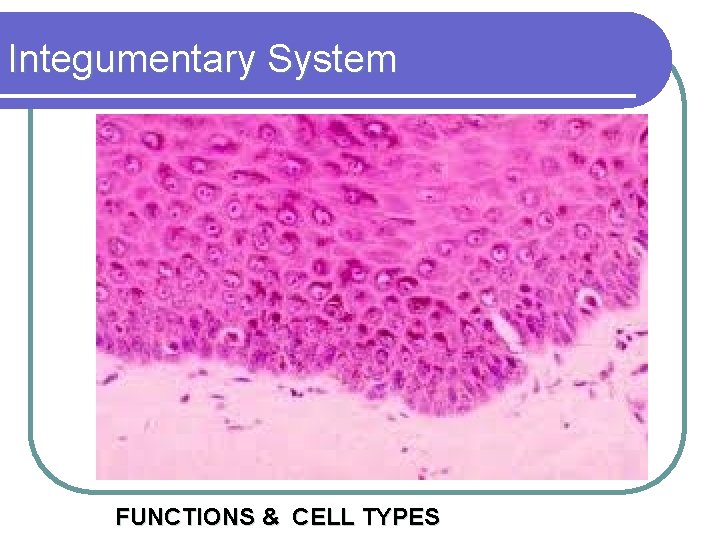
Integumentary System FUNCTIONS & CELL TYPES
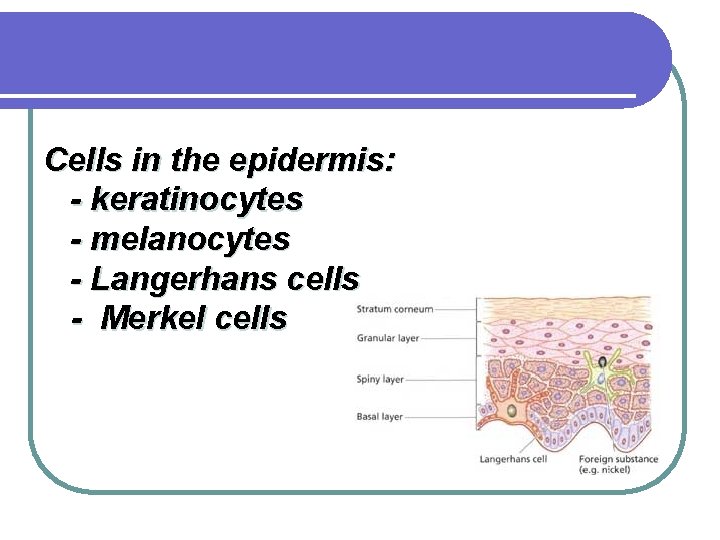
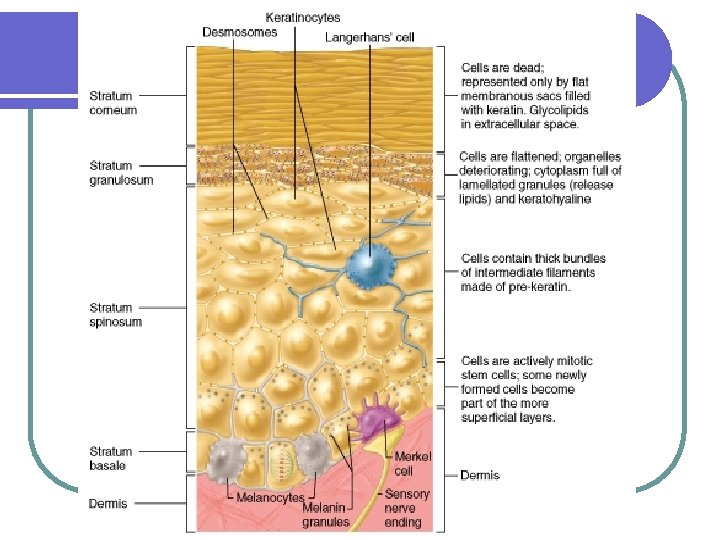
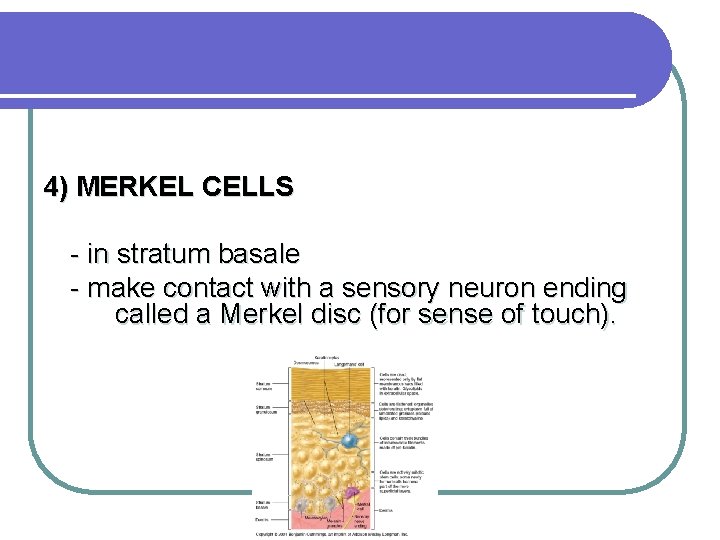
Cells in the epidermis: - keratinocytes - melanocytes - Langerhans cells - Merkel cells
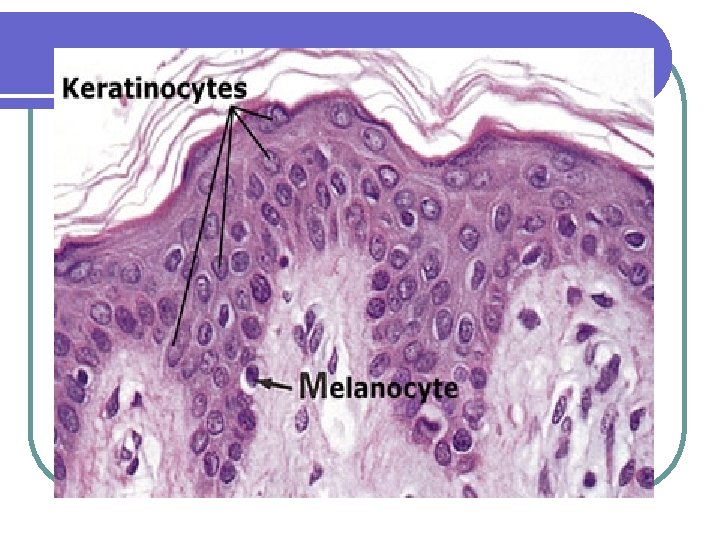
1) KERATINOCYTES - produce protein keratin - protective; waterproofing the skin - mitosis in stratum basale - regenerates every 25 -45 days
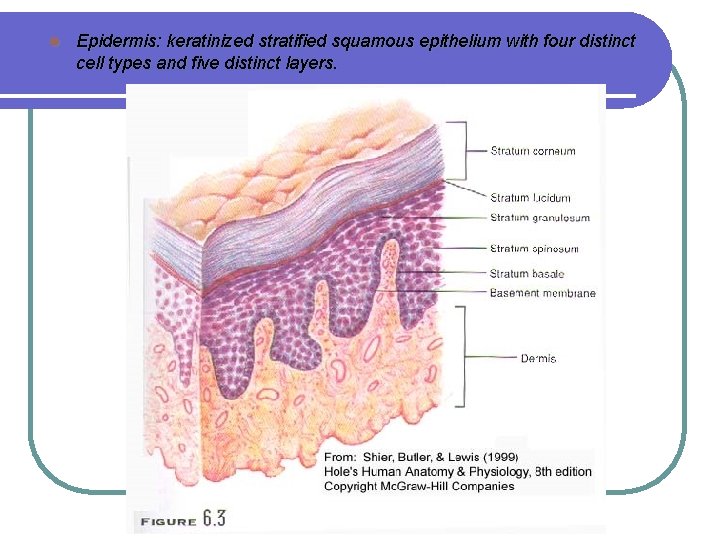
l Epidermis: keratinized stratified squamous epithelium with four distinct cell types and five distinct layers.
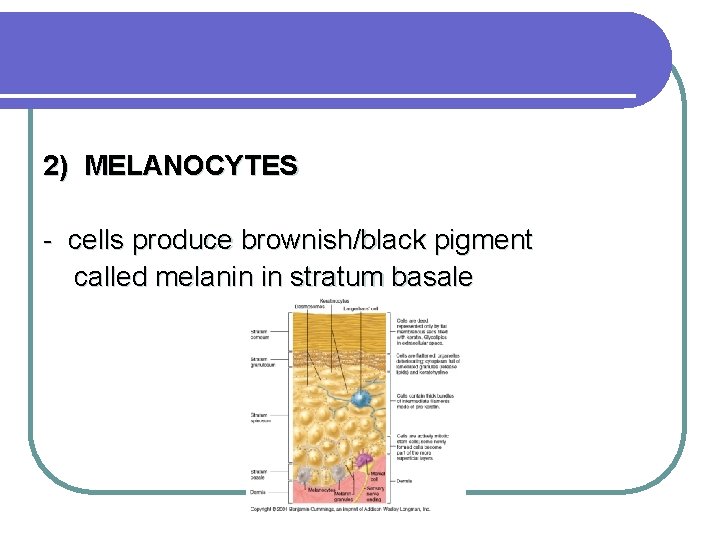
2) MELANOCYTES - cells produce brownish/black pigment called melanin in stratum basale
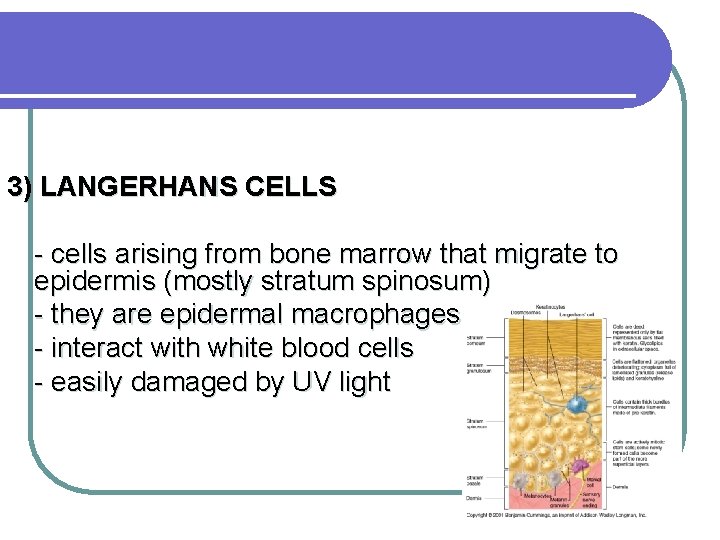
3) LANGERHANS CELLS - cells arising from bone marrow that migrate to epidermis (mostly stratum spinosum) - they are epidermal macrophages - interact with white blood cells - easily damaged by UV light
4) MERKEL CELLS - in stratum basale - make contact with a sensory neuron ending called a Merkel disc (for sense of touch).
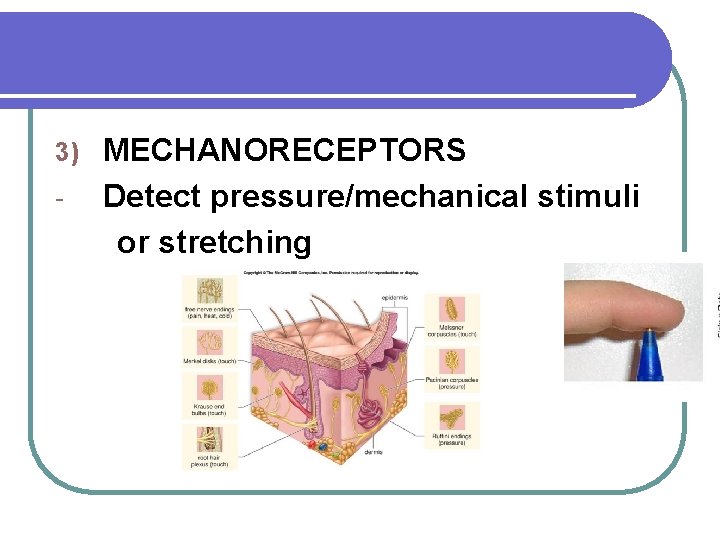
l Cells - in the dermis: Meissner corpuscles Thermoreceptors Mechanoreceptors Nociceptors Pacinian corpuscles
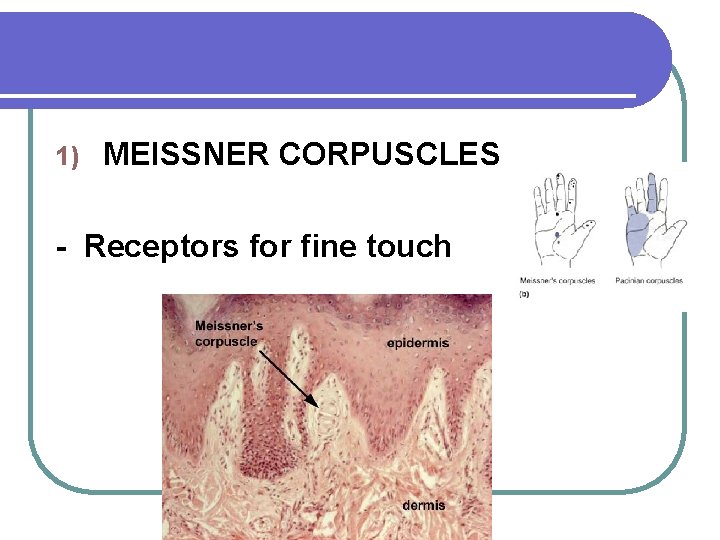
1) MEISSNER CORPUSCLES - Receptors for fine touch
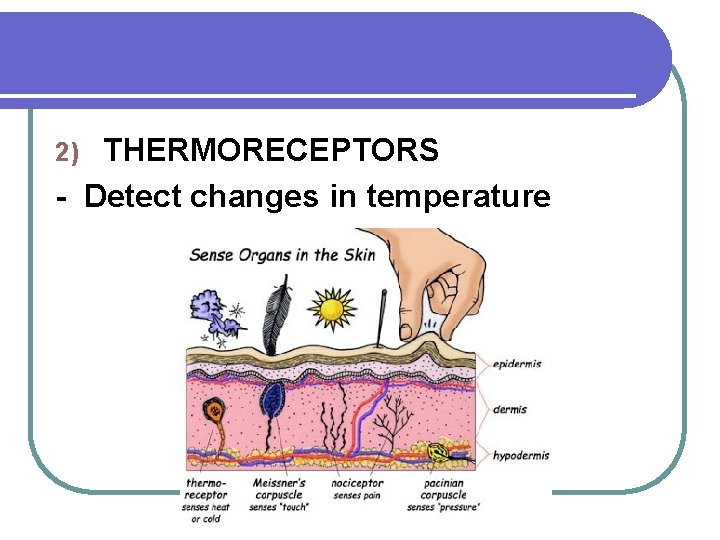
THERMORECEPTORS - Detect changes in temperature 2)
3) - MECHANORECEPTORS Detect pressure/mechanical stimuli or stretching
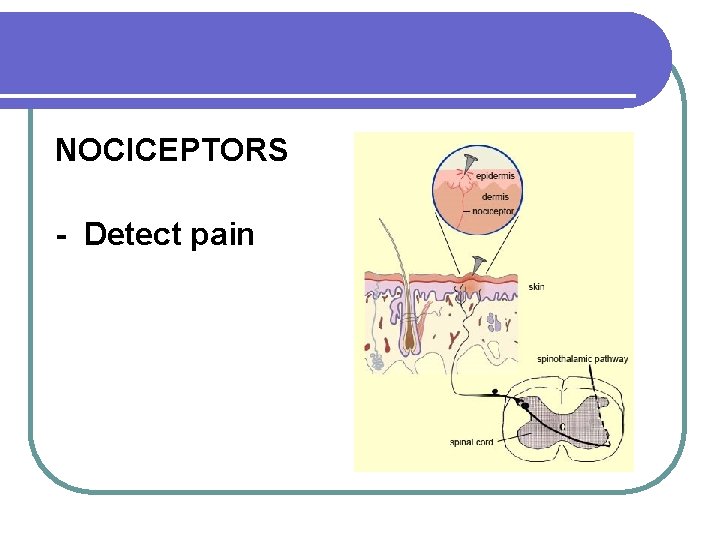
NOCICEPTORS - Detect pain
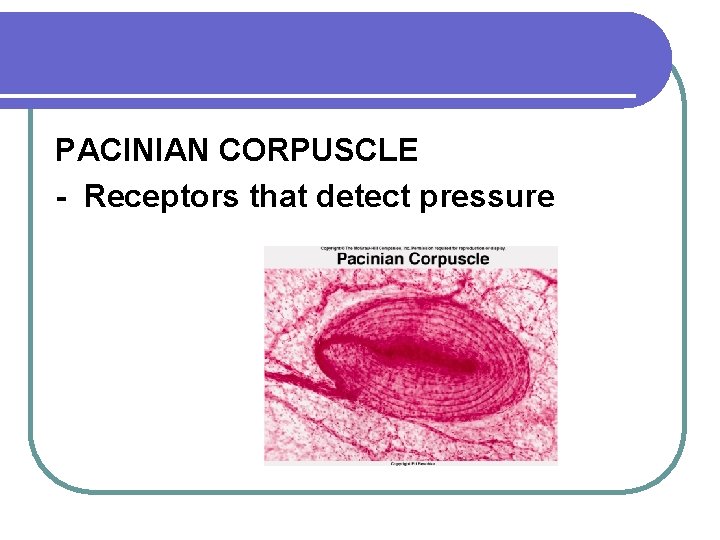
PACINIAN CORPUSCLE - Receptors that detect pressure
PHYSIOLOGY – FUNCTIONS OF SKIN 1) Regulation of BODY TEMPERATURE - vasodilation (increases blood flow) and vasoconstriction (decrease in blood flow) regulates body temp. and through evaporation of sweat Sudoriferous glands & blood vessels
2) PROTECTION physical barrier that protects underlying tissues - Protection includes immune functions of cells Keratinocytes -
3) SENSATION nerve endings and receptor cells that detect stimuli to temperature, pain, pressure and touch. Merkel cells, Thermoreceptors, Nociceptors, Mechanoreceptors, etc. -
4) EXCRETION - sweat removes water and small amounts of salt, uric acid and ammonia from the body surface Sudoriferous glands
5) IMMUNITY cells of the epidermis fight off foreign invaders Langerhans cells, macrophages
6) SYNTHESIS of Vitamin D - UV rays in sunlight stimulate the production of Vitamin D. Melanocytes