
INTEGUMENTARY SYSTEM FUNCTION 1 Protection 2 Secretion Excretion

- Slides: 20
INTEGUMENTARY SYSTEM FUNCTION 1) Protection: 2) Secretion & Excretion: 3) Sensation 4) Temperature Regulation 1
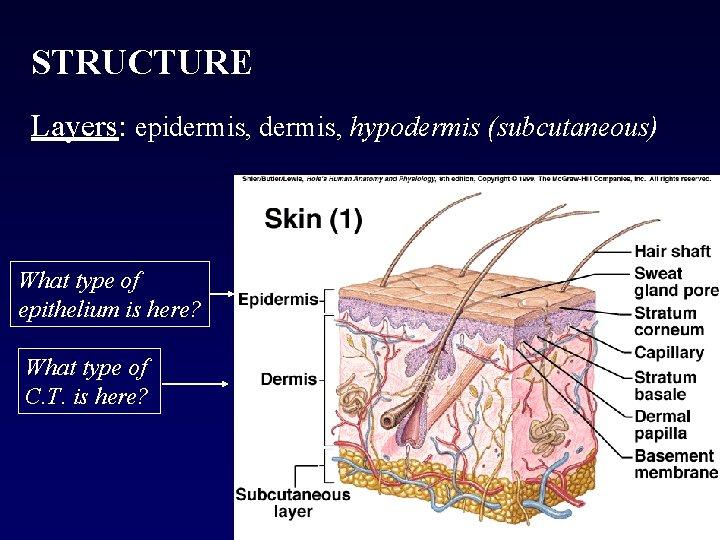
STRUCTURE Layers: epidermis, hypodermis (subcutaneous) What type of epithelium is here? What type of C. T. is here? 2
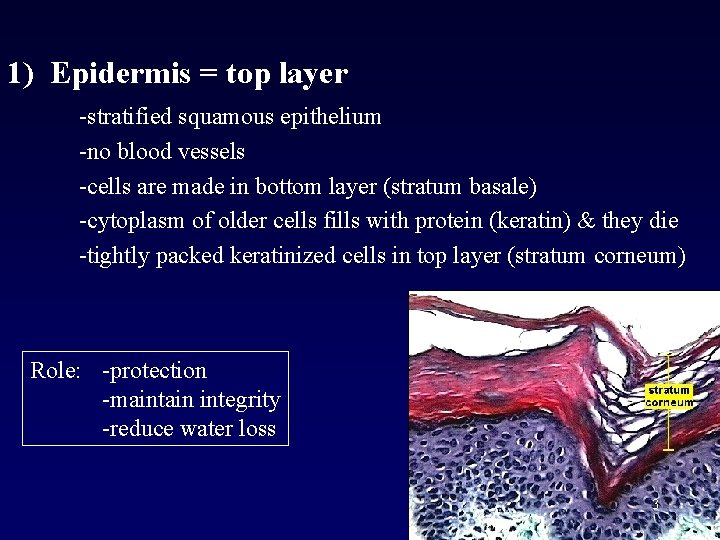
1) Epidermis = top layer -stratified squamous epithelium -no blood vessels -cells are made in bottom layer (stratum basale) -cytoplasm of older cells fills with protein (keratin) & they die -tightly packed keratinized cells in top layer (stratum corneum) Role: -protection -maintain integrity -reduce water loss 3
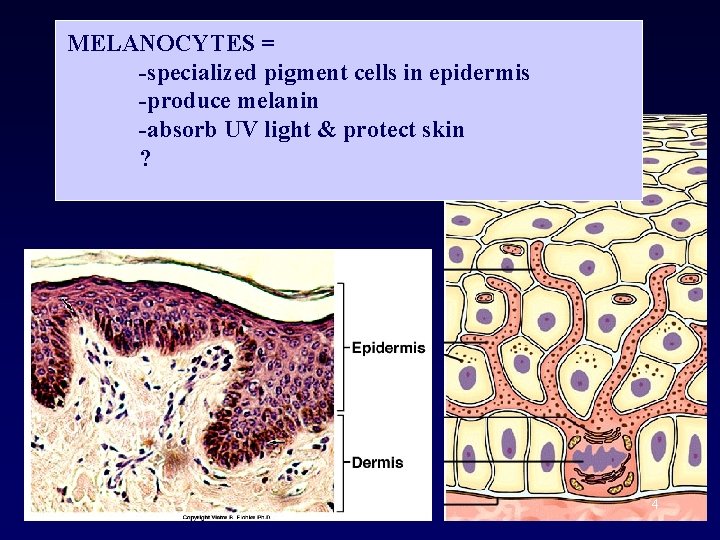
MELANOCYTES = -specialized pigment cells in epidermis -produce melanin -absorb UV light & protect skin ? 4
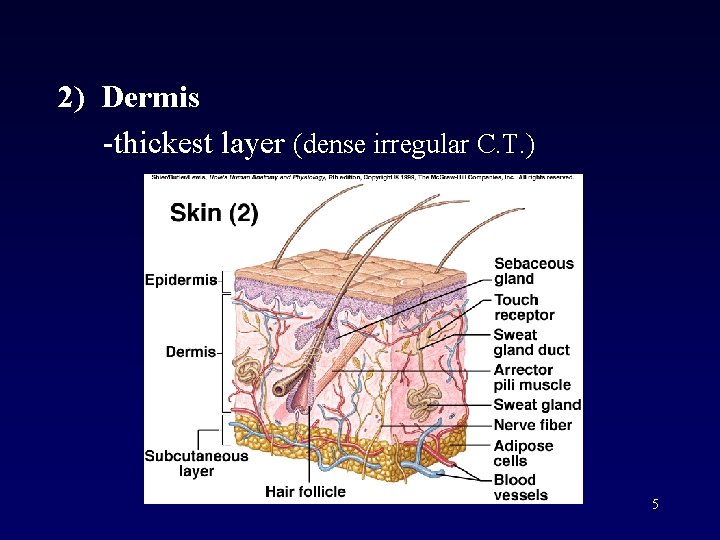
2) Dermis -thickest layer (dense irregular C. T. ) 5
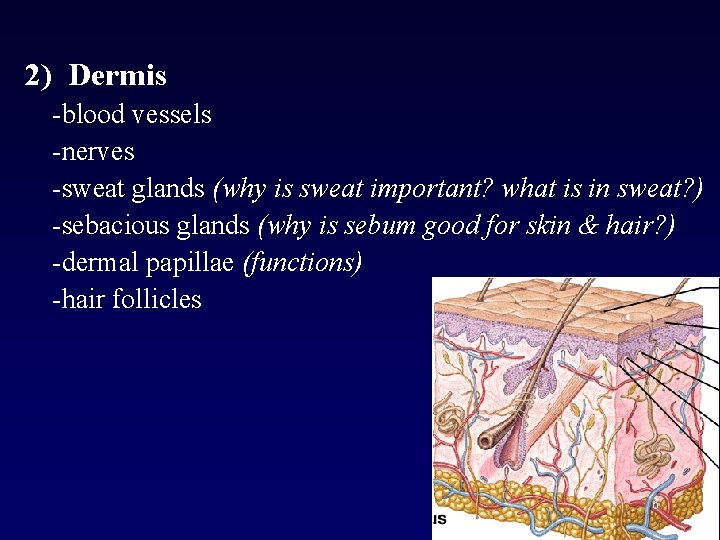
2) Dermis -blood vessels -nerves -sweat glands (why is sweat important? what is in sweat? ) -sebacious glands (why is sebum good for skin & hair? ) -dermal papillae (functions) -hair follicles 6
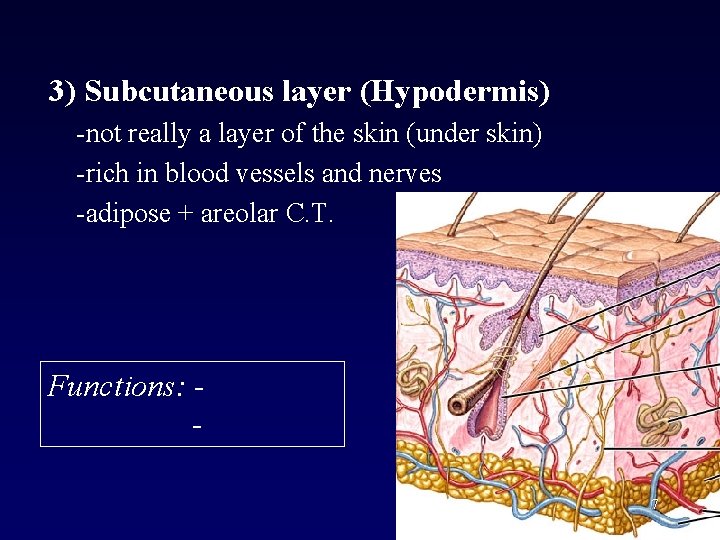
3) Subcutaneous layer (Hypodermis) -not really a layer of the skin (under skin) -rich in blood vessels and nerves -adipose + areolar C. T. Functions: 7
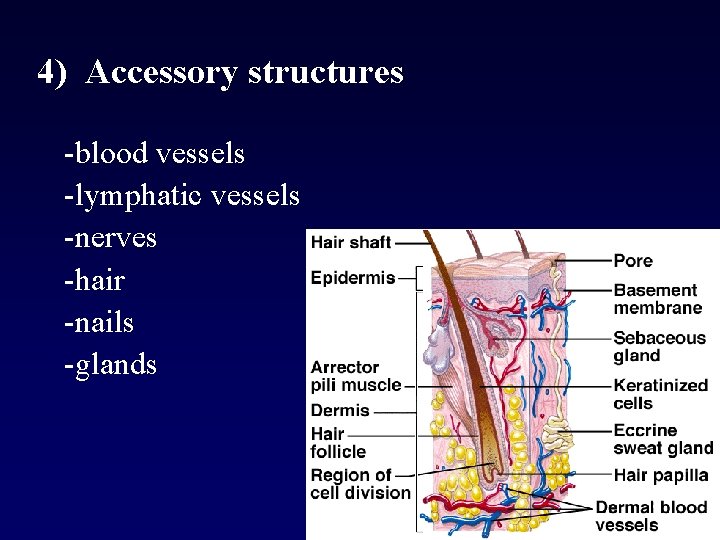
4) Accessory structures -blood vessels -lymphatic vessels -nerves -hair -nails -glands 8
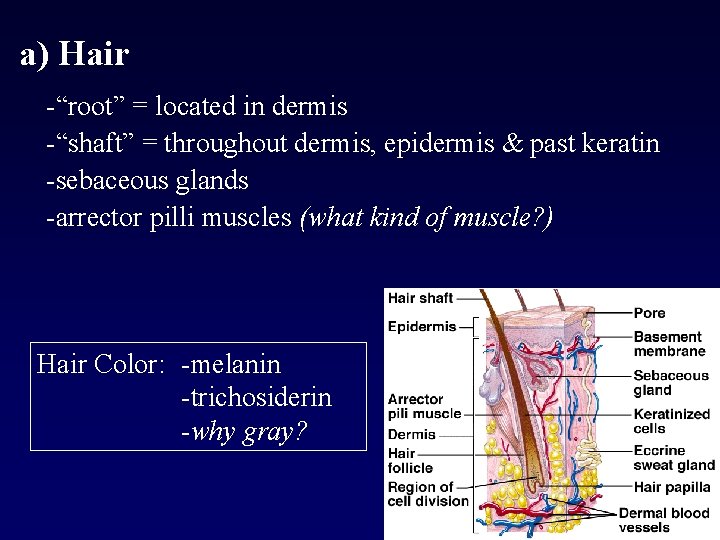
a) Hair -“root” = located in dermis -“shaft” = throughout dermis, epidermis & past keratin -sebaceous glands -arrector pilli muscles (what kind of muscle? ) Hair Color: -melanin -trichosiderin -why gray? 9
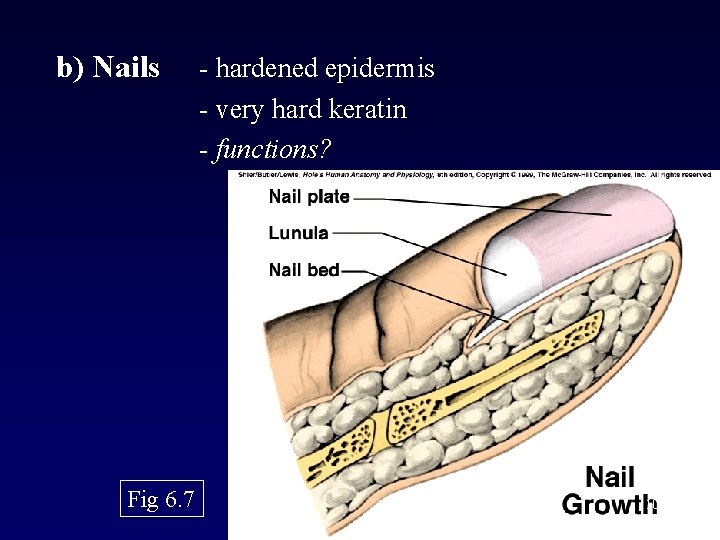
b) Nails Fig 6. 7 - hardened epidermis - very hard keratin - functions? 10
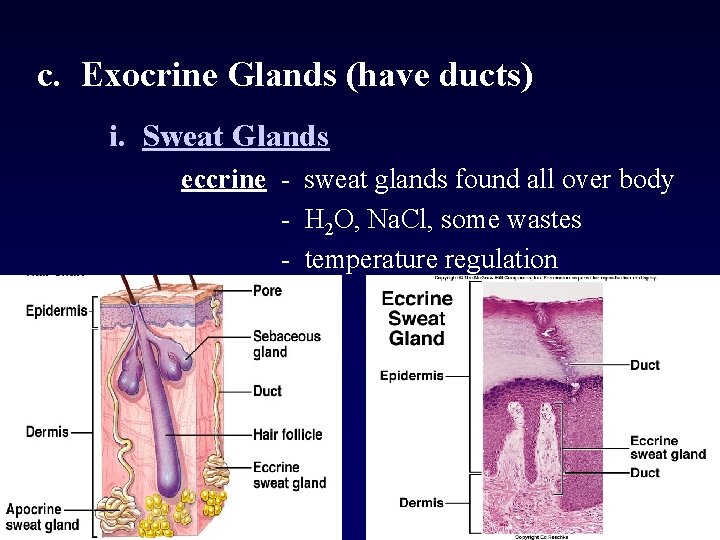
c. Exocrine Glands (have ducts) i. Sweat Glands eccrine - sweat glands found all over body - H 2 O, Na. Cl, some wastes - temperature regulation 11
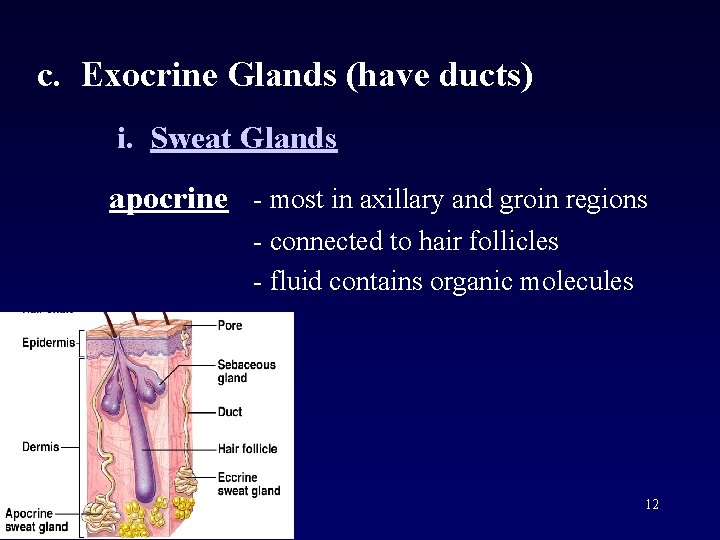
c. Exocrine Glands (have ducts) i. Sweat Glands apocrine - most in axillary and groin regions - connected to hair follicles - fluid contains organic molecules 12
c. Exocrine Glands (have ducts) ii. Sebaceous Glands oil glands –fatty material –sebum helps keep skin soft & water proof iii. Ceruminous Gland -wax producing -found where? Ear canal 13
SKIN COLOR 1) 2) 3) 4) 5) 6) albinism – genetic abnormality, NO melanin carotene – found in varying amounts cyanosis – bluish/gray, low blood supply Pink –blush- embarrassment jaundice – yellow, poor liver function Vitiligo – acquired condition-loss of pigmentin certain areas-melanocytes no longer produce pigment 14
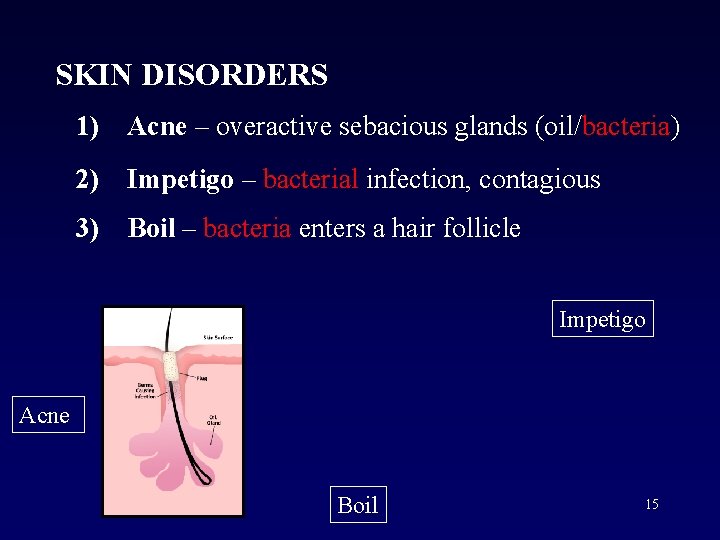
SKIN DISORDERS 1) Acne – overactive sebacious glands (oil/bacteria) 2) Impetigo – bacterial infection, contagious 3) Boil – bacteria enters a hair follicle Impetigo Acne Boil 15
SKIN DISORDERS 4) Fungal Infections - ringworm & athlete’s foot 5) Warts - caused by viral infection 6) Cold Sores - Herpes simplex virus 16
SKIN DISORDERS 7) Burns a) 1 st degree - epidermis damaged, red b) 2 nd degree - epidermis destroyed, dermis damaged - blisters, fluid accumulation c) 3 rd degree - epidermis & dermis destroyed - protective function is gone - damage/loss of nerve function - risk of death…why? - synthetic & cultured skin grafts 17
SKIN DISORDERS 8) Wrinkles - due to UV damage & age - elastin & collagen fibers deteriorate 18
SKIN DISORDERS 9) Skin Cancer - 1 million new cases/year - UV exposure Cutaneous carcinomas: -arise from epithelial cells (basal or squamous) Cutaneous melanomas: -arise at melanocyte -more irregular and colorful 19
End of Integumentary System 20