
Integumentary System Chapter 7 Protective Covering and First


- Slides: 31
Integumentary System Chapter 7 Protective Covering and First Line of Defense
Skin Trivia n n 21 Square Feet 4 Kilograms/9 pounds, 7% - 15% of Total Body Weight Complex Combination of Tissues Continuous Layer
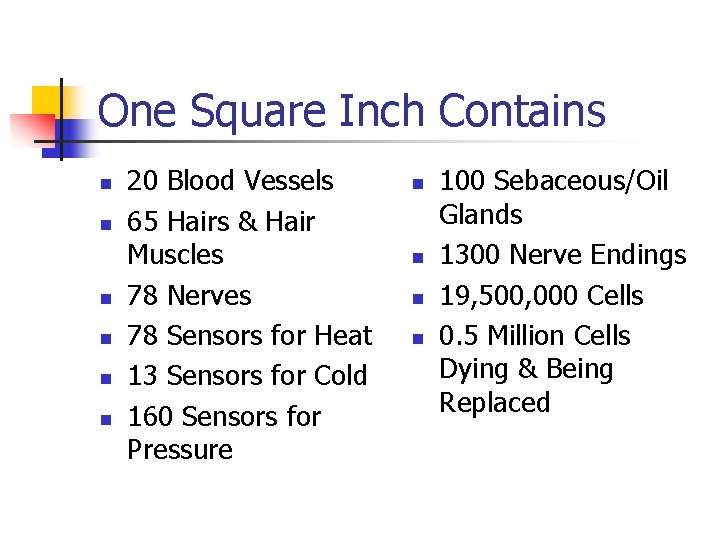
One Square Inch Contains n n n 20 Blood Vessels 65 Hairs & Hair Muscles 78 Nerves 78 Sensors for Heat 13 Sensors for Cold 160 Sensors for Pressure n n 100 Sebaceous/Oil Glands 1300 Nerve Endings 19, 500, 000 Cells 0. 5 Million Cells Dying & Being Replaced
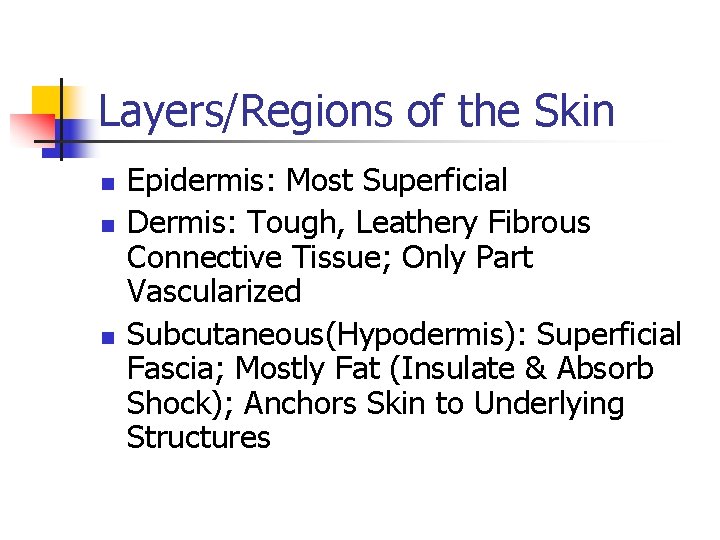
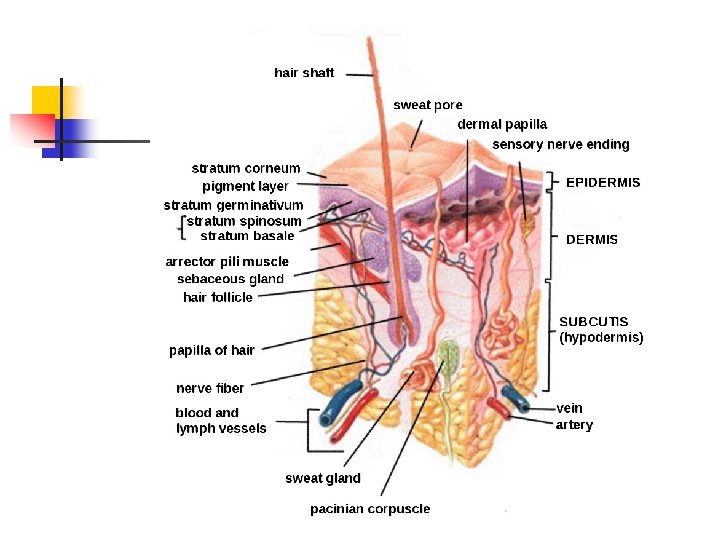
Layers/Regions of the Skin n Epidermis: Most Superficial Dermis: Tough, Leathery Fibrous Connective Tissue; Only Part Vascularized Subcutaneous(Hypodermis): Superficial Fascia; Mostly Fat (Insulate & Absorb Shock); Anchors Skin to Underlying Structures
Functions n n n n Protection Water Balance Temperature Regulation Waste Disposal Receptor Organs Blood Reservoir Vitamin D Production
Epidermis n n n Outer layer of stratified squamous epithelial tissue Avascular Complete regeneration every 35 -45 days Thinner on scalp and armpit than on sole of foot Cells of the epidermis
Stratum Basale/Stratum Germinativum n n n Basal layer of cells Actively dividing to replace old cells Strata = bedsheet Deepest layer Single row of cells (mostly stem cells 10 -25% = melanocytes (secrete melanin) n n n Amount of melanin skin color Amino acid tyrosine converts melanin granules Albinism = genetic absence of tyrosinase
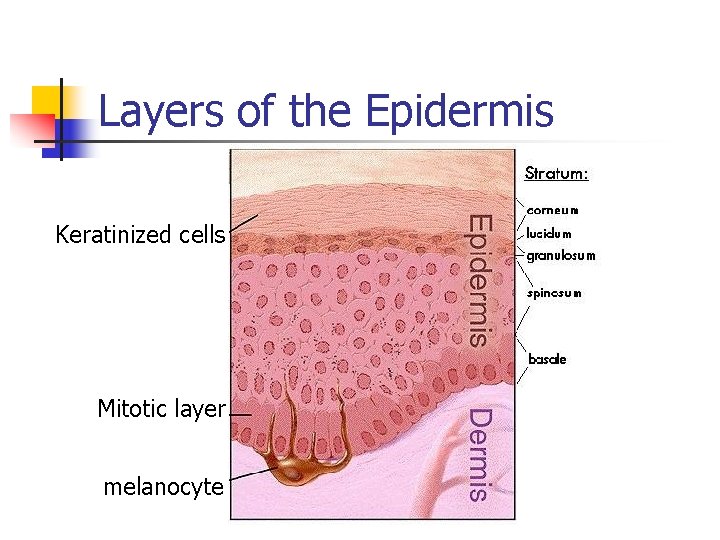
Layers of the Epidermis Keratinized cells Mitotic layer melanocyte
Stratum Basala n n Simple Cuboidal cells Undergoes Mitosis Next to the dermis Contains melanocytes (pigment producing cells) protects from UV rays n n Contains Langerhans cells(dendritic) ingest bacteria and other invaders Contains keratinocytes (produce keratin)
Stratum Spinosum n n n Spiny layer Several cell layers thick Mostly Langerhans cells surrounded by keratinocytes with spiny projections (prickle cells) n Tension resisting protein
Stratum Granulosum n n Granular layer Tough layer 3 – 5 layers of flattened keratinocytes Keratohyaline granules formation of keratin n n Lamellated granules waterproofing glycolipid Water resistant layer Slows water loss from body Receives nutrients from tissue fluids
Stratum lucidum n n n Clear layer Absent in thin skin Thickest in soles of feet and palms Mainly 2 – 3 rows of flattened dead keratinocytes Nuclei absent Eleidin in cytoplasm = water barrier
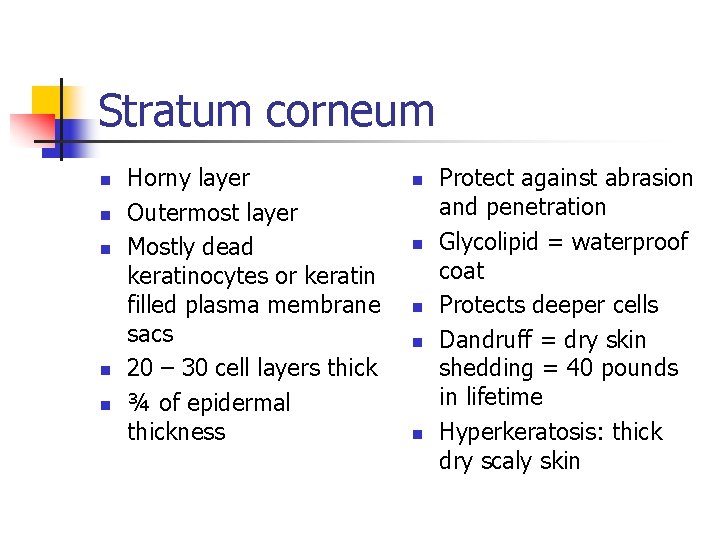
Stratum corneum n n n Horny layer Outermost layer Mostly dead keratinocytes or keratin filled plasma membrane sacs 20 – 30 cell layers thick ¾ of epidermal thickness n n n Protect against abrasion and penetration Glycolipid = waterproof coat Protects deeper cells Dandruff = dry skin shedding = 40 pounds in lifetime Hyperkeratosis: thick dry scaly skin
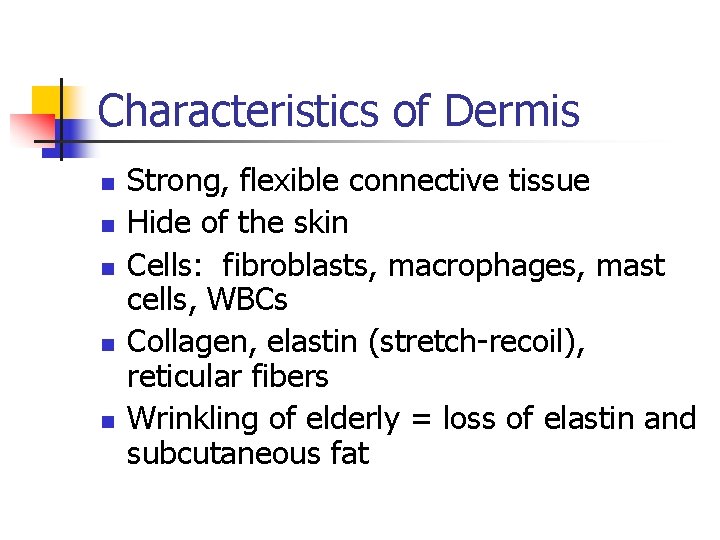
Characteristics of Dermis n n n Strong, flexible connective tissue Hide of the skin Cells: fibroblasts, macrophages, mast cells, WBCs Collagen, elastin (stretch-recoil), reticular fibers Wrinkling of elderly = loss of elastin and subcutaneous fat
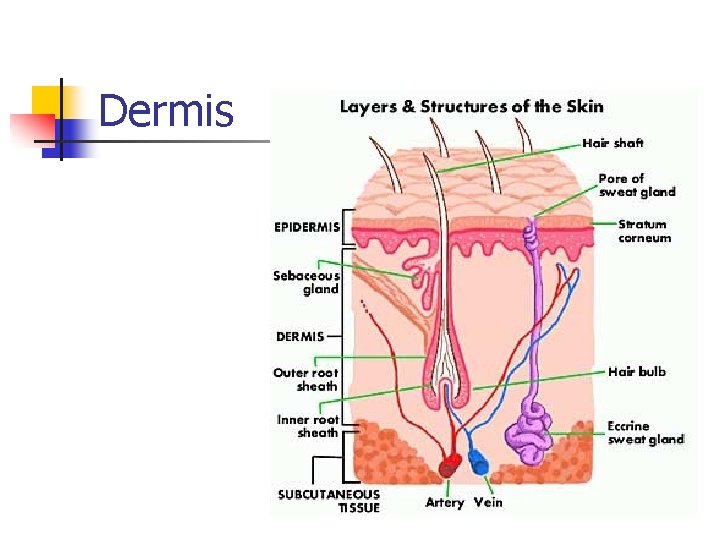
Dermis
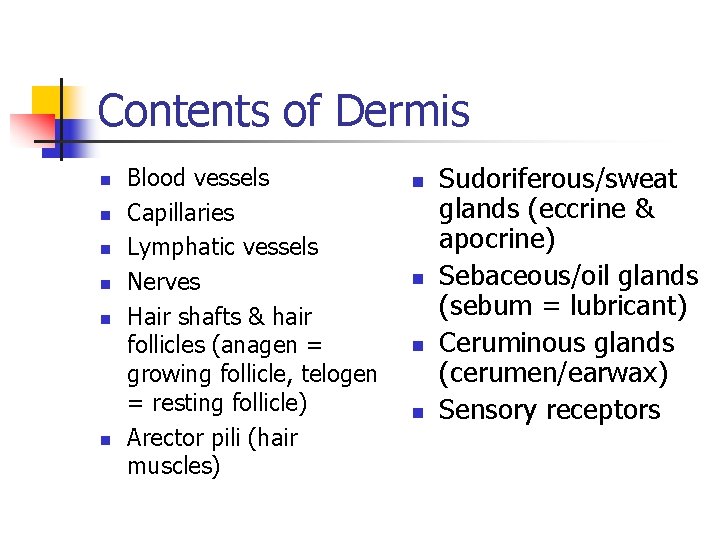
Contents of Dermis n n n Blood vessels Capillaries Lymphatic vessels Nerves Hair shafts & hair follicles (anagen = growing follicle, telogen = resting follicle) Arector pili (hair muscles) n n Sudoriferous/sweat glands (eccrine & apocrine) Sebaceous/oil glands (sebum = lubricant) Ceruminous glands (cerumen/earwax) Sensory receptors
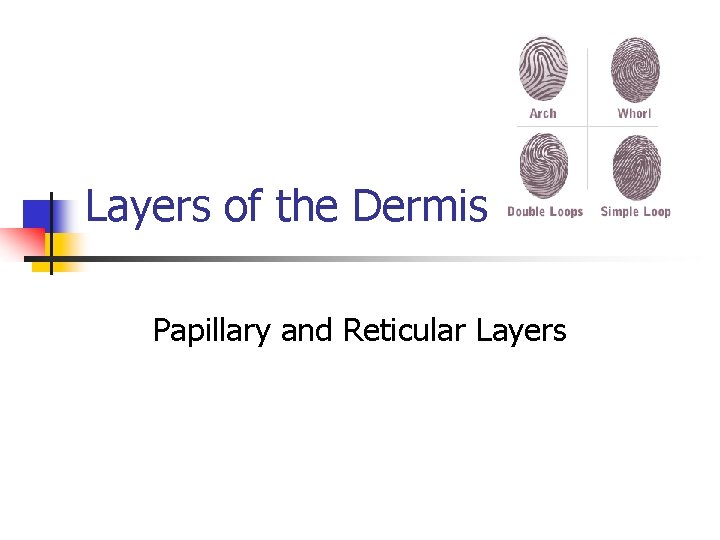
Layers of the Dermis Papillary and Reticular Layers
Papillary Layer of Dermis n n n Connects epidermis to dermis Connective tissue Capillaries Pain receptors Touch receptors (Meissner’s corpuscles) Dermal ridges (palms & soles): create epidermal ridges for friction & gripping; sweat on ridges = fingerprints, footprints
Reticular Layer of Dermis n n n 80% of dermis Deep dermis of collagen for elasticity Dense irregular connective tissue Collagen strength, resilience, hydration Lines of cleavage/tension lines (longitudinal = head & limbs, circular = neck & trunk): parallel incisions heal better and faster
Accessory Organs of the Skin Hair, Nails, Sweat Glands, Sebaceous Glands
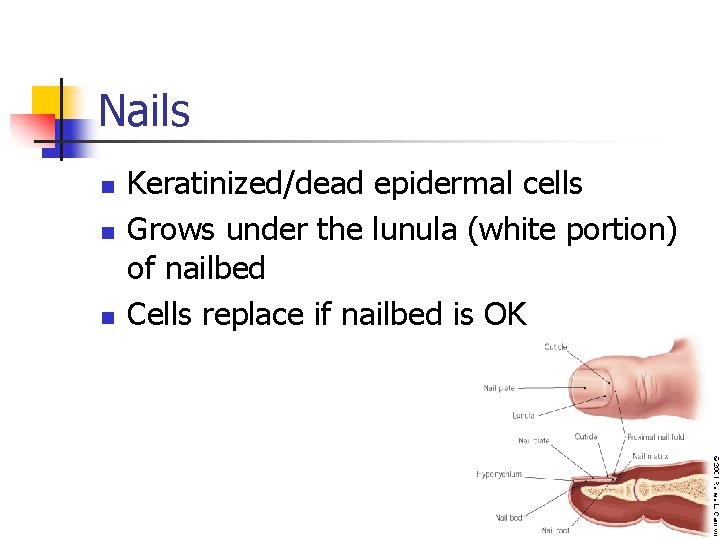
Nails n n n Keratinized/dead epidermal cells Grows under the lunula (white portion) of nailbed Cells replace if nailbed is OK
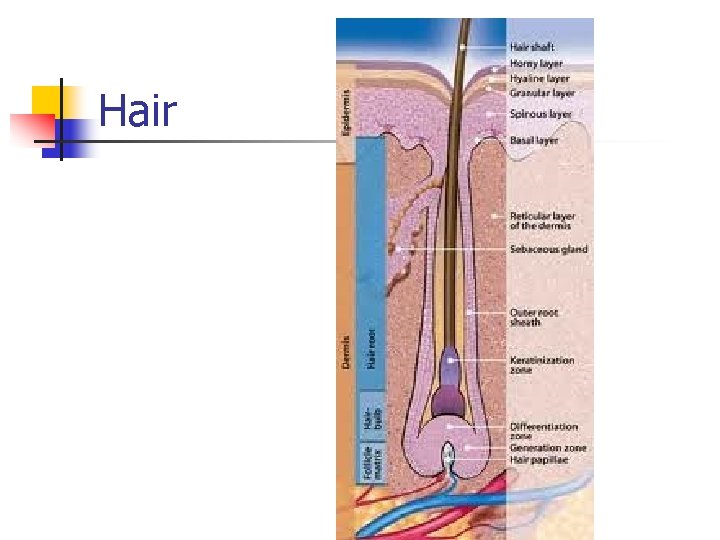
Hair
Hair n n Hair: made of keratin Shaft: projects from the skin Root: embedded in the skin; shape determines whether hair is straight or curly Pigment depends on melanocytes located in the follicle
Hair Follicle n n Contain hair root Nerve endings Knot of capillaries: papilla supply nutrients Bundle of smooth muscle arrector pili (raiser of hair)
Sudoriferous Glands Sweat Glands: 2. 5 million person n. Cover entire skin surface except for nipples and parts of external genitalia n. Sweat consists of water salt urea and uric acid n. Cools the skin eliminates waste n
Eccrine Sweat Glands n n n Most numerous Location: palms, soles of feet, forehead Secretion: sweat (99% water, salts, nitrogenous wastes) Acidic p. H 4 – 6 Purpose: temperature regulation Emotion induced sweating: no control
Apocrine Sweat Glands n n n Location: axillary, genital areas Size: larger than eccrine glands Secretions: same as eccrine PLUS fatty deposits & protein Foul odor when fats & proteins decompose Begin to function at puberty
Mammary Glands n n Secrete milk from breasts after stimulation to the breasts after giving birth Type of apocrine gland
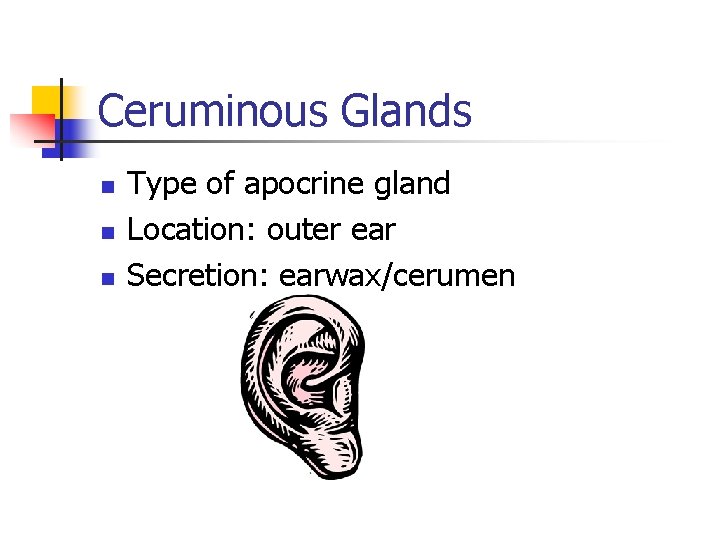
Ceruminous Glands n n n Type of apocrine gland Location: outer ear Secretion: earwax/cerumen
Sebaceous/Oil Glands n n n Location: all over the body except for palms & soles of feet Secretion: sebum, oily substance Function: smooth & soften hair and skin; slows water loss during dry weather