
Integumentary System Chapter 6 Integumentary system Skin and





- Slides: 43
Integumentary System Chapter 6
Integumentary system • Skin and various structures • Skin is considered an organ • Composed of several tissue types • Various functions – maintain homeostasis (regulates temp and water loss) – protection – contains immune cells – excretes small amounts of waste
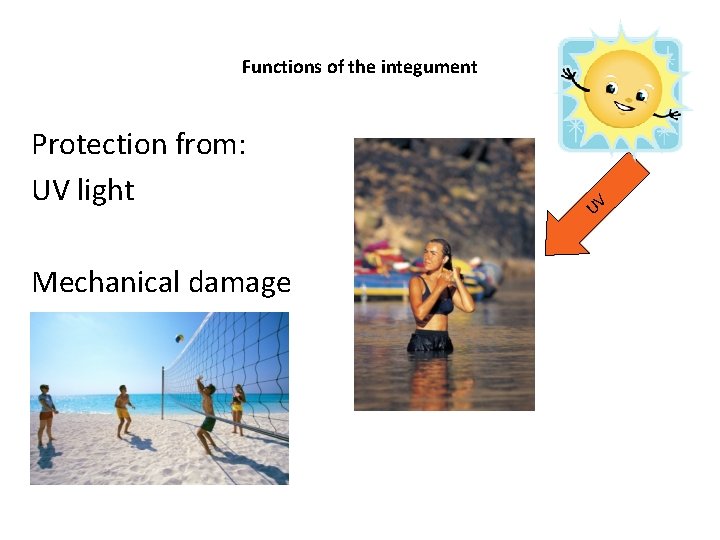
Functions of the integument Protection from: UV light Mechanical damage UV
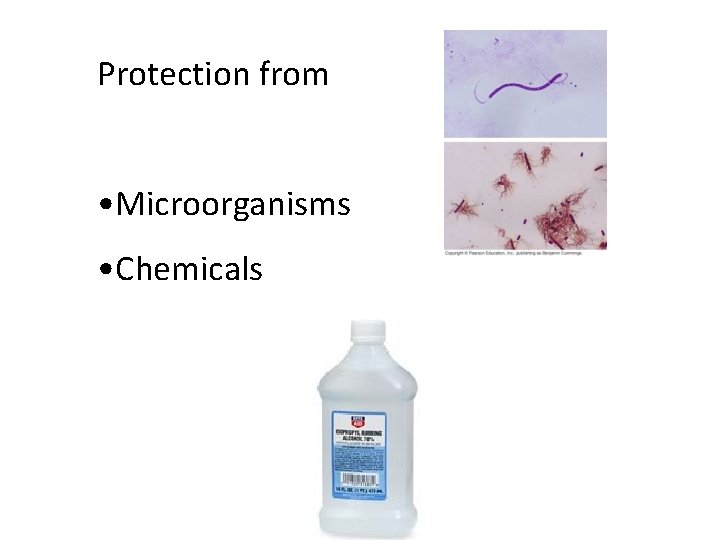
Protection from • Microorganisms • Chemicals
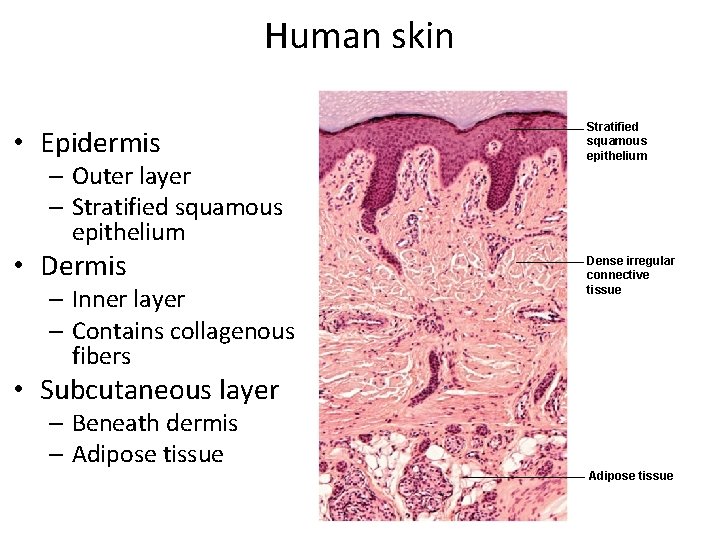
Human skin • Epidermis – Outer layer – Stratified squamous epithelium • Dermis – Inner layer – Contains collagenous fibers Stratified squamous epithelium Dense irregular connective tissue • Subcutaneous layer – Beneath dermis – Adipose tissue
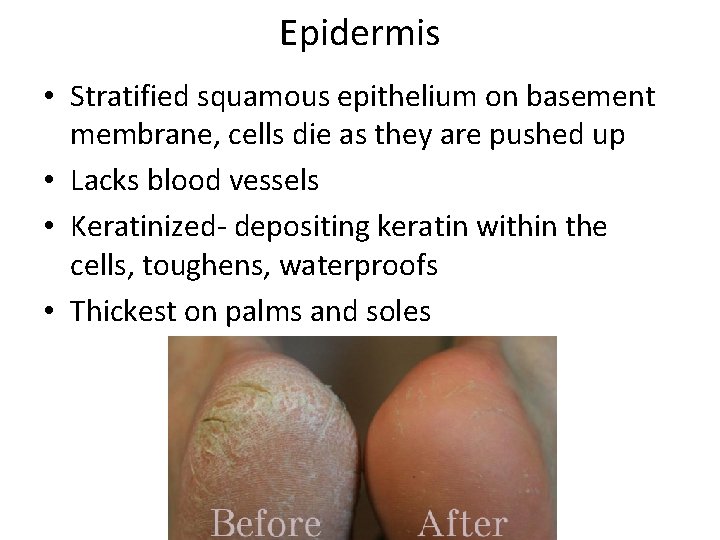
Epidermis • Stratified squamous epithelium on basement membrane, cells die as they are pushed up • Lacks blood vessels • Keratinized- depositing keratin within the cells, toughens, waterproofs • Thickest on palms and soles
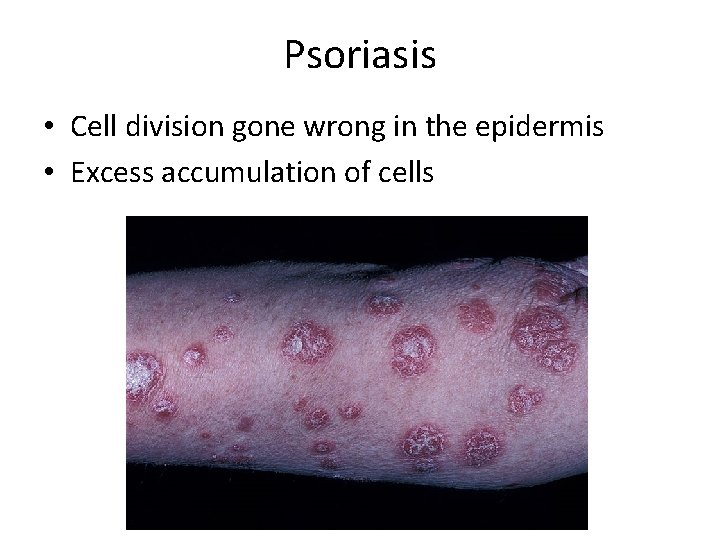
Psoriasis • Cell division gone wrong in the epidermis • Excess accumulation of cells
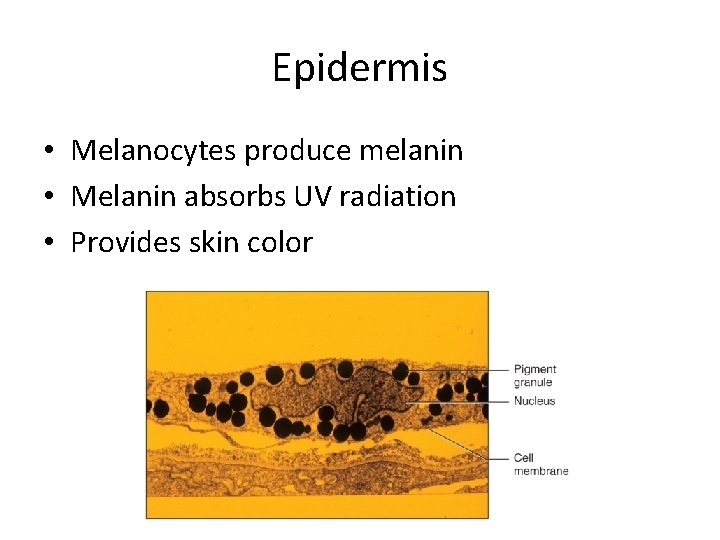
Epidermis • Melanocytes produce melanin • Melanin absorbs UV radiation • Provides skin color
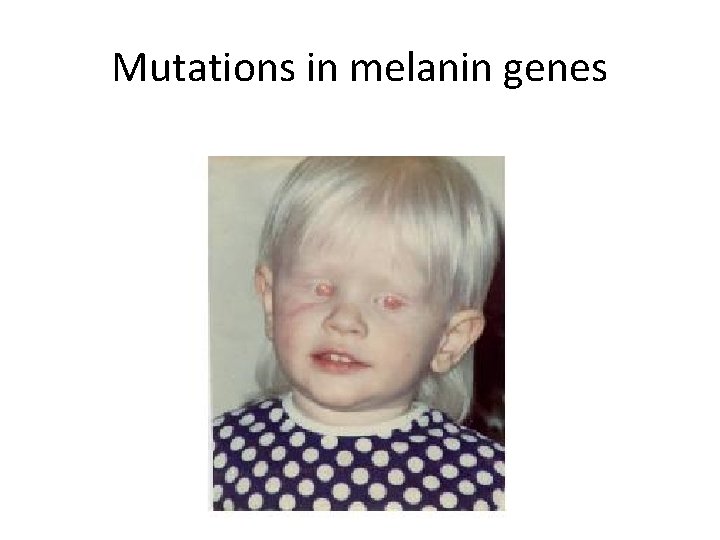
Mutations in melanin genes
• https: //www. youtube. com/watch? v=BVIIg. Hy NRd. I
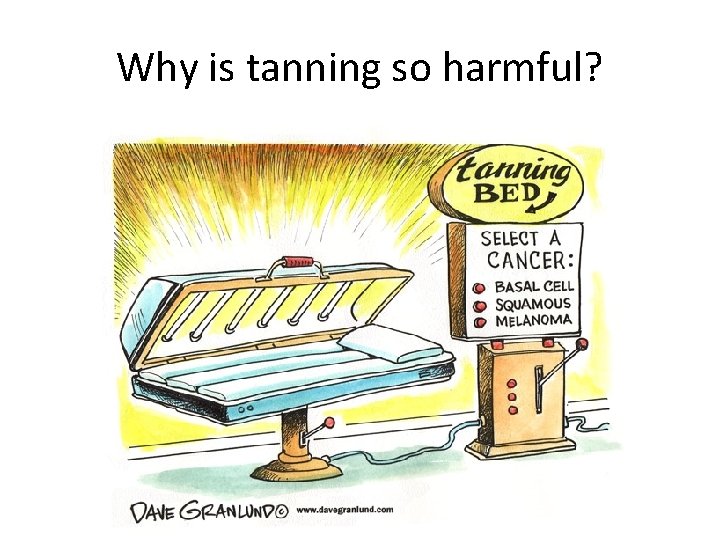
Why is tanning so harmful?
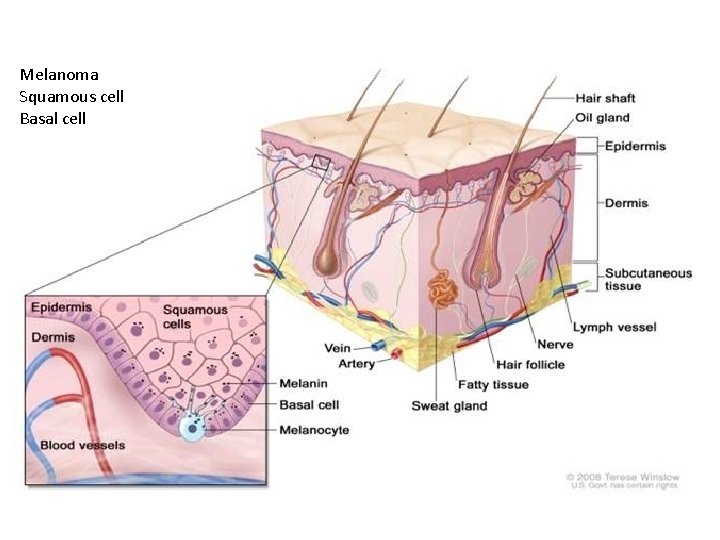
Melanoma Squamous cell Basal cell
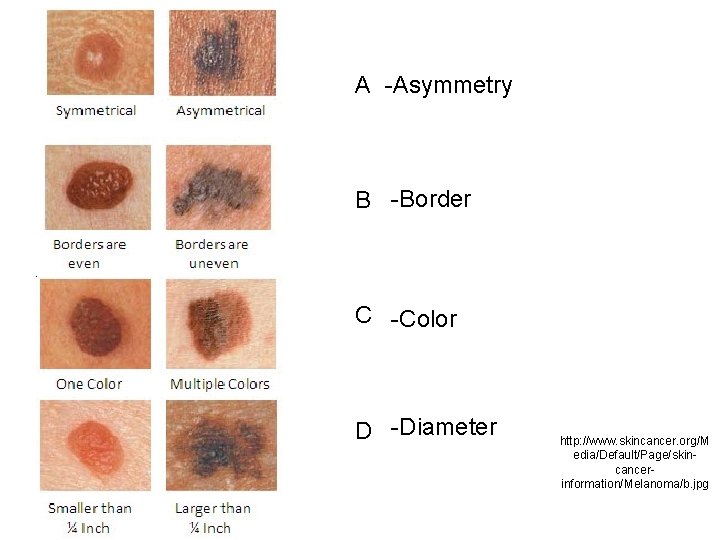
A -Asymmetry B -Border C -Color D -Diameter http: //www. skincancer. org/M edia/Default/Page/skincancerinformation/Melanoma/b. jpg
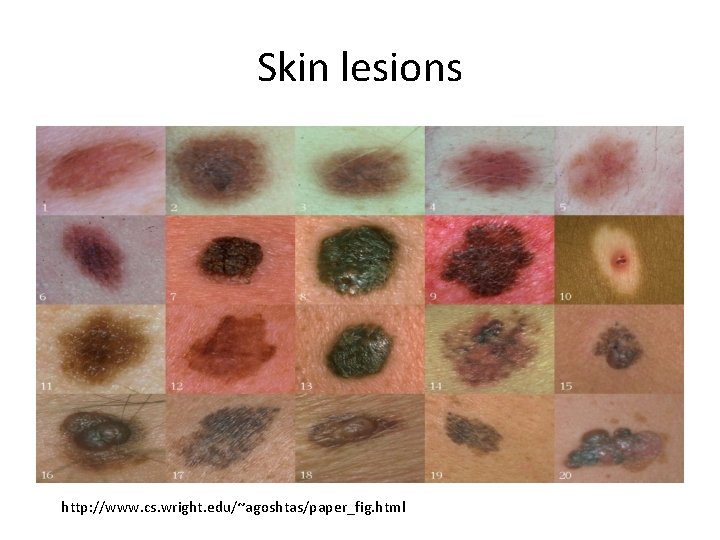
Skin lesions http: //www. cs. wright. edu/~agoshtas/paper_fig. html
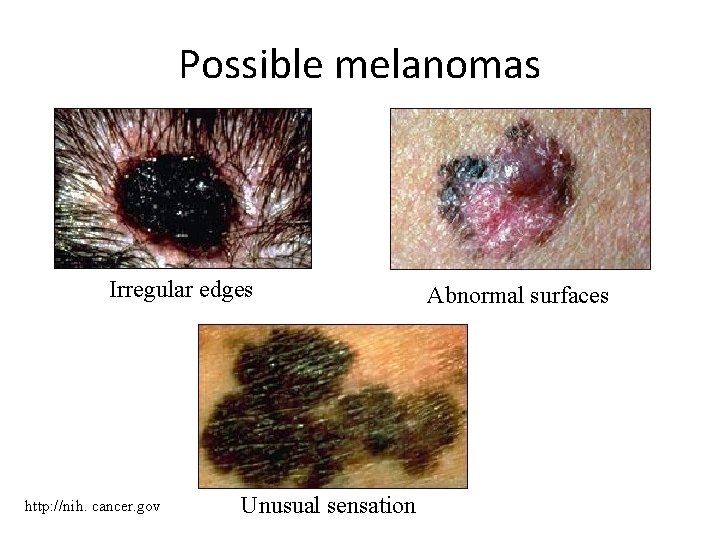
Possible melanomas Irregular edges http: //nih. cancer. gov Unusual sensation Abnormal surfaces
• https: //www. youtube. com/watch? v=BVIIg. Hy NRd. I • 8: 12
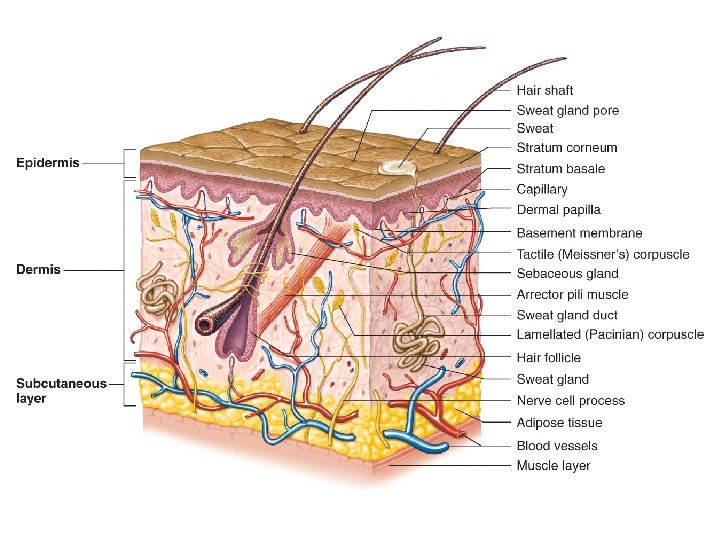
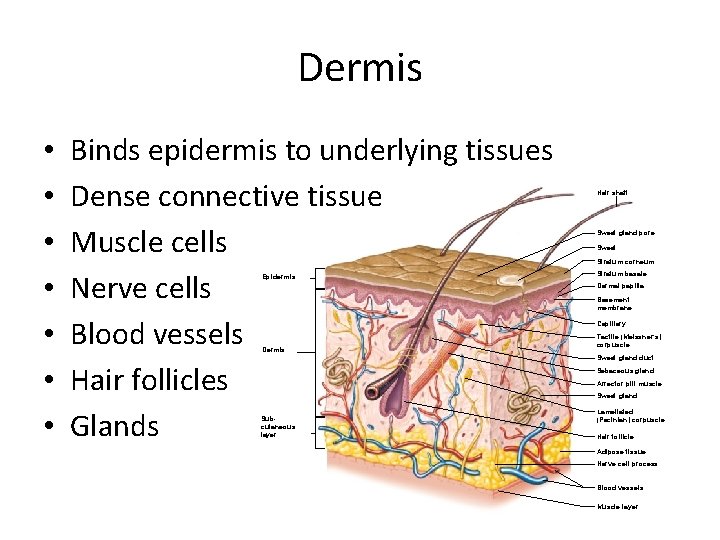
Dermis • • Binds epidermis to underlying tissues Dense connective tissue Muscle cells Nerve cells Blood vessels Hair follicles Glands Epidermis Dermis Subcutaneous layer Hair shaft Sweat gland pore Sweat Stratum corneum Stratum basale Dermal papilla Basement membrane Capillary Tactile (Meissner’s) corpuscle Sweat gland duct Sebaceous gland Arrector pili muscle Sweat gland Lamellated (Pacinian) corpuscle Hair follicle Adipose tissue Nerve cell process Blood vessels Muscle layer
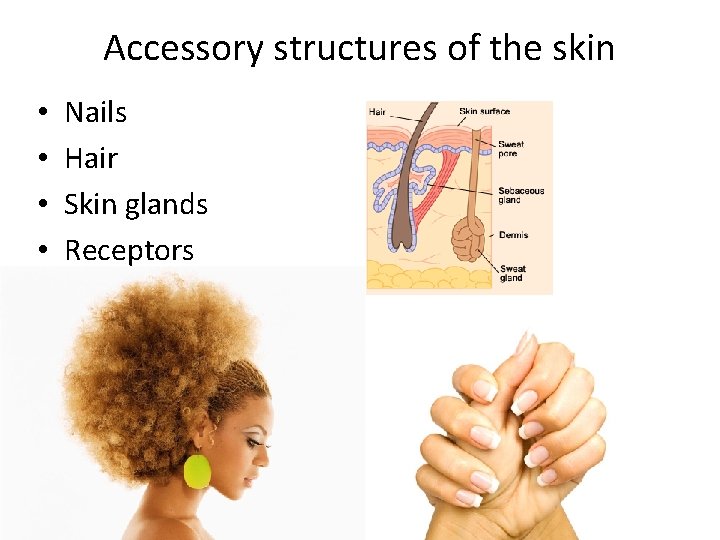
Accessory structures of the skin • • Nails Hair Skin glands Receptors
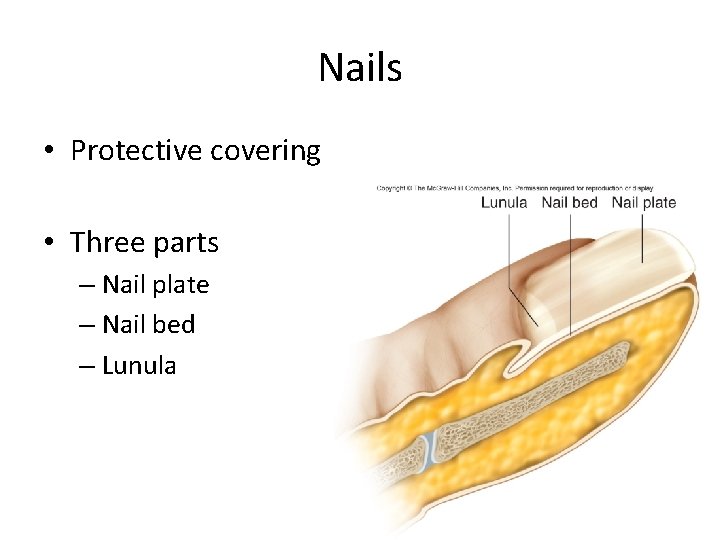
Nails • Protective covering • Three parts – Nail plate – Nail bed – Lunula
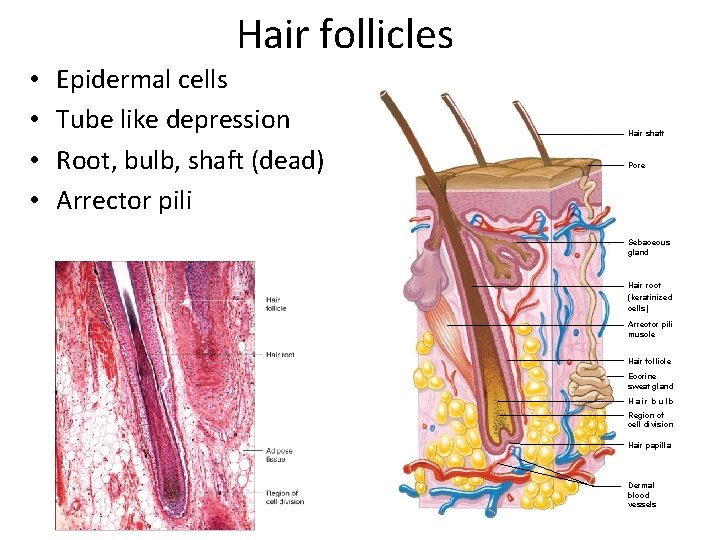
Hair follicles • • Epidermal cells Tube like depression Root, bulb, shaft (dead) Arrector pili Hair shaft Pore Sebaceous gland Hair root (keratinized cells) Arrector pili muscle Hair follicle Eccrine sweat gland H a ir b u lb Region of cell division Hair papilla Dermal blood vessels
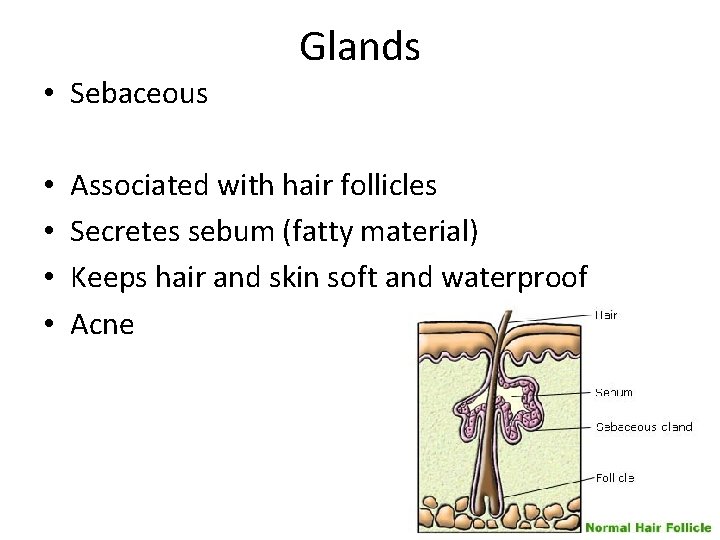
Glands • Sebaceous • • Associated with hair follicles Secretes sebum (fatty material) Keeps hair and skin soft and waterproof Acne
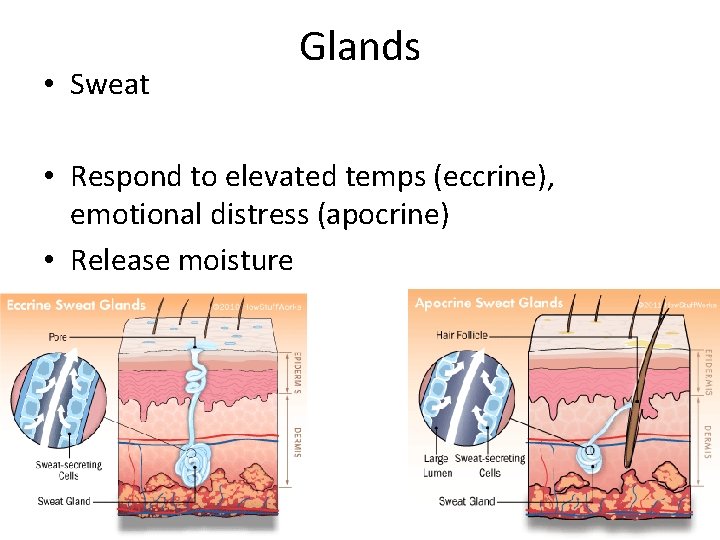
• Sweat Glands • Respond to elevated temps (eccrine), emotional distress (apocrine) • Release moisture
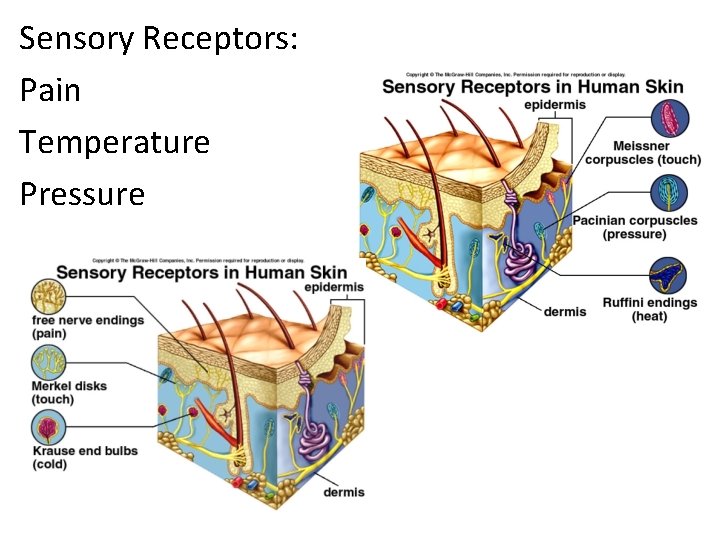
Sensory Receptors: Pain Temperature Pressure
The integumentary and homeostasis • Prevents heat loss – Blood vessels constrict – Inactivate sweat glands • Prevents overheating – Blood vessels dilate – Sweat glands secrete (evaporative cooling)
Injury to the integumentary system
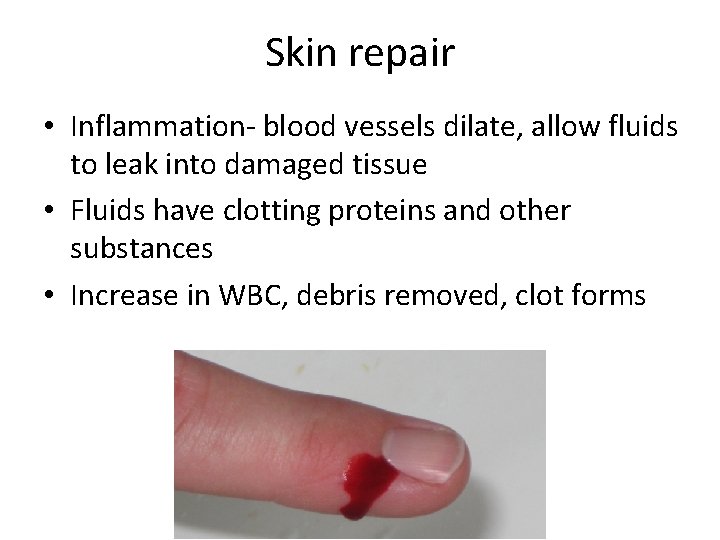
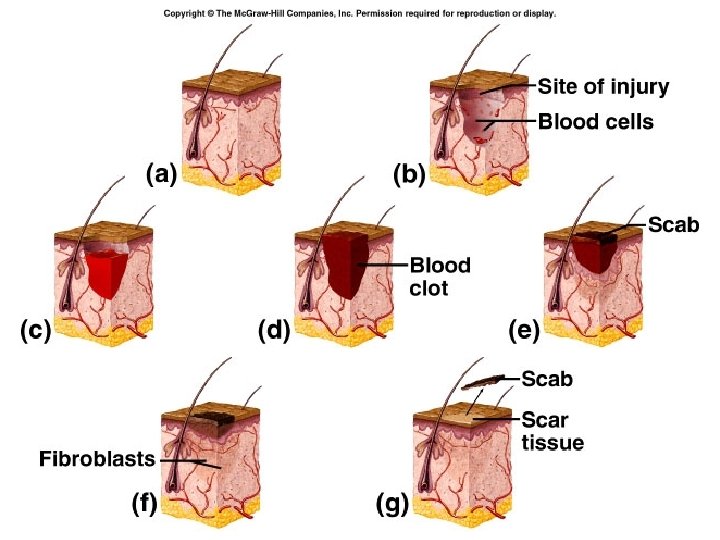
Skin repair • Inflammation- blood vessels dilate, allow fluids to leak into damaged tissue • Fluids have clotting proteins and other substances • Increase in WBC, debris removed, clot forms
Cuts • A shallow cut, epidermal cells along the cut divide more rapidly than usually • • Deep cuts, blood vessels break, clotting Growth factors stimulate new tissue formation Excess collagenous fibers may form a scar Scar tissue- strong but not as flexible, can’t perform functions of replaced tissue
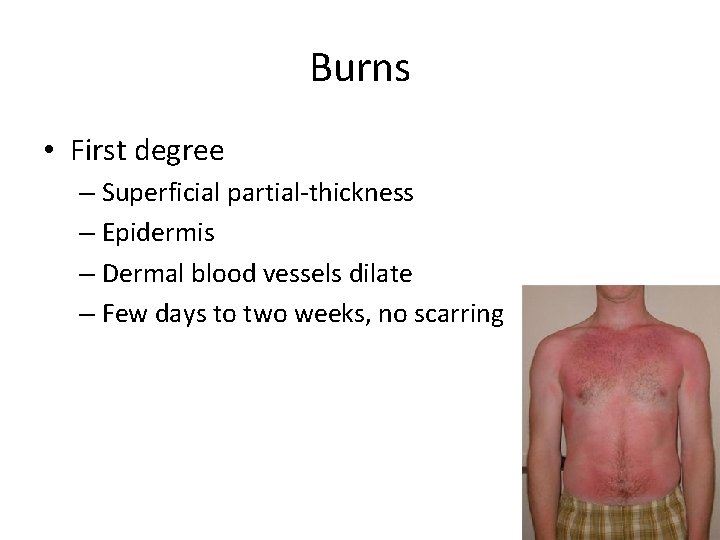
Burns • First degree – Superficial partial-thickness – Epidermis – Dermal blood vessels dilate – Few days to two weeks, no scarring
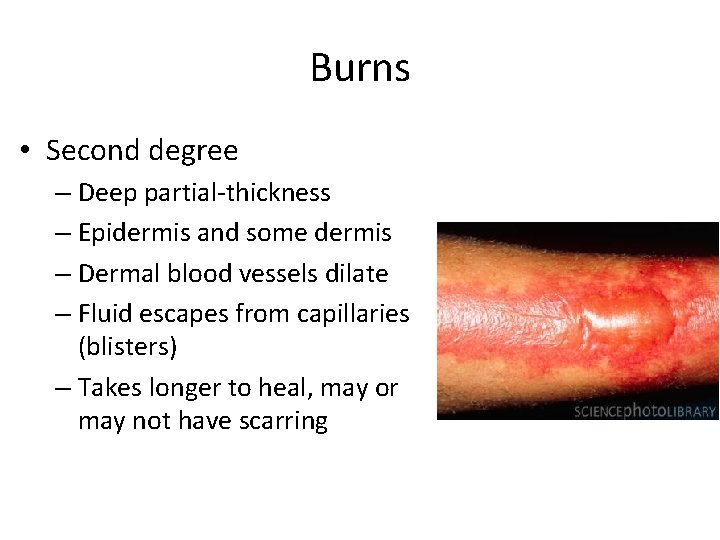
Burns • Second degree – Deep partial-thickness – Epidermis and some dermis – Dermal blood vessels dilate – Fluid escapes from capillaries (blisters) – Takes longer to heal, may or may not have scarring
Burns • Third degree – Full-thickness – Epidermis, and accessory structures – May or may not heal on own (No photo to reduce gagging in class!!!)
Burns • Fourth degree – Epidermis, subcutaneous, connective tissue, bone (No photo to reduce gagging in class!!!)
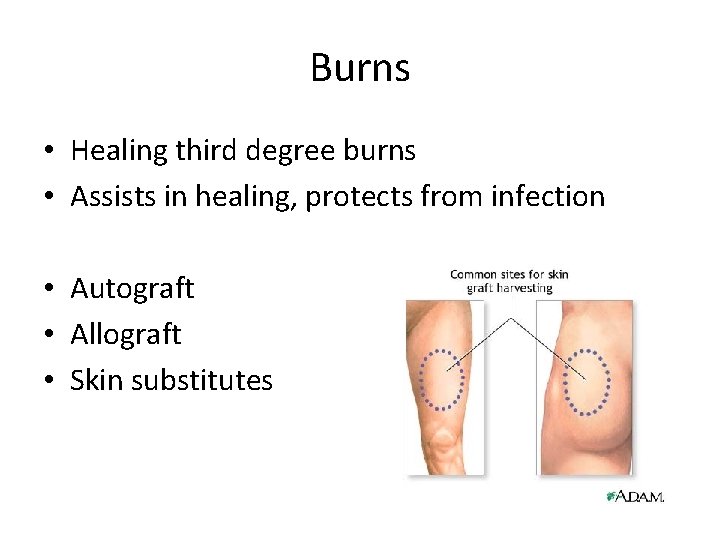
Burns • Healing third degree burns • Assists in healing, protects from infection • Autograft • Allograft • Skin substitutes
• https: //www. youtube. com/watch? v=Dsvtzwp 4 n. G 8
Aging of the skin • • Age spots Epidermis thins Loss of fat Wrinkling, sagging Less sebaceous secretion Decrease in number of hair follicles Slowed melanin production More…
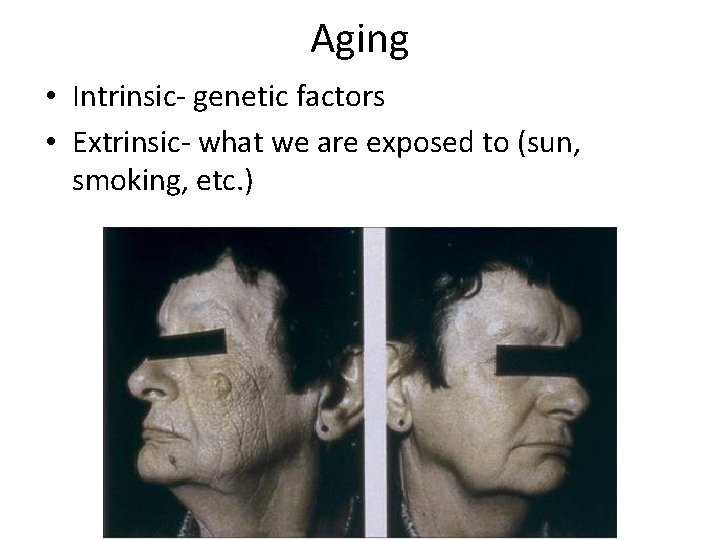
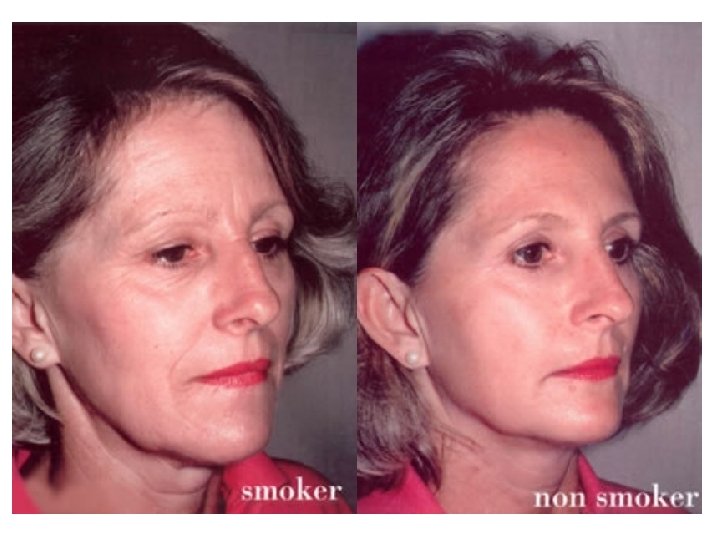
Aging • Intrinsic- genetic factors • Extrinsic- what we are exposed to (sun, smoking, etc. )
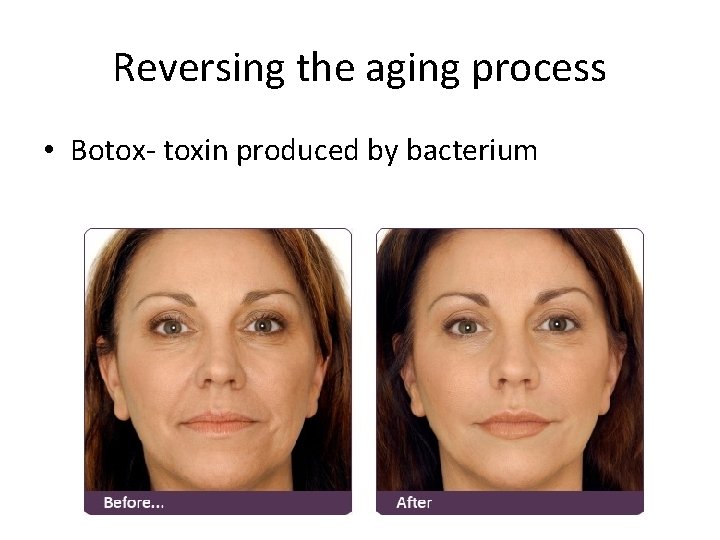
Reversing the aging process • Botox- toxin produced by bacterium
Moisturize me!!!
Exam review • 50 multiple choice questions • 50 questions, 50 minute class = 1 minute per question (be on time!!!) • Phones- if they are out at any time, you will receive a zero on your exam. • Scantron- bring a #2 pencil. • If you are confused about a question, ask me ASAP!!!
Tips • Study old quizzes and WODs • Several “identify …. in this picture” • Pick the best answer (some options may be somewhat correct…you want the best answer) • Don’t freak out!