
Integumentary System Boss Integumentary System o Consists of

Integumentary System Boss
Integumentary System o Consists of Skin, Hair, Nails, Sweat Glands, and Oil Glands o Functions: n n n Protective covering Regulates body temperature Protects from water loss Houses sensory receptors Synthesizes biochemicals Excretes a small amount of wastes
Skin o Consists of two distinct layers n Epidermis: outer layer o Made of stratified squamous epithelium n Dermis: inner layer o Made of a variety of tissues (fibrous, connective, epithelial, smooth muscle, nervous, and blood) o Epidermis and Dermis are separated by the basement membrane o Beneath the dermis are masses of loose connective and adipose tissue, which bind the skin to underlying organs (forms the subcutaneous layer/hypodermic layer)
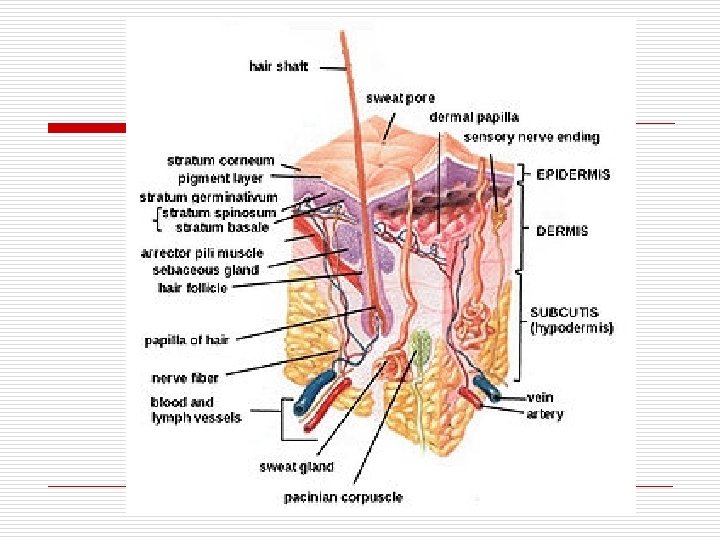
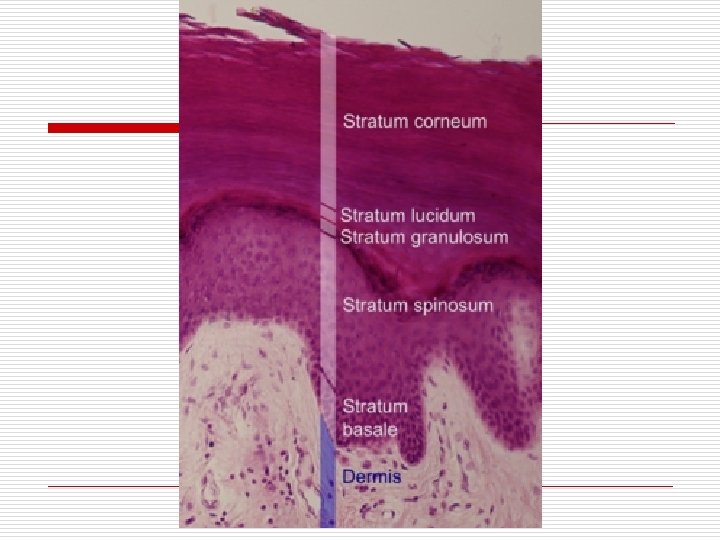
Epidermis o Made up of stratified squamous epithelium n Lacks blood vessels n Composed of 5 layers o o o Stratum corneum- tightly packed dead cells Stratum lucidem Stratum granulosum Stratum spinosum Stratum basale- deepest layers, nourished by blood vessels
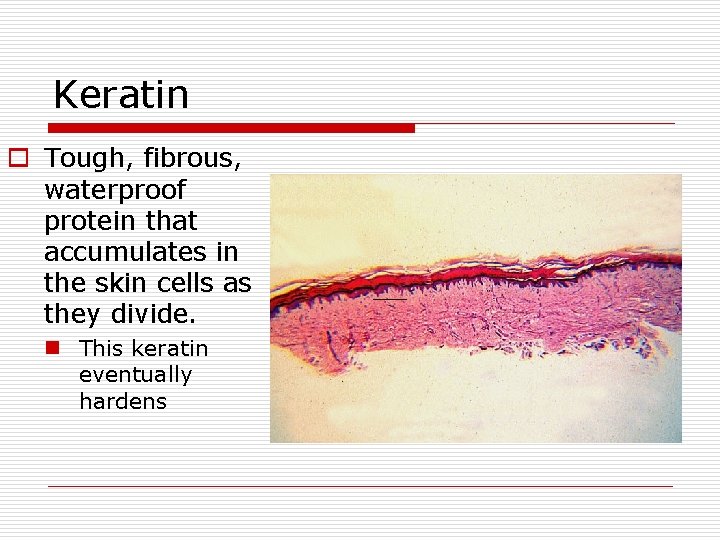
Keratin o Tough, fibrous, waterproof protein that accumulates in the skin cells as they divide. n This keratin eventually hardens
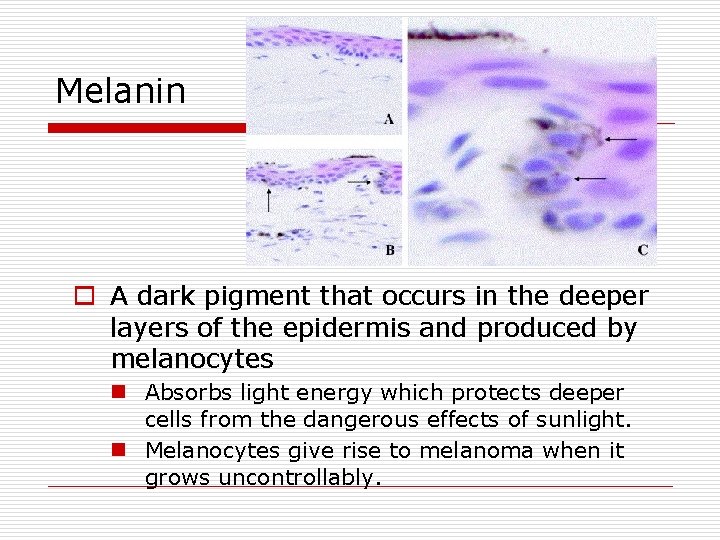
Melanin o A dark pigment that occurs in the deeper layers of the epidermis and produced by melanocytes n Absorbs light energy which protects deeper cells from the dangerous effects of sunlight. n Melanocytes give rise to melanoma when it grows uncontrollably.
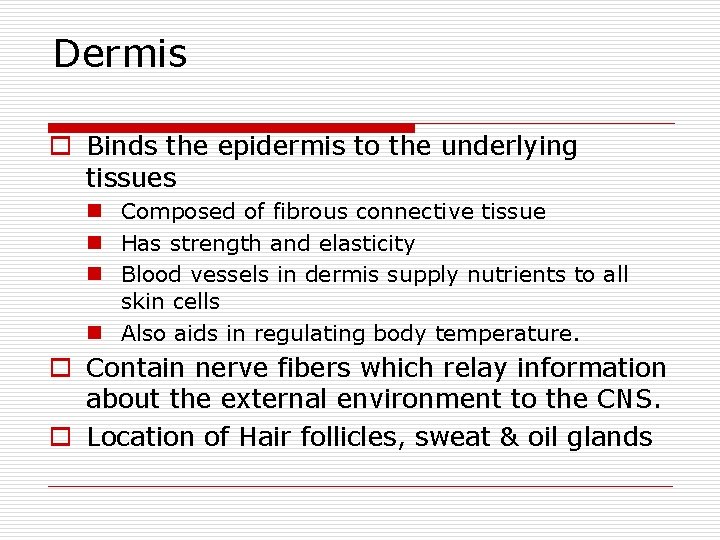
Dermis o Binds the epidermis to the underlying tissues n Composed of fibrous connective tissue n Has strength and elasticity n Blood vessels in dermis supply nutrients to all skin cells n Also aids in regulating body temperature. o Contain nerve fibers which relay information about the external environment to the CNS. o Location of Hair follicles, sweat & oil glands
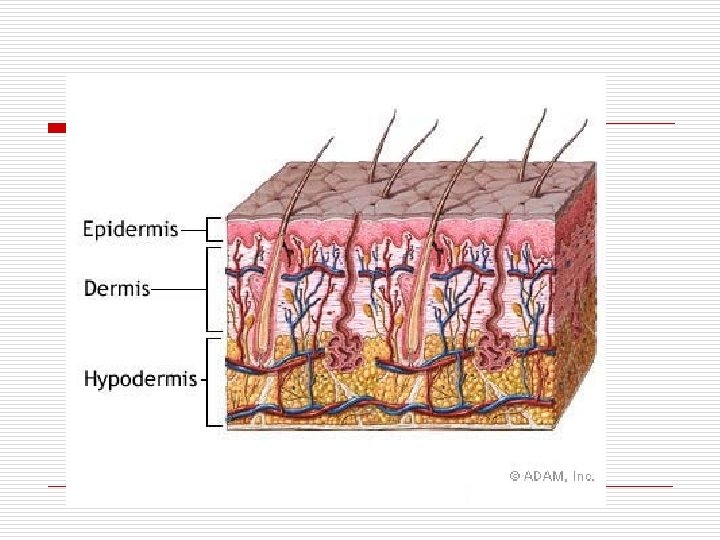

Subcutaneous Layer o Lies beneath the dermis o Consists of loose connective tissue and adipose tissue. o No real boundary between dermis and subcutaneous layer o Helps conserve body heat and has a blood supply
Cells o In an adult, there about 10 trillion cells n Not all are alike n For example, skin cells are flat to help protect against light and damage o Occasionally, in a cell or two, a message about how to divide is changed causing uncontrolled cell division. n Divides faster than the cells around them n Can be benign or malignant
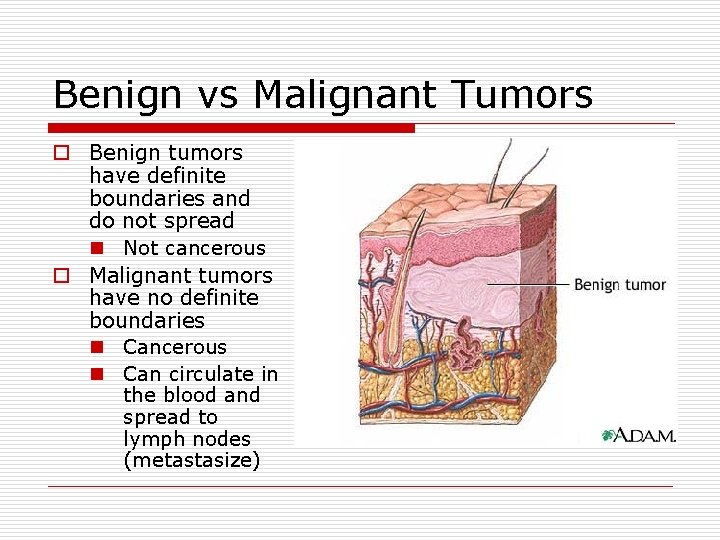
Benign vs Malignant Tumors o Benign tumors have definite boundaries and do not spread n Not cancerous o Malignant tumors have no definite boundaries n Cancerous n Can circulate in the blood and spread to lymph nodes (metastasize)
Types of Skin Cancer o Named by the types of cells they develop in: n Basal Cell Carcinoma n Squamous Cell Carcinoma n Melanoma (least common, most dangerous) o Prevention is the best treatment! n Sunscreen is essential
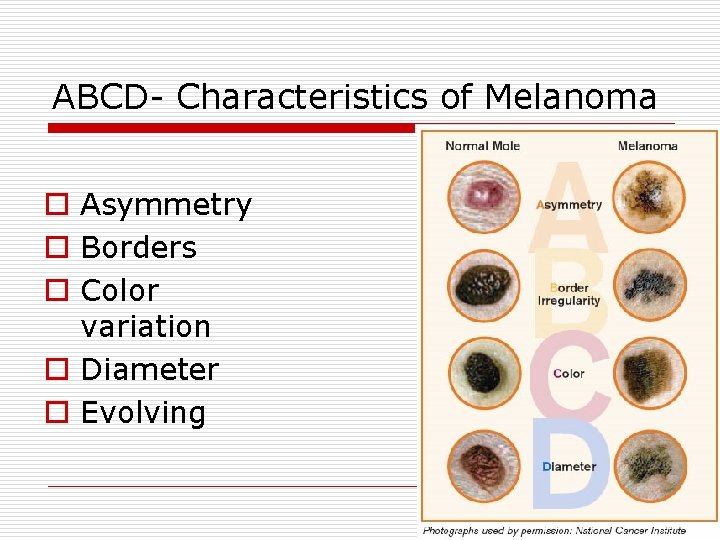
ABCD- Characteristics of Melanoma o Asymmetry o Borders o Color variation o Diameter o Evolving
- Slides: 15