
Integumentary System Basic Skin Functions Protection The skin
Integumentary System

Basic Skin Functions • Protection – The skin insulates and cushions the deeper body organs; protects the body from damage. • Regulation – Capillary network and sweat glands play an important role in regulating heat loss • Synthesis – cholesterol molecules in skin get converted to vitamin D by sunlight
Classification of Body Membranes · Epithelial membranes · Cutaneous membrane · Mucous membrane · Serous membrane · Connective tissue membranes
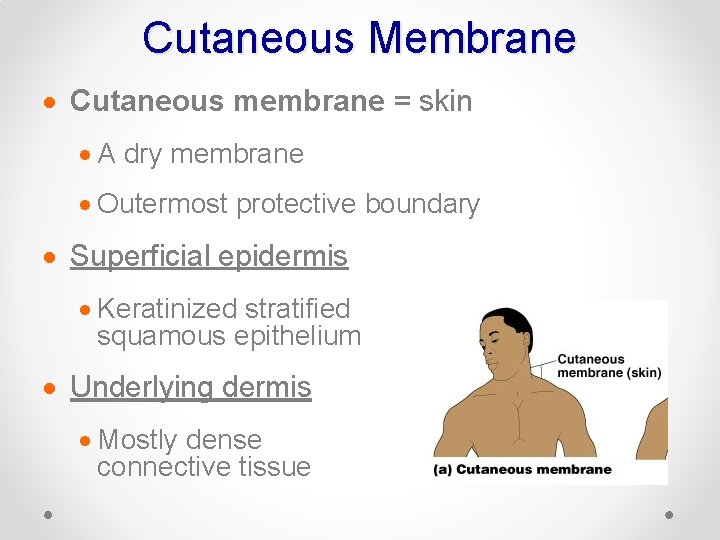
Cutaneous Membrane · Cutaneous membrane = skin · A dry membrane · Outermost protective boundary · Superficial epidermis · Keratinized stratified squamous epithelium · Underlying dermis · Mostly dense connective tissue
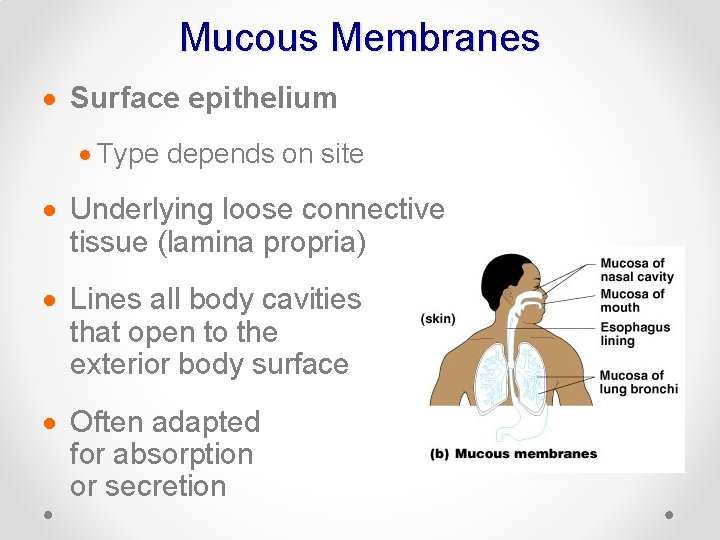
Mucous Membranes · Surface epithelium · Type depends on site · Underlying loose connective tissue (lamina propria) · Lines all body cavities that open to the exterior body surface · Often adapted for absorption or secretion
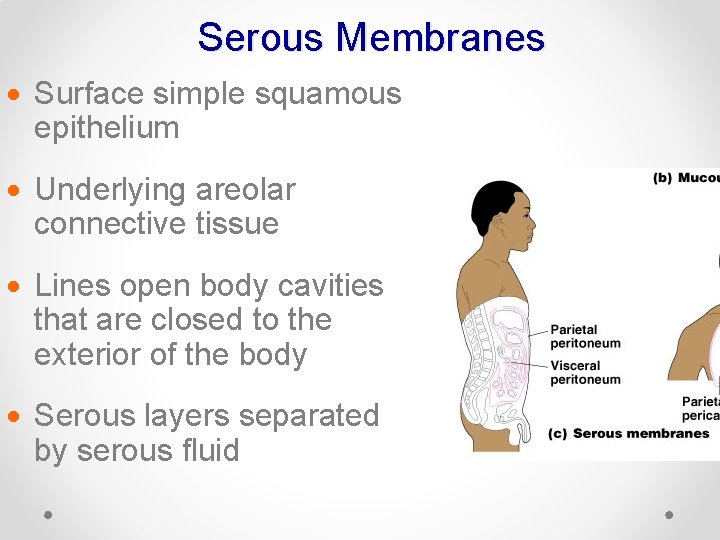
Serous Membranes · Surface simple squamous epithelium · Underlying areolar connective tissue · Lines open body cavities that are closed to the exterior of the body · Serous layers separated by serous fluid
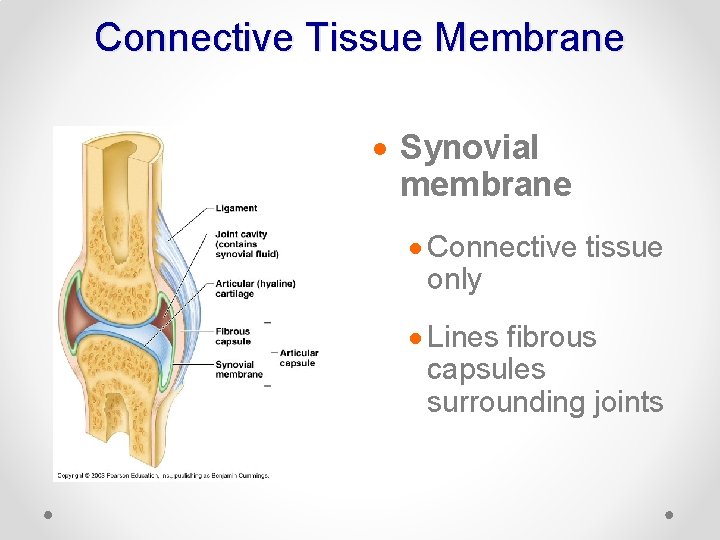
Connective Tissue Membrane · Synovial membrane · Connective tissue only · Lines fibrous capsules surrounding joints
Integumentary System Made up of: · Skin (cutaneous membrane) · Skin derivatives · Sweat glands · Oil glands · Hairs · Nails
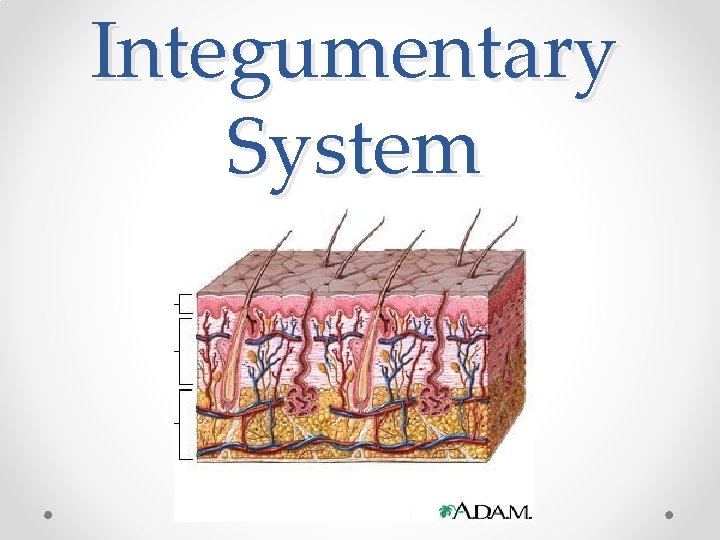
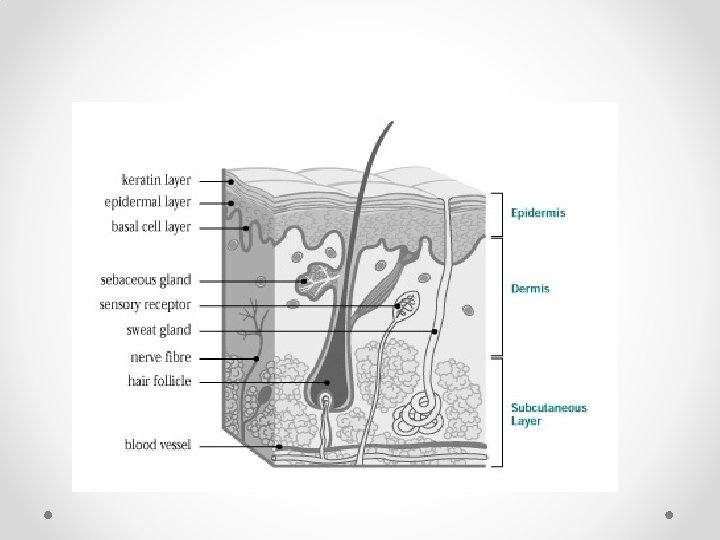
Basic Structure • Epidermis – o stratified squamous epithelium; capable of keratinizing (hard and tough) • Dermis – dense connective tissue • Hypodermis (subcutaneous tissue) – o adipose tissue; anchors skin to underlying organs; serves as shock absorber and insulates deeper tissues from extreme temperature changes.
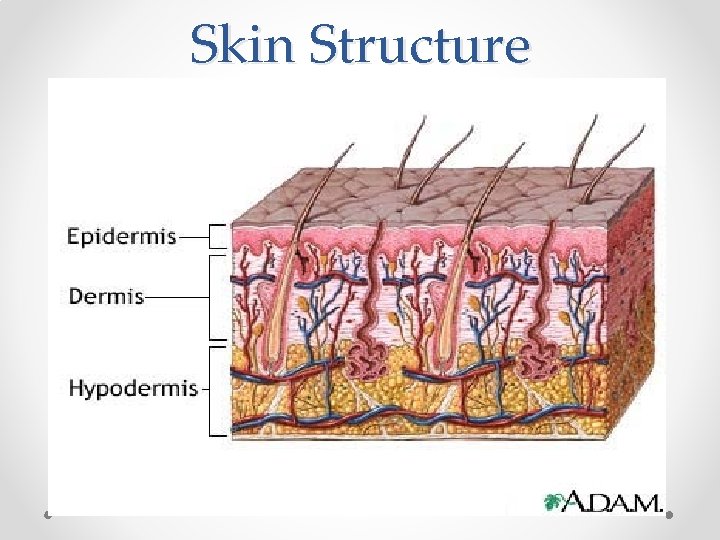
Skin Structure
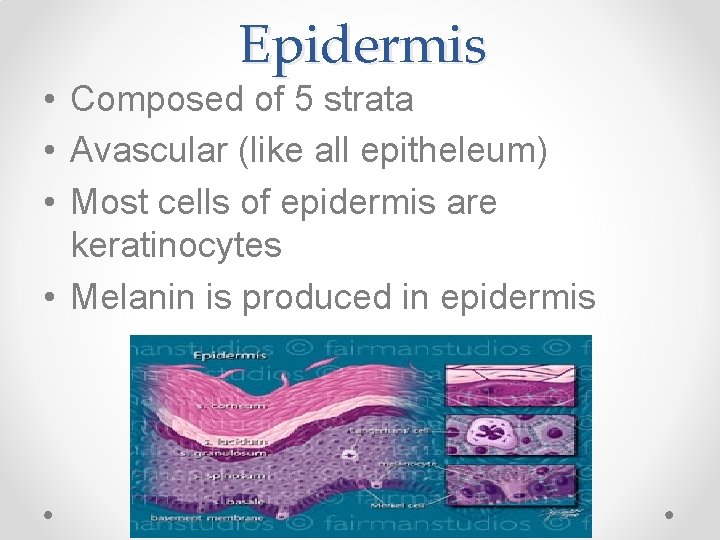
Epidermis • Composed of 5 strata • Avascular (like all epitheleum) • Most cells of epidermis are keratinocytes • Melanin is produced in epidermis
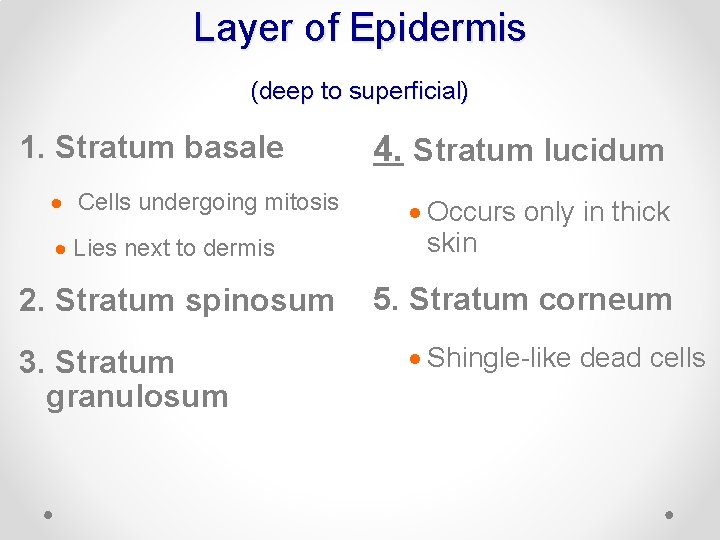
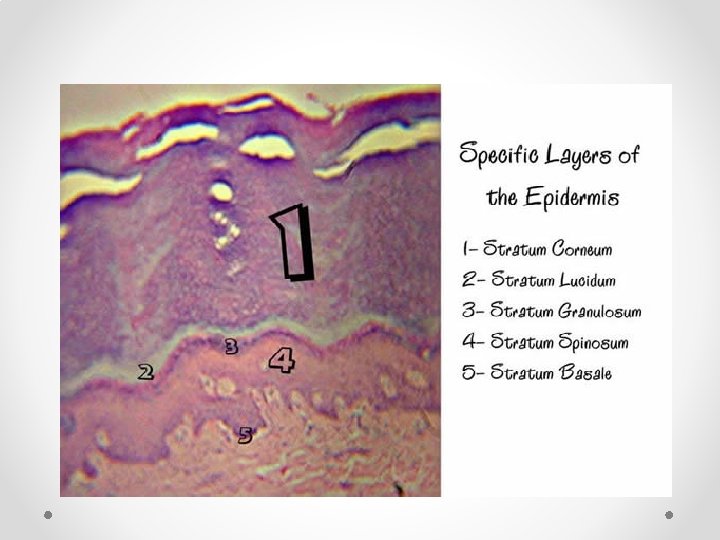
Layer of Epidermis (deep to superficial) 1. Stratum basale · Cells undergoing mitosis · Lies next to dermis 2. Stratum spinosum 3. Stratum granulosum 4. Stratum lucidum · Occurs only in thick skin 5. Stratum corneum · Shingle-like dead cells
Melanin · Pigment (melanin) produced by melanocytes · Color is yellow to brown to black · Melanocytes are mostly in the stratum basale · Amount of melanin produced depends upon genetics and exposure to sunlight
Dermis • Composed of Dense Connective Tissue • Collagen fibers in dermis gives toughness and attract and bind water – keeps skin hydrated • Elastic fibers in dermis – gives elasticity when we are young
Dermis Two Layers: · Papillary layer (superficial) · Projections called dermal papillae (grip and fingerprints) · Pain receptors · Capillary loops · Reticular layer (deep) · Blood vessels · Glands · Nerve receptors
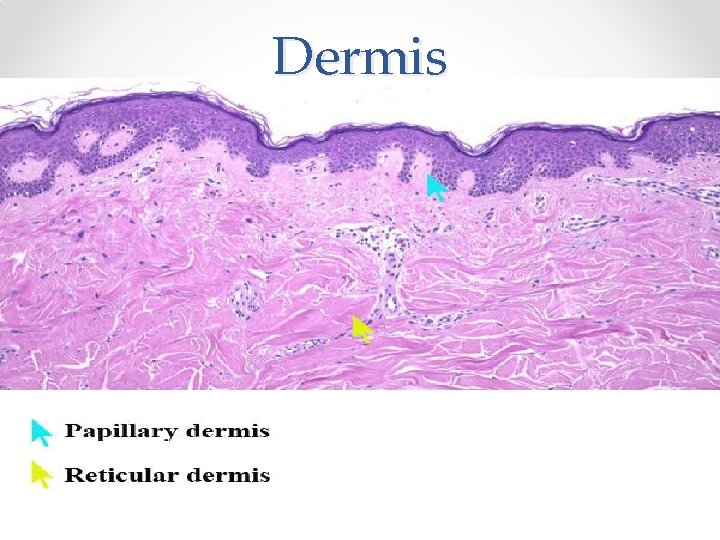
Dermis
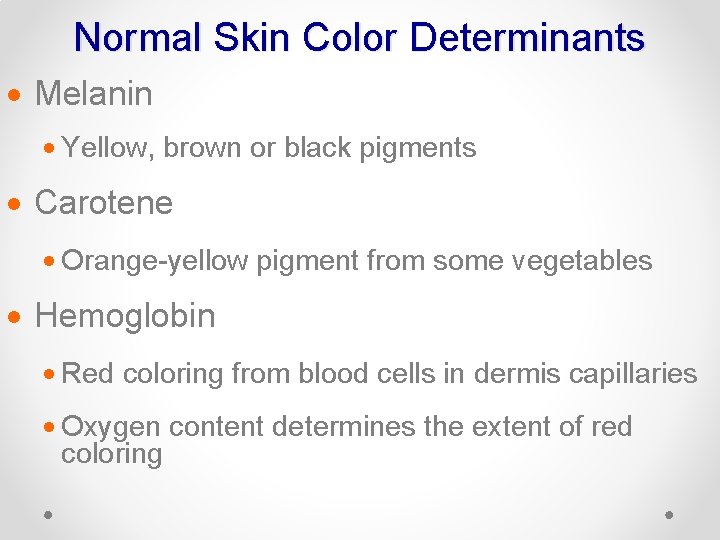
Normal Skin Color Determinants · Melanin · Yellow, brown or black pigments · Carotene · Orange-yellow pigment from some vegetables · Hemoglobin · Red coloring from blood cells in dermis capillaries · Oxygen content determines the extent of red coloring
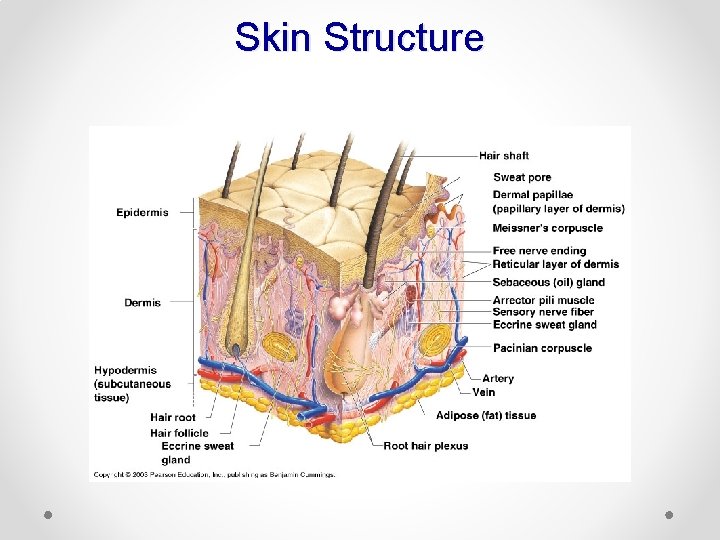
Skin Structure
Appendages of Skin • • Cutaneous glands Hair follicles Nails o. Each of these structures arise from epidermis
Cutaneous Glands • All exocrine glands – release secretions to skin surface via ducts. • Two categories: 1. Sebaceous glands 2. Sweat glands
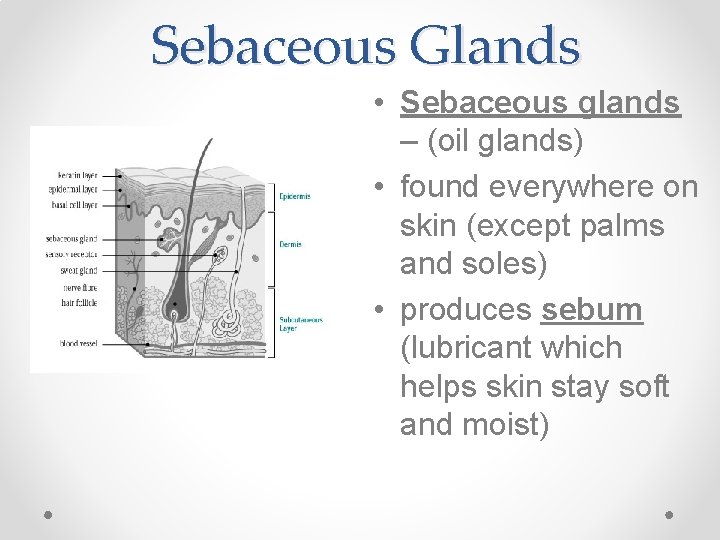
Sebaceous Glands • Sebaceous glands – (oil glands) • found everywhere on skin (except palms and soles) • produces sebum (lubricant which helps skin stay soft and moist)
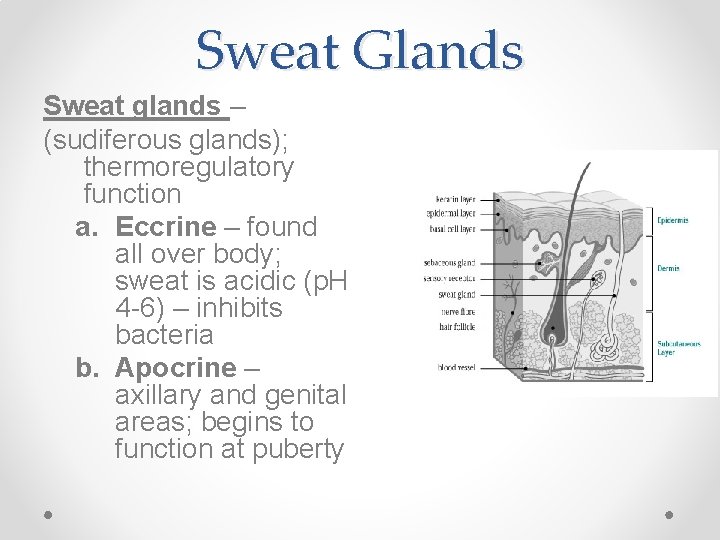
Sweat Glands Sweat glands – (sudiferous glands); thermoregulatory function a. Eccrine – found all over body; sweat is acidic (p. H 4 -6) – inhibits bacteria b. Apocrine – axillary and genital areas; begins to function at puberty
Sweat and Its Function · Composition · Mostly water · Some metabolic waste · Fatty acids and proteins (apocrine only) · Function · Helps dissipate excess heat · Excretes waste products · Acidic nature inhibits bacteria growth · Odor is from associated bacteria
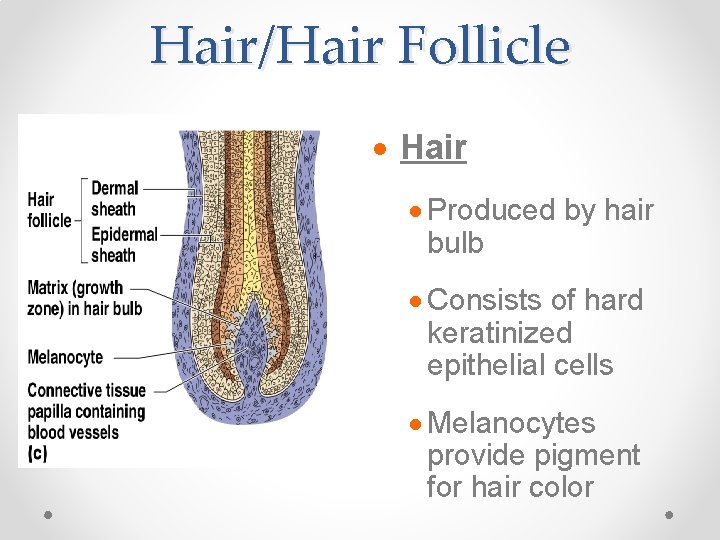
Hair/Hair Follicle · Hair · Produced by hair bulb · Consists of hard keratinized epithelial cells · Melanocytes provide pigment for hair color
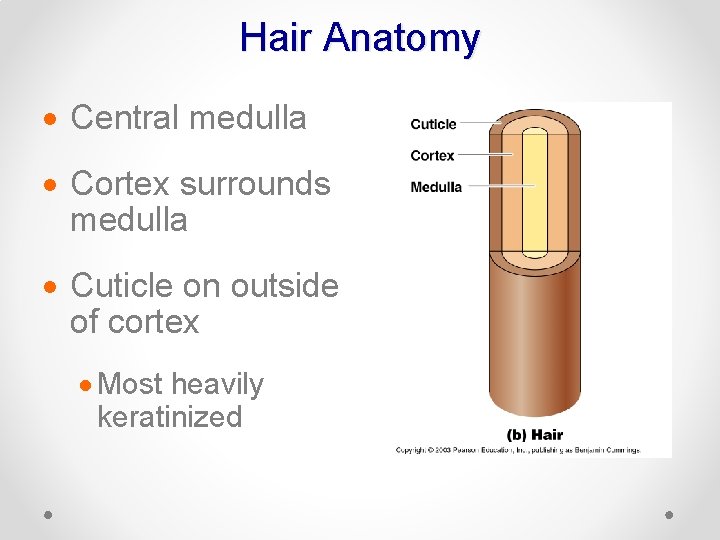
Hair Anatomy · Central medulla · Cortex surrounds medulla · Cuticle on outside of cortex · Most heavily keratinized
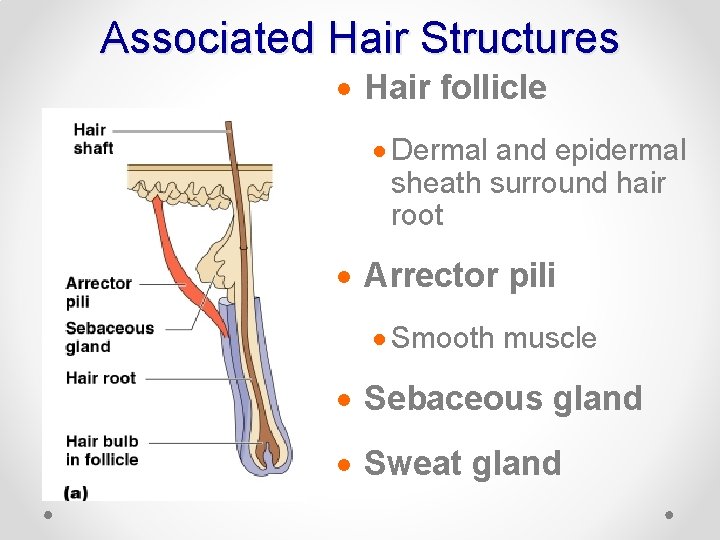
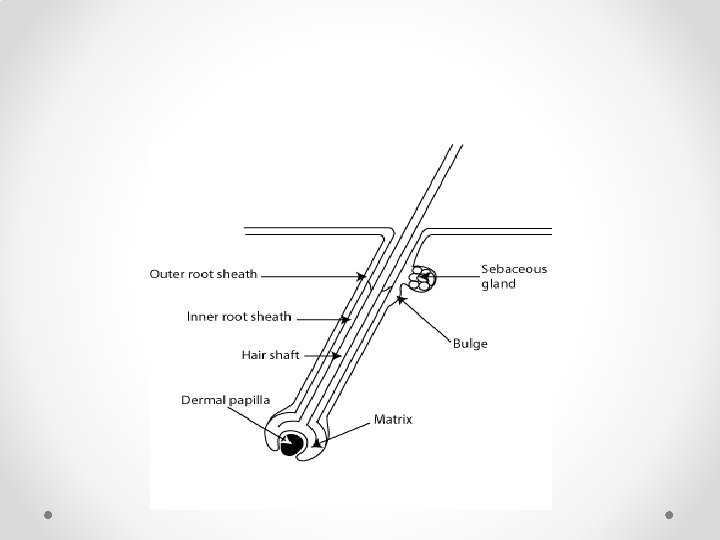
Associated Hair Structures · Hair follicle · Dermal and epidermal sheath surround hair root · Arrector pili · Smooth muscle · Sebaceous gland · Sweat gland
Appendages of the Skin · Nails · Scale-like modifications of the epidermis o Heavily keratinized · Stratum basale extends beneath the nail bed o Responsible for growth · Lack of pigment makes them colorless
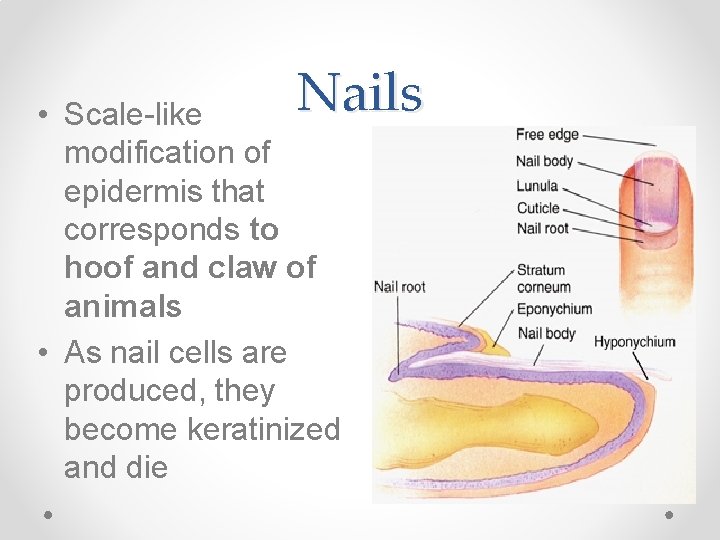
Nails • Scale-like modification of epidermis that corresponds to hoof and claw of animals • As nail cells are produced, they become keratinized and die
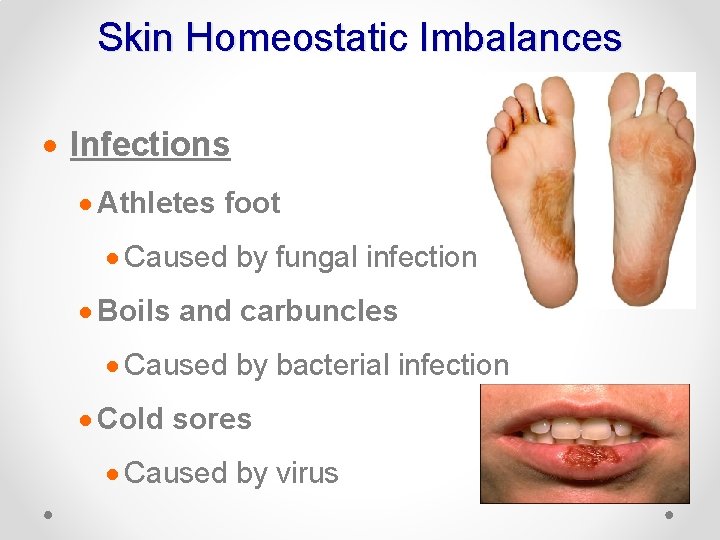
Skin Homeostatic Imbalances · Infections · Athletes foot · Caused by fungal infection · Boils and carbuncles · Caused by bacterial infection · Cold sores · Caused by virus
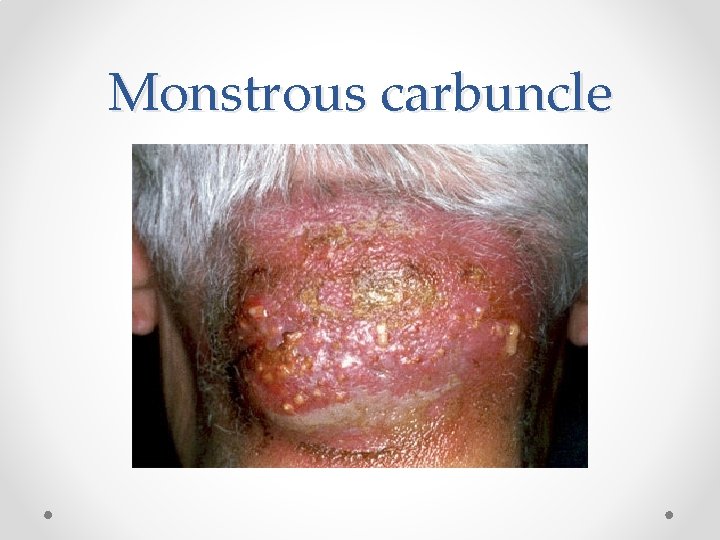
Monstrous carbuncle
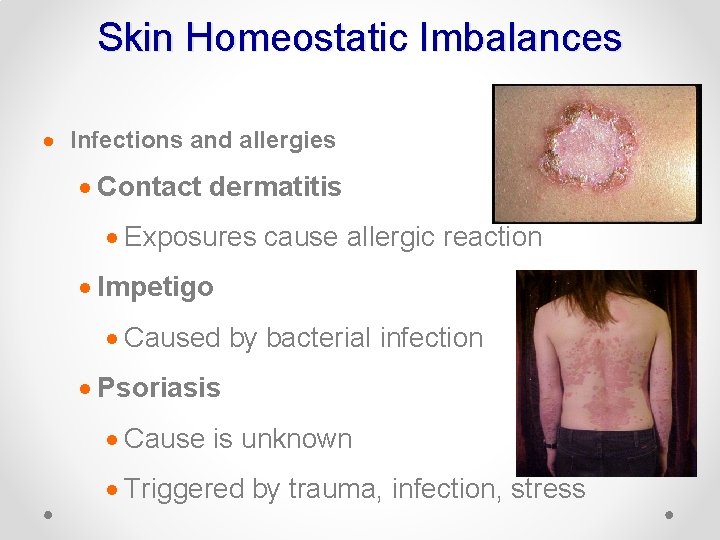
Skin Homeostatic Imbalances · Infections and allergies · Contact dermatitis · Exposures cause allergic reaction · Impetigo · Caused by bacterial infection · Psoriasis · Cause is unknown · Triggered by trauma, infection, stress
Skin Homeostatic Imbalances · Burns · Tissue damage and cell death caused by heat, electricity, UV radiation, or chemicals · Associated dangers · Dehydration · Electrolyte imbalance · Circulatory shock
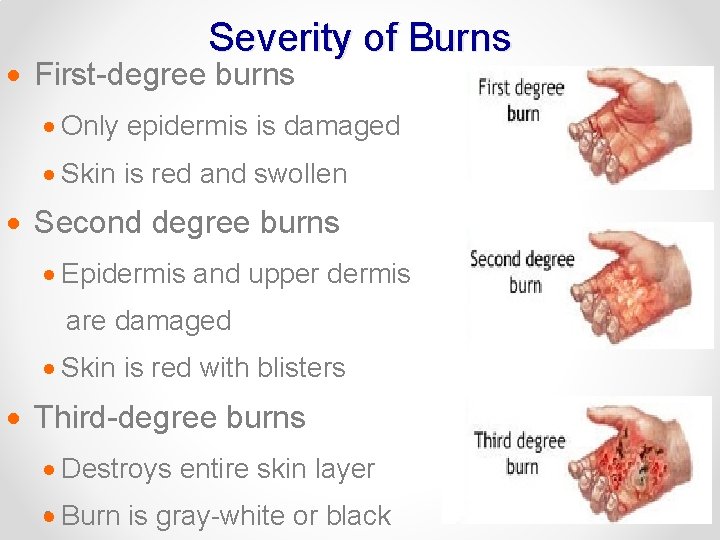
Severity of Burns · First-degree burns · Only epidermis is damaged · Skin is red and swollen · Second degree burns · Epidermis and upper dermis are damaged · Skin is red with blisters · Third-degree burns · Destroys entire skin layer · Burn is gray-white or black
Critical Burns · Burns are considered critical if: · Over 25% of body has second degree burns · Over 10% of the body has third degree burns · There are third degree burns of the face, hands, or feet
Skin Cancer · Cancer – abnormal cell mass · Two types · Benign · Does not spread (encapsulated) · Malignant · Metastasized (moves) to other parts of the body · Skin cancer is the most common type of cancer
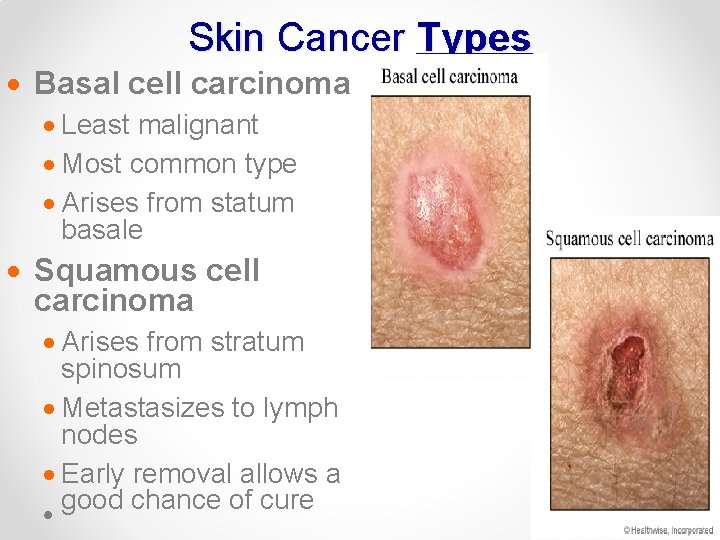
Skin Cancer Types · Basal cell carcinoma · Least malignant · Most common type · Arises from statum basale · Squamous cell carcinoma · Arises from stratum spinosum · Metastasizes to lymph nodes · Early removal allows a good chance of cure
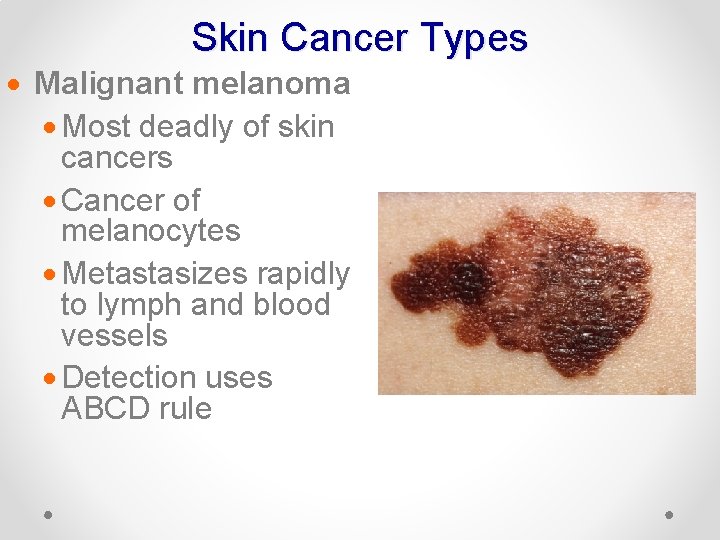
Skin Cancer Types · Malignant melanoma · Most deadly of skin cancers · Cancer of melanocytes · Metastasizes rapidly to lymph and blood vessels · Detection uses ABCD rule
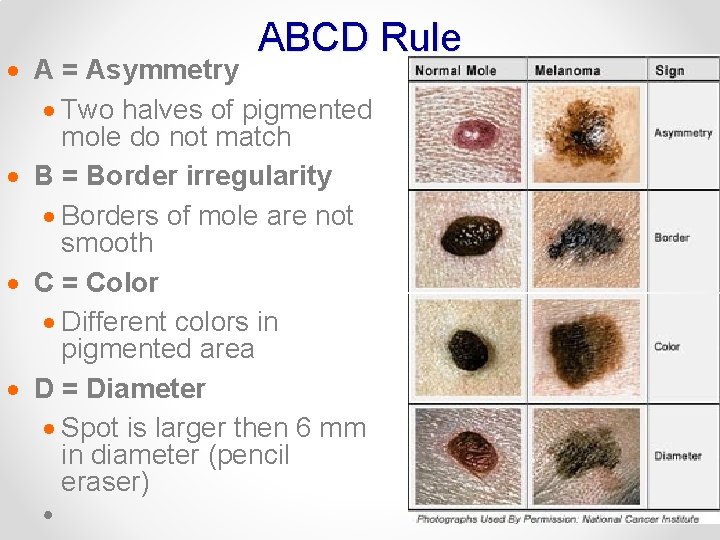
ABCD Rule · A = Asymmetry · Two halves of pigmented mole do not match · B = Border irregularity · Borders of mole are not smooth · C = Color · Different colors in pigmented area · D = Diameter · Spot is larger then 6 mm in diameter (pencil eraser)
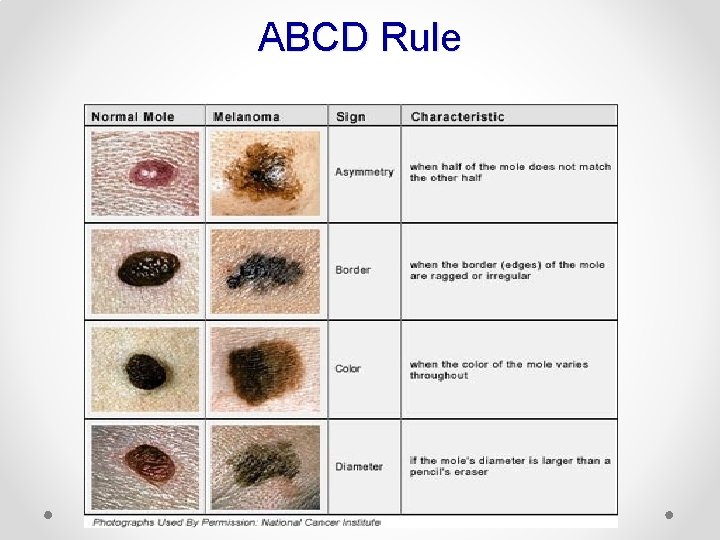
ABCD Rule
- Slides: 42