
INTEGUMENTARY SYSTEM AND SKIN LECTURE 2 Thermoregulation Healing








- Slides: 24
INTEGUMENTARY SYSTEM AND SKIN LECTURE 2 Thermoregulation, Healing and Aging
Regulation of Body Temperature � Slight shifts in temperature can disrupt metabolic rates � Stable temperature is a balance between heat lost and heat produced �Cellular metabolism produces heat ○ Skeletal and cardiac muscle and liver cells are very active � Skin is key to thermoregulation
Rise in Body Temperature � Nervous system signals organs to release heat �Blood is warmed and reaches the brain � Signal sent to dermal blood vessels to relax (vasodilation) �Vessels dilate �Heat from blood escapes to outside � Deeper blood vessels signaled to contract (vasoconstriction) �Blood diverted to surface �Skin reddens � Heart stimulated to beat faster and move more blood out of deeper regions
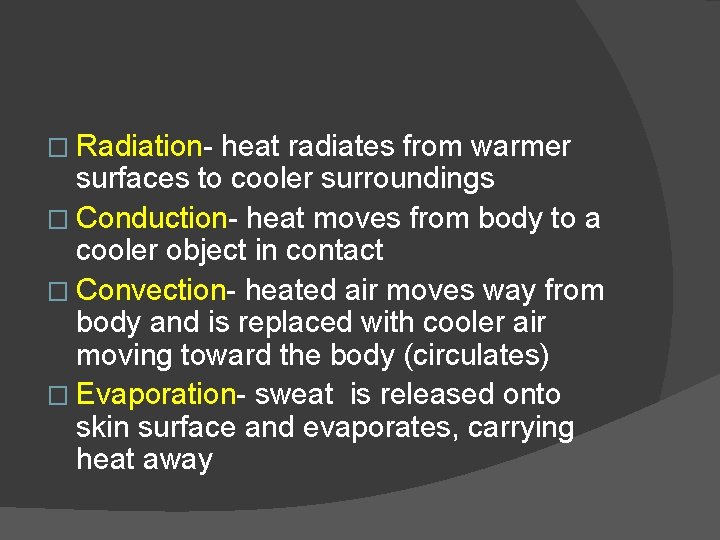
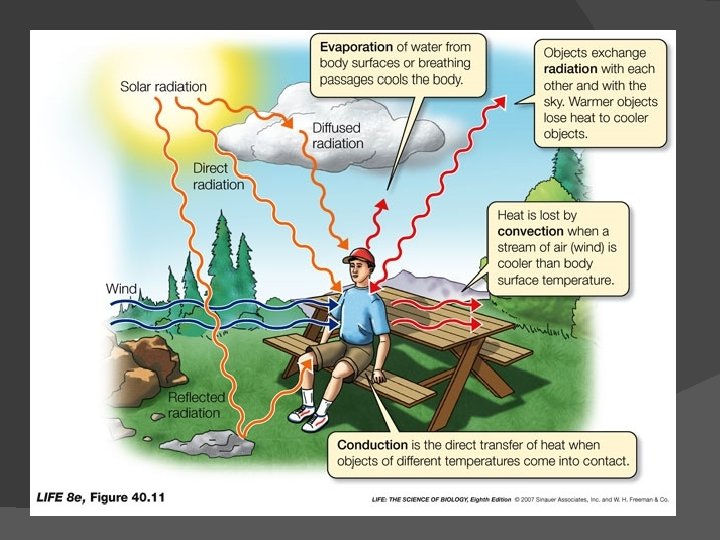
� Radiation- heat radiates from warmer surfaces to cooler surroundings � Conduction- heat moves from body to a cooler object in contact � Convection- heated air moves way from body and is replaced with cooler air moving toward the body (circulates) � Evaporation- sweat is released onto skin surface and evaporates, carrying heat away
Drop in Body Temperature � Walls of dermal blood vessels contract (vasoconstriction) �Flow of heat-carrying blood is decreased �Reduces heat loss by radiation, conduction and convection Sweat glands remain inactive � Muscles cells in skeletal muscles may begin to contract � �Increases cellular respiration and releases heat �Rhythmic, strong contractions cause shivering
Problems in Regulation � High humidity �limits or represses evaporation �Sweating is ineffective � High air temperature �Decreases heat loss by radiation �Can also cause heat gain from surroundings � Hyperthermia- body temperature exceeds 106 F �Weak, dizzy, nauseous, headache �Rapid, irregular pulse �Dry, hot, flushed skin
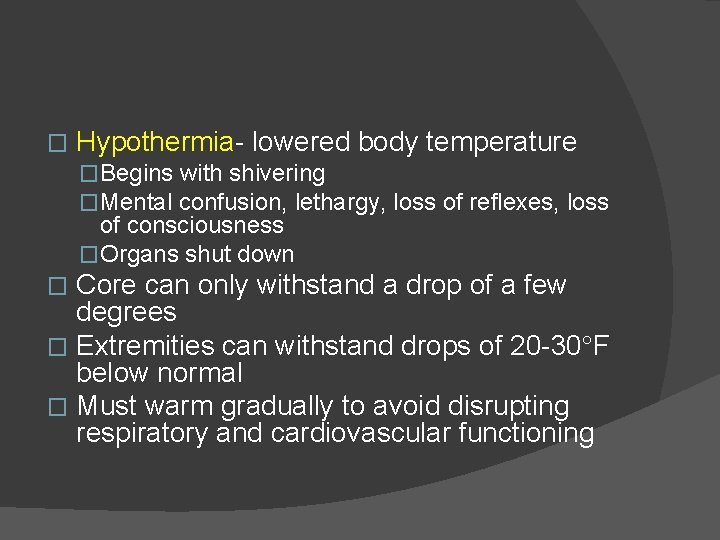
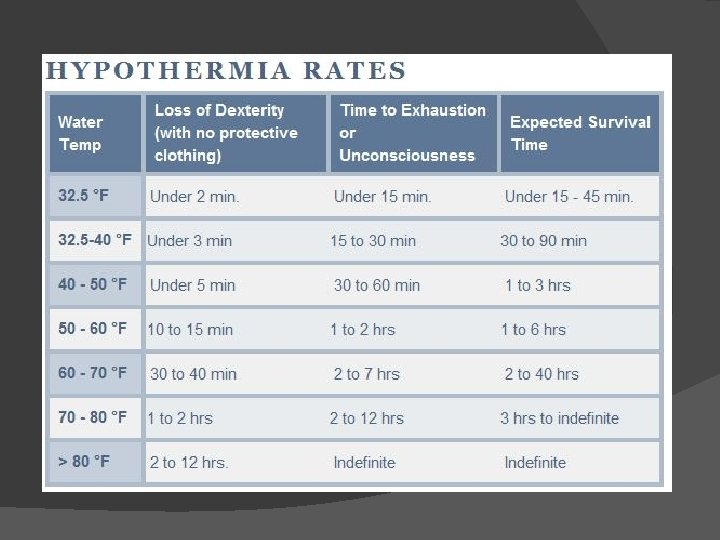
� Hypothermia- lowered body temperature �Begins with shivering �Mental confusion, lethargy, loss of reflexes, loss of consciousness �Organs shut down Core can only withstand a drop of a few degrees � Extremities can withstand drops of 20 -30 F below normal � Must warm gradually to avoid disrupting respiratory and cardiovascular functioning �
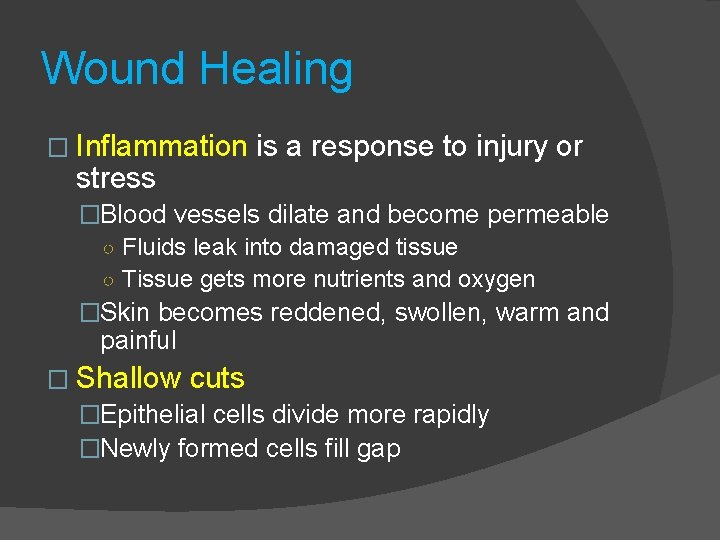
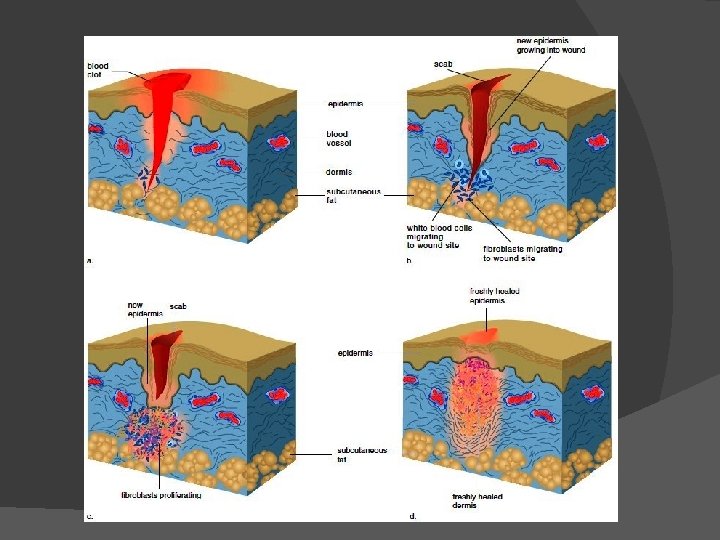
Wound Healing � Inflammation stress is a response to injury or �Blood vessels dilate and become permeable ○ Fluids leak into damaged tissue ○ Tissue gets more nutrients and oxygen �Skin becomes reddened, swollen, warm and painful � Shallow cuts �Epithelial cells divide more rapidly �Newly formed cells fill gap
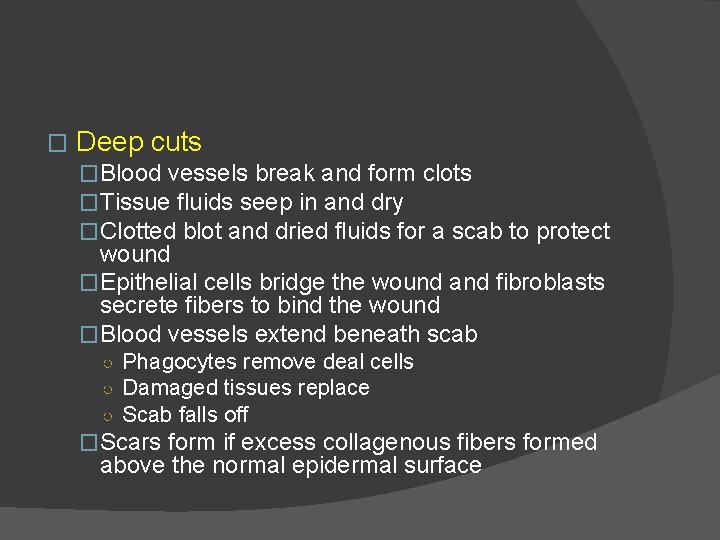
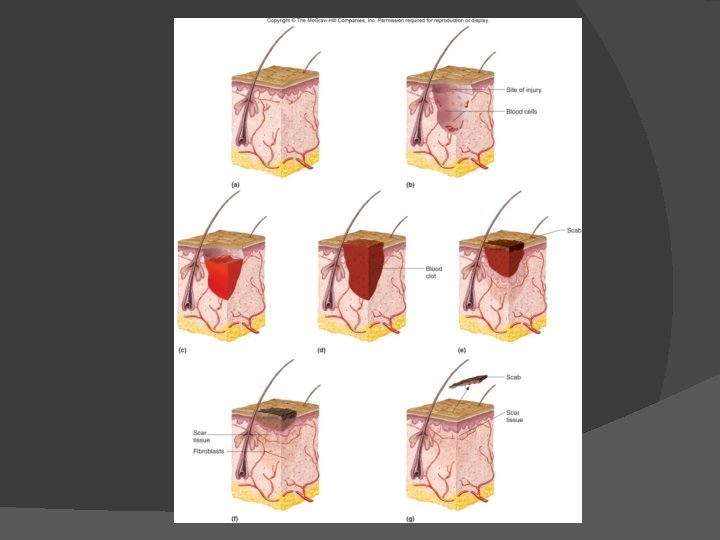
� Deep cuts �Blood vessels break and form clots �Tissue fluids seep in and dry �Clotted blot and dried fluids for a scab to protect wound �Epithelial cells bridge the wound and fibroblasts secrete fibers to bind the wound �Blood vessels extend beneath scab ○ Phagocytes remove deal cells ○ Damaged tissues replace ○ Scab falls off �Scars form if excess collagenous fibers formed above the normal epidermal surface
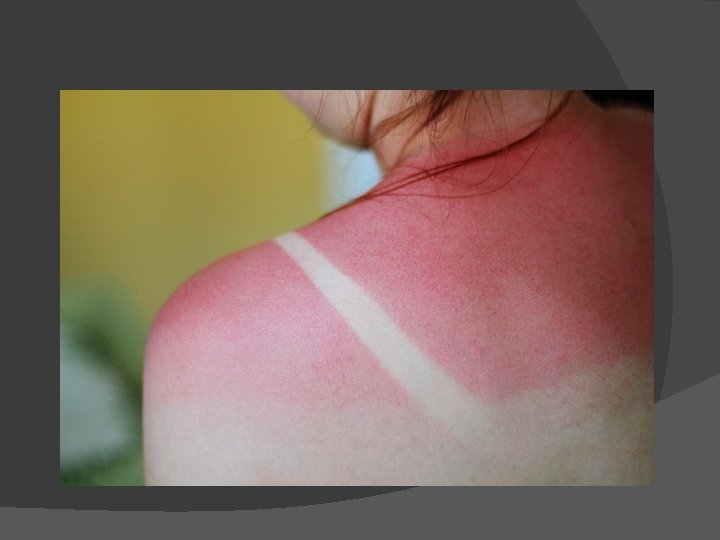
Burns � 1 st degree (superficial partial-thickness) burn �Only affects epidermis �Skin becomes warm and reddened �Mild edema �Tender �Surface layer may peel �No scarring
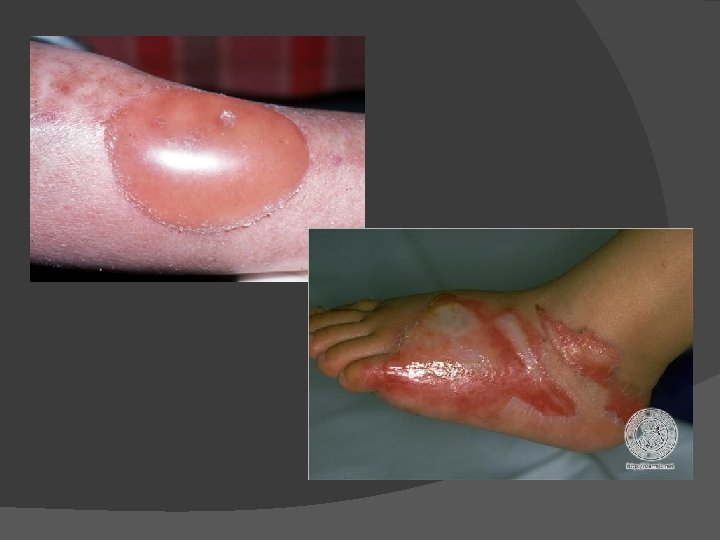
� 2 nd degree (deep partial-thickness) burn �Destroys epidermis and some underlying dermis �Fluid accumulates beneath epidermal cells to form blisters �Areas becomes moist and firm �Color varies from dark red to waxy white �Exposure to hot objects, liquids, flames, clothes �Stem cells divide and differentiate during healing �Low risk of scarring
� 3 rd degree (full-thickness) burn �Destroys epidermis, dermis and accessory structures of skin �Skin is dry and leathery �Red to black to white in color �Results from immersion in hot liquids, prolonged exposure to hot objects, flames or chemicals �Spontaneous healing of epithelial cells inward from burn margins �May need grafting or temporary membrane covers �Extensive scarring
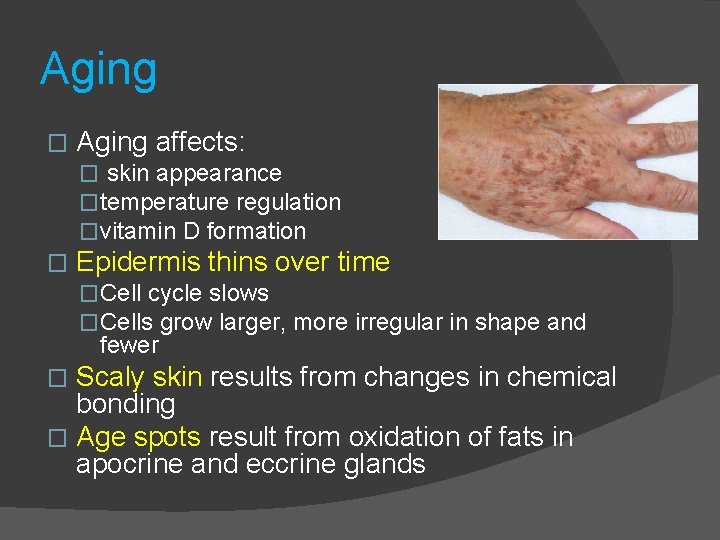
Aging � Aging affects: � skin appearance �temperature regulation �vitamin D formation � Epidermis thins over time �Cell cycle slows �Cells grow larger, more irregular in shape and fewer Scaly skin results from changes in chemical bonding � Age spots result from oxidation of fats in apocrine and eccrine glands �
� Wrinkling and sagging of skin �Dermis reduces and shrinks �Fat loss from subcutaneous layer � Wound healing is delayed �Fewer fibroblasts � Drier skin �Decreased oil from sebaceous glands
� Whitening/graying of hair �Slowed melanin production � Thinning hair �Slower hair growth �Decrease in hair follicles � Hard, dull nails �Decreased blood supply to nail bed � Decrease in pain and pressure sensitivity
� Decreased ability to control temperature � Number of sweat glands decreases � Ability to shiver declines � Blood vessels in deeper layers decrease � Decreased ability to direct blood flow to interior � Paler complexion � Fewer vessels in skin � Pressure Sores � Less blood vessels, different distribution � Decreased circulation � Decreased absorption of calcium � Less vitamin D production