
Integument System Skin Integument Consists of three major
- Slides: 47
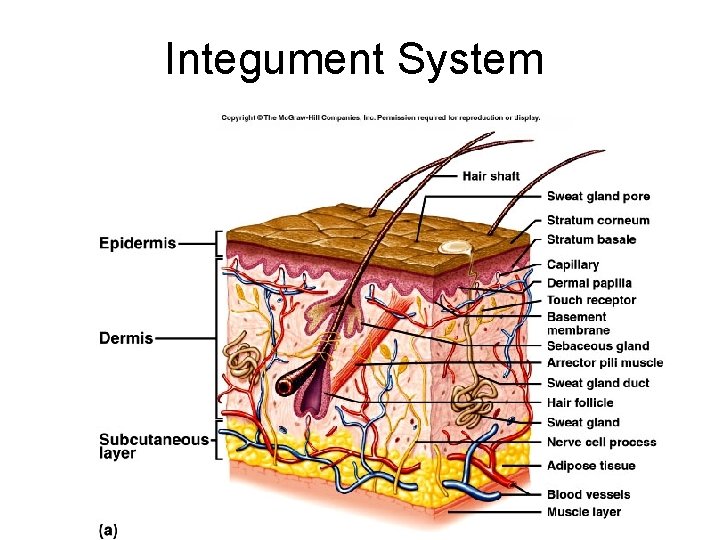
Integument System
Skin (Integument) • Consists of three major regions 1. Epidermis—superficial region 2. Dermis—middle region 3. Hypodermis (superficial fascia)—deepest region • • Subcutaneous layer deep to skin (not technically part of skin) Mostly adipose tissue
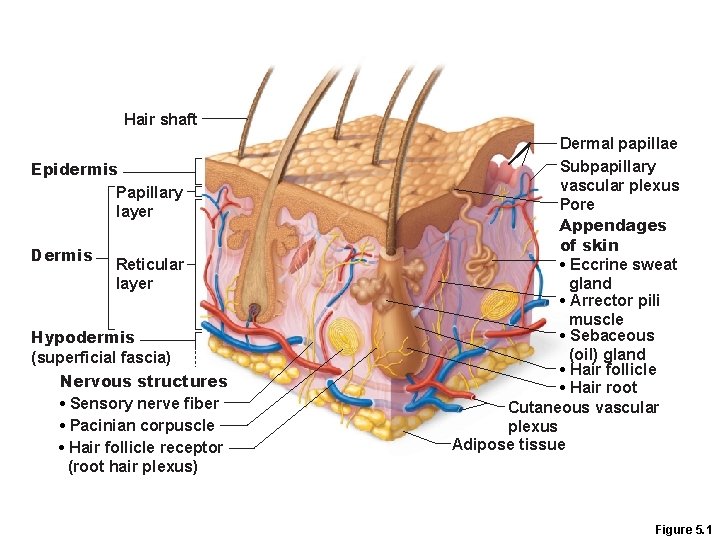
Hair shaft Epidermis Papillary layer Dermis Reticular layer Hypodermis (superficial fascia) Nervous structures • Sensory nerve fiber • Pacinian corpuscle • Hair follicle receptor (root hair plexus) Dermal papillae Subpapillary vascular plexus Pore Appendages of skin • Eccrine sweat gland • Arrector pili muscle • Sebaceous (oil) gland • Hair follicle • Hair root Cutaneous vascular plexus Adipose tissue Figure 5. 1
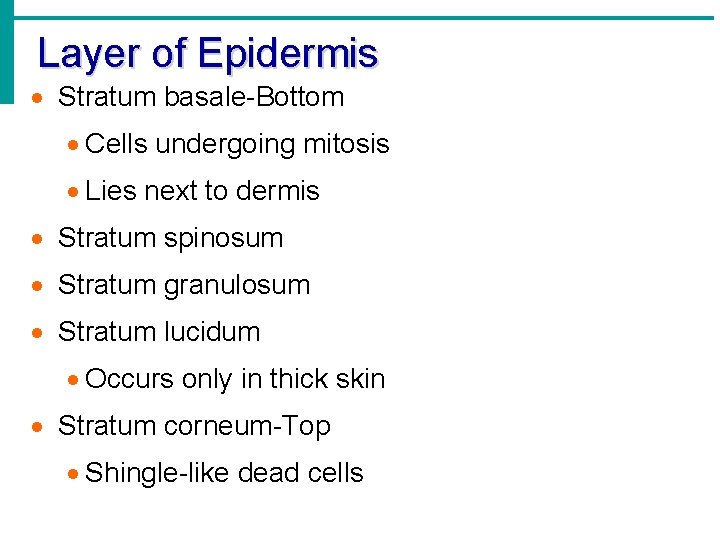
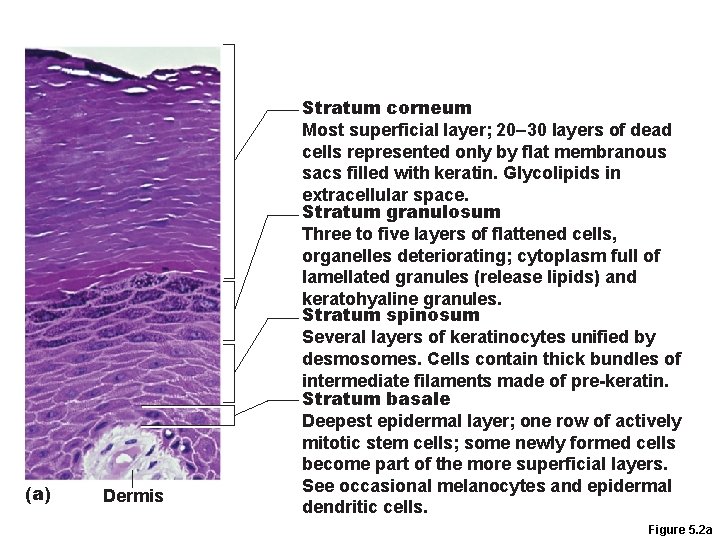
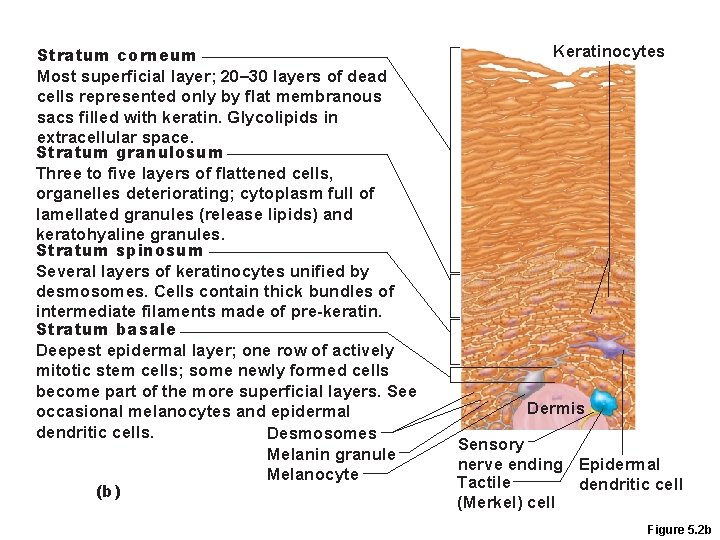
Layer of Epidermis · Stratum basale-Bottom · Cells undergoing mitosis · Lies next to dermis · Stratum spinosum · Stratum granulosum · Stratum lucidum · Occurs only in thick skin · Stratum corneum-Top · Shingle-like dead cells
(a) Dermis Stratum corneum Most superficial layer; 20– 30 layers of dead cells represented only by flat membranous sacs filled with keratin. Glycolipids in extracellular space. Stratum granulosum Three to five layers of flattened cells, organelles deteriorating; cytoplasm full of lamellated granules (release lipids) and keratohyaline granules. Stratum spinosum Several layers of keratinocytes unified by desmosomes. Cells contain thick bundles of intermediate filaments made of pre-keratin. Stratum basale Deepest epidermal layer; one row of actively mitotic stem cells; some newly formed cells become part of the more superficial layers. See occasional melanocytes and epidermal dendritic cells. Figure 5. 2 a
Stratum corneum Most superficial layer; 20– 30 layers of dead cells represented only by flat membranous sacs filled with keratin. Glycolipids in extracellular space. Stratum granulosum Three to five layers of flattened cells, organelles deteriorating; cytoplasm full of lamellated granules (release lipids) and keratohyaline granules. Stratum spinosum Several layers of keratinocytes unified by desmosomes. Cells contain thick bundles of intermediate filaments made of pre-keratin. Stratum basale Deepest epidermal layer; one row of actively mitotic stem cells; some newly formed cells become part of the more superficial layers. See occasional melanocytes and epidermal dendritic cells. Desmosomes Melanin granule Melanocyte (b) Keratinocytes Dermis Sensory nerve ending Epidermal Tactile dendritic cell (Merkel) cell Figure 5. 2 b
Dermis • Strong, flexible connective tissue • Cells include fibroblasts, macrophages, and occasionally mast cells and white blood cells • Two layers: – Papillary – Reticular
Layers of the Dermis: Papillary Layer • Papillary layer – Areolar connective tissue with collagen and elastic fibers and blood vessels – Dermal papillae contain: • Capillary loops • Meissner’s corpuscles • Free nerve endings
Layers of the Dermis: Reticular Layer • Reticular layer – ~80% of the thickness of dermis – Collagen fibers- strength and resiliency – Elastic fibers- provide stretch-recoil properties
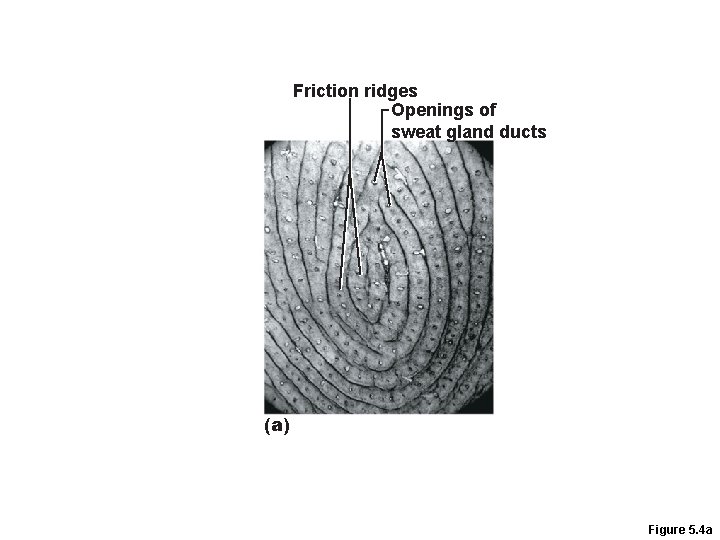
Skin Markings: Friction Ridges • Epidermal ridges lie atop deeper dermal papillary ridges to form friction ridges of fingerprints
Friction ridges Openings of sweat gland ducts (a) Figure 5. 4 a
Skin Color • Three pigments contribute to skin color: 1. Melanin • Yellow to reddish-brown to black, responsible for dark skin colors – Produced in melanocytes – Freckles and pigmented moles » Local accumulations of melanin 2. Carotene • Yellow to orange, most obvious in the palms and soles 3. Hemoglobin • Responsible for the pinkish hue of skin
Appendages of the Skin • Derivatives of the epidermis – Sweat glands – Oil glands – Hairs and hair follicles – Nails
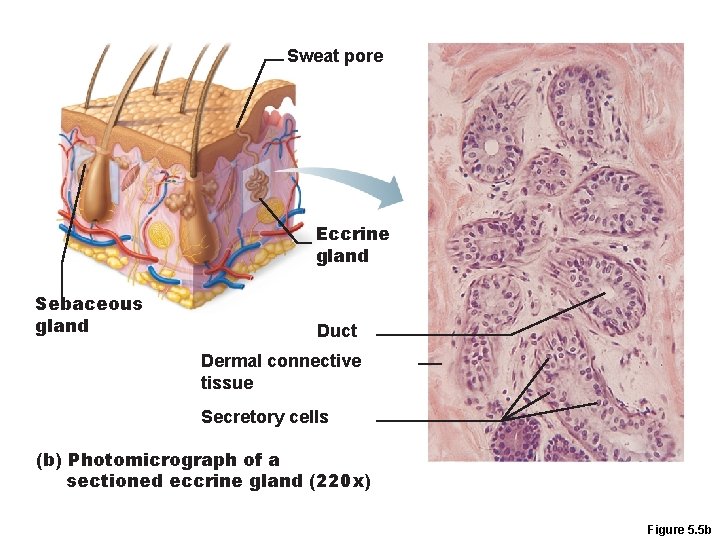
Sweat Glands • Two main types of sweat glands 1. Eccrine (merocrine) sweat glands—abundant on palms, soles, and forehead • • Sweat: 99% water, Na. Cl, vitamin C, antibodies, dermcidin, metabolic wastes Function in thermoregulation
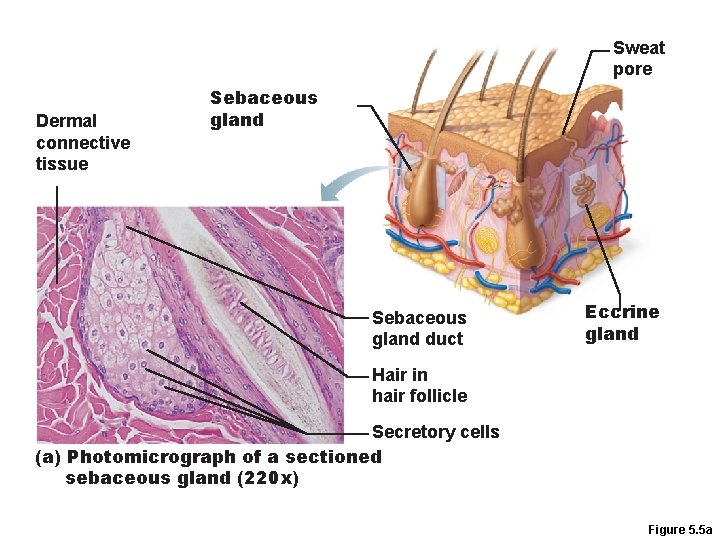
Sweat pore Eccrine gland Sebaceous gland Duct Dermal connective tissue Secretory cells (b) Photomicrograph of a sectioned eccrine gland (220 x) Figure 5. 5 b
Sweat Glands 2. Apocrine sweat glands—confined to axillary and anogenital areas • Sebum: sweat + fatty substances and proteins • Ducts connect to hair follicles • Functional from puberty onward (as sexual scent glands? ) – Specialized apocrine glands • Ceruminous glands—in external ear canal; secrete cerumen • Mammary glands
Sebaceous (Oil) Glands • • Widely distributed Most develop from hair follicles Become active at puberty Sebum – Oily holocrine secretion – Bactericidal – Softens hair and skin
Sweat pore Dermal connective tissue Sebaceous gland duct Eccrine gland Hair in hair follicle Secretory cells (a) Photomicrograph of a sectioned sebaceous gland (220 x) Figure 5. 5 a
Hair • Functions – Alerting the body to presence of insects on the skin – Guarding the scalp against physical trauma, heat loss, and sunlight – Mate attraction • Distribution – Entire surface except palms, soles, lips, nipples, and portions of external genitalia
Hair • Consists of dead keratinized cells • Contains hard keratin; more durable than soft keratin of skin • Hair pigments: melanins (yellow, rust brown, black) – Gray/white hair: decreased melanin production, increased air bubbles in shaft
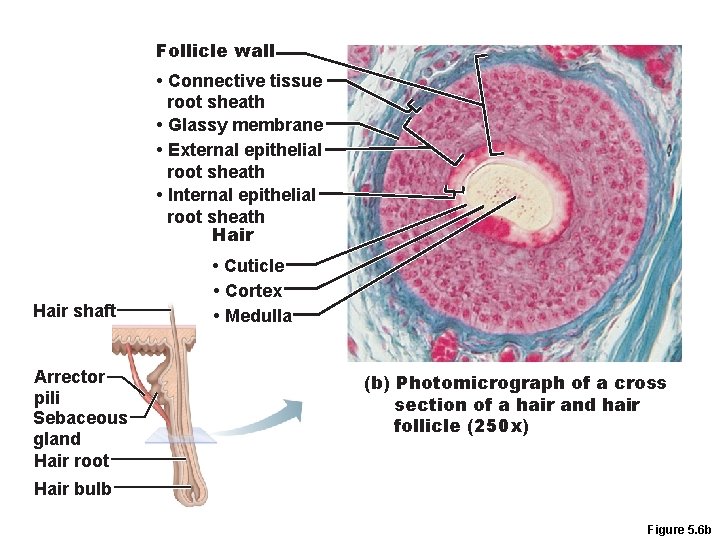
Follicle wall • Connective tissue root sheath • Glassy membrane • External epithelial root sheath • Internal epithelial root sheath Hair shaft Arrector pili Sebaceous gland Hair root • Cuticle • Cortex • Medulla (b) Photomicrograph of a cross section of a hair and hair follicle (250 x) Hair bulb Figure 5. 6 b
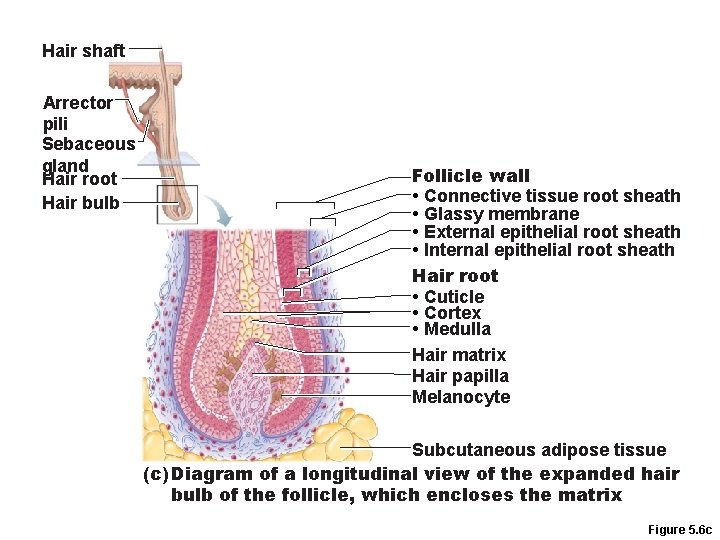
Hair Follicle • Extends from the epidermal surface into dermis • Two-layered wall: outer connective tissue root sheath, inner epithelial root sheath • Hair bulb: expanded deep end
Hair Follicle • Hair follicle receptor (root hair plexus) – Sensory nerve endings around each hair bulb • Stimulated by bending a hair • Arrector pili – Smooth muscle attached to follicle – Responsible for “goose bumps” – Vestigial
Hair shaft Arrector pili Sebaceous gland Hair root Hair bulb Follicle wall • Connective tissue root sheath • Glassy membrane • External epithelial root sheath • Internal epithelial root sheath Hair root • Cuticle • Cortex • Medulla Hair matrix Hair papilla Melanocyte Subcutaneous adipose tissue (c) Diagram of a longitudinal view of the expanded hair bulb of the follicle, which encloses the matrix Figure 5. 6 c
Hair Thinning and Baldness • Alopecia—hair thinning in both sexes after age 40 • True (frank) baldness – Genetically determined and sex-influenced condition – Male pattern baldness is caused by follicular response to DHT
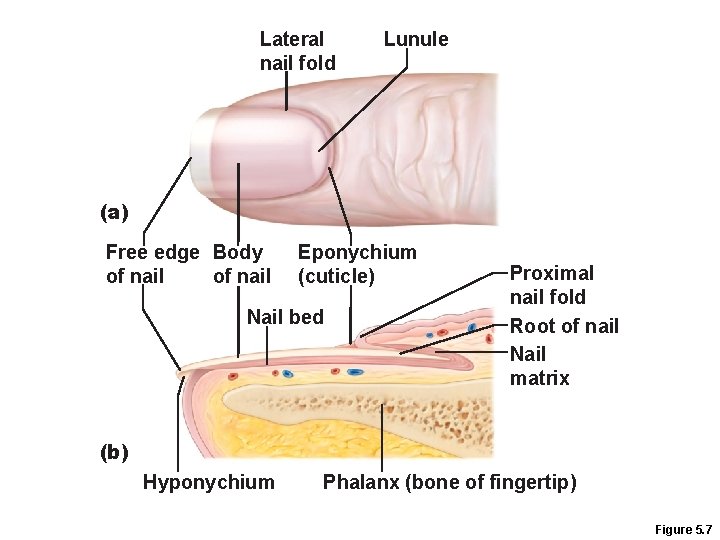
Structure of a Nail • Scalelike modification of the epidermis on the distal, dorsal surface of fingers and toes
Lateral nail fold Lunule (a) Free edge Body of nail Eponychium (cuticle) Nail bed Proximal nail fold Root of nail Nail matrix (b) Hyponychium Phalanx (bone of fingertip) Figure 5. 7
Functions of the Integumentary System 1. Protection—three types of barriers – Chemical – Physical/mechanical barriers • Keratin and glycolipids block most water and watersoluble substances • Limited penetration of skin by lipid-soluble substances, plant oleoresins (e. g. , poison ivy), organic solvents, salts of heavy metals, some drugs – Biological barriers • Dendritic cells, macrophages, and DNA
Functions of the Integumentary System 2. Body temperature regulation – ~500 ml/day of routine insensible perspiration (at normal body temperature) – At elevated temperature, dilation of dermal vessels and increased sweat gland activity (sensible perspirations) cool the body 3. Cutaneous sensations – Temperature, touch, and pain
Functions of the Integumentary System 4. Metabolic functions – Synthesis of vitamin D precursor and collagenase – Chemical conversion of carcinogens and some hormones 5. Blood reservoir—up to 5% of body’s blood volume 6. Excretion—nitrogenous wastes and salt in sweat
Skin Cancer • Most skin tumors are benign (do not metastasize) • Risk factors – Overexposure to UV radiation – Frequent irritation of the skin • Some skin lotions contain enzymes in liposomes that can fix damaged DNA
Skin Cancer • Three major types: – Basal cell carcinoma • Least malignant, most common – Squamous cell carcinoma • Second most common – Melanoma • Most dangerous
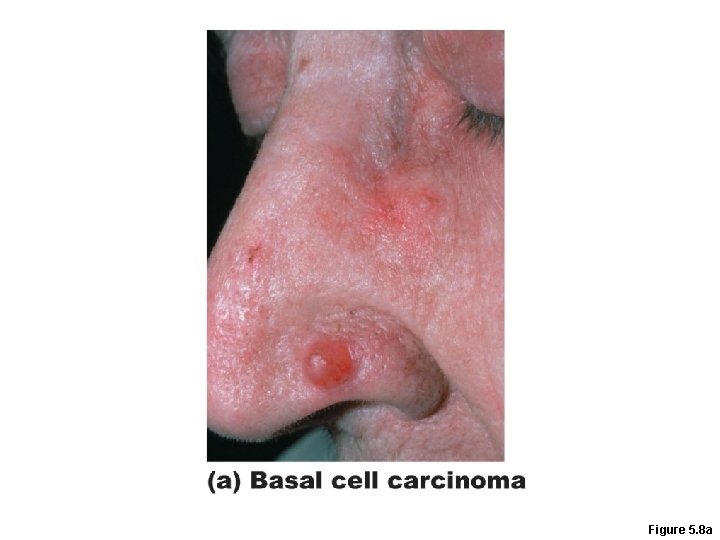
Basal Cell Carcinoma • Stratum basale cells proliferate and slowly invade dermis and hypodermis • Cured by surgical excision in 99% of cases
Figure 5. 8 a
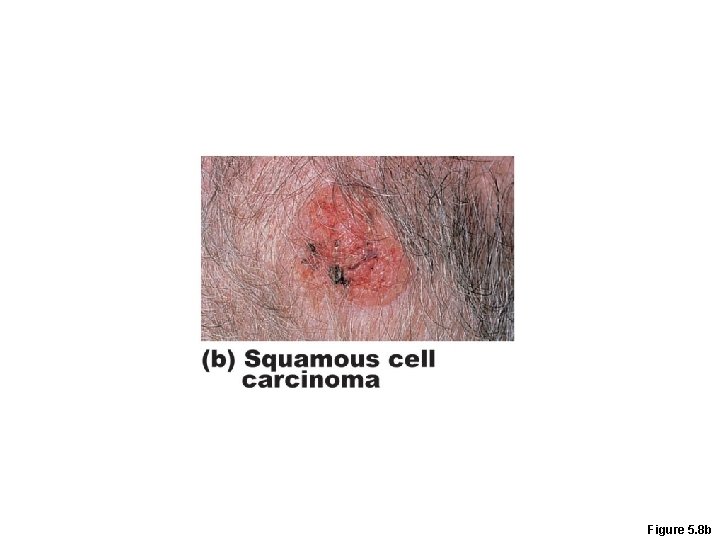
Squamous Cell Carcinoma • Involves keratinocytes of stratum spinosum • Most common on scalp, ears, lower lip, and hands • Good prognosis if treated by radiation therapy or removed surgically
Figure 5. 8 b
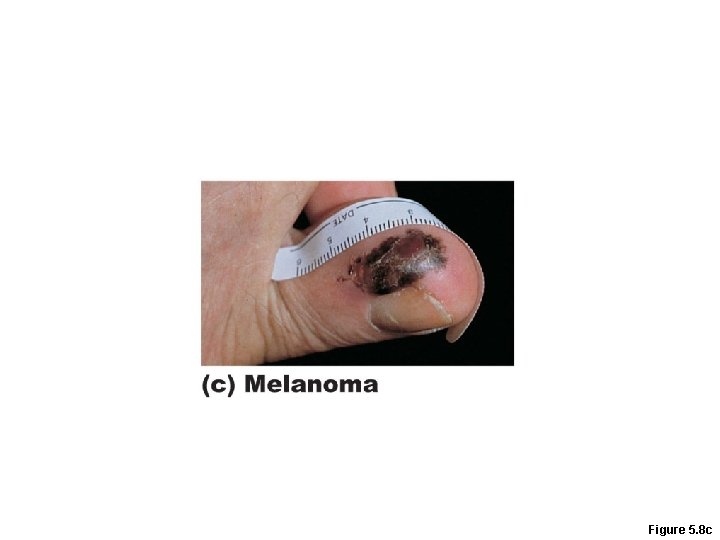
Melanoma • Involves melanocytes • Highly metastatic and resistant to chemotherapy • Treated by wide surgical excision accompanied by immunotherapy
Melanoma • Characteristics (ABCD rule) A: Asymmetry; the two sides of the pigmented area do not match B: Border exhibits indentations C: Color is black, brown, tan, and sometimes red or blue D: Diameter is larger than 6 mm (size of a pencil eraser)
Figure 5. 8 c
Burns • Heat, electricity, radiation, certain chemicals Burn (tissue damage, denatured protein, cell death) • Immediate threat: – Dehydration and electrolyte imbalance, leading to renal shutdown and circulatory shock
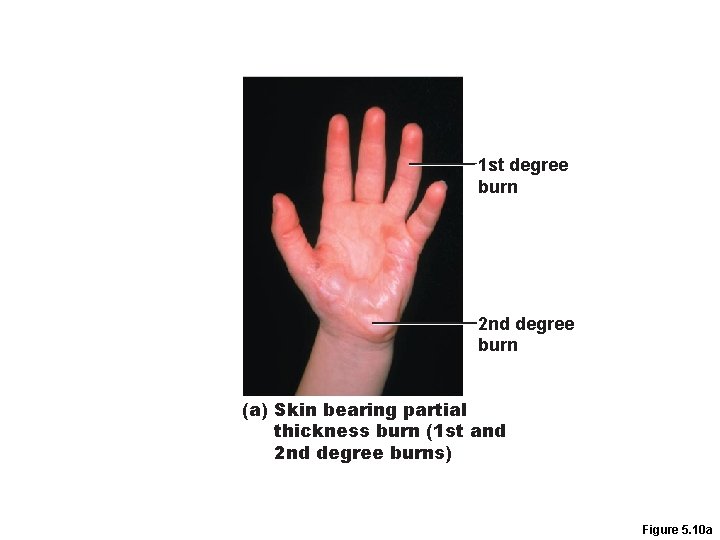
Partial-Thickness Burns • First degree – Epidermal damage only • Localized redness, edema (swelling), and pain • Second degree – Epidermal and upper dermal damage • Blisters appear
1 st degree burn 2 nd degree burn (a) Skin bearing partial thickness burn (1 st and 2 nd degree burns) Figure 5. 10 a
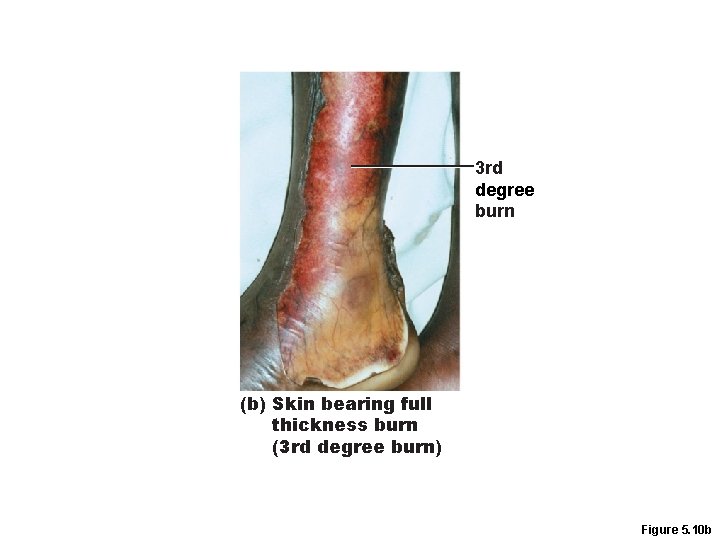
Full-Thickness Burns • Third degree – Entire thickness of skin damaged • Gray-white, cherry red, or black • No initial edema or pain (nerve endings destroyed) • Skin grafting usually necessary
3 rd degree burn (b) Skin bearing full thickness burn (3 rd degree burn) Figure 5. 10 b
Severity of Burns • Critical if: – >25% of the body has second-degree burns – >10% of the body has third-degree burns – Face, hands, or feet bear third-degree burns
Skin Homeostatic Imbalances · Infections · Athletes foot · Caused by fungal infection · Boils and carbuncles · Caused by bacterial infection · Cold sores · Caused by virus (HSV)
Skin Homeostatic Imbalances · Infections and allergies · Contact dermatitis · Exposures cause allergic reaction · Impetigo · Caused by bacterial infection (staph) · Psoriasis · Cause is unknown (genetic) · Triggered by trauma, infection, stress