
Integrative Psychotherapy Theory Therapy Transcendence The Dialectic of

- Slides: 49
Integrative Psychotherapy Theory, Therapy & Transcendence
The Dialectic of Therapy Personal Reflections § Simple and Complex § “Talk Therapy” vs. “Integrative Psychotherapy” § Being With vs. Doing to
The Dialectic of Therapy Personal Reflections § Simple and Complex § “Talk Therapy” vs. “Integrative Psychotherapy” § Being With vs. Doing to
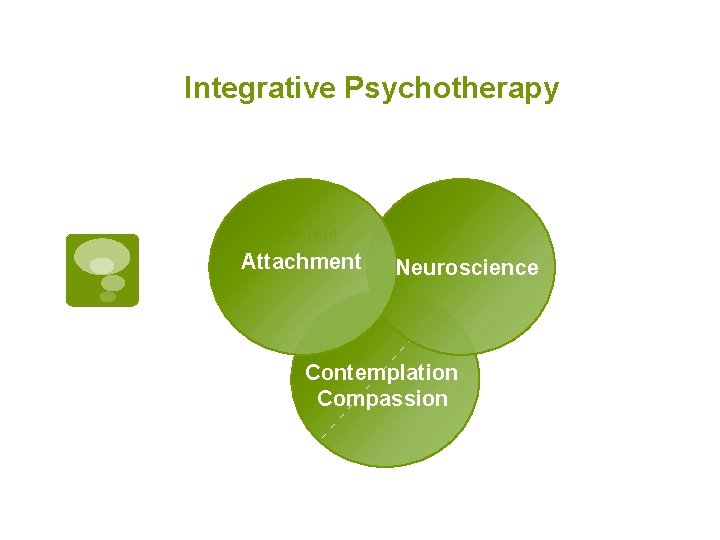
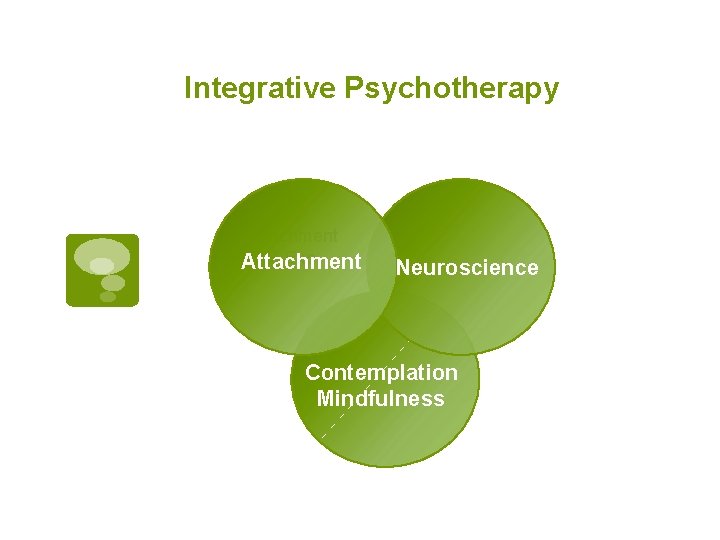
Integrative Psychotherapy Attachment P-Exp Attachment Neuroscience Contemplation Compassion
Integrative Psychotherapy Attachment P-Exp Attachment Neuroscience Contemplation Mindfulness
Premise: Integrative Psychotherapy § Primacy of Relationship as “transformative” § Experience of relationship is embedded in our neural system § A contemplative and mindful stance supports intra-psychic, inter-subjective, and neurological integration
Premise: Integrative Psychotherapy § Primacy of Relationship as “transformative” § Experience of relationship is embedded in our neural system § A contemplative and mindful stance supports intra-psychic, inter-subjective, and neurological integration
Attachment Theory: Historical Context § Influenced by Freud & neo-Freudians § Unconscious cognitive, affective, and motivational processes § Early childhood experiences § Mental models or representations of the self, others, and relationships § Advances in neuroscience show the link between psychodynamic and neurological processes in personality and relational development
Attachment Theory: Critical Points § John Bowlby & Mary Ainsworth § Infant-Mother bond is conceptualized in terms of basic needs for PROTECTION and SECURITY. § Proximity seeking behavior (actual or internalized-symbolical) to significant others is paramount § When feels threatened the “attachment behavioral system” (ABS) is activated
Attachment Theory: Critical Points Three Principles 1. Alarm activates the ABS that seeks out soothing from attachment figure: near, attentive, and responsive. 2. Only physical contact with the attachment figure will turn off the alarm 3. When ABS is prolonged without soothing and termination, angry behaviors appear or the system become repressed.
Attachment Theory: Critical Points Three Principles 1. Alarm activates the ABS that seeks out soothing from attachment figure: near, attentive, and responsive. 2. Only physical contact with the attachment figure will turn off the alarm 3. When ABS is prolonged without soothing and termination, angry behaviors appear or the system become repressed.
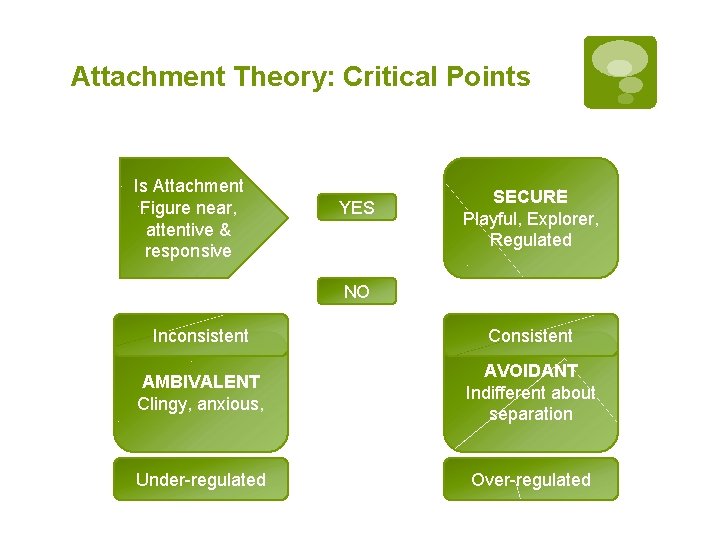
Attachment Theory: Critical Points Is Attachment Figure near, attentive & responsive YES SECURE Playful, Explorer, Regulated NO Inconsistent Consistent AMBIVALENT Clingy, anxious, AVOIDANT Indifferent about separation Under-regulated Over-regulated
Attachment Theory: Critical Points Attachment Categories § § Secure Attachment Insecure § Ambivalent § Avoidant § Disorganized
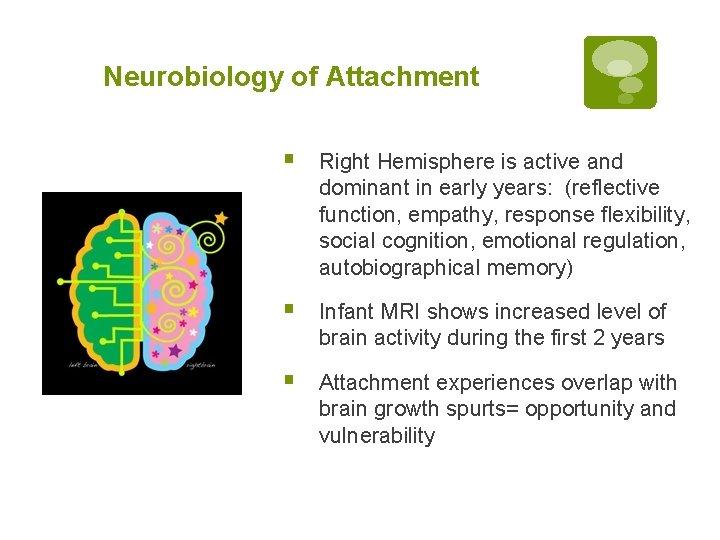
Neurobiology of Attachment § Right Hemisphere is active and dominant in early years: (reflective function, empathy, response flexibility, social cognition, emotional regulation, autobiographical memory) § Infant MRI shows increased level of brain activity during the first 2 years § Attachment experiences overlap with brain growth spurts= opportunity and vulnerability
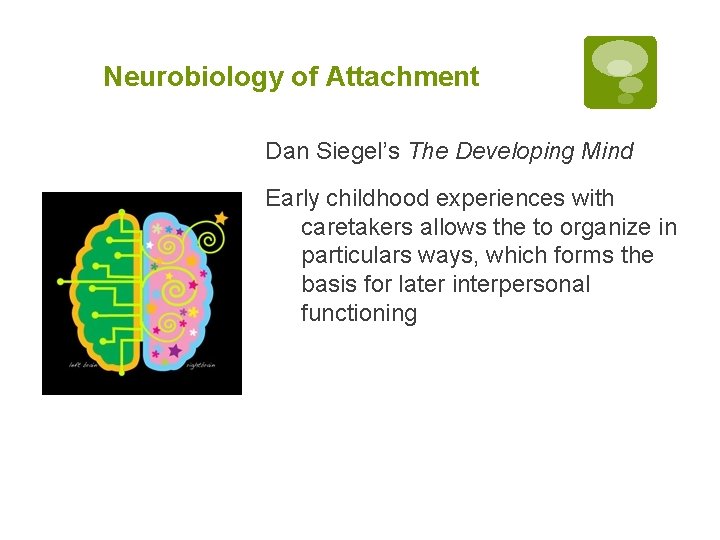
Neurobiology of Attachment Dan Siegel’s The Developing Mind Early childhood experiences with caretakers allows the to organize in particulars ways, which forms the basis for later interpersonal functioning
Brain and Personality http: //topdocumentaryfilms. com/the-humanmind/
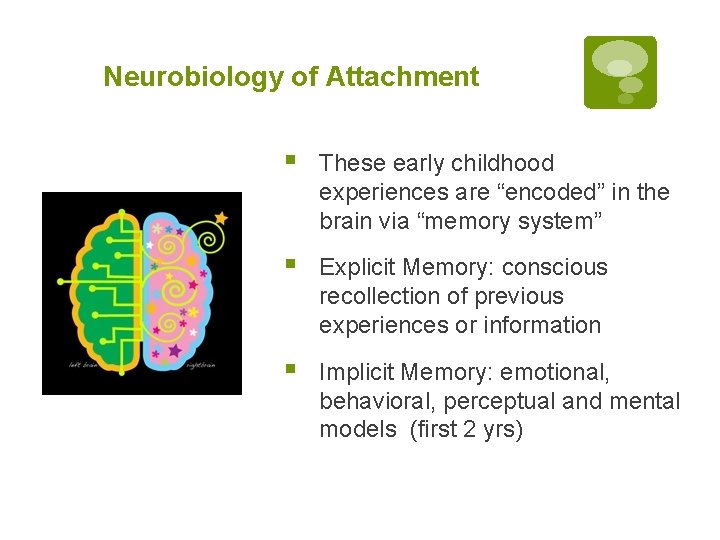
Neurobiology of Attachment § These early childhood experiences are “encoded” in the brain via “memory system” § Explicit Memory: conscious recollection of previous experiences or information § Implicit Memory: emotional, behavioral, perceptual and mental models (first 2 yrs)
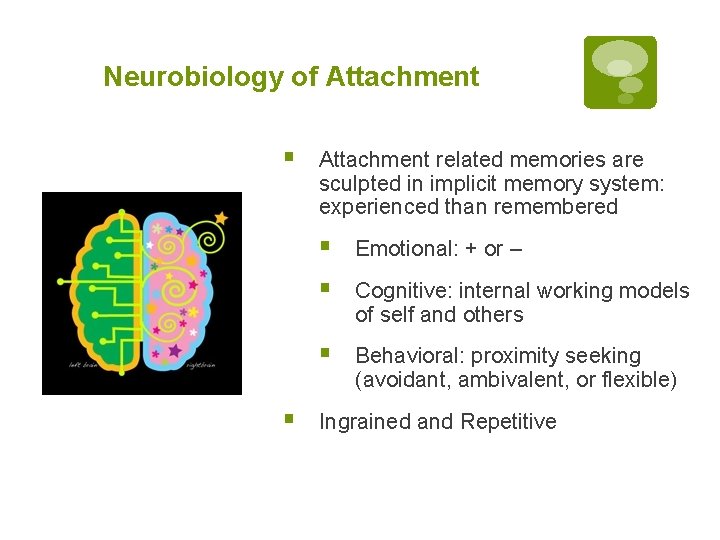
Neurobiology of Attachment § § Attachment related memories are sculpted in implicit memory system: experienced than remembered § § Emotional: + or – § Behavioral: proximity seeking (avoidant, ambivalent, or flexible) Cognitive: internal working models of self and others Ingrained and Repetitive
Neuroscience § Dan Siegel and Mindful Brain Interpersonal Neurobiology 1. 2. Mirror Neuron System Neural Plasticity
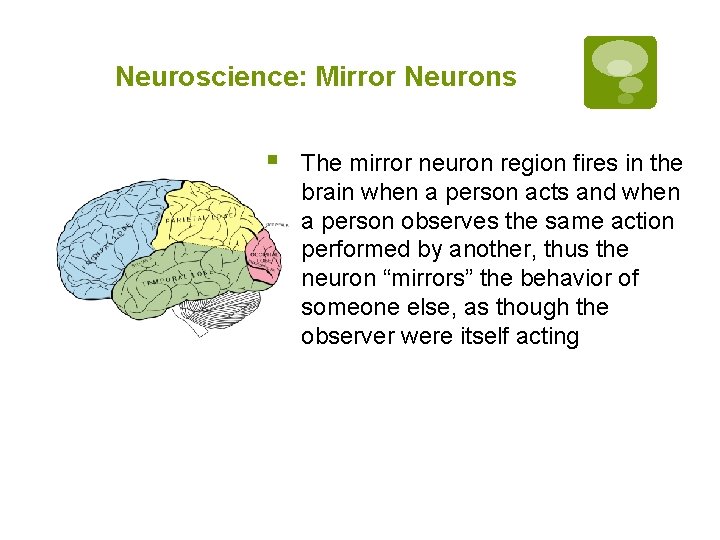
Neuroscience: Mirror Neurons § The mirror neuron region fires in the brain when a person acts and when a person observes the same action performed by another, thus the neuron “mirrors” the behavior of someone else, as though the observer were itself acting
Neuroscience: Mirror Neurons § “All mammals have evolved limbic circuitry to read the internal states of others; in addition it seems that primates have developed of unique capacity to create an internal state that resembles that of others” (Siegel 2003, 75)
Neuroscience: Mirror Neurons § Essential aspect of the neural basis for empathy § Resonance involves a change in physiologic, affective and intentional states of the observer § Empathic attunement: intersubjective & neurological
Neuroscience: Neural Plasticity § Is the ability of the brain and nervous system to change in structure and function as a result of input from the environment § Reveals how the brain’s interconnectedness can change throughout the life span. § Attention and Consciousness KEY
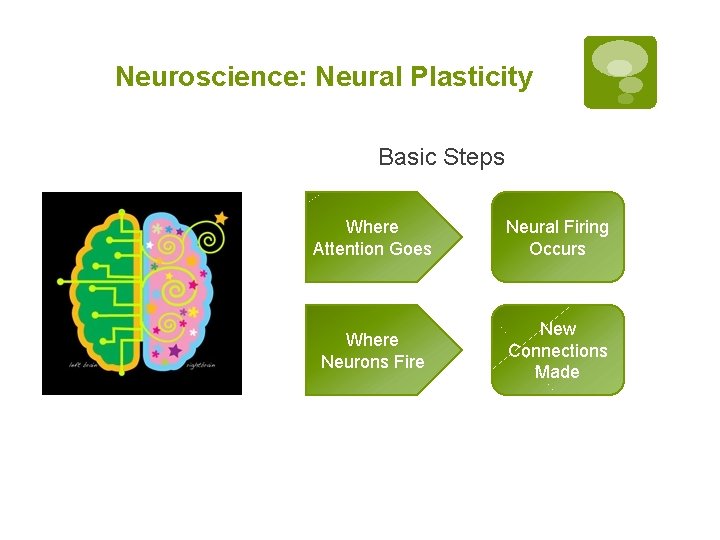
Neuroscience: Neural Plasticity Basic Steps Where Attention Goes Neural Firing Occurs Where Neurons Fire New Connections Made
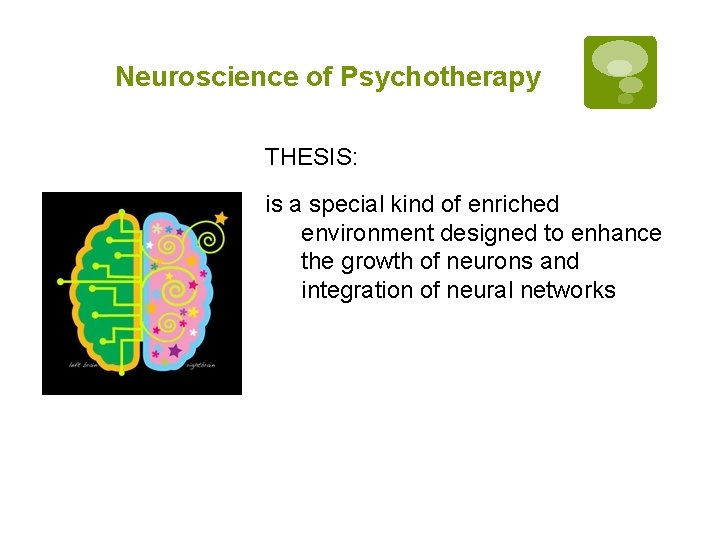
Neuroscience of Psychotherapy THESIS: is a special kind of enriched environment designed to enhance the growth of neurons and integration of neural networks
Neuroscience of Psychotherapy all forms of therapy, regardless of theoretical orientation, will be successful to the degree to which they foster appropriate neuro-plasticity, which is enhanced by: 1. 2. 3. 4. Establishment of a safe and trusting relationship Mild to moderate levels of stress Activating both emotion and cognition Co-construction of personal narratives
Neuroscience of Psychotherapy HUMAN EXPERIENCE is mediated by 1. SHAPING of NEURAL STRUCTURES within the context of RELATIONSHIPS Emotional and Interpersonal learning within the “primitive brain” occurs way before we have the necessary “cortical systems” are developed Thus, social-emotional experiences (positive or negative) are EMBEDDED in/ORGANIZED by reflexes
Premise To say it differently, quality of relationship is encoded within the neural infrastructure of our brains such that translation of EXPERIENCE into NEURO-BIOLOGICAL structures that NATURE & NURTURE become one
Neuroscience of Psychotherapy Theory of Psychopathology traumatic and unprocessed relational ruptures and experiences that occurred early on result in neural networks that remain under-developed, under-regulated, and under-integrated Theory of Change: Psychotherapy is a way of reinstating healthy neural functioning
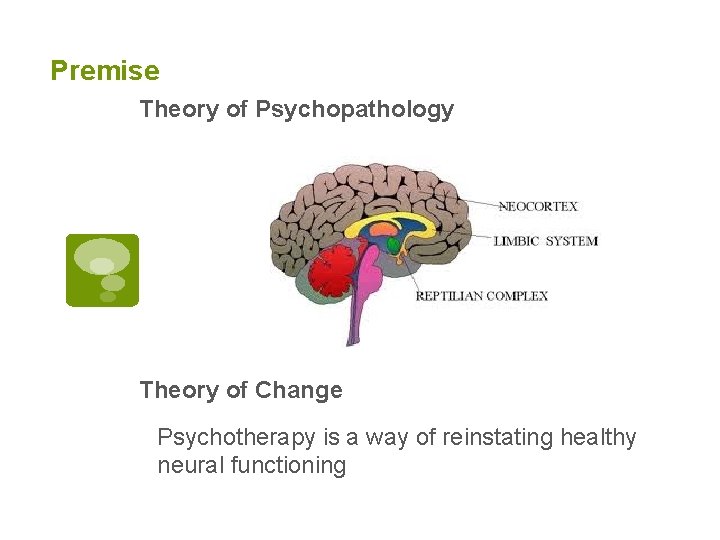
Premise Theory of Psychopathology Theory of Change Psychotherapy is a way of reinstating healthy neural functioning
Neuroscience: Neural Plasticity Basic Steps Where Attention Goes Neural Firing Occurs Where Neurons Fire New Connections Made
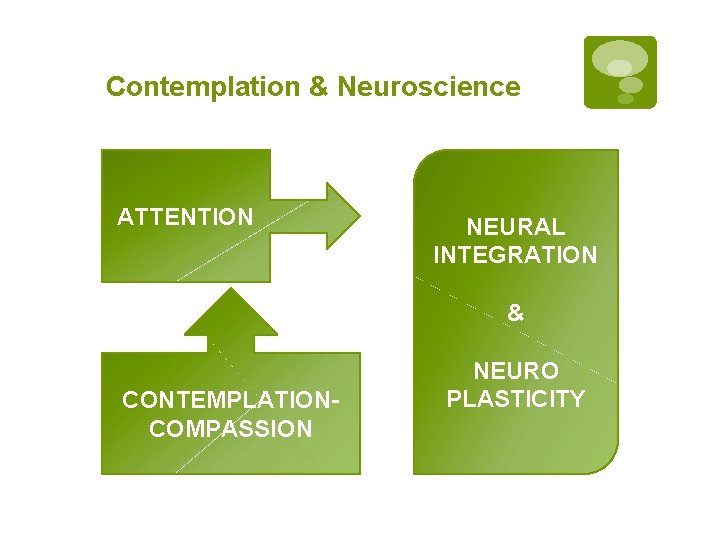
Contemplation & Neuroscience ATTENTION NEURAL INTEGRATION & CONTEMPLATIONCOMPASSION NEURO PLASTICITY
Proposal Mindfulness-based therapies offer a kind of experience that holistically targets the integration of the whole person (body-mind-spirit) and cultivates an attitude of focused attention and awareness of the present moment and compassion lacking among individuals struggling with addiction.
Contemplative Approach to Psychotherapy § A distinct way of approaching therapy where “being with” takes center stage § ATTENTION to the unfolding experience of the client AND the relationship, moment by moment without judgment.
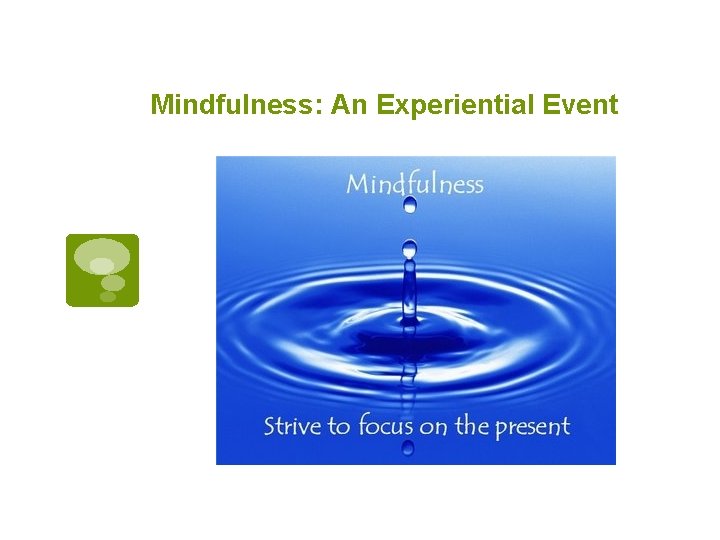
Mindfulness: An Experiential Event
Mindful Moments are: § Present-centered: “here and now” § Nonjudgmental § Intentional: directing attention to one’s interior and subjective self. § Participant observation: experiencing it more intimately
Contemplation/Mindfulness & Levels of Practice § Varying degrees of intensity—from everyday mindfulness to monks and nuns, and lay people doing considerable amount of time in meditation. Common practice is § Disengaging from an activity and taking a long, conscious breath, and asking oneself questions like: § What am I feeling right now? § What am I doing right now? § What is most compelling to my awareness right now?
Contemplation & Psychotherapy § “the non-judgmental observation of the ongoing stream of internal and external stimuli as they arise. ” § (1) awareness of (2) present experience, (3) with curiosity and compassion
Contemplative Approach to Psychotherapy § Process of Change: Key Elements § Focused and Bare Attention § Hospitable Reception § Flexible Conceptualization § Empathy and Compassion § Equanimity
Contemplative Approach to Psychotherapy § Process of Change: Key Elements § Focused and Bare Attention Focused Attention is directing all of one’s awareness onto a single object to the exclusion of everyone else. Bare Attention is the capacity to become evenly aware of not just one object but of all things — internally and relationally between therapist and client § Hospitable Reception Open and welcoming stance towards whatever unfolds in the present moment, non-anxious and non-judging
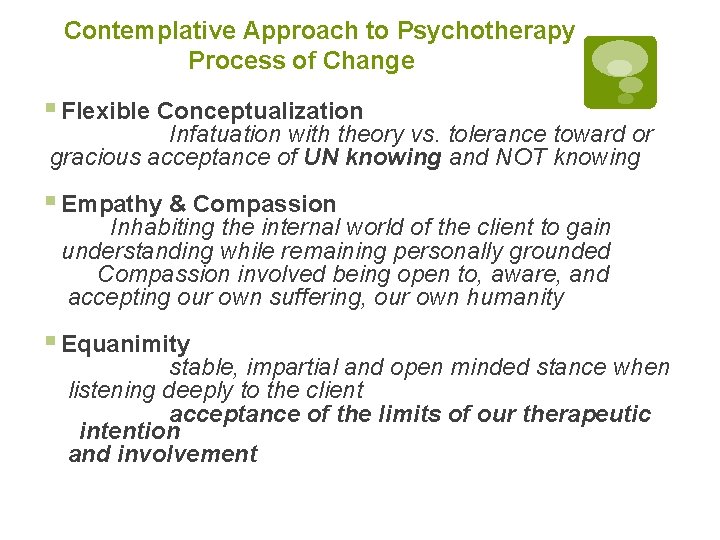
Contemplative Approach to Psychotherapy Process of Change § Flexible Conceptualization Infatuation with theory vs. tolerance toward or gracious acceptance of UN knowing and NOT knowing § Empathy & Compassion Inhabiting the internal world of the client to gain understanding while remaining personally grounded Compassion involved being open to, aware, and accepting our own suffering, our own humanity § Equanimity stable, impartial and open minded stance when listening deeply to the client acceptance of the limits of our therapeutic intention and involvement
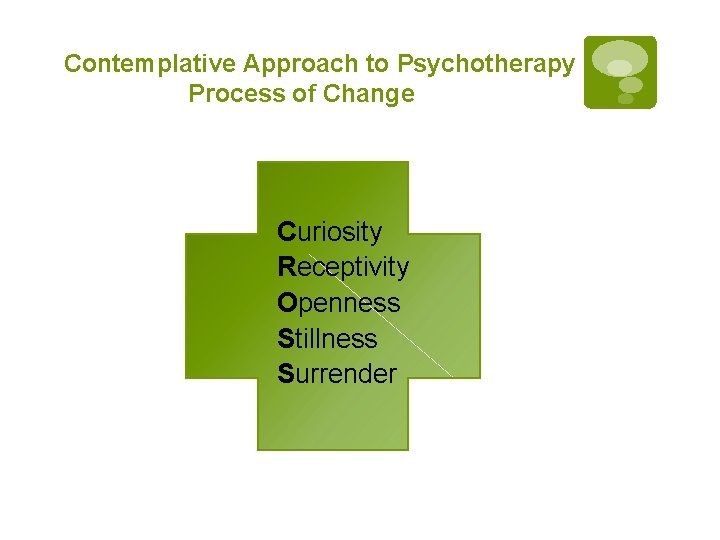
Contemplative Approach to Psychotherapy Process of Change Curiosity Receptivity Openness Stillness Surrender
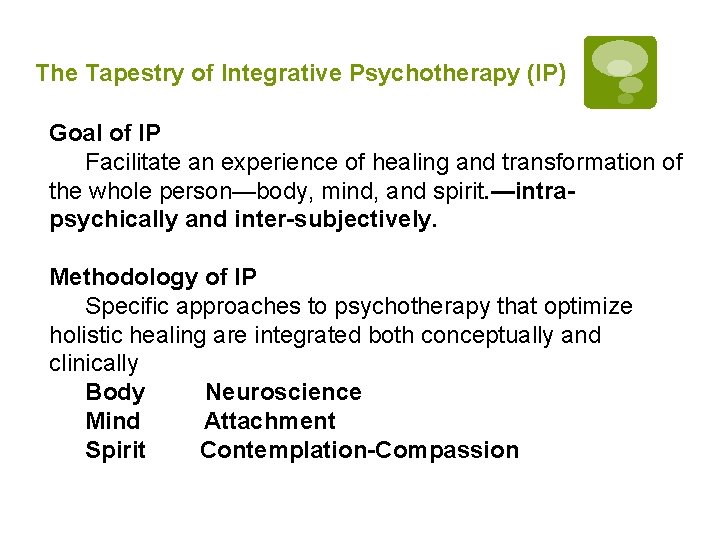
The Tapestry of Integrative Psychotherapy (IP) Goal of IP Facilitate an experience of healing and transformation of the whole person—body, mind, and spirit. —intrapsychically and inter-subjectively. Methodology of IP Specific approaches to psychotherapy that optimize holistic healing are integrated both conceptually and clinically Body Neuroscience Mind Attachment Spirit Contemplation-Compassion
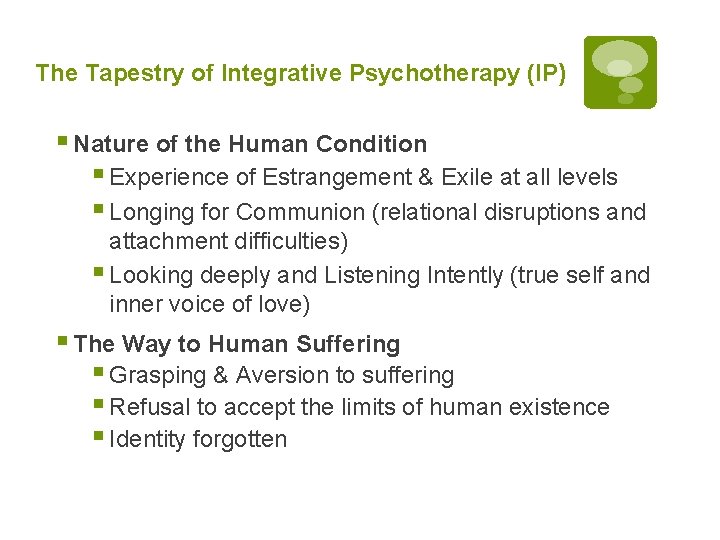
The Tapestry of Integrative Psychotherapy (IP) § Nature of the Human Condition § Experience of Estrangement & Exile at all levels § Longing for Communion (relational disruptions and attachment difficulties) § Looking deeply and Listening Intently (true self and inner voice of love) § The Way to Human Suffering § Grasping & Aversion to suffering § Refusal to accept the limits of human existence § Identity forgotten
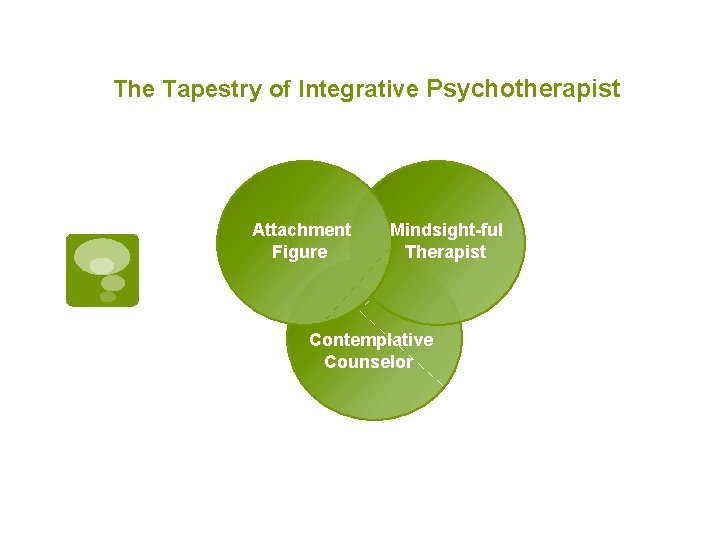
The Tapestry of Integrative Psychotherapist Attachment P-Exp Figure Mindsight-ful Therapist Contemplative Counselor
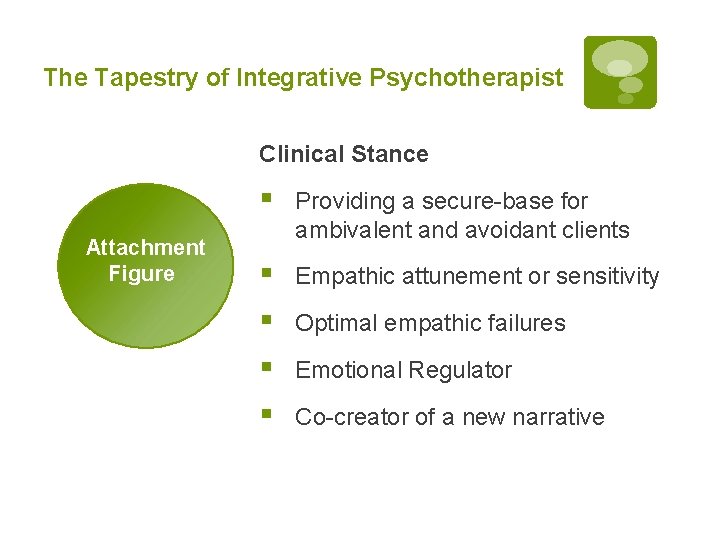
The Tapestry of Integrative Psychotherapist Clinical Stance Attachment Figure § Providing a secure-base for ambivalent and avoidant clients § § Empathic attunement or sensitivity Optimal empathic failures Emotional Regulator Co-creator of a new narrative
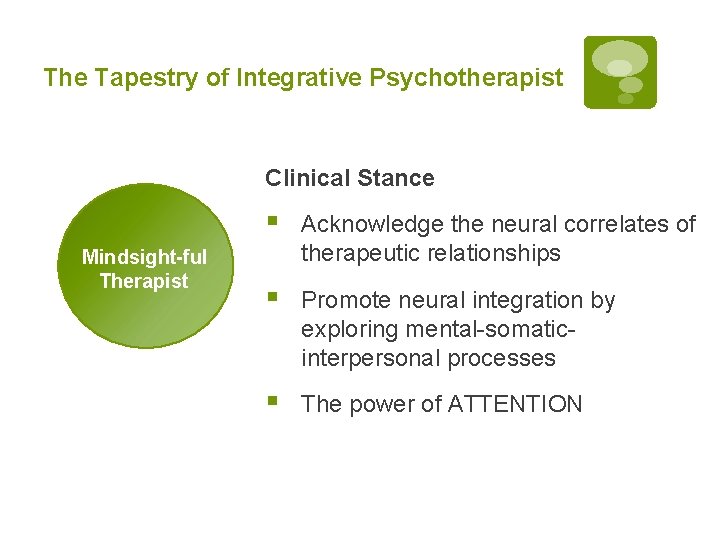
The Tapestry of Integrative Psychotherapist Clinical Stance Mindsight-ful Therapist § Acknowledge the neural correlates of therapeutic relationships § Promote neural integration by exploring mental-somaticinterpersonal processes § The power of ATTENTION
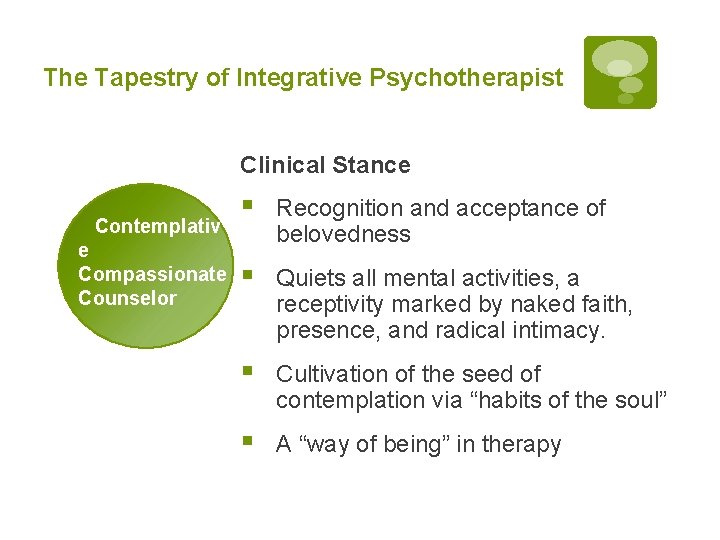
The Tapestry of Integrative Psychotherapist Clinical Stance Contemplativ e Compassionate Counselor § Recognition and acceptance of belovedness § Quiets all mental activities, a receptivity marked by naked faith, presence, and radical intimacy. § Cultivation of the seed of contemplation via “habits of the soul” § A “way of being” in therapy
The work of engaged hands emerges from the quiet and still state of the heart. Nolasco, 2010