
Integrative Data Analysis with MultiSource Data Daniel J
- Slides: 24
Integrative Data Analysis with Multi-Source Data Daniel J. Bauer 1 Patrick J. Curran 1 1 Center Andrea L. Howard 2 Andrea M. Hussong 1 for Developmental Science and Dept. of Psychology and Neuroscience, University of North Carolina at Chapel Hill 2 Department of Psychology, Carleton University
Integrative Data Analysis • The analysis of raw data pooled across multiple, often independently conducted studies
Advantages • Increases power through data aggregation • Permits formal tests of the reproducibility of findings across studies • Provides a way to combine longitudinal research conducted over different age intervals to cover a wider developmental span
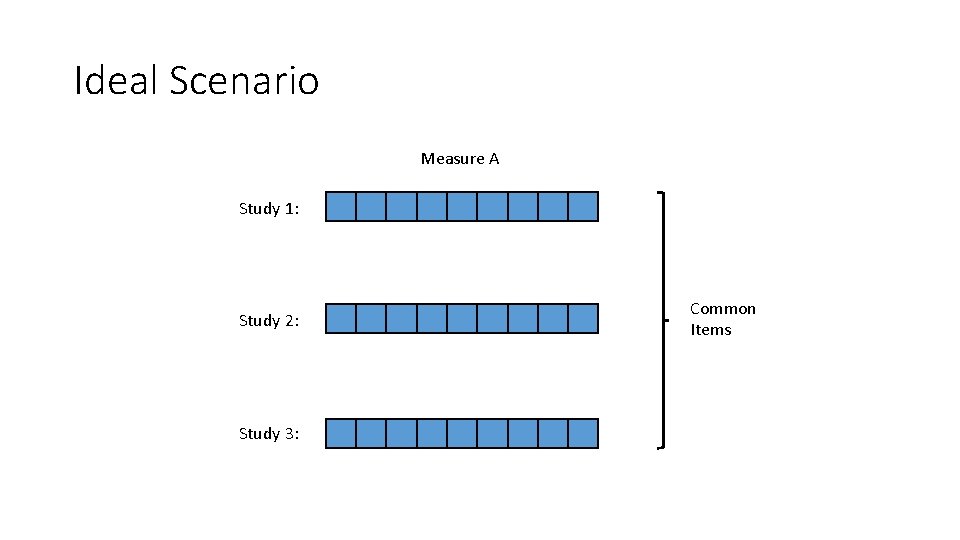
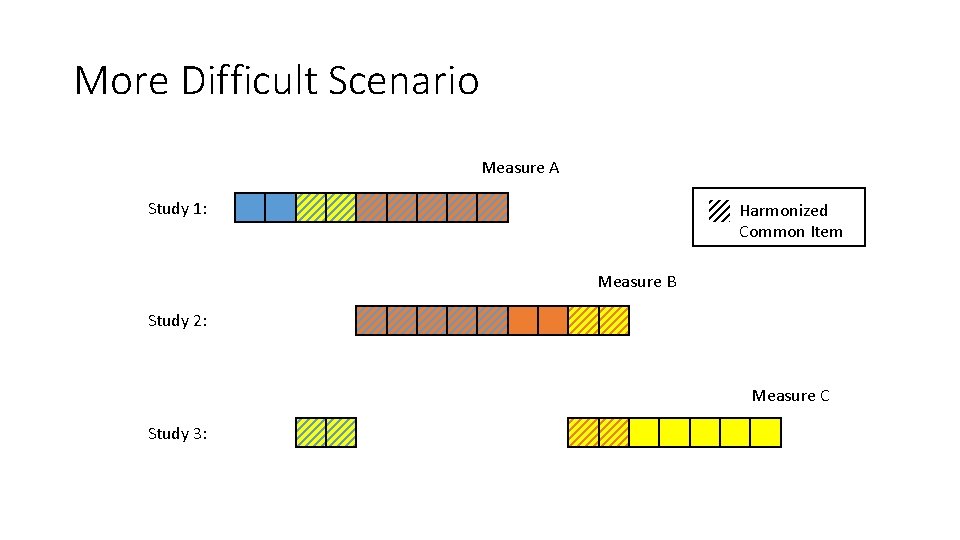
The Challenge of Measurement • Among the many challenges for IDA is measurement • Are the same constructs measured in each contributing study? • Are they measured using the same or similar items across studies?
Ideal Scenario Measure A Study 1: Study 2: Study 3: Common Items
More Difficult Scenario Measure A Study 1: Harmonized Common Item Measure B Study 2: Measure C Study 3:
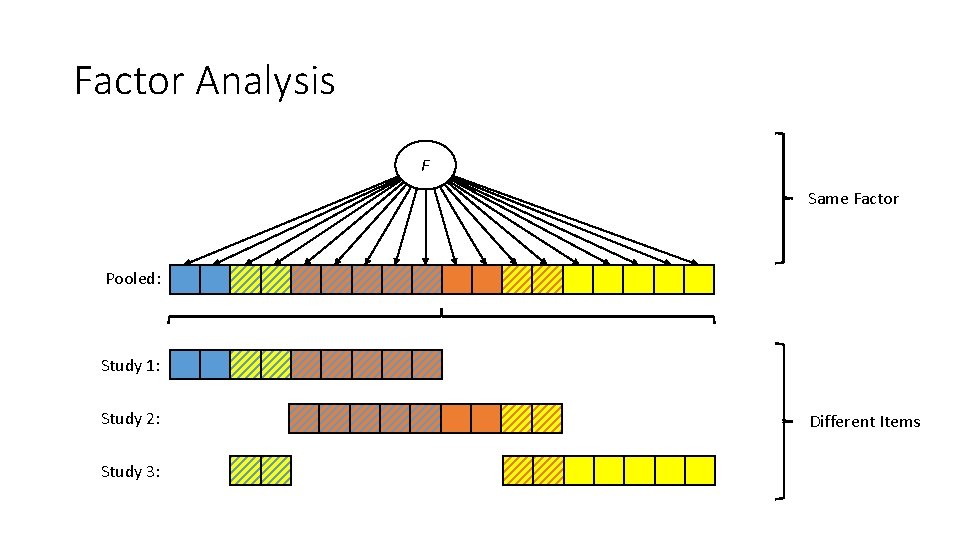
Psychometric Modeling • Posit factor analysis / item response theory model for pooled item set • Score factor in each study • Under measurement invariance factor scores have same meaning and metric, despite differences in observed item sets
Factor Analysis F Same Factor Pooled: Study 1: Study 2: Study 3: Different Items
Testing Measurement Invariance • Important to evaluate comparability of scores by testing whether common item parameters are equal across studies • Testing DIF especially important for harmonized items • But DIF may also exist for identical items (e. g. , context effects) • Often need to simultaneously consider DIF due to other covariates • Gender, age, etc. • Especially those that covary with study
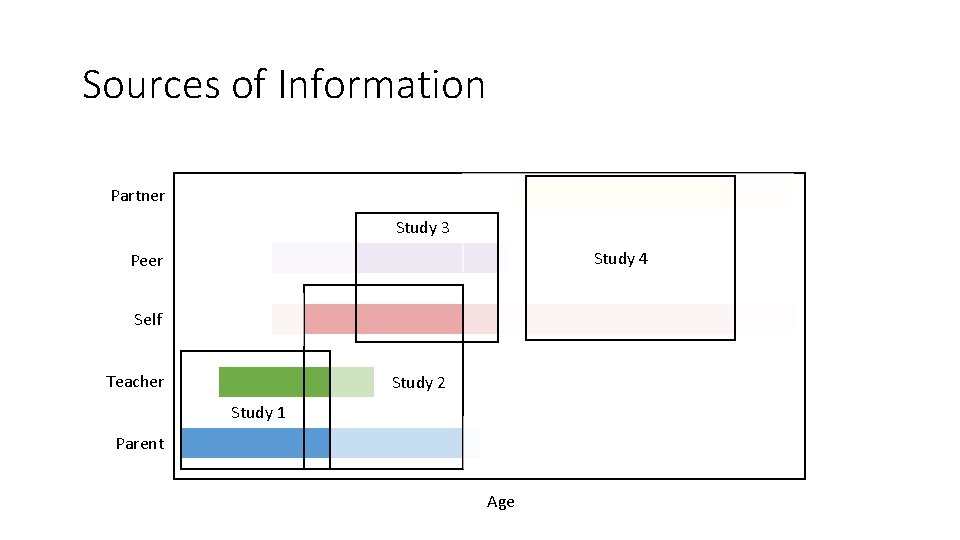
Multi-Source Data • To date, use of psychometric models to facilitate IDA has focused on single-source data • Example: Self-reported negative affect • However, longitudinal research often involves multi-source data • Best practice to use multi-method approach • Optimal informant may change with development • May differ across studies
Sources of Information Partner Study 3 Study 4 Peer Self Teacher Study 2 Study 1 Parent Age
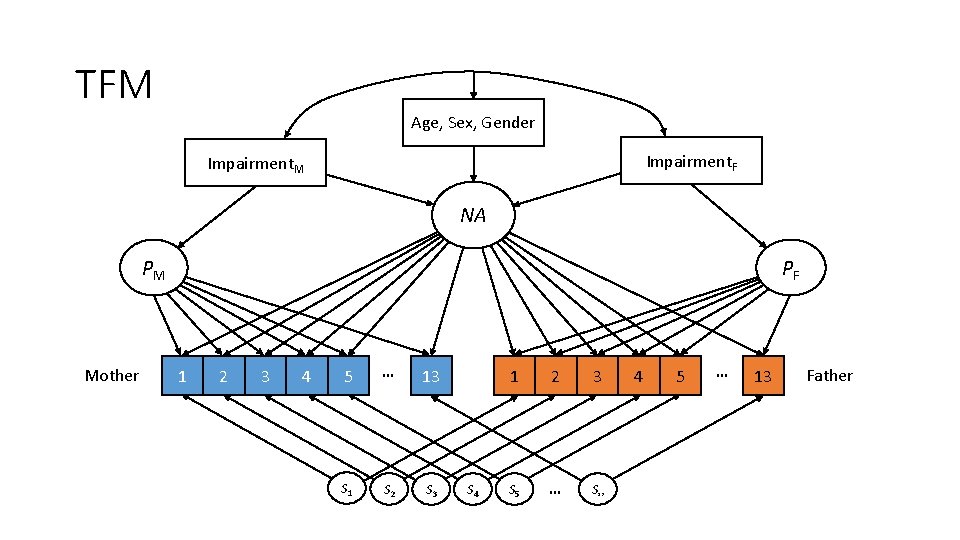
Psychometric Models for Multi-Source Data • Tri-Factor Model (TFM) provides one way to model multi-source data • Can be adapted to generate common measures for integrative data analysis
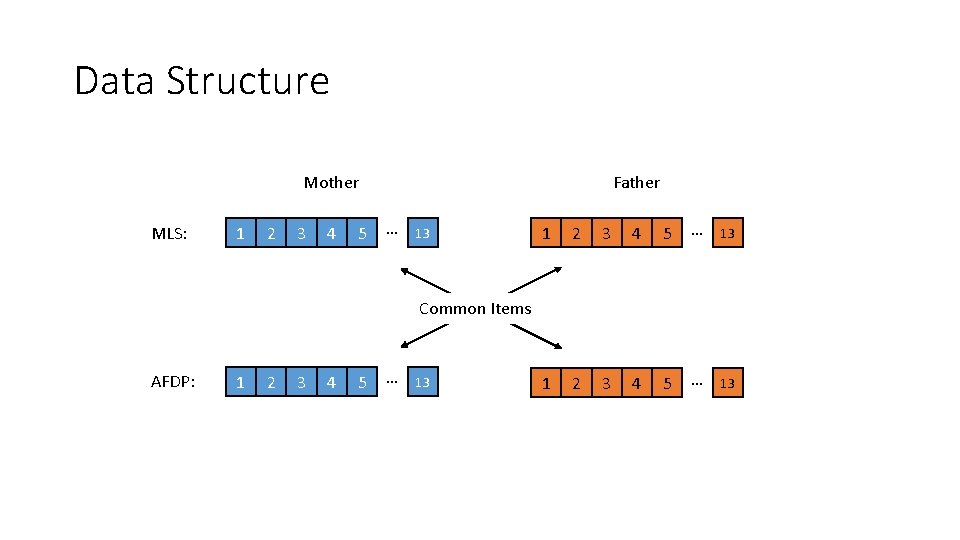
Example TFM Application • Bauer et al. (2013) fit the TFM to data drawn from two longitudinal studies of children of alcoholics • Michigan Longitudinal Study (MLS; PI: Zucker), age 2 -18 • Adolescent and Family Development Project (AFDP; PI: Chassin), age 10 -18 • Negative Affect rated by mothers and fathers • 13 identical items in both studies rated by both reporters • Key covariates: • Study, Age, Gender, and Parental Alcoholism, ASP, and Depression
Data Structure Mother MLS: 1 2 3 4 5 Father … 13 1 2 3 4 5 … 13 Common Items AFDP: 1 2 3 4 5 … 13
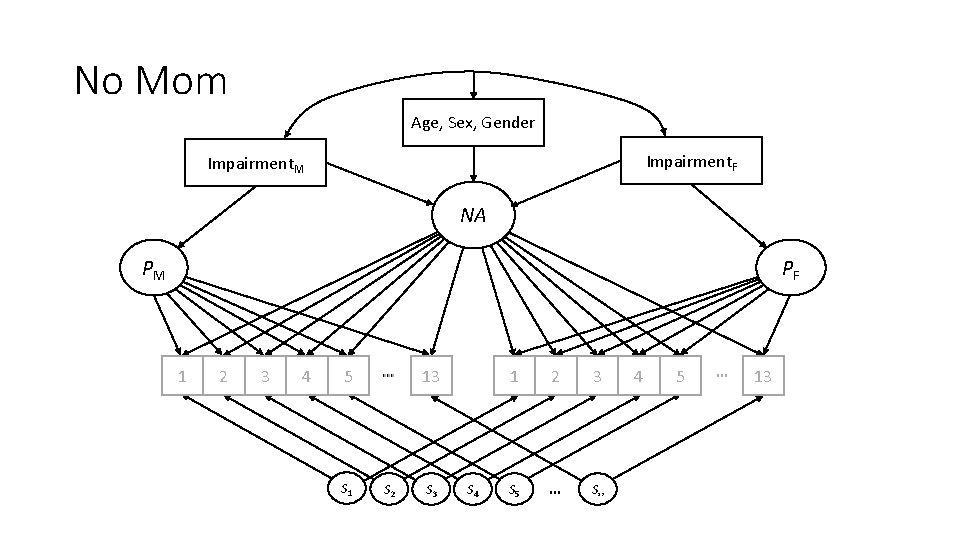
TFM Age, Sex, Gender Impairment. F Impairment. M NA PM Mother PF 1 2 3 4 5 … 13 S 1 S 2 S 3 S 4 1 2 3 S 5 … S 13 4 5 … 13 Father
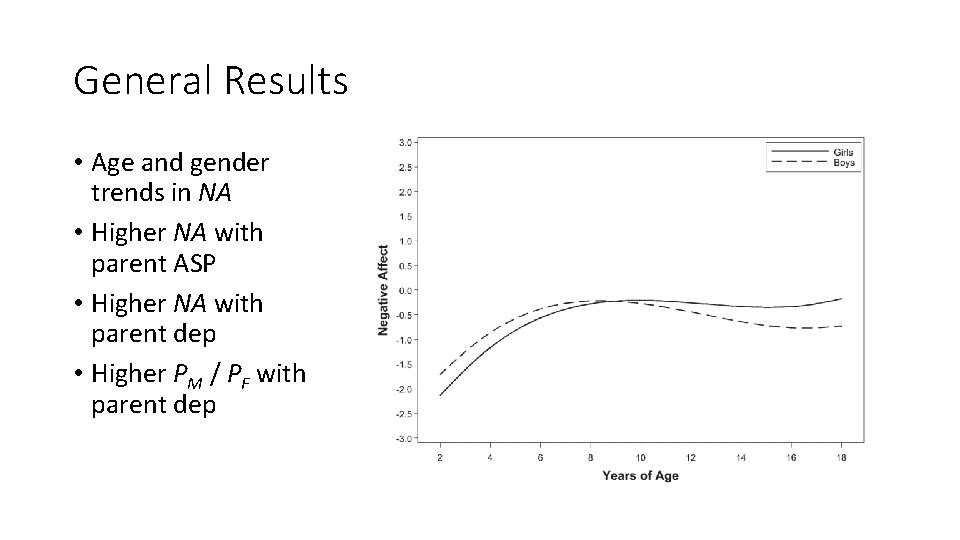
General Results • Age and gender trends in NA • Higher NA with parent ASP • Higher NA with parent dep • Higher PM / PF with parent dep
Important Question • In this application same reporters were available in each study, ensuring all scores based on the same information • But are scores comparable even if some sources of information are missing for some studies? • Unclear, given complex factor structure • Here we provide a preliminary empirical assessment
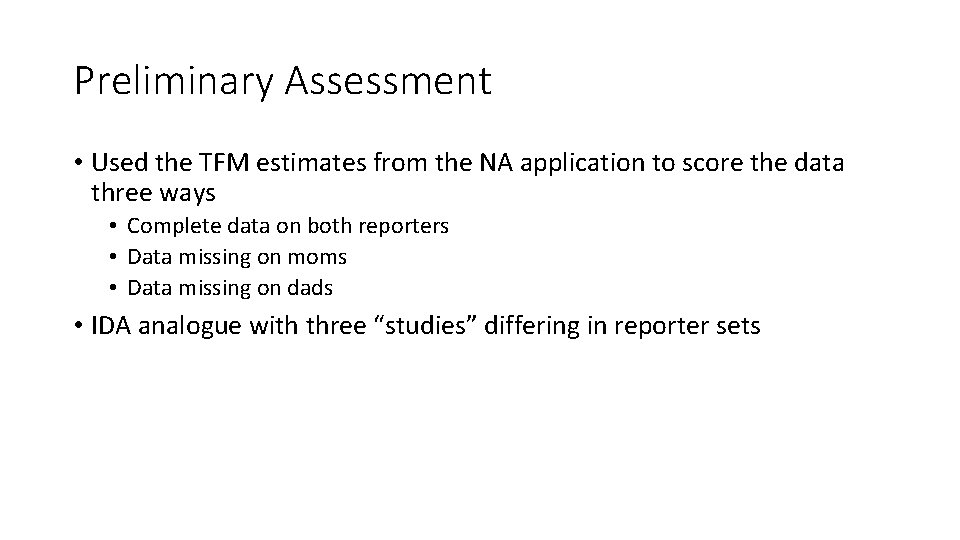
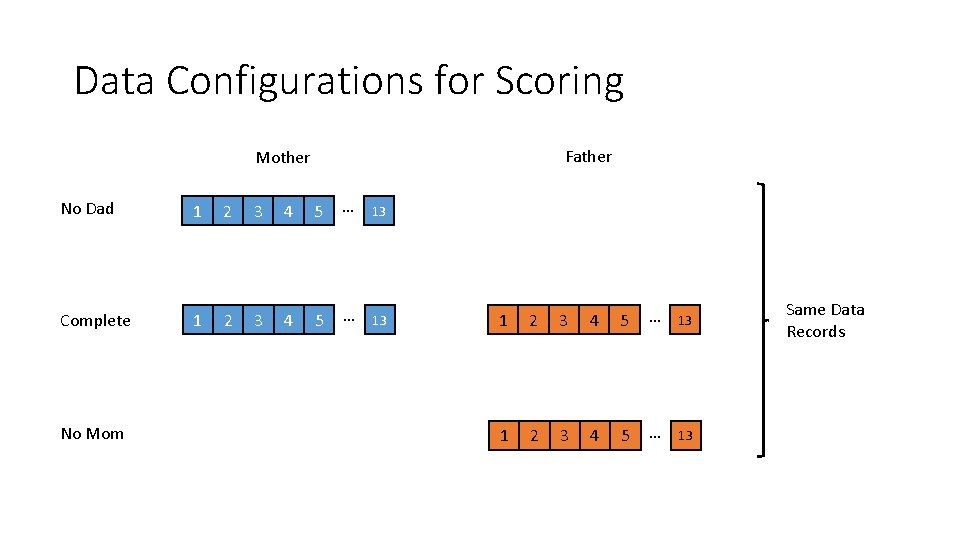
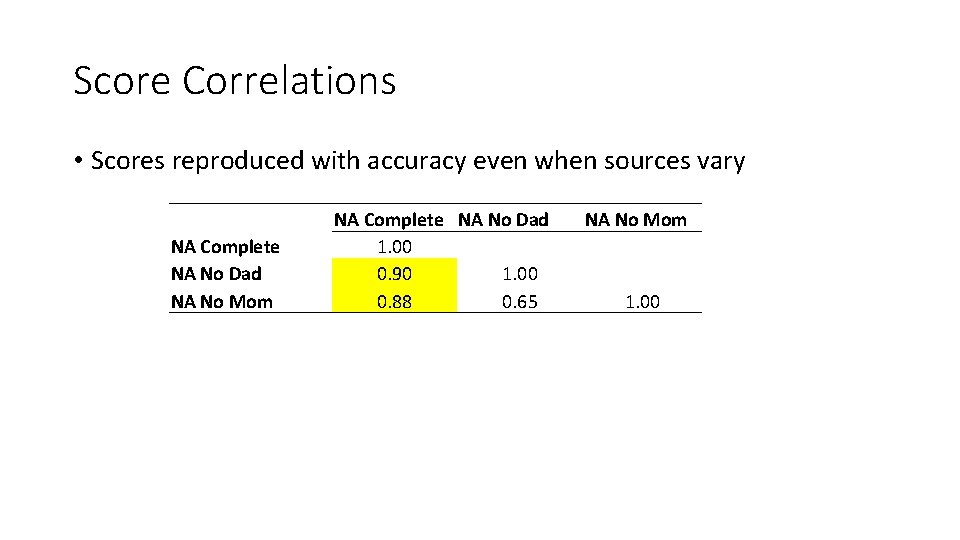
Preliminary Assessment • Used the TFM estimates from the NA application to score the data three ways • Complete data on both reporters • Data missing on moms • Data missing on dads • IDA analogue with three “studies” differing in reporter sets
Data Configurations for Scoring Father Mother No Dad 1 2 3 4 5 … 13 Complete 1 2 3 4 5 … 13 No Mom 1 2 3 4 5 … 13 Same Data Records
Complete No Dad Mom Age, Sex, Gender Impairment. F Impairment. M NA PM PF 1 2 3 4 5 … 13 S 1 S 2 S 3 S 4 1 2 3 S 5 … S 13 4 5 … 13
Score Correlations • Scores reproduced with accuracy even when sources vary NA Complete NA No Dad NA No Mom NA Complete NA No Dad 1. 00 0. 90 1. 00 0. 88 0. 65 NA No Mom 1. 00
Conclusions • Psychometric models offer opportunities to create commensurate measures from instruments that differ superficially across studies • One important potential difference in longitudinal studies is the source of information on targets • The tri-factor model offers one possible way to accommodate multisource data when conducting IDA • Initial results suggest TFM may produce reasonably commensurate scores even when sources of information vary • But more research needed
Acknowledgments The project described was supported by National Institutes of Health grants R 01 DA 034636 (PI: Daniel Bauer) and R 01 DA 015398 (PIs: Andrea Hussong & Patrick Curran). The content is solely the responsibility of the authors and does not represent the official views of the National Institute on Drug Abuse or the National Institutes of Health.
References Bauer, D. J. , Howard, A. L. , Baldasaro, R. E. , Curran, P. J. , Hussong, A. M. , Chassin, L. , & Zucker, R. A. (2013). A trifactor model for integratings across multiple informants. Psychological Methods, 18, 475 -493. doi: 10. 1037/a 0032475. PMCID: PMC 3964937 Bauer, D. J. & Hussong, A. M (2009). Psychometric approaches for developing commensurate measures across independent studies: traditional and new models. Psychological Methods, 14, 101 -125. doi: 10. 1037/a 0015583 PMCID: PMC 2780030 Curran, P. J. , Mc. Ginley, J. S. , Bauer, D. J. , Hussong, A. M. , Burns, A. , Chassin, L. , Sher, K. , & Zucker, R. (2014). A moderated nonlinear factor model for the development of commensurate measures in integrative data analysis. Multivariate Behavioral Research, 49, 214 -231, doi: 10. 1080/00273171. 2014. 889594. Hussong, A. M. , Curran, P. J. & Bauer, D. J. (2013). Integrative data analysis in clinical psychology research. Annual Review of Clinical Psychology, 9, 61 -89. doi: 10. 1146/annurev-clinpsy-050212 -185522