
Integration of Traffic Speed Deflectometer TSD and Ground

- Slides: 23
Integration of Traffic Speed Deflectometer (TSD) and Ground Penetrating Radar (GPR) for Network. Level Roadway Structure Evaluation by Ken Maser, Adam Carmichael, Infrasense, Inc Pete Schmalzer, Nichols Consulting Engineers Bill Shaw, Idaho Transportation Department NRRA 2017 Conference May 24, 2017 •
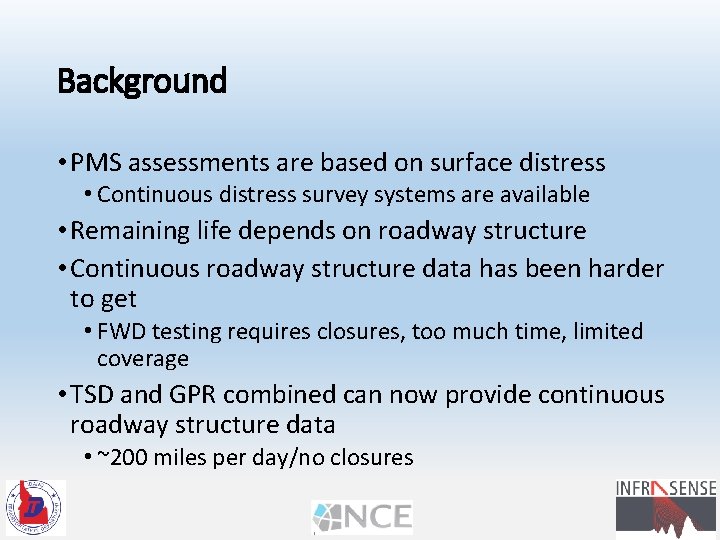
Background • PMS assessments are based on surface distress • Continuous distress survey systems are available • Remaining life depends on roadway structure • Continuous roadway structure data has been harder to get • FWD testing requires closures, too much time, limited coverage • TSD and GPR combined can now provide continuous roadway structure data • ~200 miles per day/no closures
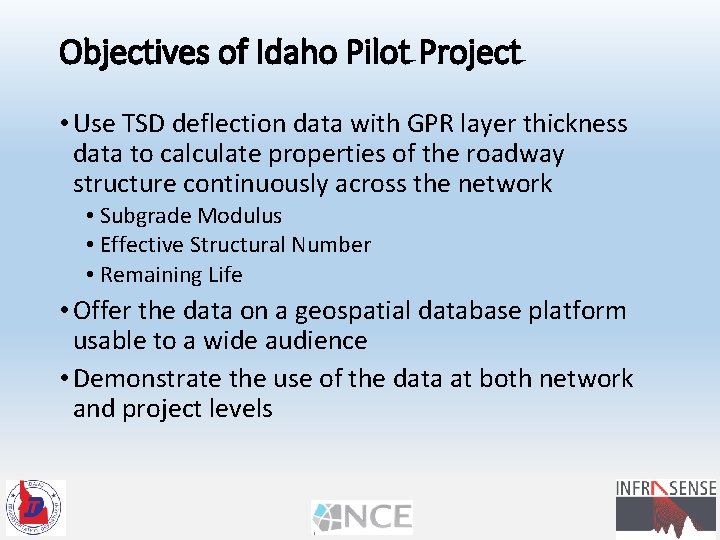
Objectives of Idaho Pilot Project • Use TSD deflection data with GPR layer thickness data to calculate properties of the roadway structure continuously across the network • Subgrade Modulus • Effective Structural Number • Remaining Life • Offer the data on a geospatial database platform usable to a wide audience • Demonstrate the use of the data at both network and project levels
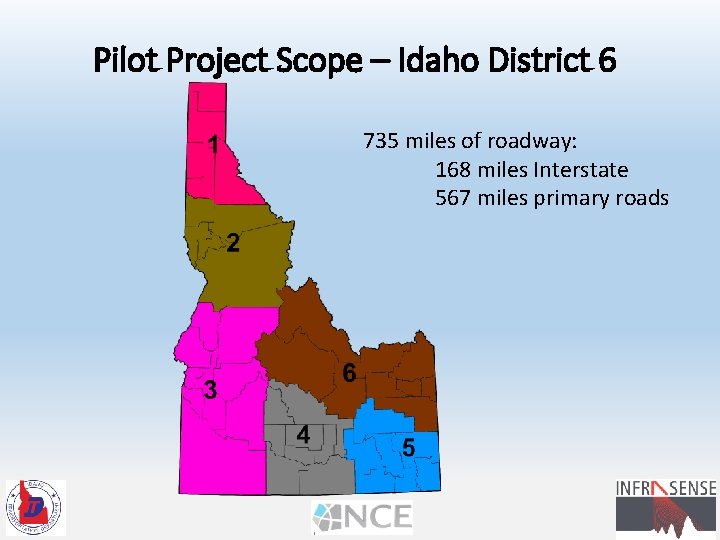
Pilot Project Scope – Idaho District 6 735 miles of roadway: 168 miles Interstate 567 miles primary roads
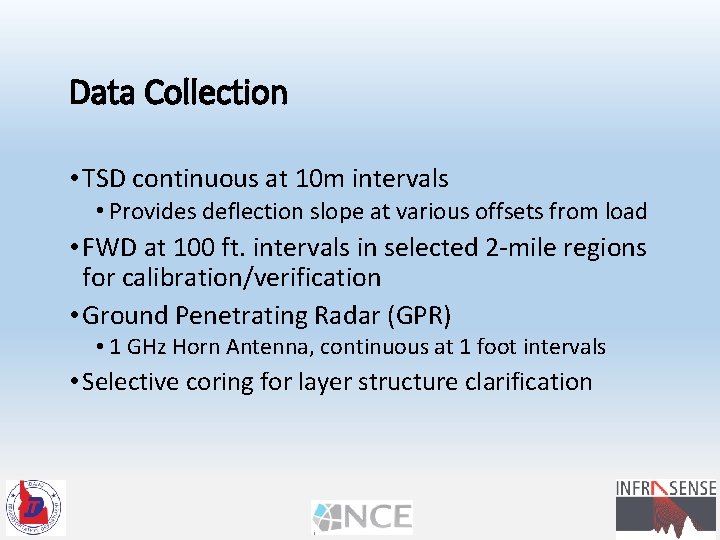
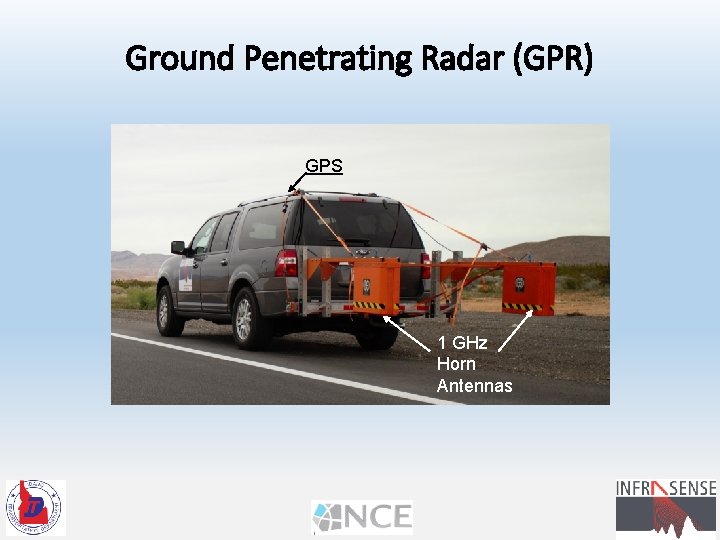
Data Collection • TSD continuous at 10 m intervals • Provides deflection slope at various offsets from load • FWD at 100 ft. intervals in selected 2 -mile regions for calibration/verification • Ground Penetrating Radar (GPR) • 1 GHz Horn Antenna, continuous at 1 foot intervals • Selective coring for layer structure clarification
Traffic Speed Deflectometer (TSD)
Ground Penetrating Radar (GPR) GPS 1 GHz Horn Antennas
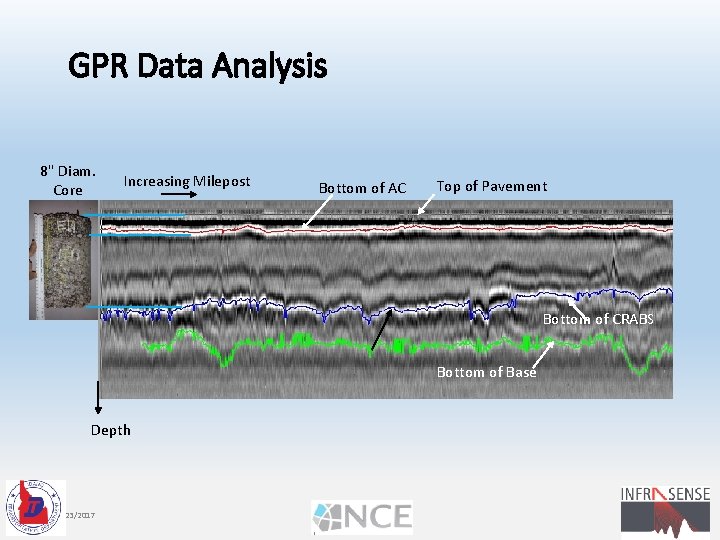
GPR Data Analysis 8" Diam. Core Increasing Milepost Bottom of AC Top of Pavement Bottom of CRABS Bottom of Base Depth 5/23/2017
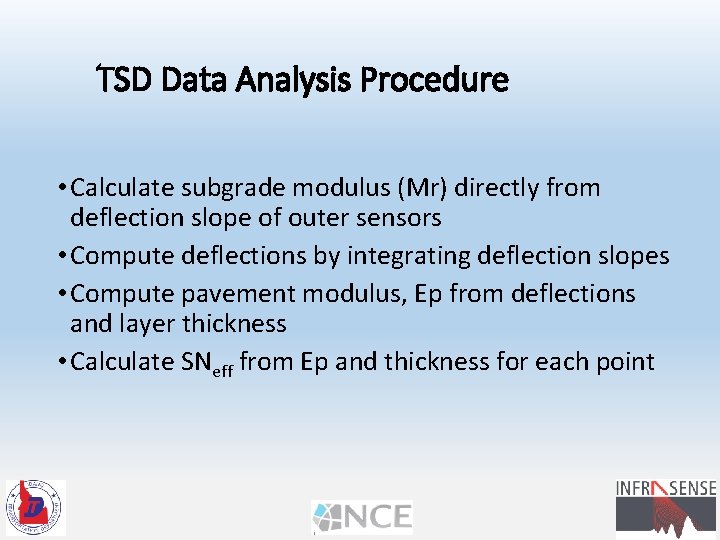
TSD Data Analysis Procedure • Calculate subgrade modulus (Mr) directly from deflection slope of outer sensors • Compute deflections by integrating deflection slopes • Compute pavement modulus, Ep from deflections and layer thickness • Calculate SNeff from Ep and thickness for each point
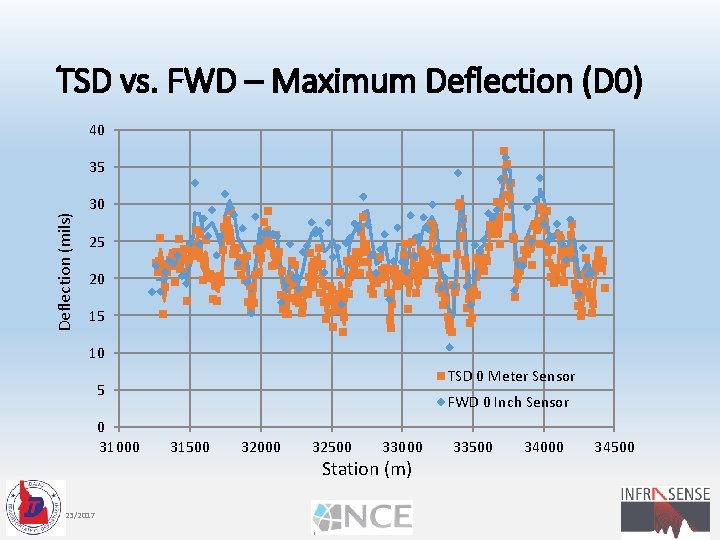
TSD vs. FWD – Maximum Deflection (D 0) 40 Deflection (mils) 35 30 25 20 15 10 TSD 0 Meter Sensor 5 0 31000 5/23/2017 FWD 0 Inch Sensor 31500 32000 32500 33000 Station (m) 33500 34000 34500
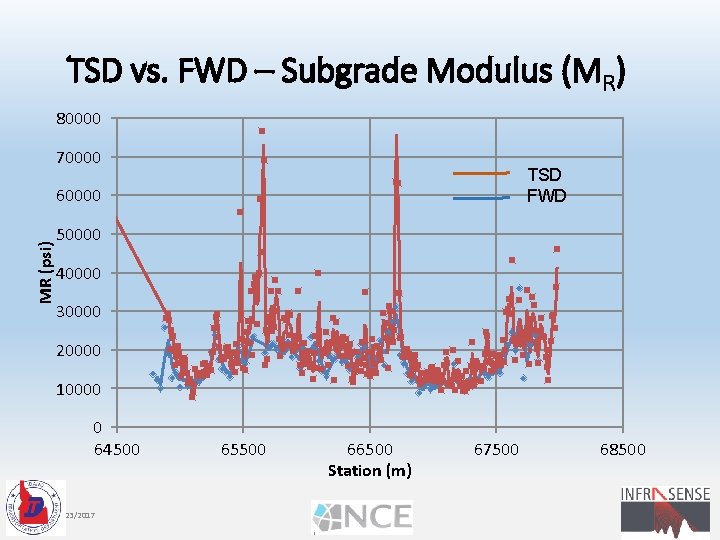
MR (psi) TSD vs. FWD – Subgrade Modulus (MR) Station (m) 5/23/2017
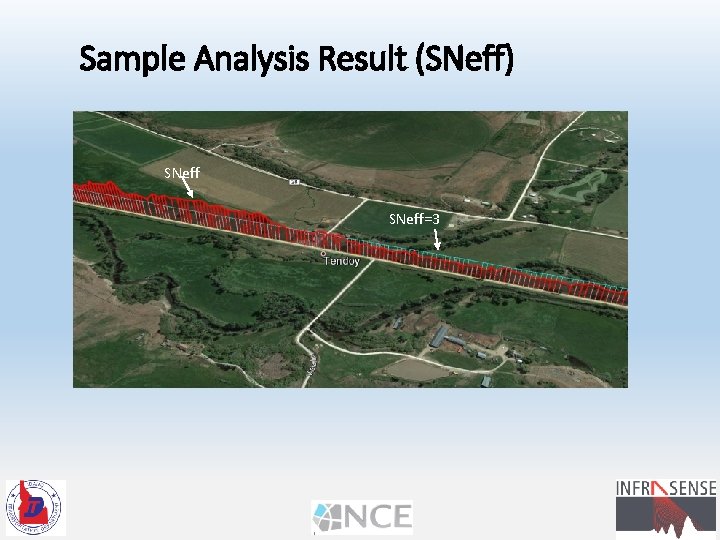
Sample Analysis Result (SNeff) SNeff=3
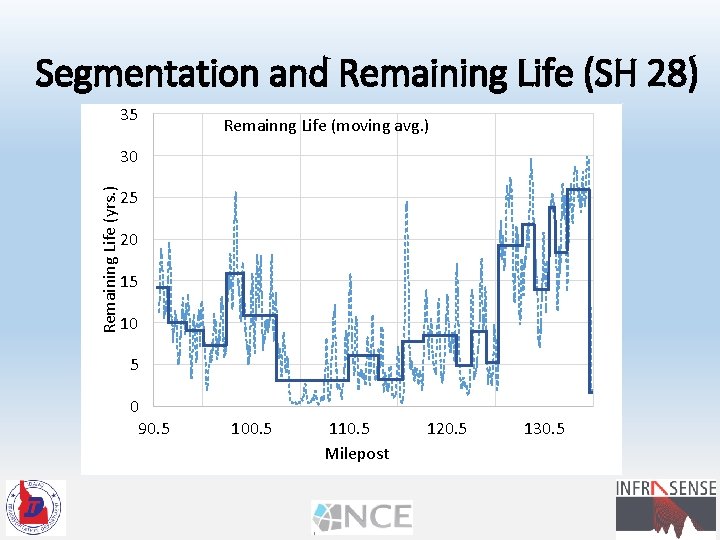
Remaining Life and Segmentation • Calculate remaining life at each point • given SNeff at each test point, compute ESALs • using traffic projections convert ESALS to life • Segment the pavement based on remaining life • Targeted 1 -6 mile segment length, based on typical rehab project length.
Segmentation and Remaining Life (SH 28) 35 Remainng Life (moving avg. ) Remaining Life (yrs. ) 30 25 20 15 10 5 0 90. 5 100. 5 110. 5 Milepost 120. 5 130. 5
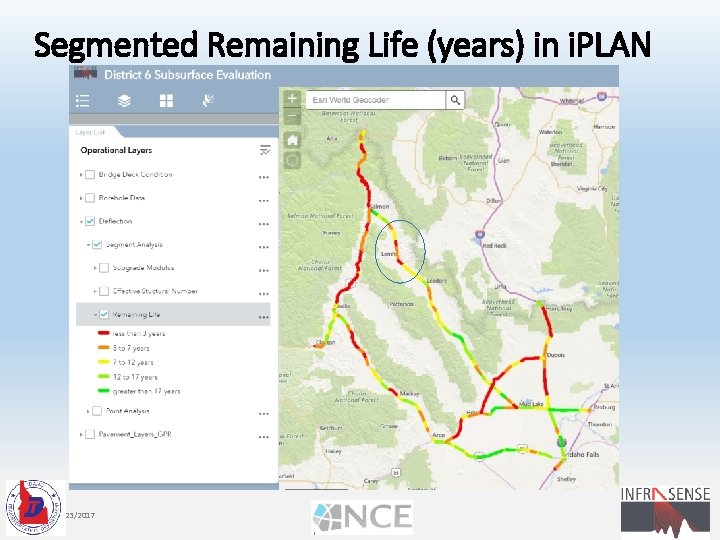
Pavement Substructure Geo. Database • Data is recorded in a series of tables • Data is displayed spatially using Arc. GIS • Database is accessible through i. PLAN • http: //iplan. maps. arcgis. com/apps/webappviewer/index. ht ml? id=36433 c 5 e 330 e 48378 bca 126 af 4920549
Segmented Remaining Life (years) in i. PLAN 5/23/2017
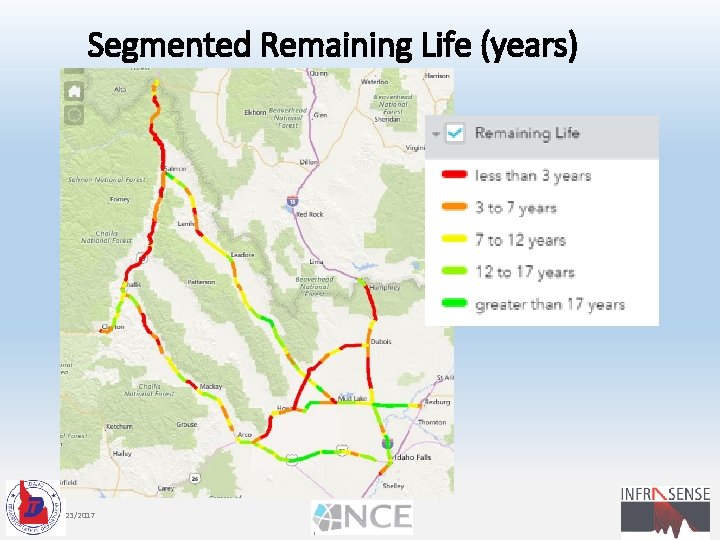
Segmented Remaining Life (years) 5/23/2017
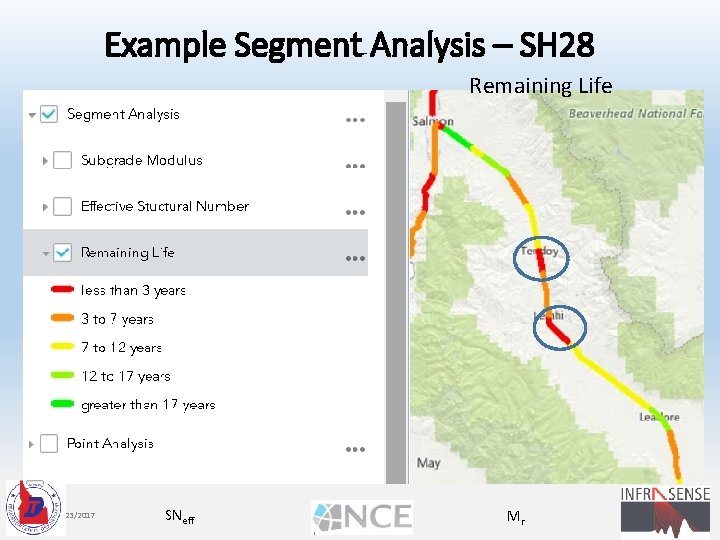
Example Segment Analysis – SH 28 Remaining Life 5/23/2017 SNeff Mr
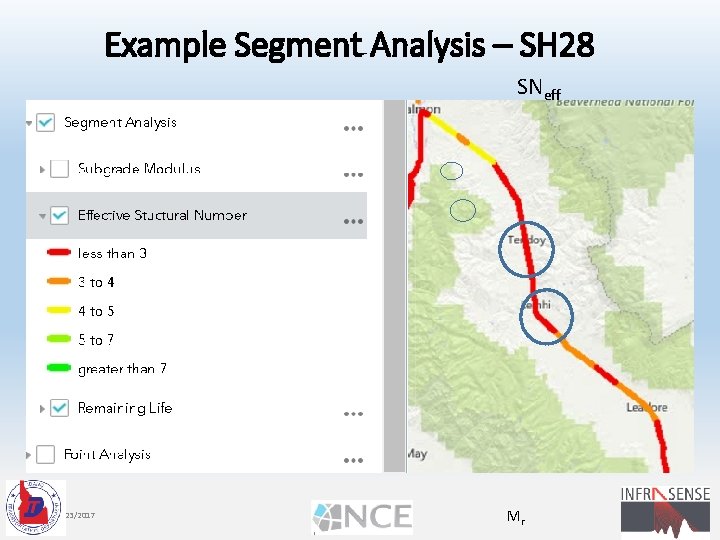
Example Segment Analysis – SH 28 SNeff 5/23/2017 Mr
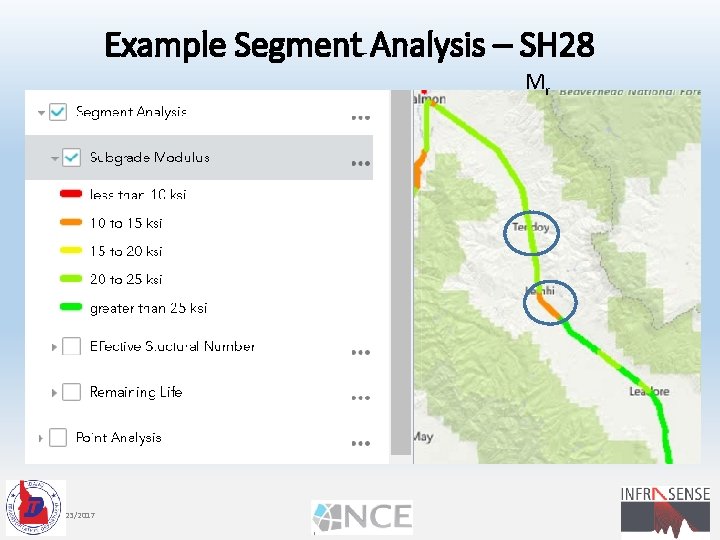
Example Segment Analysis – SH 28 Mr 5/23/2017
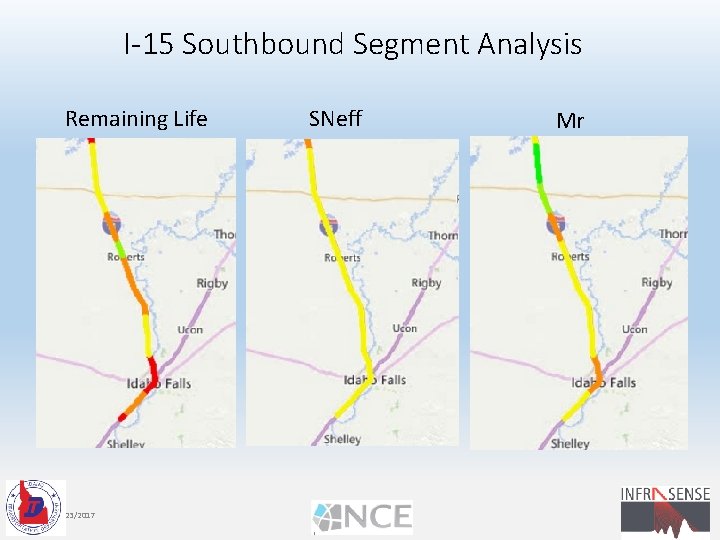
I-15 Southbound Segment Analysis Remaining Life 5/23/2017 SNeff Mr
Current Effort – Use of Structure Data in Pavement Management • Incorporate roadway structure parameters into PMS database (TAMS) • Combine structure parameters with surface distress in decision rules • Evaluate changes in resource allocation and rehabilitation plans
Summary • Combination of TSD and GPR has been demonstrated for determining network-level roadway structure data • Process has been applied to 735 miles of roadway • Resulting data is available via a statewide geodatabase • Results demonstrate potential impact on rehab design • Current work will complete remaining 340 miles of roads in the district and will investigate impact of results on pavement management