
Integration of the New Federal Performance Based Planning
Integration of the New Federal Performance -Based Planning Requirements in California’s Planning Process Coco Briseño Deputy Director, Planning and Modal Programs DRAFT AASHTO’s 2018 Joint Policy Conference: Connecting the DOTs Spokane, Washington July 18, 2018
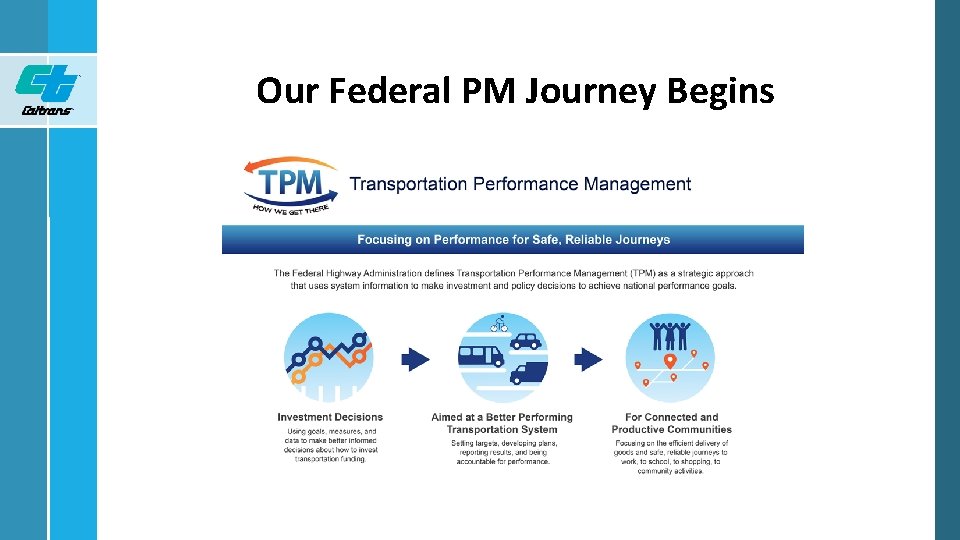
Our Federal PM Journey Begins
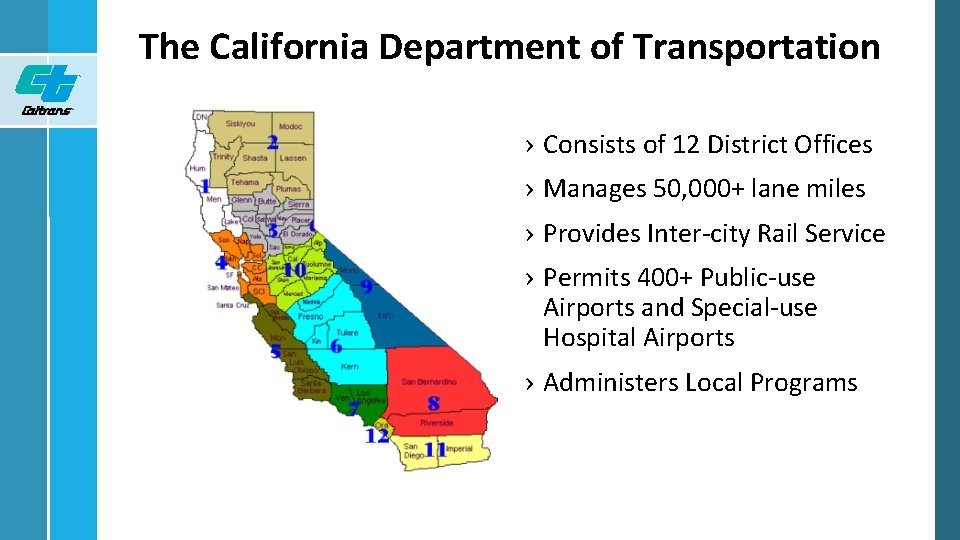
The California Department of Transportation › Consists of 12 District Offices › Manages 50, 000+ lane miles › Provides Inter-city Rail Service › Permits 400+ Public-use Airports and Special-use Hospital Airports › Administers Local Programs
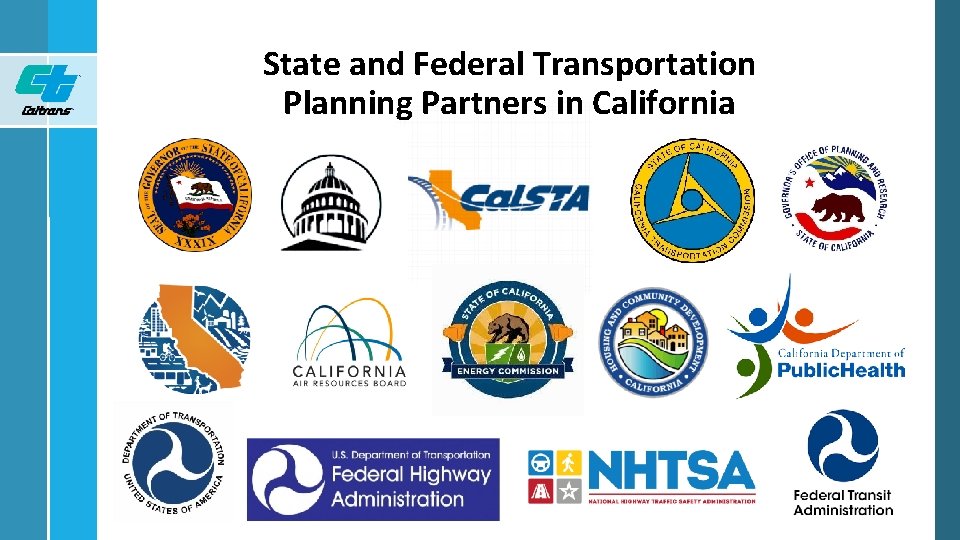
State and Federal Transportation Planning Partners in California
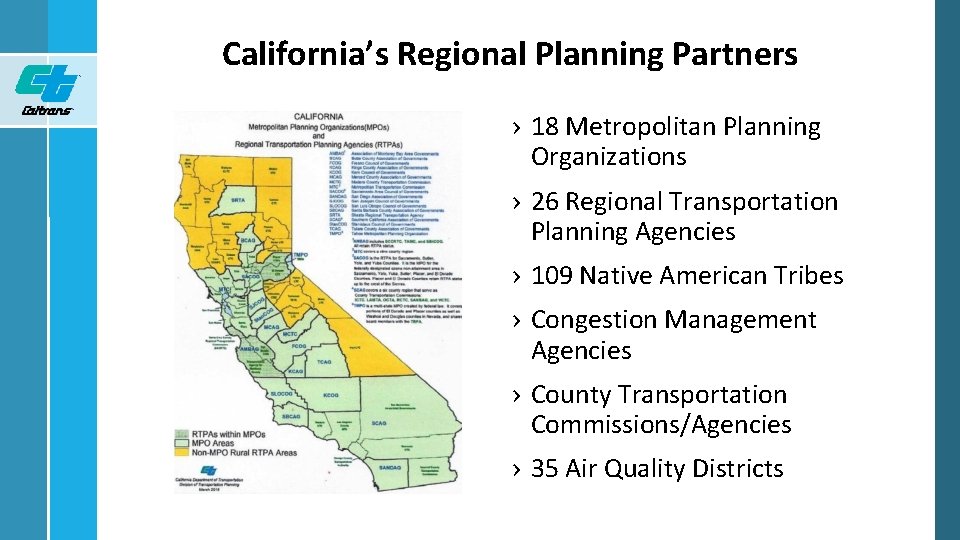
California’s Regional Planning Partners › 18 Metropolitan Planning Organizations › 26 Regional Transportation Planning Agencies › 109 Native American Tribes › Congestion Management Agencies › County Transportation Commissions/Agencies › 35 Air Quality Districts
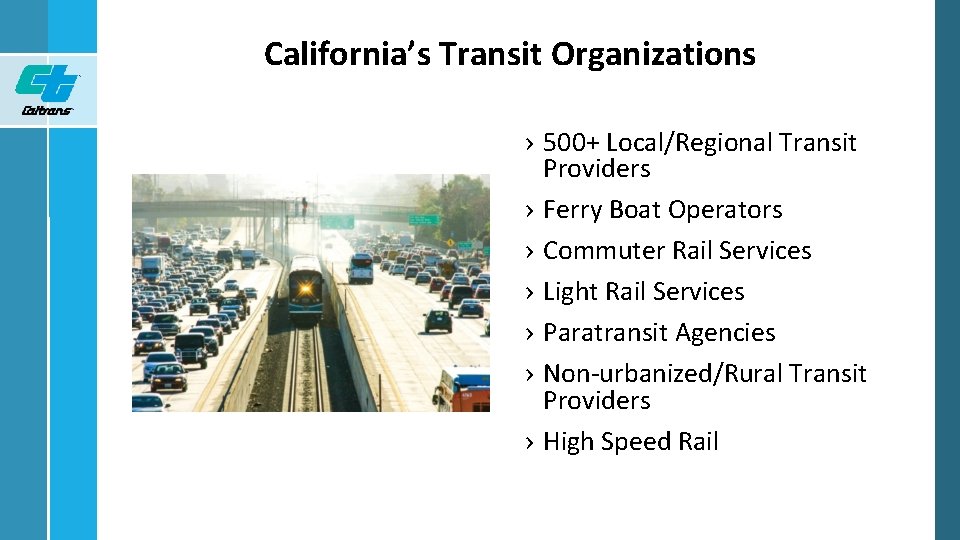
California’s Transit Organizations › 500+ Local/Regional Transit Providers › Ferry Boat Operators › Commuter Rail Services › Light Rail Services › Paratransit Agencies › Non-urbanized/Rural Transit Providers › High Speed Rail
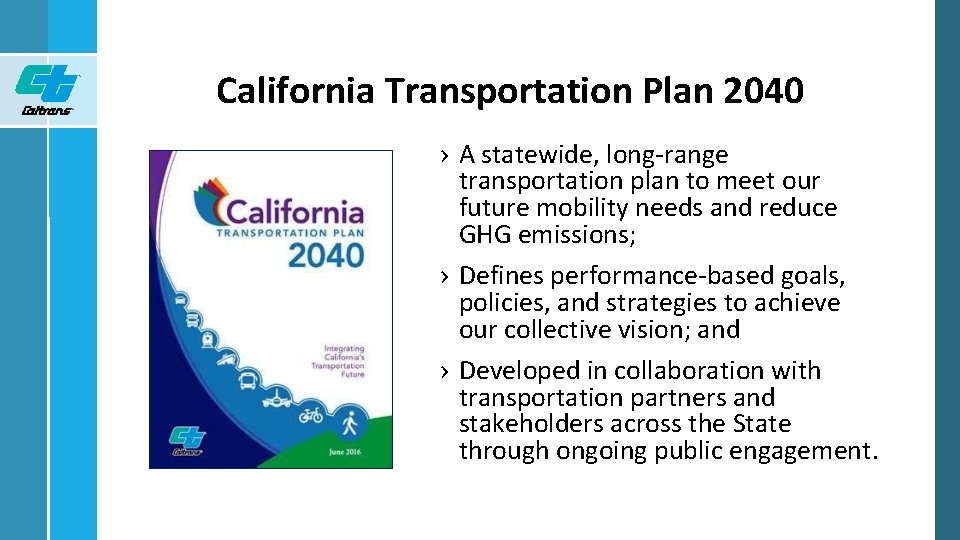
California Transportation Plan 2040 › A statewide, long-range transportation plan to meet our future mobility needs and reduce GHG emissions; › Defines performance-based goals, policies, and strategies to achieve our collective vision; and › Developed in collaboration with transportation partners and stakeholders across the State through ongoing public engagement.
Collaborative Team Approach › Caltrans › Other CA State Agencies – Office of Traffic Safety – California Highway Patrol › California Transportation Commission › FHWA (CA and HQ) › CALCOG › Tribal Governments
Collaboration is the Journey, Not the Destination › Documenting the Collaboration: – Hosted a California Data Assessment Workshop – Caltrans and MPO Performance Target Setting Engagement Workshops (Webcast, Videotaped and Electronically Archived on the Internet) – For PM 2, established a Transportation Asset Management Advisory Committee (TAMAC) – For PM 3, developed a Technical Advisory Group (TAG) – The California Federal Programming Group (CFPG), created a subgroup to address the PM requirements in their current 2017 FTIPs.
MAP-21/FAST Act PM Addendum › Executed PM Addendums between Caltrans and all 18 MPOs (March 23, 2018). › Establishes roles and responsibilities for the State and MPOs to meet the PM requirements. › Includes all three PM measures and Transit Asset Management. › Iterative process with many partners.
Communication, Tools and Resources – PM 3 Data Tool: http: //npmrds. uat. iterispems. com/ – Provided funding to access the PM pooledfund data tool (INRIX) – All PM High-level Whitepaper – Caltrans Whitepapers on PM Target Setting Processes – Caltrans and MPO Data Concurrence Template (PM 3) – MPO Target Reporting Templates – Rolling Master Calendar – PM Website: http: //www. dot. ca. gov/fedliaison/
It’s All About Planning and Programming To achieve desired performance outcomes for our multimodal transportation system, State DOTS, MPOs, RTPAs, transit agencies, and other partner organizations need to integrate goals, objectives, performance measures, and targets from other Performance Based Plans Into the Planning Process. › Asset Management Plans (Highway and Transit) › Freight Plan › Safety Plans (SHSP and HSIP and transit) › Congestion (Management Process and Plan) › CMAQ
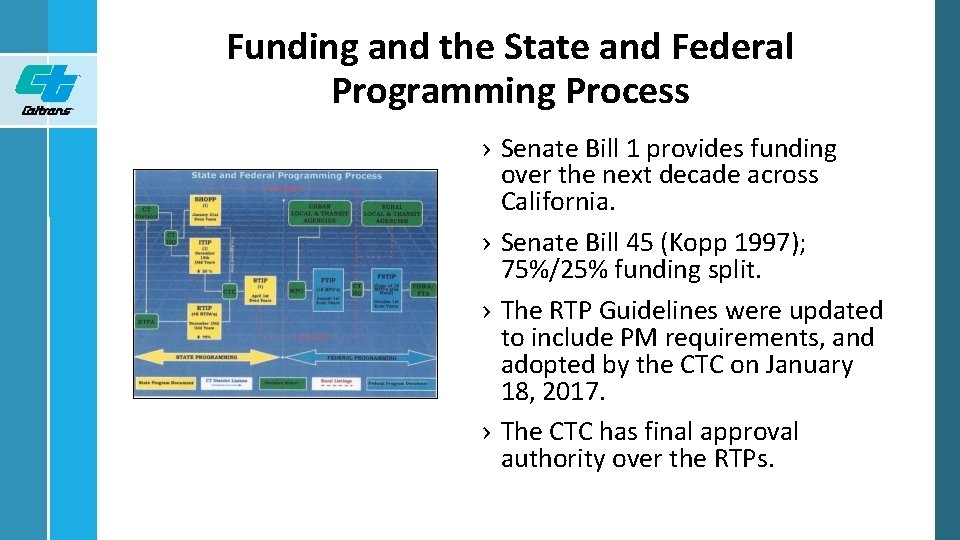
Funding and the State and Federal Programming Process › Senate Bill 1 provides funding over the next decade across California. › Senate Bill 45 (Kopp 1997); 75%/25% funding split. › The RTP Guidelines were updated to include PM requirements, and adopted by the CTC on January 18, 2017. › The CTC has final approval authority over the RTPs.
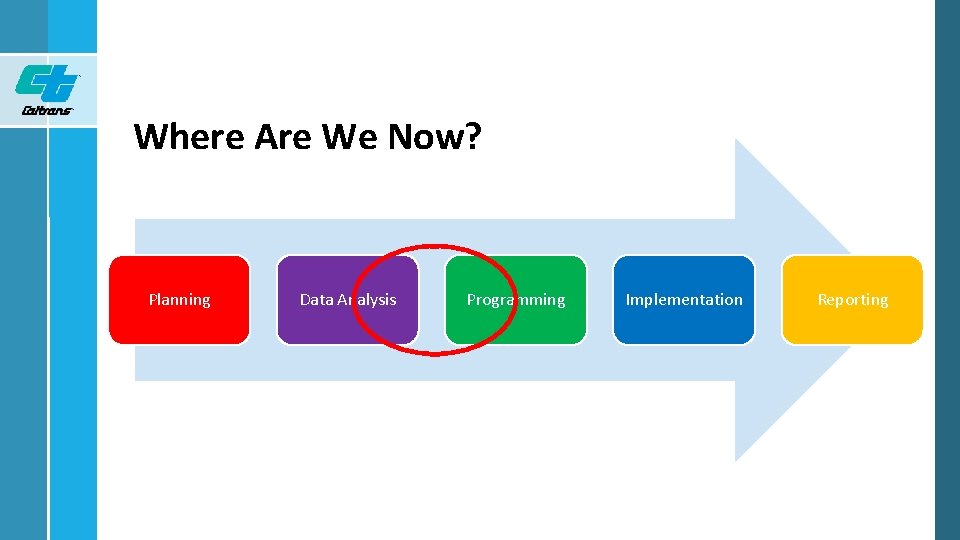
Where Are We Now? Planning Data Analysis Programming Implementation Reporting
Caltrans’ MAP-21 PM Implementation PM 1 (Safety): – Completed Year-One › 17 of 18 MPO’s adopted Caltrans’ statewide targets – Commenced Year-Two › On July 1, 2018 OTS set statewide targets for three of the five targets with NHTSA › Caltrans will meet with the MPOs in late July to discuss its final statewide targets › On August 31, 2018, Caltrans will set Calendar Year 2019 targets with the FHWA in the HSIP.
Caltrans’ MAP-21 PM Implementation PM 2 (Pavement/Bridge Condition) and PM 3 (System Performance): – Completed Year-One › Coordinated with transportation partners and stakeholders. › On May 20, 2018, statewide two- and four-year targets were established by Caltrans. › By November 16, 2018, MPOs need to document with Caltrans whether they will contribute toward the accomplishment of Caltrans’ targets, or set their own. › Whitepapers were distributed, which document their respective target-setting processes.
Challenges / Lessons Learned › Data timeliness and quality, integrating with SHSP and RTPs; impact on TIPs. (PM 1) › Ownership of NHS, unequal conditions across road systems, multi-state MPOs, and complexity of planning / management processes. State legislation with performance targets. (PM 2) › Data timeliness and quality, and data concurrence with local partners. (PM 3)

Contact Information: › PM 1 Team Lead: Thomas Schriber, thomas. schriber@dot. ca. gov, (916) 654 -7138 › PM 2 Team Lead: Michael Johnson, michael. b. johnson@dot. ca. gov, (916) 653 -2572 › PM 3 Team Lead: Nicholas Deal, nicholas. deal@dot. ca. gov, (916) 654 -4853

Questions?
- Slides: 19