
Integration of the International Realtime Ocean Color Data
- Slides: 38
Integration of the International Real-time Ocean Color Data to the New Jersey Long Term Ecosystem (LEO-15) Schofield, O. , Bergmann, T. , Crowley, M. , Glenn, S. Rutgers Coastal Ocean Observation Laboratory http: //marine. rutgers. edu/cool Special acknowledgement of the expansive-generous brains of Mark Moline (Cal-Poly) & Bob Arnone (NRL)
Goals: Overview of NOPP related bio-optical efforts l What is in the water l Relation to in-water optical properties l Defining the spatial variability l New satellite algorithms and the new platforms l Why ocean observatories are cool for a lowly biologist
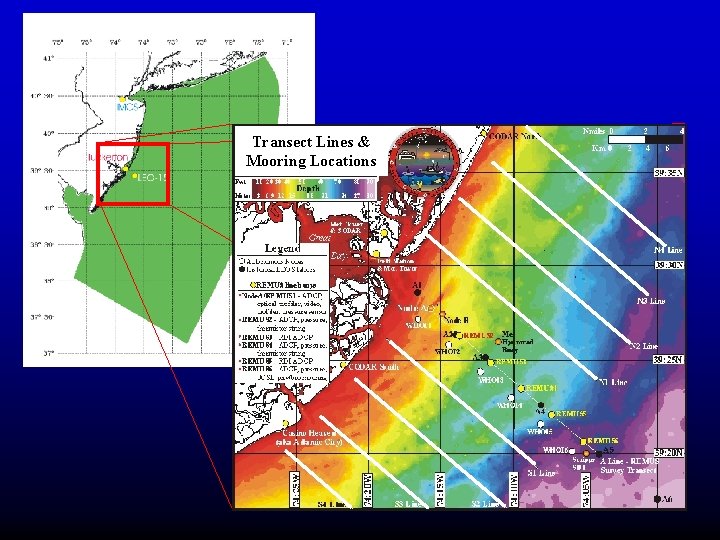
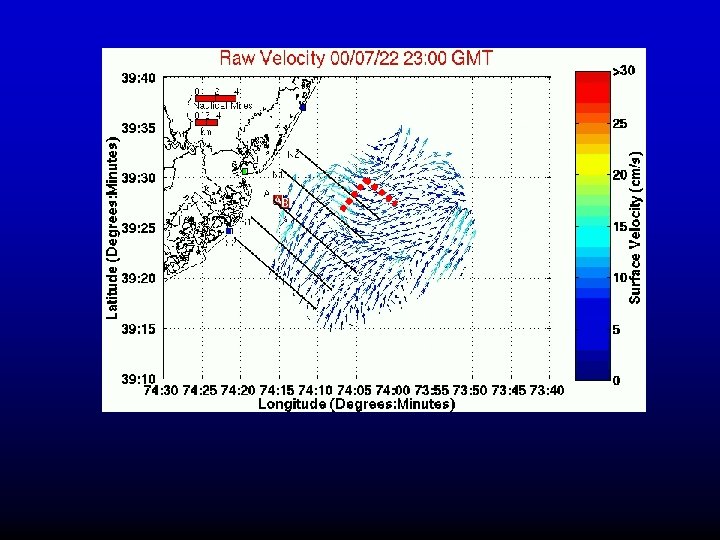
Transect Lines & Mooring Locations
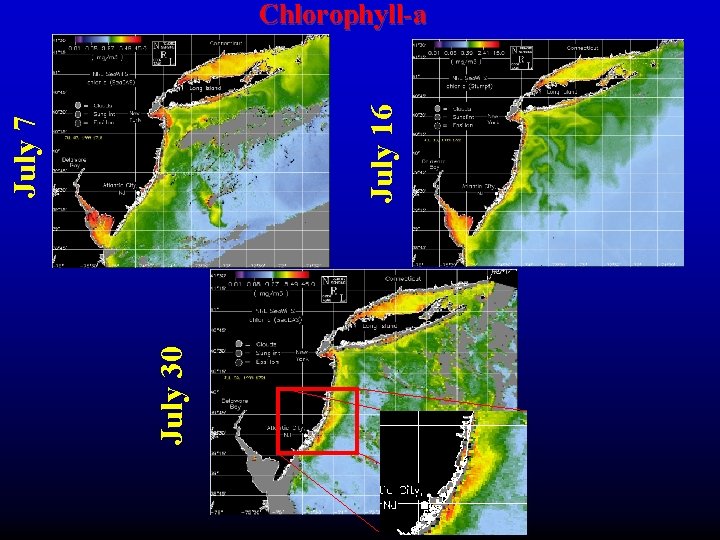
July 30 July 16 July 7 Chlorophyll-a
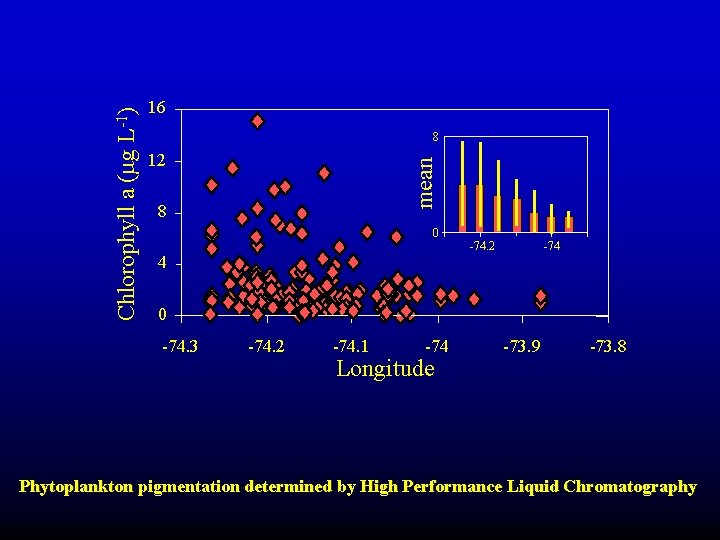
8 12 mean Chlorophyll a (mg L-1) 16 8 0 4 -74. 2 -74 0 -74. 3 -74. 2 -74. 1 -74 Longitude -73. 9 -73. 8 Phytoplankton pigmentation determined by High Performance Liquid Chromatography
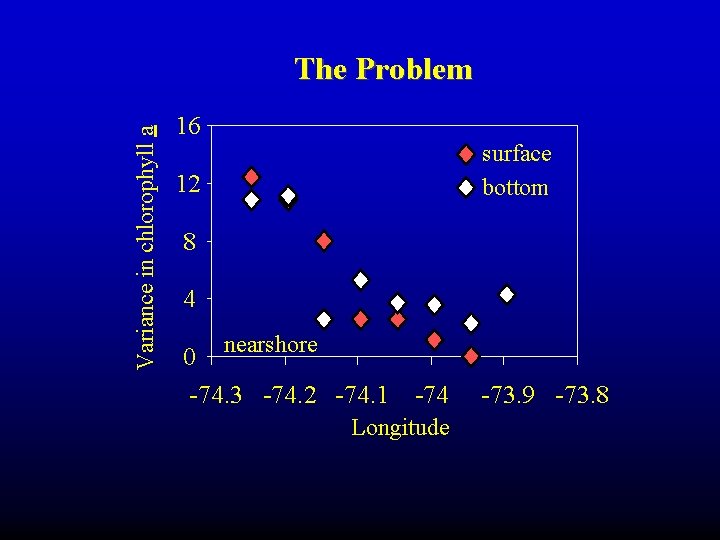
Variance in chlorophyll a The Problem 16 surface bottom 12 8 4 nearshore 0 -74. 3 -74. 2 -74. 1 -74 Longitude -73. 9 -73. 8
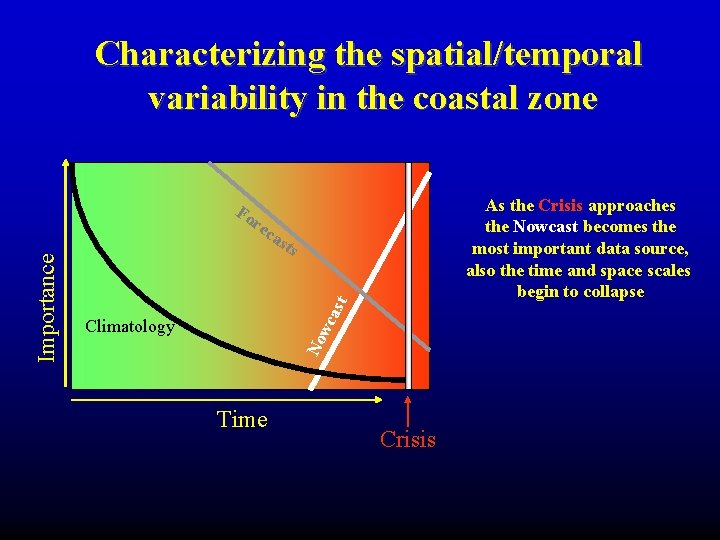
Characterizing the spatial/temporal variability in the coastal zone Fo As the Crisis approaches the Nowcast becomes the most important data source, also the time and space scales begin to collapse ast ca sts wc Climatology No Importance re Time Crisis
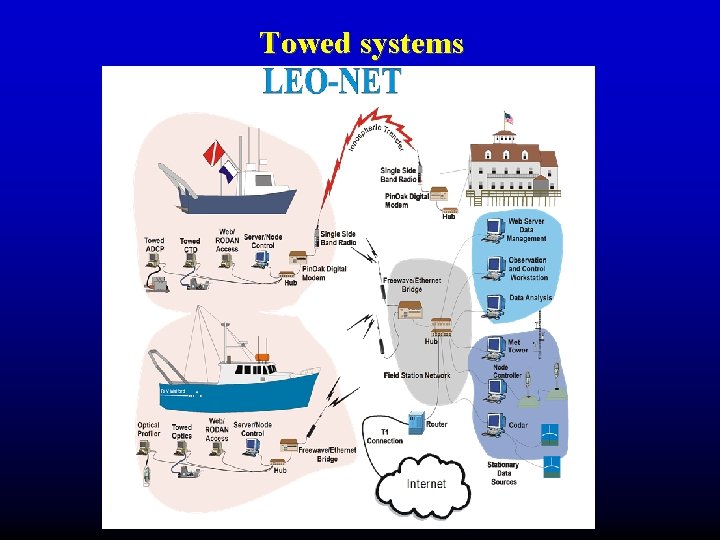
Towed systems
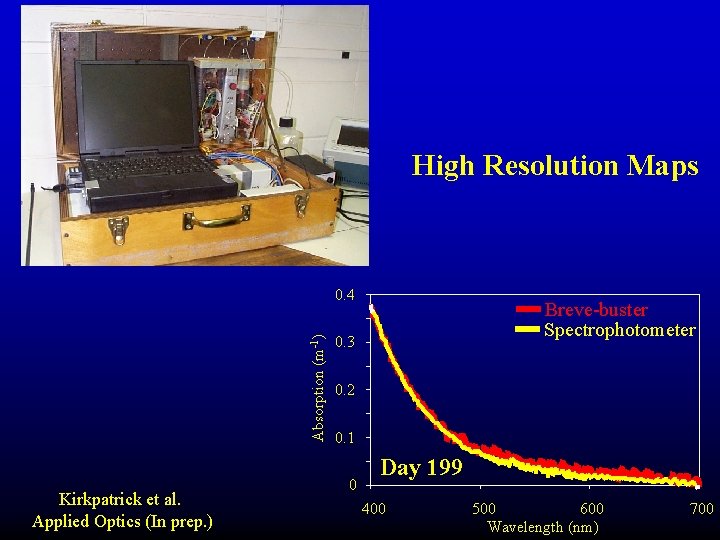
High Resolution Maps Absorption (m-1) 0. 4 Kirkpatrick et al. Applied Optics (In prep. ) Breve-buster Spectrophotometer 0. 3 0. 2 0. 1 0 Day 199 400 500 600 Wavelength (nm) 700
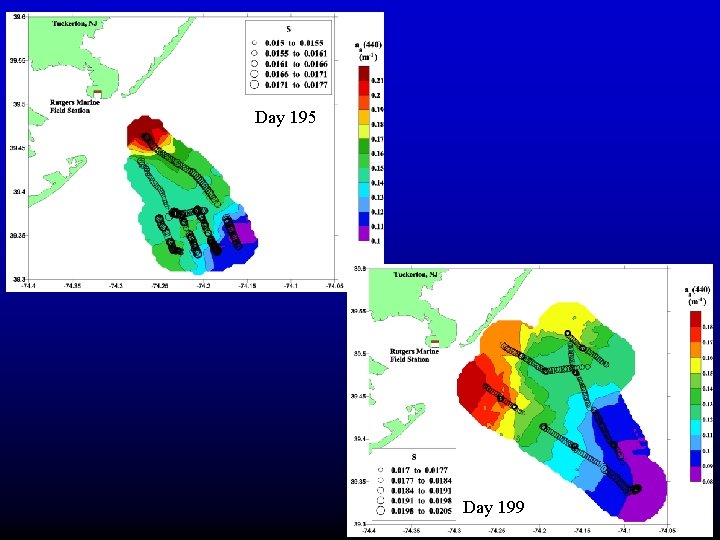
Day 195 Day 199
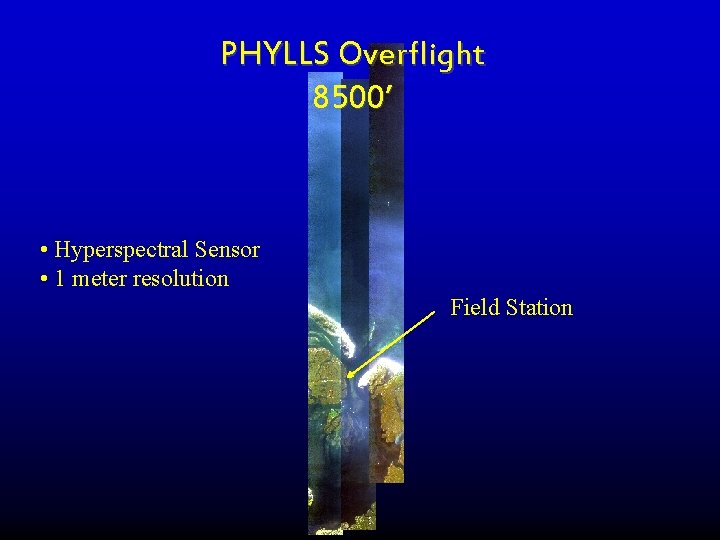
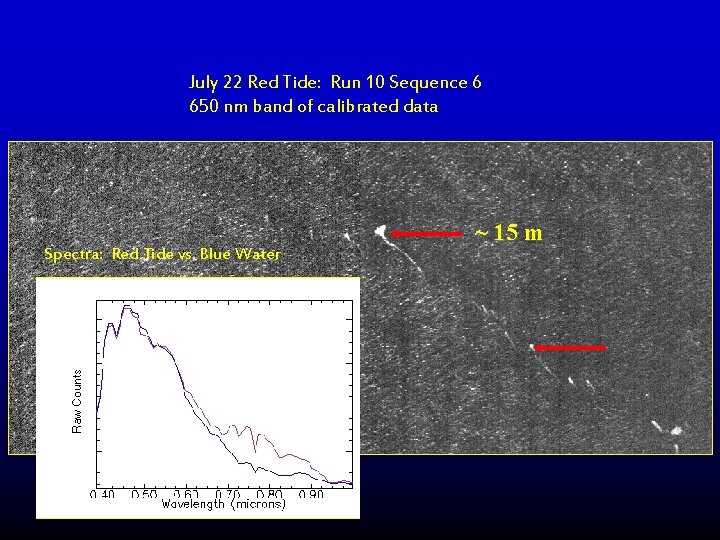
PHYLLS Overflight 8500’ • Hyperspectral Sensor • 1 meter resolution Field Station
July 22 Red Tide: Run 10 Sequence 6 650 nm band of calibrated data Raw Counts Spectra: Red Tide vs. Blue Water ~ 15 m
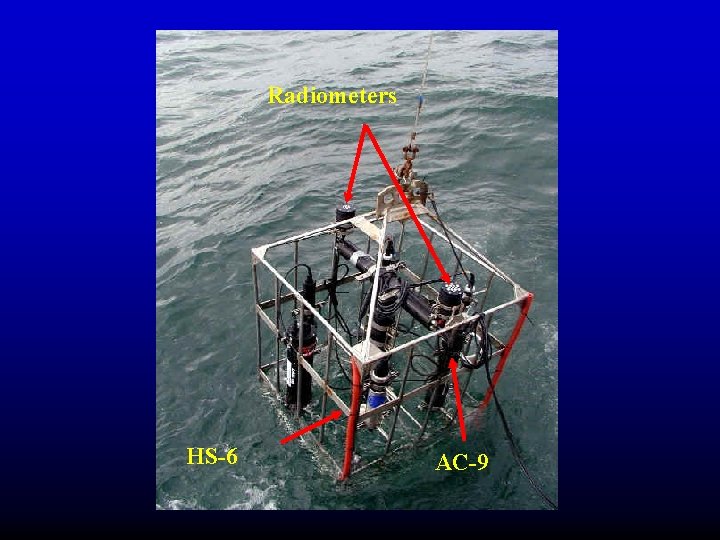
Radiometers HS-6 AC-9
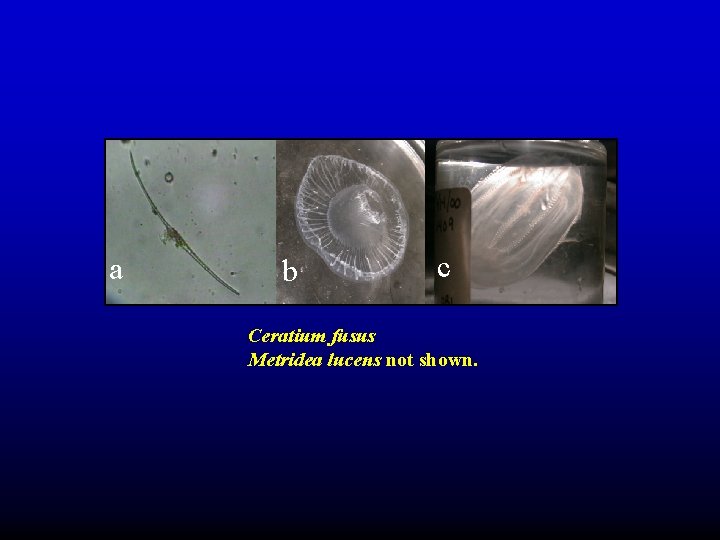
a b c Ceratium fusus Metridea lucens not shown.
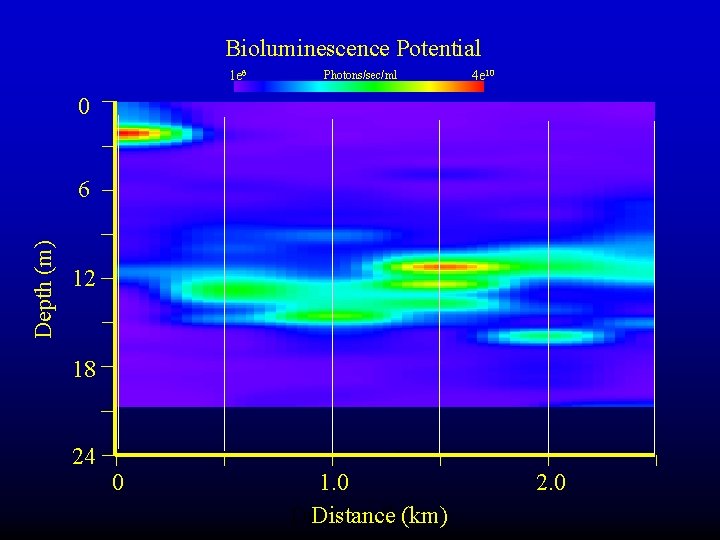
Bioluminescence Potential 1 e 6 Photons/sec/ml 4 e 10 0 Depth (m) 6 12 18 24 a 0 1. 0 Distance (km) 2. 0
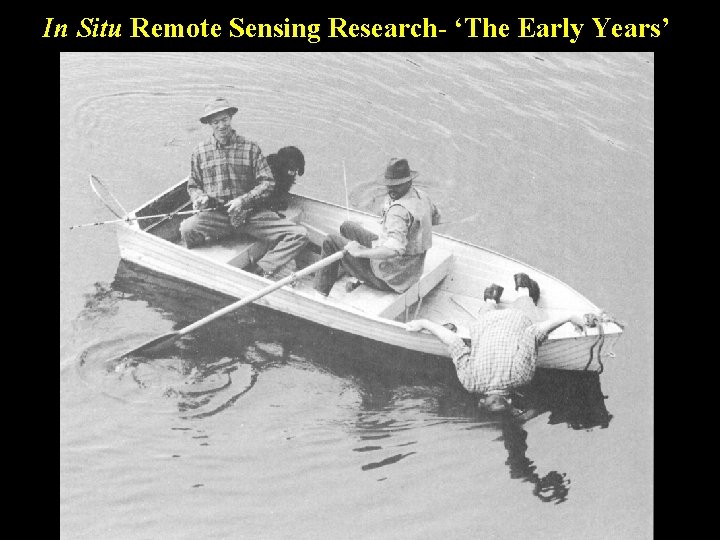
In Situ Remote Sensing Research- ‘The Early Years’
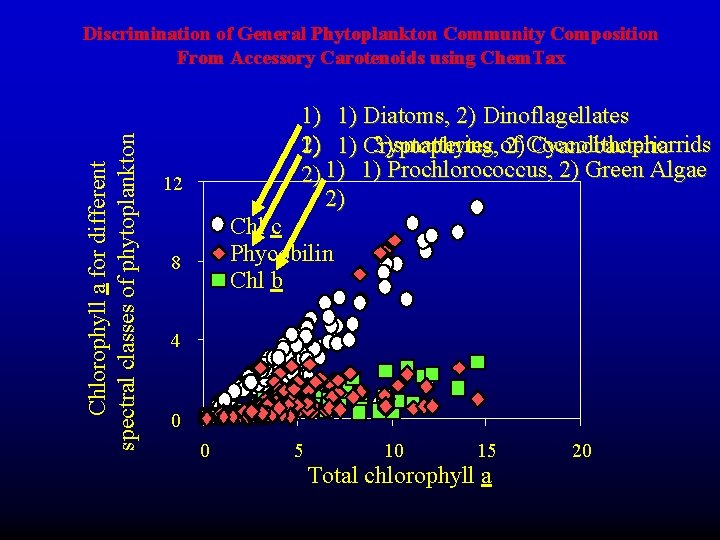
Chlorophyll a for different spectral classes of phytoplankton Discrimination of General Phytoplankton Community Composition From Accessory Carotenoids using Chem. Tax 1) 1) Diatoms, 2) Dinoflagellates 2) 3)smattering, of 1) 1) Cryptophytes 2) Coccolithophorrids Cyanobacteria 2) 1) 1) Prochlorococcus, 2) Green Algae 2) 12 Chl c Phycobilin Chl b 8 4 0 0 5 10 15 Total chlorophyll a 20
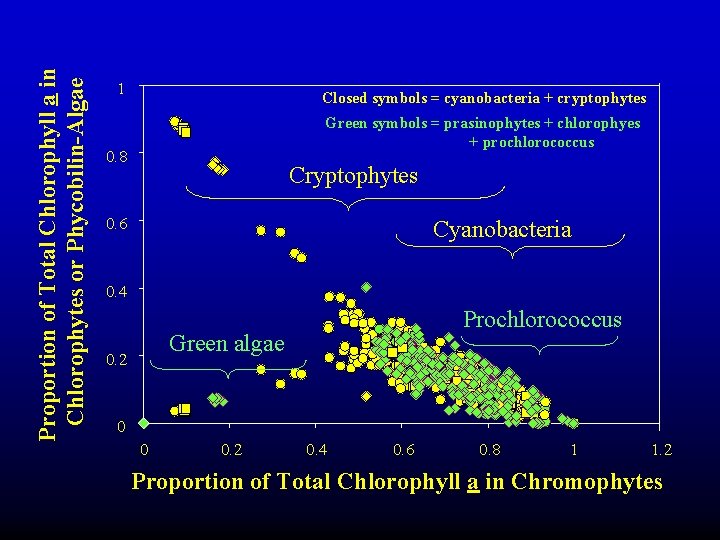
Proportion of Total Chlorophyll a in Chlorophytes or Phycobilin-Algae 1 Closed symbols = cyanobacteria + cryptophytes Green symbols = prasinophytes + chlorophyes + prochlorococcus 0. 8 Cryptophytes 0. 6 Cyanobacteria 0. 4 Prochlorococcus Green algae 0. 2 0 0 0. 2 0. 4 0. 6 0. 8 1 1. 2 Proportion of Total Chlorophyll a in Chromophytes
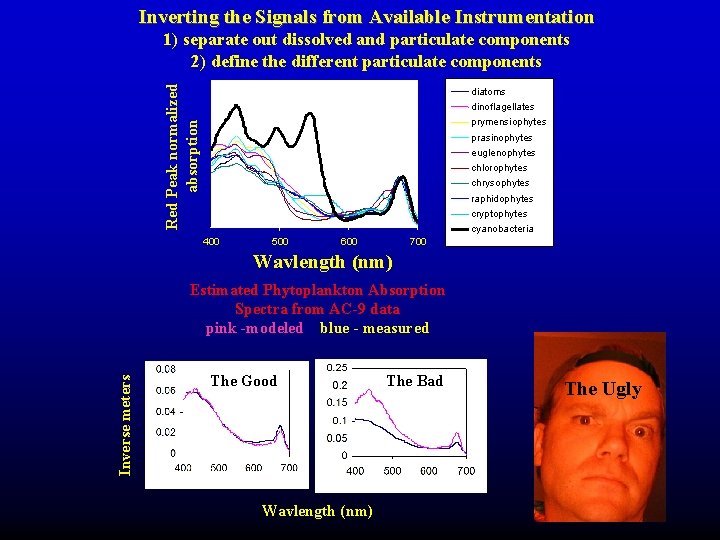
Inverting the Signals from Available Instrumentation Red Peak normalized absorption 1) separate out dissolved and particulate components 2) define the different particulate components diatoms dinoflagellates prymensiophytes prasinophytes euglenophytes chlorophytes chrysophytes raphidophytes cryptophytes cyanobacteria 400 500 600 700 Wavlength (nm) Inverse meters Estimated Phytoplankton Absorption Spectra from AC-9 data pink -modeled blue - measured The Good Wavlength (nm) The Bad The Ugly
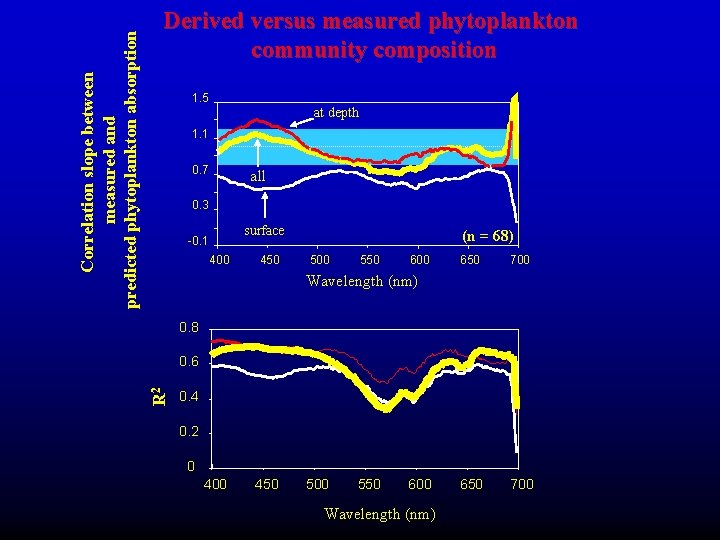
1. 5 at depth 1. 1 0. 7 all 0. 3 surface -0. 1 400 450 (n = 68) 500 550 600 650 700 Wavelength (nm) 0. 8 0. 6 R 2 Correlation slope between measured and predicted phytoplankton absorption Derived versus measured phytoplankton community composition 0. 4 0. 2 0 400 450 500 550 600 Wavelength (nm)
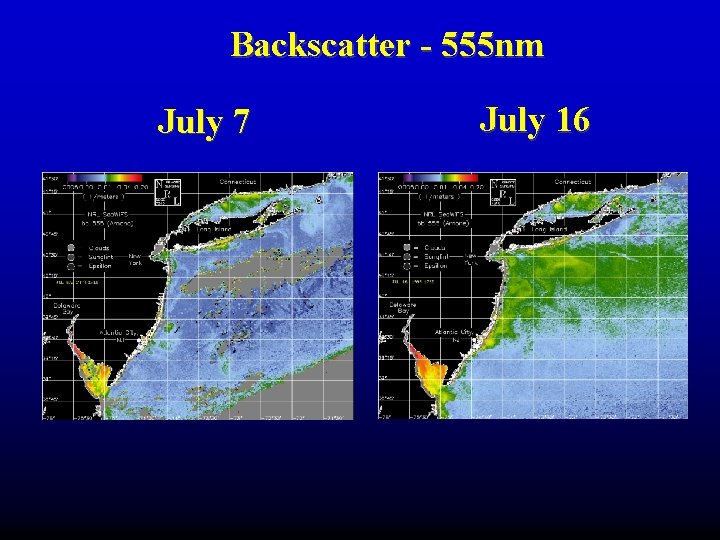
Backscatter - 555 nm July 7 July 16
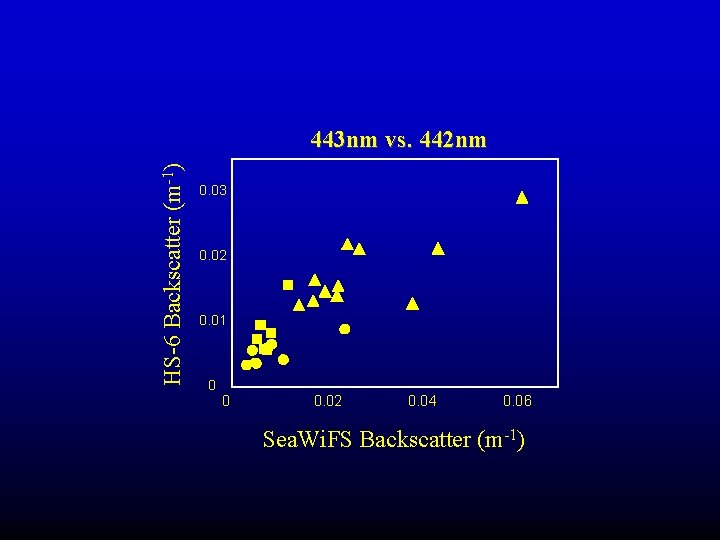
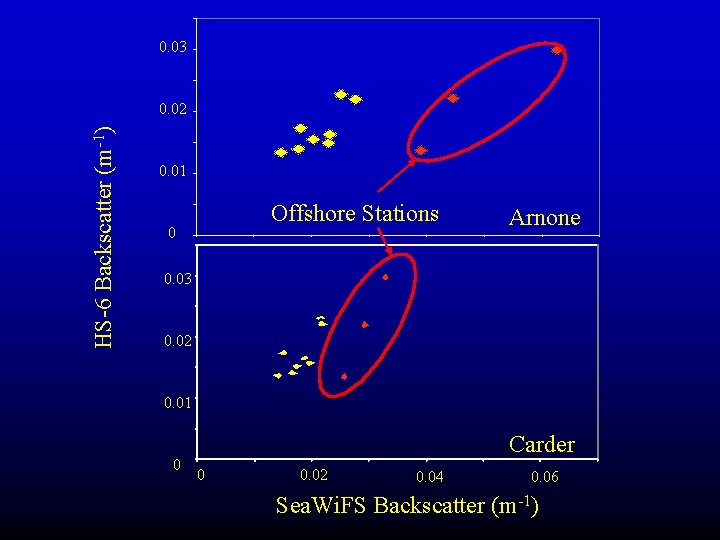
HS-6 Backscatter (m-1) 443 nm vs. 442 nm 0. 03 0. 02 0. 01 0 0 0. 02 0. 04 0. 06 Sea. Wi. FS Backscatter (m-1)
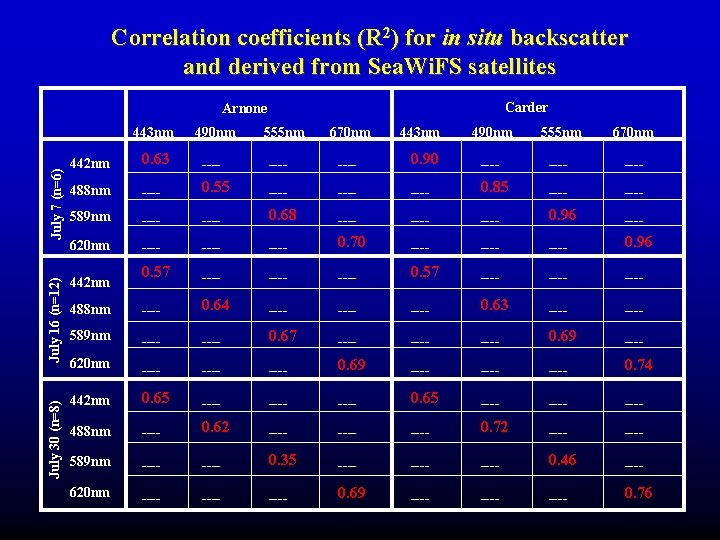
Correlation coefficients (R 2) for in situ backscatter and derived from Sea. Wi. FS satellites Carder July 30 (n=8) July 16 (n=12) July 7 (n=6) Arnone 443 nm 490 nm 555 nm 670 nm 442 nm 0. 63 ---- 0. 90 ---- 488 nm ---- 0. 55 ---- 0. 85 ---- 589 nm ---- 0. 68 ---- 0. 96 ---- 620 nm ---- 0. 70 ---- 0. 96 0. 57 ---- ---- 488 nm ---- 0. 64 ---- 0. 63 ---- 589 nm ---- 0. 67 ---- 0. 69 ---- 620 nm ---- 0. 69 ---- 0. 74 442 nm 0. 65 ---- ---- 488 nm ---- 0. 62 ---- 0. 72 ---- 589 nm ---- 0. 35 ---- 0. 46 ---- 620 nm ---- 0. 69 ---- 0. 76 442 nm 555 nm 670 nm 443 nm
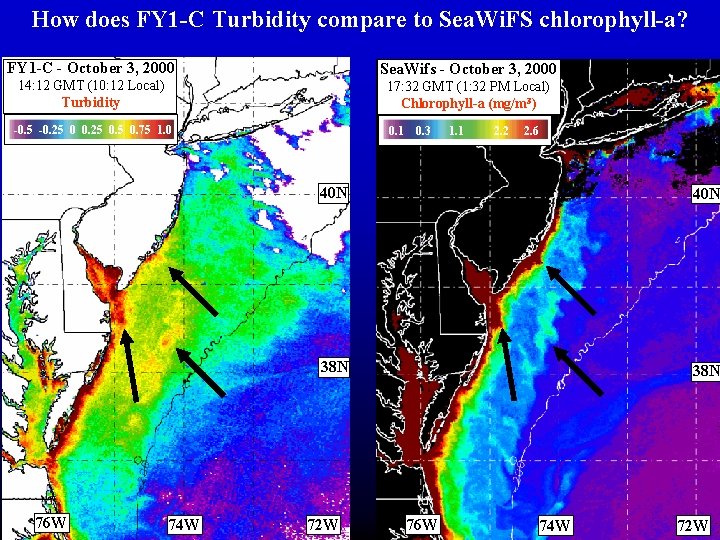
How does FY 1 -C Turbidity compare to Sea. Wi. FS chlorophyll-a? FY 1 -C - October 3, 2000 Sea. Wifs - October 3, 2000 14: 12 GMT (10: 12 Local) Turbidity 17: 32 GMT (1: 32 PM Local) Chlorophyll-a (mg/m 3) -0. 5 -0. 25 0. 75 1. 0 0. 1 76 W 74 W 0. 3 1. 1 2. 2 2. 6 40 N 38 N 72 W 76 W 74 W 72 W
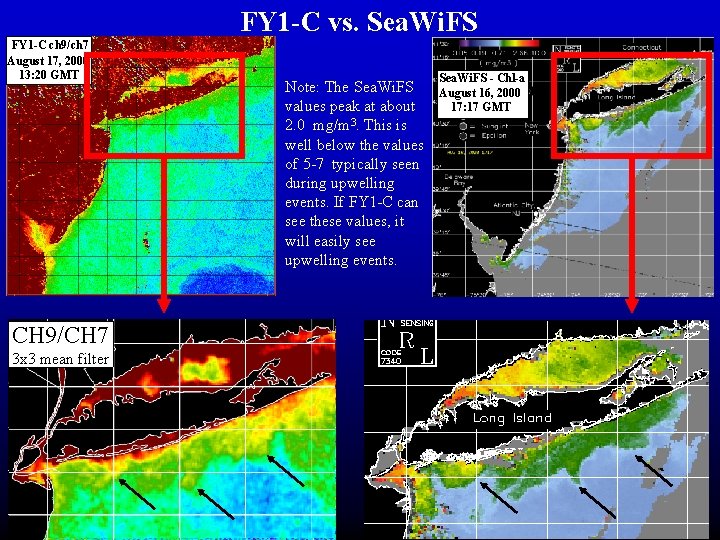
FY 1 -C vs. Sea. Wi. FS FY 1 -C ch 9/ch 7 August 17, 2000 13: 20 GMT CH 9/CH 7 3 x 3 mean filter Note: The Sea. Wi. FS values peak at about 2. 0 mg/m 3. This is well below the values of 5 -7 typically seen during upwelling events. If FY 1 -C can see these values, it will easily see upwelling events. Sea. Wi. FS - Chl-a August 16, 2000 17: 17 GMT
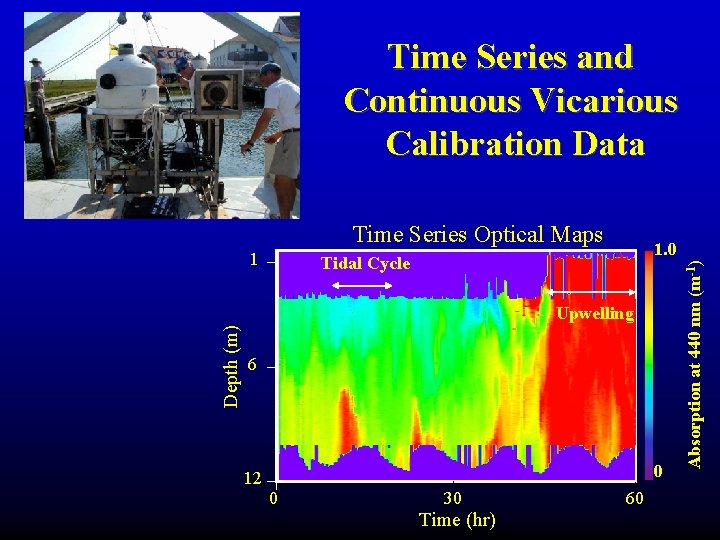
Time Series and Continuous Vicarious Calibration Data Time Series Optical Maps 1. 0 Tidal Cycle Depth (m) Upwelling 6 12 0 0 30 Time (hr) 60 Absorption at 440 nm (m-1) 1
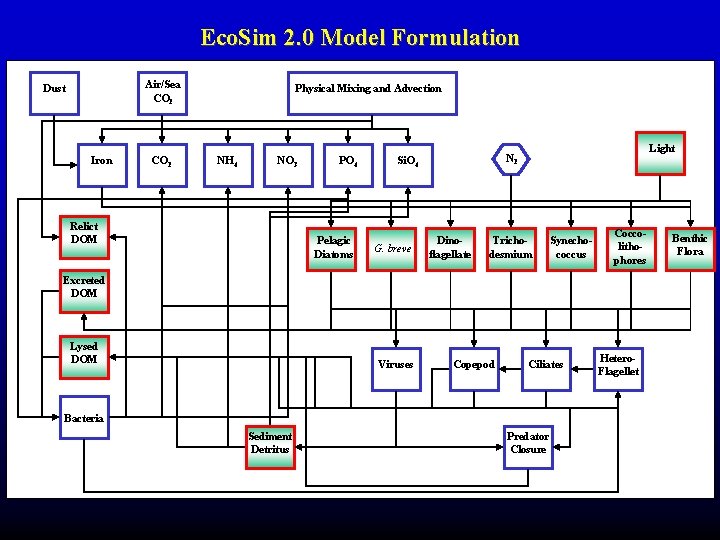
Eco. Sim 2. 0 Model Formulation Air/Sea CO 2 Dust Iron CO 2 Physical Mixing and Advection NH 4 NO 3 Relict DOM PO 4 Pelagic Diatoms G. breve Light N 2 Si. O 4 Dinoflagellate Trichodesmium Synechococcus Coccolithophores Excreted DOM Lysed DOM Viruses Copepod Ciliates Bacteria Sediment Detritus Predator Closure Hetero. Flagellet Benthic Flora
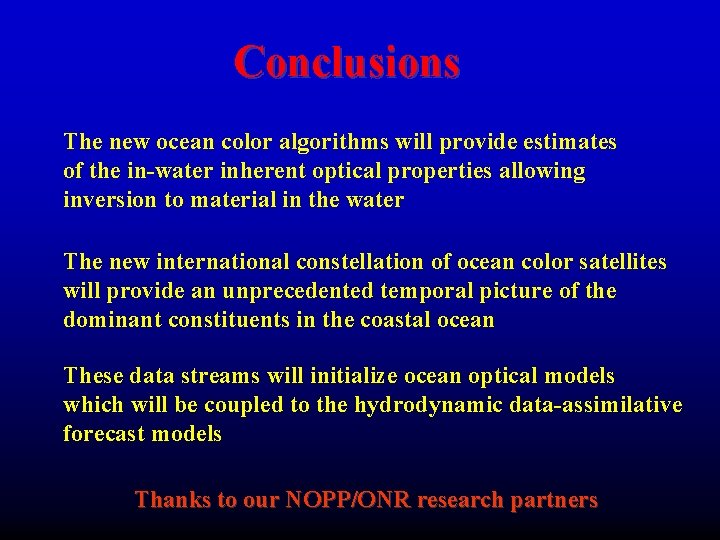
Conclusions The new ocean color algorithms will provide estimates of the in-water inherent optical properties allowing inversion to material in the water The new international constellation of ocean color satellites will provide an unprecedented temporal picture of the dominant constituents in the coastal ocean These data streams will initialize ocean optical models which will be coupled to the hydrodynamic data-assimilative forecast models Thanks to our NOPP/ONR research partners
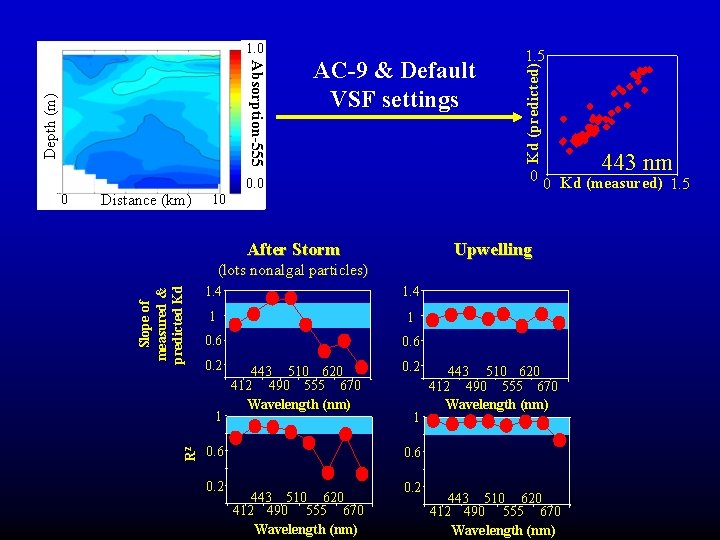
Depth (m) Absorption-555 AC-9 & Default VSF settings Distance (km) 10 After Storm Upwelling Slope of measured & predicted Kd (lots nonalgal particles) 1. 4 1 1 0. 6 0. 2 R 2 1 443 510 620 412 490 555 670 Wavelength (nm) 0. 6 0. 2 1 443 510 620 412 490 555 670 Wavelength (nm) 0. 6 443 510 620 412 490 555 670 Wavelength (nm) 443 nm 0 0 Kd (measured) 1. 5 0. 0 0 1. 5 Kd (predicted) 1. 0 0. 2 443 510 620 412 490 555 670 Wavelength (nm)
Book from 1954 Observatories
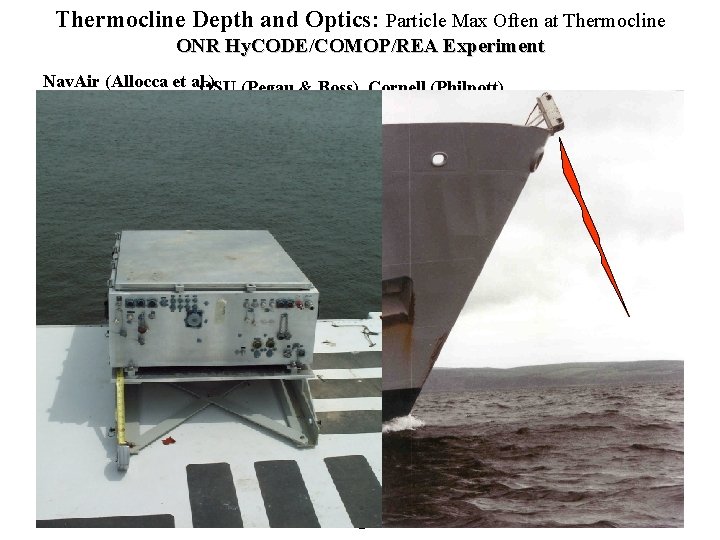
Thermocline Depth and Optics: Particle Max Often at Thermocline ONR Hy. CODE/COMOP/REA Experiment Nav. Air (Allocca et al. ) OSU (Pegau & Boss), Cornell (Philpott) Depth Fluorescence Thermocline Active: Changes in Attenuation Passive: Modulation over time of magnitude and Slope Profile with Modulated LIDAR shape of. Beam the reflectance spectra Range
0. 03 HS-6 Backscatter (m-1) 0. 02 0. 01 Offshore Stations 0 Arnone 0. 03 0. 02 0. 01 0 Carder 0 0. 02 0. 04 0. 06 Sea. Wi. FS Backscatter (m-1)
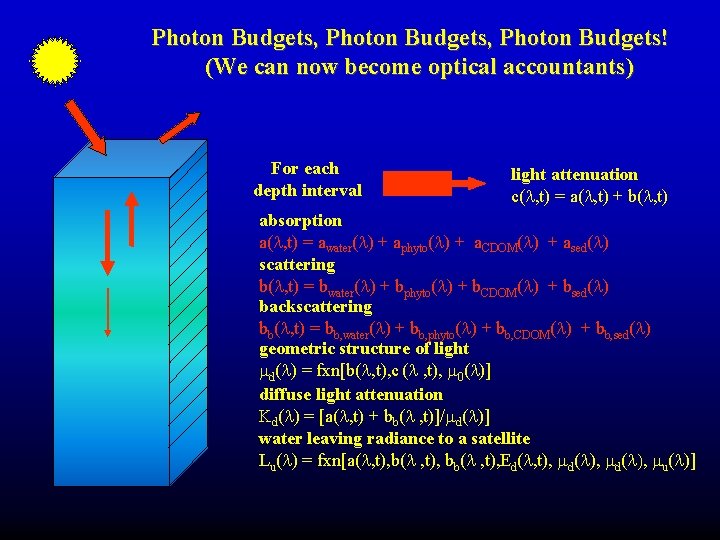
Photon Budgets, Photon Budgets! (We can now become optical accountants) For each depth interval light attenuation c(l, t) = a(l, t) + b(l, t) absorption a(l, t) = awater(l) + aphyto(l) + a. CDOM(l) + ased(l) scattering b(l, t) = bwater(l) + bphyto(l) + b. CDOM(l) + bsed(l) backscattering bb(l, t) = bb, water(l) + bb, phyto(l) + bb, CDOM(l) + bb, sed(l) geometric structure of light md(l) = fxn[b(l, t), c (l , t), m 0(l)] diffuse light attenuation Kd(l) = [a(l, t) + bb(l , t)]/md(l)] water leaving radiance to a satellite Lu(l) = fxn[a(l, t), b(l , t), bb(l , t), Ed(l, t), md(l), mu(l)]
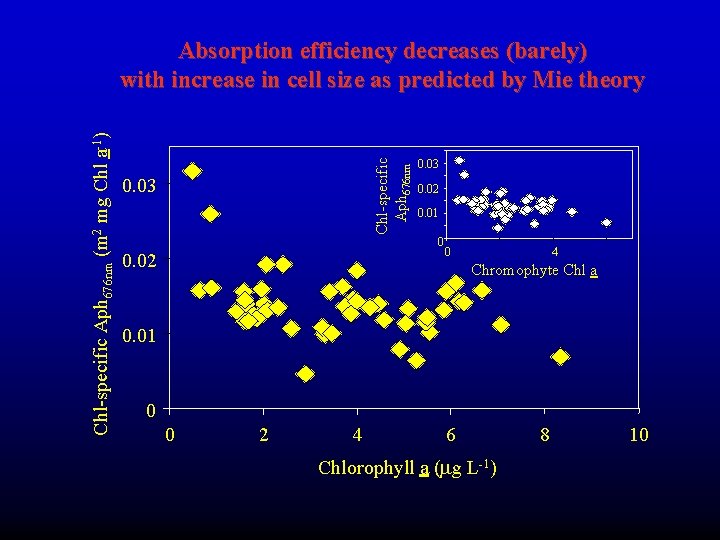
Chl-specific Aph 676 nm (m 2 mg Chl a-1) Absorption efficiency decreases (barely) with increase in cell size as predicted by Mie theory 0. 03 0. 02 0. 01 0 0. 02 0 4 Chromophyte Chl a 0. 01 0 0 2 4 6 Chlorophyll a (mg L-1) 8 10
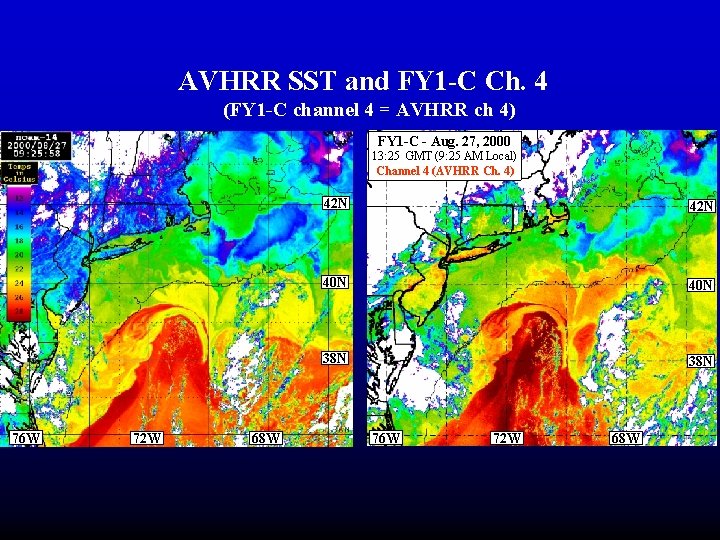
AVHRR SST and FY 1 -C Ch. 4 (FY 1 -C channel 4 = AVHRR ch 4) FY 1 -C - Aug. 27, 2000 13: 25 GMT (9: 25 AM Local) Channel 4 (AVHRR Ch. 4) 76 W 72 W 68 W 42 N 40 N 38 N 76 W 72 W 68 W