
INTEGRATION OF CELLS INTO TISSUES Dr Mahmood S



- Slides: 34
INTEGRATION OF CELLS INTO TISSUES Dr Mahmood S Choudhery, Ph. D Assistant Professor Advance Center of Research in Biomedical Sciences Incharge Tissue Engineering Laboratory, Mayo Hospital Lahore, Pakistan King Edward Medical University, Lahore, Pakistan
Learning objective � How cells attach to neighboring cells � How cells communicate with other cells and extracellular matrix (ECM) � Types of different junctions � Role of ECM in cell signaling
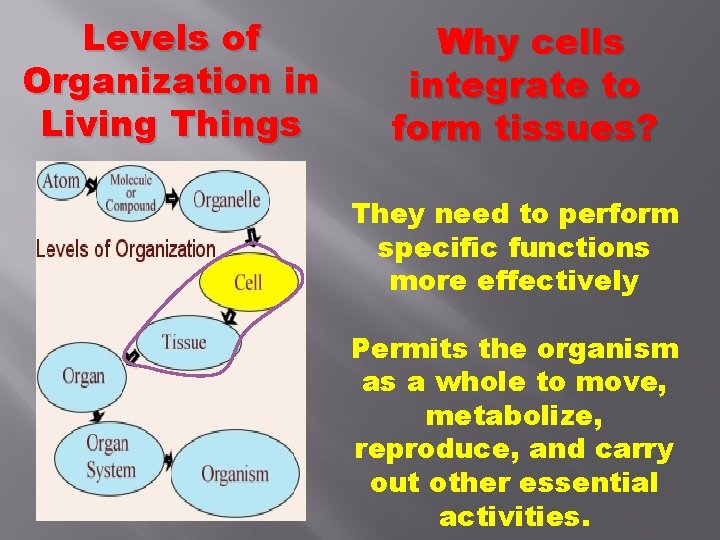
Levels of Organization in Living Things Why cells integrate to form tissues? They need to perform specific functions more effectively Permits the organism as a whole to move, metabolize, reproduce, and carry out other essential activities.
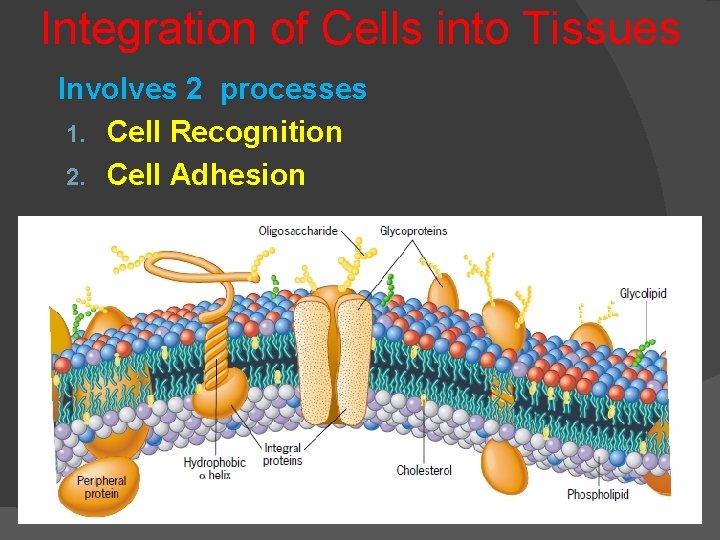
Integration of Cells into Tissues Involves 2 processes 1. Cell Recognition 2. Cell Adhesion
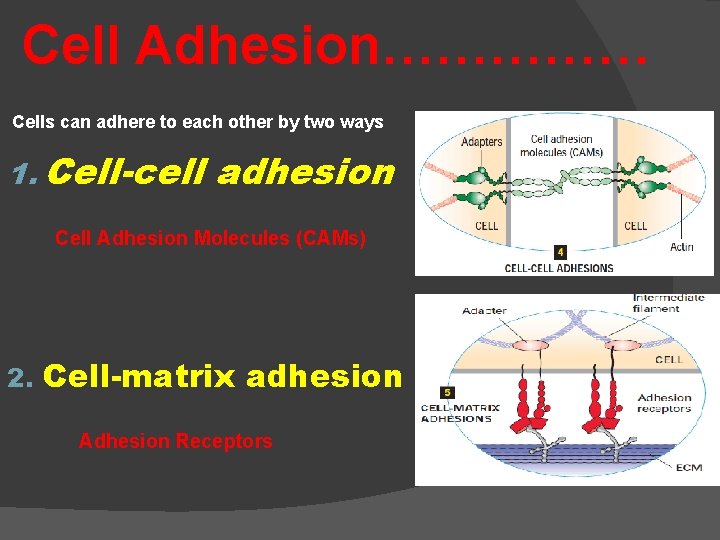
Cell Adhesion…………… Cells can adhere to each other by two ways 1. Cell-cell adhesion Cell Adhesion Molecules (CAMs) 2. Cell-matrix adhesion Adhesion Receptors
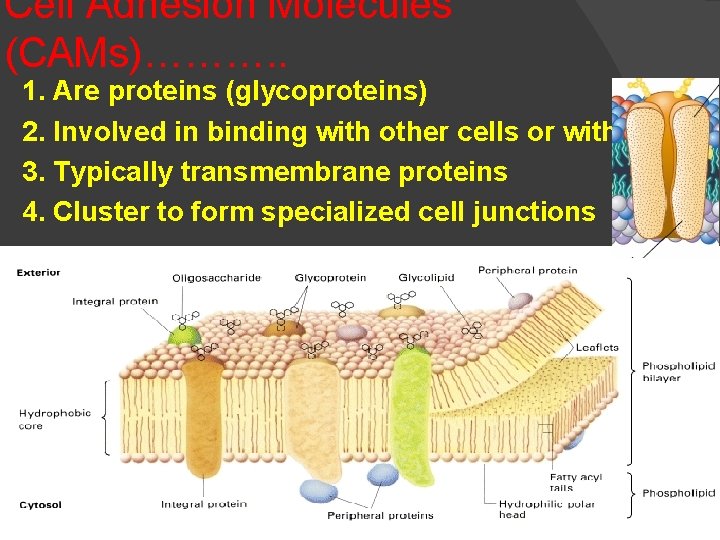
Cell Adhesion Molecules (CAMs)………. . 1. Are proteins (glycoproteins) 2. Involved in binding with other cells or with ECM 3. Typically transmembrane proteins 4. Cluster to form specialized cell junctions
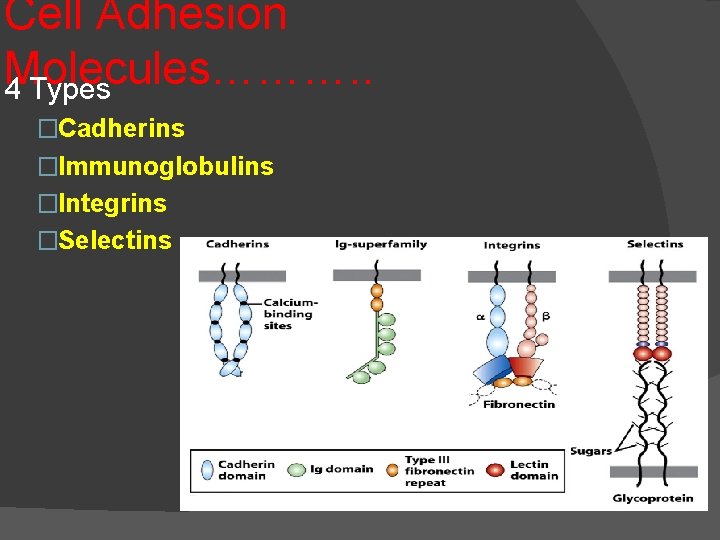
Cell Adhesion Molecules………. . 4 Types �Cadherins �Immunoglobulins �Integrins �Selectins
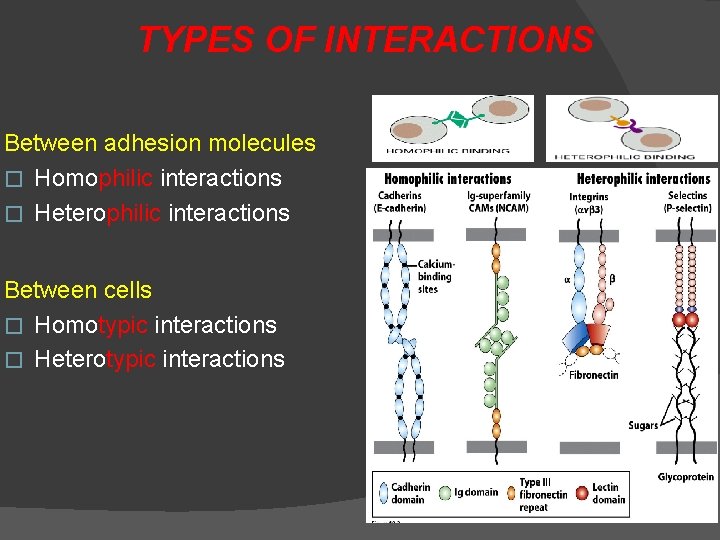
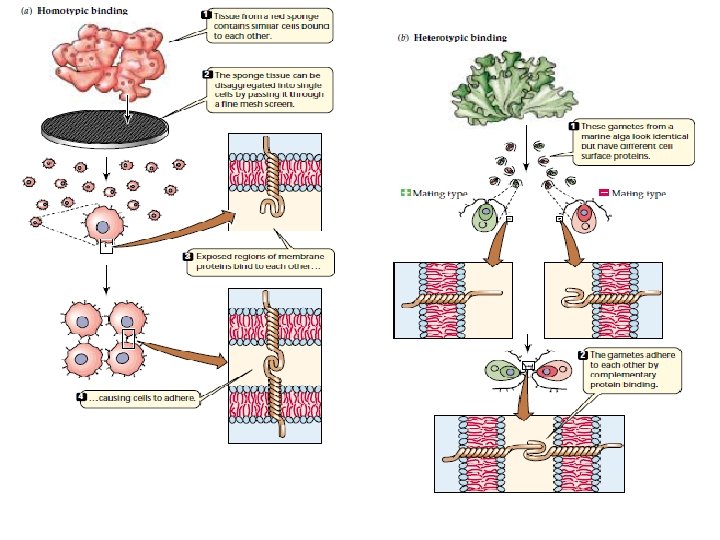
TYPES OF INTERACTIONS Between adhesion molecules � Homophilic interactions � Heterophilic interactions Between cells � Homotypic interactions � Heterotypic interactions
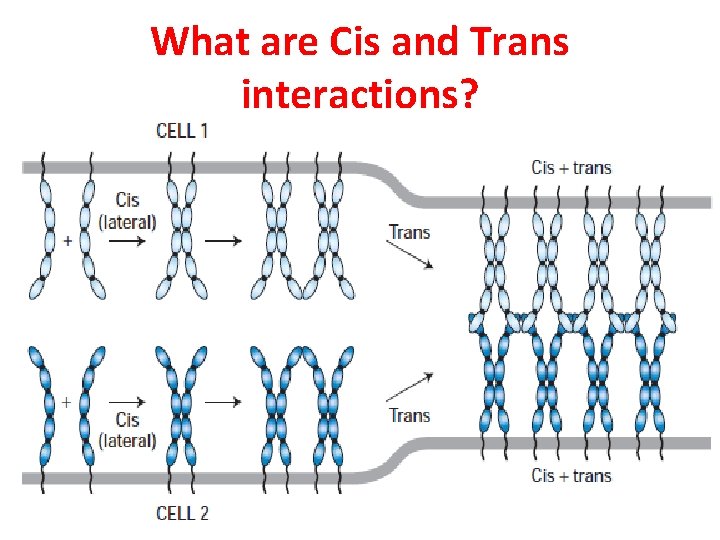
What are Cis and Trans interactions?
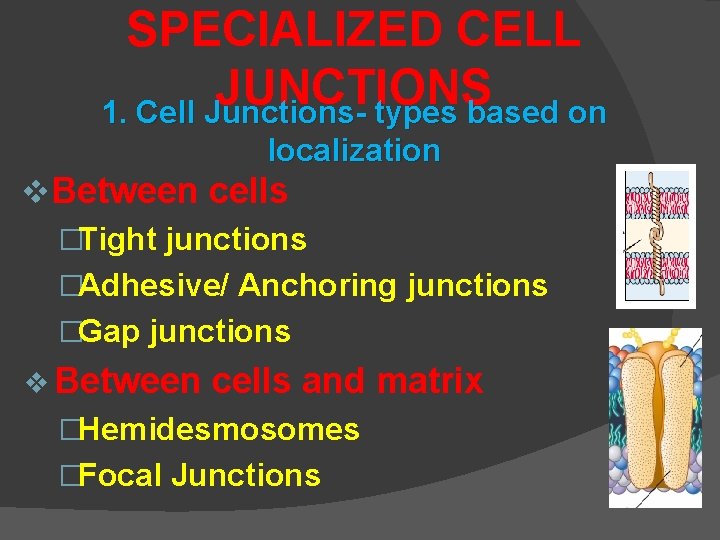
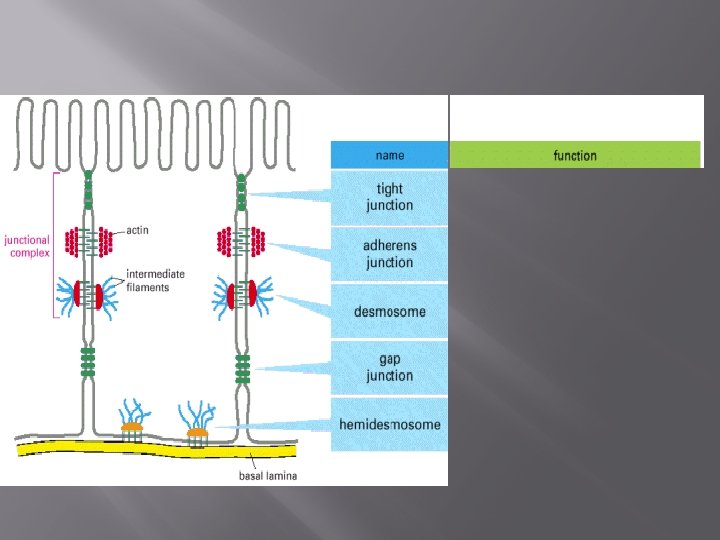
SPECIALIZED CELL JUNCTIONS 1. Cell Junctions- types based on localization v. Between cells �Tight junctions �Adhesive/ Anchoring junctions �Gap junctions v Between cells and matrix �Hemidesmosomes �Focal Junctions
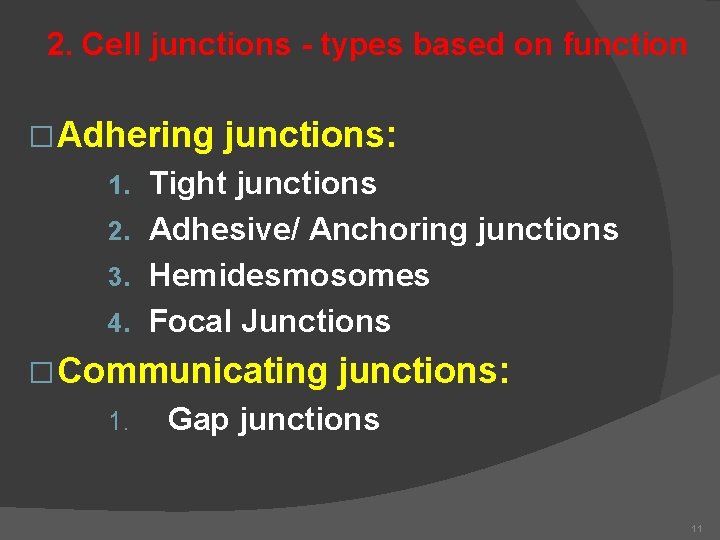
2. Cell junctions - types based on function � Adhering junctions: Tight junctions 2. Adhesive/ Anchoring junctions 3. Hemidesmosomes 4. Focal Junctions 1. � Communicating 1. junctions: Gap junctions 11
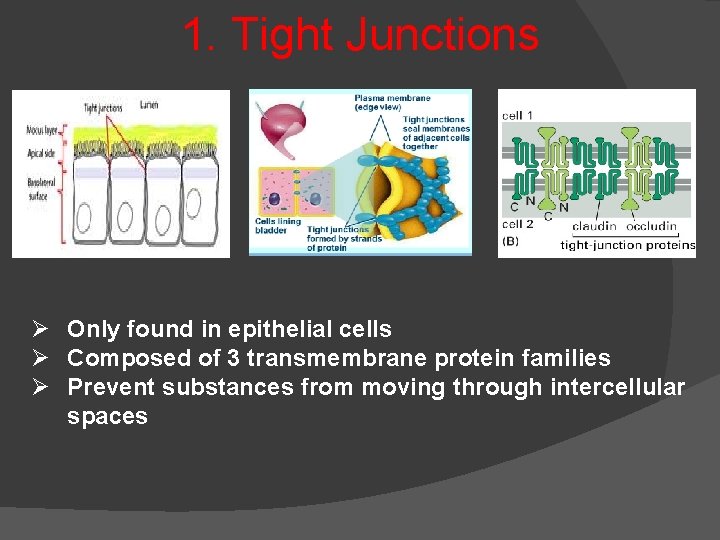
1. Tight Junctions Ø Only found in epithelial cells Ø Composed of 3 transmembrane protein families Ø Prevent substances from moving through intercellular spaces
2. Adhesive/ Anchoring junctions 2 types a) b) Desmosomes Adherens Junctions Hold cells tightly together � Connect a cell’s cytoskeleton to another cell �
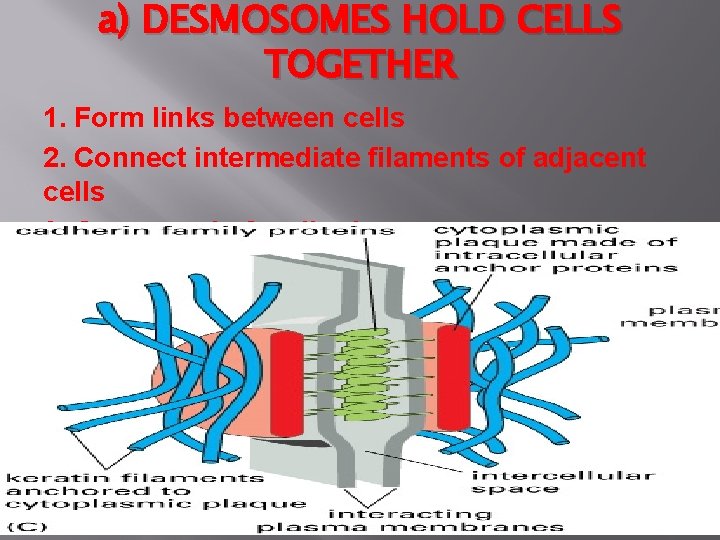
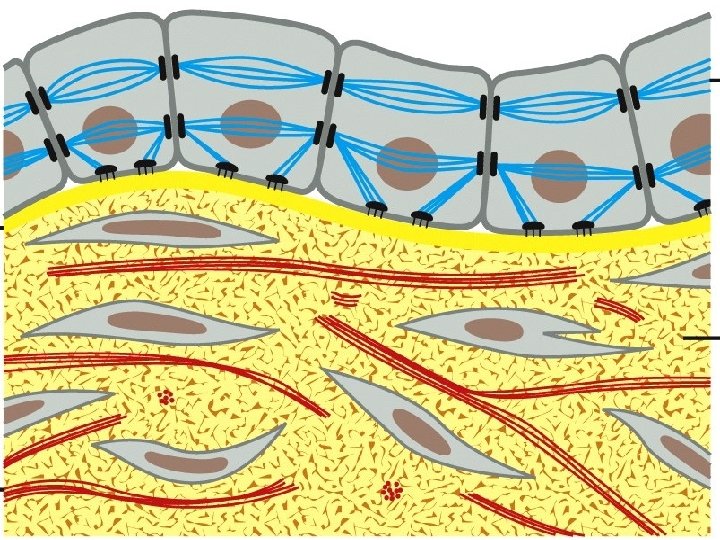
a) DESMOSOMES HOLD CELLS TOGETHER 1. Form links between cells 2. Connect intermediate filaments of adjacent cells 3. Composed of cadherins
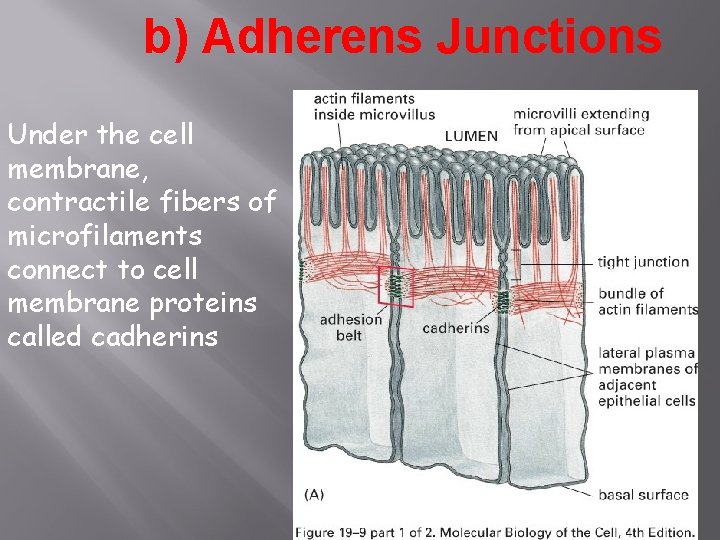
b) Adherens Junctions Under the cell membrane, contractile fibers of microfilaments connect to cell membrane proteins called cadherins
E- cadherin mediated adherens junctions � � Homophilic pairing of E- cadherins Adapter proteins (plakoglobin and α and βcatenins) link cadherins to the belt of actin filaments. 17
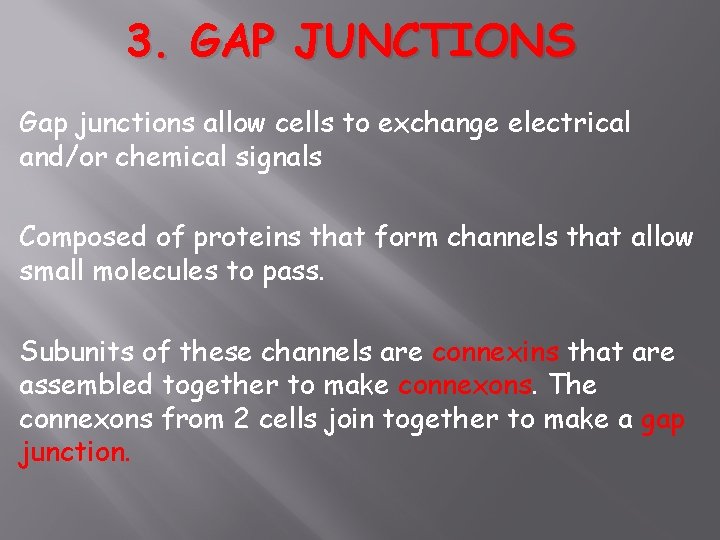
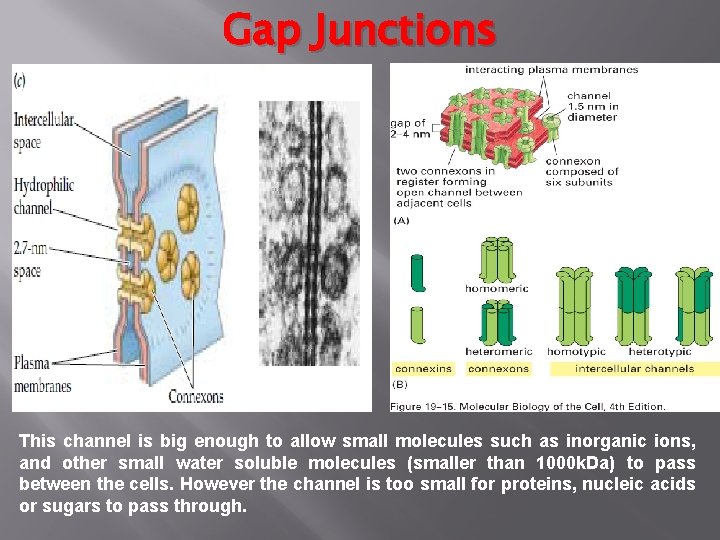
3. GAP JUNCTIONS Gap junctions allow cells to exchange electrical and/or chemical signals Composed of proteins that form channels that allow small molecules to pass. Subunits of these channels are connexins that are assembled together to make connexons. The connexons from 2 cells join together to make a gap junction.
Gap Junctions This channel is big enough to allow small molecules such as inorganic ions, and other small water soluble molecules (smaller than 1000 k. Da) to pass between the cells. However the channel is too small for proteins, nucleic acids or sugars to pass through.
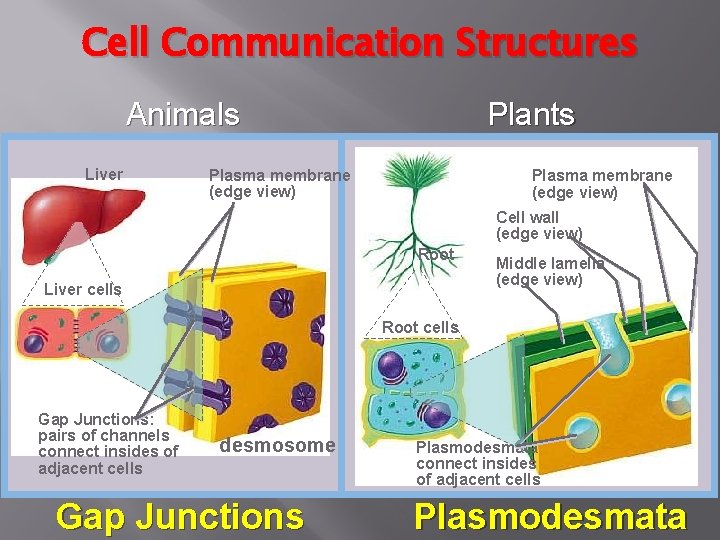
Cell Communication Structures Animals Liver Plants Plasma membrane (edge view) Cell wall (edge view) Root Liver cells Middle lamella (edge view) Root cells Gap Junctions: pairs of channels connect insides of adjacent cells desmosome Gap Junctions Plasmodesmata connect insides of adjacent cells Plasmodesmata
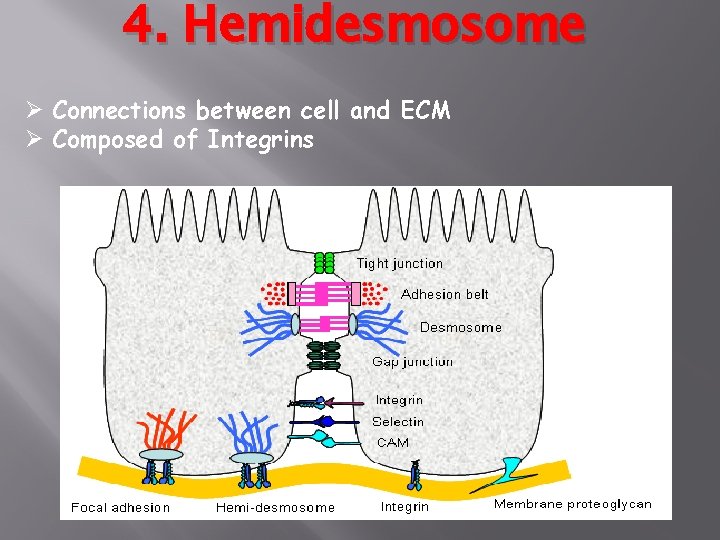
4. Hemidesmosome Ø Connections between cell and ECM Ø Composed of Integrins
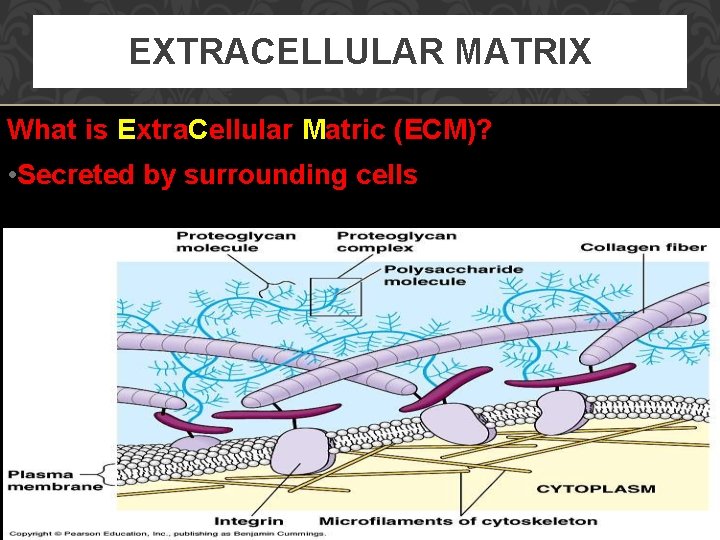
EXTRACELLULAR MATRIX What is Extra. Cellular Matric (ECM)? • Secreted by surrounding cells
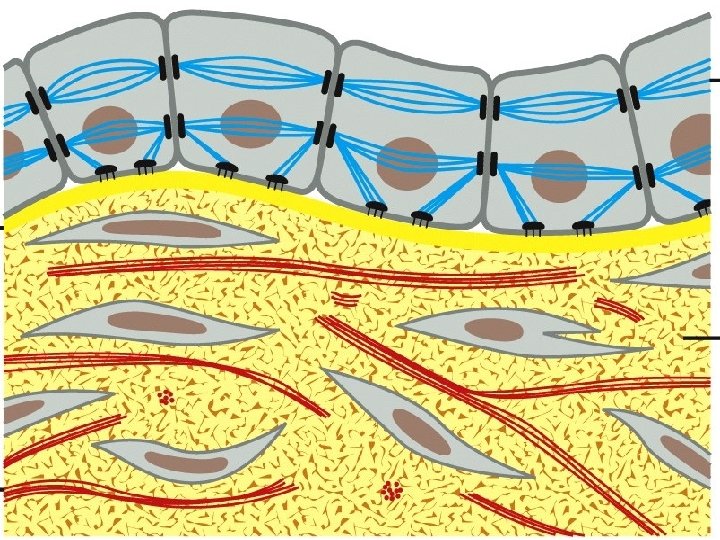
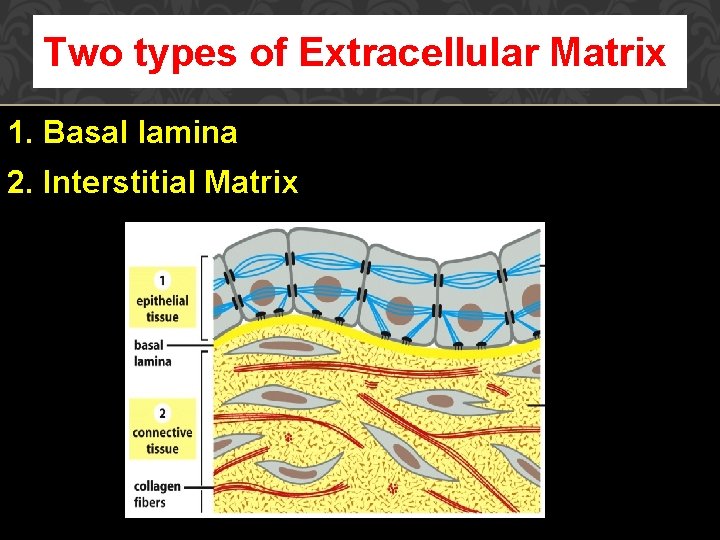
Two types of Extracellular Matrix 1. Basal lamina 2. Interstitial Matrix
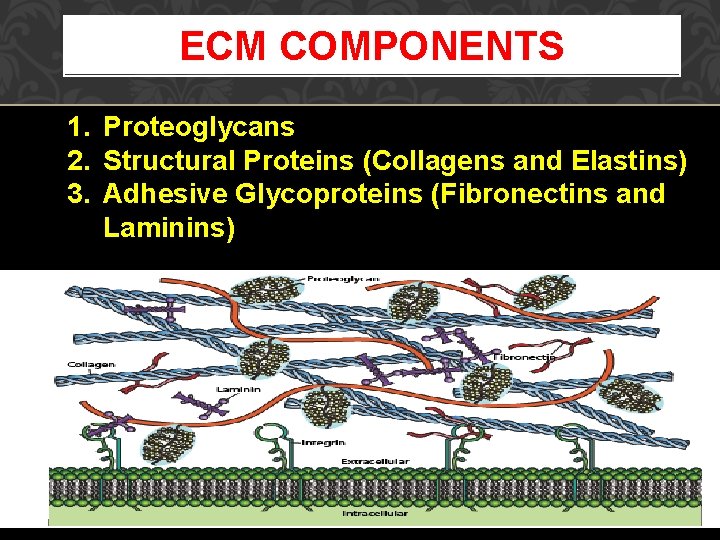
ECM COMPONENTS 1. Proteoglycans 2. Structural Proteins (Collagens and Elastins) 3. Adhesive Glycoproteins (Fibronectins and Laminins)
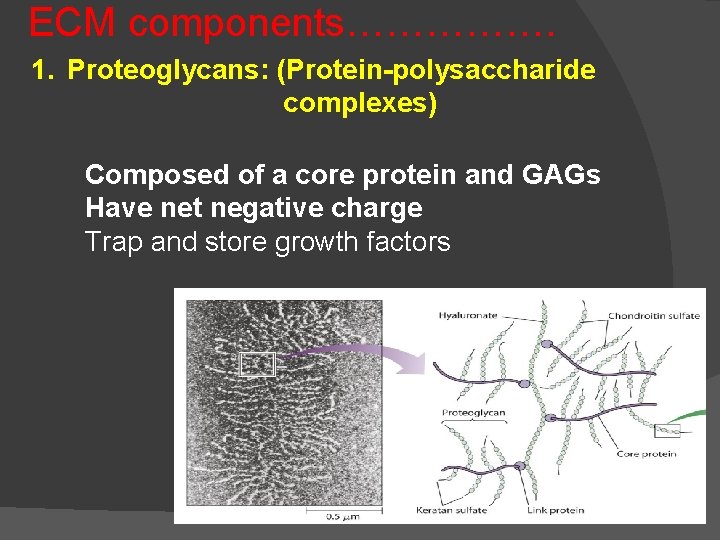
ECM components……………. 1. Proteoglycans: (Protein-polysaccharide complexes) Composed of a core protein and GAGs Have net negative charge Trap and store growth factors
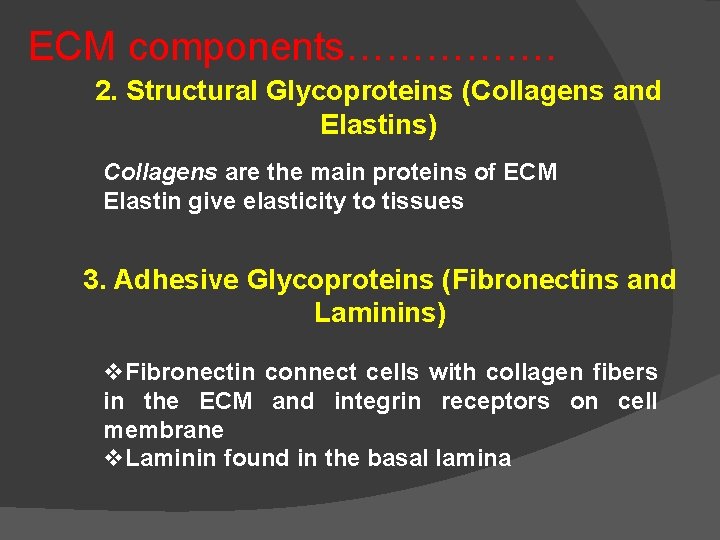
ECM components……………. 2. Structural Glycoproteins (Collagens and Elastins) Collagens are the main proteins of ECM Elastin give elasticity to tissues 3. Adhesive Glycoproteins (Fibronectins and Laminins) v. Fibronectin connect cells with collagen fibers in the ECM and integrin receptors on cell membrane v. Laminin found in the basal lamina
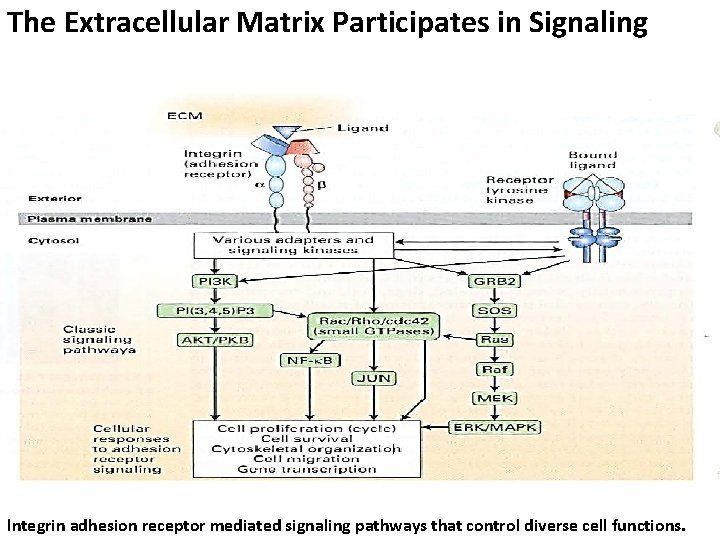
Role of Extracellular Matrix in Cell Signaling � Provides space where different ligands and growth factors are released � Act as a reservoir for various growth factors � Different proteins of ECM act as ligand for cell receptors
How Extracellular Matrix Components Mediate Cell Signaling? Integrins are transmembrane receptors for extracellular matrix (ECM) proteins such as collagens, fibronectin, laminins and vitronectin.
The Extracellular Matrix Participates in Signaling lntegrin adhesion receptor mediated signaling pathways that control diverse cell functions.
Recommended Books • Molecular Cell Biology By Lodish 7 th • Molecular Biology of The Cell by Bruce Alberts