
Integration and inclusion mainstreaming New paradigm on equality
- Slides: 15
Integration and inclusion, mainstreaming
New paradigm on equality • All children with disabilities are to be educated to the „maximum extent“ with children who do not have disabilities. Federal law i. D. E. A. Sec. 612: 5 A
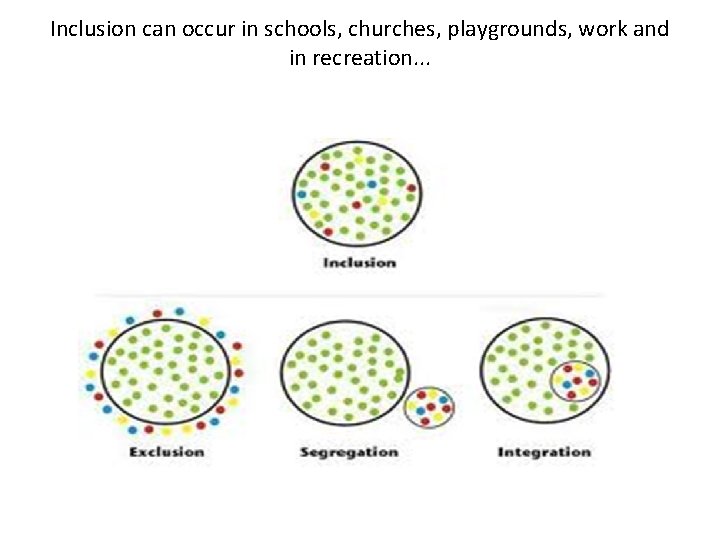
Inclusion can occur in schools, churches, playgrounds, work and in recreation. . .
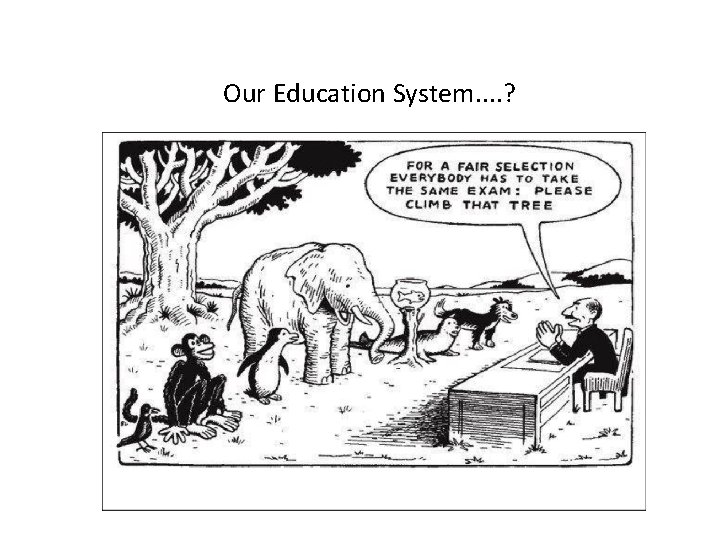
Our Education System. . ?
Tendency in Europe • Europe is to develop policy aimed at inclusion of pupils in need of special education support in mainstream schools, providing teachers with varying degrees of support in terms of supplementary staff, materials, in-service training and equipment. • Experience demonstrates that the inclusion with SEN is the best achieved within inclusive schools that serve almost all children within community. Pupils can achieve the fullest educational progress and social inclusion.
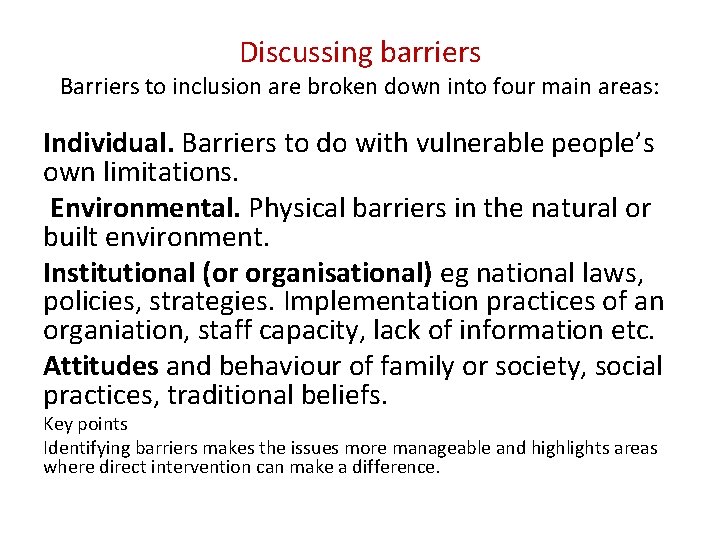
Discussing barriers Barriers to inclusion are broken down into four main areas: Individual. Barriers to do with vulnerable people’s own limitations. Environmental. Physical barriers in the natural or built environment. Institutional (or organisational) eg national laws, policies, strategies. Implementation practices of an organiation, staff capacity, lack of information etc. Attitudes and behaviour of family or society, social practices, traditional beliefs. Key points Identifying barriers makes the issues more manageable and highlights areas where direct intervention can make a difference.
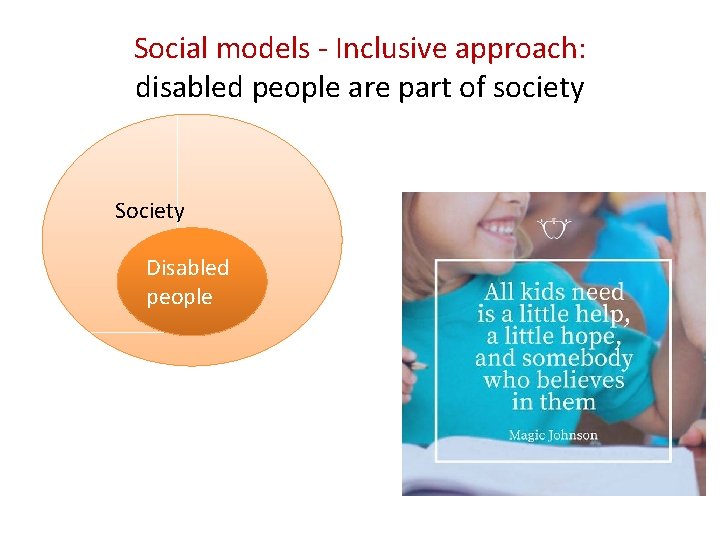
Social models - Inclusive approach: disabled people are part of society Society Disabled people
The indicators cover 3 dimension • Creating inclusive culture- building community, establishing inclusive values • Inclusive policies –developing the school for all, organism supporting diversity • Evolving inclusive practice –orchestraiting learning, mobilising resources Booth. T. , Ainscow, M (2002) Index of inclusion: developing learning and participation in schools. Bristol: Centre for Studies on Inclusive Education , (CSIE)
Focus on children Ten percent of the world’s population is disabled. As many as 20% of the poorest of the poor are disabled. Children make up a large proportion of the population (varies by country). Children are particularly vulnerable to related diseases, some have severe and long-term consequences. Children – especially girls – are often miss out on education. Children miss school; many girls miss school when menstrual hygiene needs are not met.
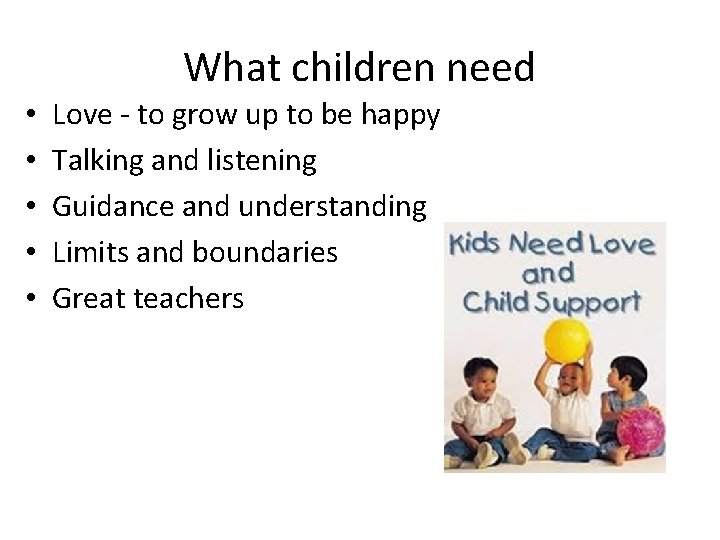
What children need • • • Love - to grow up to be happy Talking and listening Guidance and understanding Limits and boundaries Great teachers
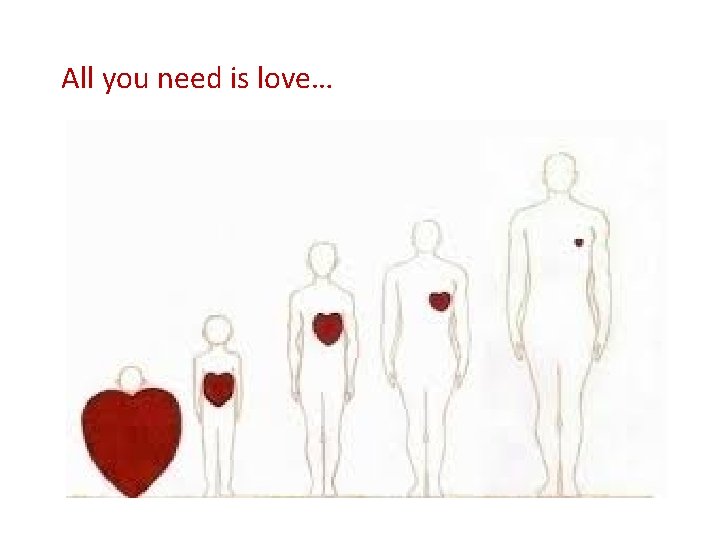
All you need is love…
Children need great teachers and parents
How to be a great teacher?