
Integrating WorkBased Learning WBL Data to Measure Student
Integrating Work-Based Learning (WBL) Data to Measure Student Outcomes Dwayne Hobbs, Career, Technical and Agricultural Education Program Manager, Georgia Department of Public Instruction Chris Droessler, Career and Technical Education Coordinator, North Carolina Community College System
Why collect WBL Data? • Identify gaps in program delivery • Design effective professional development • Match needs of business and industry • Adjust focus of the program (dynamic vs. static) • Provide completer status by cluster/pathway • Comply with local, state, federal policies and laws • Monitor how special populations are served • Continuous program improvement • “What gets measured gets done”
Overview of Session • Secondary CTE WBL Data – Georgia • Post-Secondary CTE WBL Data – North Carolina • Small group discussions: Discuss objectives and challenges of collecting WBL data • Whole group discussion: Share key points with the room
WBL in Georgia Dwayne Hobbs
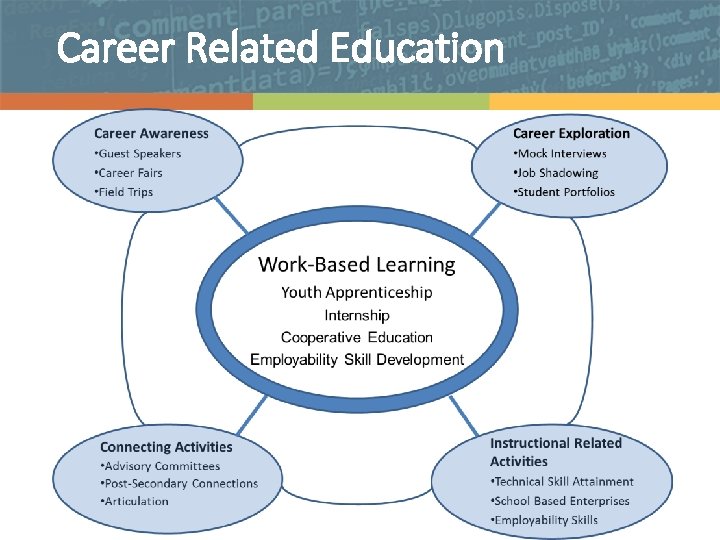
Career Related Education
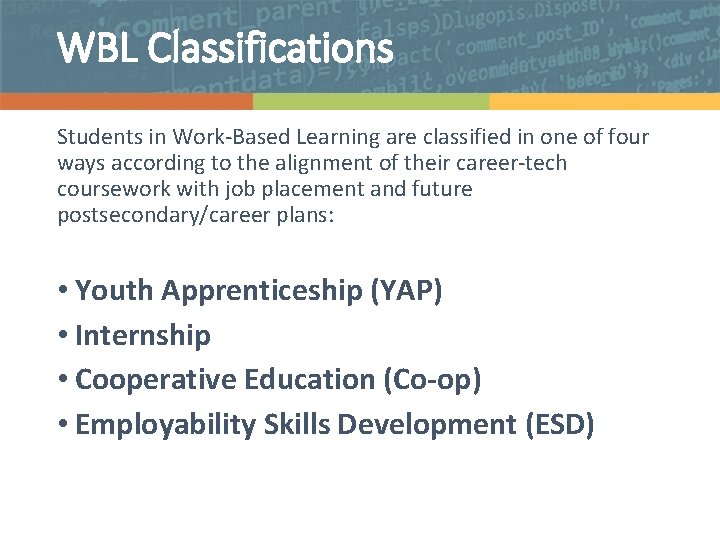
WBL Classifications Students in Work-Based Learning are classified in one of four ways according to the alignment of their career-tech coursework with job placement and future postsecondary/career plans: • Youth Apprenticeship (YAP) • Internship • Cooperative Education (Co-op) • Employability Skills Development (ESD)
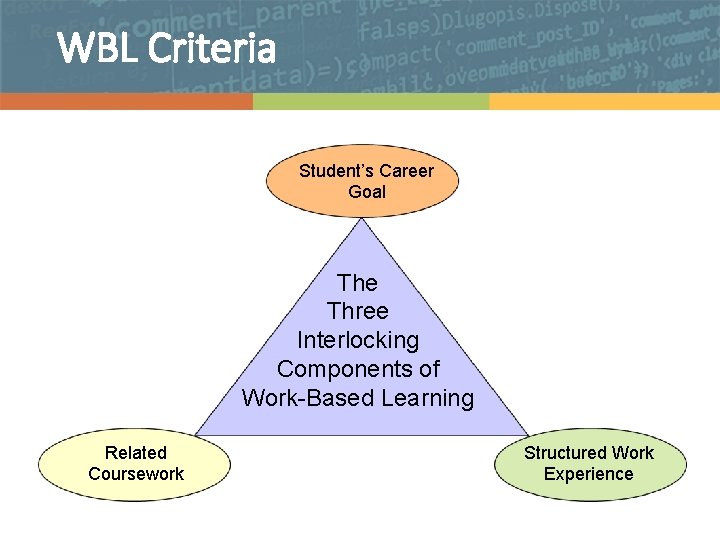
WBL Criteria Student’s Career Goal The Three Interlocking Components of Work-Based Learning Related Coursework Structured Work Experience
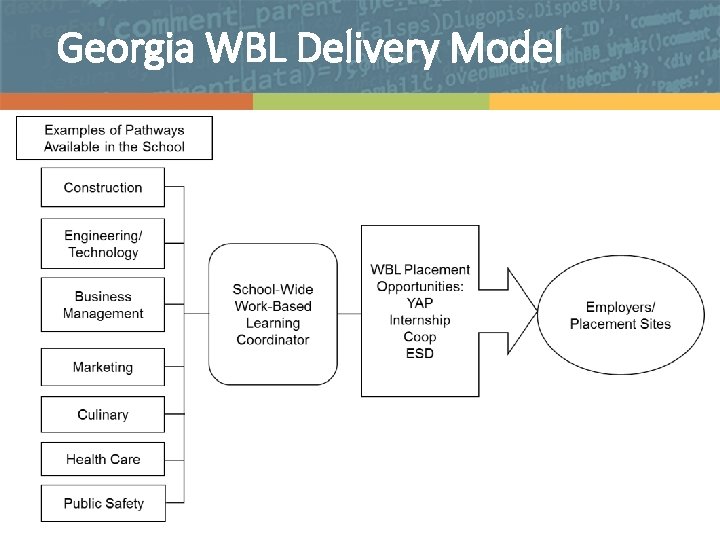
Georgia WBL Delivery Model
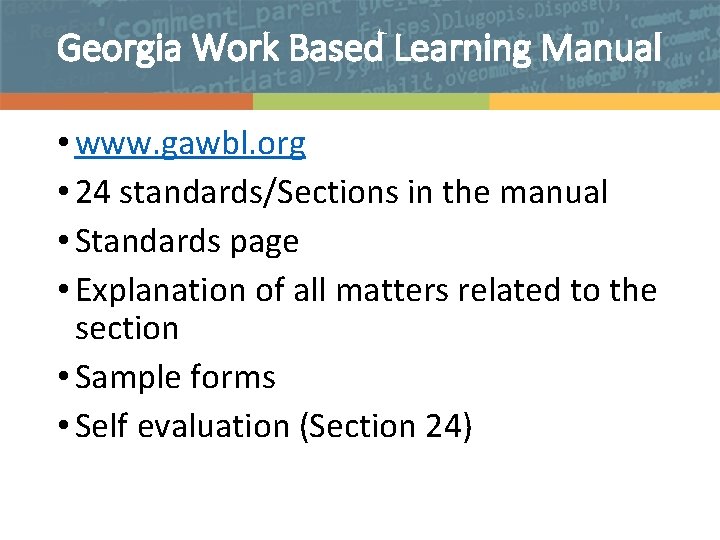
Georgia Work Based Learning Manual • www. gawbl. org • 24 standards/Sections in the manual • Standards page • Explanation of all matters related to the section • Sample forms • Self evaluation (Section 24)
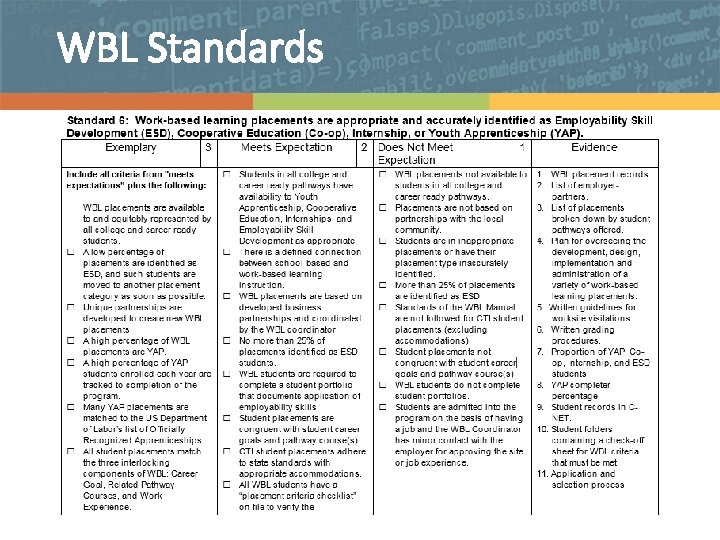
WBL Standards
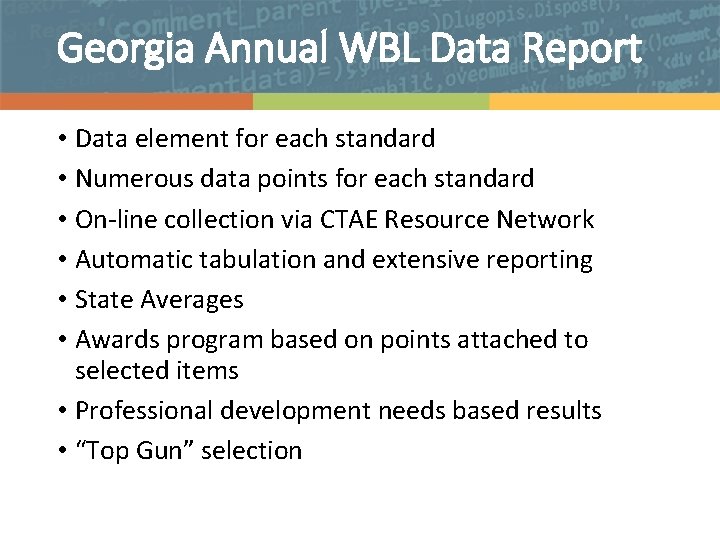
Georgia Annual WBL Data Report • Data element for each standard • Numerous data points for each standard • On-line collection via CTAE Resource Network • Automatic tabulation and extensive reporting • State Averages • Awards program based on points attached to selected items • Professional development needs based results • “Top Gun” selection
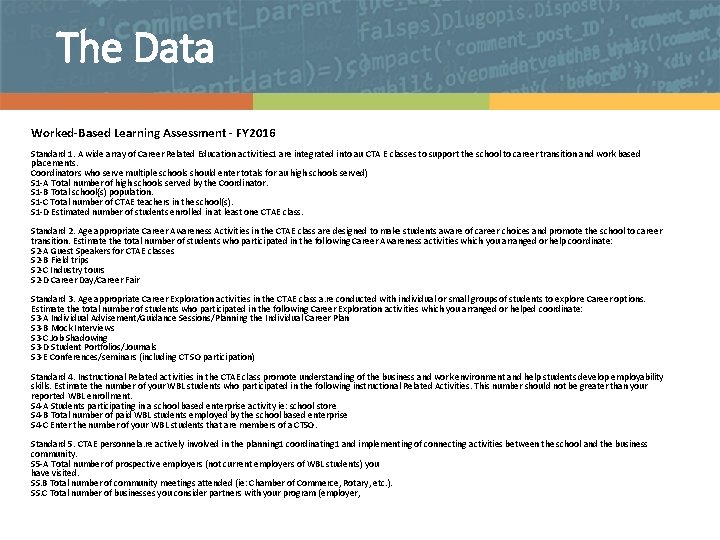
The Data Worked-Based Learning Assessment - FY 2016 Standard 1. A wide array of Career Related Education activities 1 are integrated into au CTA E classes to support the school to career transition and work based placements. Coordinators who serve multiple schools should enter totals for au high schools served) S 1 -A Total number of high schools served by the Coordinator. S 1 -B Total school{s) population. S 1 -C Total number of CTAE teachers in the school(s). S 1 -D Estimated number of students enrolled in at least one CTAE class. Standard 2. Age appropriate Career Awareness Activities in the CTAE class are designed to make students aware of career choices and promote the school to career transition. Estimate the total number of students who participated in the following Career Awareness activities which you arranged or help coordinate: S 2 -A Guest Speakers for CTAE classes S 2 -B Field trips S 2 -C Industry tours S 2 -D Career Day/Career Fair Standard 3. Age appropriate Career Exploration activities in the CTAE class a. re conducted with individual or small groups of students to explore Career options. Estimate the total number of students who participated in the following Career Exploration activities which you arranged or helped coordinate: S 3 -A Individual Advisement/Guidance Sessions/Planning the Individual Career Plan S 3 -B Mock Interviews S 3 -C Job Shadowing S 3 -D Student Portfolios/Journals S 3 -E Conferences/seminars (including CT SO participation) Standard 4. Instructional Related activities in the CTAE class promote understanding of the business and work environment and help students develop employability skills. Estimate the number of your WBL students who participated in the following instructional Related Activities. This number should not be greater than your reported WBL enrollment. S 4 -A Students participating in a school based enterprise activity ie: school store S 4 -B Total number of paid WBL students employed by the school based enterprise S 4 -C Enter the number of your WBL students that are members of a CTSO. Standard 5. CTAE personnela. re actively involved in the planning 1 coordinating 1 and implementing of connecting activities between the school and the business community. S 5 -A Total number of prospective employers (not current employers of WBL students) you have visited. SS. B Total number of community meetings attended (ie: Chamber of Commerce, Rotary, etc. ). SS. C Total number of businesses you consider partners with your program (employer,
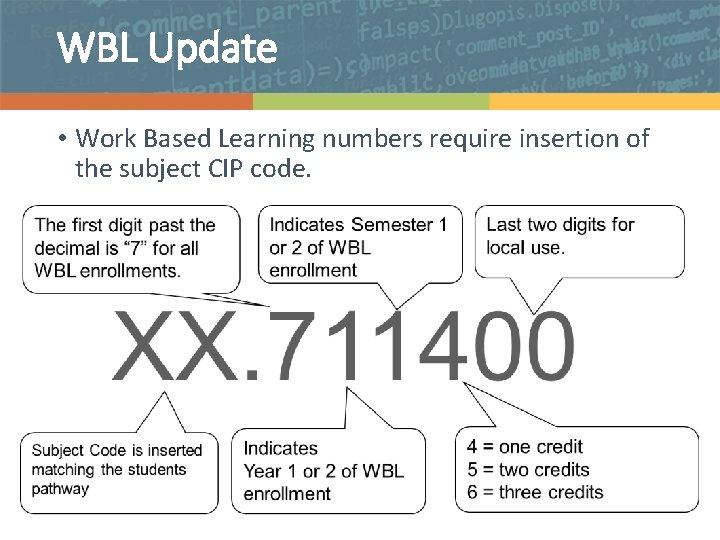
WBL Update • Work Based Learning numbers require insertion of the subject CIP code.
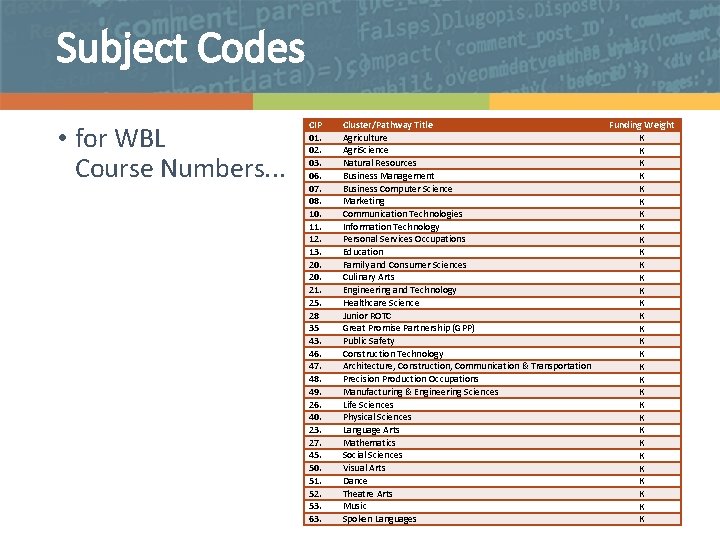
Subject Codes • for WBL Course Numbers. . . CIP 01. 02. 03. 06. 07. 08. 10. 11. 12. 13. 20. 21. 25. 28 35 43. 46. 47. 48. 49. 26. 40. 23. 27. 45. 50. 51. 52. 53. 63. Cluster/Pathway Title Agriculture Agri. Science Natural Resources Business Management Business Computer Science Marketing Communication Technologies Information Technology Personal Services Occupations Education Family and Consumer Sciences Culinary Arts Engineering and Technology Healthcare Science Junior ROTC Great Promise Partnership (GPP) Public Safety Construction Technology Architecture, Construction, Communication & Transportation Precision Production Occupations Manufacturing & Engineering Sciences Life Sciences Physical Sciences Language Arts Mathematics Social Sciences Visual Arts Dance Theatre Arts Music Spoken Languages Funding Weight K K K K K K K K
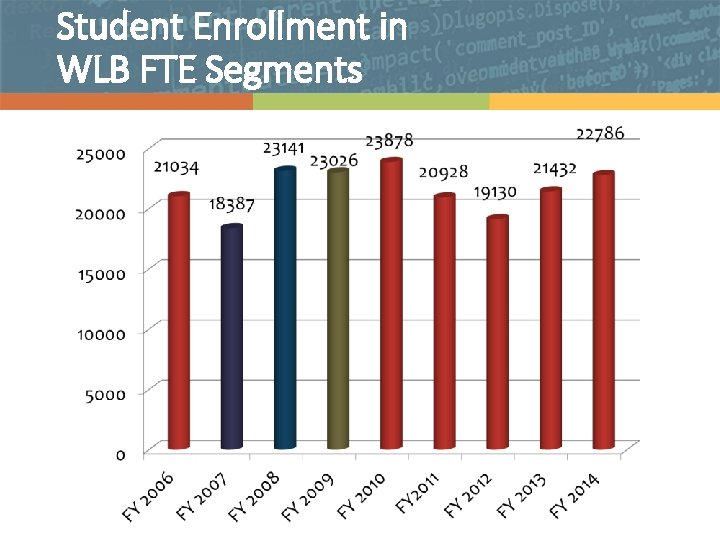
Student Enrollment in WLB FTE Segments
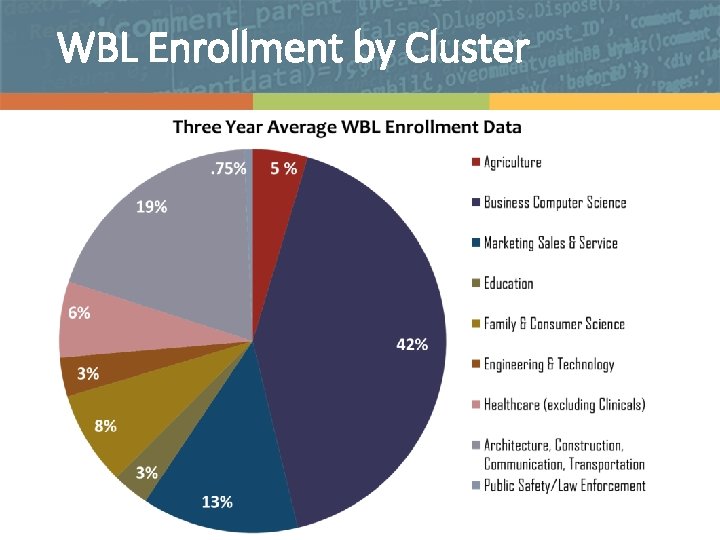
WBL Enrollment by Cluster
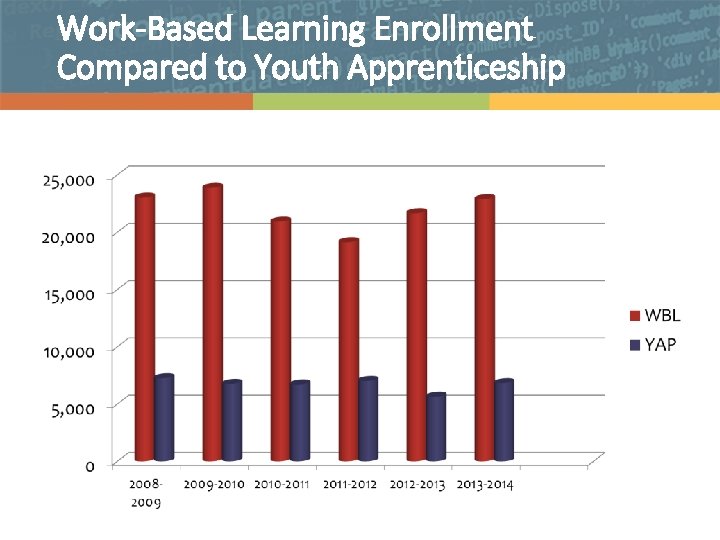
Work-Based Learning Enrollment Compared to Youth Apprenticeship
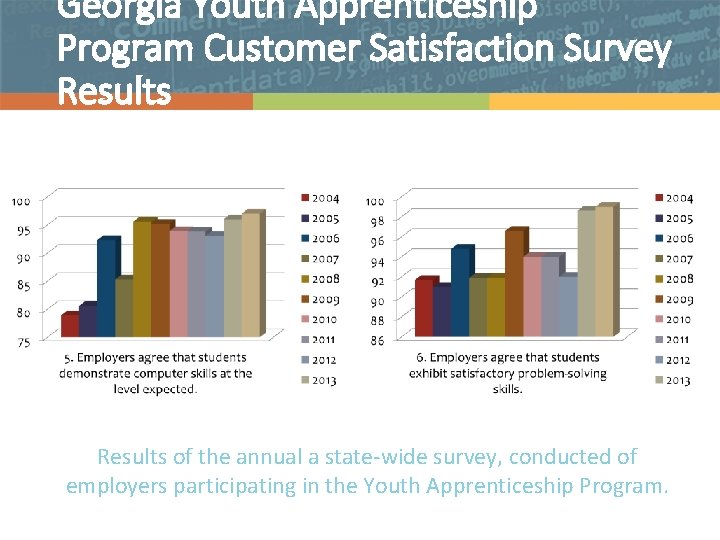
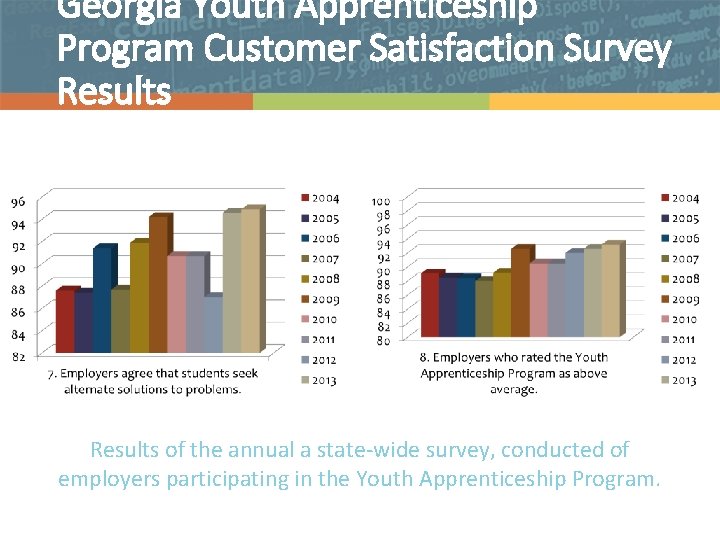
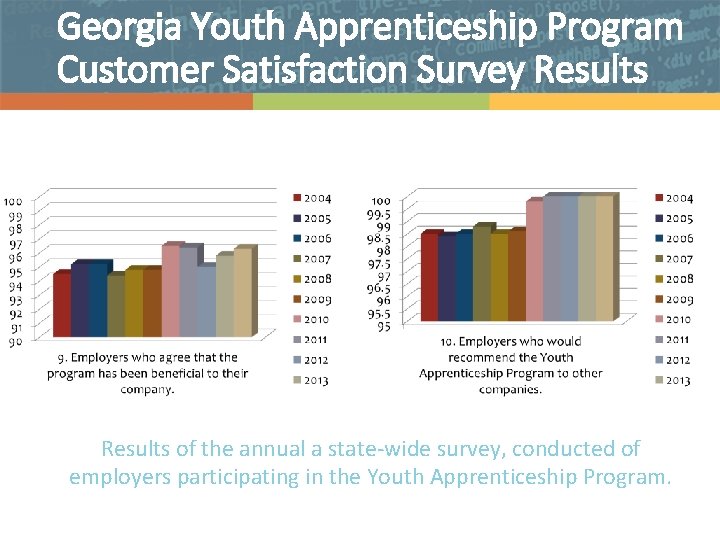
Employer Feedback • Georgia Youth Apprenticeship Program Customer Satisfaction Survey • A survey is created on survey monkey. com • The link is provided to all coordinators statewide • Each WBL Coordinator personally gives the link to employers and explains the purposes of the survey • This data has been collected since the inception of Youth Apprenticeship funding in the state in 1995 • Data is provided on the website, to legislators, and used with coordinators to identify needs improvement.
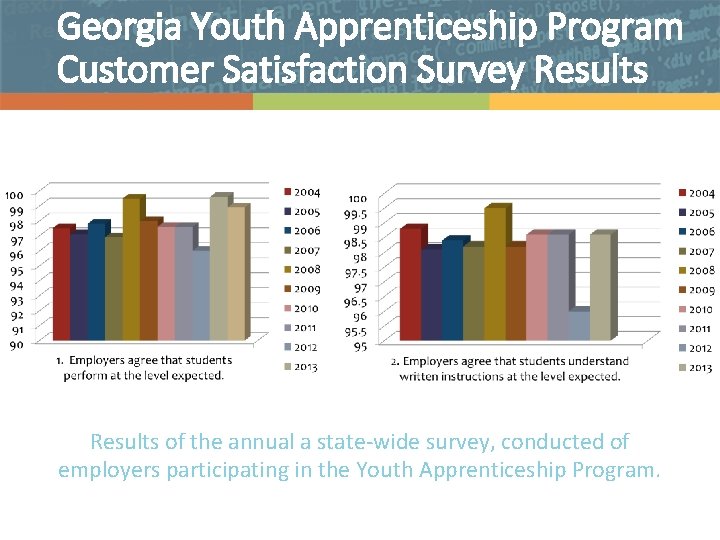
Georgia Youth Apprenticeship Program Customer Satisfaction Survey Results of the annual a state-wide survey, conducted of employers participating in the Youth Apprenticeship Program.
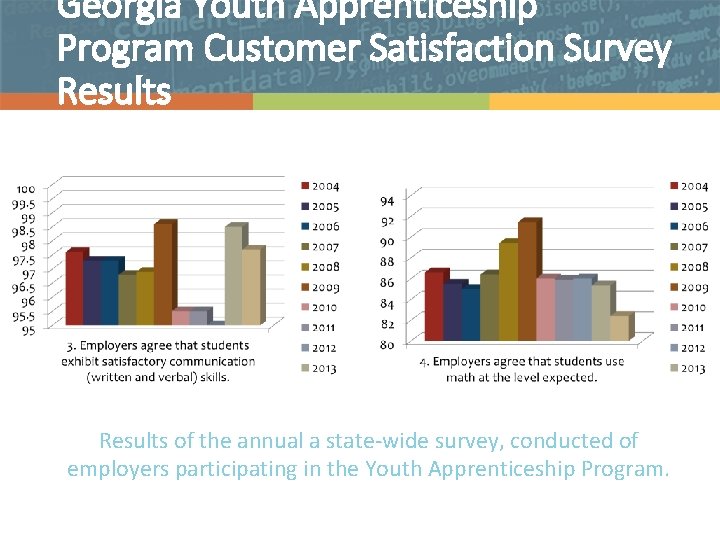
Georgia Youth Apprenticeship Program Customer Satisfaction Survey Results of the annual a state-wide survey, conducted of employers participating in the Youth Apprenticeship Program.
Georgia Youth Apprenticeship Program Customer Satisfaction Survey Results of the annual a state-wide survey, conducted of employers participating in the Youth Apprenticeship Program.
Georgia Youth Apprenticeship Program Customer Satisfaction Survey Results of the annual a state-wide survey, conducted of employers participating in the Youth Apprenticeship Program.
Georgia Youth Apprenticeship Program Customer Satisfaction Survey Results of the annual a state-wide survey, conducted of employers participating in the Youth Apprenticeship Program.
WBL in North Carolina Chris Droessler Career and Technical Education Coordinator North Carolina Community College System NCperkins. org/presentations
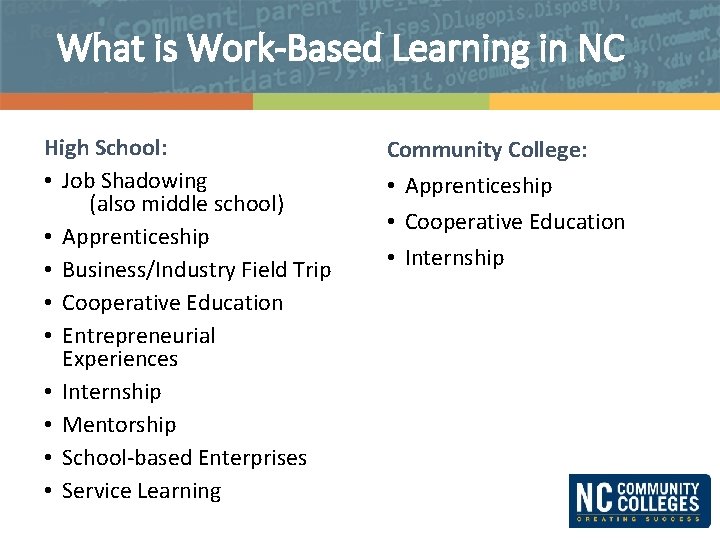
What is Work-Based Learning in NC High School: • Job Shadowing (also middle school) • Apprenticeship • Business/Industry Field Trip • Cooperative Education • Entrepreneurial Experiences • Internship • Mentorship • School-based Enterprises • Service Learning Community College: • Apprenticeship • Cooperative Education • Internship
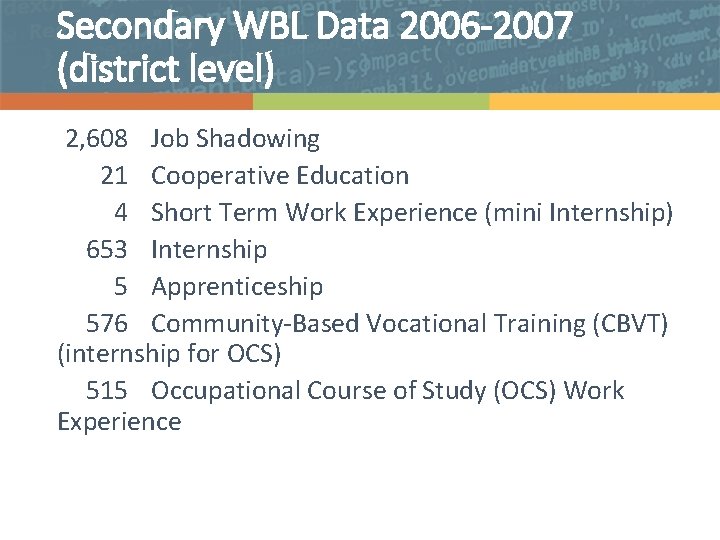
Secondary WBL Data 2006 -2007 (district level) 2, 608 Job Shadowing 21 Cooperative Education 4 Short Term Work Experience (mini Internship) 653 Internship 5 Apprenticeship 576 Community-Based Vocational Training (CBVT) (internship for OCS) 515 Occupational Course of Study (OCS) Work Experience
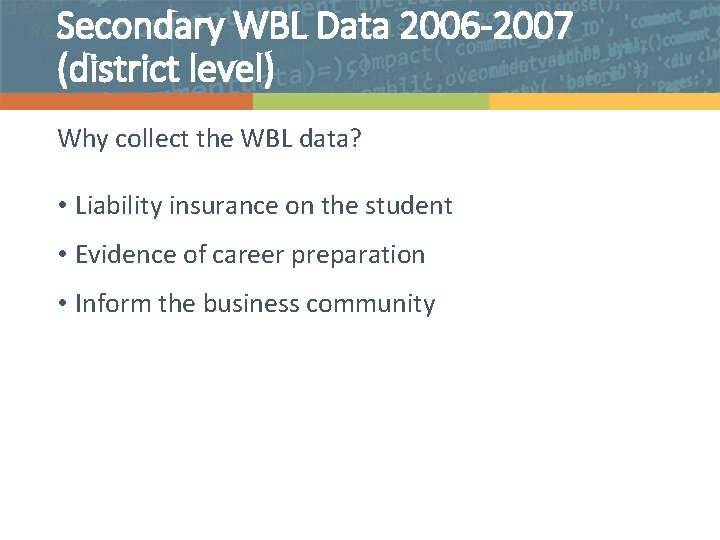
Secondary WBL Data 2006 -2007 (district level) Why collect the WBL data? • Liability insurance on the student • Evidence of career preparation • Inform the business community
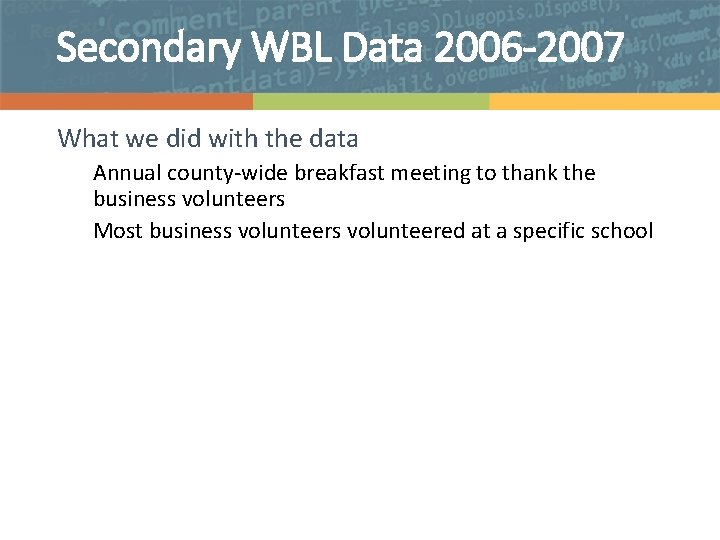
Secondary WBL Data 2006 -2007 What we did with the data Annual county-wide breakfast meeting to thank the business volunteers Most business volunteered at a specific school
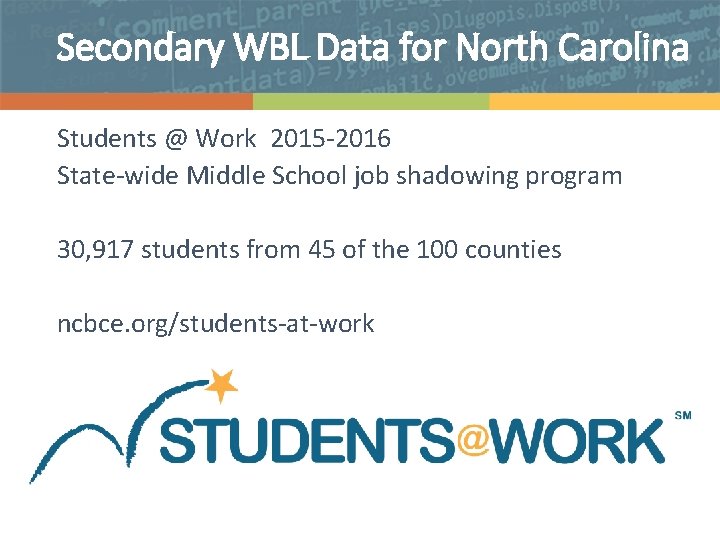
Secondary WBL Data for North Carolina Students @ Work 2015 -2016 State-wide Middle School job shadowing program 30, 917 students from 45 of the 100 counties ncbce. org/students-at-work
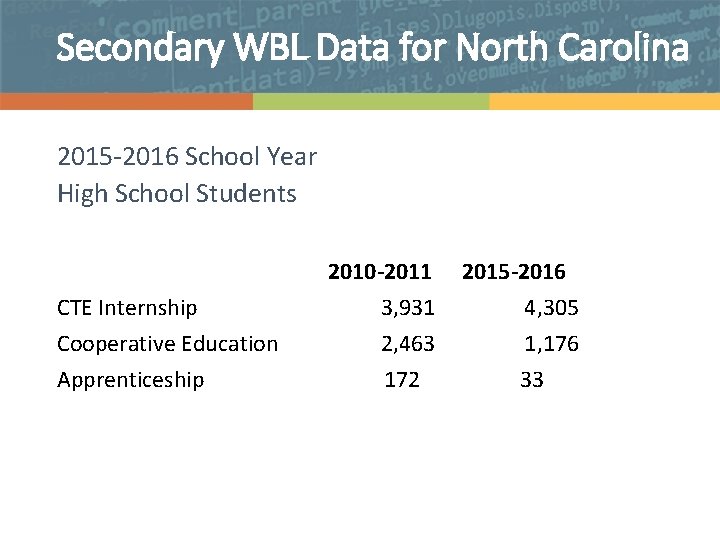
Secondary WBL Data for North Carolina 2015 -2016 School Year High School Students CTE Internship Cooperative Education Apprenticeship 2010 -2011 3, 931 2, 463 172 2015 -2016 4, 305 1, 176 33

Course Credit Cooperative Education, Internship, Apprenticeship • College: • 1 semester hour credit for 160 hours of WBL • High School: • 1 course credit for 135 hours on block schedule • 1 course credit for 150 hours on traditional calendar
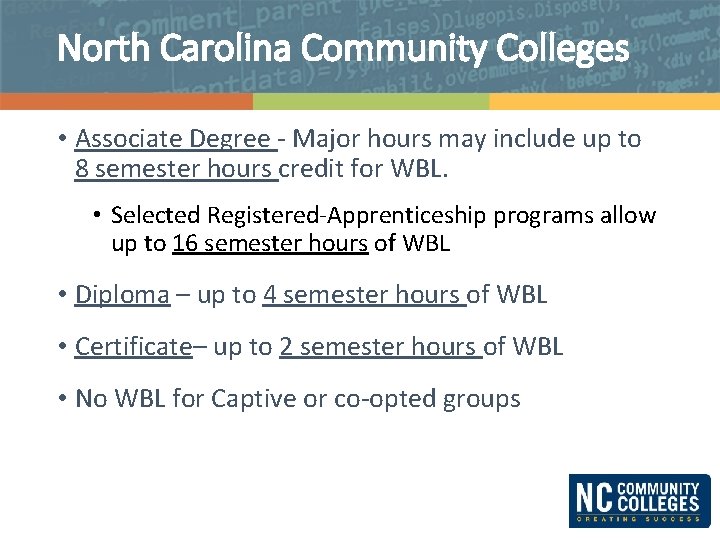
North Carolina Community Colleges • Associate Degree - Major hours may include up to 8 semester hours credit for WBL. • Selected Registered-Apprenticeship programs allow up to 16 semester hours of WBL • Diploma – up to 4 semester hours of WBL • Certificate– up to 2 semester hours of WBL • No WBL for Captive or co-opted groups
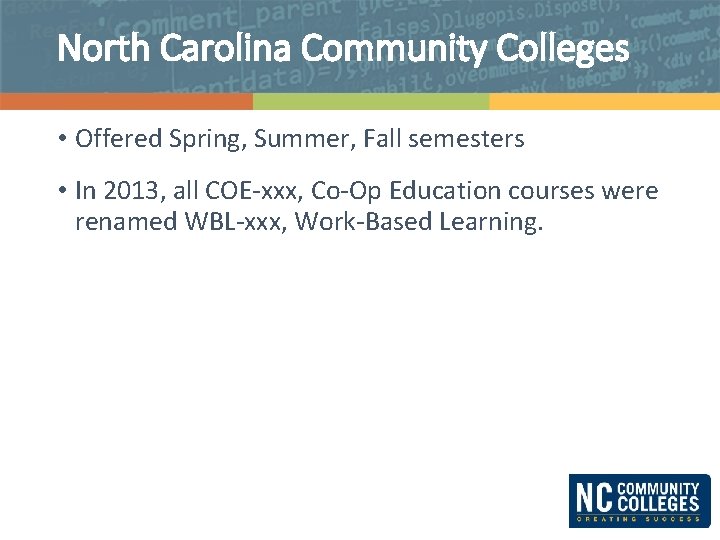
North Carolina Community Colleges • Offered Spring, Summer, Fall semesters • In 2013, all COE-xxx, Co-Op Education courses were renamed WBL-xxx, Work-Based Learning.
North Carolina Community Colleges • 31 different WBL courses • 6 different levels of courses • Course number indicates 1, 2, 3, or 4 credits • Additional seminar course at each level
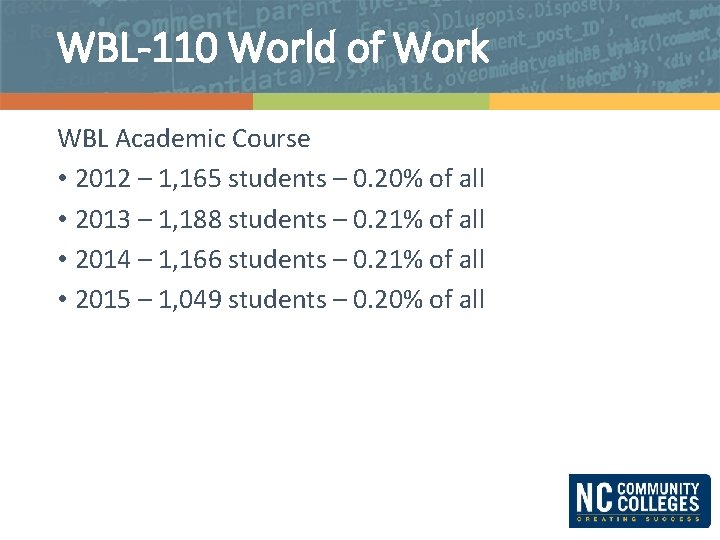
WBL-110 World of Work WBL Academic Course • 2012 – 1, 165 students – 0. 20% of all • 2013 – 1, 188 students – 0. 21% of all • 2014 – 1, 166 students – 0. 21% of all • 2015 – 1, 049 students – 0. 20% of all
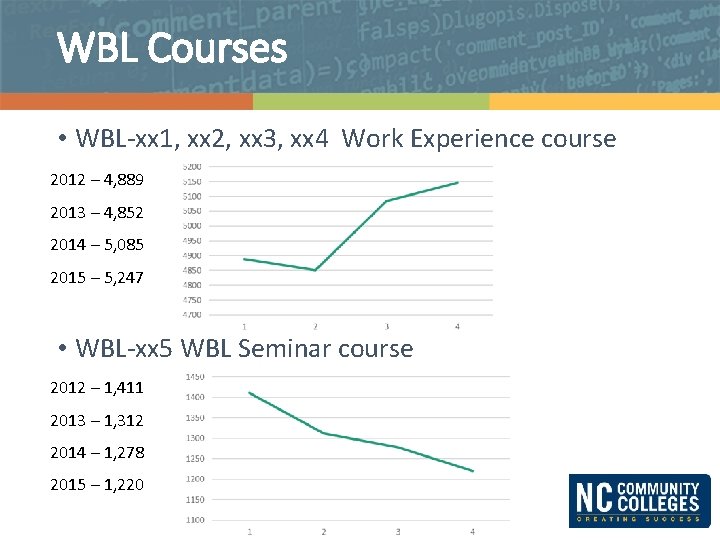
WBL Courses • WBL-xx 1, xx 2, xx 3, xx 4 Work Experience course 2012 – 4, 889 2013 – 4, 852 2014 – 5, 085 2015 – 5, 247 • WBL-xx 5 WBL Seminar course 2012 – 1, 411 2013 – 1, 312 2014 – 1, 278 2015 – 1, 220
WBL Courses • Clinical hours in Health Science courses? • Nursing courses require 3 -12 clinical hours • Early Childhood Education has their own workbased learning course.
2016 NC Employer Needs Survey
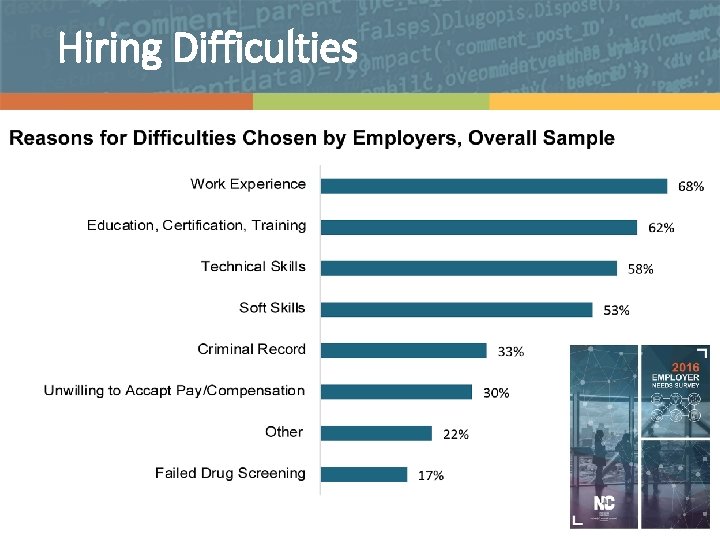
Hiring Difficulties
Activity – Individual think time • Individually, consider the following questions: • What types of WBL data does your state currently collect? • What have been your challenges around collecting WBL data? • What innovative practices have you heard about related to WBL data?
Activity – Small Groups • At your tables, share your answers to the following questions on the chart paper: • What types of WBL data does your state currently collect? • What have been your challenges around collecting WBL data? • What innovative practices have you heard about related to WBL data?
Activity – Whole Group • Now, let’s share back: • What types of WBL data are your states currently collecting? • What have been your challenges around collecting WBL data? • What innovative practices have you heard about related to WBL data?
Integrating Work-Based Learning (WBL) Data to Measure Student Outcomes • Dwayne Hobbs Career, Technical and Agricultural Education Program Manager Georgia Department of Public Instruction DHobbs@doe. k 12. ga. us • Chris Droessler Career and Technical Education Coordinator North Carolina Community College System Droessler. C@nccommunitycolleges. edu
- Slides: 44