
Integrating Gender into Your Evaluation insert date Qualitative

- Slides: 30
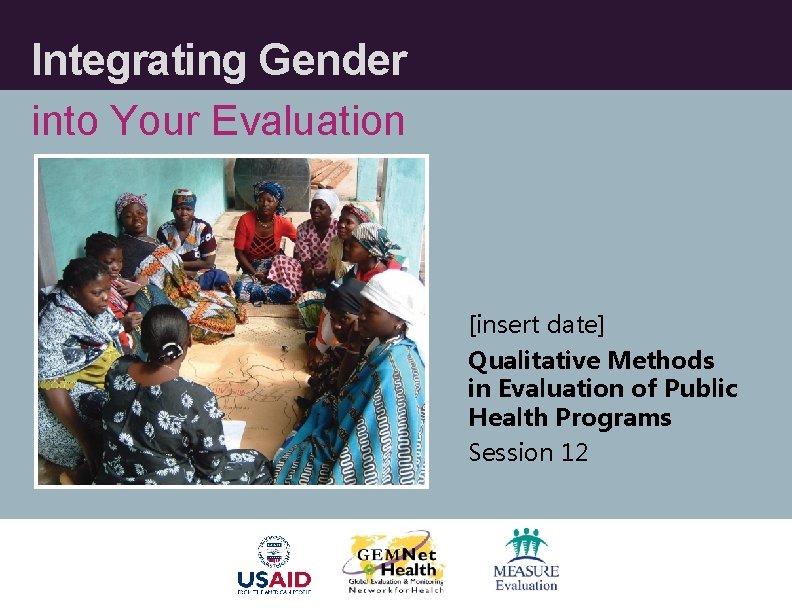
Integrating Gender into Your Evaluation [insert date] Qualitative Methods in Evaluation of Public Health Programs Session 12
Learning objectives At the end of the session, participants will be able to: § Define gender and related terms § Identify why gender is important to qualitative evaluation of public health programs § Describe gender issues in qualitative evaluation design, data collection, analysis, and dissemination/use
Activity: Vote with your feet § This will help us explore gender concepts * Source: USAID Training of Trainers: Gender and Reproductive Health 101
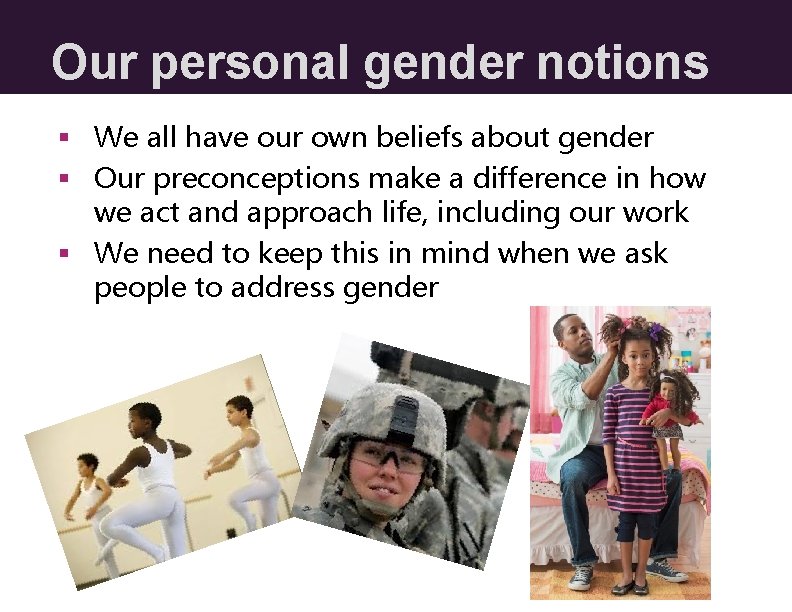
Our personal gender notions § We all have our own beliefs about gender § Our preconceptions make a difference in how we act and approach life, including our work § We need to keep this in mind when we ask people to address gender
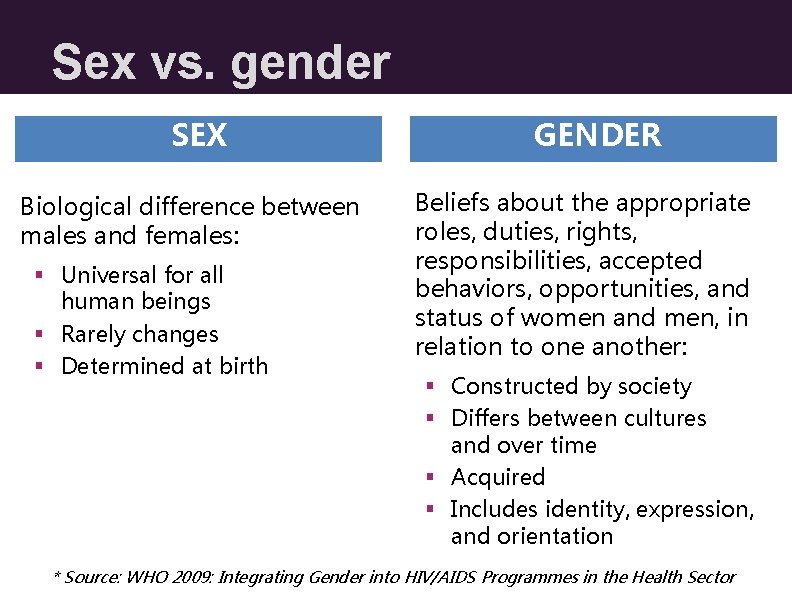
Sex vs. gender SEX Biological difference between males and females: § Universal for all human beings § Rarely changes § Determined at birth GENDER Beliefs about the appropriate roles, duties, rights, responsibilities, accepted behaviors, opportunities, and status of women and men, in relation to one another: § Constructed by society § Differs between cultures and over time § Acquired § Includes identity, expression, and orientation * Source: WHO 2009: Integrating Gender into HIV/AIDS Programmes in the Health Sector
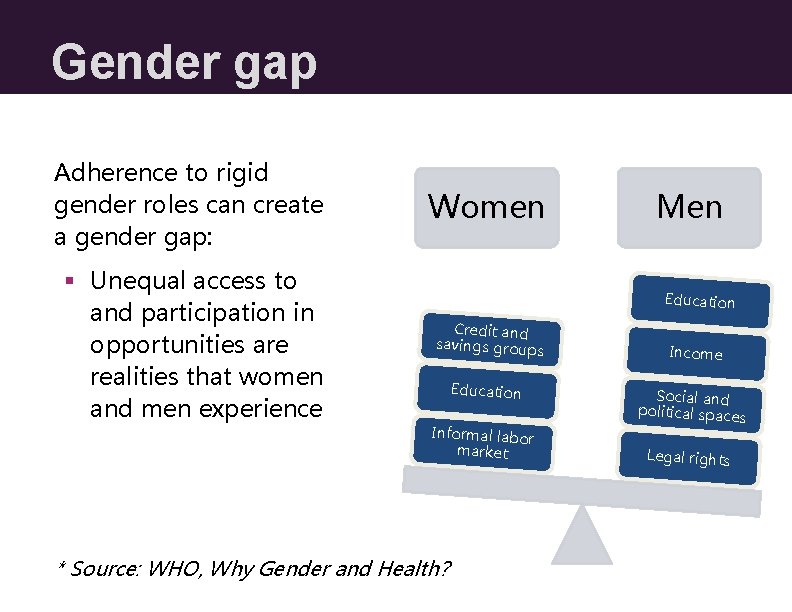
Gender gap Adherence to rigid gender roles can create a gender gap: § Unequal access to and participation in opportunities are realities that women and men experience Women Men Education Credit and savings groups Education Informal labor market * Source: WHO, Why Gender and Health? Income Social and political spaces Legal rights
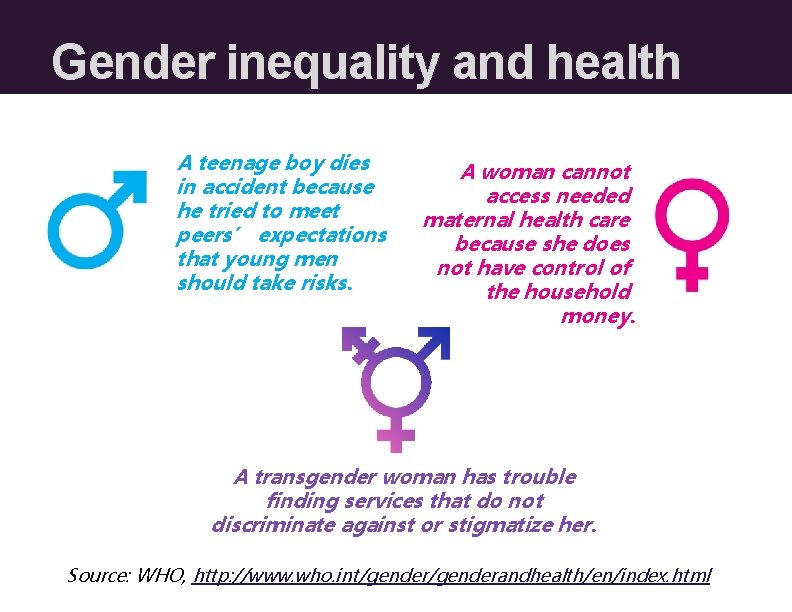
Gender inequality and health A teenage boy dies in accident because he tried to meet peers’ expectations that young men should take risks. A woman cannot access needed maternal health care because she does not have control of the household money. A transgender woman has trouble finding services that do not discriminate against or stigmatize her. Source: WHO, http: //www. who. int/genderandhealth/en/index. html
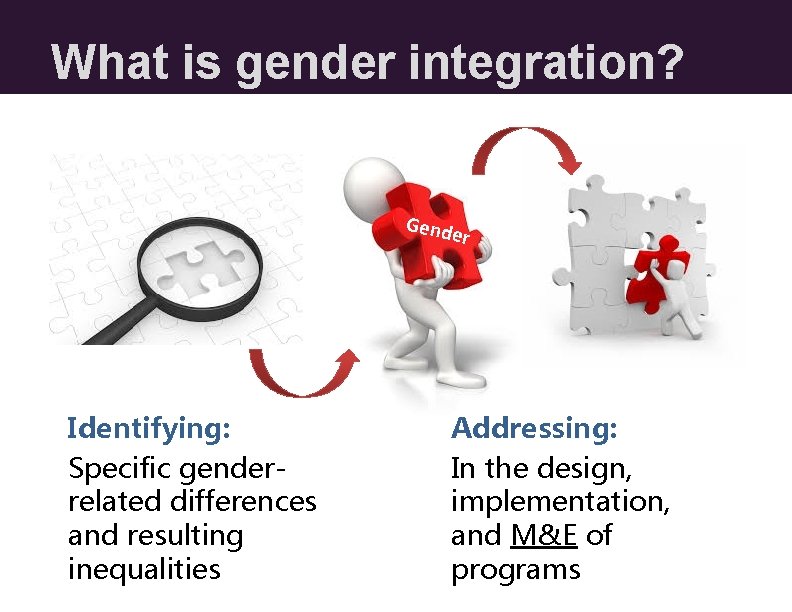
What is gender integration? Gend er Identifying: Specific genderrelated differences and resulting inequalities Addressing: In the design, implementation, and M&E of programs
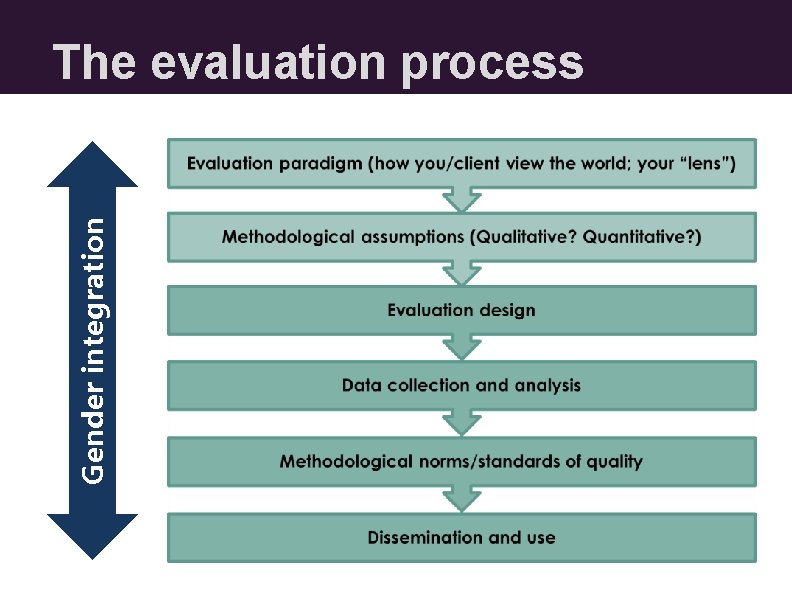
Gender integration The evaluation process
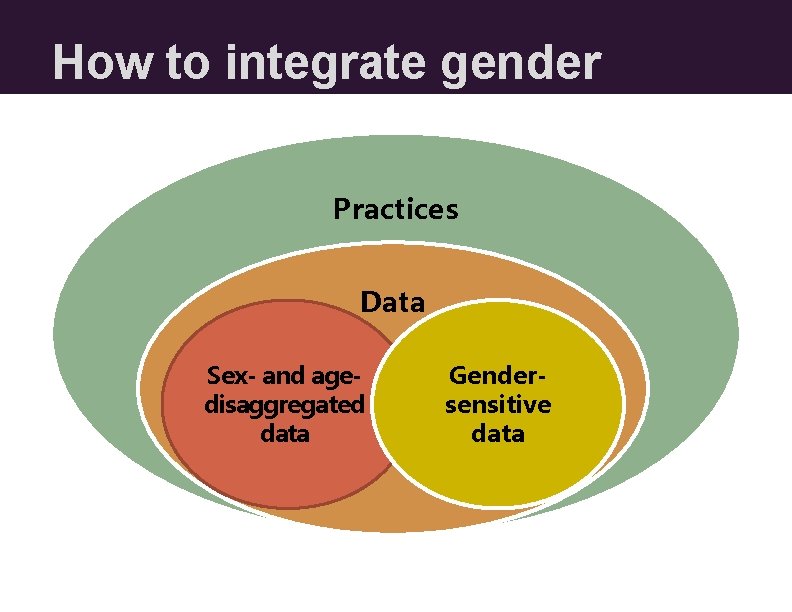
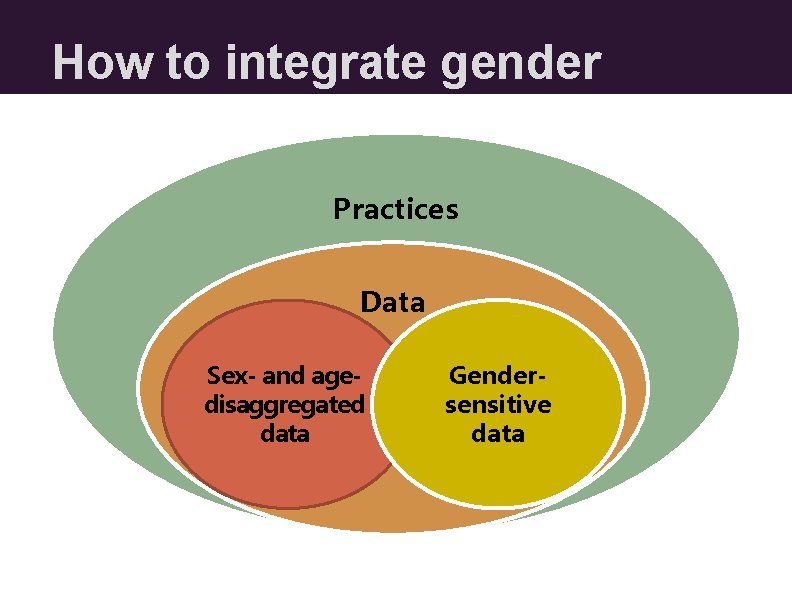
How to integrate gender Practices Data Sex- and agedisaggregated data Gendersensitive data
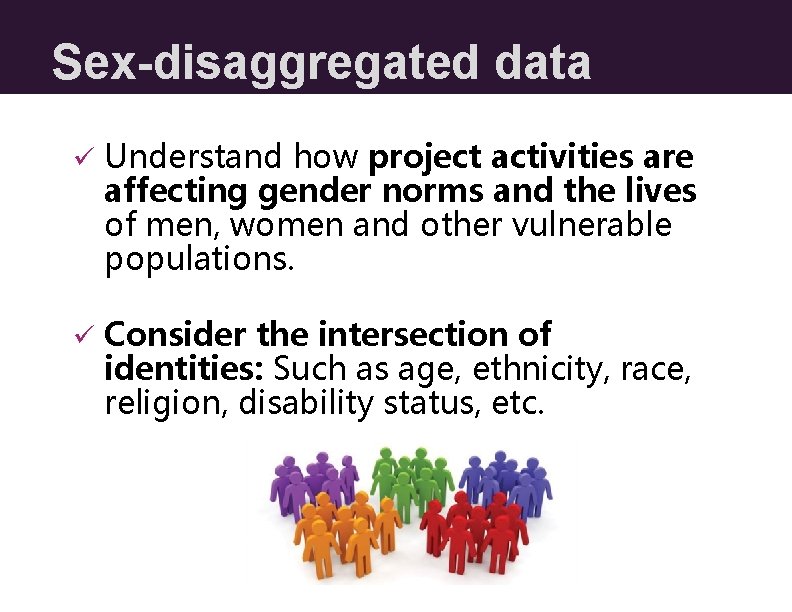
Sex-disaggregated data ü Understand how project activities are affecting gender norms and the lives of men, women and other vulnerable populations. ü Consider the intersection of identities: Such as age, ethnicity, race, religion, disability status, etc.
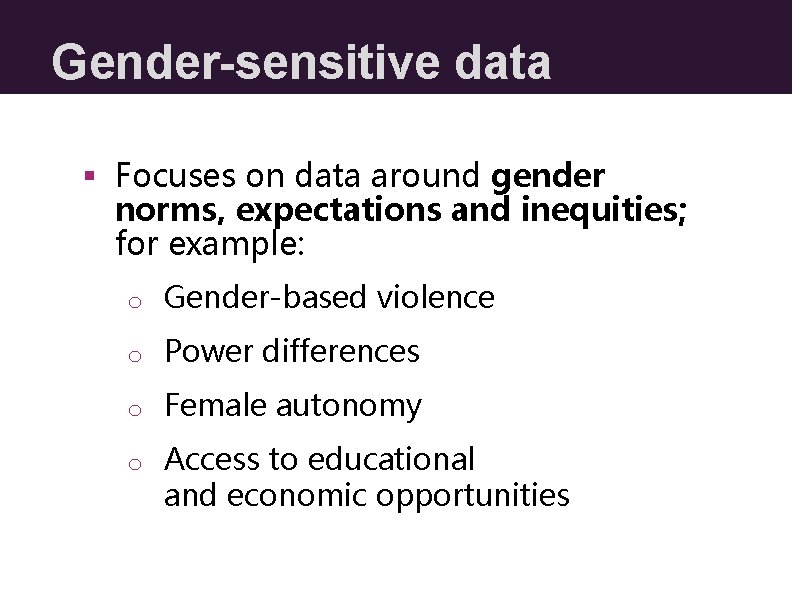
Gender-sensitive data § Focuses on data around gender norms, expectations and inequities; for example: o Gender-based violence o Power differences o Female autonomy o Access to educational and economic opportunities
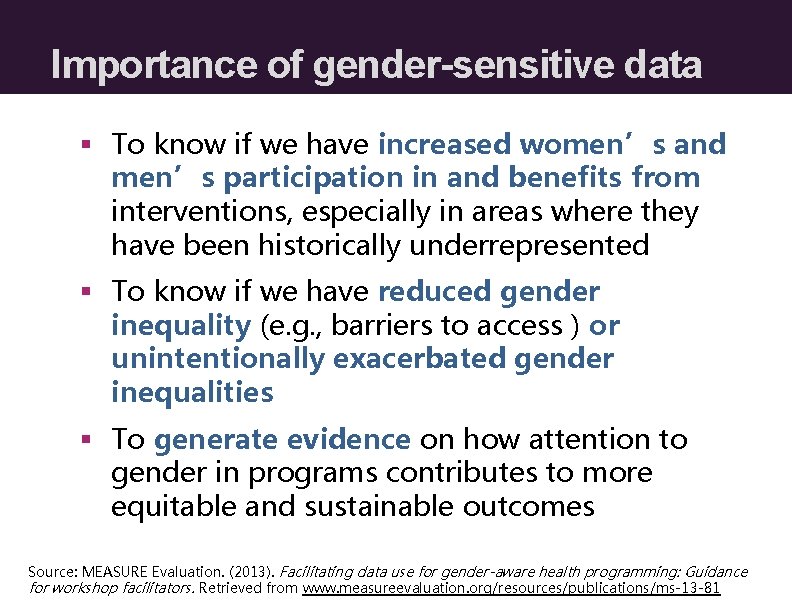
Importance of gender-sensitive data § To know if we have increased women’s and men’s participation in and benefits from interventions, especially in areas where they have been historically underrepresented § To know if we have reduced gender inequality (e. g. , barriers to access ) or unintentionally exacerbated gender inequalities § To generate evidence on how attention to gender in programs contributes to more equitable and sustainable outcomes Source: MEASURE Evaluation. (2013). Facilitating data use for gender-aware health programming: Guidance for workshop facilitators. Retrieved from www. measureevaluation. org/resources/publications/ms-13 -81
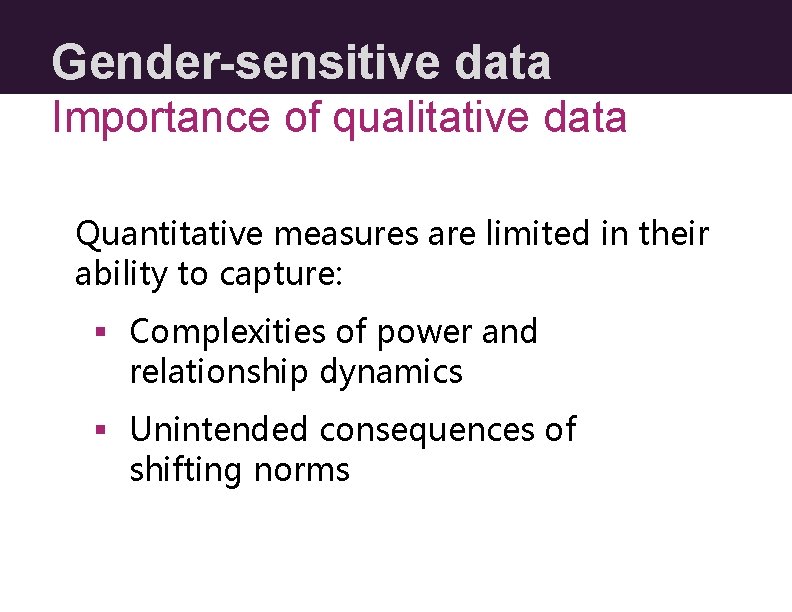
Gender-sensitive data Importance of qualitative data Quantitative measures are limited in their ability to capture: § Complexities of power and relationship dynamics § Unintended consequences of shifting norms
How to integrate gender Practices Data Sex- and agedisaggregated data Gendersensitive data
Activity
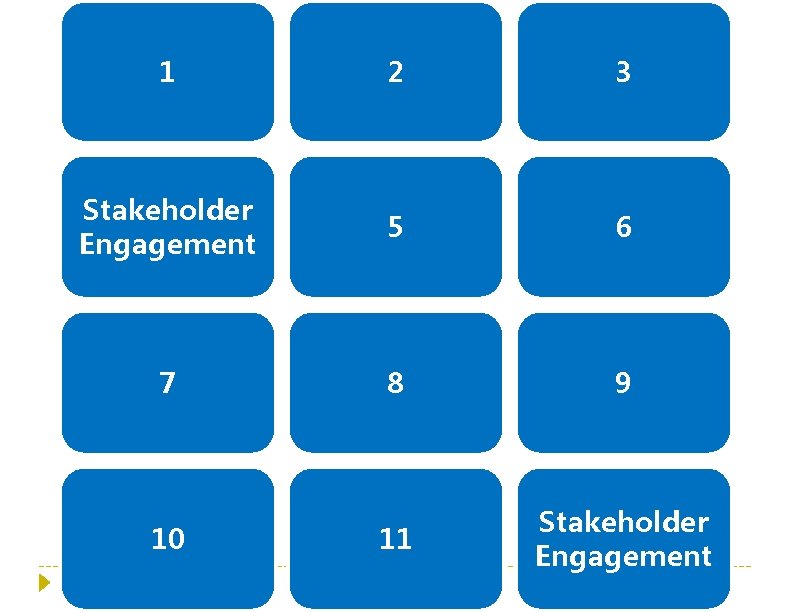
1 2 3 Stakeholder Engagement 4 5 6 7 8 9 11 Stakeholder Engagement 10 12
Data collection 2 where Data collection 3 when Ethics 4 Probing 5 Selection of 7 interviewer s Selection of 6 participant s Data collection 8 when Ethics 9 Selection of 11 interviewer s Selection of 12 participant s Probing 1 Data collection 10 where
Gender-integrated practices
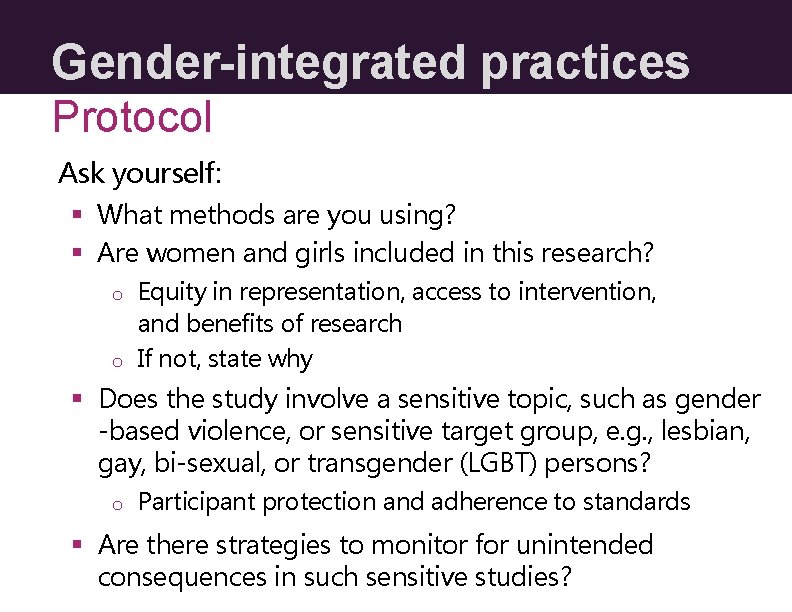
Gender-integrated practices Protocol Ask yourself: § What methods are you using? § Are women and girls included in this research? o Equity in representation, access to intervention, and benefits of research o If not, state why § Does the study involve a sensitive topic, such as gender -based violence, or sensitive target group, e. g. , lesbian, gay, bi-sexual, or transgender (LGBT) persons? o Participant protection and adherence to standards § Are there strategies to monitor for unintended consequences in such sensitive studies?
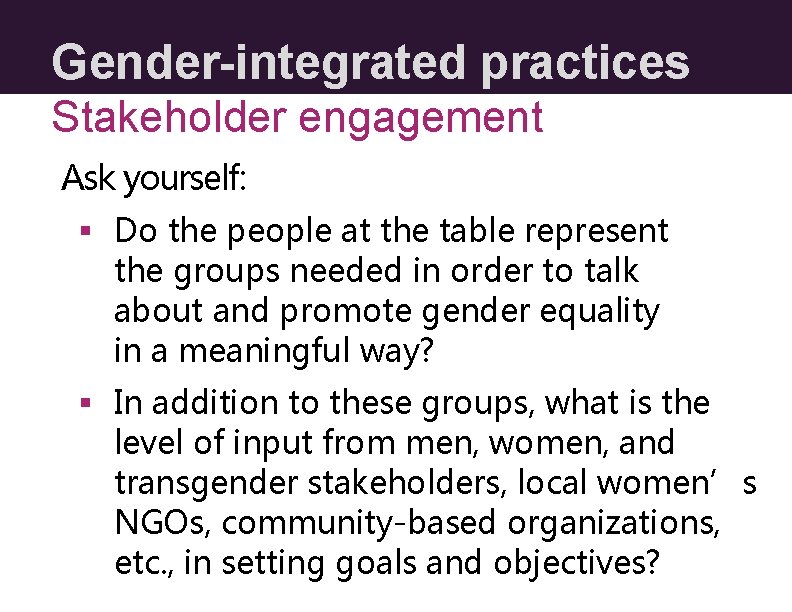
Gender-integrated practices Stakeholder engagement Ask yourself: § Do the people at the table represent the groups needed in order to talk about and promote gender equality in a meaningful way? § In addition to these groups, what is the level of input from men, women, and transgender stakeholders, local women’s NGOs, community-based organizations, etc. , in setting goals and objectives?
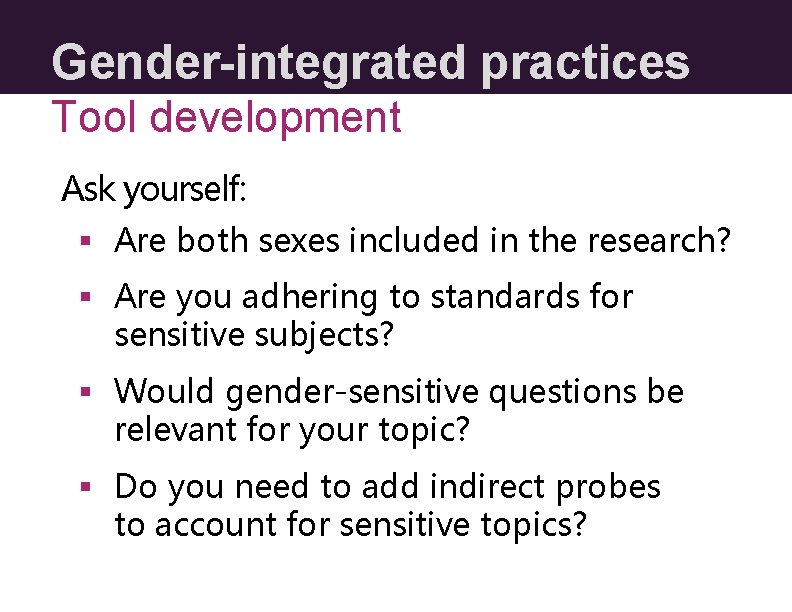
Gender-integrated practices Tool development Ask yourself: § Are both sexes included in the research? § Are you adhering to standards for sensitive subjects? § Would gender-sensitive questions be relevant for your topic? § Do you need to add indirect probes to account for sensitive topics?
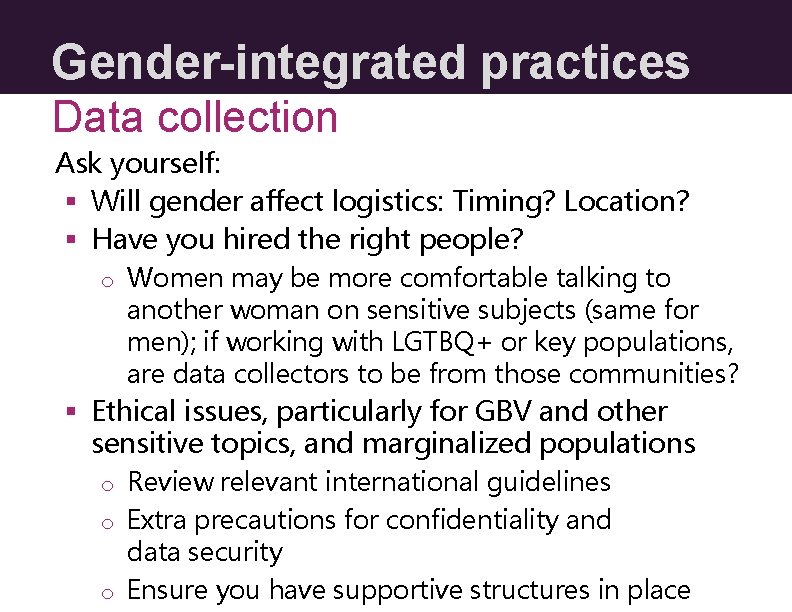
Gender-integrated practices Data collection Ask yourself: § Will gender affect logistics: Timing? Location? § Have you hired the right people? o Women may be more comfortable talking to another woman on sensitive subjects (same for men); if working with LGTBQ+ or key populations, are data collectors to be from those communities? § Ethical issues, particularly for GBV and other sensitive topics, and marginalized populations o Review relevant international guidelines o Extra precautions for confidentiality and data security o Ensure you have supportive structures in place
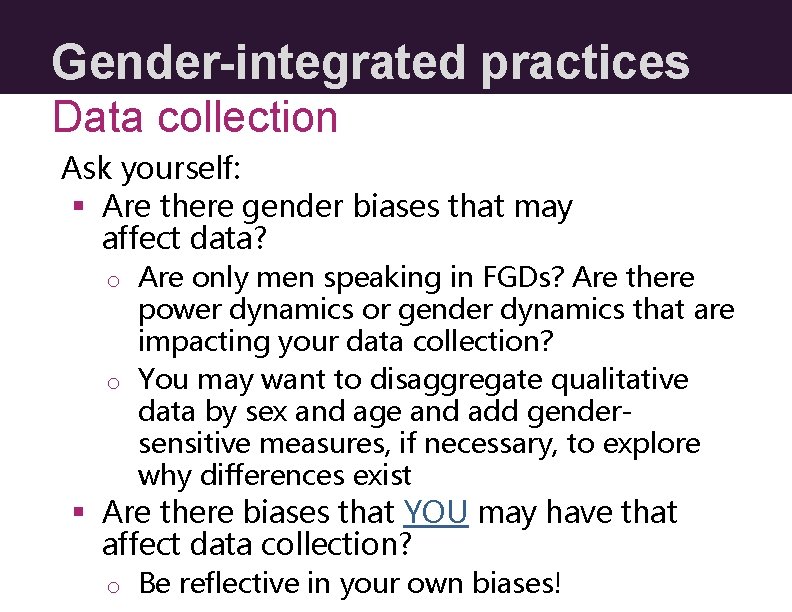
Gender-integrated practices Data collection Ask yourself: § Are there gender biases that may affect data? o Are only men speaking in FGDs? Are there power dynamics or gender dynamics that are impacting your data collection? o You may want to disaggregate qualitative data by sex and age and add gendersensitive measures, if necessary, to explore why differences exist § Are there biases that YOU may have that affect data collection? o Be reflective in your own biases!
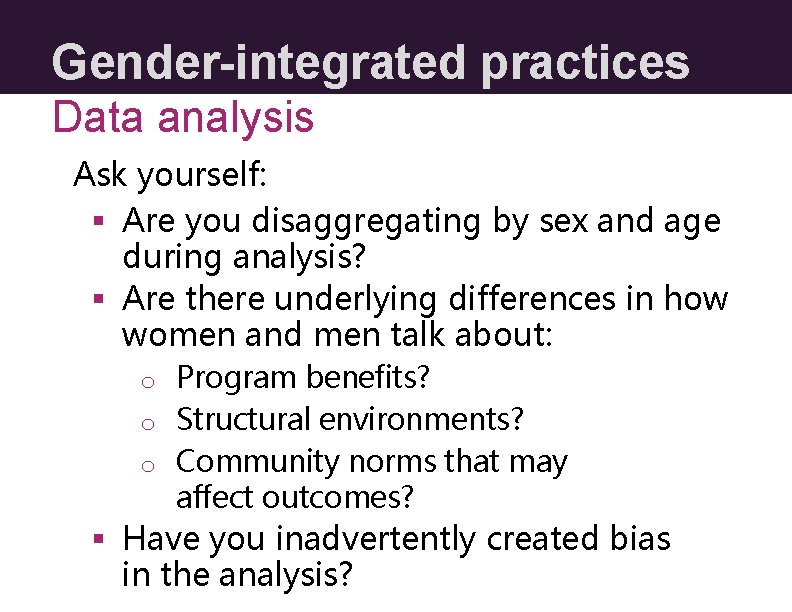
Gender-integrated practices Data analysis Ask yourself: § Are you disaggregating by sex and age during analysis? § Are there underlying differences in how women and men talk about: o Program benefits? o Structural environments? o Community norms that may affect outcomes? § Have you inadvertently created bias in the analysis?
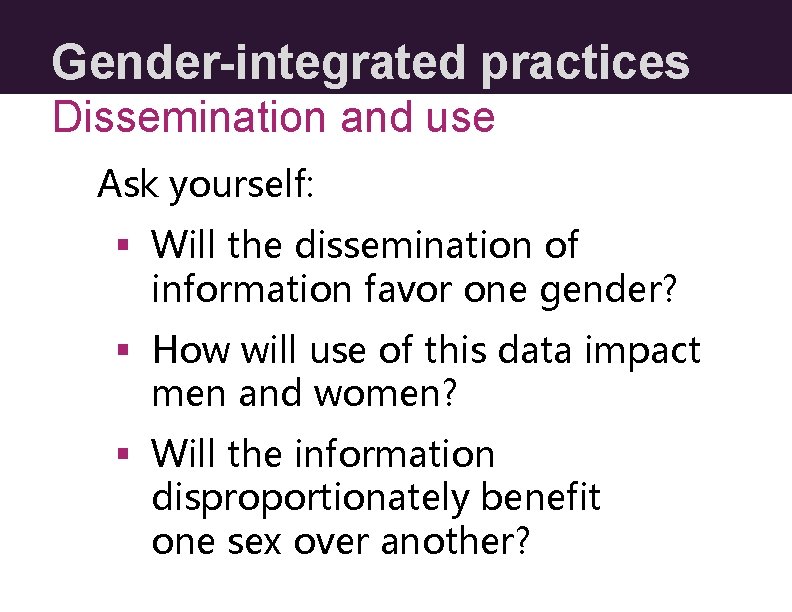
Gender-integrated practices Dissemination and use Ask yourself: § Will the dissemination of information favor one gender? § How will use of this data impact men and women? § Will the information disproportionately benefit one sex over another?
Questions, ideas, comments?
Summary
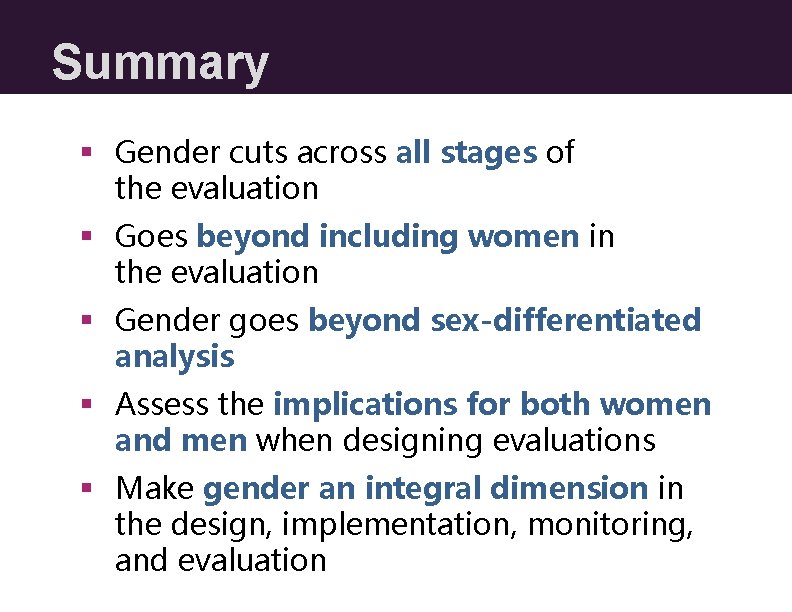
Summary § Gender cuts across all stages of the evaluation § Goes beyond including women in the evaluation § Gender goes beyond sex-differentiated analysis § Assess the implications for both women and men when designing evaluations § Make gender an integral dimension in the design, implementation, monitoring, and evaluation
This presentation was produced with the support of the United States Agency for International Development (USAID) under the terms of MEASURE Evaluation cooperative agreement AID-OAA-L-14 -00004. MEASURE Evaluation is implemented by the Carolina Population Center, University of North Carolina at Chapel Hill in partnership with ICF International; John Snow, Inc. ; Management Sciences for Health; Palladium; and Tulane University. Views expressed are not necessarily those of USAID or the United States government. www. measureevaluation. org