
Integrating Family Caregivers Into Primary Care to Improve













- Slides: 44
Integrating Family Caregivers Into Primary Care to Improve Outcomes Well. Medical Management Inc. Well. Med Charitable Foundation San Antonio, Texas
Disclosures It is the policy of the AAFP that all individuals in a position to control content disclose any relationships with commercial interests upon nomination/ invitation of participation. Disclosure documents are reviewed for potential conflicts of interest and if identified, they are resolved prior to confirmation of participation. Only these participants who have no conflict of interest or who agree to an identified resolution process prior to their participation were involved in this CME activity. All individuals in a position to control content for this activity have indicated they have no relevant financial relationships to disclose.
Objectives Upon completion of this session, the participants should be able to: • Describe how family caregivers can be integrated into a health care setting. • Determine if the tools used for caregiver assessment and referral would be pertinent in their care setting. • Determine if the program described during this presentation could be adapted to their care setting.
Agenda • Well. Med Organizational Overview • The Case for Integrating Caregiver Services into Primary Care • Caregiver SOS – A New Approach • Integration of Caregiver Support Pilot in the Well. Med Care Model
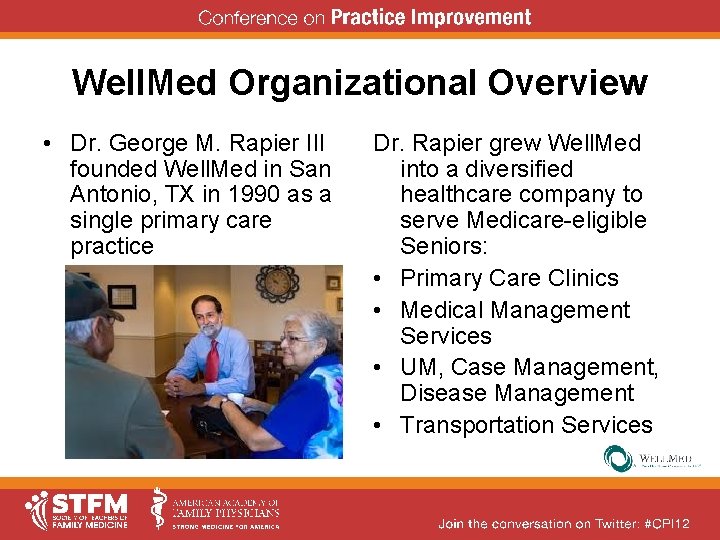
Well. Med Organizational Overview • Dr. George M. Rapier III founded Well. Med in San Antonio, TX in 1990 as a single primary care practice Dr. Rapier grew Well. Med into a diversified healthcare company to serve Medicare-eligible Seniors: • Primary Care Clinics • Medical Management Services • UM, Case Management, Disease Management • Transportation Services
Organizational Overview 56 primary care clinics (in-house lab, x-ray, pharmacy) with more than 100 physicians in Texas and Florida.
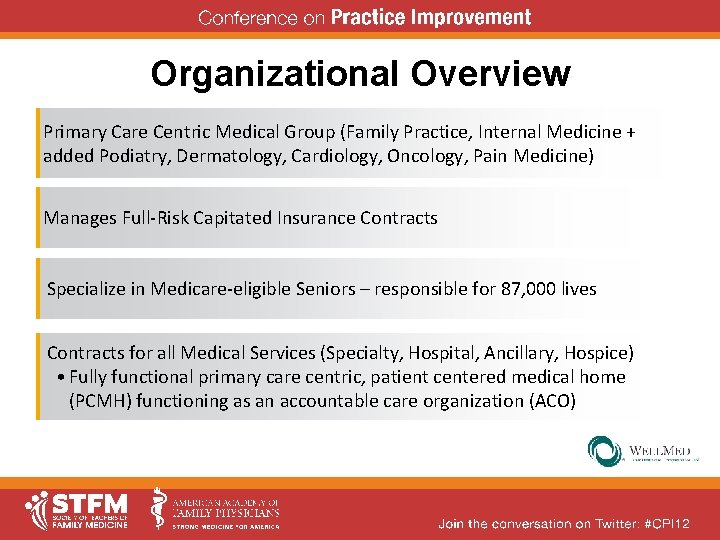
Organizational Overview Primary Care Centric Medical Group (Family Practice, Internal Medicine + added Podiatry, Dermatology, Cardiology, Oncology, Pain Medicine) Manages Full-Risk Capitated Insurance Contracts Specialize in Medicare-eligible Seniors – responsible for 87, 000 lives Contracts for all Medical Services (Specialty, Hospital, Ancillary, Hospice) • Fully functional primary care centric, patient centered medical home (PCMH) functioning as an accountable care organization (ACO)
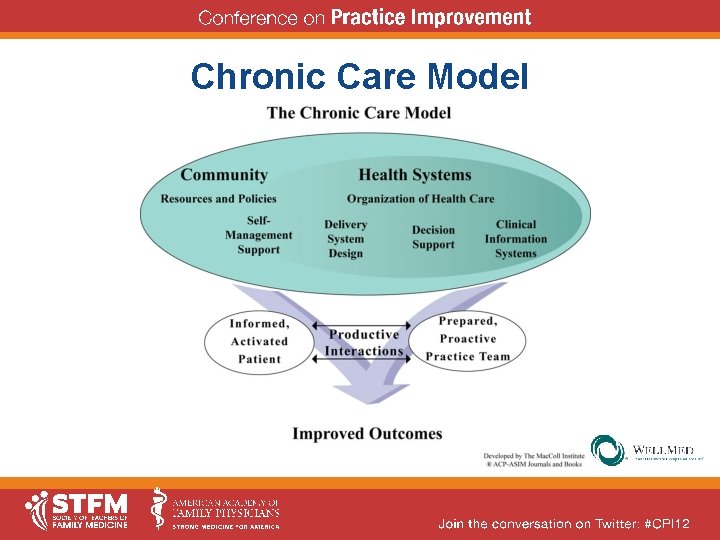
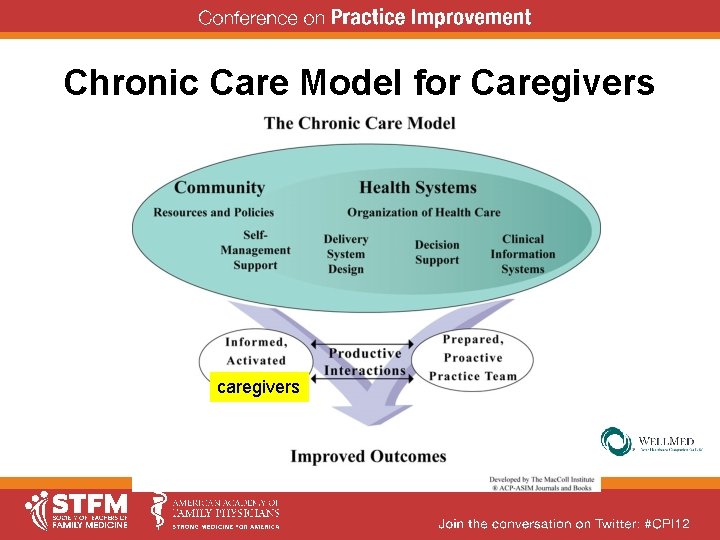
Chronic Care Model
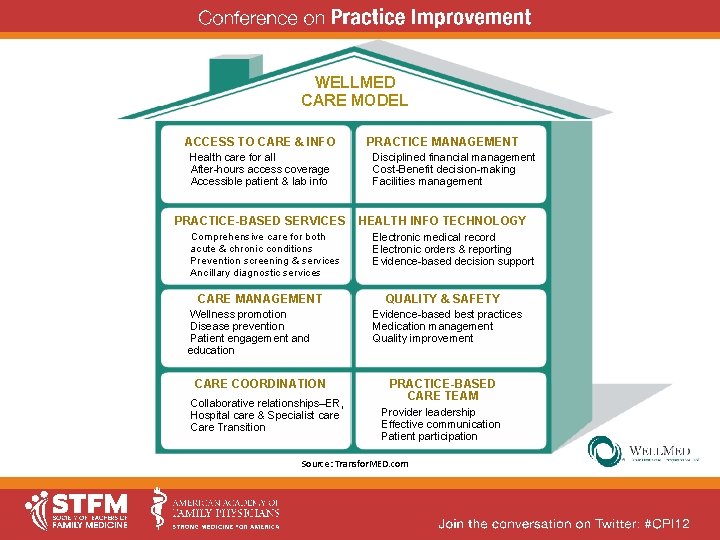
WELLMED CARE MODEL ACCESS TO CARE & INFO Health care for all After-hours access coverage Accessible patient & lab info PRACTICE-BASED SERVICES Comprehensive care for both acute & chronic conditions Prevention screening & services Ancillary diagnostic services CARE MANAGEMENT Wellness promotion Disease prevention Patient engagement and education CARE COORDINATION Collaborative relationships–ER, Hospital care & Specialist care Care Transition PRACTICE MANAGEMENT Disciplined financial management Cost-Benefit decision-making Facilities management HEALTH INFO TECHNOLOGY Electronic medical record Electronic orders & reporting Evidence-based decision support QUALITY & SAFETY Evidence-based best practices Medication management Quality improvement PRACTICE-BASED CARE TEAM Provider leadership Effective communication Patient participation Source: Transfor. MED. com
The Case for Integrating Caregiver Services Into Primary Care
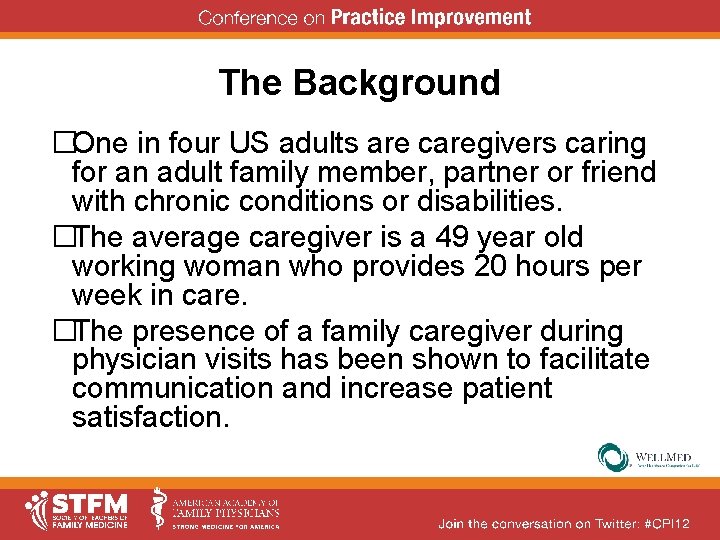
The Background �One in four US adults are caregivers caring for an adult family member, partner or friend with chronic conditions or disabilities. �The average caregiver is a 49 year old working woman who provides 20 hours per week in care. �The presence of a family caregiver during physician visits has been shown to facilitate communication and increase patient satisfaction.
Medical or Health Care Home The medical home, in reality, is the home of the person with chronic care needs cared for by a family caregiver L Feinberg, SC Reinhard, A Houser, and R. Choula, Valuing the Invaluable, 2011 Update – the Growing contributions and costs of Family Caregiving, AARP Public Policy Institute INSIGHT on the Issues (Washington, DC: AARP, 2011
Home Alone: Family Caregivers Providing Complex Chronic Care • A new study from the United Hospital Fund and the AARP Public Policy Institute released in October 2012 • 46% of caregivers perform “medical” or “nursing” tasks
Medication Management • 78% managed many different kinds of medications – 5 -9 prescriptions each day – Intraveneous fluids and injections • 60% learned how to manage at least some of these on their own • 47% never received any training of any kind • Caregivers are afraid of making a mistake and harming their family member
Wound Care • 35% of caregivers provide wound care – Ostomy care – Pressure sores – Application of ointments and bandages for skin care • 66% found this very hard • 47% were afraid of making a mistake • 36% received some training, usually from home health organization
Heavy Medical Burden • Those caregivers who performed 5 or more medical tasks were more likely to feel depressed • They believe they are helping their family member avoid being placed in a nursing home. • 57% felt they had no choice
“How has doing these medical/nursing tasks affected your own quality of life? ” Caregiver Answers: “In the last year and a half, I have developed high blood pressure, diabetes, and weight gain so now I have sleep apnea. ” “What life? ”
Care Transitions �High levels of caregiver burden and/or depression are associated with problematic discharges. �Risk of re-hospitalizations occurs when the family caregiver feels unprepared for care in the home. �Between 40 and 50 percent of re-admissions are linked to social problems and lack of community resources.
Positive Interventions �Involving family caregivers in discharge planning during care transitions may improve quality of care and lessen risk of readmission. �Goals: ◦ ◦ Understand instructions for medication and self care Recognize symptoms that signify complications Make and keep follow-up appointments Engaged and activated caregivers as members of the health care team
Person/Family Centered Approaches • In 2008, the American College of Physicians endorsed ethical guidance to physicians emphasizing the importance of the patientcaregiver-physician relationship. • United Hospital Fund initiative to improve quality of care by regularly recognizing, training, and supporting family caregivers. • Programs with a combination of education, skills training, coping techniques, and counseling show positive results.
The Costs of Doing Nothing • 17 -35% of caregivers have significant chronic health issues, such as heart disease, diabetes, sleep problems, and increased use of psychotropic drugs. • Caregivers of persons with dementia were more likely to have an emergency room visit or hospitalization.
Involving family caregivers in a meaningful and practical way, and supporting their own health care needs, should be a key component in all new models of care to promote better care, improve the experience of care, and reduce costs.
A New Approach: The Caregiver SOS Program
What is Caregiver SOS? A caregiver support program that provides: ØWellness-activity programming to support the physical and mental health of caregivers ØInformation-assistance with care planning and referral to local community resources ØSupport – groups that foster connections to other caregivers ØEducation- Education on caregiver topics Developing WISE caregivers!
Caregiver SOS Locations • San Antonio – Alicia Trevino Lopez Senior One Stop Center – Northern Hills • Edinburgh – Hidalgo County • Harlingen – Harlingen Senior Center • Corpus Christi – Lindale Senior Center
Evidence Based Programming �Assessments and Care Planning Tools �Better Choices/Better Health (CDSMP) �Diabetes Self Management Program �Stress-busting Program for Family Caregivers �A Matter of Balance
Stress-Busting Program Results of Phase 2 • Has been highly beneficial for many family caregivers • 209 Alzheimer’s caregivers – 162 females and 47 males – 128 spousal caregivers, 78 adult children caregivers, 3 others – 149 white (non-Hispanic) caregivers, 53 Hispanic caregivers
Perceived Stress Baseline 4 weeks End Intervention 2 Months
Depression Baseline 4 weeks End Intervention 2 Months
Anxiety Baseline 4 weeks End Intervention 2 Months
Stress-Busting Program Summary of Results Decreases in • Stress • Depression • Anger/Hostility • Anxiety Improvements in • Quality of life • Sense of control
Other Assessment Tools �C. A. R. E Tool (Short Version) ◦ Caregivers Aspirations, Realities, and Expectations ◦ N. Guberman, J. Keefe, P. Fancey, L. Barylak • Caregiver Risk Screen (Guberman, Keefe, Fancey, Nahmiash, Barylak, 2001)
Integration of Caregiver Support Pilot in the Well. Med Care Model
Chronic Care Model for Caregivers caregivers
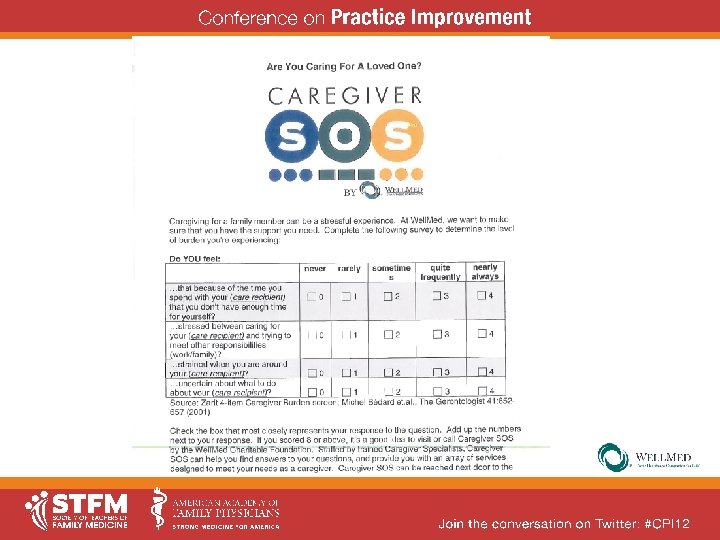
Clinic Integration • Utilizing 4 question Zarit caregiver burden scale as initial screening. • Initial clinic site is co-located with a Caregiver SOS site • Clinic staff administer the screening with the caregiver. • The results are given to the Caregiver SOS specialist who contacts the caregiver.
Clinic Integration �Caregiver SOS specialist works directly with the caregivers to assess needs, and offer appropriate programming. �Referrals to community agencies are made as indicated by the screening and interview �Feedback provided to clinic staff �Goal: Make the caregiver part of the Care Team.
Referral Mechanisms • Desktop Icon • Zarit 4 Question Survey in Clinics • Self Referral of Caregivers
Intervention • Average Zarit score = 7. 7 • Contact required within 48 hours • Referrals include support groups, evidence based programs, community programs • 60% of caregivers are now participating in SOS programming
Future Evaluation Metrics • Reduced hospitalizations • Reduced hospital re-admissions • Reduced emergency department usage • Reduced cost per member per month • Tie patient acuity rating to caregiver wellbeing
Questions Yet to Be Answered �What training is required with the health team to ensure they have the skills to integrate a caregiver as a member of the health team? �What changes in procedure are required to leverage an activated and engaged caregiver? �What policy changes would allow all health care providers to engage caregivers?
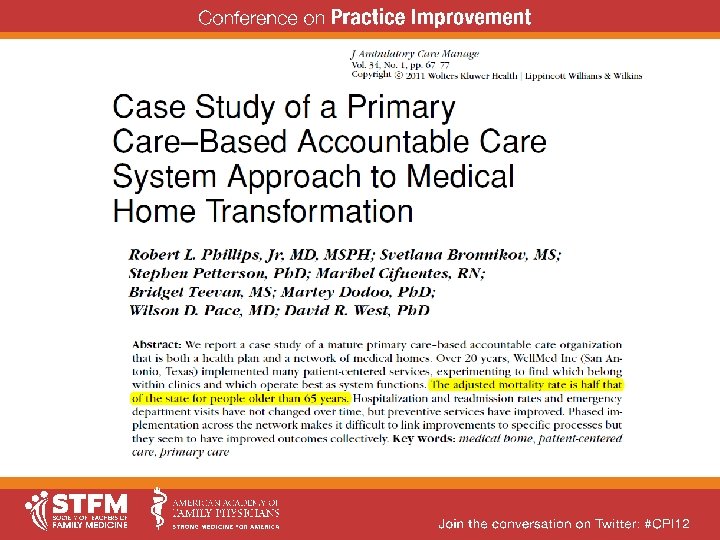
An Interview with Bob Phillips, MD, MSPH Director, Robert Graham Center Policy Studies in Family Medicine & Primary Care “What is primary care going to look like in 20 years and who is going to be providing it? ” http: //www. youtube. com/watch? v=dx 3 rz. WE 9 u 4&feature=youtu. be
Contact Information Cynthia Henderson, RN, CCM Director, Clinical Programs Well. Medical Management, Inc. chenderson@wellmed. net Debbie Billa, Grants Manager Well. Med Charitable Foundation dbilla@wellmed. net