
Integrating Data Streams Across the Enterprise for ALM

- Slides: 17
Integrating Data Streams Across the Enterprise for ALM Christopher Hoffman Director – Engineering Information Systems Owner Cummins Inc. 29 March 2018 Public
P. O. S. T. PURPOSE A look at defining the strategy and initiatives for “business” application lifecycle management for the entire engineering workflow – 1000+ applications and 1000 s of data locations. OUTCOME / ASK To share an approach to engineer an information ecosystem. To ask for validation of the approach and potential risks from your experience. STRUCTURE Presentation followed by questions and comments. TIME 30 minutes Public 2
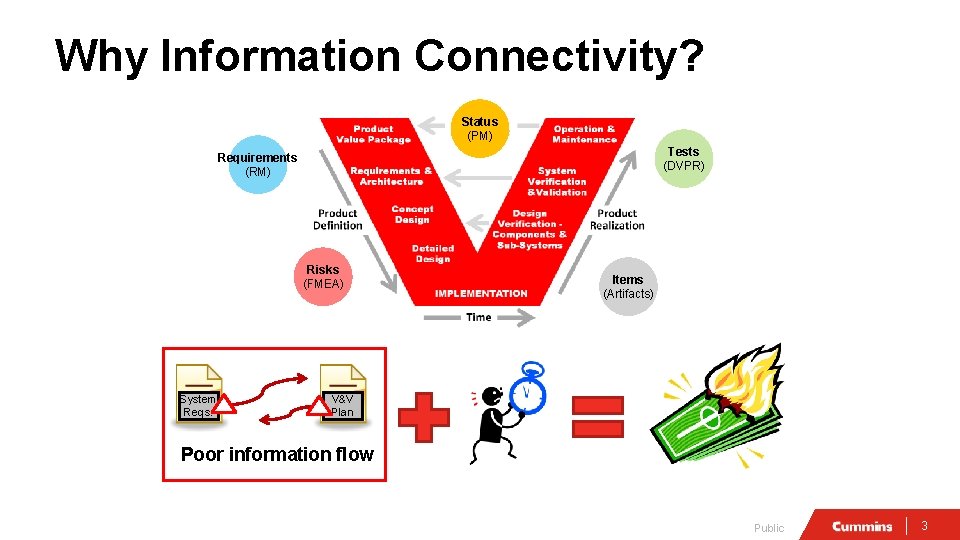
Why Information Connectivity? Status (PM) Tests (DVPR) Requirements (RM) Risks (FMEA) System Reqs. Items (Artifacts) V&V Plan Poor information flow Public 3
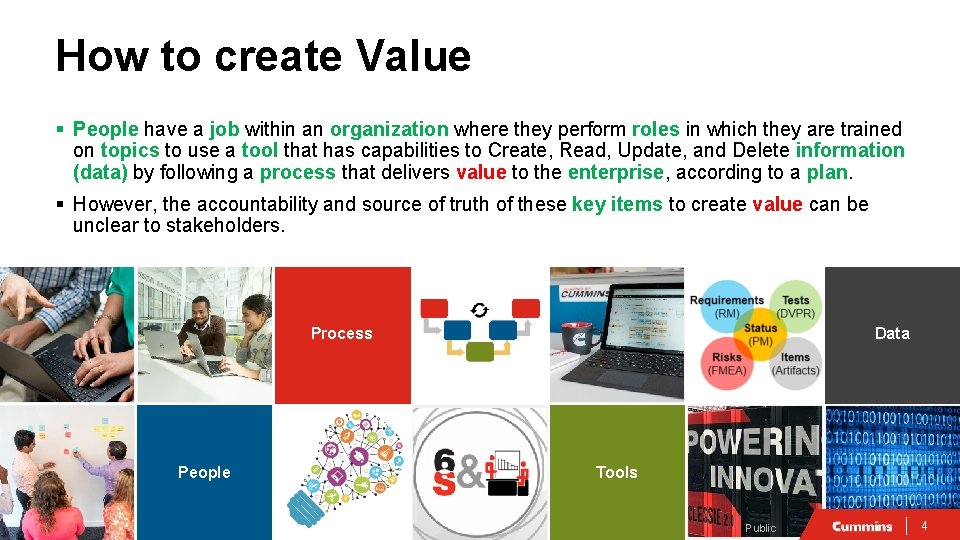
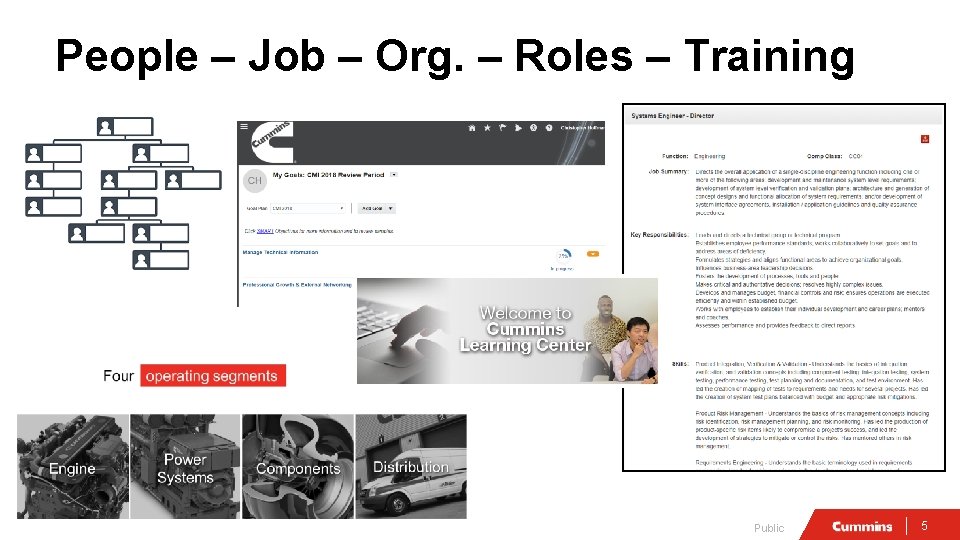
How to create Value § People have a job within an organization where they perform roles in which they are trained on topics to use a tool that has capabilities to Create, Read, Update, and Delete information (data) by following a process that delivers value to the enterprise, according to a plan. § However, the accountability and source of truth of these key items to create value can be unclear to stakeholders. Process People Data Tools Public 4
People – Job – Org. – Roles – Training Public 5
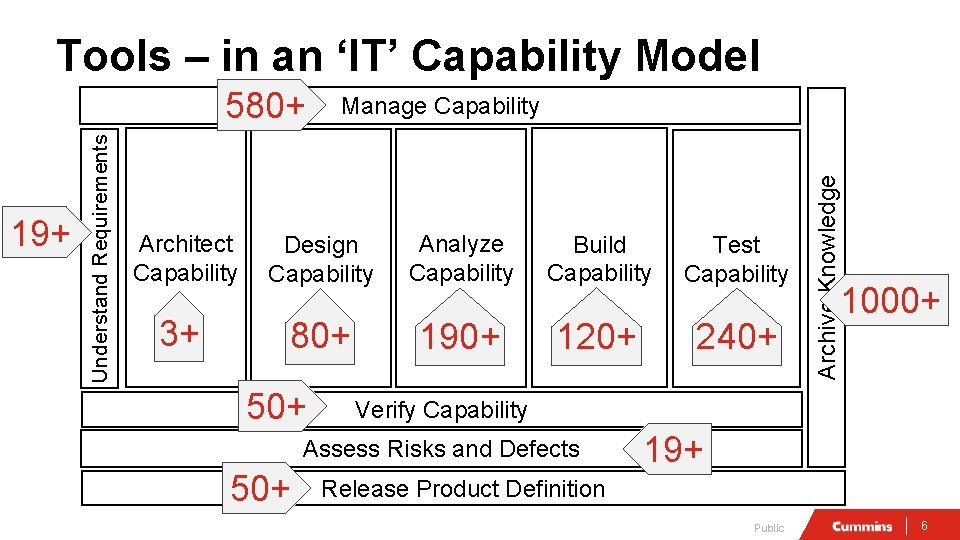
Tools – in an ‘IT’ Capability Model Manage Capability Architect Capability Design Capability Analyze Capability Build Capability Test Capability 3+ 80+ 190+ 120+ 240+ 50+ 1000+ Verify Capability Assess Risks and Defects 50+ Archive Knowledge 19+ Understand Requirements 580+ 19+ Release Product Definition Public 6
7
8
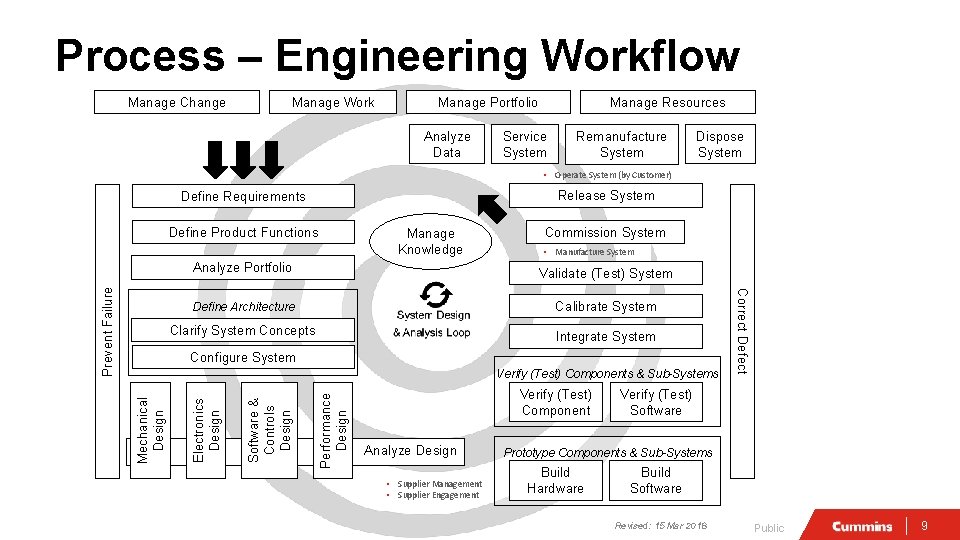
Process – Engineering Workflow Manage Change Manage Work Manage Portfolio Analyze Data Manage Resources Service System Remanufacture System Dispose System • Operate System (by Customer) Release System Define Requirements Manage Knowledge Commission System • Manufacture System Analyze Portfolio Validate (Test) System Define Architecture Calibrate System Clarify System Concepts Integrate System Configure System Performance Design Software & Controls Design Electronics Design Mechanical Design Verify (Test) Components & Sub-Systems Verify (Test) Component Analyze Design • Supplier Management • Supplier Engagement Correct Defect Prevent Failure Define Product Functions Verify (Test) Software Prototype Components & Sub-Systems Build Hardware Build Software Revised: 15 Mar 2018 Public 9
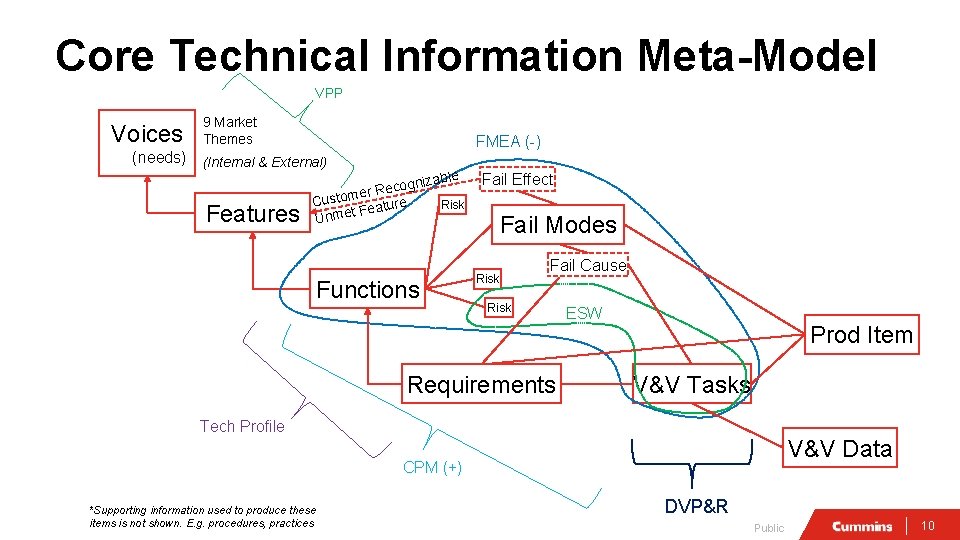
Core Technical Information Meta-Model VPP Voices 9 Market Themes FMEA (-) (needs) (Internal & External) Features nizable g o c e R er Custom eature Risk F Unmet Functions Fail Effect Fail Modes Risk Fail Cause Risk Requirements ESW Prod Item V&V Tasks Tech Profile V&V Data CPM (+) *Supporting information used to produce these items is not shown. E. g. procedures, practices DVP&R Public 10
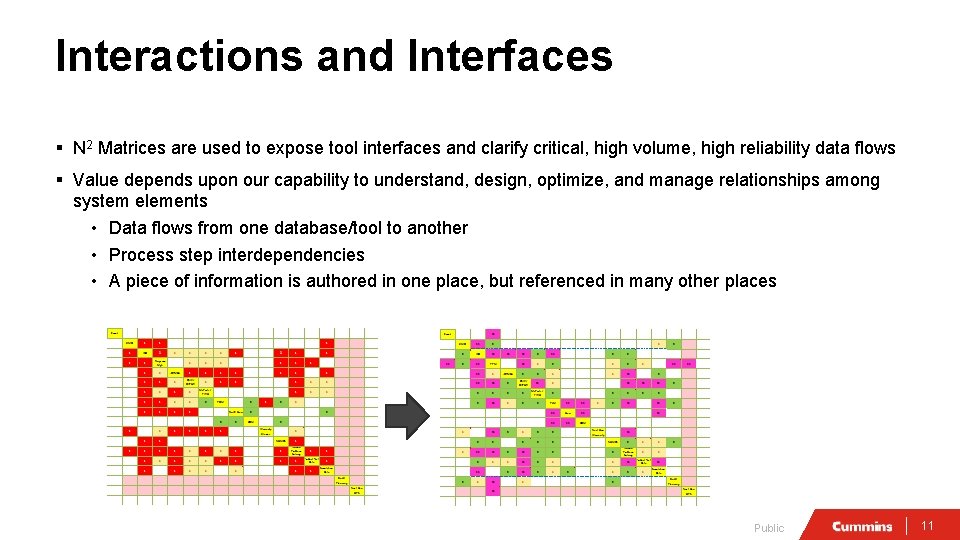
Interactions and Interfaces § N 2 Matrices are used to expose tool interfaces and clarify critical, high volume, high reliability data flows § Value depends upon our capability to understand, design, optimize, and manage relationships among system elements • Data flows from one database/tool to another • Process step interdependencies • A piece of information is authored in one place, but referenced in many other places Public 11
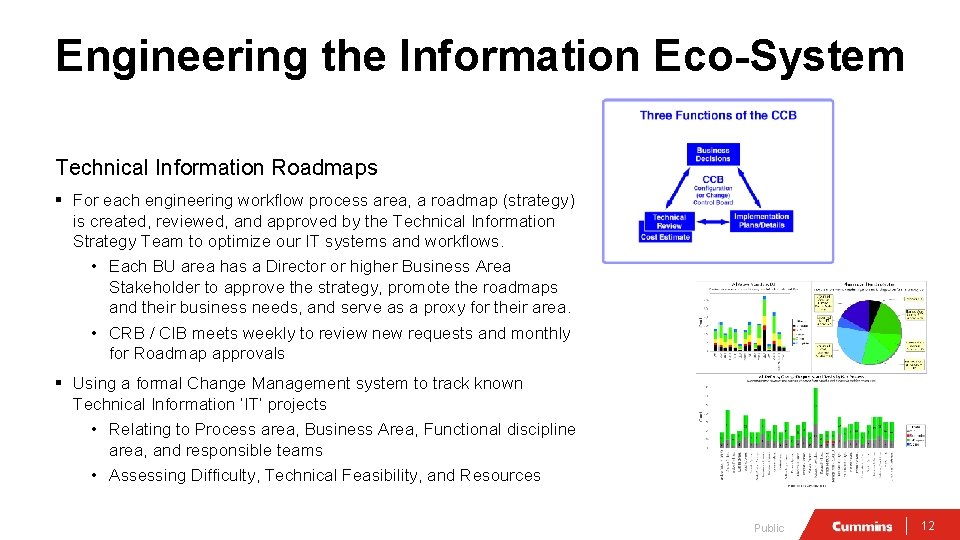
Engineering the Information Eco-System Technical Information Roadmaps § For each engineering workflow process area, a roadmap (strategy) is created, reviewed, and approved by the Technical Information Strategy Team to optimize our IT systems and workflows. • Each BU area has a Director or higher Business Area Stakeholder to approve the strategy, promote the roadmaps and their business needs, and serve as a proxy for their area. • CRB / CIB meets weekly to review new requests and monthly for Roadmap approvals § Using a formal Change Management system to track known Technical Information ‘IT’ projects • Relating to Process area, Business Area, Functional discipline area, and responsible teams • Assessing Difficulty, Technical Feasibility, and Resources Public 12
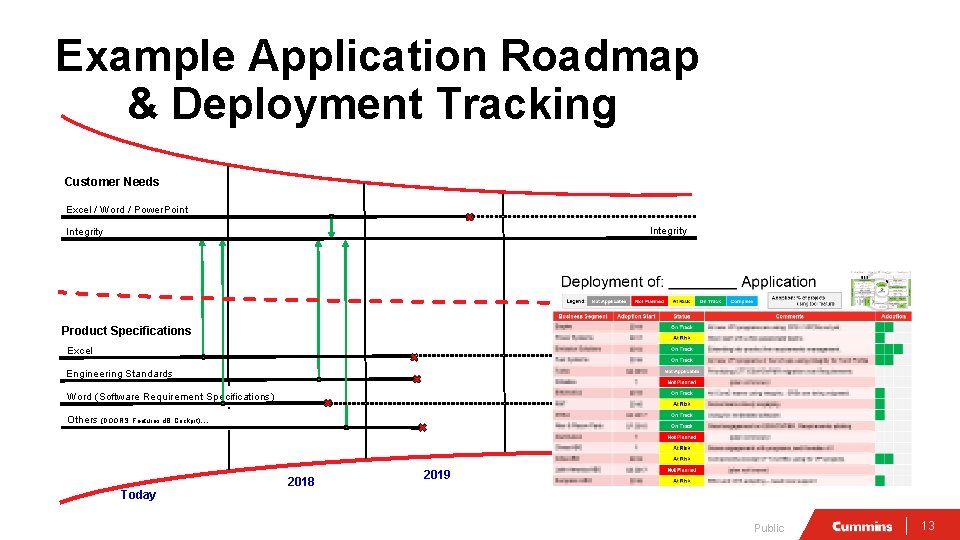
Example Application Roadmap & Deployment Tracking Customer Needs Excel / Word / Power. Point Integrity Product Specifications Excel Engineering Standards Word (Software Requirement Specifications) Others (DOORS, Features d. B, Cockpit)… Today 2018 2019 >2020 Public 13
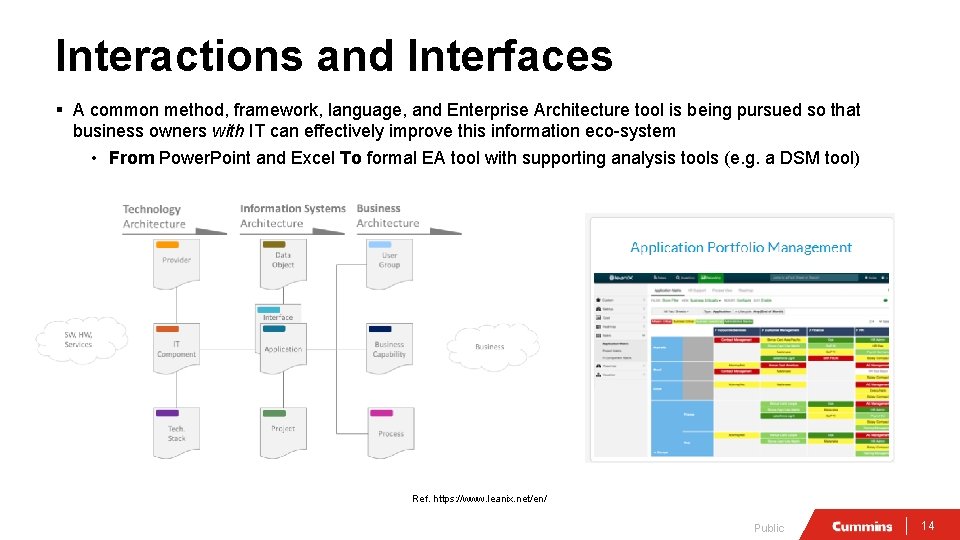
Interactions and Interfaces § A common method, framework, language, and Enterprise Architecture tool is being pursued so that business owners with IT can effectively improve this information eco-system • From Power. Point and Excel To formal EA tool with supporting analysis tools (e. g. a DSM tool) Ref. https: //www. leanix. net/en/ Public 14
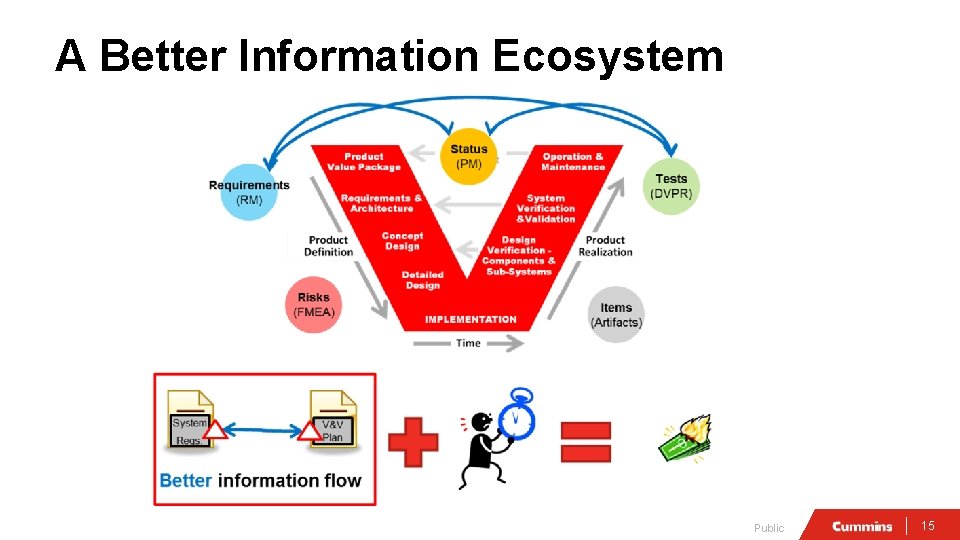
A Better Information Ecosystem Public 15
Q+A 16
17 17