
Integrated Waste Management Reduce Reuse and Recycle www
- Slides: 15
Integrated Waste Management: Reduce, Reuse and Recycle www. assignmentpoint. com
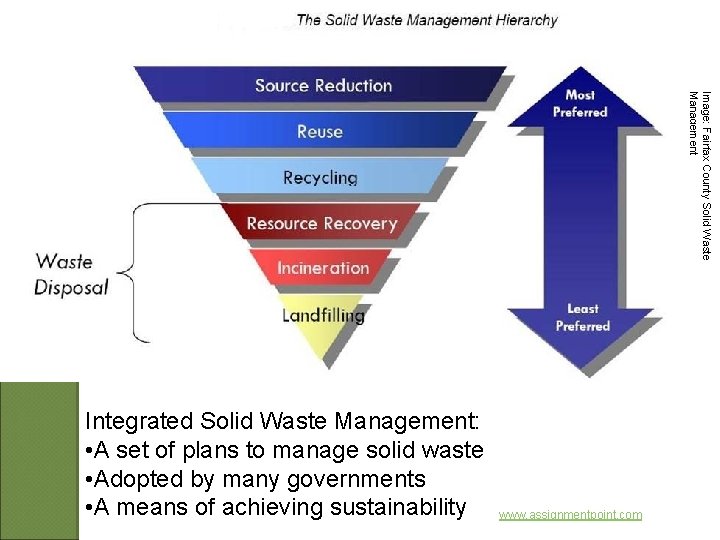
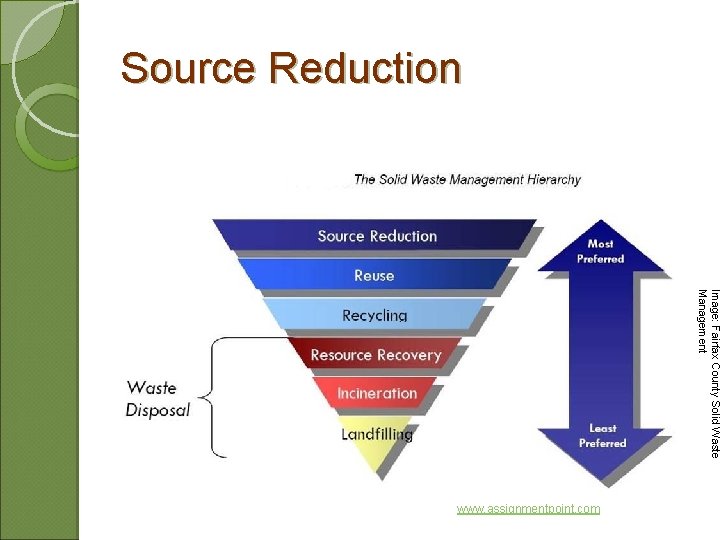
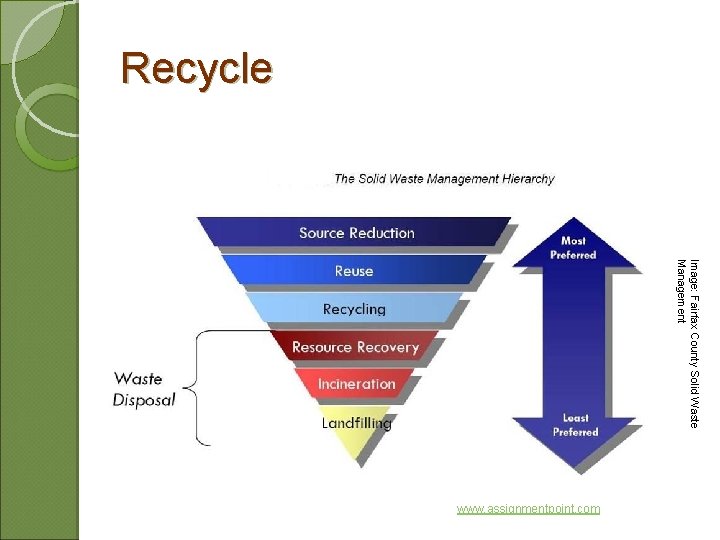
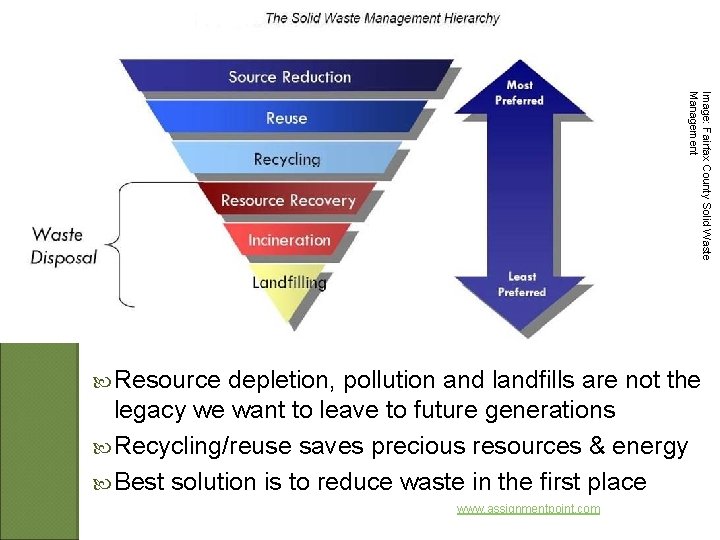
Image: Fairfax County Solid Waste Management Integrated Solid Waste Management: • A set of plans to manage solid waste • Adopted by many governments • A means of achieving sustainability www. assignmentpoint. com
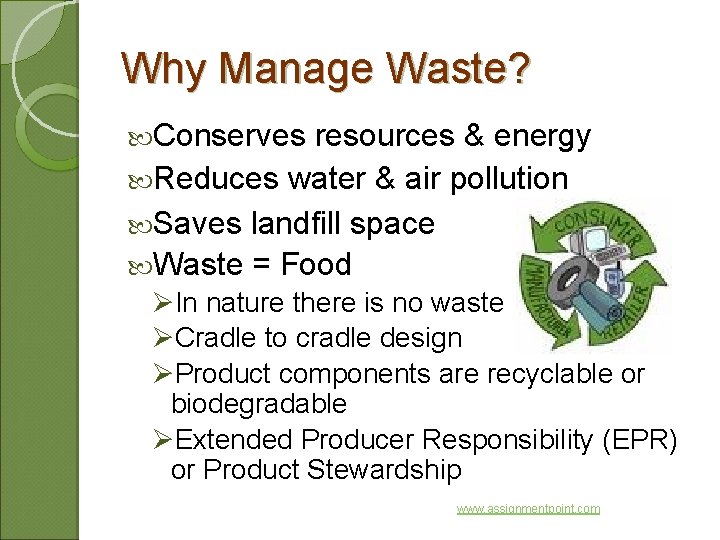
Why Manage Waste? Conserves resources & energy Reduces water & air pollution Saves landfill space Waste = Food ØIn nature there is no waste ØCradle to cradle design ØProduct components are recyclable or biodegradable ØExtended Producer Responsibility (EPR) or Product Stewardship www. assignmentpoint. com
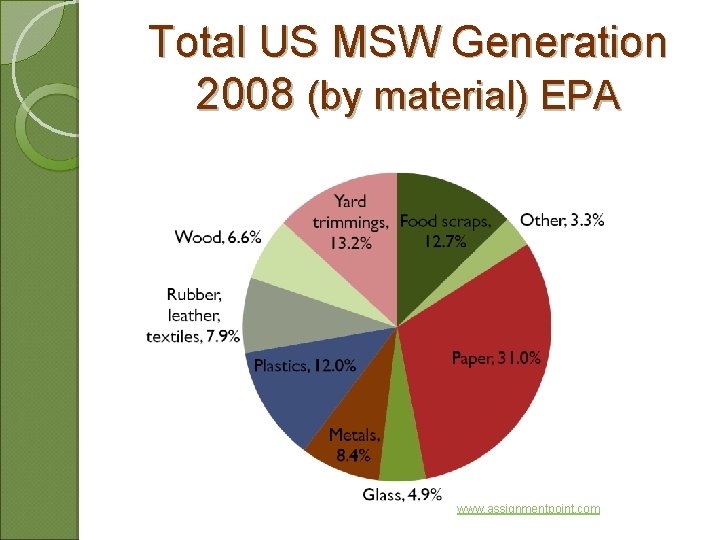
Total US MSW Generation 2008 (by material) EPA www. assignmentpoint. com
Source Reduction Image: Fairfax County Solid Waste Management www. assignmentpoint. com
Source Reduction or “Reduce” Preferred method: Prevents the generation of waste in the first place • Manufacturer: Decrease materials/energy used during manufacturing/distribution • Consumer: Purchase items with minimal packaging, avoid disposable products • Includes backyard composting • www. assignmentpoint. com
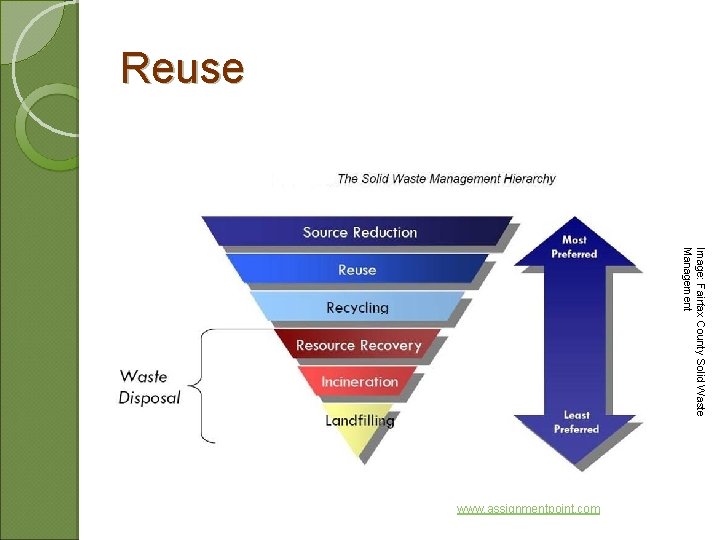
Reuse Image: Fairfax County Solid Waste Management www. assignmentpoint. com
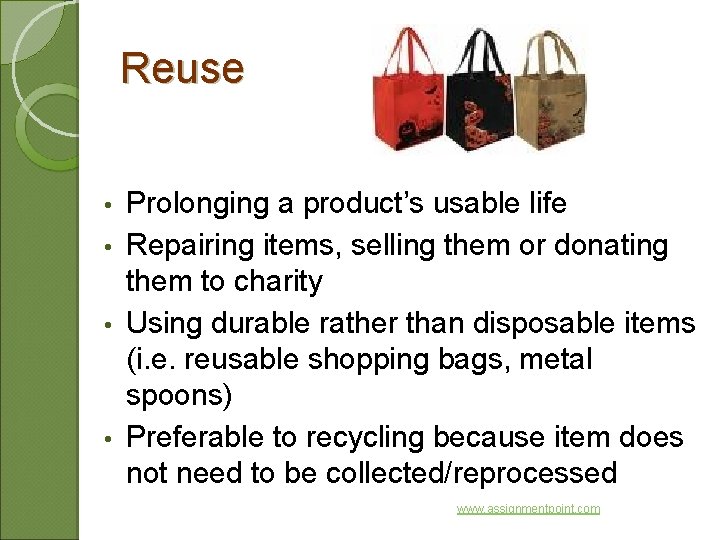
Reuse Prolonging a product’s usable life • Repairing items, selling them or donating them to charity • Using durable rather than disposable items (i. e. reusable shopping bags, metal spoons) • Preferable to recycling because item does not need to be collected/reprocessed • www. assignmentpoint. com
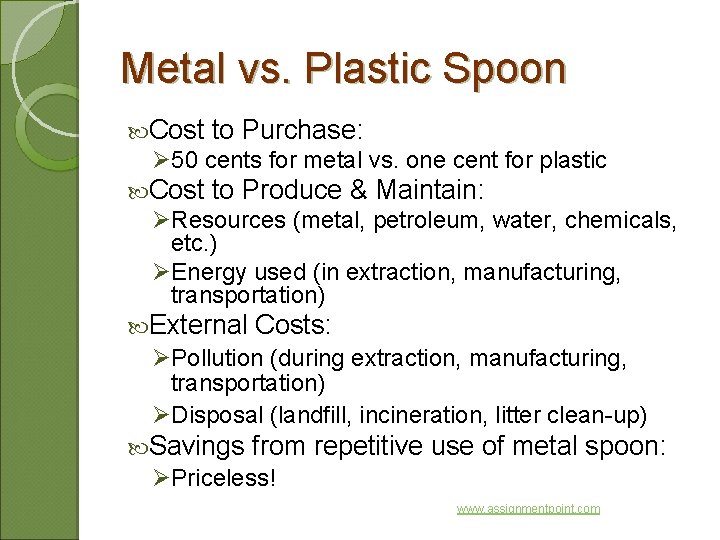
Metal vs. Plastic Spoon Cost to Purchase: Ø 50 cents for metal vs. one cent for plastic Cost to Produce & Maintain: ØResources (metal, petroleum, water, chemicals, etc. ) ØEnergy used (in extraction, manufacturing, transportation) External Costs: ØPollution (during extraction, manufacturing, transportation) ØDisposal (landfill, incineration, litter clean-up) Savings from repetitive use of metal spoon: ØPriceless! www. assignmentpoint. com
Recycle Image: Fairfax County Solid Waste Management www. assignmentpoint. com
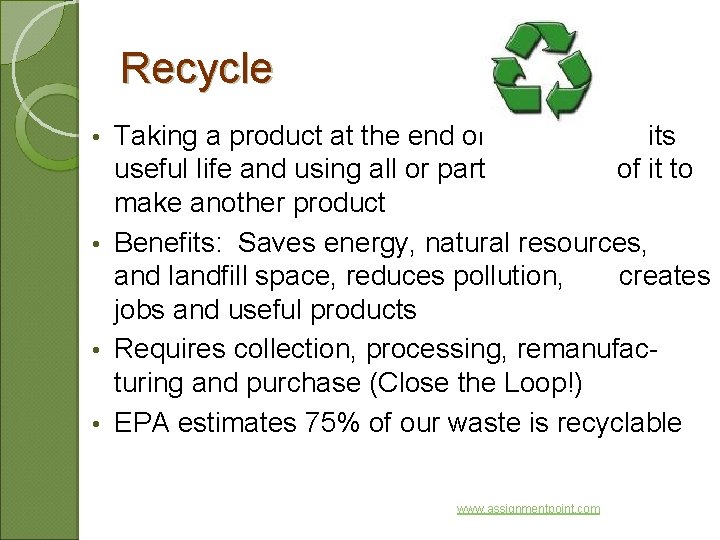
Recycle Taking a product at the end of its useful life and using all or part of it to make another product • Benefits: Saves energy, natural resources, and landfill space, reduces pollution, creates jobs and useful products • Requires collection, processing, remanufacturing and purchase (Close the Loop!) • EPA estimates 75% of our waste is recyclable • www. assignmentpoint. com
Waste Disposal Last in the Hierarchy Image: Fairfax County Solid Waste Management www. assignmentpoint. com
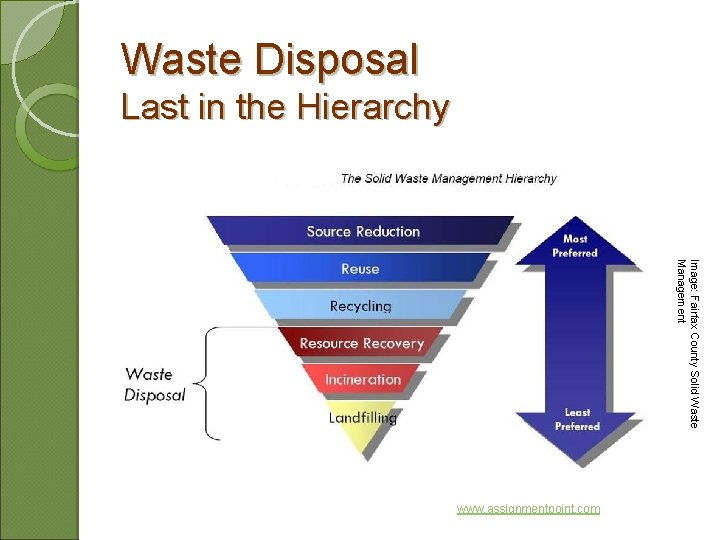
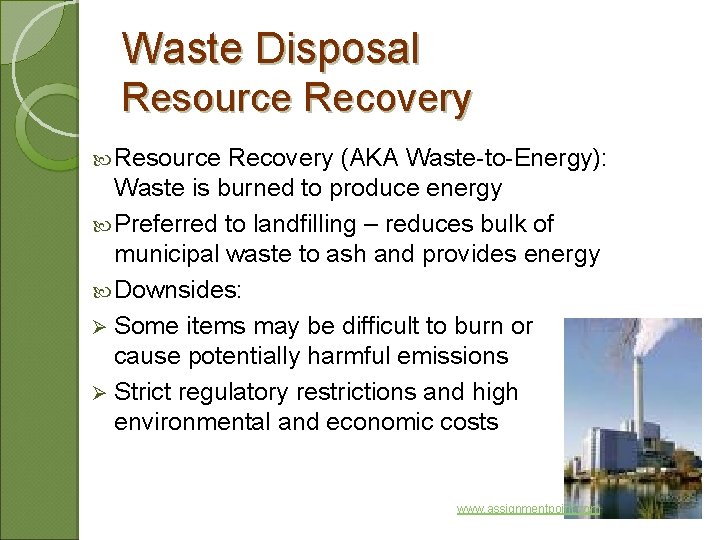
Waste Disposal Resource Recovery (AKA Waste-to-Energy): Waste is burned to produce energy Preferred to landfilling – reduces bulk of municipal waste to ash and provides energy Downsides: Ø Some items may be difficult to burn or cause potentially harmful emissions Ø Strict regulatory restrictions and high environmental and economic costs www. assignmentpoint. com
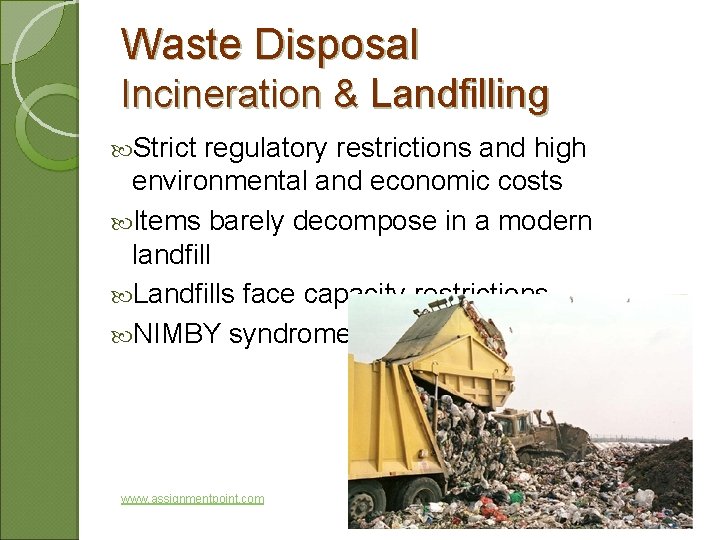
Waste Disposal Incineration & Landfilling Strict regulatory restrictions and high environmental and economic costs Items barely decompose in a modern landfill Landfills face capacity restrictions NIMBY syndrome www. assignmentpoint. com
Image: Fairfax County Solid Waste Management Resource depletion, pollution and landfills are not the legacy we want to leave to future generations Recycling/reuse saves precious resources & energy Best solution is to reduce waste in the first place www. assignmentpoint. com