
Integrated Taxonomic Information System Janet Gomon Deputy Director
- Slides: 18
Integrated Taxonomic Information System Janet Gomon, Deputy Director, ITIS Smithsonian Institution Museum of Natural History gomon. janet@nmnh. si. edu The Colour of Ocean Data - Palais des Congrès, Brussels, Belgium, 25 -27 November 2002
Presentation Topics v v v ITIS Overview Technical Aspects Benefits Lessons Learned Future Plans
What is ITIS? v An evolving standard reference for taxonomic information on species (biodiversity) v. A partnership § US, Canadian, Mexican governmental groups § Non-governmental organizations v Developed in collaboration with systematics community and other list keepers
Goal v To provide quality taxonomic information about organisms that meets needs of partners and user public § Taxonomic coverage: all major groups; focus on North America; world coverage where feasible § Service: • data quality assurance system for taxonomic • • identification common reference point for exchange of data capacity building in taxonomy (regional datasets, etc. )
History v NODC Taxonomic Code, 7 th ed. – ITIS roots v “VIMS Code” or “Taxonomic Code for the Biota of the Chesapeake Bay” – NODC Tax. Code roots v 1996 – 7 U. S. federal agencies sign MOU, along with Smithsonian Natural History Museum v By 2002 – ITIS North America established; Associate Member GBIF; joined with Species 2000 in “Catalogue of Life”
Partners
How many names? v Over 320, 000 scientific names v 186, 000 v 80, 000 valid/accepted species names additional common names
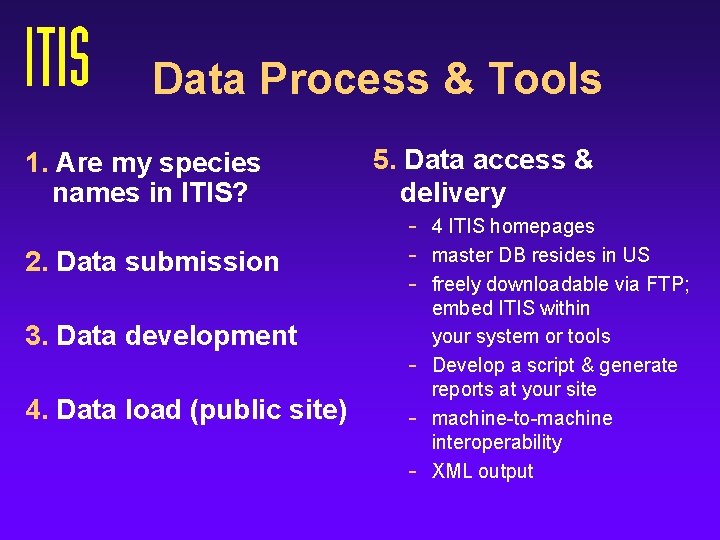
Data Process & Tools 1. Are my species names in ITIS? 2. Data submission 3. Data development 4. Data load (public site) 5. Data access & delivery - 4 ITIS homepages - master DB resides in US - freely downloadable via FTP; - embed ITIS within your system or tools Develop a script & generate reports at your site machine-to-machine interoperability XML output
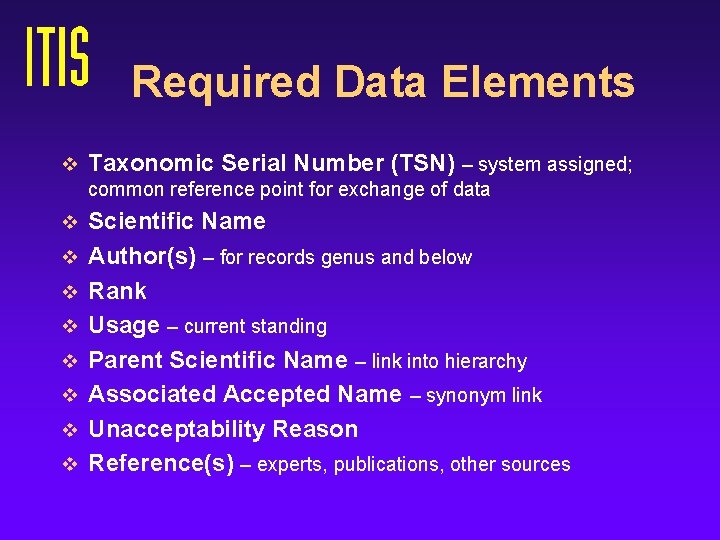
Required Data Elements v Taxonomic Serial Number (TSN) – system assigned; common reference point for exchange of data v v v v Scientific Name Author(s) – for records genus and below Rank Usage – current standing Parent Scientific Name – link into hierarchy Associated Accepted Name – synonym link Unacceptability Reason Reference(s) – experts, publications, other sources
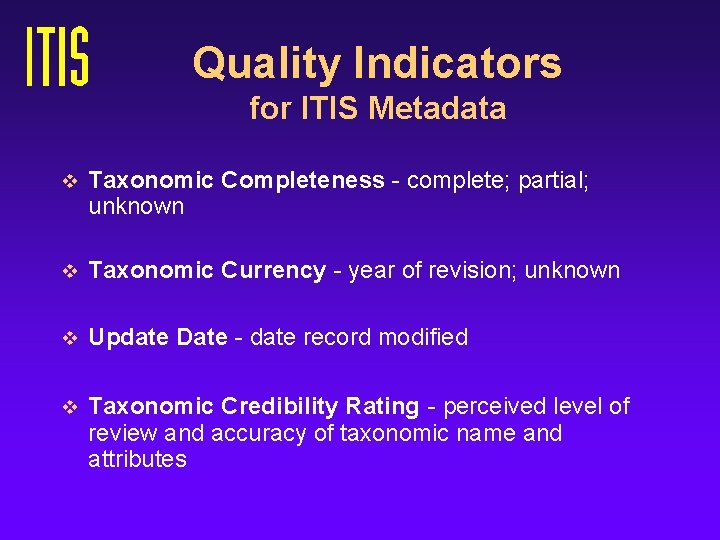
Quality Indicators for ITIS Metadata v Taxonomic Completeness - complete; partial; unknown v Taxonomic Currency - year of revision; unknown v Update Date - date record modified v Taxonomic Credibility Rating - perceived level of review and accuracy of taxonomic name and attributes
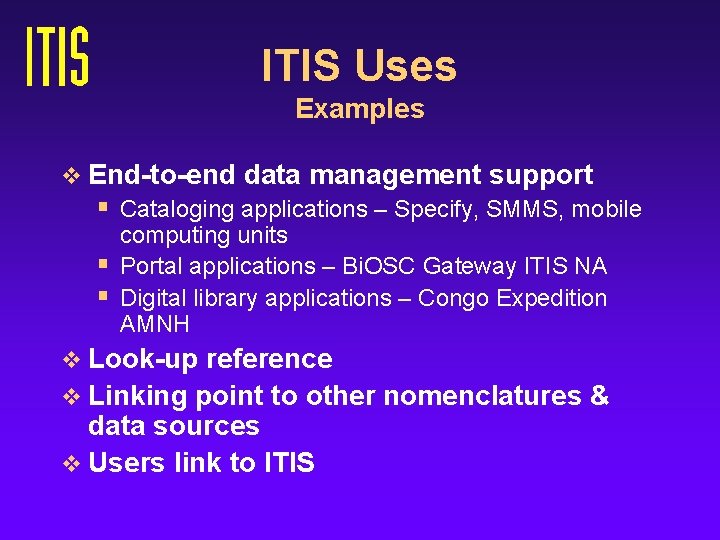
ITIS Uses Examples v End-to-end data management support § Cataloging applications – Specify, SMMS, mobile computing units § Portal applications – Bi. OSC Gateway ITIS NA § Digital library applications – Congo Expedition AMNH v Look-up reference v Linking point to other nomenclatures & data sources v Users link to ITIS
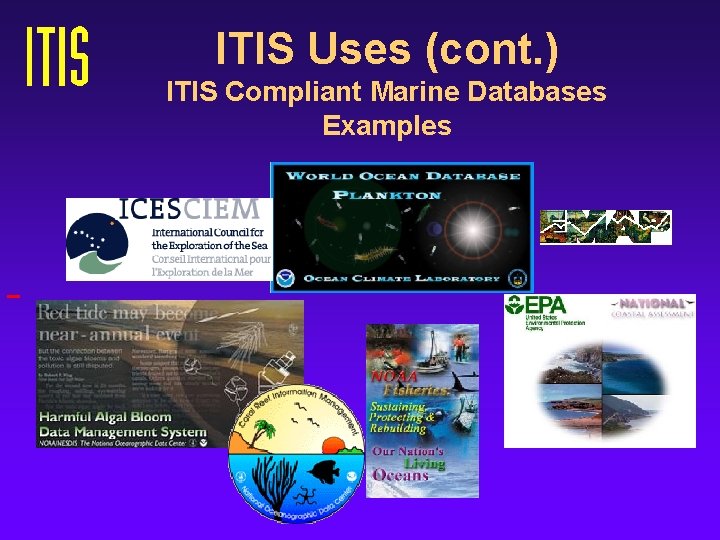
ITIS Uses (cont. ) ITIS Compliant Marine Databases Examples
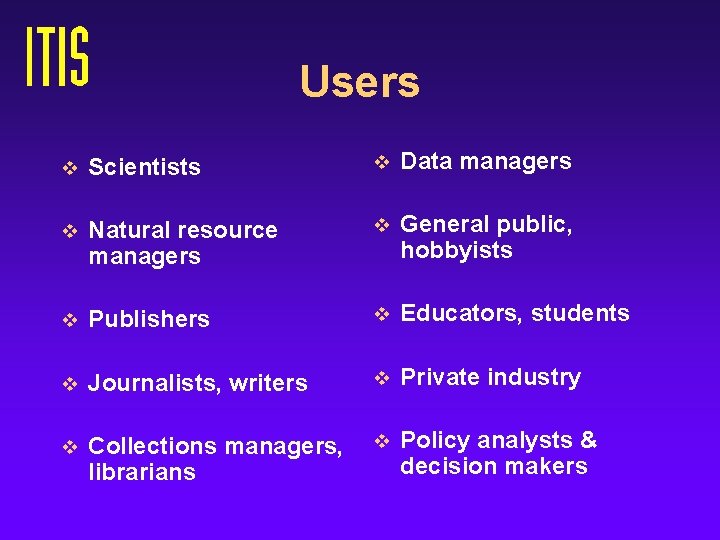
Users v Scientists v Data managers v Natural resource managers v General public, hobbyists v Publishers v Educators, students v Journalists, writers v Private industry v Collections managers, librarians v Policy analysts & decision makers
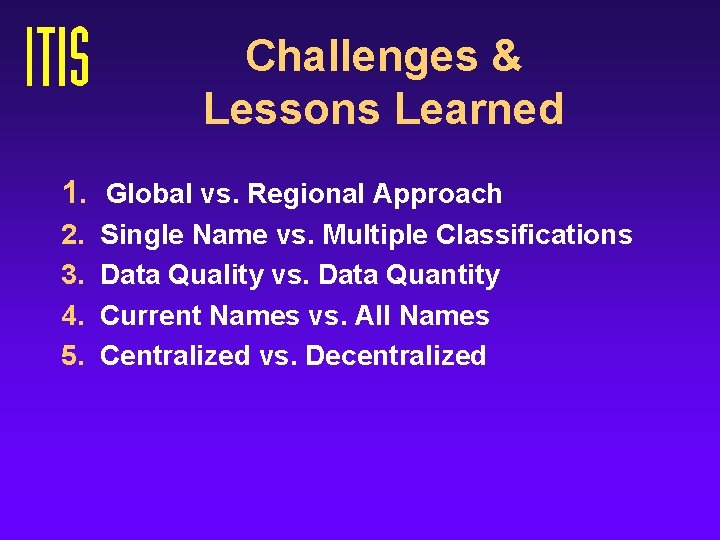
Challenges & Lessons Learned 1. Global vs. Regional Approach 2. 3. 4. 5. Single Name vs. Multiple Classifications Data Quality vs. Data Quantity Current Names vs. All Names Centralized vs. Decentralized
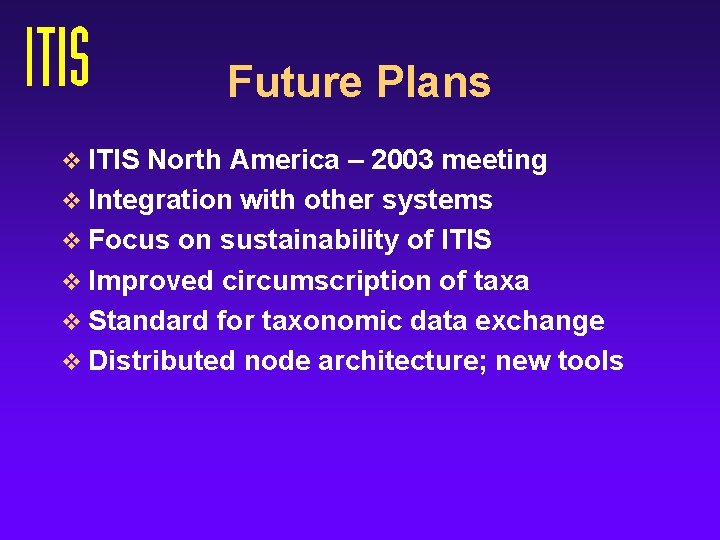
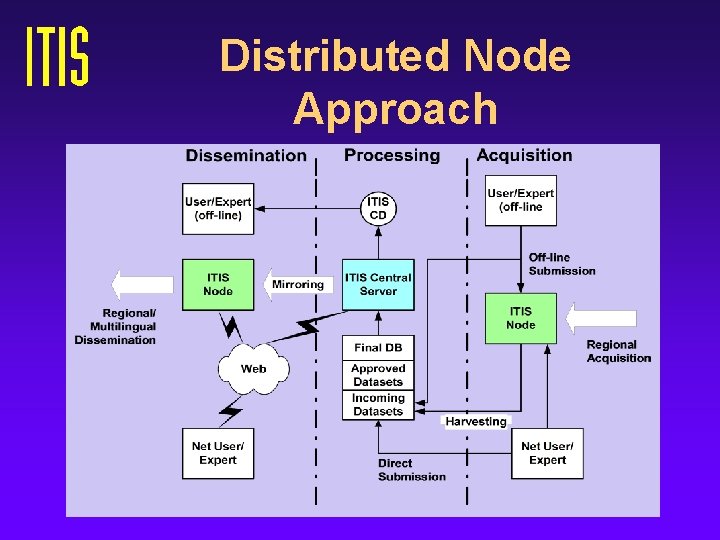
Future Plans v ITIS North America – 2003 meeting v Integration with other systems v Focus on sustainability of ITIS v Improved circumscription of taxa v Standard for taxonomic data exchange v Distributed node architecture; new tools
Distributed Node Approach
Summary v ITIS is an evolving standard reference of scientifically credible, quality-controlled taxonomic information on species (biodiversity) v ITIS data are used in a variety of applications v Referencing biological datasets to ITIS brings significant value to your data - an indicator of QA/QC of species identifications
Contact Information v ITIS homepage: http: //www. itis. usda. gov v Webmaster: itiswebmaster@www. itis. usda. gov