
INTEGRATED STEM MODEL INTEGRATED STEM WHY The main
- Slides: 8
INTEGRATED STEM MODEL
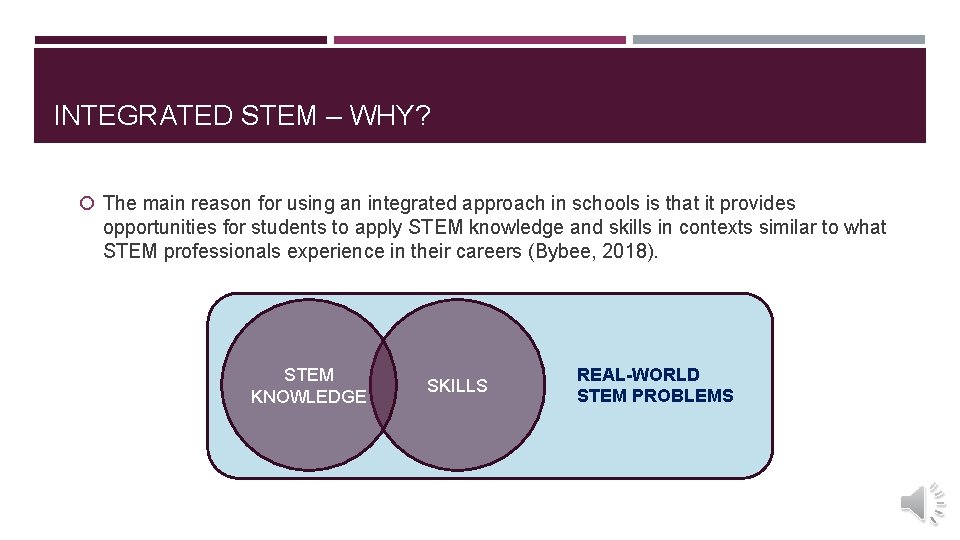
INTEGRATED STEM – WHY? The main reason for using an integrated approach in schools is that it provides opportunities for students to apply STEM knowledge and skills in contexts similar to what STEM professionals experience in their careers (Bybee, 2018). STEM KNOWLEDGE SKILLS REAL-WORLD STEM PROBLEMS
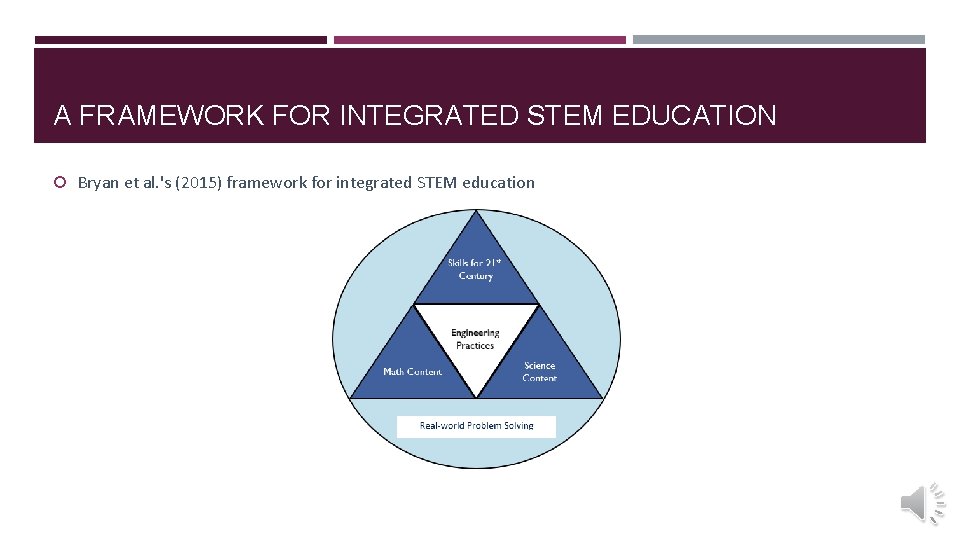
A FRAMEWORK FOR INTEGRATED STEM EDUCATION Bryan et al. 's (2015) framework for integrated STEM education
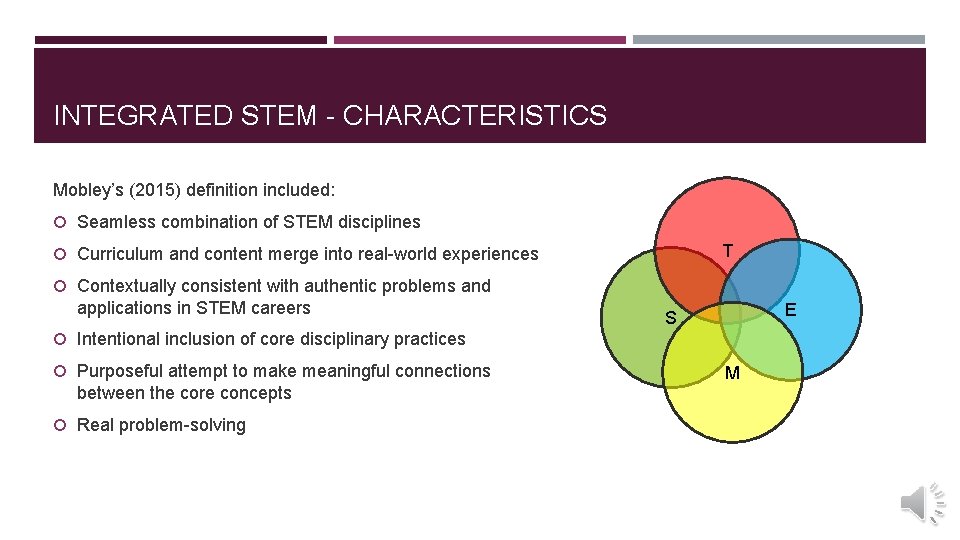
INTEGRATED STEM - CHARACTERISTICS Mobley’s (2015) definition included: Seamless combination of STEM disciplines T Curriculum and content merge into real-world experiences Contextually consistent with authentic problems and applications in STEM careers E S Intentional inclusion of core disciplinary practices Purposeful attempt to make meaningful connections between the core concepts Real problem-solving M
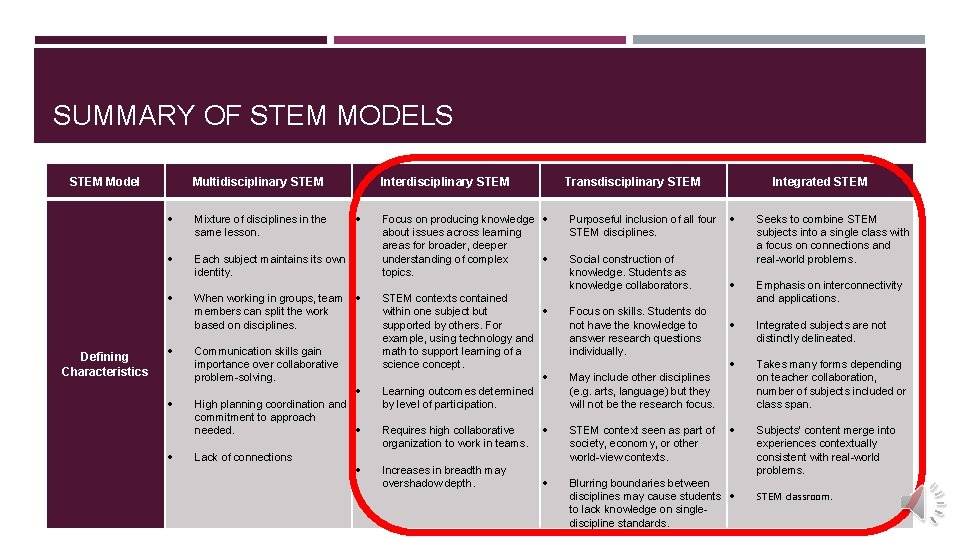
SUMMARY OF STEM MODELS STEM Model Defining Characteristics Multidisciplinary STEM Mixture of disciplines in the same lesson. Each subject maintains its own identity. When working in groups, team members can split the work based on disciplines. Interdisciplinary STEM Communication skills gain importance over collaborative problem-solving. High planning coordination and commitment to approach needed. Lack of connections Transdisciplinary STEM Focus on producing knowledge about issues across learning areas for broader, deeper understanding of complex topics. STEM contexts contained within one subject but supported by others. For example, using technology and math to support learning of a science concept. Learning outcomes determined by level of participation. Requires high collaborative organization to work in teams. Increases in breadth may overshadow depth. Purposeful inclusion of all four STEM disciplines. Social construction of knowledge. Students as knowledge collaborators. Focus on skills. Students do not have the knowledge to answer research questions individually. Integrated STEM Seeks to combine STEM subjects into a single class with a focus on connections and real-world problems. Emphasis on interconnectivity and applications. Integrated subjects are not distinctly delineated. Takes many forms depending on teacher collaboration, number of subjects included or class span. Subjects’ content merge into experiences contextually consistent with real-world problems. May include other disciplines (e. g. arts, language) but they will not be the research focus. STEM context seen as part of society, economy, or other world-view contexts. Blurring boundaries between disciplines may cause students to lack knowledge on singlediscipline standards. STEM classroom.
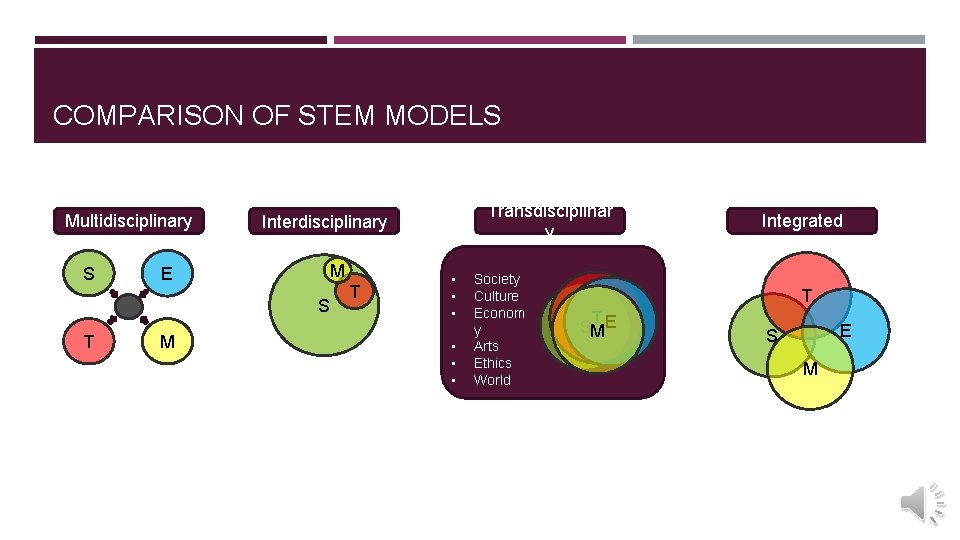
COMPARISON OF STEM MODELS Multidisciplinary S E M S T M Transdisciplinar y Interdisciplinary T • • • Society Culture Econom y Arts Ethics World Integrated T TE SM E S M
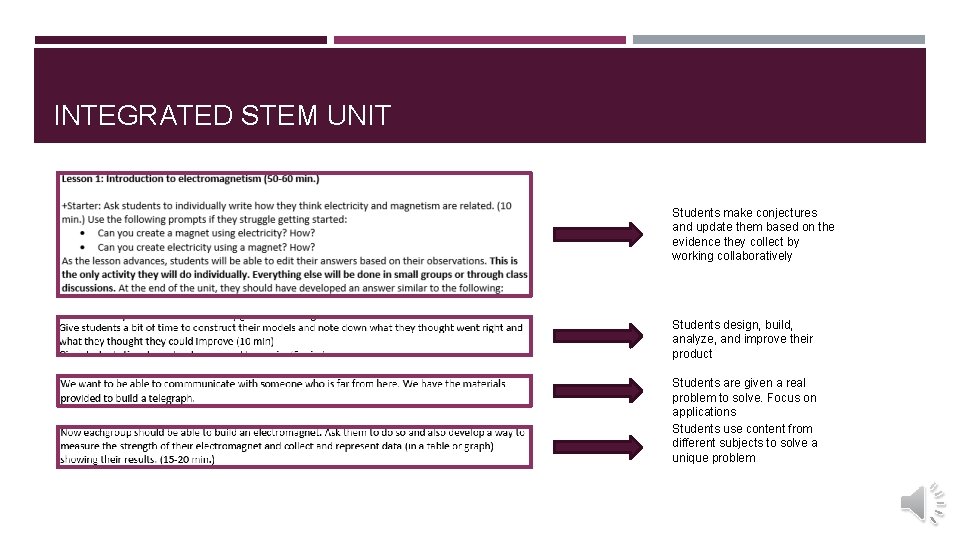
INTEGRATED STEM UNIT Students make conjectures and update them based on the evidence they collect by working collaboratively Students design, build, analyze, and improve their product Students are given a real problem to solve. Focus on applications Students use content from different subjects to solve a unique problem
FINAL ASSIGNMENTS First, take the last quiz to make sure you have become familiar with the different STEM models. Then, use your knowledge on the different STEM models to design a unit plan that follows an integrated approach. You can use the one provided in this last module as an example. Use the form provided to fill some information and reflect on your unit plan. After you design the unit, upload it to the discussion board and add a brief description of the unit. Completing these steps will give you access to the unit plans uploaded by other teachers and your course certificate. Thanks for your hard work!