
Integrated Pest ManagementIPM Approach for Sustainable Agriculture Ashwani

Integrated Pest Management(IPM) –Approach for Sustainable Agriculture Ashwani Kumar Joint Secretary(Plant Protection) Government of India Ministry of Agriculture & Farmers ’Welfare Department of Agriculture , Cooperation & Farmers ’Welfare
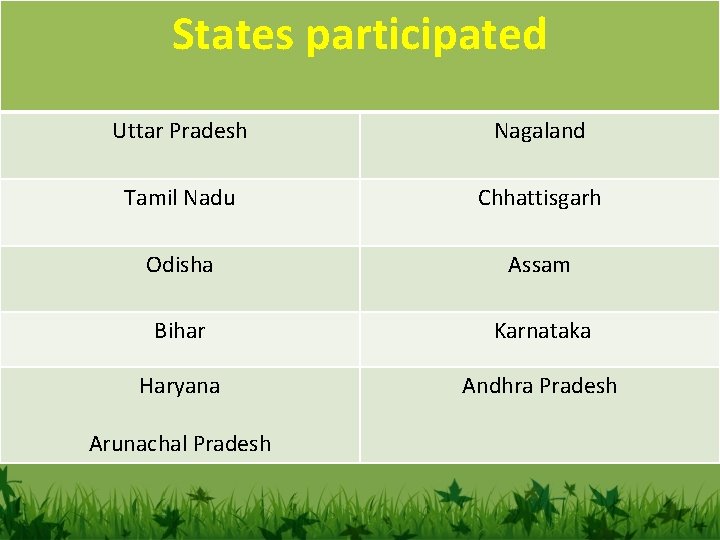
States participated Uttar Pradesh Nagaland Tamil Nadu • Arunanchal Pradesh • Odisha Chhattisgarh Bihar Karnataka Haryana Andhra Pradesh Arunachal Pradesh Assam
Sustainable Agriculture Sustainable agriculture is farming in sustainable ways based on an understanding of ecosystem services. It can be defined as “an integrated system of plant and animal production practices having a site-specific application that will last over the long term“.
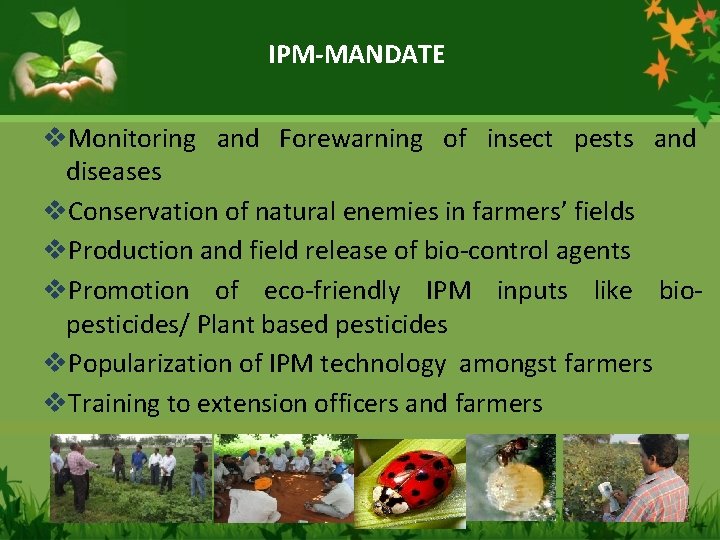
IPM-MANDATE v. Monitoring and Forewarning of insect pests and diseases v. Conservation of natural enemies in farmers’ fields v. Production and field release of bio-control agents v. Promotion of eco-friendly IPM inputs like biopesticides/ Plant based pesticides v. Popularization of IPM technology amongst farmers v. Training to extension officers and farmers 5
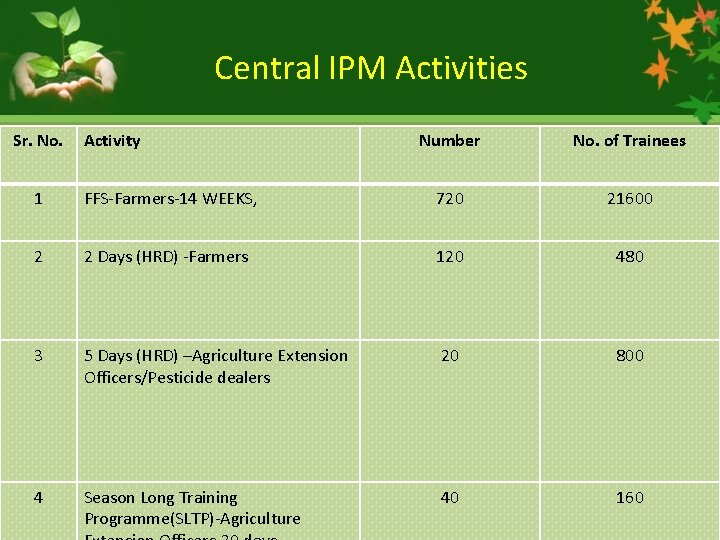
Central IPM Activities Sr. No. Activity Number No. of Trainees 1 FFS-Farmers-14 WEEKS, 720 21600 2 2 Days (HRD) -Farmers 120 480 3 5 Days (HRD) –Agriculture Extension Officers/Pesticide dealers 20 800 4 Season Long Training Programme(SLTP)-Agriculture 40 160
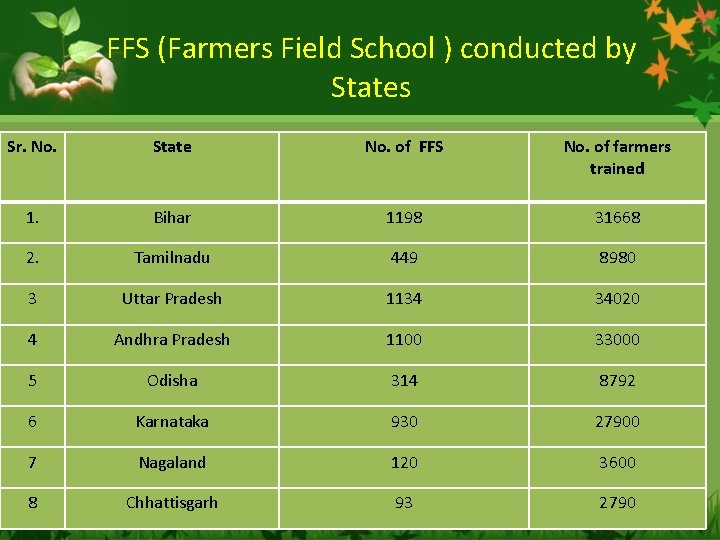
FFS (Farmers Field School ) conducted by States Sr. No. State No. of FFS No. of farmers trained 1. Bihar 1198 31668 2. Tamilnadu 449 8980 3 Uttar Pradesh 1134 34020 4 Andhra Pradesh 1100 33000 5 Odisha 314 8792 6 Karnataka 930 27900 7 Nagaland 120 3600 8 Chhattisgarh 93 2790
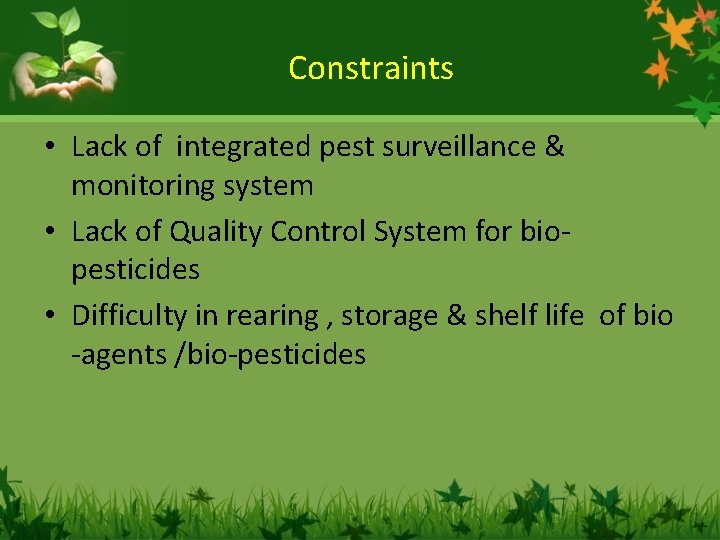
Constraints • Lack of integrated pest surveillance & monitoring system • Lack of Quality Control System for biopesticides • Difficulty in rearing , storage & shelf life of bio -agents /bio-pesticides
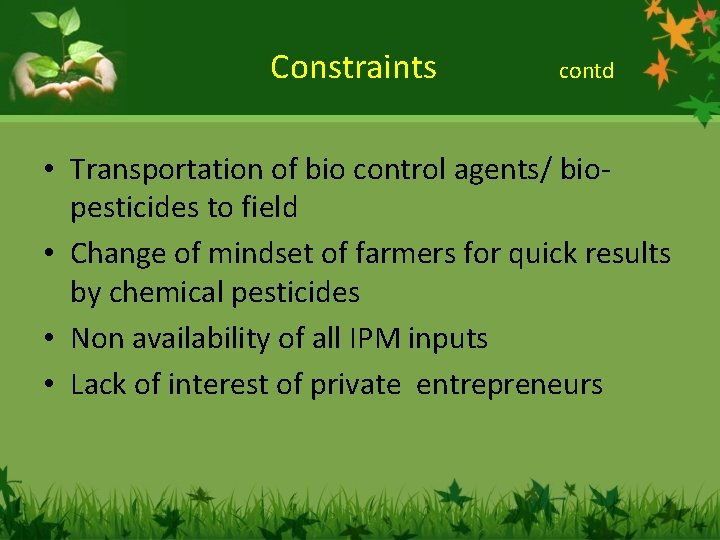
Constraints contd • Transportation of bio control agents/ biopesticides to field • Change of mindset of farmers for quick results by chemical pesticides • Non availability of all IPM inputs • Lack of interest of private entrepreneurs
Recommendations • Priority to pest surveillance • Systematic monitoring of insect pests /diseases • Timely forewarning for effective management of pests • Augmentation and Conservation of Natural enemies. • Production and releases of bio-control agents. • Strengthening of State bio-control laboratories.
Recommendations contd. • Emphasis on seed treatment with biopesticides /fungicides. • Quality control of bio-pesticides • Human resource development in IPM of agricultural extension officers • Increase of FFS activities. • Season-long training and orientation programmes should be enhanced.
Recommendations contd • Positioning IPM trained personnel for IPM activities. • Participation of NGOs /Panchayat Raj Institutions , private entrepreneurs in all IPM programmes. • Translation of 87 IPM package of practices in local languages. • Regulated sale of Pesticides

THANK YOU
- Slides: 13