
Integrated Pest Management Basics for a Safe Healthy
Integrated Pest Management Basics for a Safe, Healthy, and Well-Maintained Home Timothy Mc. Dermott DVM, OSU Extension Educator, Franklin County Visiting Instructor, Department of Veterinary Preventative Medicine
IPM Definition* IPM is a sustainable approach to managing pests by combining biological, cultural, physical and chemical tools in a way that minimizes economic, health and environmental risks. * U. S. Congress Bill, August 1996
Integrated – Working together within a system Pest Disease = Weed = Insect Management – control vs eradication managed
IPM is: • A decision-making process. • IPM is a system of pest management decisions based on ecological, economic and sociological values. • IPM involves monitoring for pests. (SCOUTING) • IPM is a process which considers all of the control methods. • IPM is not an “organic” program though organic materials can certainly be used.
1. Cultural IPM Methods Three Main 2. Biological 3. Chemical
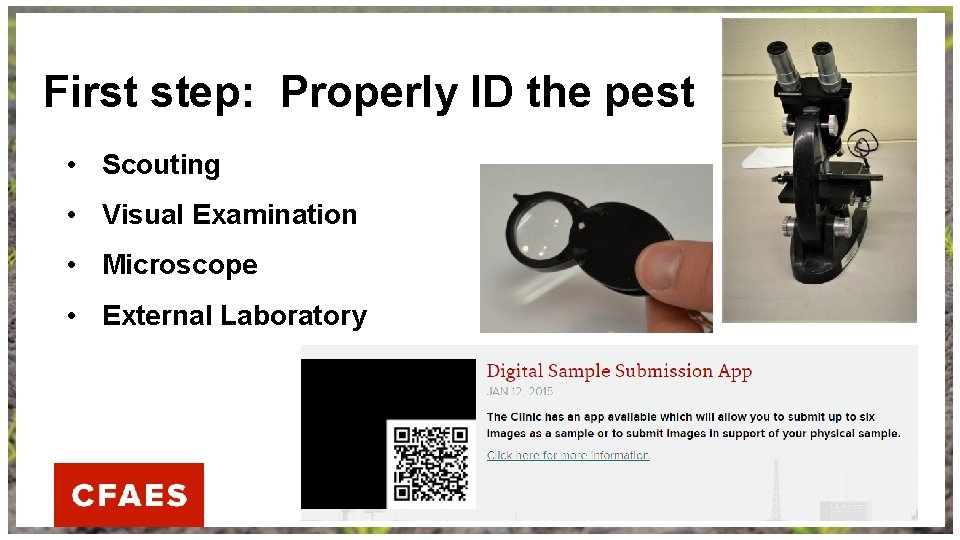
First step: Properly ID the pest • Scouting • Visual Examination • Microscope • External Laboratory
Pest Control Failures • Incorrectly identified the pest • Incorrect pesticide or rate applied • Application timing error • New pest problem has developed • Pest resistance
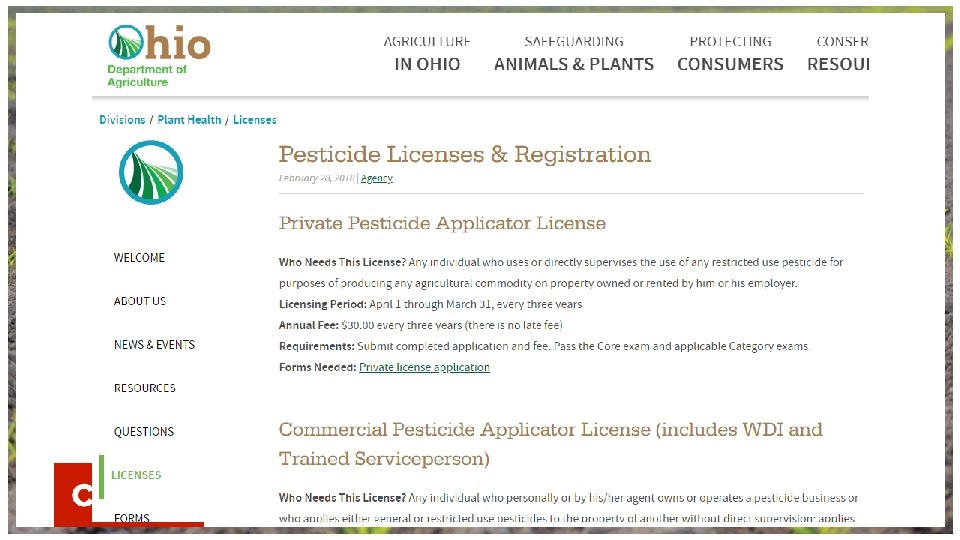
There are Two Kinds of Certified Applicators in Ohio: • A private pesticide applicator license is required to buy and use restricted-use pesticides for agricultural production – your own or your employer’s • Commercial applicator license – required for all pesticide applications made for hire and certain other situations
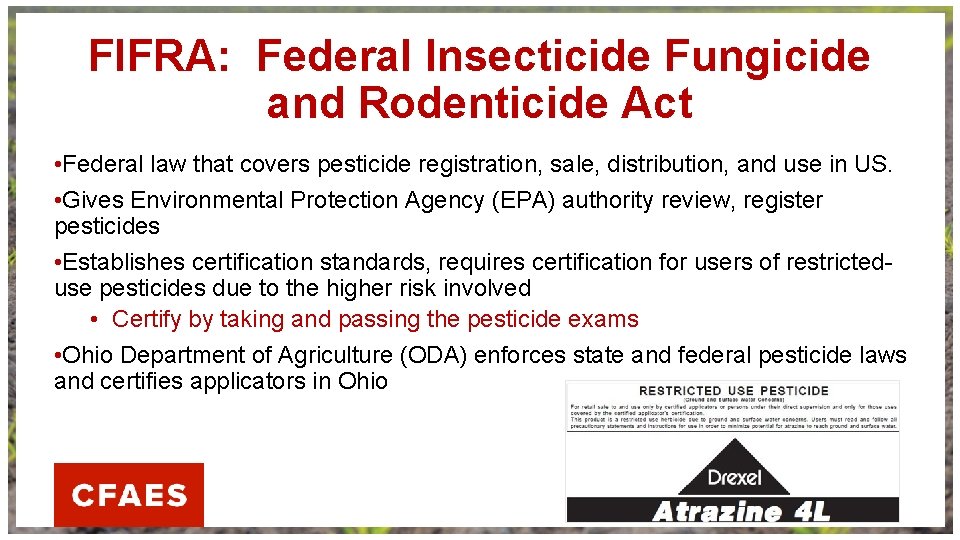
FIFRA: Federal Insecticide Fungicide and Rodenticide Act • Federal law that covers pesticide registration, sale, distribution, and use in US. • Gives Environmental Protection Agency (EPA) authority review, register pesticides • Establishes certification standards, requires certification for users of restricteduse pesticides due to the higher risk involved • Certify by taking and passing the pesticide exams • Ohio Department of Agriculture (ODA) enforces state and federal pesticide laws and certifies applicators in Ohio
FIFRA gives the Pesticide Label the authority of a Legal Document YOU CANNOT: • Apply to a crop or site not listed on the label • Apply more than the labeled rate • Apply at more frequent intervals • Ignore the personal protective equipment (PPE) requirement • Ignore a restricted entry interval (REI) • Violations are subject to civil and criminal penalties THE LABEL IS THE LAW!
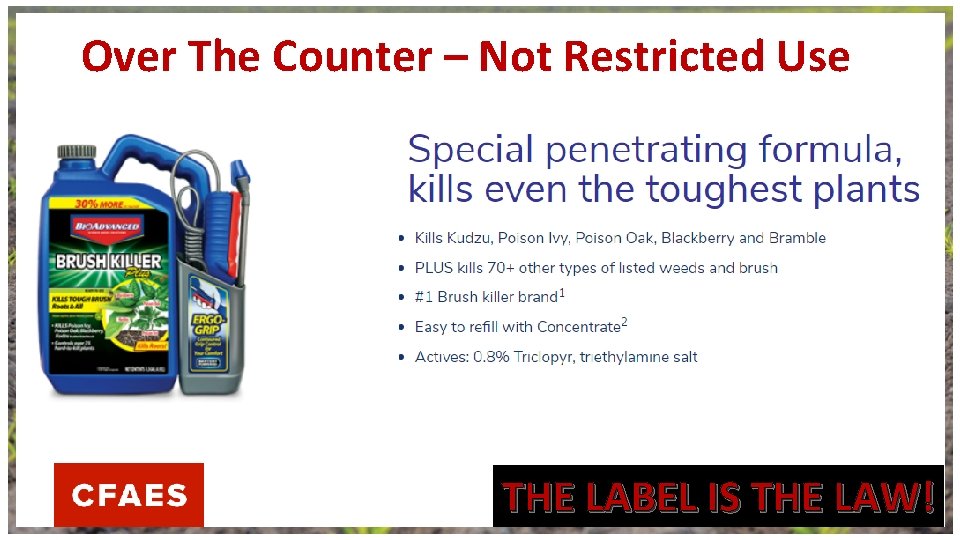
Over The Counter – Not Restricted Use THE LABEL IS THE LAW!
What is the Pesticide Label? • The information printed on or attached to the pesticide container • The LABEL contains all information USER needs to use pesticide safely and effectively • Pesticide users required by law to comply with instructions on the pesticide label • “Labeling” is a related term that indicates both the label and any additional manufacturer information about product, - brochures, leaflets, etc.

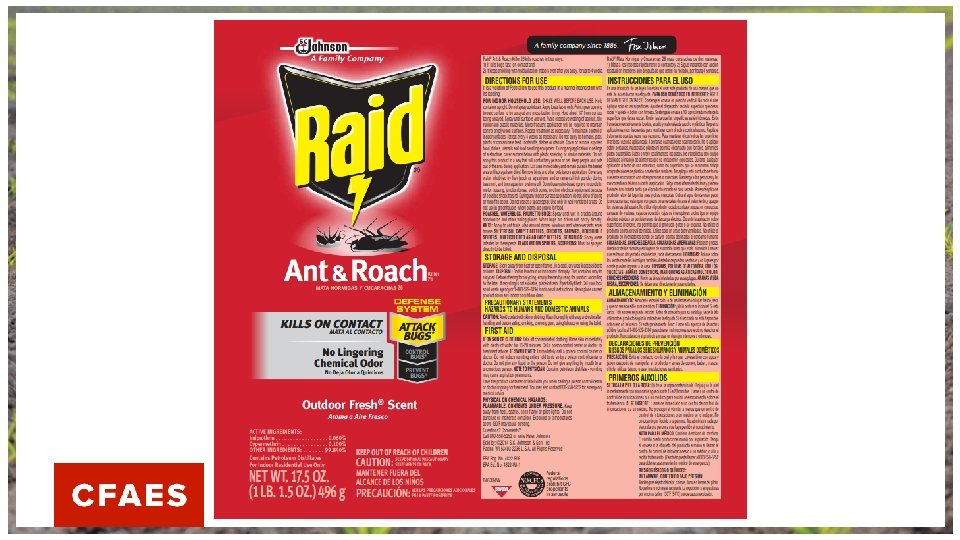
Key Sections of a Pesticide Label 1. Front Panel 2. First Aid 3. Precautionary Statements 4. Directions for Use 5. Storage and Disposal
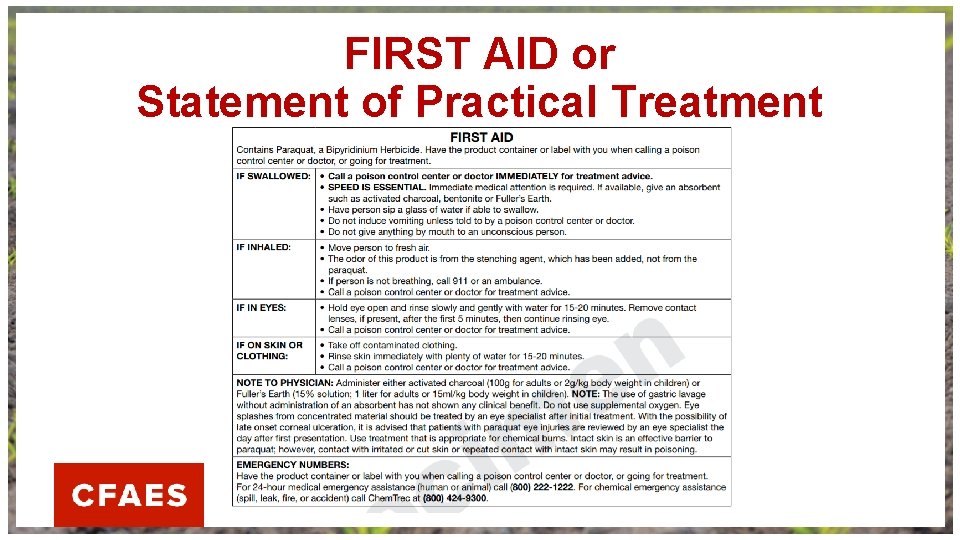
FIRST AID or Statement of Practical Treatment
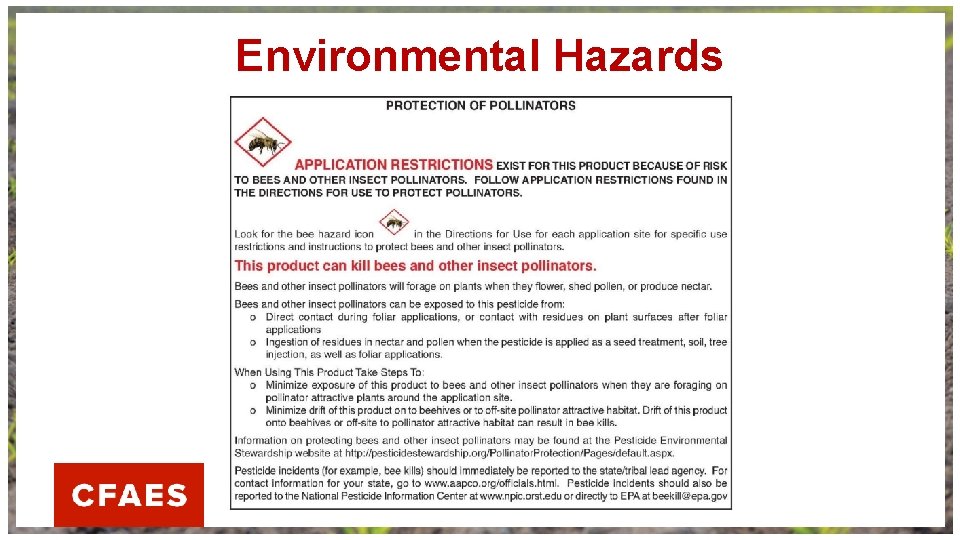
Environmental Hazards

Precautionary Statements • Hazards to Humans and Domestic Animals • Personal Protective Equipment • User Safety Recommendations • Environmental Hazards • Physical and Chemical Hazards
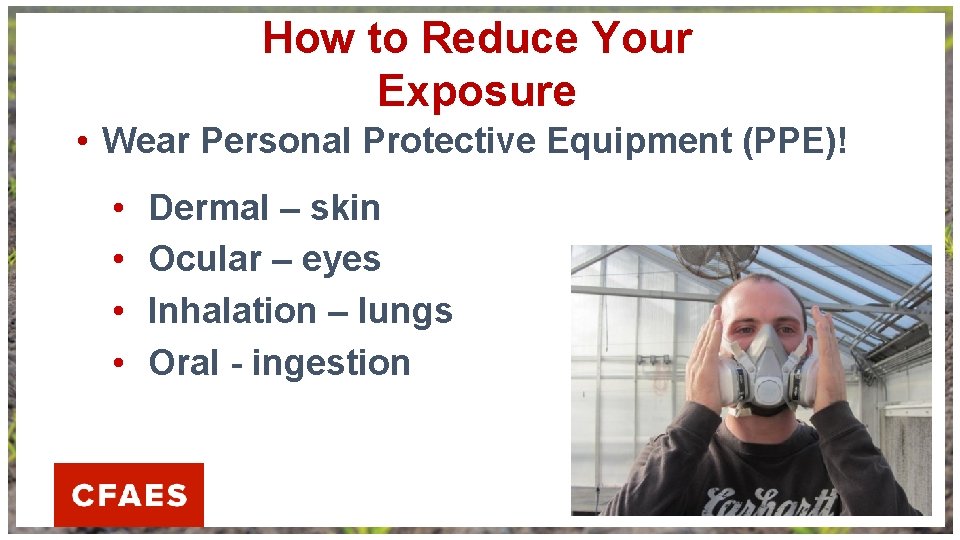
How to Reduce Your Exposure • Wear Personal Protective Equipment (PPE)! • • Dermal – skin Ocular – eyes Inhalation – lungs Oral - ingestion

Rates of Pesticide Absorption through Skin Varies Greatly Scalp - 32% Forehead - 36% Ear Canal - 47% Forearm - 9% Palm - 12% Abdomen - 18% Scrotum - 100% Ball of feet - 14%

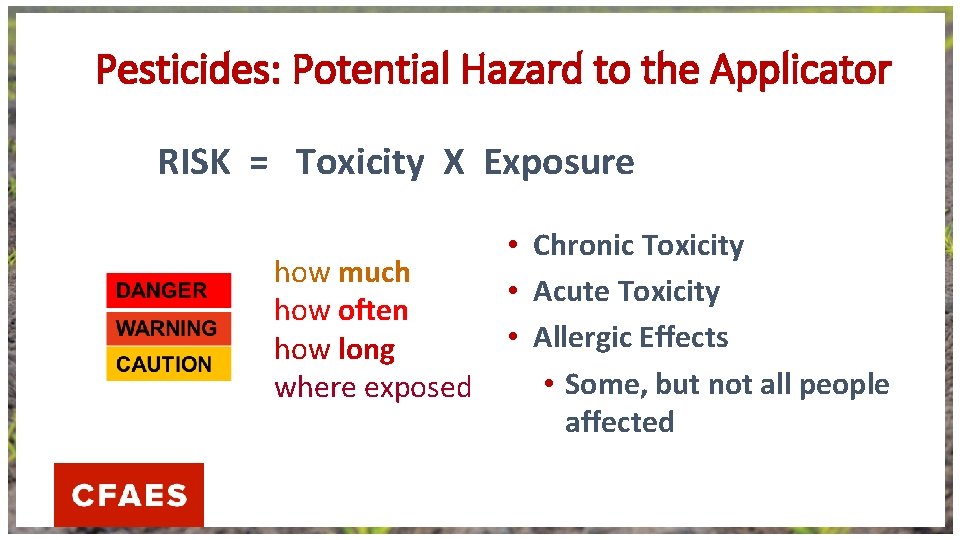
Pesticides: Potential Hazard to the Applicator RISK = Toxicity X Exposure how much how often how long where exposed • Chronic Toxicity • Acute Toxicity • Allergic Effects • Some, but not all people affected
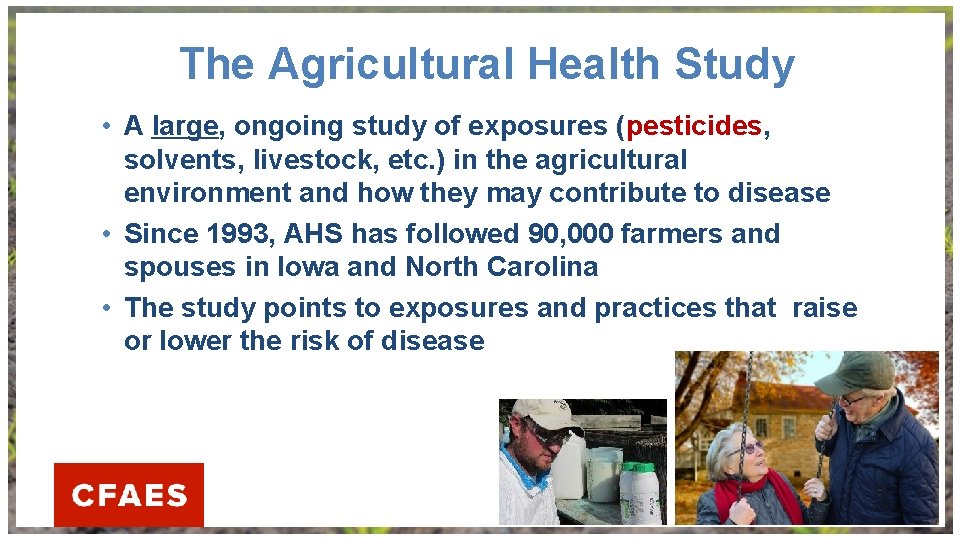
The Agricultural Health Study • A large, ongoing study of exposures (pesticides, solvents, livestock, etc. ) in the agricultural environment and how they may contribute to disease • Since 1993, AHS has followed 90, 000 farmers and spouses in Iowa and North Carolina • The study points to exposures and practices that raise or lower the risk of disease
The Agricultural Health Study Findings • Overall, farmers were healthier than the general population. • Comparing people of same sex, age, and race, farmers had: • Lower death rates • Less likely to die from diabetes, heart, lung, & liver disease • Fewer cases of most cancers Healthier lifestyle and lower smoking rates probably a factor
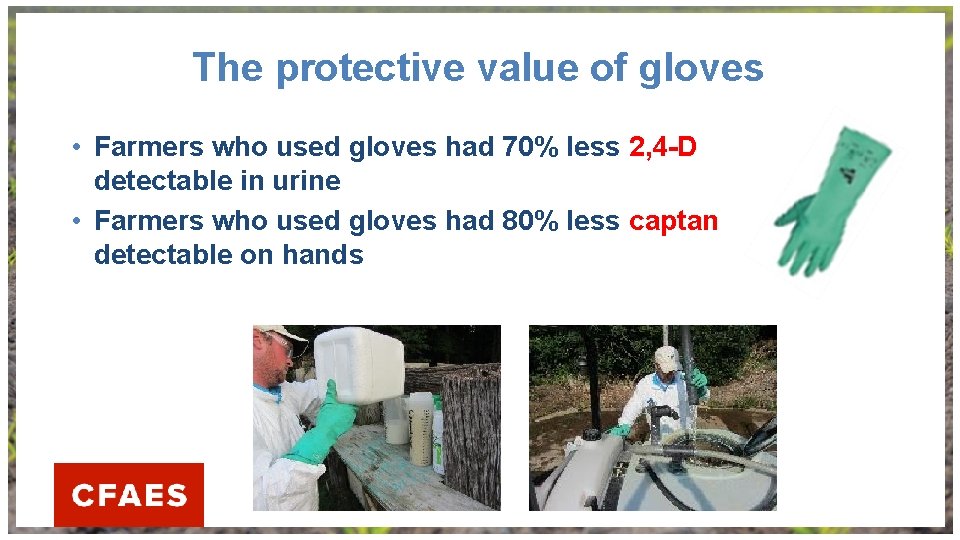
The protective value of gloves • Farmers who used gloves had 70% less 2, 4 -D detectable in urine • Farmers who used gloves had 80% less captan detectable on hands
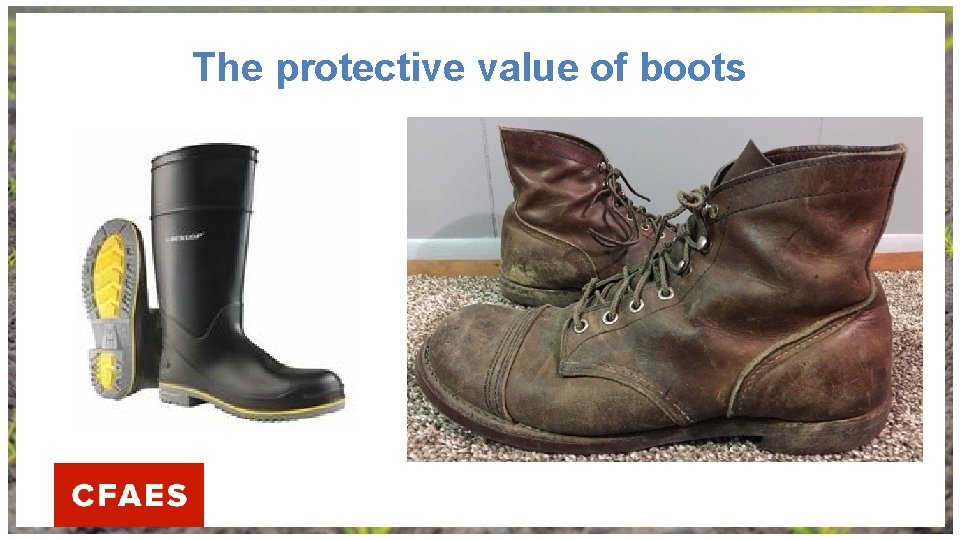
The protective value of boots

To reduce your risk: • Always wear chemical resistant gloves when applying pesticides • Wear the required personal protective equipment • Wash immediately after removing PPE and before eating, smoking, using restroom • Bathe after applying pesticides and launder clothing • Read the label!
Subtle changes in memory and attention • Association found between these changes and high pesticide exposure events • Those that had these memory changes also tended to: § Apply pesticides more days/year § Spray pesticide from vehicle with open window § Repair spray equipment § Wear same work clothing > 2 days § Wear work boots in the home
Parkinson’s Disease • Parkinson’s Disease – a degenerative neural disease • While the total number of participants with disease was small……… • Participants with lifetime pesticide use > 400 days more likely to have disease • Participants using these pesticides had 2. 5 X greater risk: • Paraquat • Rotenone
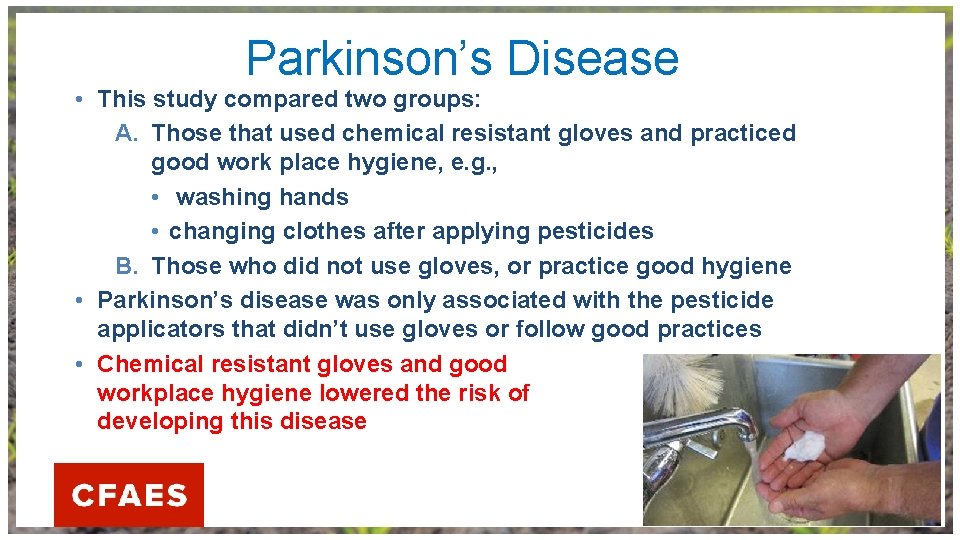
Parkinson’s Disease • This study compared two groups: A. Those that used chemical resistant gloves and practiced good work place hygiene, e. g. , • washing hands • changing clothes after applying pesticides B. Those who did not use gloves, or practice good hygiene • Parkinson’s disease was only associated with the pesticide applicators that didn’t use gloves or follow good practices • Chemical resistant gloves and good workplace hygiene lowered the risk of developing this disease
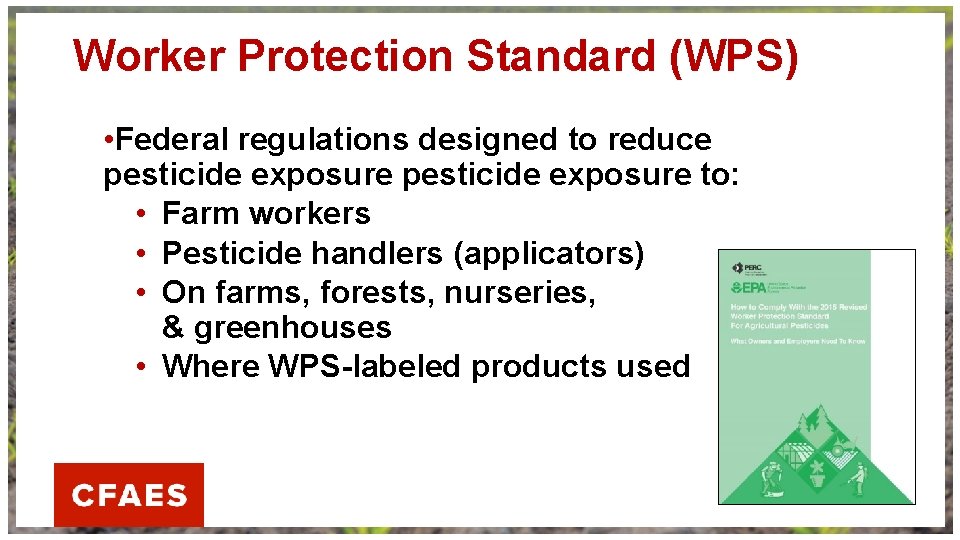
Worker Protection Standard (WPS) • Federal regulations designed to reduce pesticide exposure to: • Farm workers • Pesticide handlers (applicators) • On farms, forests, nurseries, & greenhouses • Where WPS-labeled products used
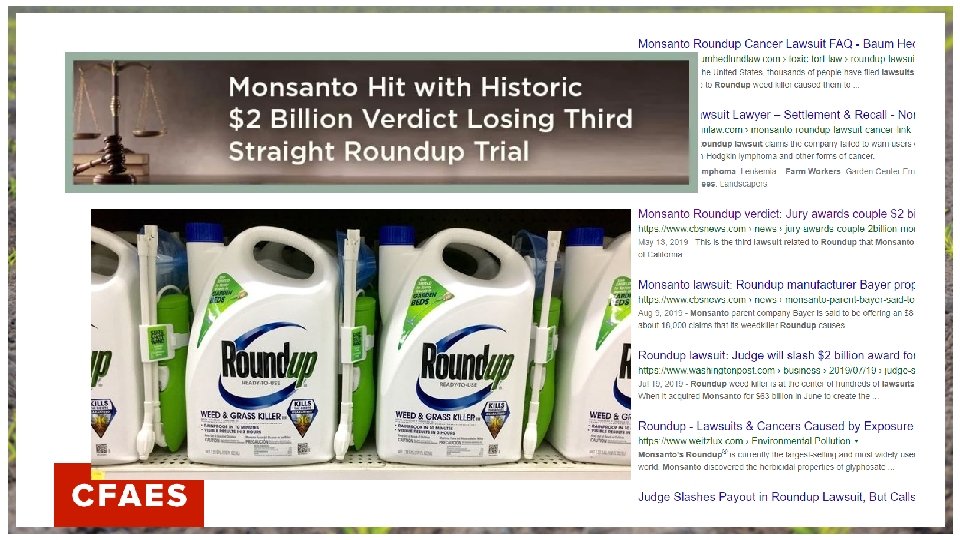
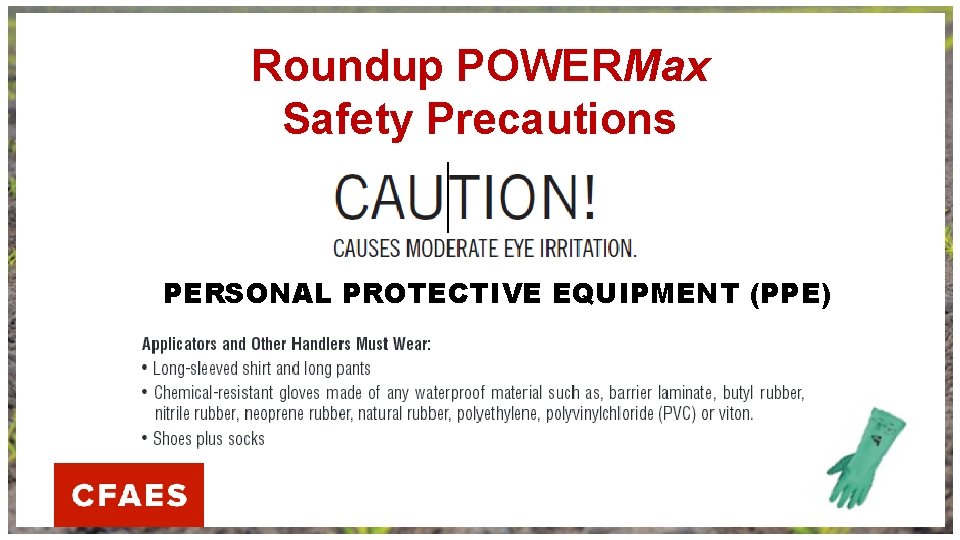
Roundup POWERMax Safety Precautions PERSONAL PROTECTIVE EQUIPMENT (PPE)
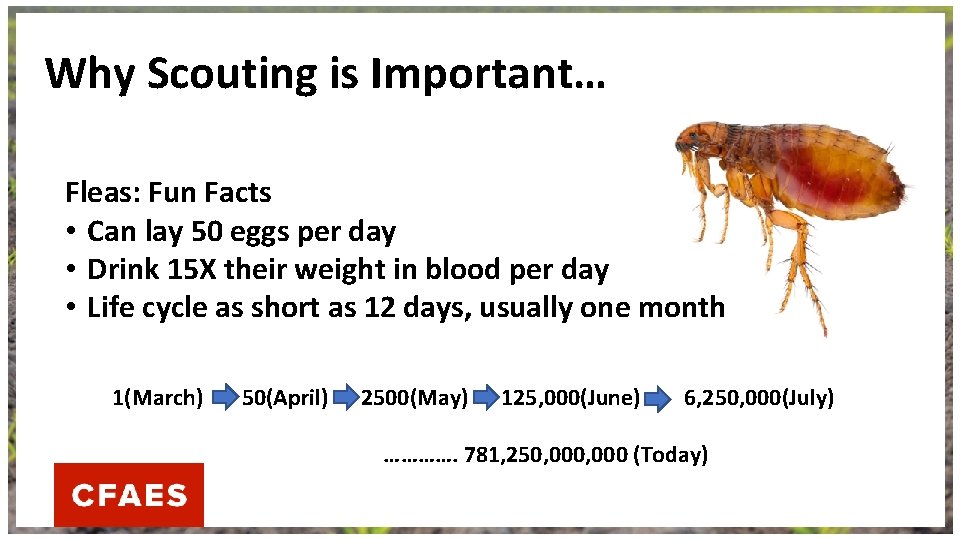
Why Scouting is Important… Fleas: Fun Facts • Can lay 50 eggs per day • Drink 15 X their weight in blood per day • Life cycle as short as 12 days, usually one month 1(March) 50(April) 2500(May) 125, 000(June) 6, 250, 000(July) …………. 781, 250, 000 (Today)
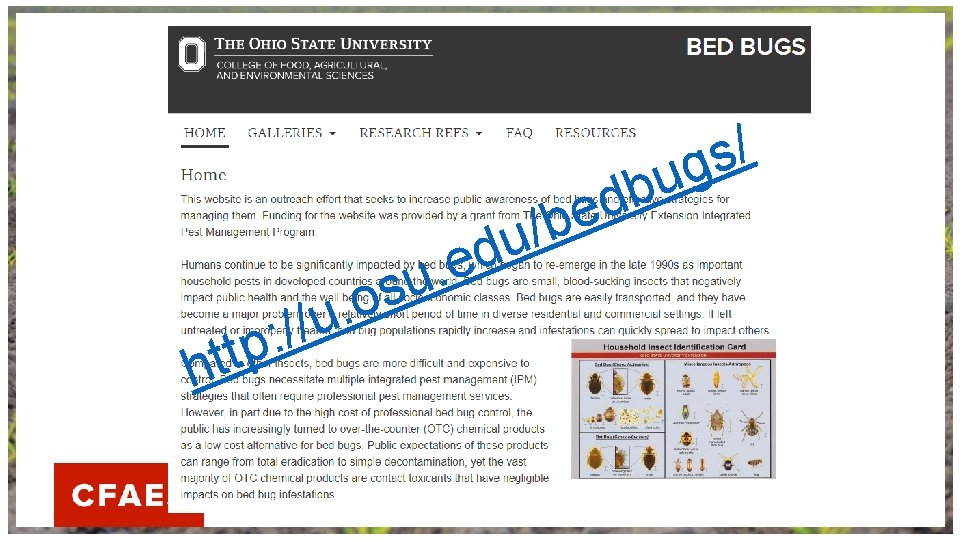
/ s g u b h / : ttp s o. u / d e u. d e b / u
Safe, Healthy, and Well-Maintained Home Takes Homes: • Read, Understand Follow the Label. (IT IS THE LAW) • Wear Your PPE • Scout and USE IPM Principles Mc. Dermott. 15@osu. edu
- Slides: 38