
Integrated Marketing Communication Advertising Sales Promotion Public Relations
9 Integrated Marketing Communication Advertising Sales Promotion Public Relations Personal Selling Direct Marketing Professor Takada
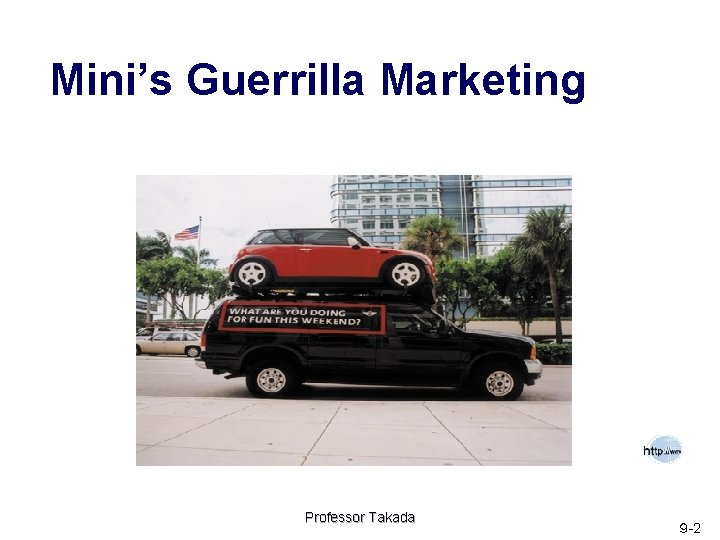
Mini’s Guerrilla Marketing Professor Takada 9 -2
Marketing Communications The means by which firms attempt to inform, persuade, and remind consumers, directly or indirectly, about the products and brands they sell. Professor Takada 9 -3
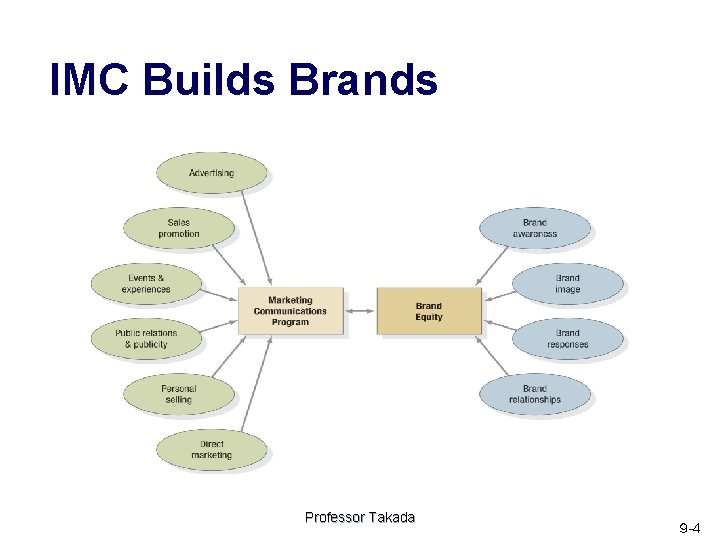
IMC Builds Brands Professor Takada 9 -4
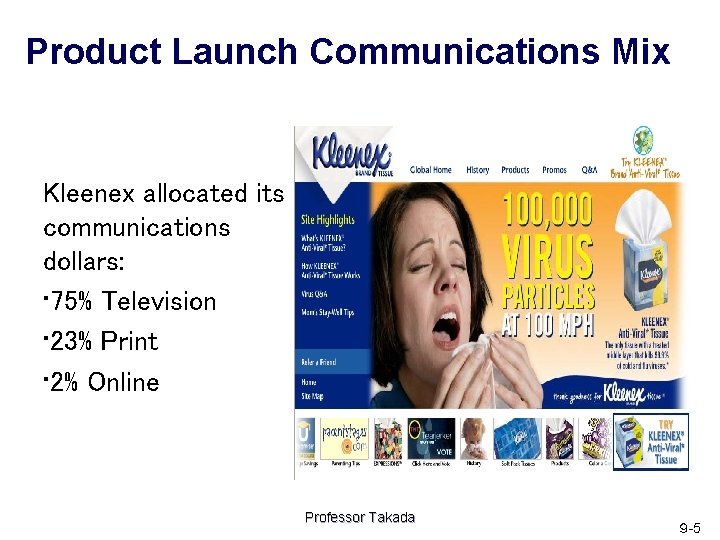
Product Launch Communications Mix Kleenex allocated its communications dollars: • 75% Television • 23% Print • 2% Online Professor Takada 9 -5
Factors in Setting Communications Mix • Type of product market • Consumer readiness to • • make a purchase Stage in the product life cycle Market rank Professor Takada 9 -6
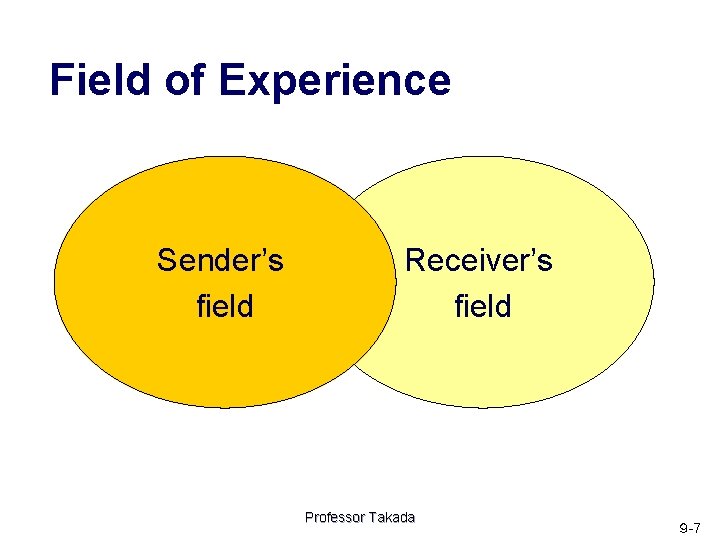
Field of Experience Sender’s field Receiver’s field Professor Takada 9 -7
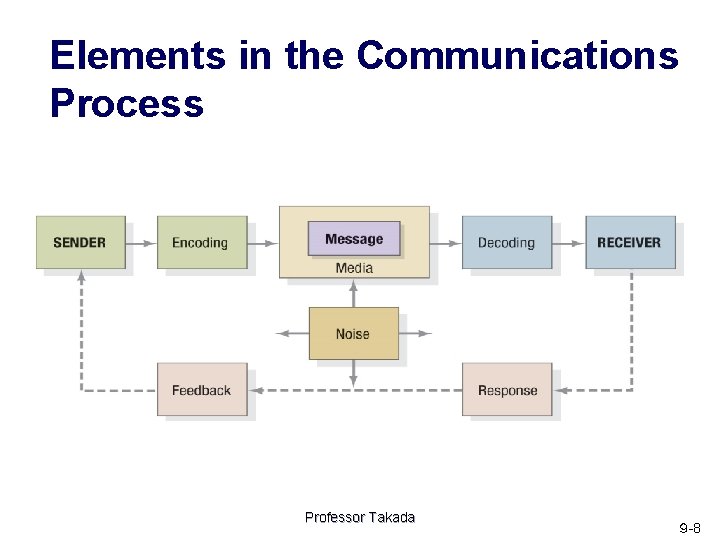
Elements in the Communications Process Professor Takada 9 -8
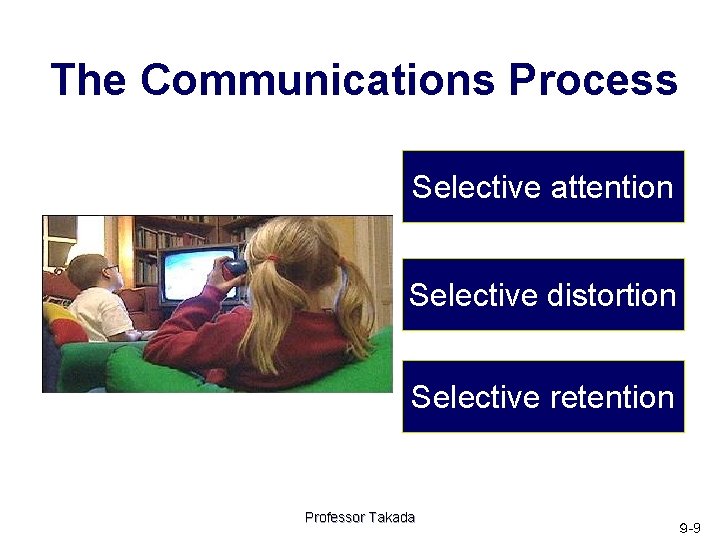
The Communications Process Selective attention Selective distortion Selective retention Professor Takada 9 -9
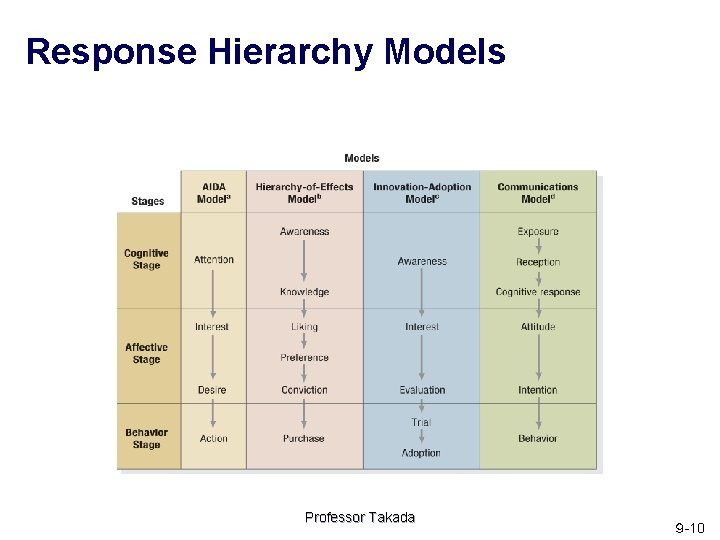
Response Hierarchy Models Professor Takada 9 -10
ROAD MAP: Previewing the Concepts • Integrated marketing communications Five promotion tools and the factors that must be considered in shaping the overall promotion mix. – Advertising: The major decisions involved in developing an advertising program. – Sales promotion: How do sales promotion campaigns are developed and implemented? – Public relations: How do companies use public relations to communicate with their publics? – Personal selling: Role of a company’s salespeople, six major steps and process of sales force management – Direct marketing: Major forms of direct marketing. Professor Takada 9 -11
Marketing Communications Mix • Advertising – • Sales Promotion – • Building good relations with the company’s various publics by obtaining favorable publicity, building up a good corporate image, and handling or heading off unfavorable rumors, stories, and events. Personal Selling – • Short-term incentives to encourage the purchase or sale of a product or service. Public Relations – • Any paid form of nonpersonal presentation and promotion of ideas, goods, or services by an identified sponsor. Personal presentation by the firm’s sales force for the purpose of making sales and building customer relationships. Direct Marketing – Direct connections with carefully targeted individual consumers to both obtain an immediate response and cultivate lasting customer relationships—the use of telephone, mail, fax, e-mail, the Internet, and other tools to communicate directly with specific consumers. Professor Takada 9 -12
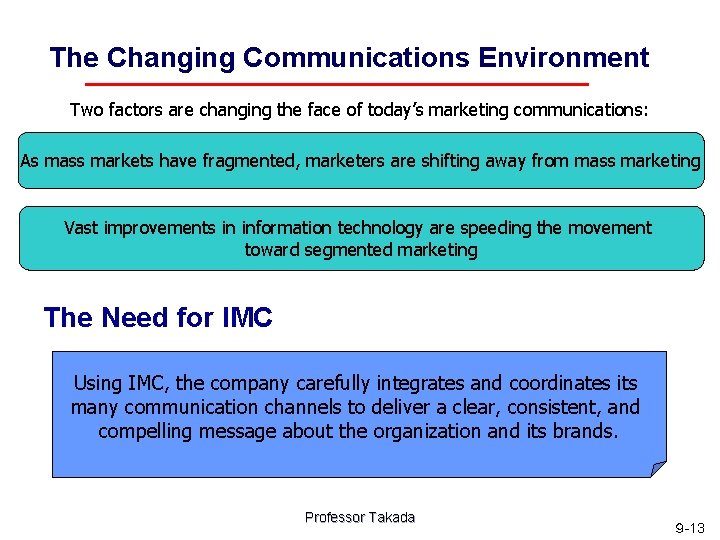
The Changing Communications Environment Two factors are changing the face of today’s marketing communications: As mass markets have fragmented, marketers are shifting away from mass marketing Vast improvements in information technology are speeding the movement toward segmented marketing The Need for IMC Using IMC, the company carefully integrates and coordinates its many communication channels to deliver a clear, consistent, and compelling message about the organization and its brands. Professor Takada 9 -13
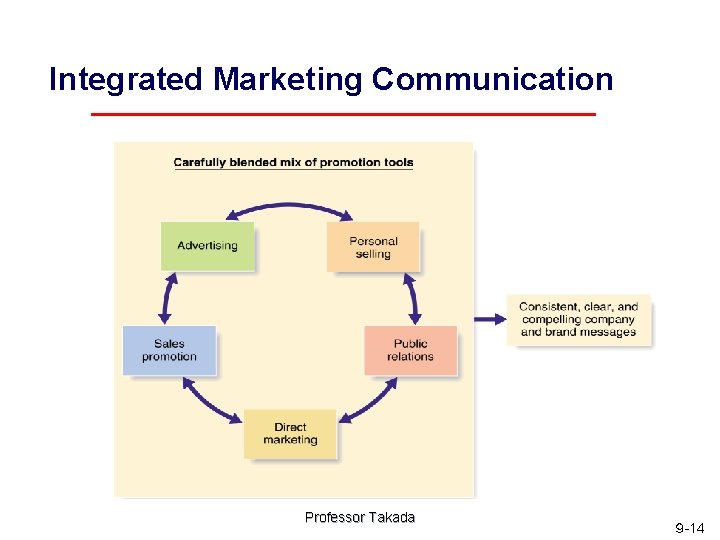
Integrated Marketing Communication Professor Takada 9 -14
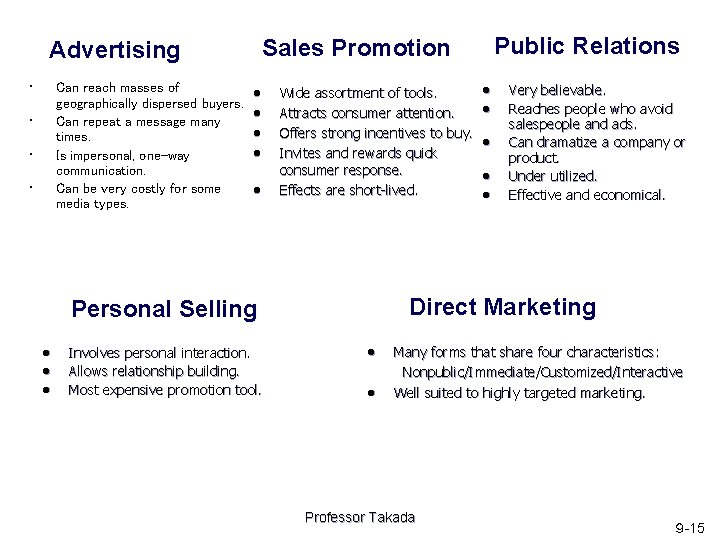
• Can reach masses of geographically dispersed buyers. Can repeat a message many times. Is impersonal, one-way communication. Can be very costly for some media types. • • Wide assortment of tools. Attracts consumer attention. Offers strong incentives to buy. Invites and rewards quick consumer response. Effects are short-lived. Involves personal interaction. Allows relationship building. Most expensive promotion tool. • • • Very believable. Reaches people who avoid salespeople and ads. Can dramatize a company or product. Under utilized. Effective and economical. Direct Marketing Personal Selling • • • Public Relations Sales Promotion Advertising • • Many forms that share four characteristics: Nonpublic/Immediate/Customized/Interactive Well suited to highly targeted marketing. Professor Takada 9 -15
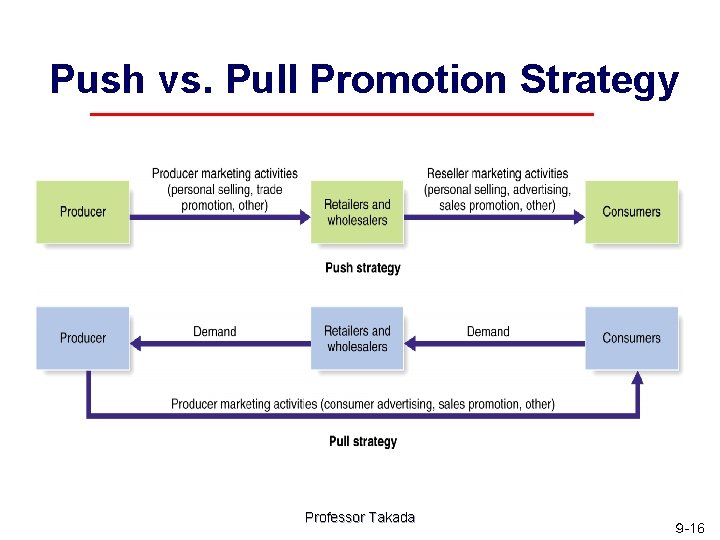
Push vs. Pull Promotion Strategy Professor Takada 9 -16
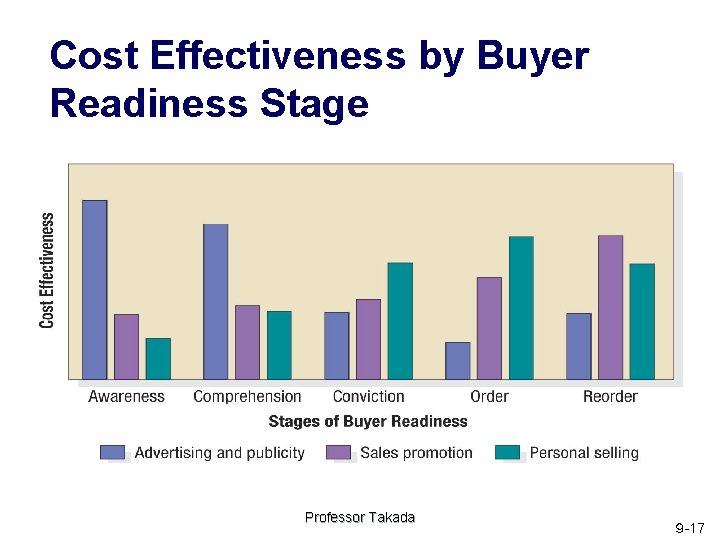
Cost Effectiveness by Buyer Readiness Stage Professor Takada 9 -17
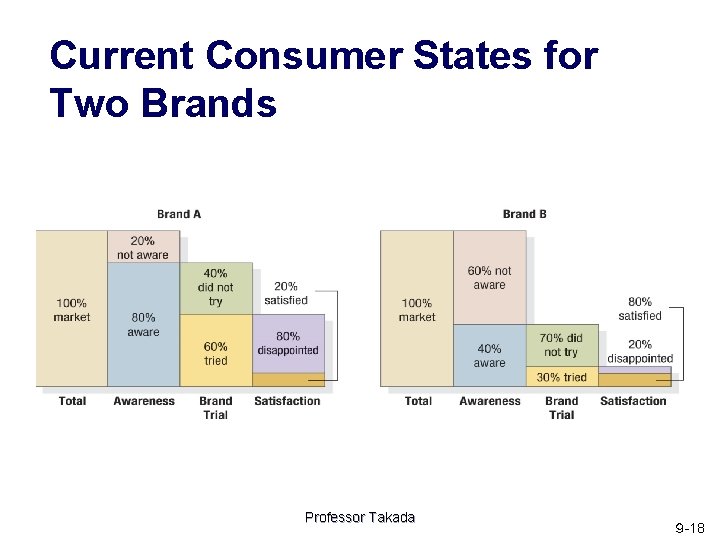
Current Consumer States for Two Brands Professor Takada 9 -18
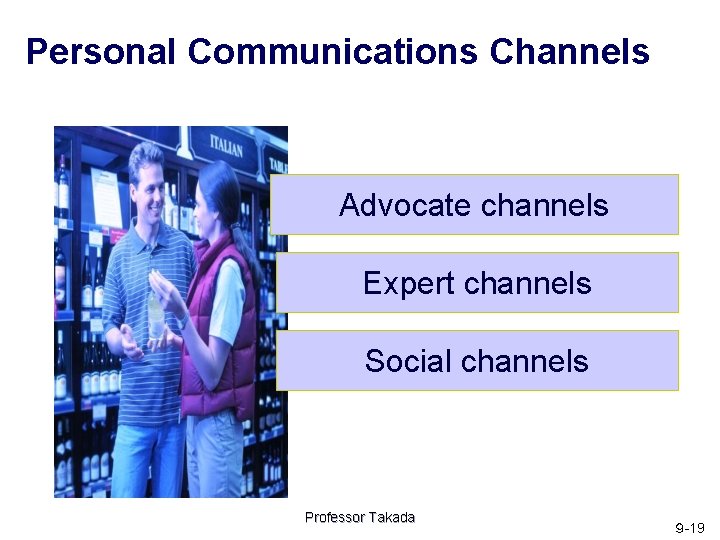
Personal Communications Channels Advocate channels Expert channels Social channels Professor Takada 9 -19
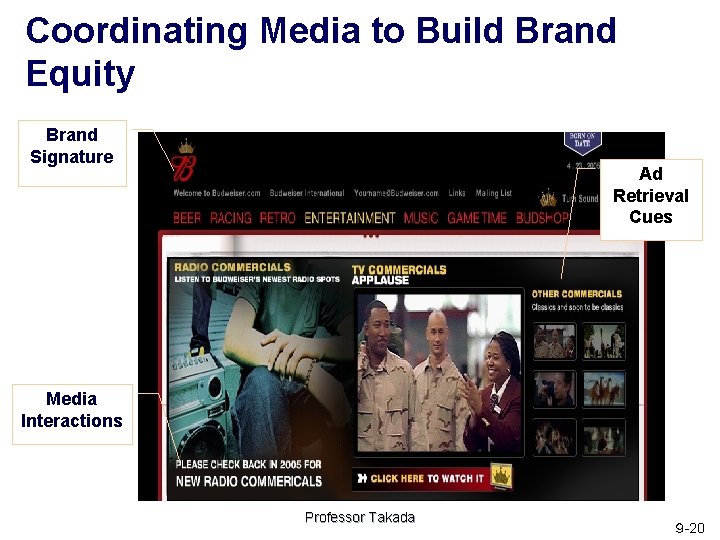
Coordinating Media to Build Brand Equity Brand Signature Ad Retrieval Cues Media Interactions Professor Takada 9 -20
ROAD MAP: • Integrated marketing communications Five promotion tools and the factors that must be considered in shaping the overall promotion mix. – Advertising: The major decisions involved in developing an advertising program. – Sales promotion: How do sales promotion campaigns are developed and implemented? – Public relations: How do companies use public relations to communicate with their publics? – Personal selling: Role of a company’s salespeople, six major steps and process of sales force management – Direct marketing: Major forms of direct marketing. Professor Takada 9 -21
Advertising Any paid form of nonpersonal presentation and promotion of ideas, goods, or services by an identified sponsor. Professor Takada 9 -22
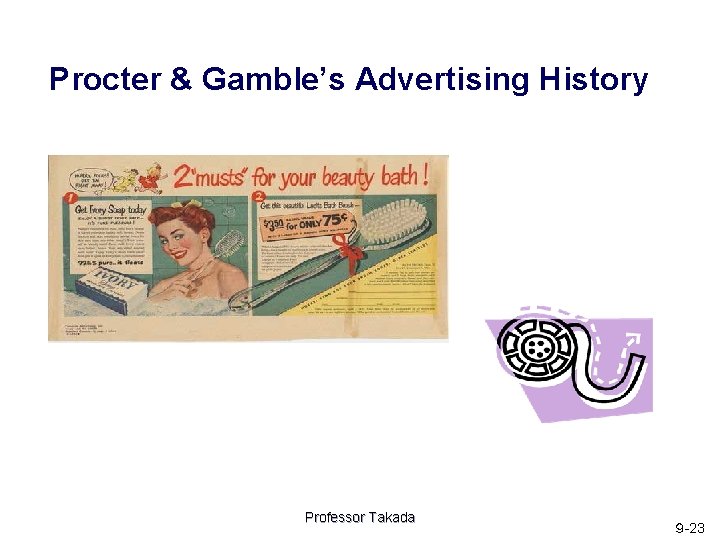
Procter & Gamble’s Advertising History Professor Takada 9 -23
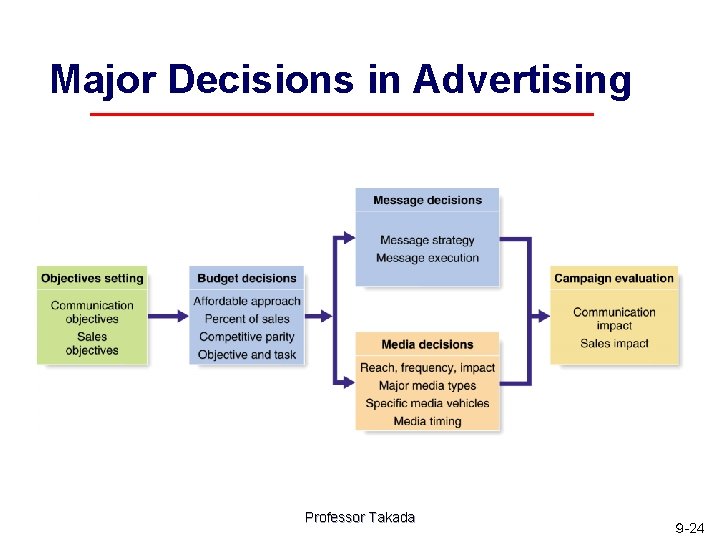
Major Decisions in Advertising Professor Takada 9 -24
Setting Advertising Objectives • An advertising objective: – A specific communication task to be accomplished with a specific target audience during a specific period of time. • Classified by purpose: – Inform – Persuade – Compare – Remind Professor Takada 9 -25
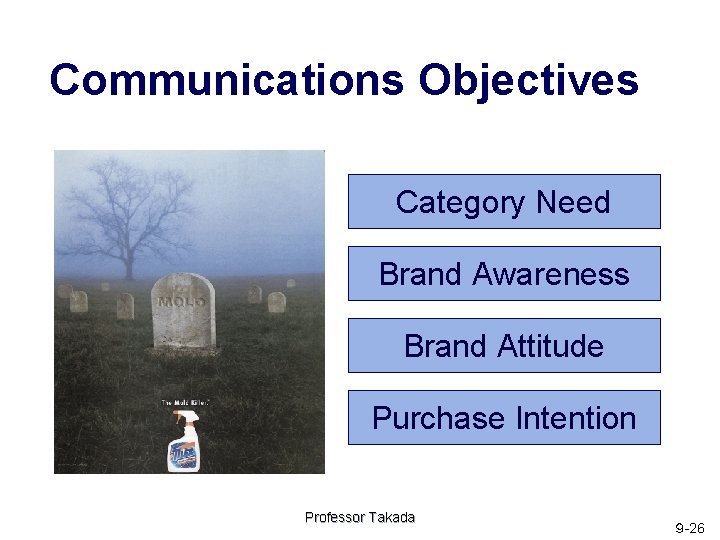
Communications Objectives Category Need Brand Awareness Brand Attitude Purchase Intention Professor Takada 9 -26
Factors to Consider in Setting an Advertising Budget Stage in the product life cycle Market share and consumer base Competition and clutter Advertising frequency Product substitutability Professor Takada 9 -27
Setting the Advertising Budget Affordable Based on What the Company Thinks it Can Afford Percentage-of-Sales Based on a Percentage of Current or Forecasted Sales Competitive-Parity Set Budget to Match Competitors Objective-and-Task Set Objectives, Determine Tasks to Achieve Objectives, Sum of Task Costs Equals Budget Professor Takada 9 -28
Objective-and-Task Method • Establish the market share goal. • Determine the percentage that should be reached. • Determine the percentage of aware prospects that • • • should be persuaded to try the brand. Determine the number of advertising impressions per 1% trial rate. Determine the number of gross rating points that would have to be purchased. Determine the necessary advertising budget on the basis of the average cost of buying a GRP. Professor Takada 9 -29
Developing Advertising Strategy • Two major elements: – Message decisions – Media decisions Professor Takada 9 -30
Message Strategy Identify Customer Benefits Develop Compelling Creative Concept The “Big Idea” Advertising Appeals Should Be Meaningful, Believable, & Distinctive Professor Takada 9 -31
Image The set of beliefs, ideas, and impressions a person holds regarding an object. Professor Takada 9 -32
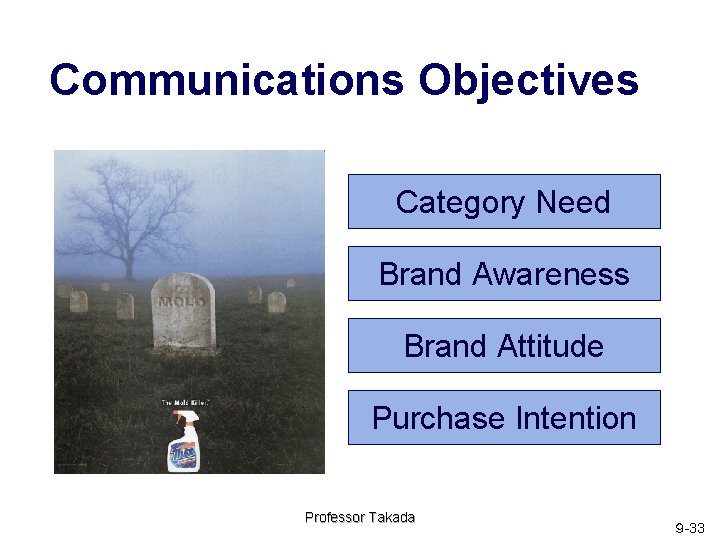
Communications Objectives Category Need Brand Awareness Brand Attitude Purchase Intention Professor Takada 9 -33
Designing the Communications • • • Message strategy Creative strategy Message source Personal communication channels Nonpersonal communication channels Integration Professor Takada 9 -34
Creative Strategy • Informational and transformational appeals • Positive and negative appeals – – – – Fear Guilt Shame Humor Love Pride Joy Professor Takada 9 -35
Creative Brief • • • Positioning statement Key message Target market Objectives Key brand benefits • • • Brand promise Evidence of promise Media Background Creative considerations Professor Takada 9 -36
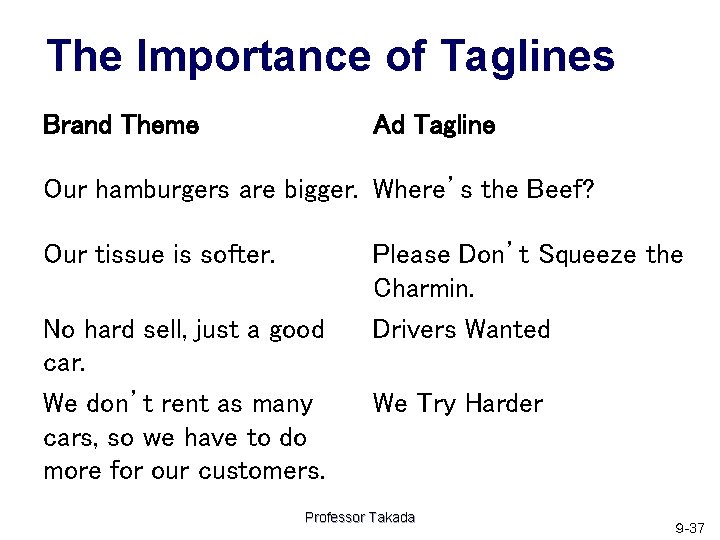
The Importance of Taglines Brand Theme Ad Tagline Our hamburgers are bigger. Where’s the Beef? Our tissue is softer. No hard sell, just a good car. We don’t rent as many cars, so we have to do more for our customers. Please Don’t Squeeze the Charmin. Drivers Wanted We Try Harder Professor Takada 9 -37
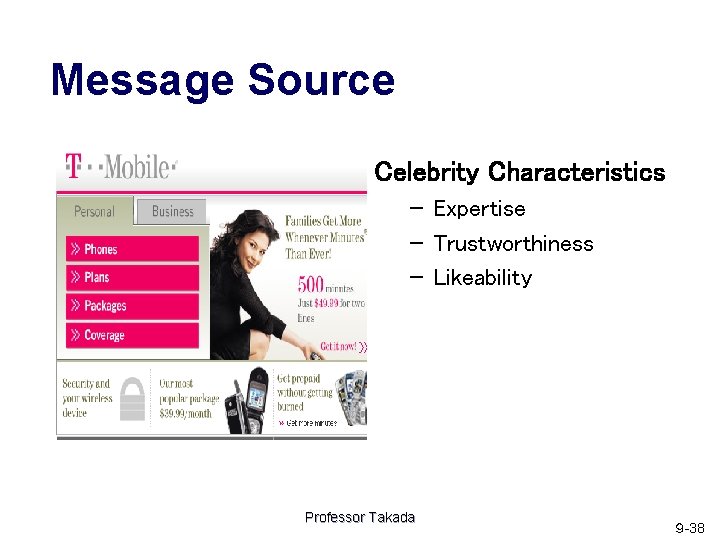
Message Source Celebrity Characteristics – Expertise – Trustworthiness – Likeability Professor Takada 9 -38
Stimulating Personal Influence Channels • Identify influential individuals and devote extra • • • attention to them Create opinion leaders Use community influentials in testimonial advertising Develop advertising with high “conversation value” Develop WOM referral channels Establish an electronic forum Use viral marketing Professor Takada 9 -39
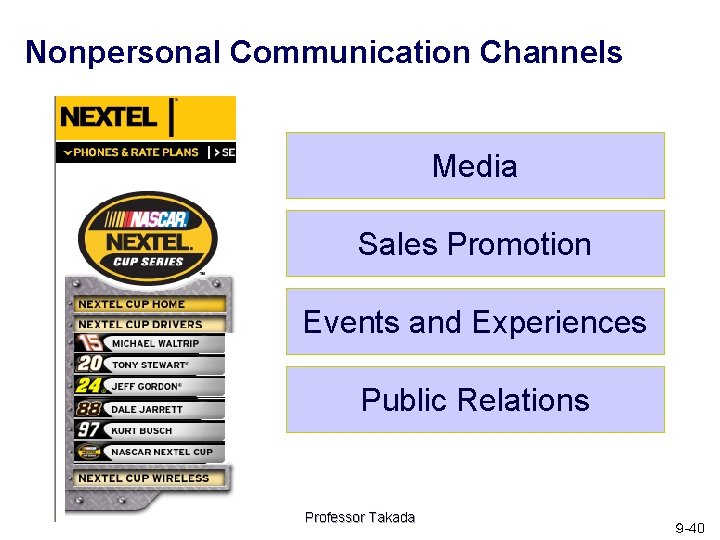
Nonpersonal Communication Channels Media Sales Promotion Events and Experiences Public Relations Professor Takada 9 -40
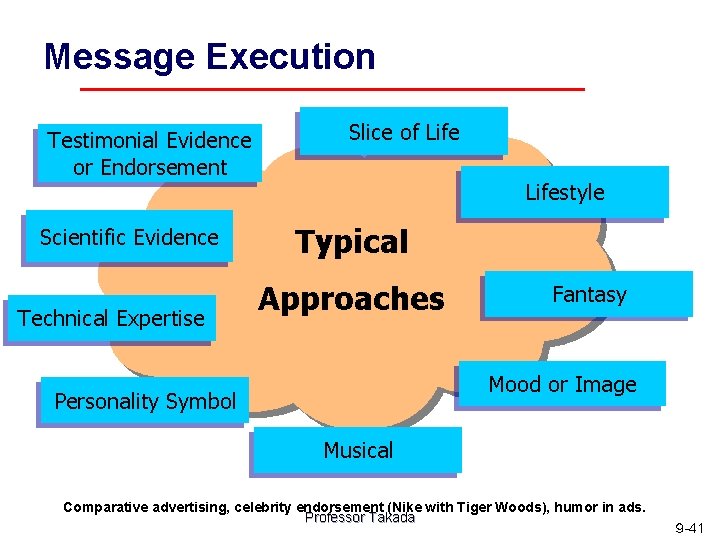
Message Execution Testimonial Evidence or Endorsement Scientific Evidence Technical Expertise Slice of Lifestyle Typical Approaches Fantasy Mood or Image Personality Symbol Musical Comparative advertising, celebrity endorsement (Nike with Tiger Woods), humor in ads. Professor Takada 9 -41
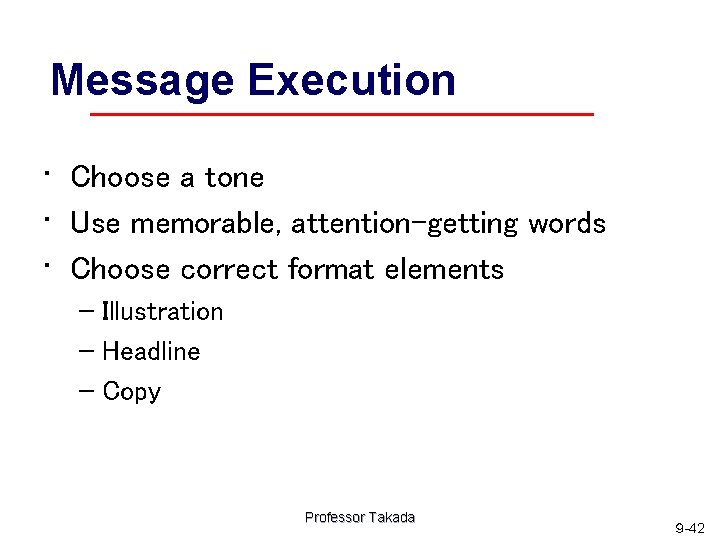
Message Execution • Choose a tone • Use memorable, attention-getting words • Choose correct format elements – Illustration – Headline – Copy Professor Takada 9 -42
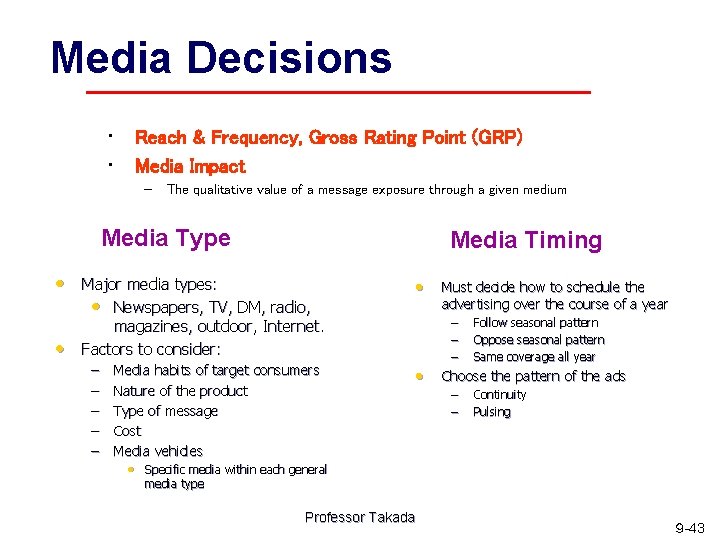
Media Decisions • Reach & Frequency, Gross Rating Point (GRP) • Media Impact – The qualitative value of a message exposure through a given medium Media Type Media Timing • Major media types: • Newspapers, TV, DM, radio, • • magazines, outdoor, Internet. Factors to consider: – – – Media habits of target consumers Nature of the product Type of message Cost Media vehicles • Must decide how to schedule the advertising over the course of a year – – – Follow seasonal pattern Oppose seasonal pattern Same coverage all year Choose the pattern of the ads – – Continuity Pulsing • Specific media within each general media type Professor Takada 9 -43
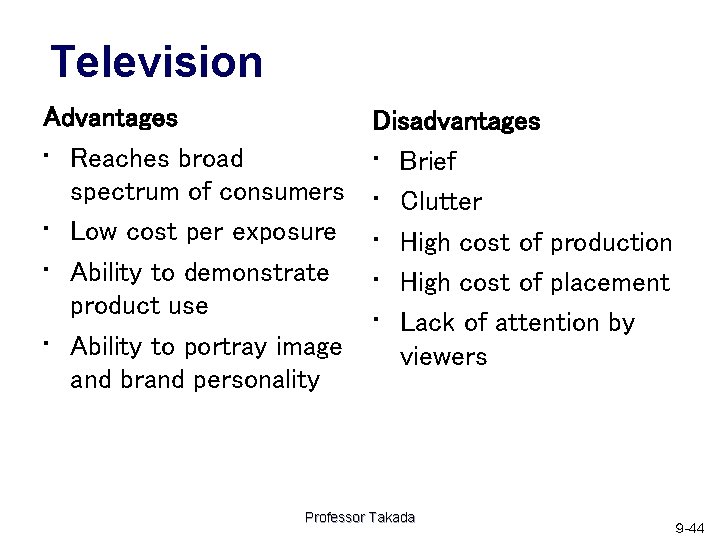
Television Advantages • Reaches broad spectrum of consumers • Low cost per exposure • Ability to demonstrate product use • Ability to portray image and brand personality Disadvantages • Brief • Clutter • High cost of production • High cost of placement • Lack of attention by viewers Professor Takada 9 -44
Print Ads Advantages • Detailed product information • Ability to communicate user imagery • Flexibility • Ability to segment Disadvantages • Passive medium • Clutter • Unable to demonstrate product use Professor Takada 9 -45
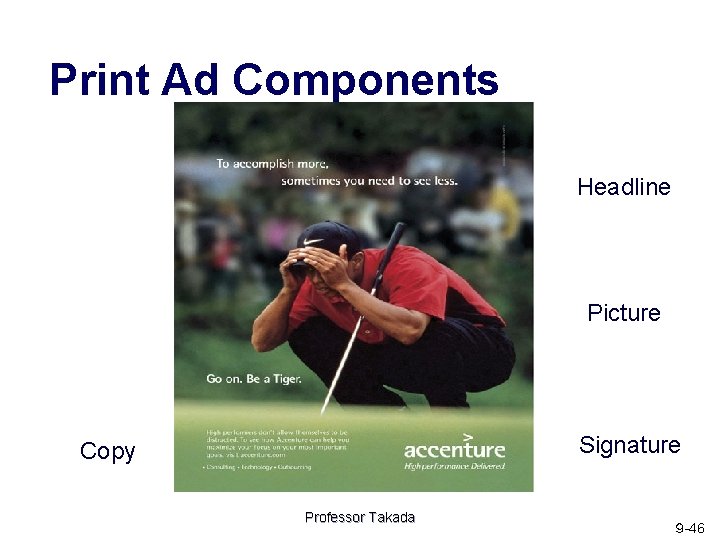
Print Ad Components Headline Picture Signature Copy Professor Takada 9 -46
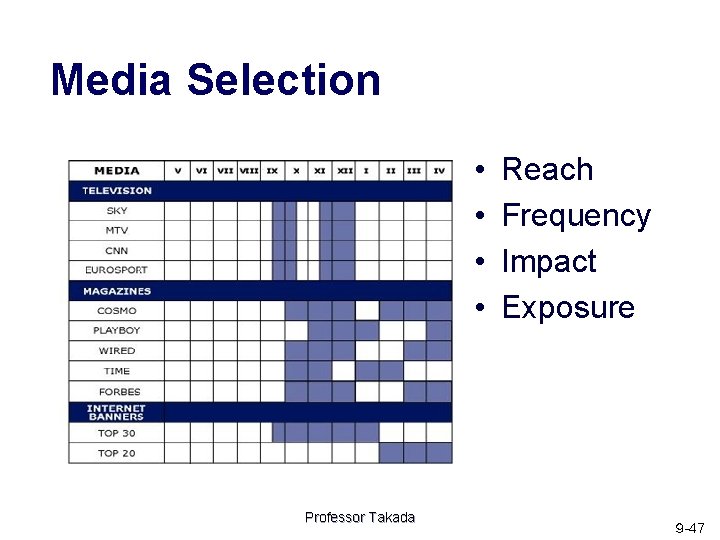
Media Selection • • Professor Takada Reach Frequency Impact Exposure 9 -47
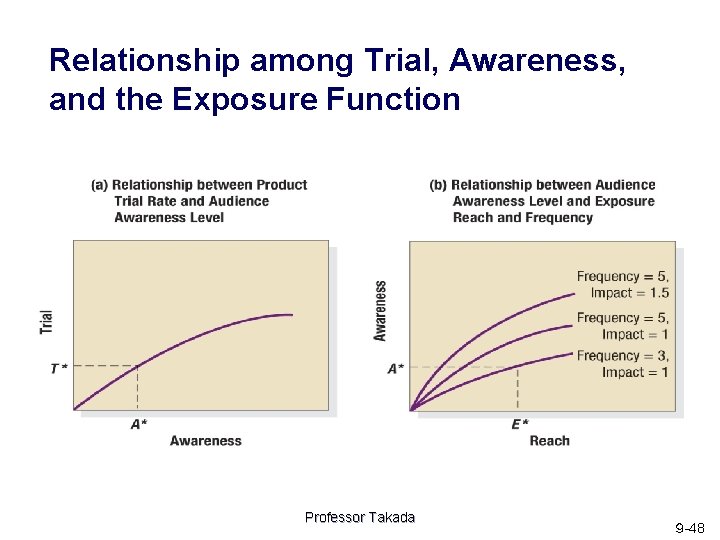
Relationship among Trial, Awareness, and the Exposure Function Professor Takada 9 -48
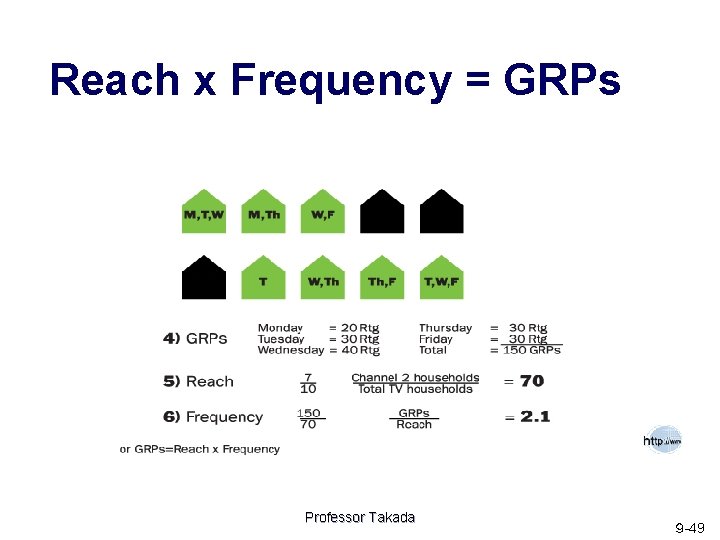
Reach x Frequency = GRPs Professor Takada 9 -49
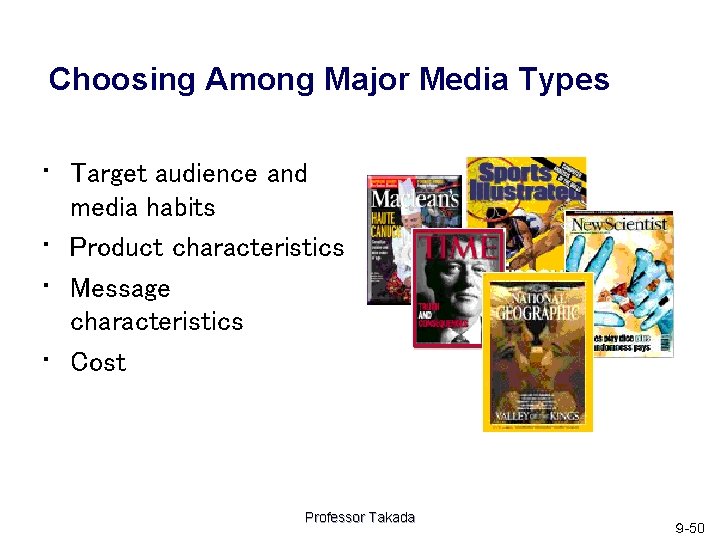
Choosing Among Major Media Types • Target audience and • • • media habits Product characteristics Message characteristics Cost Professor Takada 9 -50
Major Media Types • • • Newspapers Television Direct mail Radio Magazines • • • Outdoor Yellow pages Newsletters Brochures Telephone Internet Professor Takada 9 -51
Marketing Communication Expenditures (2001) Media $ % of Total TV 52. 7 22 Radio 19. 4 8 Internet 3. 4 1 Magazines 12. 3 5 Newspaper 49. 4 21 Professor Takada 9 -52
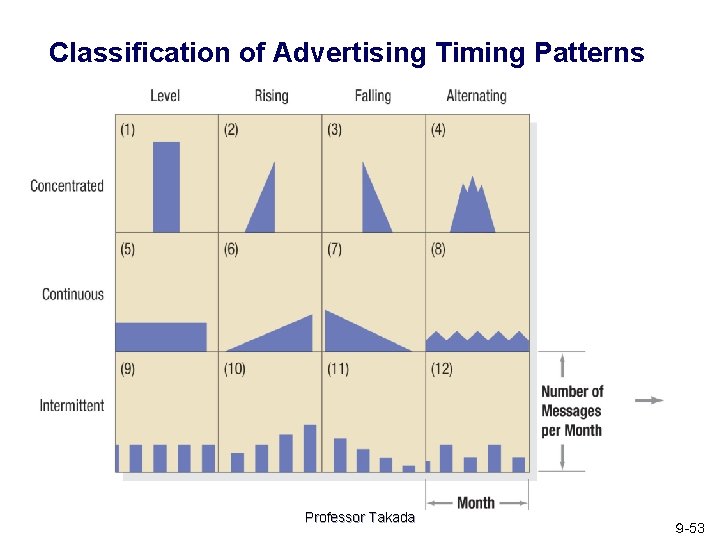
Classification of Advertising Timing Patterns Professor Takada 9 -53
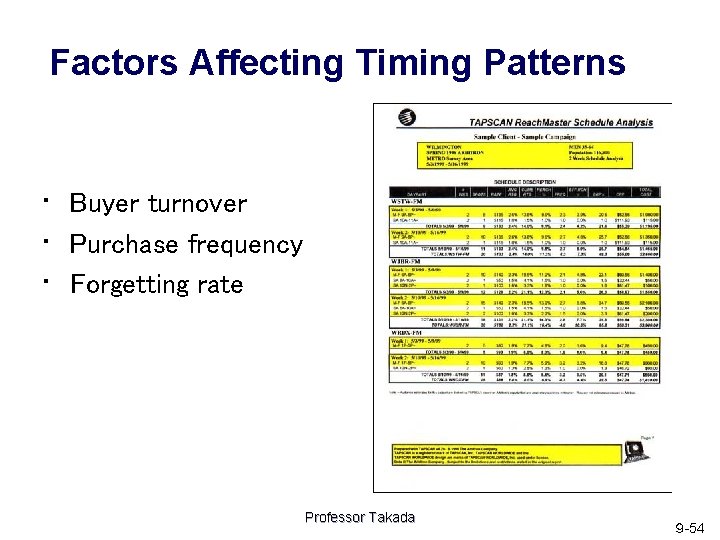
Factors Affecting Timing Patterns • Buyer turnover • Purchase frequency • Forgetting rate Professor Takada 9 -54
Media Schedule Patterns • • Continuity Concentration Flighting Pulsing Professor Takada 9 -55
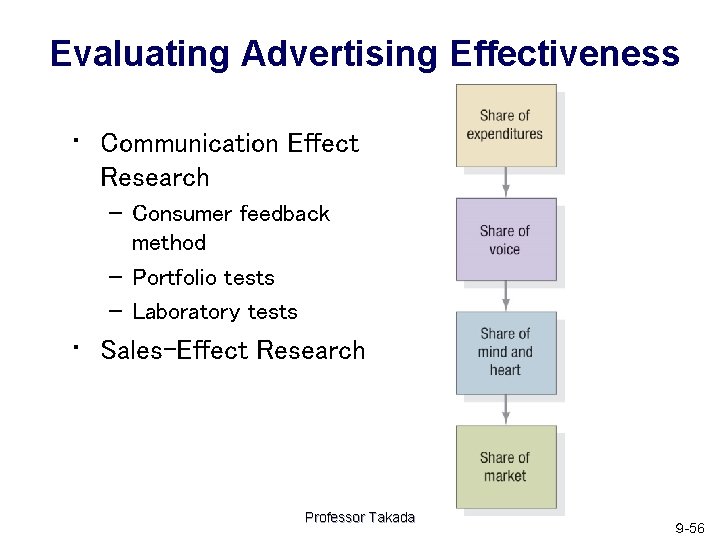
Evaluating Advertising Effectiveness • Communication Effect Research – Consumer feedback method – Portfolio tests – Laboratory tests • Sales-Effect Research Professor Takada 9 -56
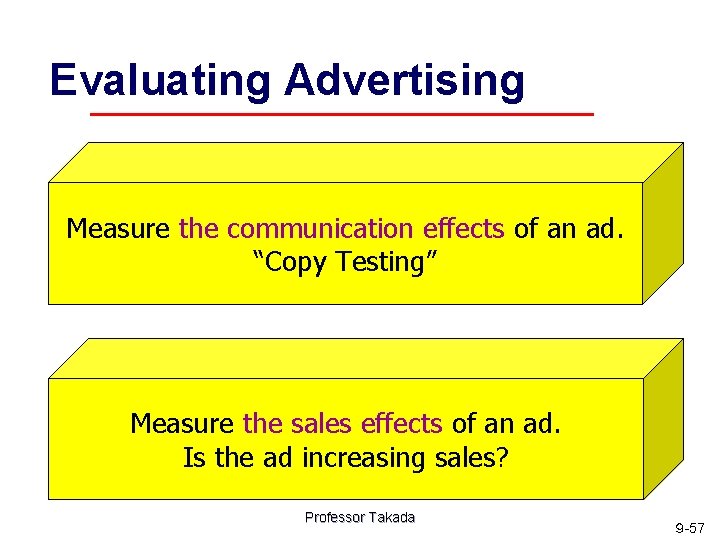
Evaluating Advertising Measure the communication effects of an ad. “Copy Testing” Measure the sales effects of an ad. Is the ad increasing sales? Professor Takada 9 -57
Print Ad Evaluation Criteria • • Is the message clear at a glance? Is the benefit in the headline? Does the illustration support the headline? Does the first line of the copy support or explain the headline and illustration? Is the ad easy to read and follow? Is the product easily identified? Is the brand or sponsor clearly identified? Professor Takada 9 -58
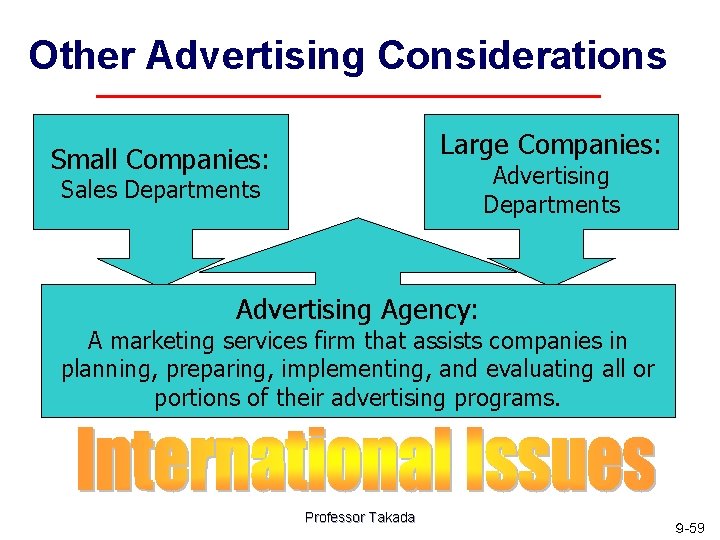
Other Advertising Considerations Large Companies: Small Companies: Advertising Departments Sales Departments Advertising Agency: A marketing services firm that assists companies in planning, preparing, implementing, and evaluating all or portions of their advertising programs. Professor Takada 9 -59
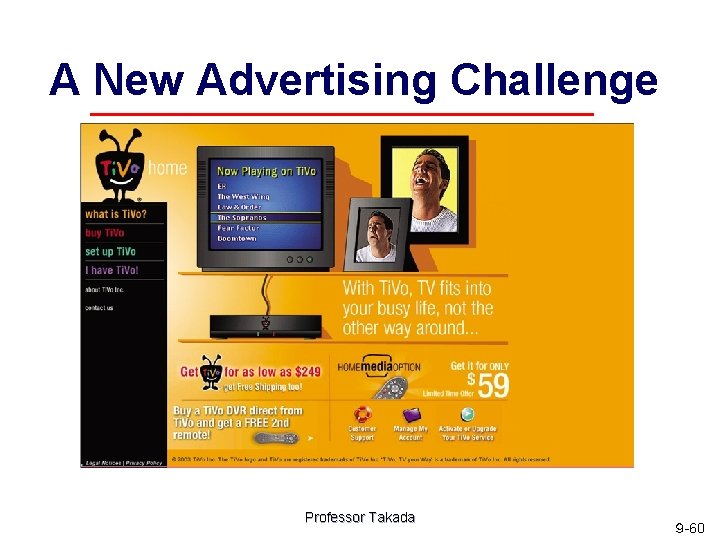
A New Advertising Challenge Professor Takada 9 -60
- Slides: 60