
Integrated HIV Research and Prevention Epidemiology principles approach




- Slides: 66
Integrated HIV Research and Prevention Epidemiology – principles & approach CITAR Vietnam Workshop 2008 Lu-Yu Hwang, M. D. The University of Texas-Houston, School of Public Health
EPIDEMIOLOGY DEFINITION • Study of distribution and determinants of disease, status of health, disability, morbidity and mortality in population. (Friis)
EPIDEMIOLOGY DEFINITION • Distribution – Frequency of disease occurrence in population – Time, place person (when, where, who) • Determinants – Factors to bring the change in health – What, why, how
EPIDEMIOLOGY DEFINITION • Population – Description of health phenomena in population groups (time, place, person), rather than individuals – Population medicine, Population health (Community health)
EPIDEMIOLOGY AIMS • To Describe health status of population distribution and determinants • To Explain the etiology of disease, to discover the causal factors • To Predict the occurrence of disease, to plan intervention and allocation of resources • To control the distribution of diseases and prevent new diseases
EPIDEMIOLOGY GOAL • Assessing the public health importance of diseases and identifying the population at risk. • Understanding the natural history of disease and factors influencing its distribution • Planning intervention to prevent and control diseases
EPIDEMIOLOGY APPROACH • Interdisciplinary composition – Biological science of man and agents – Physical environment science – Social and behavioral science concerned with human society – (Clinical medicine, microbiology, social and behavioral science, environmental science, biostatistics)
EPIDEMIOLOGY APPROACH • Quantification – Systematic collection : Surveillance – Construction of tables and figures by time, place and person • Special Vocabulary – Epidemic, – Prevalence, incidence – Association, risk (relative risk, odds ratio)
Public Health Significance • Relationship of exposure to burden of disease in a population depends on: – Strength of association between exposure and disease – Prevalence of exposure – Incidence of disease in population (Morbidity) – Mortality
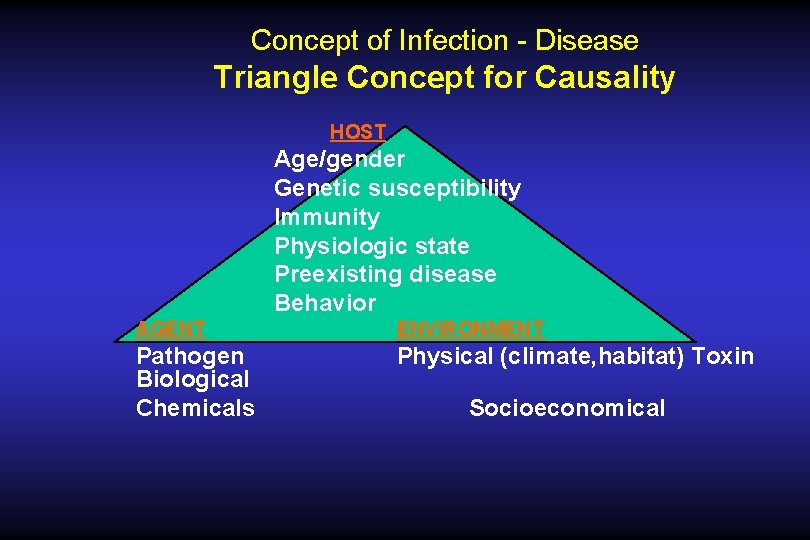
Concept of Infection - Disease Triangle Concept for Causality HOST Age/gender Genetic susceptibility Immunity Physiologic state Preexisting disease Behavior AGENT ENVIRONMENT Pathogen Biological Chemicals Physical (climate, habitat) Toxin Socioeconomical
Epidemiology and Control of Infectious Disease Research Approach Research Question: • Frequency of disease or infection in population • Factors associated with transmission or infection • Factors (predictors) associated with disease progress mobility & mortality • Efficacy of intervention • Effectiveness of program
Study Designs
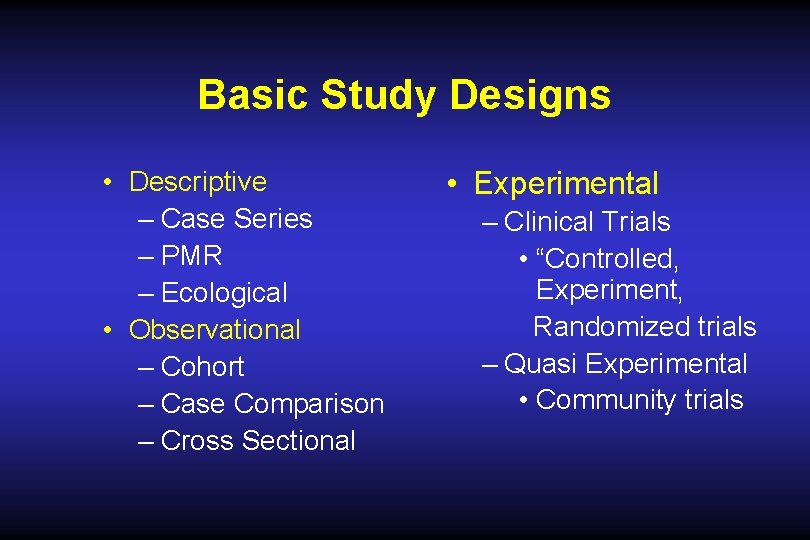
Basic Study Designs • Descriptive – Case Series – PMR – Ecological • Observational – Cohort – Case Comparison – Cross Sectional • Experimental – Clinical Trials • “Controlled, Experiment, Randomized trials – Quasi Experimental • Community trials
Study Designs • Descriptive Epidemiology – Descriptive – person, place & time. • Demographics. • Geographic distribution. • Seasonal patterns etc. • Frequency of disease patterns. – Useful for: • Allocate resource. • Plan prevention programs. • Hypotheses development.
Case Series • Experience of a group of patients with a similar diagnosis. – Useful for hypothesis generation. – Informative for very rare disease with few established risk factors.
Ecologic Studies (Correlational Studies) • Provide crude way of exploring associations • Hypothesis generating • The group rather than the individual is the unit of analysis • Does not relate exposure and outcome to an individual • No control or very little control over distorting factors • Usually sample selection is problematic
Cross-Sectional Study • also called survey or prevalence study • measures exposure and outcome at the same point in time – involves disease prevalence – usually involves random sampling and questionnaire measurement – cannot distinguish whether hypothesized cause preceded the outcome – used to generate hypotheses
Cross-Sectional Study • Strengths – Describe magnitude and distribution of health problems in a population – Provide information critical for health planning – Generate hypotheses to be examined in analytic studies
Cross-Sectional Study • Limitations – Not suitable for etiologic investigations • the association between an exposure and the risk of developing a disease • effect of change in an exposure on the risk of developing a disease – Factors studied may be associated with risk, survival, or both – Not suitable for rare diseases (or outcomes) – Temporality issues – exposure and disease history taken at same time
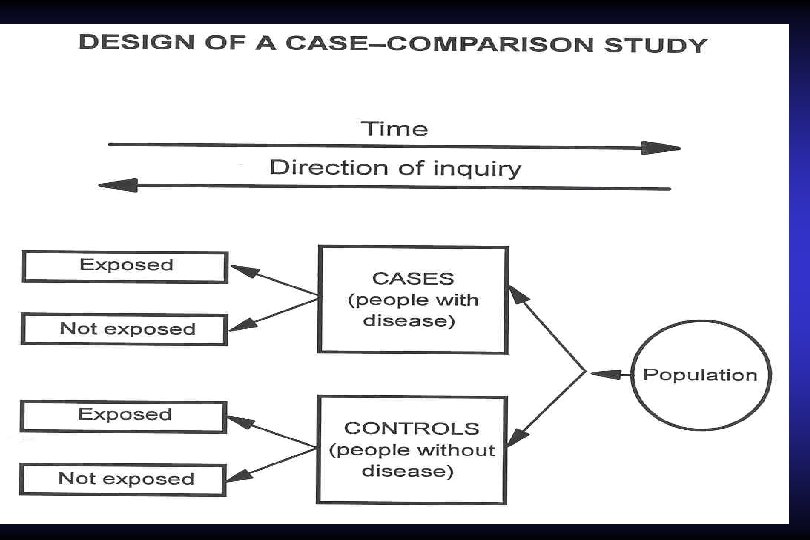
Case Comparison Studies (aka Case-Control) • Selection of study subjects based on disease status • Mainstay of epidemiologic research • They go from effect to cause • Determine prevalence of exposure among cases and non-cases
Defining a Case • These rules hold for any epidemiologic study – The simplest and most objective criteria are usually the best – Take into account the sensitivity and specificity of the case definition – The case definition must be: • Easy to apply • Applied consistently
Selection of Compeers (Controls) • Ideally cases and compeers should come from the same population – Be aware of the biases that might arise from the selection of compeers that arise from different sources: • Hospital based • Population based • Choosing friends and family
Strengths of Case Comparison Studies • Quick and relatively inexpensive. • Well suited for rare outcomes. • Optimal for the evaluation of diseases with long latency periods. • Can examine multiple potential risk factors for a single disease.
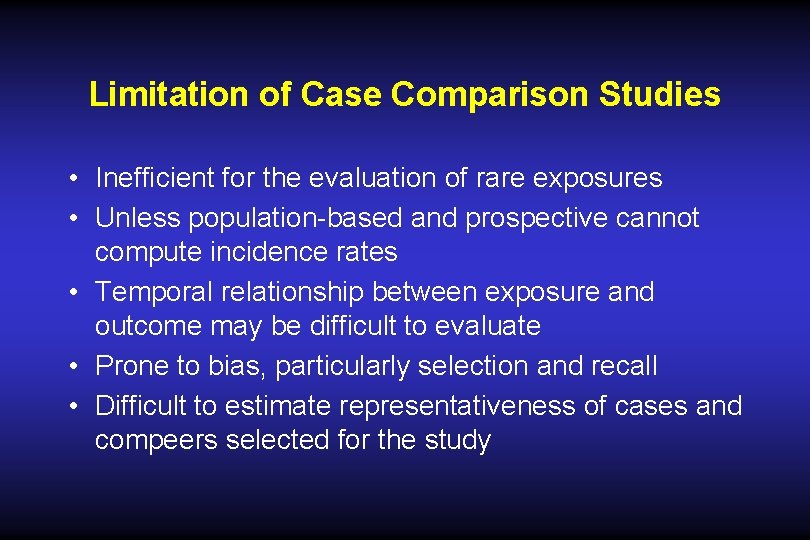
Limitation of Case Comparison Studies • Inefficient for the evaluation of rare exposures • Unless population-based and prospective cannot compute incidence rates • Temporal relationship between exposure and outcome may be difficult to evaluate • Prone to bias, particularly selection and recall • Difficult to estimate representativeness of cases and compeers selected for the study
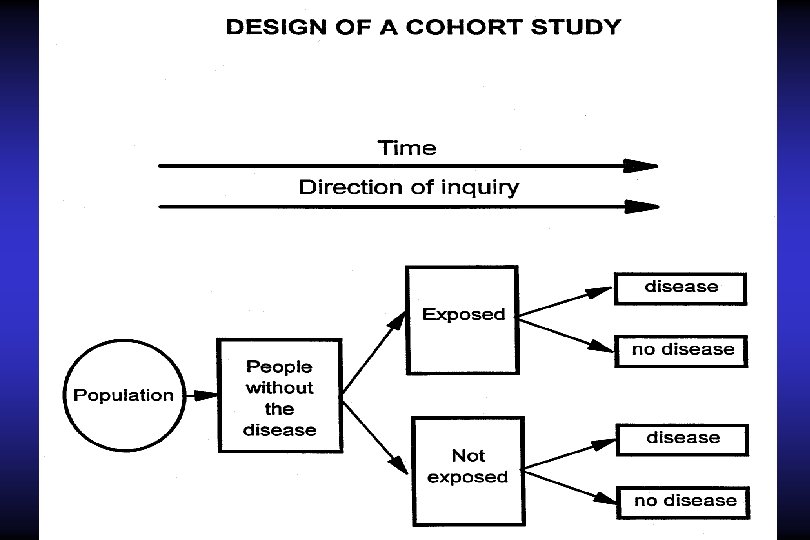
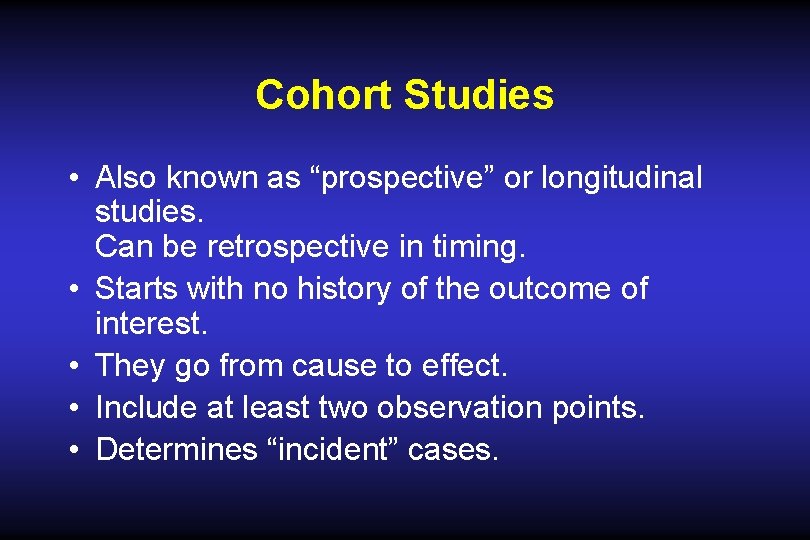
Cohort Studies • Also known as “prospective” or longitudinal studies. Can be retrospective in timing. • Starts with no history of the outcome of interest. • They go from cause to effect. • Include at least two observation points. • Determines “incident” cases.
Cohort – Selection of Comparisons • Internal Comparison. – The “non-exposed” become the comparison. • Separate Comparison Cohort. – Selection of an external comparison group. • Should be as similar as possible to the exposed group regarding other variables associated with the outcome. • Comparison with Available Population Rates. – When it is not possible to establish a comparison group. – Compare with known rates of disease in the population.
Cohort Studies: Strengths • Allows for direct determination of rate and risk • Provides stronger evidence of exposure-disease associations • Evidence about lag time (evidence of temporal relationship) • Useful when exposure is rare • Minimizes bias in ascertainment of exposure (when prospective)
Cohort Studies: Limitations • • Inefficient for rare diseases Expensive and time-consuming Availability of adequate records Issues with loss to follow-up
Epidemiologic Framework • Epidemiologic studies draw inferences about the experience of an entire population based on an evaluation of only a sample • In a study of a sample of the population, observed associations can be due to: – chance – bias – confounding – true association
Chance, Bias, Confounding
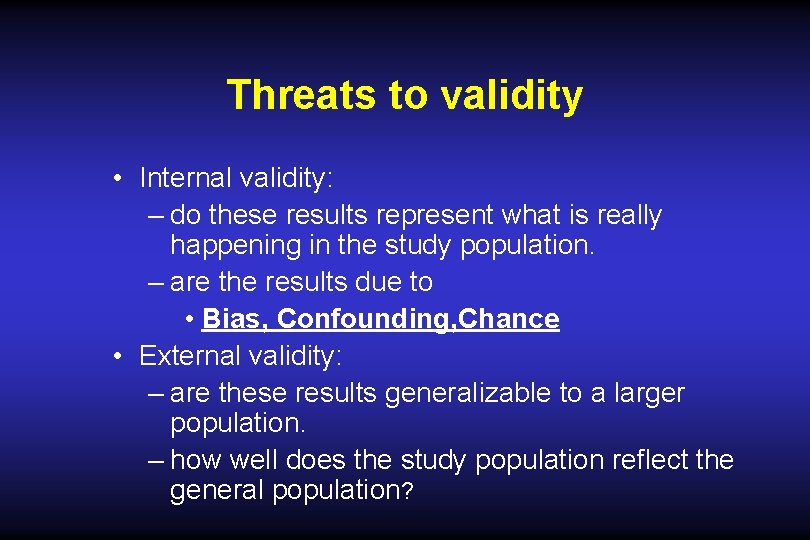
Threats to validity • Internal validity: – do these results represent what is really happening in the study population. – are the results due to • Bias, Confounding, Chance • External validity: – are these results generalizable to a larger population. – how well does the study population reflect the general population?
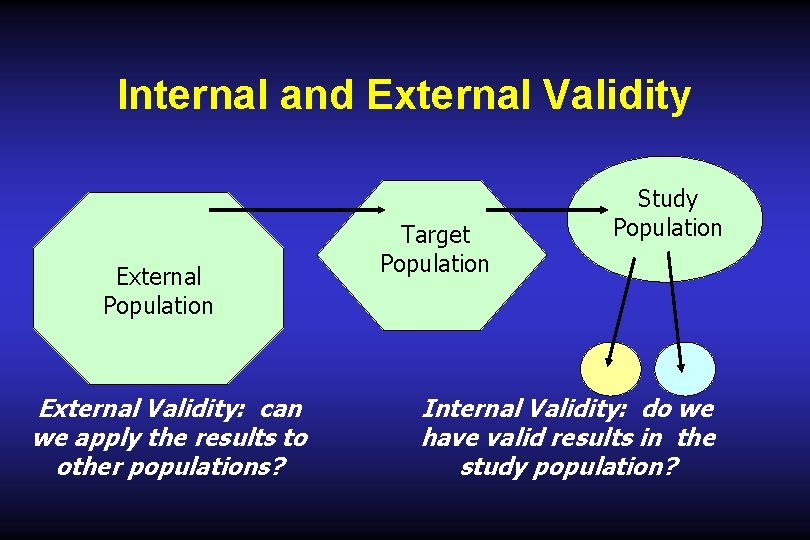
Internal and External Validity External Population External Validity: can we apply the results to other populations? Target Population Study Population Internal Validity: do we have valid results in the study population?
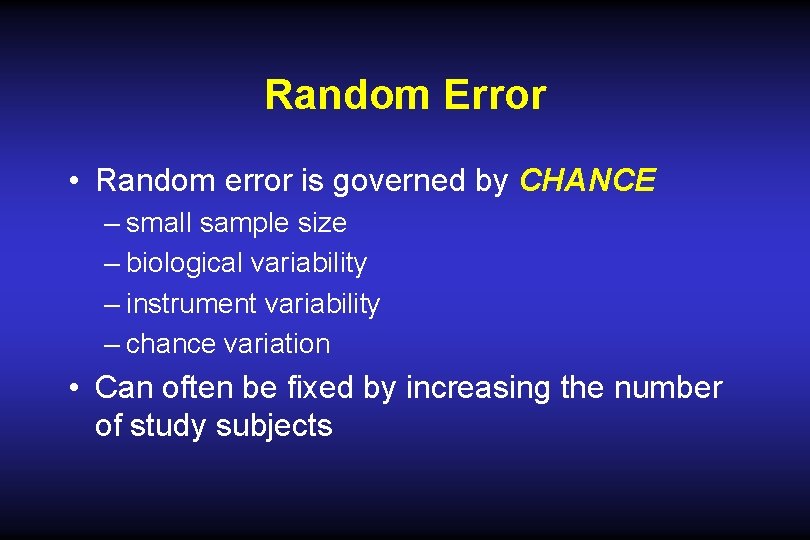
Random Error • Random error is governed by CHANCE – small sample size – biological variability – instrument variability – chance variation • Can often be fixed by increasing the number of study subjects
Systematic Error • Bias is introduced by any systematic error in the design, conduct, or analysis of a study that results in a mistaken estimate of the exposure’s effect on the risk of disease. Schlesselman & Stolley, 1982
BIAS • Two major types to consider: selection bias: non-comparable criteria used to enroll participants information bias: non-comparable information obtained due to Interviewer, recall bias or misclafication
Bias in a Case Control Study – do the controls represent the population from which the cases were drawn – are controls at similar risk of being exposed? – is case status / control status similar • survival bias • volunteer bias • information bias
Bias in a cohort study • exposed and non-exposed from same base population – Internal comparisons: start with a cross-sectional study of a population sample – External comparisons: try to ensure that the nonexposed are similar in all ways to the exposed group.
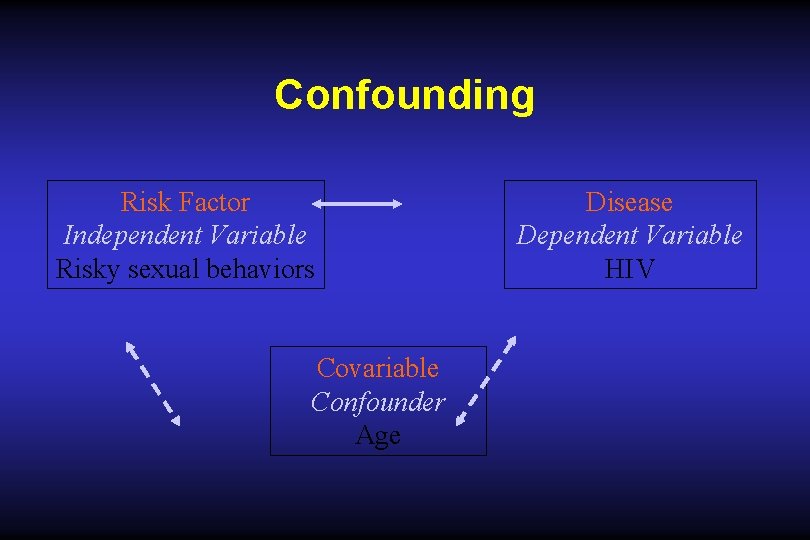
Confounding – the variable must be associated with the disease (the confounder itself may be a risk factor). – the variable is associated with the exposure independently of the disease – the association under study must be confounded (the result achieved is distorted from truth)
Confounding Risk Factor Independent Variable Risky sexual behaviors Covariable Confounder Age Disease Dependent Variable HIV
Control of Confounding Detecting and removing spurious associations can be done at • Design stage: – restriction – matching • Analysis stage: – stratification – multivariate techniques
Experimental Methods In Epidemiology – Intervention Trials
Experimental Methods In Epidemiology • DEFINITION (clinical trial) – A research study to answer specific questions about vaccines or new therapies or new ways of using known treatments (intervention). – Clinical trials (also called medical research, prevention trial, experimental epidemiology study) are used to determine whether new drugs or treatments or intervention are both safe and effective. – New therapies are tested on people only after laboratory and animal studies showing promising.
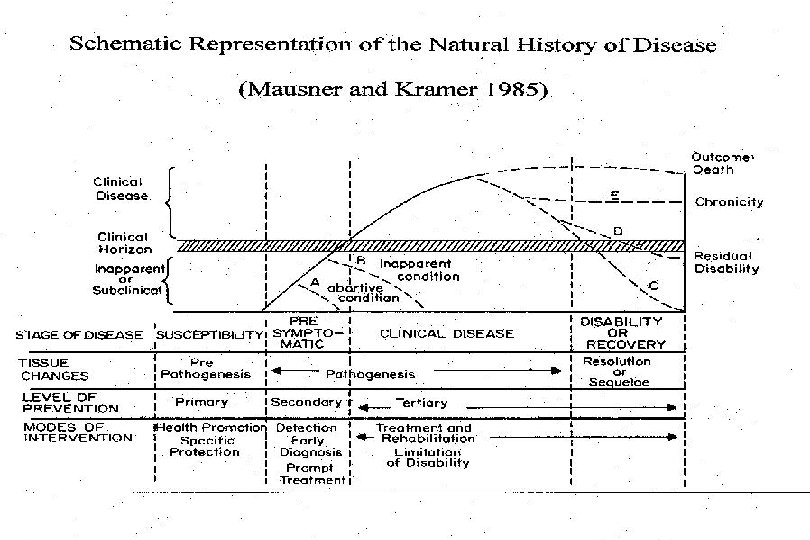
Experimental Methods In Epidemiology • Tertiary Prevention – Treatment trials • Aspirin trial, chemotherapy – Surgical trials • Radical mastectomy vs. lumpectomy • Secondary Prevention – Drug Prevention trials • HDFP (high BP detection/ follow-up trial), AZT trial, chemoprevention trial • Primary Prevention – Vaccine trials – Behavioral intervention trials
Experimental Methods In Epidemiology QUESTIONS Will complications of disease Y be reversed or reduced in severity, when patients with disease Y are treated with A versus B? Will treatment (intervention) A result in a reduced incidence of outcome Y in patients with condition X in contrast with that among similar patients treated (intervene) with B (alternate treatment or placebo)?
Experimental Methods In Epidemiology QUESTIONS • Adverse Effects – might occur and unpredictable – not rigorous and specifically addressed – unethical approach – monitoring clinical and laboratory measurements – moral responsibility
Experimental Methods In Epidemiology QUESTIONS • Intervention – assigned exposure – Characteristics description – drugs, biological products, devices, procedures, lifestyle modification, program intervention – Administration - dose, intensity, frequency schedule – Availability – licensed or regulatory agency approval – Time, place, person initiation, duration, and special facilities
Experimental Methods In Epidemiology QUESTIONS • Response Variables – outcomes – Mortality • total or specific cause of death – Disease morbidity • disease incidence, disease specific complication • symptoms, clinical signs – laboratory measurement – KABB (knowledge, attitude, believe, behavior) measurement – cost
Experimental Methods In Epidemiology • Study Population – Subset of population with condition – Characteristics of interest defined by eligibility criteria : benefit from intervention – Inclusive/Exclusive criteria be defined in advanced, because the impact will have on • study design • ability to generalize, • Participant recruitment
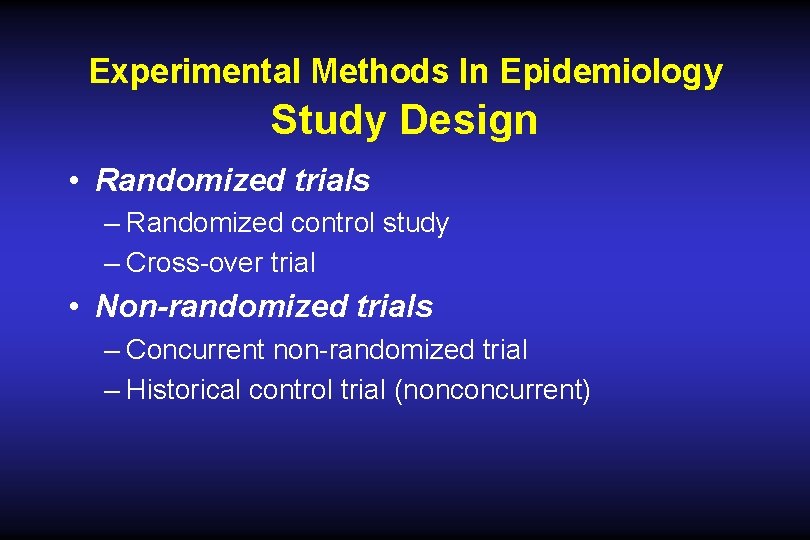
Experimental Methods In Epidemiology Study Design • Randomized trials – Randomized control study – Cross-over trial • Non-randomized trials – Concurrent non-randomized trial – Historical control trial (nonconcurrent)
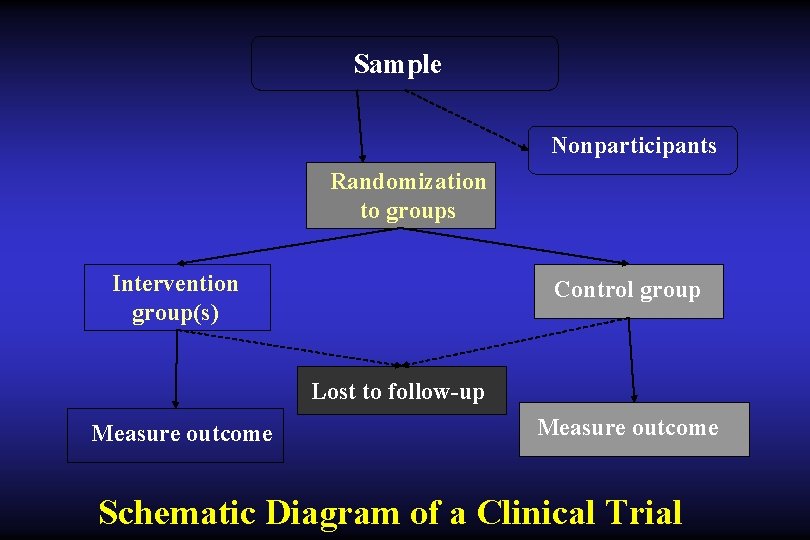
Sample Nonparticipants Randomization to groups Intervention group(s) Control group Lost to follow-up Measure outcome Schematic Diagram of a Clinical Trial
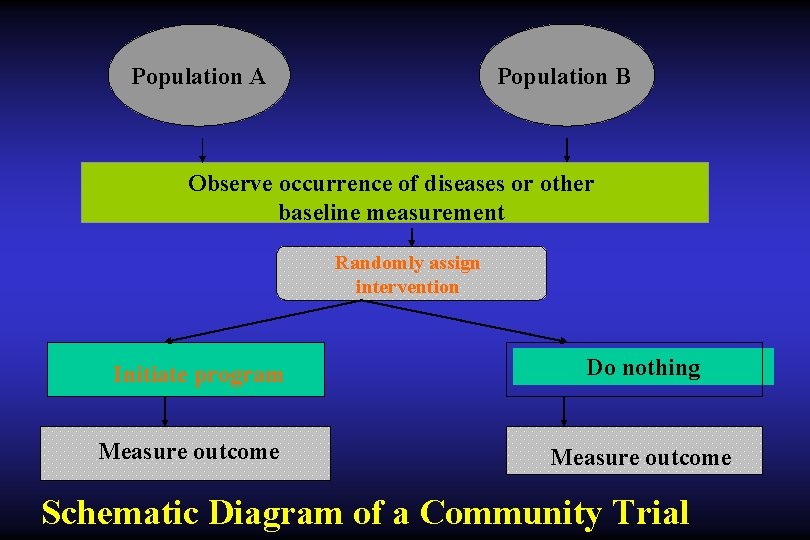
Population A Population B Observe occurrence of diseases or other baseline measurement Randomly assign intervention Initiate program Measure outcome Do nothing Measure outcome Schematic Diagram of a Community Trial
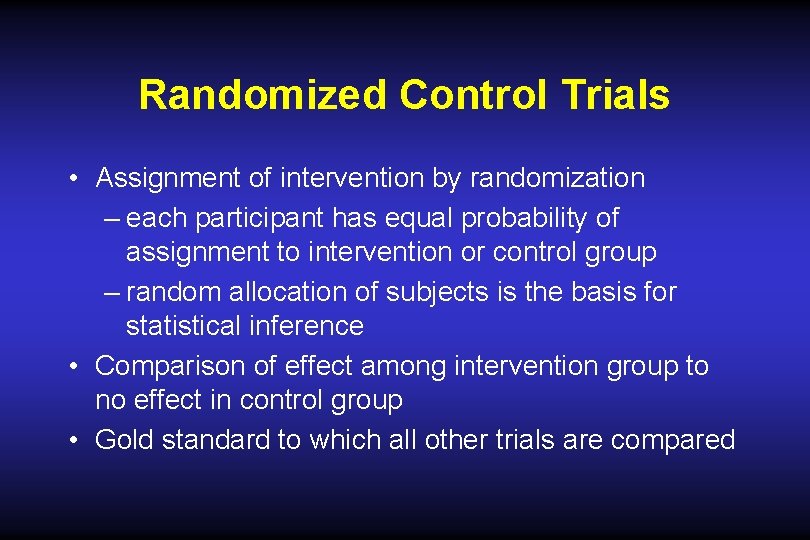
Randomized Control Trials • Assignment of intervention by randomization – each participant has equal probability of assignment to intervention or control group – random allocation of subjects is the basis for statistical inference • Comparison of effect among intervention group to no effect in control group • Gold standard to which all other trials are compared
Experimental Methods In Epidemiology Study Conduct Masking (blinding) • To avoid systematic differences between treated and control groups during the conduct of study • Controlling for information bias • Double-blind – Patient, care provider, and investigator (person collecting data) all unaware of treatment assignment • Single-blind – Patient unaware of treatment assignment
Experimental Methods In Epidemiology Strengths • Potentially the most rigorous design for evaluating the effect of a single controlled exposure or intervention • When well executed, less subject to issues of interpretation than non-experimental studies • More reproducible than non-experimental studies (theoretically)
Experimental Methods In Epidemiology Limitations • Applicable only to certain types of questions, at a particular stage of knowledge about the problem • Complex planning • Usually expensive • Ethical considerations may limit selection of participants and generality of results • Rigor of the conduct may fall far short of the intent
Summary of Epidemiology Research Paper
Summary of Epidemiology Research Paper • Objective. – Indicate the research question that the study was intended to investigate.
Summary of Epidemiology Research Paper • Design: – How does the study appear to have been planned, in the following respects: What was to be the exposure and outcome Who was to be studied (intended study population)? What was the timing of this study (time orientation relative both to real time and to the timing of the disease process)?
Summary of Epidemiology Research Paper • Conduct: – How was the study carried out, in two main respects: Who was actually studied (how representative of the intended study population was the actual study population? What data were actually collected (what were the reported observations and measurements)?
Summary of Epidemiology Research Paper • Measurements. – What were the important measurements for exposures and outcomes, – and how were they made?
Summary of Epidemiology Research Paper • Analysis: – What kinds of data analysis are presented? – Formal statistical estimates from observations in a sample of a population)? – Tests of formal statistical hypotheses (hypothesis testing)?
Summary of Epidemiology Research Paper • Result: – The main result should answer the research question identified above: What is the major finding of this study (the result, concisely and objectively stated)? • Conclusions: – What did the authors infer from these results?
Summary of Epidemiology Research Paper Evaluate Explanations and Conclusions – a. Is chance a likely explanation for the results? – b. Is selection bias a likely explanation for the results? – c. Is information bias a likely explanation for the results? – d. Is confounding a likely explanation for the results? – e. Are the authors conclusions reasonable in terms of the information presented? – f. Applicability beyond the actual study population (generalizibility)?