
INTEGRATED FISH FARMING Mr OUCH Lang BSc Aquaculture
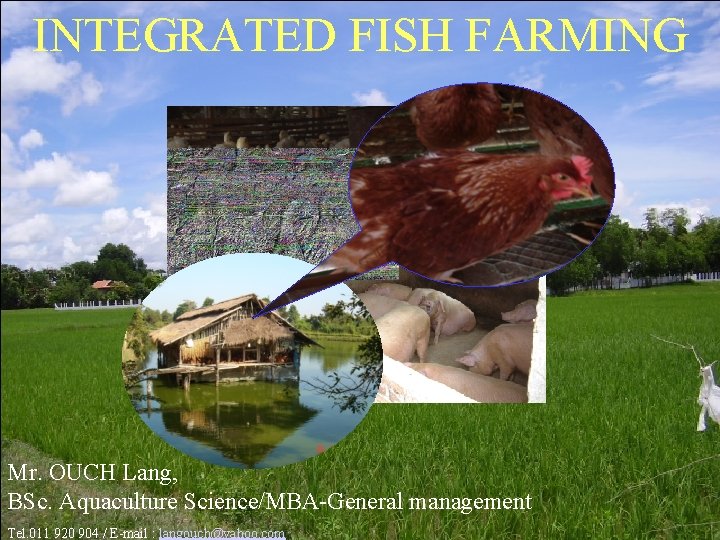
INTEGRATED FISH FARMING Mr. OUCH Lang, BSc. Aquaculture Science/MBA-General management Tel. 011 920 904 / E-mail : langouch@yahoo. com
What is integrated fish farming ?

Integrated Fish Farming Is a traditional ecological agriculture production mode with fishery as main activity Tourism er z li FISHERY Food fish Seed production Fingerling e ur Po n an d /M sil t d ed e F /F e Fe ti r e Market Product Processing Crop Production Economic crop Green fodder Grain Feed Fertilizer Animal Husbandry Aquatic animal Livestock Poultry
NECESSITY OF INTEGRATION AQUACULTURE WITH OTHER AGRICULTURE SECTORS
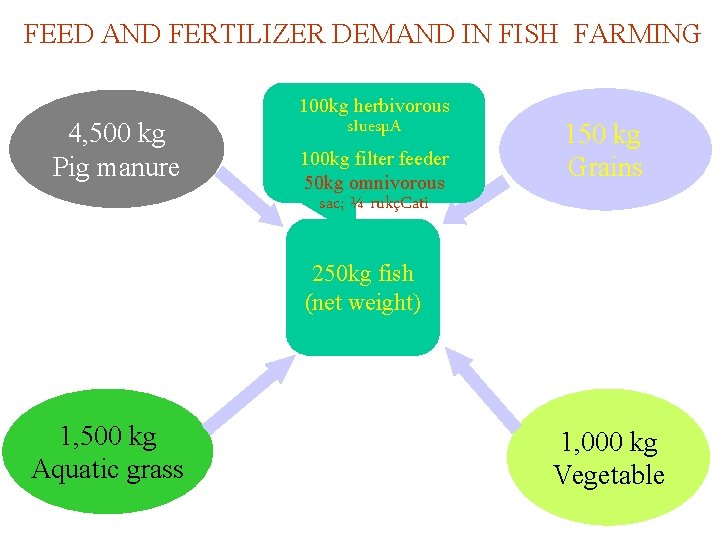
FEED AND FERTILIZER DEMAND IN FISH FARMING 100 kg herbivorous 4, 500 kg Pig manure s. IuesµA 100 kg filter feeder 50 kg omnivorous 150 kg Grains sac; ¼ rukçCati 250 kg fish (net weight) 1, 500 kg Aquatic grass 1, 000 kg Vegetable
THE TYPE OF ARTIFICIAL FEEDS IN AQUACULTURE § Aquatic and terrestrial plants (elephant grass, duckweed) § Aquatic animals and terrestrial-based live feeds (snail, earth worm) § Plant processing by-products (rice bran, …) § Animal processing by-products (fish meal, …) § Industrial wastes (wine and beer manufacturing) § Formulated feeds (composed several materials ) § Commercial feeds (pellet)
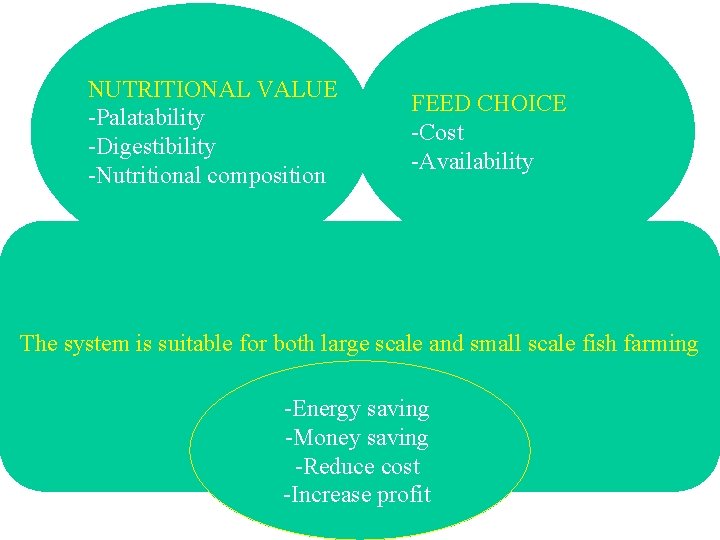
NUTRITIONAL VALUE -Palatability -Digestibility -Nutritional composition FEED CHOICE -Cost -Availability The system is suitable for both large scale and small scale fish farming -Energy saving -Money saving -Reduce cost -Increase profit
THE MAIN SYSTEMS OF INTEGRATED FISH FARMING • The system of fish-crop integration (dyke-pond) • The system of fish-livestock/poultry integration • The system of fish-livestock/poultry-crop integration • The system of Multi-level utilization
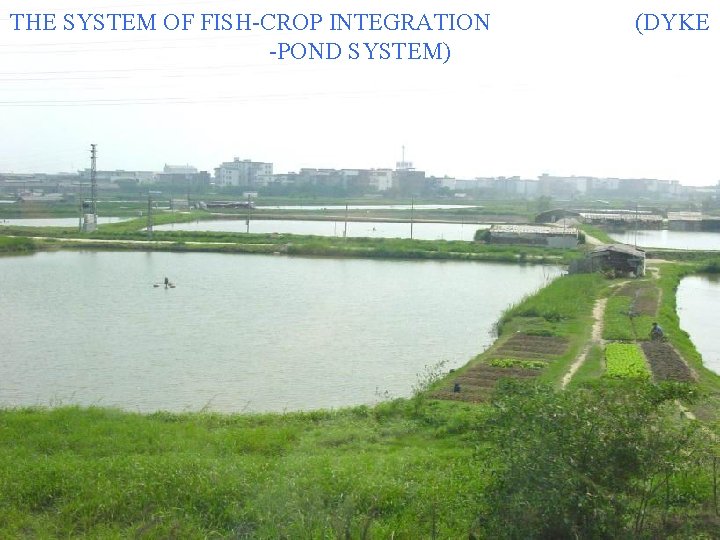
THE SYSTEM OF FISH-CROP INTEGRATION -POND SYSTEM) (DYKE
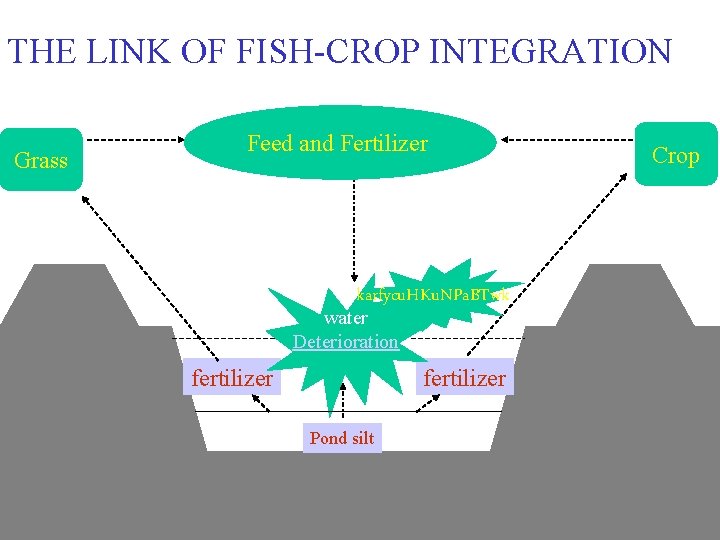
THE LINK OF FISH-CROP INTEGRATION Grass Feed and Fertilizer karfycu. HKu. NPa. BTwk water Deterioration fertilizer Pond silt Crop
FORMATION AND FUNCTION OF POND SILT
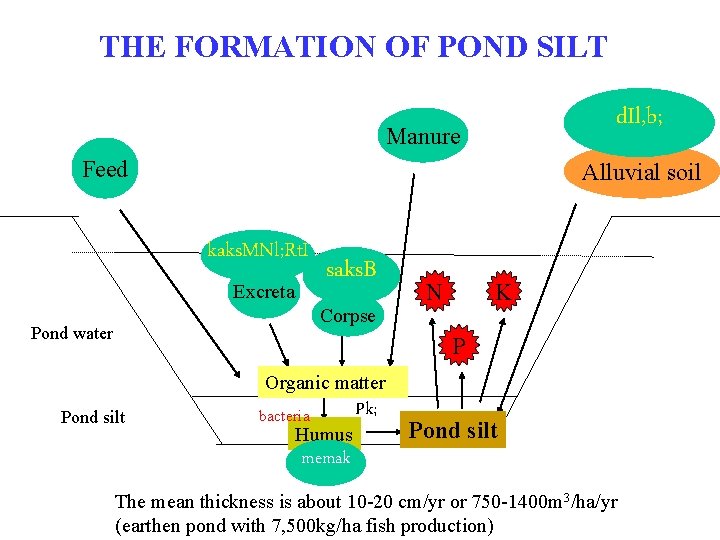
THE FORMATION OF POND SILT d. Il, b; Manure Feed Alluvial soil kaks. MNl; Rt. I Excreta saks. B Corpse Pond water N K P Organic matter Pond silt bacteria Humus Pk; Pond silt memak The mean thickness is about 10 -20 cm/yr or 750 -1400 m 3/ha/yr (earthen pond with 7, 500 kg/ha fish production)
THE EFFECT OF POND SILT ON FISH POND a. As a kind of fertilizer for fishpond water b. Consume dissolved oxygen in the fishpond, reduce p. H and create toxicity material (e. g. NH 3, H 2 S, CH 4) c. Hiding the pathogens and parasite of fish disease d. Reducing the carry capacity of fishpond
THE EFFECT OF POND SILT ON CROP CULTIVATION a. Increases the thickness of the cultivation land layer b. Improves the soil’s particle structure, strengthens its ability to absorb N, P and K and improves the soil's capacity to hold water. c. Slow-acting fertilizer, which is beneficial to later crops d. Increase the yield of crop.
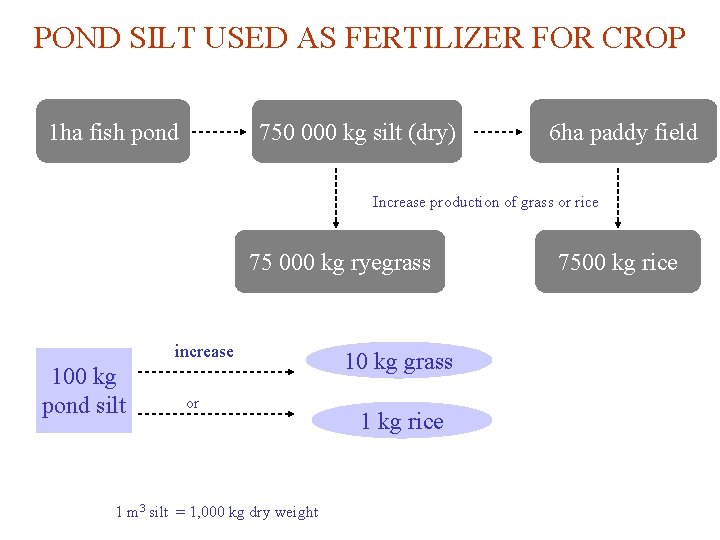
POND SILT USED AS FERTILIZER FOR CROP 1 ha fish pond 750 000 kg silt (dry) 6 ha paddy field Increase production of grass or rice 75 000 kg ryegrass increase 100 kg pond silt or 1 m 3 silt = 1, 000 kg dry weight 10 kg grass 1 kg rice 7500 kg rice
s. Um. Gr. Ku. N Edl)anykcitþTukdak; sþab ;
- Slides: 16