
Integrated Environmental Management Systems A Design for the
- Slides: 19
Integrated Environmental Management Systems: A Design for the Environment Approach Karen Chu Design for the Environment Program Economics, Exposure & Technology Division Office of Pollution Prevention & Toxics U. S. Environmental Protection Agency June 4, 2003 Slide ® U. S. Environmental Protection Agency, OPPT
Df. E’s IEMS Goals Ø To ensure that EMSs drive continuous environmental improvement § Ø To make EMSs easier § § Slide Emphasize P 2 and Df. E principles and tools Provide technical support in § Identifying & prioritizing significant environmental aspects (SEAs) § Evaluating alternatives for environmental improvement Lead Partner organizations provide common materials, mentoring, and recognition ® U. S. Environmental Protection Agency, OPPT
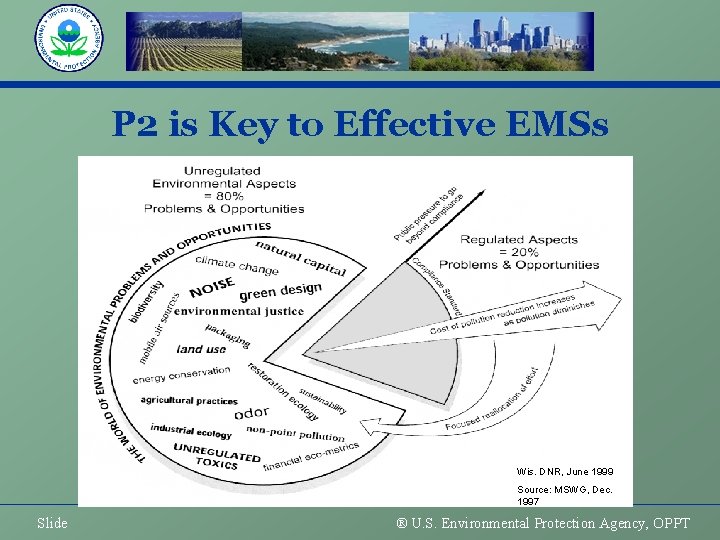
P 2 is Key to Effective EMSs Wis. DNR, June 1999 Source: MSWG, Dec. 1997 Slide ® U. S. Environmental Protection Agency, OPPT
Chemical Focus is Critical Ø 10, 000 + chemicals in commerce at any time §Fewer than 700 chemicals are regulated Ø 2, 800 high-production-volume chemicals §Complete hazard data available on 7% Ø Implications § § Slide Overwhelming need for more chemical information Sheds doubt on the presumption of safety Regulations are necessary, but limited to clear risks Organizations must become responsible for smart chemical substitution ® U. S. Environmental Protection Agency, OPPT
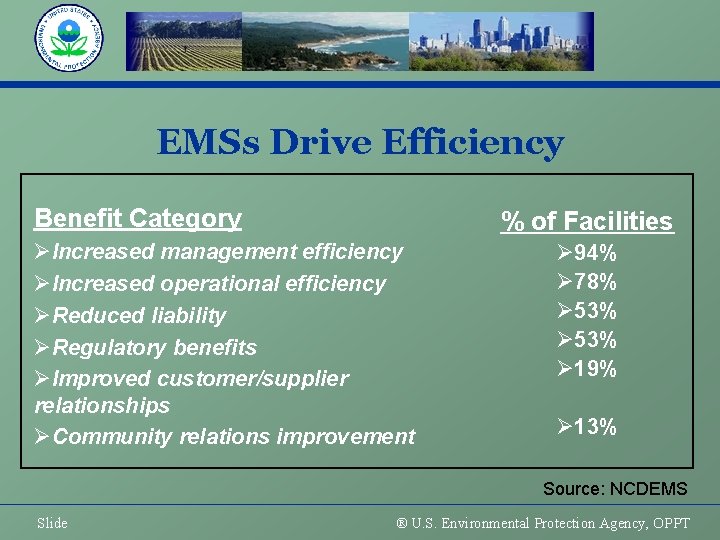
EMSs Drive Efficiency Benefit Category % of Facilities ØIncreased management efficiency ØIncreased operational efficiency ØReduced liability ØRegulatory benefits ØImproved customer/supplier relationships ØCommunity relations improvement Ø 94% Ø 78% Ø 53% Ø 19% Ø 13% Source: NCDEMS Slide ® U. S. Environmental Protection Agency, OPPT
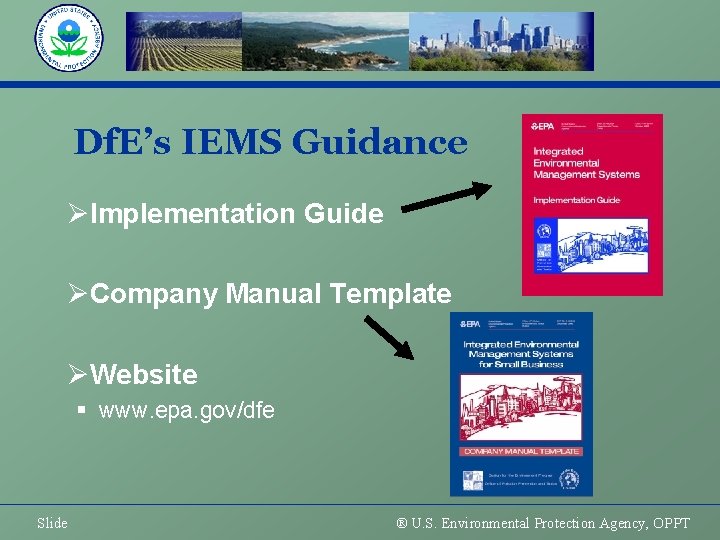
Df. E’s IEMS Guidance ØImplementation Guide ØCompany Manual Template ØWebsite § www. epa. gov/dfe Slide ® U. S. Environmental Protection Agency, OPPT
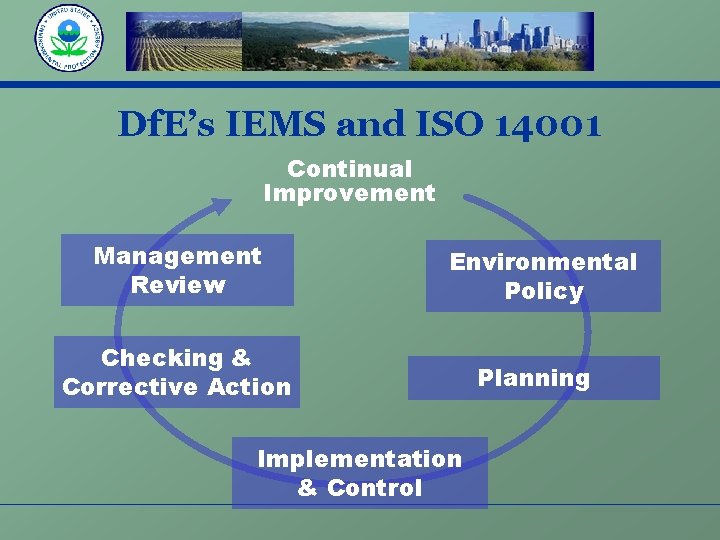
Df. E’s IEMS and ISO 14001 Continual Improvement Management Review Environmental Policy Checking & Corrective Action Implementation & Control Planning
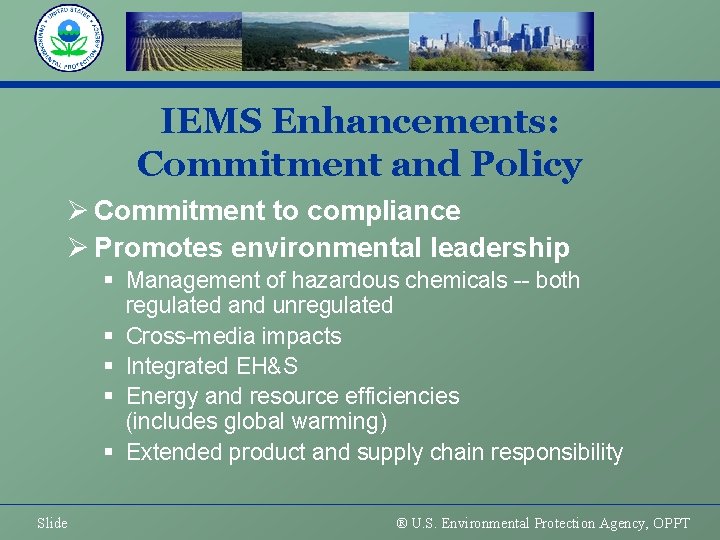
IEMS Enhancements: Commitment and Policy Ø Commitment to compliance Ø Promotes environmental leadership § Management of hazardous chemicals -- both regulated and unregulated § Cross-media impacts § Integrated EH&S § Energy and resource efficiencies (includes global warming) § Extended product and supply chain responsibility Slide ® U. S. Environmental Protection Agency, OPPT
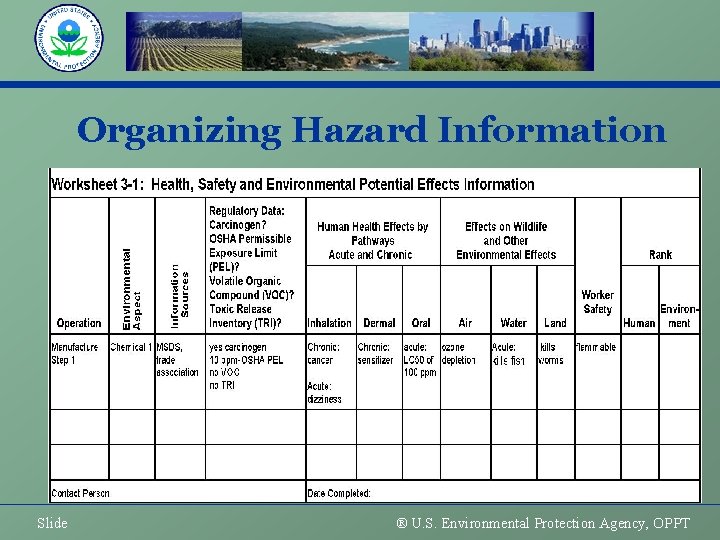
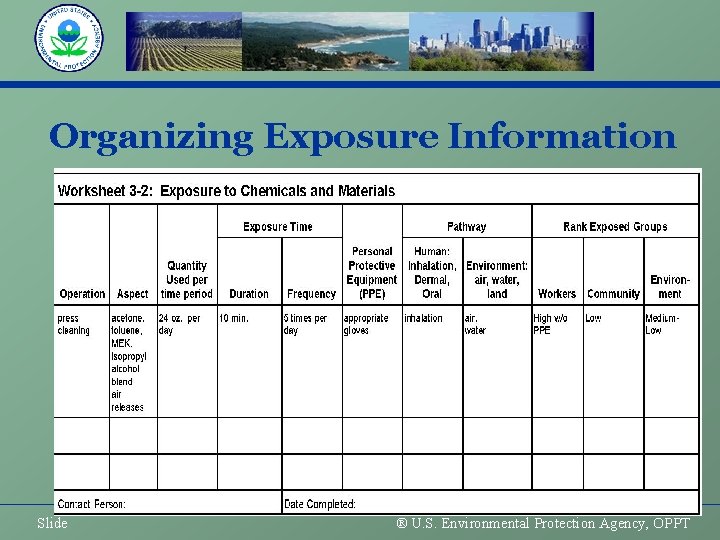
IEMS Enhancements: Planning ØDf. E gaps analysis ØDetailed process mapping of materials, chemicals, and resource flows ØIdentifying company impacts on environment § Identify and profile chemicals ØUse risk concerns to help select SEAs and set objectives ØConduct root cause analysis for each SEA Slide ® U. S. Environmental Protection Agency, OPPT
Determining Significance of Environmental Aspects Slide ® U. S. Environmental Protection Agency, OPPT
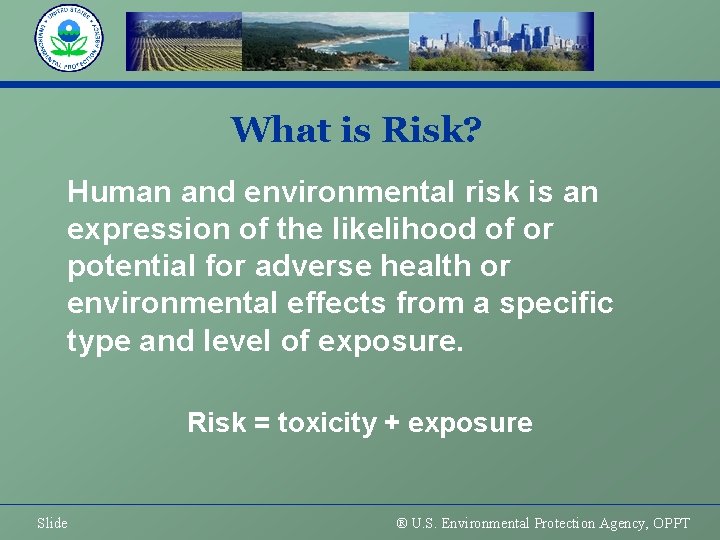
What is Risk? Human and environmental risk is an expression of the likelihood of or potential for adverse health or environmental effects from a specific type and level of exposure. Risk = toxicity + exposure Slide ® U. S. Environmental Protection Agency, OPPT
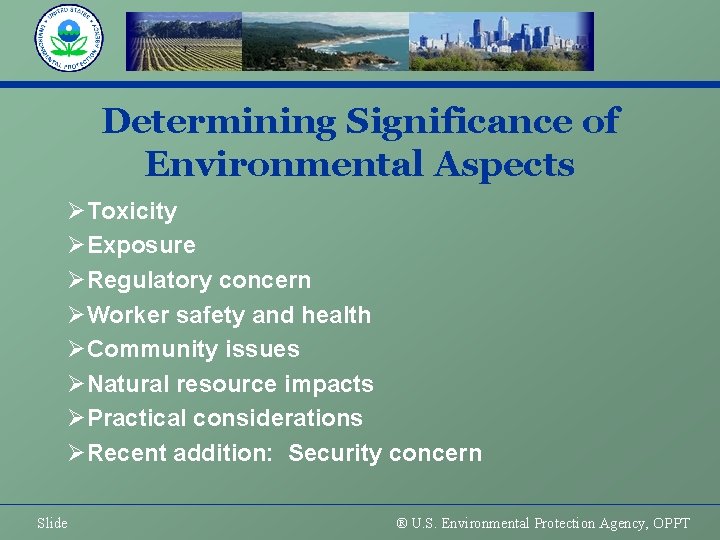
Determining Significance of Environmental Aspects ØToxicity ØExposure ØRegulatory concern ØWorker safety and health ØCommunity issues ØNatural resource impacts ØPractical considerations ØRecent addition: Security concern Slide ® U. S. Environmental Protection Agency, OPPT
Organizing Hazard Information Slide ® U. S. Environmental Protection Agency, OPPT
Organizing Exposure Information Slide ® U. S. Environmental Protection Agency, OPPT
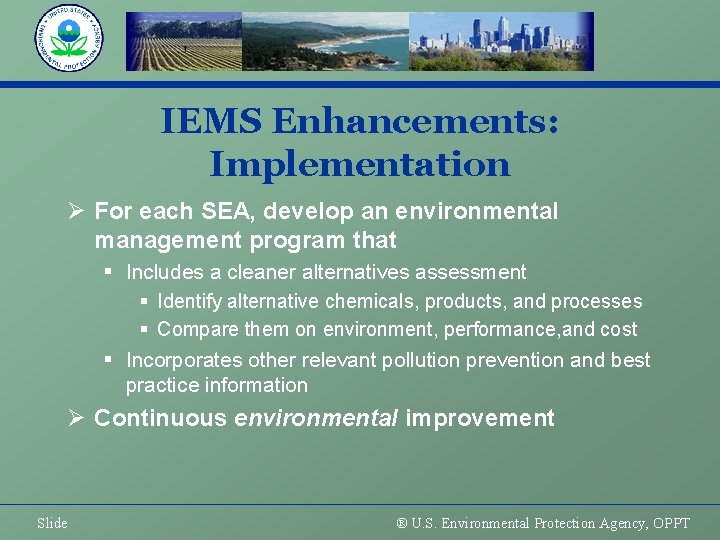
IEMS Enhancements: Implementation Ø For each SEA, develop an environmental management program that § Includes a cleaner alternatives assessment § Identify alternative chemicals, products, and processes § Compare them on environment, performance, and cost § Incorporates other relevant pollution prevention and best practice information Ø Continuous environmental improvement Slide ® U. S. Environmental Protection Agency, OPPT
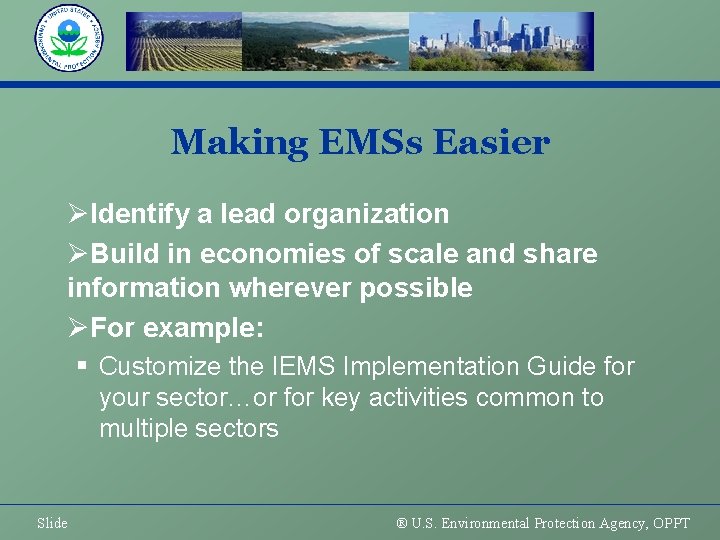
Making EMSs Easier ØIdentify a lead organization ØBuild in economies of scale and share information wherever possible ØFor example: § Customize the IEMS Implementation Guide for your sector…or for key activities common to multiple sectors Slide ® U. S. Environmental Protection Agency, OPPT
Making EMSs Easier § Develop a detailed process map showing typical processes § Identify environmental aspects typical to sector/activity § Develop database of chemical information § Hold workshops § Mentor § Provide regulatory baseline, health and safety, and chemical process information Slide ® U. S. Environmental Protection Agency, OPPT
Making EMSs Easier § Conduct cleaner alternatives assessment for common SEAs § Compile pollution prevention checklists, best practice information § Identify environmentally preferable products § Encourage participation in voluntary programs (such as Energy Star) that have technical assistance on common environmental aspects Slide ® U. S. Environmental Protection Agency, OPPT
“” “…It has been encouraging to see how much a ‘cooperative spirit’ can accomplish. ” Leif Anderson, Vice-President, Anderson Chemical Company Slide ® U. S. Environmental Protection Agency, OPPT