
Integrated Disease Surveillance and Response a strategy for


- Slides: 19
Integrated Disease Surveillance and Response: a strategy for strengthening national public health surveillance systems DPHSWD Resident Advisor Orientation Helen N. Perry, Ph. D IDSR Team Lead Public Health Systems Strengthening Branch August 8, 2011
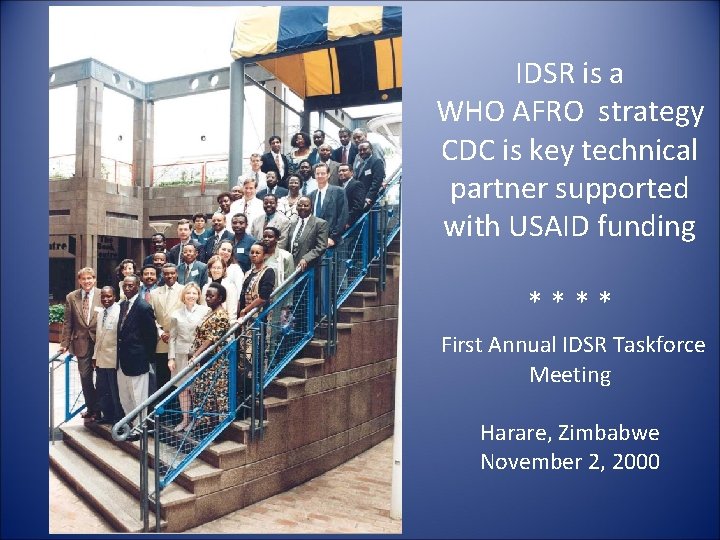
IDSR is a WHO AFRO strategy CDC is key technical partner supported with USAID funding * * First Annual IDSR Taskforce Meeting Harare, Zimbabwe November 2, 2000
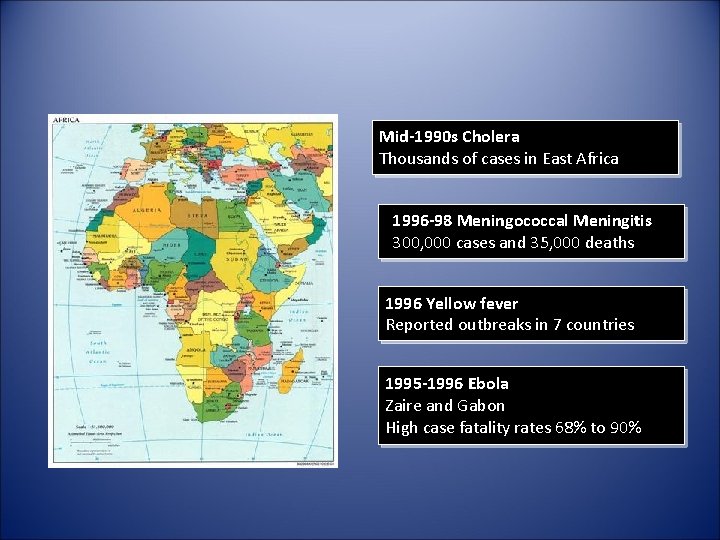
Mid-1990 s Cholera Thousands of cases in East Africa 1996 -98 Meningococcal Meningitis 300, 000 cases and 35, 000 deaths 1996 Yellow fever Reported outbreaks in 7 countries 1995 -1996 Ebola Zaire and Gabon High case fatality rates 68% to 90%
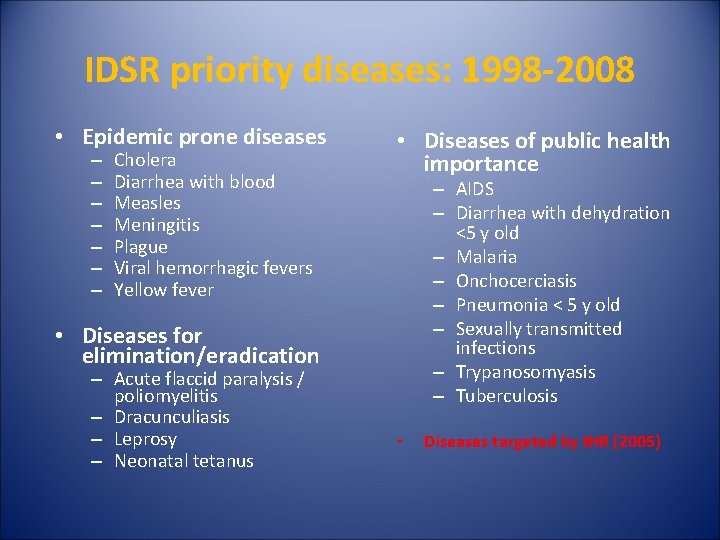
IDSR priority diseases: 1998 -2008 • Epidemic prone diseases – – – – Cholera Diarrhea with blood Measles Meningitis Plague Viral hemorrhagic fevers Yellow fever • Diseases of public health importance – AIDS – Diarrhea with dehydration <5 y old – Malaria – Onchocerciasis – Pneumonia < 5 y old – Sexually transmitted infections – Trypanosomyasis – Tuberculosis • Diseases for elimination/eradication – Acute flaccid paralysis / poliomyelitis – Dracunculiasis – Leprosy – Neonatal tetanus • Diseases targeted by IHR (2005)
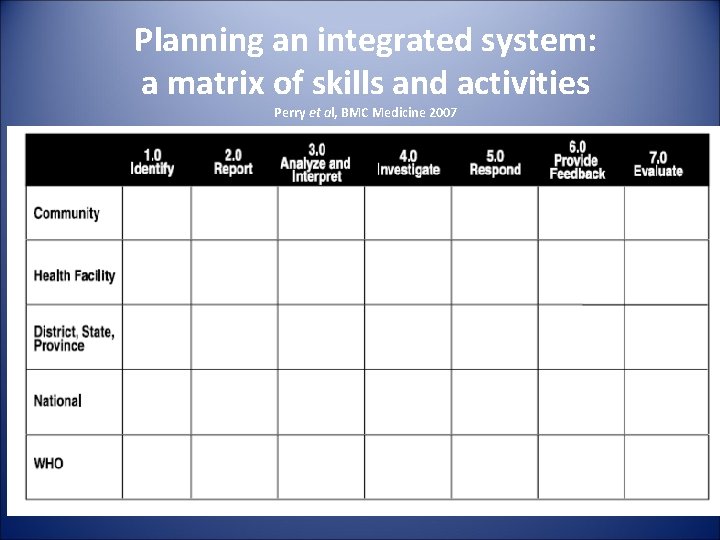
Planning an integrated system: a matrix of skills and activities Perry et al, BMC Medicine 2007
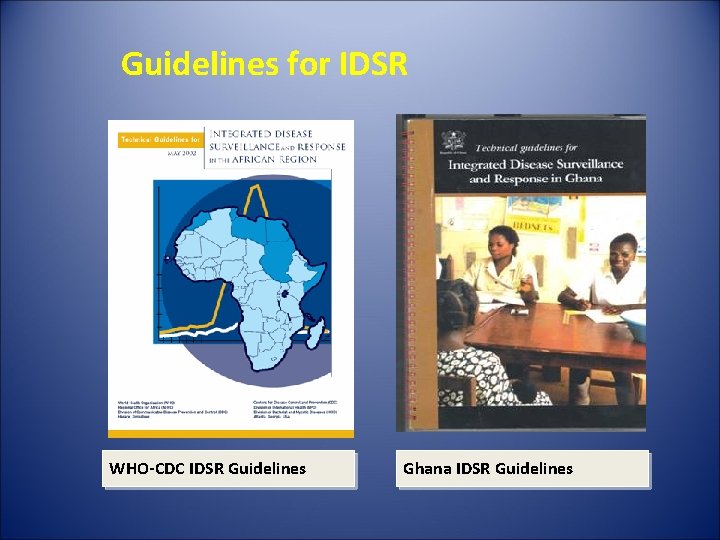
Guidelines for IDSR WHO-CDC IDSR Guidelines Ghana IDSR Guidelines
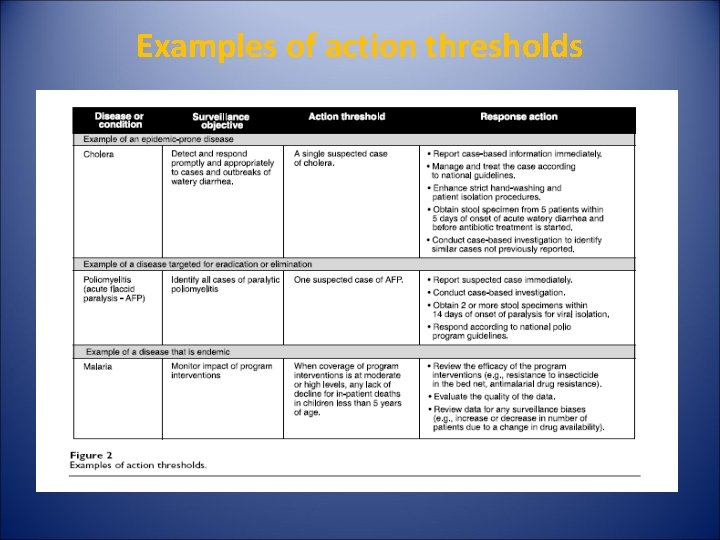
Examples of action thresholds
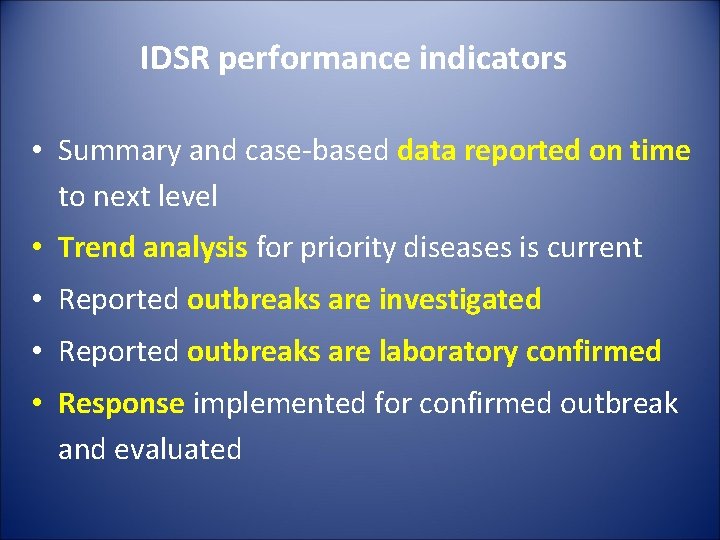
IDSR performance indicators • Summary and case-based data reported on time to next level • Trend analysis for priority diseases is current • Reported outbreaks are investigated • Reported outbreaks are laboratory confirmed • Response implemented for confirmed outbreak and evaluated
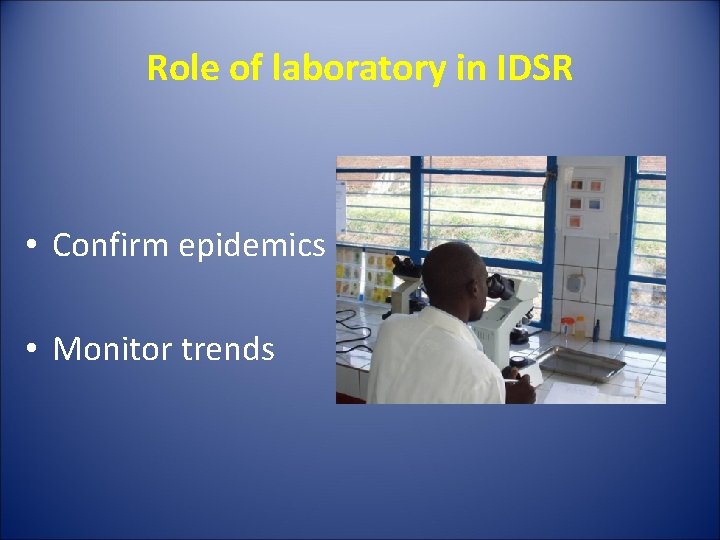
Role of laboratory in IDSR • Confirm epidemics • Monitor trends
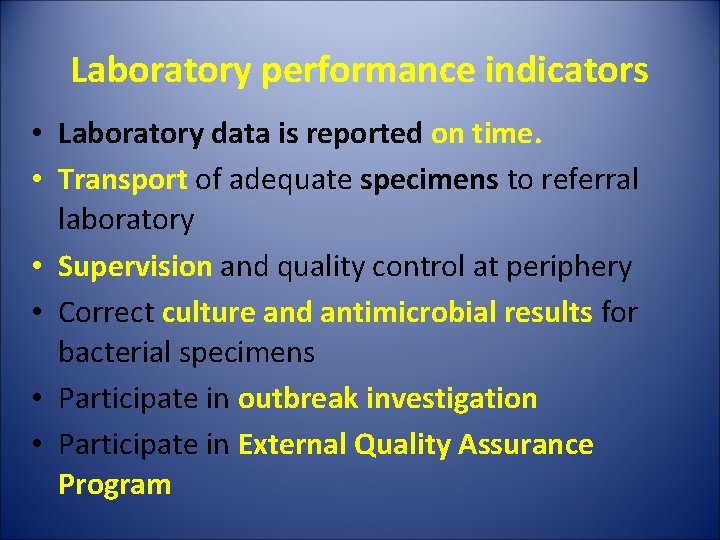
Laboratory performance indicators • Laboratory data is reported on time. • Transport of adequate specimens to referral laboratory • Supervision and quality control at periphery • Correct culture and antimicrobial results for bacterial specimens • Participate in outbreak investigation • Participate in External Quality Assurance Program
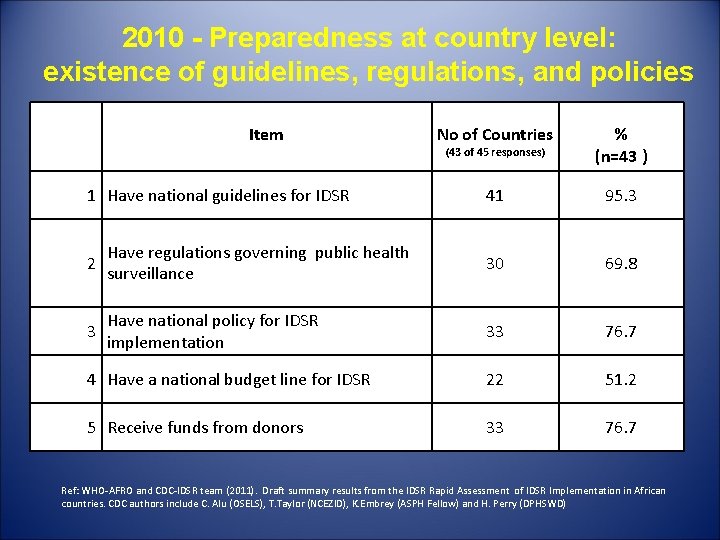
2010 - Preparedness at country level: existence of guidelines, regulations, and policies Item 1 Have national guidelines for IDSR No of Countries % (n=43 ) 41 95. 3 (43 of 45 responses) 2 Have regulations governing public health surveillance 30 69. 8 3 Have national policy for IDSR implementation 33 76. 7 4 Have a national budget line for IDSR 22 51. 2 5 Receive funds from donors 33 76. 7 Ref: WHO-AFRO and CDC-IDSR team (2011). Draft summary results from the IDSR Rapid Assessment of IDSR Implementation in African countries. CDC authors include C. Alu (OSELS), T. Taylor (NCEZID), K. Embrey (ASPH Fellow) and H. Perry (DPHSWD)
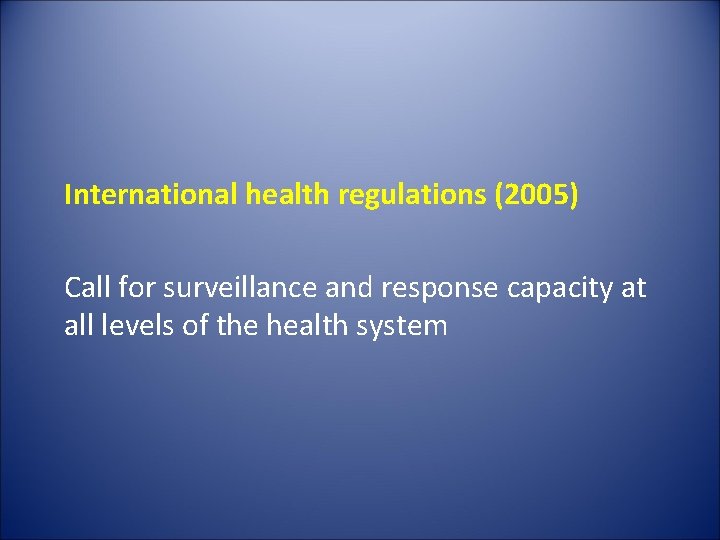
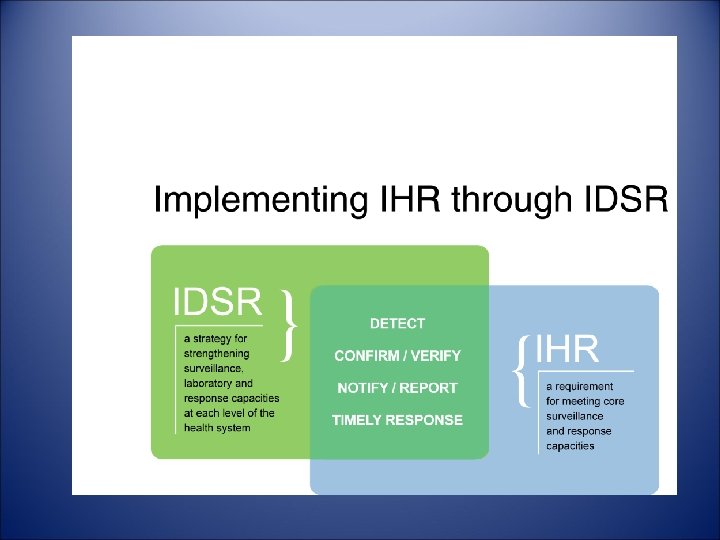
International health regulations (2005) Call for surveillance and response capacity at all levels of the health system
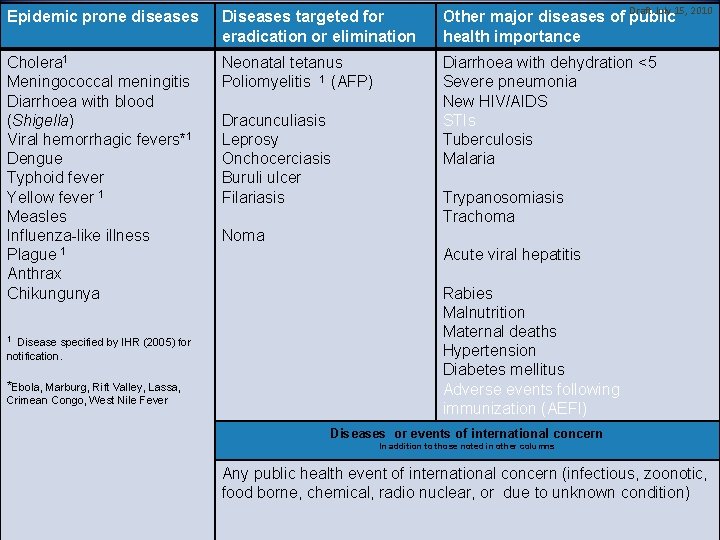
Draft July 15, 2010 Epidemic prone diseases Diseases targeted for eradication or elimination Other major diseases of public health importance Cholera 1 Meningococcal meningitis Diarrhoea with blood (Shigella) Viral hemorrhagic fevers*1 Dengue Typhoid fever Yellow fever 1 Measles Influenza-like illness Plague 1 Anthrax Chikungunya Neonatal tetanus Poliomyelitis 1 (AFP) Diarrhoea with dehydration <5 Severe pneumonia New HIV/AIDS STIs Tuberculosis Malaria 1 Disease specified by IHR (2005) for notification. *Ebola, Marburg, Rift Valley, Lassa, Crimean Congo, West Nile Fever ( Dracunculiasis Leprosy Onchocerciasis Buruli ulcer Filariasis Trypanosomiasis Trachoma Noma Acute viral hepatitis Rabies Malnutrition Maternal deaths Hypertension Diabetes mellitus Adverse events following immunization (AEFI) Diseases or events of international concern In addition to those noted in other columns Any public health event of international concern (infectious, zoonotic, food borne, chemical, radio nuclear, or due to unknown condition)
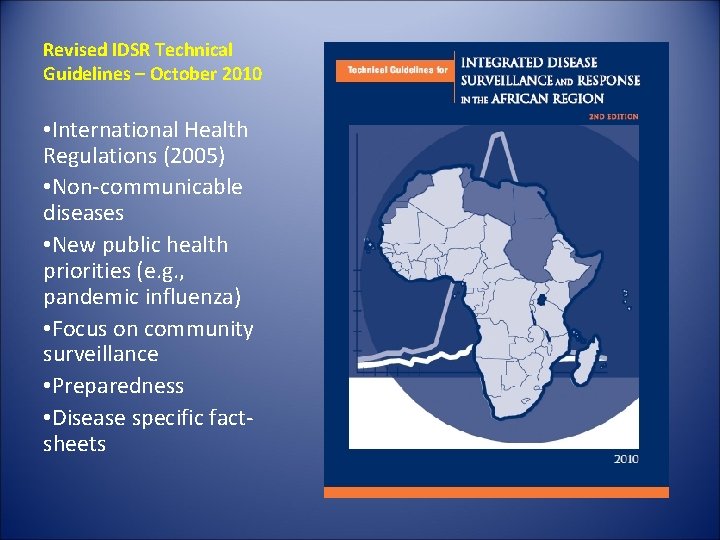
Revised IDSR Technical Guidelines – October 2010 • International Health Regulations (2005) • Non-communicable diseases • New public health priorities (e. g. , pandemic influenza) • Focus on community surveillance • Preparedness • Disease specific factsheets
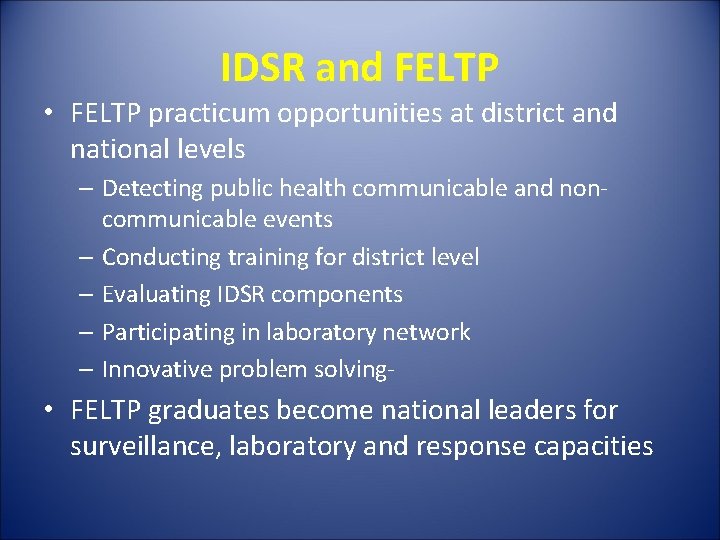
IDSR and FELTP • FELTP practicum opportunities at district and national levels – Detecting public health communicable and noncommunicable events – Conducting training for district level – Evaluating IDSR components – Participating in laboratory network – Innovative problem solving- • FELTP graduates become national leaders for surveillance, laboratory and response capacities
Summary • IDSR is a framework for strengthening public health surveillance and response at all levels of the health system • IDSR and FELTP work together to reduce illness, death and disability and contribute to healthier African and global communities
THANK YOU IDSR PARTNERS WHO-AFRO CDC-Atlanta USAID Africa Bureau Africa 2010 WHO ISTs Ministries of Health