
Integrated Cancer Treatment and Research Centre Wagholi Pune
- Slides: 23
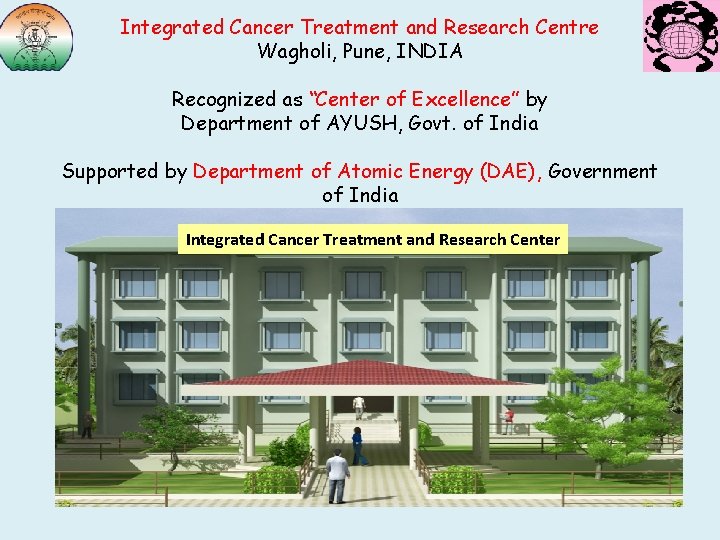
Integrated Cancer Treatment and Research Centre Wagholi, Pune, INDIA Recognized as “Center of Excellence” by Department of AYUSH, Govt. of India Supported by Department of Atomic Energy (DAE), Government of India Integrated Cancer Treatment and Research Center
Effectiveness of Ayurvedic treatment in alleviating side-effects of radiotherapy in oropharyngeal cancer patients and its relationship with improvement in immune status of the host Vineeta Deshmukh, Sudha Gangal, Arvind Kulkarni, Shubha Chiplunkar*, Shweta Gujar, Trupti Pradhan*, Shriram Agashe, Rupali Gaikwad, Sampat Navale and Sadanand Sardeshmukh Integrated Cancer Treatment and Research Center, Pune, and * Advanced Center for Treatment Research and Education in Cancer (ACTREC), Tata Memorial Center, Navi Mumbai
Introduction § Ayurveda, an ancient Indian system of medicine is practised even today for various illnesses especially those which are caused by reduced immune responses § Recently combinations of Ayurvedic drugs are recommended for cancer as an adjunct therapy § Non-toxicity of Ayurvedic drug combinations makes the drugs acceptable by patients § Oral cancer ranks in the top three of all cancers in India with an alarming increase in younger age. High incidence is associated with use of smokeless tobacco § The preference of treatment for oropharyngeal cancers is surgery followed by radiotherapy and / or chemotherapy depending upon grade and stage of disease
Introduction § Side effects of Radiotherapy often affect immune system and compromise quality of life of cancer patient § Side effects are also reflected in Quality of life as the treatment hampers intake of food § This major concern is being addressed worldwide § We have used selected Ayurvedic medicines, known to act on pathological conditions similar to side-effects of radiotherapy, as per Ayurvedic texts § In the first part of this study we have clinically assessed the efficacy of Ayurvedic drugs in alleviating side effects of radiotherapy § In the second part, we have assessed the possible improvement in immune status of these patients
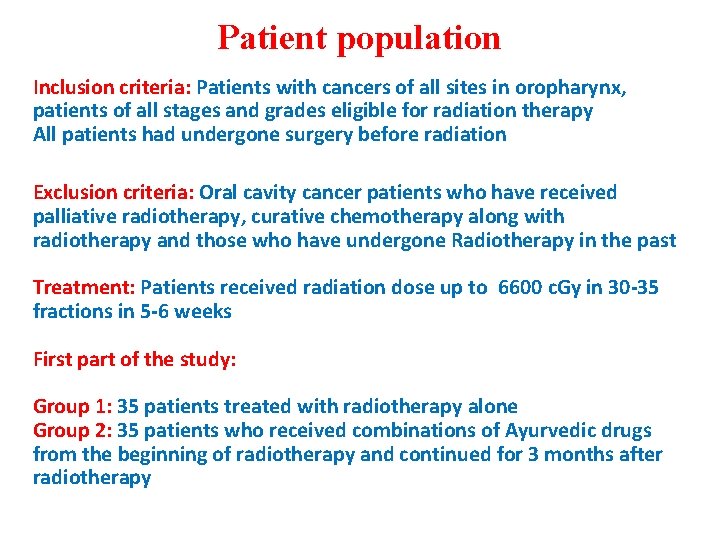
Patient population Inclusion criteria: Patients with cancers of all sites in oropharynx, patients of all stages and grades eligible for radiation therapy All patients had undergone surgery before radiation Exclusion criteria: Oral cavity cancer patients who have received palliative radiotherapy, curative chemotherapy along with radiotherapy and those who have undergone Radiotherapy in the past Treatment: Patients received radiation dose up to 6600 c. Gy in 30 -35 fractions in 5 -6 weeks First part of the study: Group 1: 35 patients treated with radiotherapy alone Group 2: 35 patients who received combinations of Ayurvedic drugs from the beginning of radiotherapy and continued for 3 months after radiotherapy
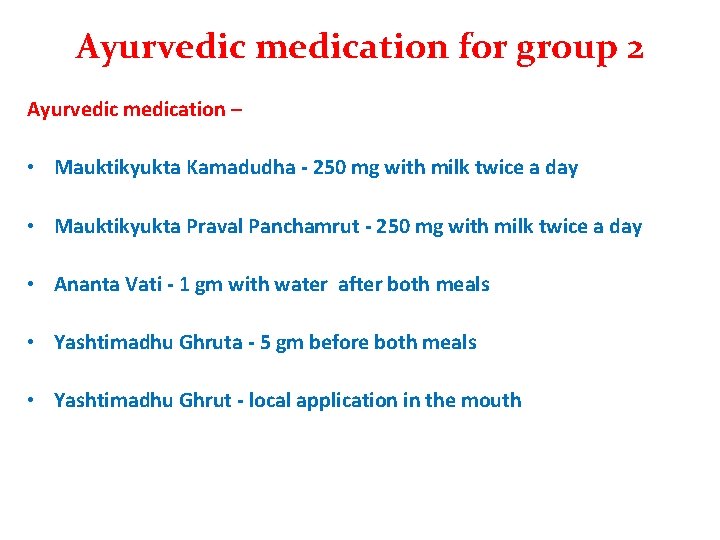
Ayurvedic medication for group 2 Ayurvedic medication – • Mauktikyukta Kamadudha - 250 mg with milk twice a day • Mauktikyukta Praval Panchamrut - 250 mg with milk twice a day • Ananta Vati - 1 gm with water after both meals • Yashtimadhu Ghruta - 5 gm before both meals • Yashtimadhu Ghrut - local application in the mouth
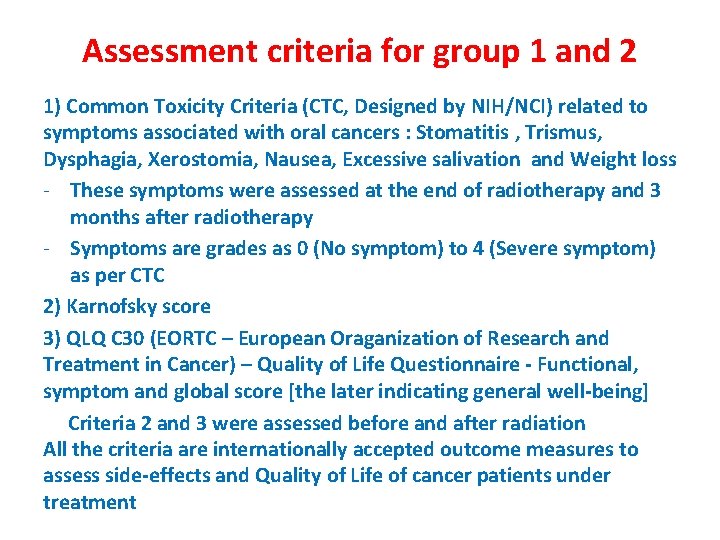
Assessment criteria for group 1 and 2 1) Common Toxicity Criteria (CTC, Designed by NIH/NCI) related to symptoms associated with oral cancers : Stomatitis , Trismus, Dysphagia, Xerostomia, Nausea, Excessive salivation and Weight loss - These symptoms were assessed at the end of radiotherapy and 3 months after radiotherapy - Symptoms are grades as 0 (No symptom) to 4 (Severe symptom) as per CTC 2) Karnofsky score 3) QLQ C 30 (EORTC – European Oraganization of Research and Treatment in Cancer) – Quality of Life Questionnaire - Functional, symptom and global score [the later indicating general well-being] Criteria 2 and 3 were assessed before and after radiation All the criteria are internationally accepted outcome measures to assess side-effects and Quality of Life of cancer patients under treatment
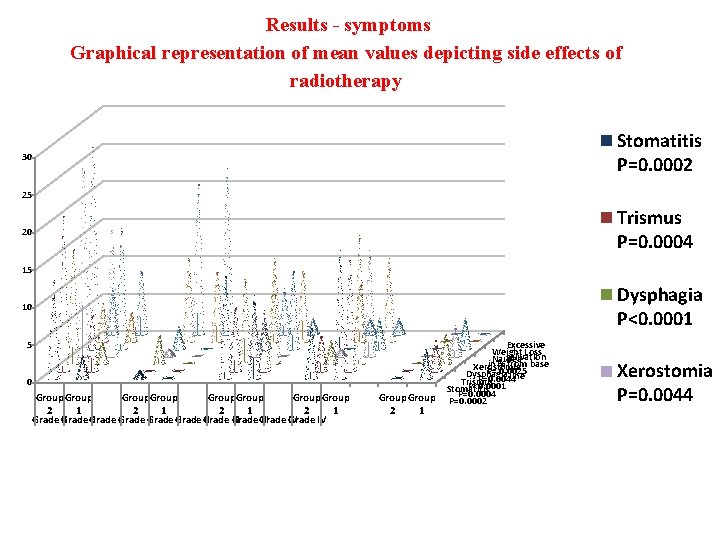
Results - symptoms Graphical representation of mean values depicting side effects of radiotherapy Stomatitis P=0. 0002 30 25 Trismus P=0. 0004 20 15 Dysphagia P<0. 0001 10 5 0 Group Group 2 1 2 1 Grade 0 Grade 1 Grade III Grade IV Excessive Weight Loss salivation Nausea in % from base Xerostomia P= 0. 0025 Dysphagia line P=0. 0044 Trismus P<0. 0001 Stomatitis P=0. 0004 Group P=0. 0002 2 1 Xerostomia P=0. 0044
Graphical representation of mean values (35 samples) depicting Karnofsky score A – Before Radiotherapy , B – After Radiotherapy
Graphical representation of mean values depicting functional, symptom and global score of QLQ A – Before Radiotherapy , B – After Radiotherapy
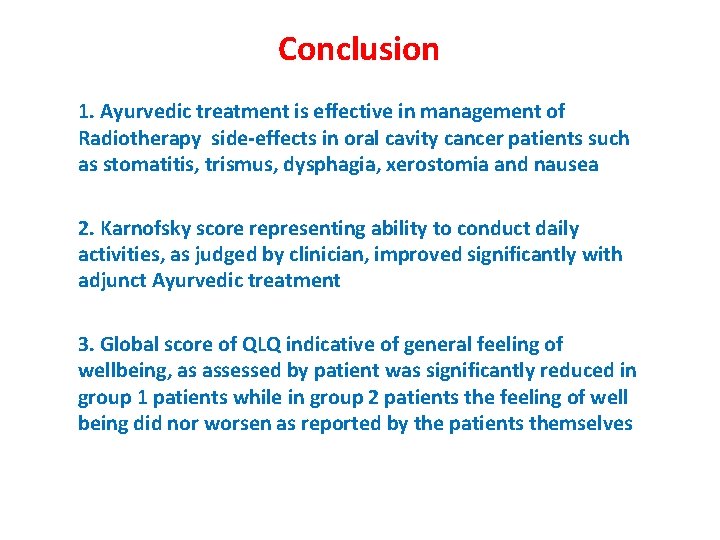
Conclusion 1. Ayurvedic treatment is effective in management of Radiotherapy side-effects in oral cavity cancer patients such as stomatitis, trismus, dysphagia, xerostomia and nausea 2. Karnofsky score representing ability to conduct daily activities, as judged by clinician, improved significantly with adjunct Ayurvedic treatment 3. Global score of QLQ indicative of general feeling of wellbeing, as assessed by patient was significantly reduced in group 1 patients while in group 2 patients the feeling of well being did nor worsen as reported by the patients themselves
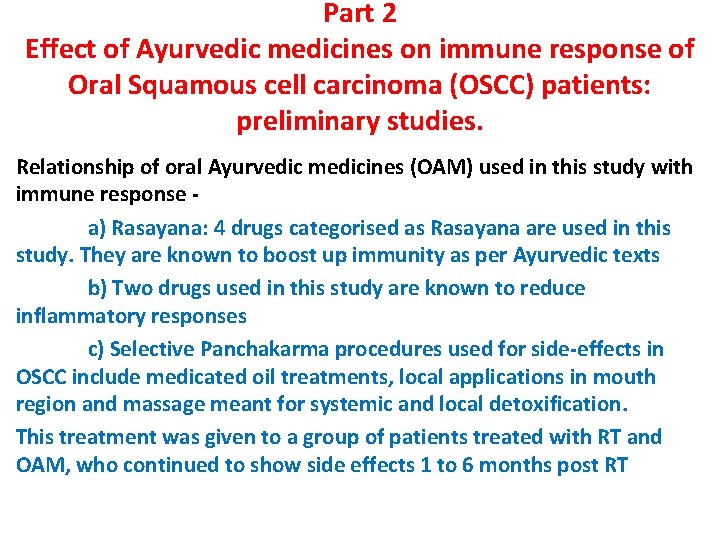
Part 2 Effect of Ayurvedic medicines on immune response of Oral Squamous cell carcinoma (OSCC) patients: preliminary studies. Relationship of oral Ayurvedic medicines (OAM) used in this study with immune response a) Rasayana: 4 drugs categorised as Rasayana are used in this study. They are known to boost up immunity as per Ayurvedic texts b) Two drugs used in this study are known to reduce inflammatory responses c) Selective Panchakarma procedures used for side-effects in OSCC include medicated oil treatments, local applications in mouth region and massage meant for systemic and local detoxification. This treatment was given to a group of patients treated with RT and OAM, who continued to show side effects 1 to 6 months post RT
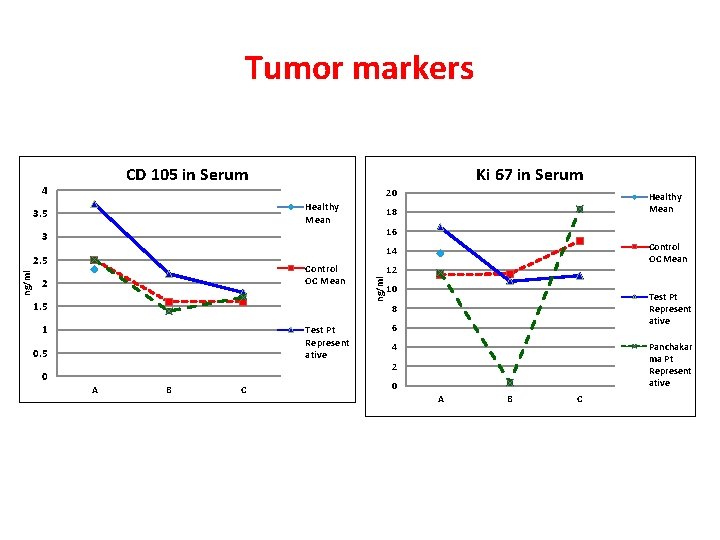
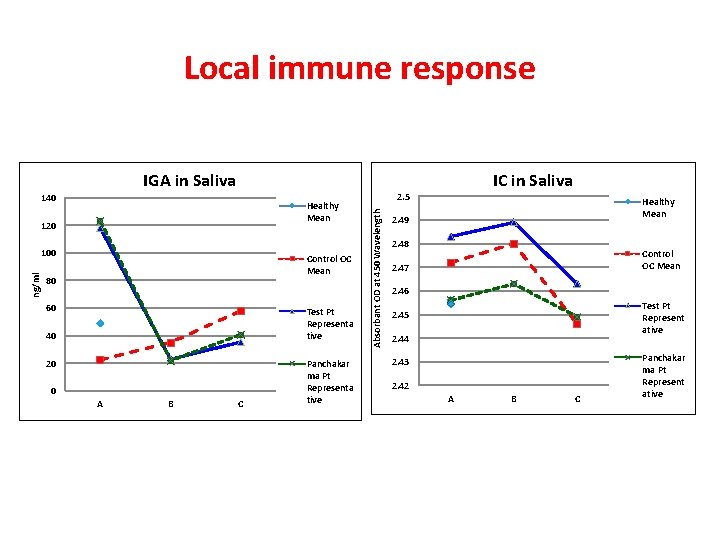
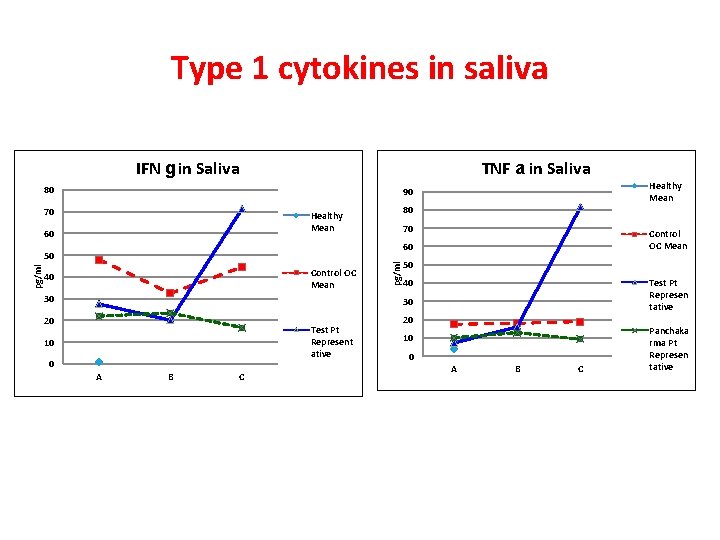
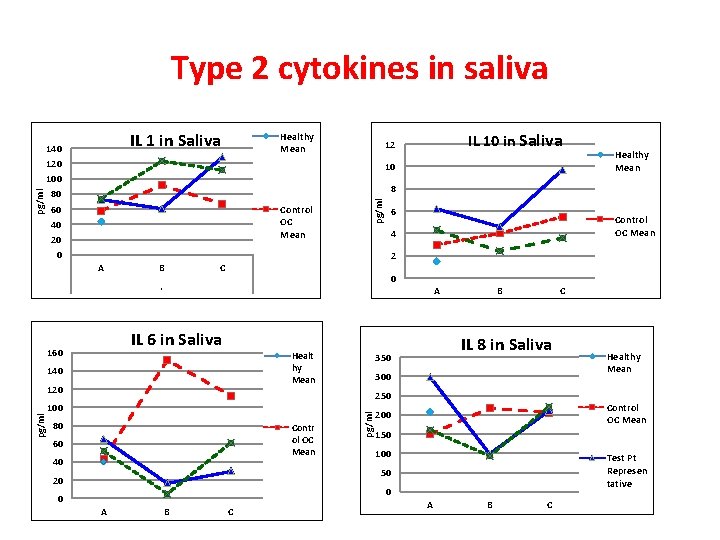
Immunological criteria assessed 1) Immunophenotyping - Total T & B cells and T cells subsets in PBMC and mitogen induced proliferation of T and B cells 2) Markers of tumor load: CD 105 and Ki 67 3) Assessment of cytokines carried out in saliva and serum, local responses were indicated by salivary samples, therefore data presented will be on salivary samples Type 1 cytokines: IFN-γ and TNF-α Type 2 cytokines: IL-1 β, IL-6, IL-8 and IL-10, indicative of inflammatory status 4) Immune complexes and Ig. A in saliva indicative of local immune response.
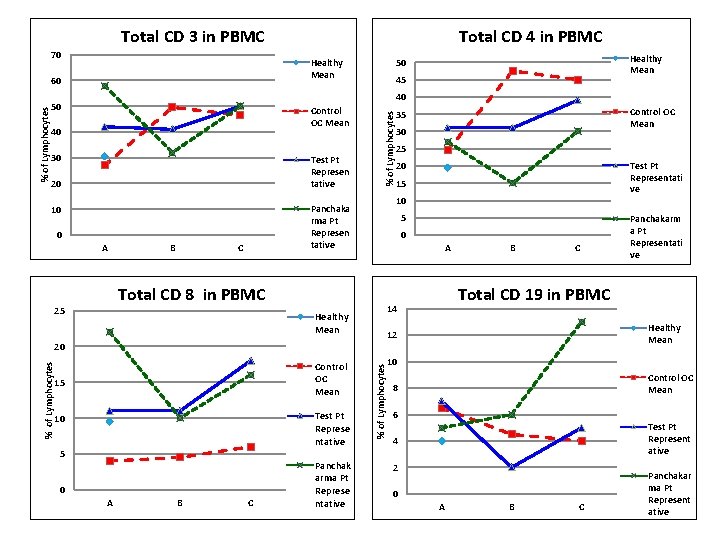
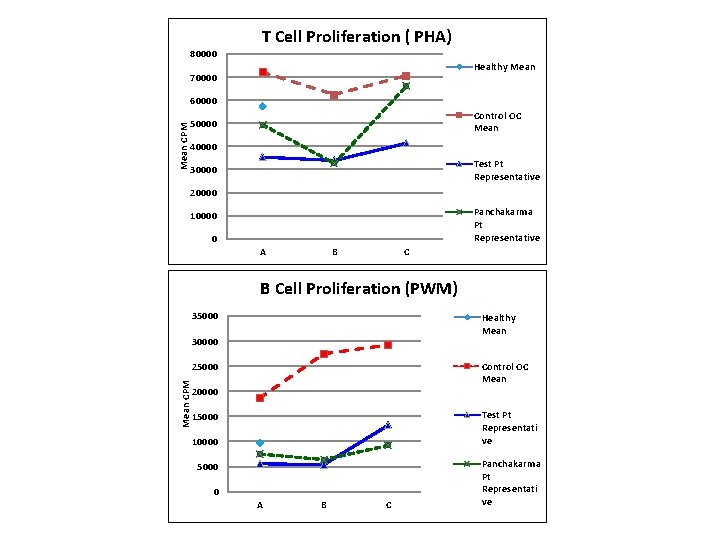
Grouping of patients • Major limitation of the study: 1. small sample size. • Group 1 a – controls: 1 normal healthy donor, 1 chewer with mild leukoplakia 1 chewer with severe leukoplakia • Group 1 b – OSCC patients treated with RT alone – 2 • Group 2 a – OSCC patients treated with RT and OAM – 5 • Group 2 b – OSCC patients treated with RT + OAM + Panchakarma -6 2. Large variation in test results in individual samples in 2 a and 2 b, statistical analysis was therefore not conclusive although pattern of response was same • Time point of assessment 2 a: A - beginning of RT + OAM, B – at the end of RT + OAM, C – 1 month post RT + OAM 2 b: A – beginning of Panchakarma (OAM continued), B – at the end of Panchakarma (OAM continued), C – 1 month post Panchakarma (OAM continued)
Total CD 3 in PBMC 70 Healthy Mean 60 45 40 50 Control OC Mean 40 30 Test Pt Represen tative 20 0 A B C 5 A B C Panchak arma Pt Represe ntative 15 B C Panchakarm a Pt Representati ve Total CD 19 in PBMC 14 Healthy Mean 12 % of Lymphocytes Test Pt Represe ntative 10 Test Pt Representati ve 20 A 20 15 25 0 Healthy Mean Control OC Mean 30 5 Total CD 8 in PBMC 25 Control OC Mean 35 10 Panchaka rma Pt Represen tative 10 0 Healthy Mean 50 % of Lymphocytes Total CD 4 in PBMC 10 Control OC Mean 8 6 Test Pt Represent ative 4 2 0 A B C Panchakar ma Pt Represent ative
T Cell Proliferation ( PHA) 80000 Healthy Mean 70000 Mean CPM 60000 Control OC Mean 50000 40000 Test Pt Representative 30000 20000 Panchakarma Pt Representative 10000 0 A B Cell Proliferation (PWM) 35000 Healthy Mean 30000 Control OC Mean CPM 25000 20000 Test Pt Representati ve 15000 10000 5000 0 A B C Panchakarma Pt Representati ve
Tumor markers CD 105 in Serum 4 Ki 67 in Serum 20 Healthy Mean 3. 5 16 3 Control OC Mean 2 1. 5 12 ng/ml Control OC Mean 14 2. 5 10 Test Pt Represent ative 8 1 Test Pt Represent ative 0. 5 0 Healthy Mean 18 A B C 6 Panchakar ma Pt Represent ative 4 2 0 A B C
Local immune response IGA in Saliva Healthy Mean 120 ng/ml 100 Control OC Mean 80 60 Test Pt Representa tive 40 20 0 A B C Panchakar ma Pt Representa tive Absorbant OD at 450 Wavelength 140 IC in Saliva 2. 5 Healthy Mean 2. 49 2. 48 Control OC Mean 2. 47 2. 46 Test Pt Represent ative 2. 45 2. 44 2. 43 2. 42 A B C Panchakar ma Pt Represent ative
Type 1 cytokines in saliva IFN g in Saliva TNF a in Saliva 80 70 80 Healthy Mean 60 70 Control OC Mean 60 Control OC Mean 40 30 pg/ml 50 pg/ml Healthy Mean 90 50 Test Pt Represen tative 40 30 20 Test Pt Represent ative 10 0 A B C 20 10 0 A B C Panchaka rma Pt Represen tative
140 120 100 80 60 40 20 0 IL 1 in Saliva Healthy Mean 10 Healthy Mean 8 Control OC Mean A B Control OC Mean 2 C 0 IL 6 in Saliva 160 6 4 . Healt hy Mean 140 120 A B C IL 8 in Saliva 350 300 250 100 80 Contr ol OC Mean 60 40 pg/ml IL 10 in Saliva 12 pg/ml Type 2 cytokines in saliva Control OC Mean 200 150 100 Test Pt Represen tative 50 20 0 0 A B C Healthy Mean A B C
Tentative conclusion Based on the preliminary data, the trends indicate 1) Local immune response in saliva shows better association with treatment outcome 2) Immune recovery in the form of a) phenotypes in peripheral blood b) proliferative responses in T and B cells c) oral mucosal immunity d) type 1 cytokines e) reduction in circulating tumour markers is seen in patients treated with oral administration of Ayurvedic drugs along with RT. 3) The pro inflammatory cytokines showed decrease after radiation. In both 2 a and 2 b patients this response appears to be related to Ayurvedic treatment 4) Type 1 cytokines IFN-Ƴ and TNF-α show levels initially which are increased in both 2 a and 2 b after 1 month of radiotherapy, which is perhaps indicative of polarization towards TH 1 response Further research leads require inclusion of larger cohort and extended follow-up with OAM to confirm the findings
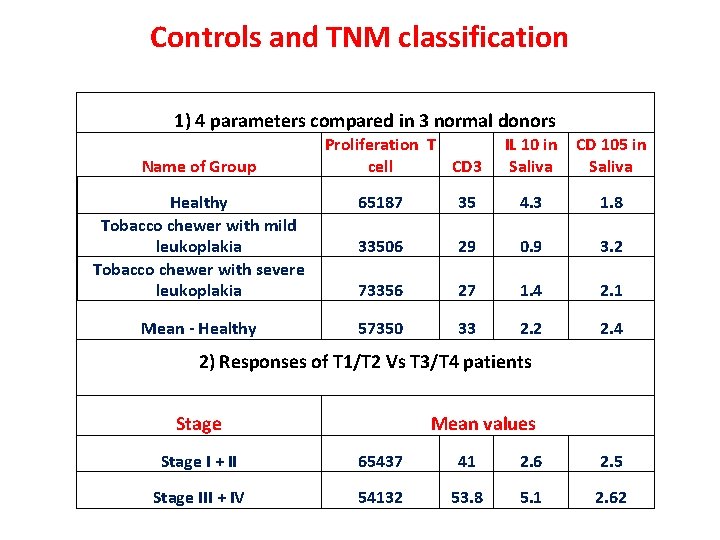
Controls and TNM classification 1) 4 parameters compared in 3 normal donors Name of Group Proliferation T cell CD 3 IL 10 in CD 105 in Saliva Healthy Tobacco chewer with mild leukoplakia Tobacco chewer with severe leukoplakia 65187 35 4. 3 1. 8 33506 29 0. 9 3. 2 73356 27 1. 4 2. 1 Mean - Healthy 57350 33 2. 2 2. 4 2) Responses of T 1/T 2 Vs T 3/T 4 patients Stage Mean values Stage I + II 65437 41 2. 6 2. 5 Stage III + IV 54132 53. 8 5. 1 2. 62