
INSURANCE 101 NAVIGATING INSURANCE AS A PH PATIENT








- Slides: 22
INSURANCE 101 NAVIGATING INSURANCE AS A PH PATIENT
TODAY’S GOALS • Understand different sources for health insurance coverage • Learn how to navigate insurance challenges • Know where to turn for help
UNDERSTANDING HEALTH INSURANCE
WHAT IS HEALTH INSURANCE? A contract between you and the insurance company saying that the insurance company will pay a portion of your medical expenses if you get sick or hurt
WORDS TO KNOW • Coverage is the amount of your bill insurance will pay. • Your health insurance policy is the contract between you and your health insurance provider that spells out what your insurance plan will and won’t cover. • Each policy has different out-of-pocket expenses: • • Premiums Copayments or coinsurances Deductibles Out-of-pocket maximum/catastrophic limit
INSURANCE OPTIONS
TYPES OF INSURANCE • Public: government funded programs or financial support to help pay for treatments. • Private: paid for by private companies or employers; these plans vary greatly. • Self-funded: employers pay for services directly.
MEDICARE • Part A: Hospital care • Part B: Out-patient care & durable medical equipment • Part D: Prescription drug coverage • Advantage plans (Part C): Combined A, B and sometimes D into a single plan • Medigap supplements: Additional coverage that can be purchased along with Medicare A and B
MEDICARE & SOCIAL SECURITY DISABILITY ASSISTANCE • After being approved for monthly income payments through social security disability assistance, you may need to wait up to two years before becoming eligible for Medicare. • If you are considering applying for disability assistance, it is important to understand COBRA and other resources for keeping yourself insured after you stop working.
OTHER PUBLIC INSURANCE SOURCES • Medicaid: www. Medicaid. gov • CHIP: www. Insure. Kids. Now. gov • Military & Veterans’: www. VA. gov/Health
PRIVATE AND EMPLOYERBASED INSURANCE • Group coverage provided by an employer is one common source for health insurance • Individuals can also purchase health insurance • COBRA (Consolidated Omnibus Budget Reconciliation Act) can be an important bridge between employerbased health insurance and health insurance from another source.
CHOOSING COVERAGE • List your medications and medical care you are likely to need. • What is the premium, or monthly cost for plans that cover what you need? • What will your out-of-pocket responsibility be for the medications and services you need? • Plans with high premiums may cover more of the cost of care, making them worthwhile in the long run.
CHOOSING COVERAGE Several non-profit organizations offer one-on-one assistance with researching health insurance plans in your area and identifying the coverage option(s) that may work best for you: Patient Advocate Foundation: 1 (800) 532 -5274; www. Patient. Advocate. org PAN Foundation: 1 -866 -316 -726; www. PANFoundation. org Medicare Rights Center: 800 -333 -4114; www. Medicare. Rights. org
NAVIGATING INSURANCE CHALLENGES
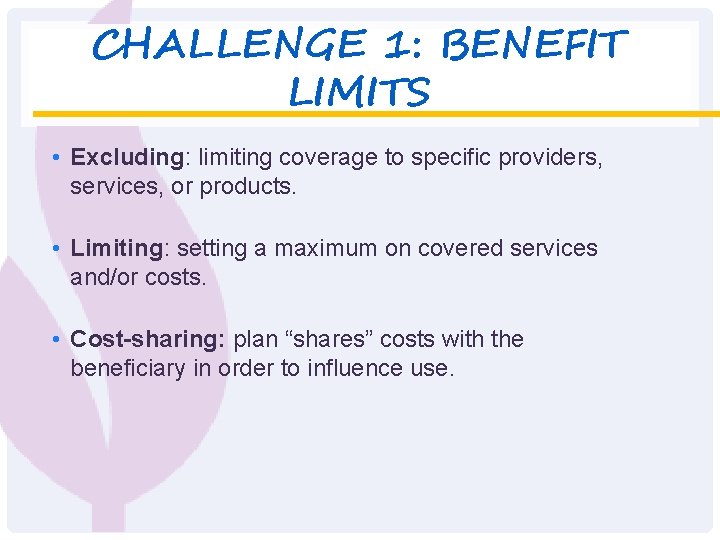
CHALLENGE 1: BENEFIT LIMITS • Excluding: limiting coverage to specific providers, services, or products. • Limiting: setting a maximum on covered services and/or costs. • Cost-sharing: plan “shares” costs with the beneficiary in order to influence use.
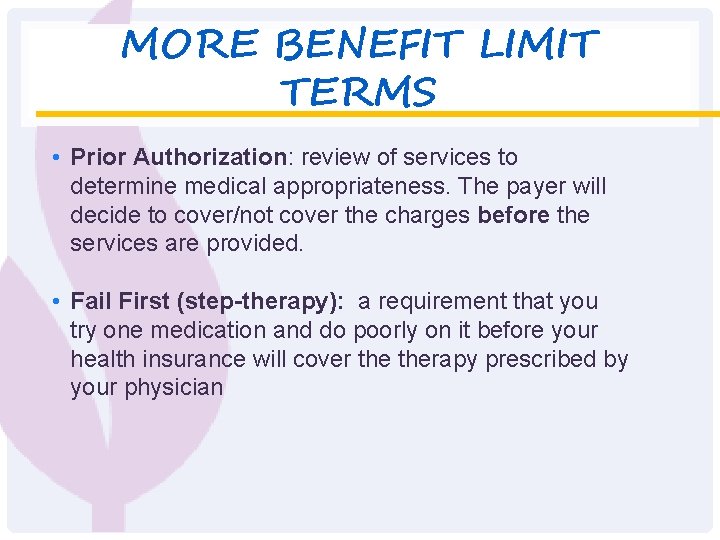
MORE BENEFIT LIMIT TERMS • Prior Authorization: review of services to determine medical appropriateness. The payer will decide to cover/not cover the charges before the services are provided. • Fail First (step-therapy): a requirement that you try one medication and do poorly on it before your health insurance will cover therapy prescribed by your physician
BENEFIT LIMITS AND GENERICS • Generic PAH therapy saves health insurance plans money, but it not always cheaper for the individual with PH. • Learn more about navigating brand generic therapy choices at www. PHAssociation. org/genericsfyi • Your medical team will be an important resources to help you navigate benefit limits.
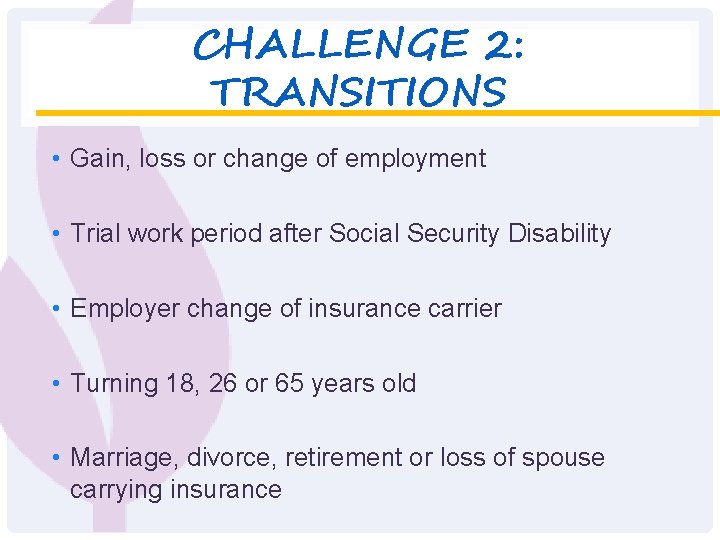
CHALLENGE 2: TRANSITIONS • Gain, loss or change of employment • Trial work period after Social Security Disability • Employer change of insurance carrier • Turning 18, 26 or 65 years old • Marriage, divorce, retirement or loss of spouse carrying insurance
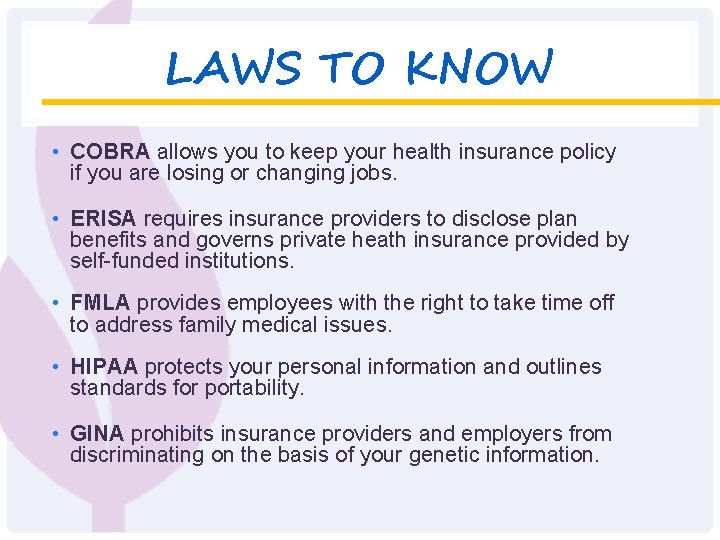
LAWS TO KNOW • COBRA allows you to keep your health insurance policy if you are losing or changing jobs. • ERISA requires insurance providers to disclose plan benefits and governs private heath insurance provided by self-funded institutions. • FMLA provides employees with the right to take time off to address family medical issues. • HIPAA protects your personal information and outlines standards for portability. • GINA prohibits insurance providers and employers from discriminating on the basis of your genetic information.
KNOW YOUR RIGHTS • Legal: Know the healthcare laws. • Appeals: An initial denial is not final! • Grievances and Complaints: File a complaint within your health plan and/or your state’s Department of Insurance. • Patient advocate: Health plans, hospitals, specialty pharmacies and independent organizations often have somebody to help you access your treatment. • Elected Officials: Tell your story to your local, state or federal elected official. U. S. Senators and representatives have constituent services staff who may be able to help
FINANCIAL ASSISTANCE Visit www. PHAssociation. org/Help for the most up-to-date information on: • Non-profit assistance funds • Drug-manufacturer assistance programs • Help through your specialty pharmacy • Federal, state and local help www. PHAssociation. org/Help
NEED A PLACE TO START? Pulmonary Hypertension Association www. PHAssociation. org/Patients/Insurance@PHAssociation. org 301 -565 -3004 x 758