
Insulin Resistance Progression to Diabetes Part 3 Low
Insulin Resistance Progression to Diabetes Part 3
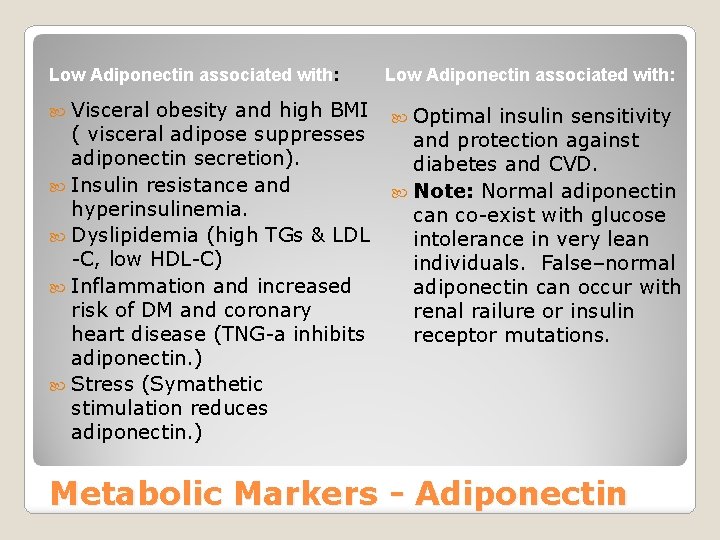
Low Adiponectin associated with: Visceral obesity and high BMI ( visceral adipose suppresses adiponectin secretion). Insulin resistance and hyperinsulinemia. Dyslipidemia (high TGs & LDL -C, low HDL-C) Inflammation and increased risk of DM and coronary heart disease (TNG-a inhibits adiponectin. ) Stress (Symathetic stimulation reduces adiponectin. ) Low Adiponectin associated with: Optimal insulin sensitivity and protection against diabetes and CVD. Note: Normal adiponectin can co-exist with glucose intolerance in very lean individuals. False–normal adiponectin can occur with renal railure or insulin receptor mutations. Metabolic Markers - Adiponectin
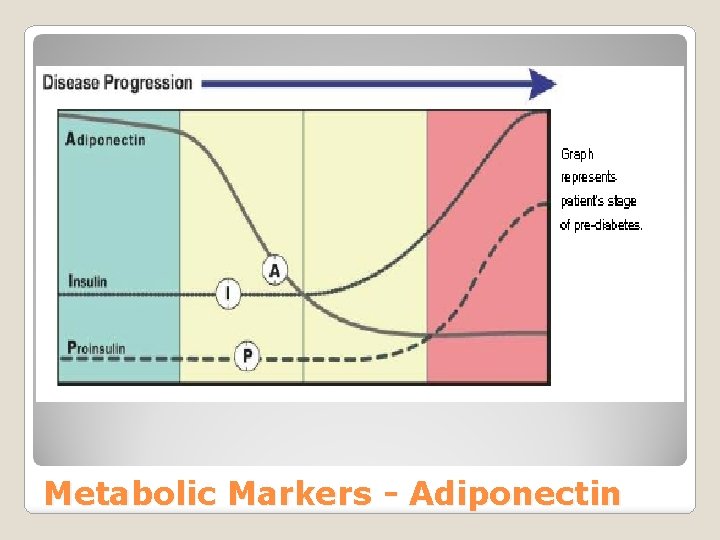
Metabolic Markers - Adiponectin
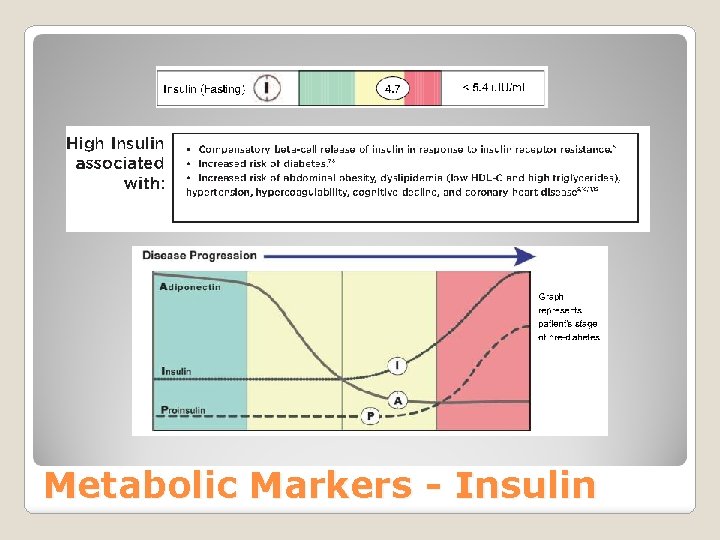
Metabolic Markers - Insulin
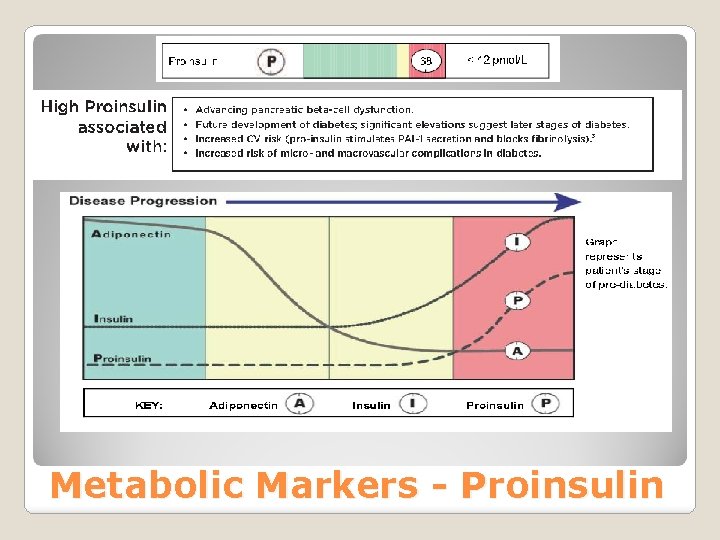
Metabolic Markers - Proinsulin
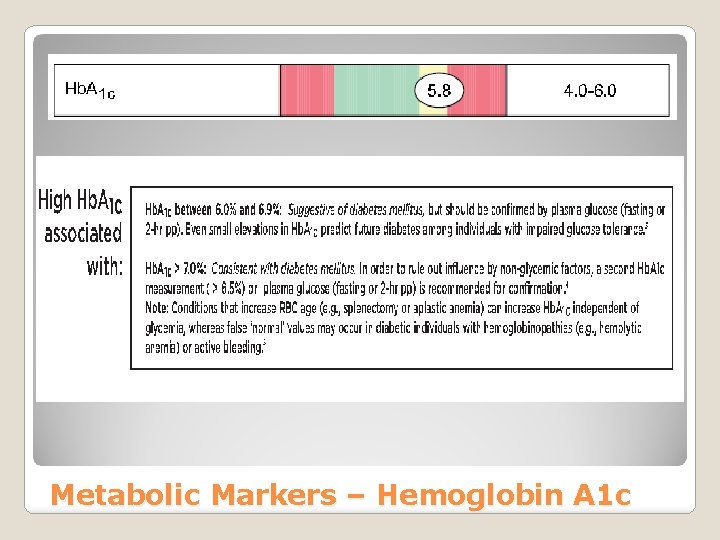
Metabolic Markers – Hemoglobin A 1 c

High HOMA-IR associated with: Hepatic insulin resistance—a result of ineffective suppression of hepatic glucose production by insulin, declining beta-cell function, or both. Increased risk (or presence) of CVD and diabetes (high HOMA-IR may precede DM for several years). 3 Increased risk of hypertension, dyslipidemia, coagulation, and vascular endothelial dysfunction, even in the absence of glucose intolerance. 4 Normal HOMA-IR associated with: Optimal insulin sensitivity Low fasting glucose or insulin, since HOMA-IR closely associates with both. Refer to glucose and insulin measurements for pertinent information. • Note: A false-normal HOMA-IR score may occur in DM when impaired beta-cell function causes greater secretion of pro-insulin than insulin in the fasting state. (See section for Pro-insulin). Metabolic Markers-HOMA-IR
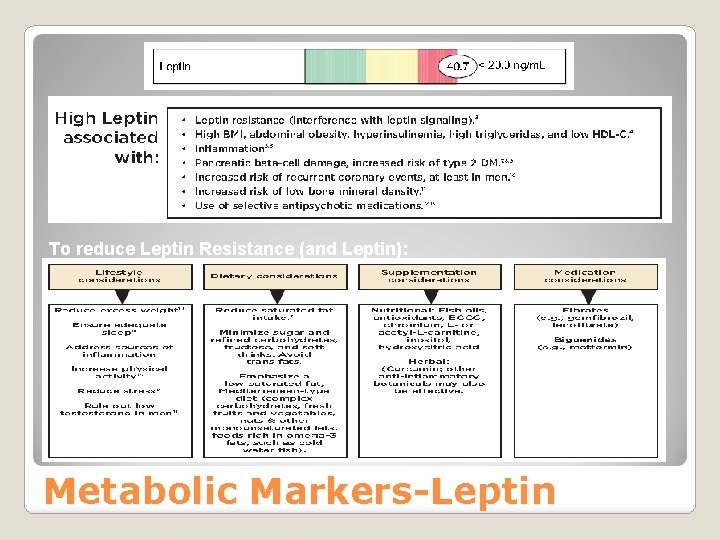
To reduce Leptin Resistance (and Leptin): Metabolic Markers-Leptin
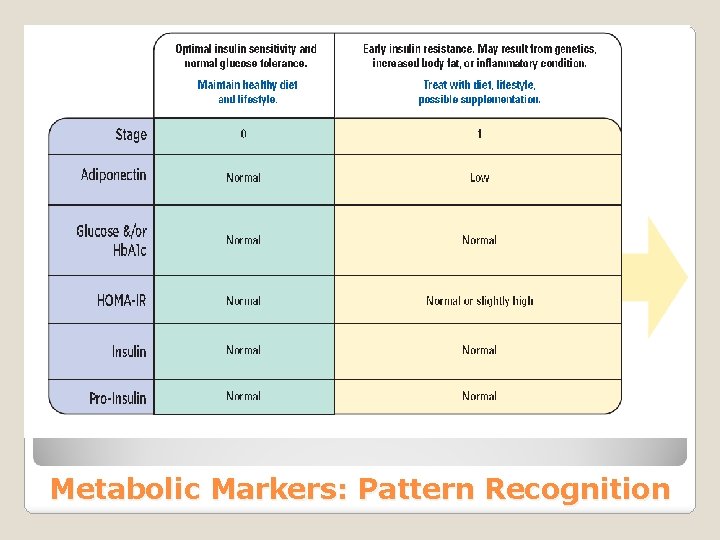
Metabolic Markers: Pattern Recognition
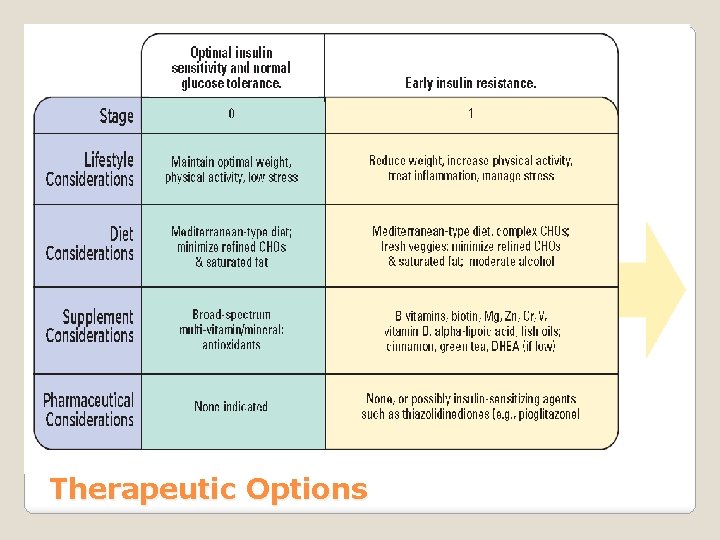
Therapeutic Options
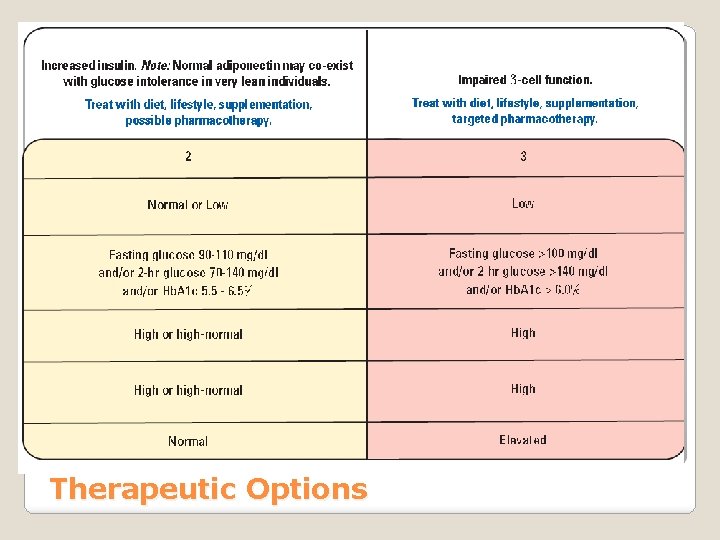
Therapeutic Options
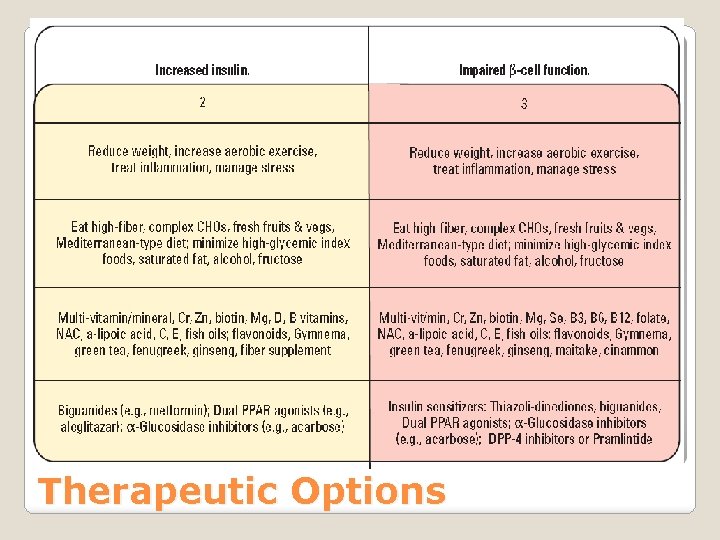
Therapeutic Options
- Slides: 12