
Insulin Pump Therapy Case Studies Sandra Weber MD
Insulin Pump Therapy Case Studies Sandra Weber, MD and Bruce W. Bode, MD
Candidates for Flexible (Intensive or Targeted) Insulin Therapy l All Type 1 Diabetes l Type 2 Diabetes failing OHA or basal insulin l Diabetes in Pregnancy not at goal

Metabolic Advantages with CSII l Improved glycemic control l Better pharmacokinetic delivery of insulin – Less hypoglycemia – Less insulin required l Improved quality of life
Case 1: DM 1 not at goal A 1 C l 35 year old female physician presents with Type 1 Diabetes since age 7 l Control suboptimal (A 1 C 8. 7%) on MDI with Regular AC and NPH HS. l SMBG 5/day with CHO counting l Complications: mild retinopathy and neuropathy, and hypoglycemia induced migraines
Case 1: DM 1 not at goal A 1 C l Recommend CSII but refuses; Does not want to be attached to something l Ask her to record, monitor 6 to 7 times per day, fax readings, and try lispro l She complies with minimal change in A 1 C falling to 8. 4% at 3 months and 7. 7% at 6 months l Still refuses CSII l Recommend a sensor (CGMS)
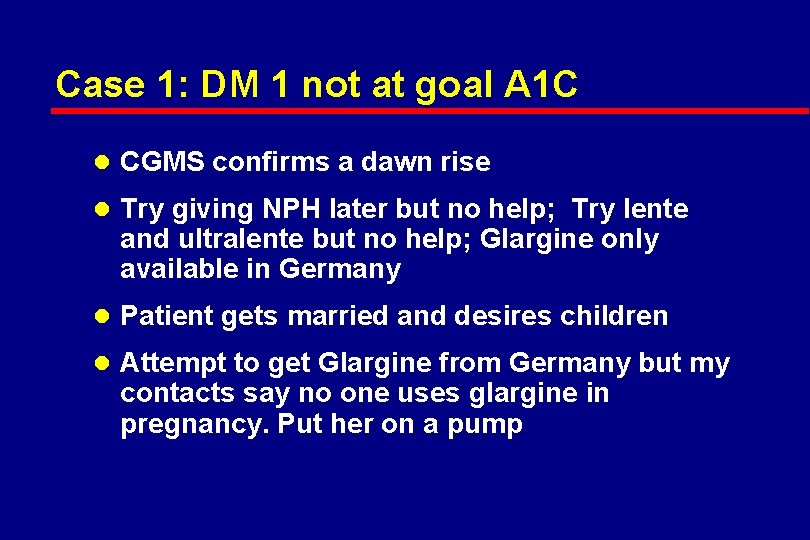
Case 1: DM 1 not at goal A 1 C l CGMS confirms a dawn rise l Try giving NPH later but no help; Try lente and ultralente but no help; Glargine only available in Germany l Patient gets married and desires children l Attempt to get Glargine from Germany but my contacts say no one uses glargine in pregnancy. Put her on a pump
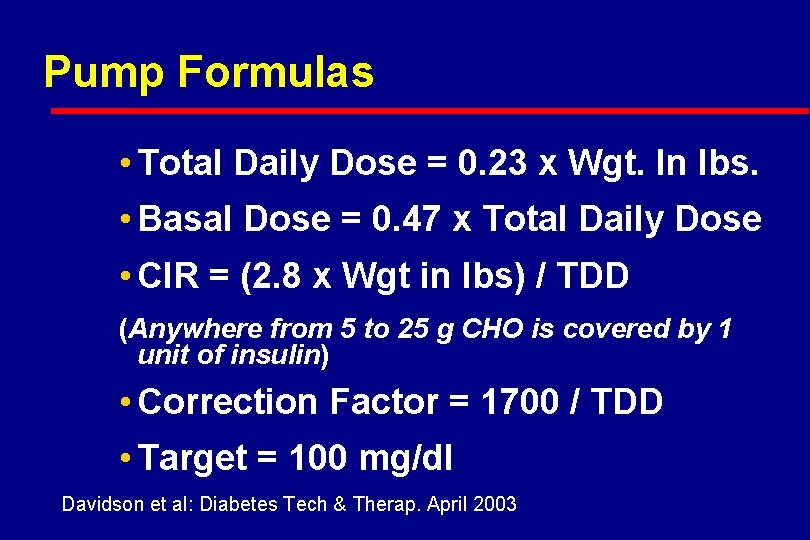
Pump Formulas • Total Daily Dose = 0. 23 x Wgt. In lbs. • Basal Dose = 0. 47 x Total Daily Dose • CIR = (2. 8 x Wgt in lbs) / TDD (Anywhere from 5 to 25 g CHO is covered by 1 unit of insulin) • Correction Factor = 1700 / TDD • Target = 100 mg/dl Davidson et al: Diabetes Tech & Therap. April 2003
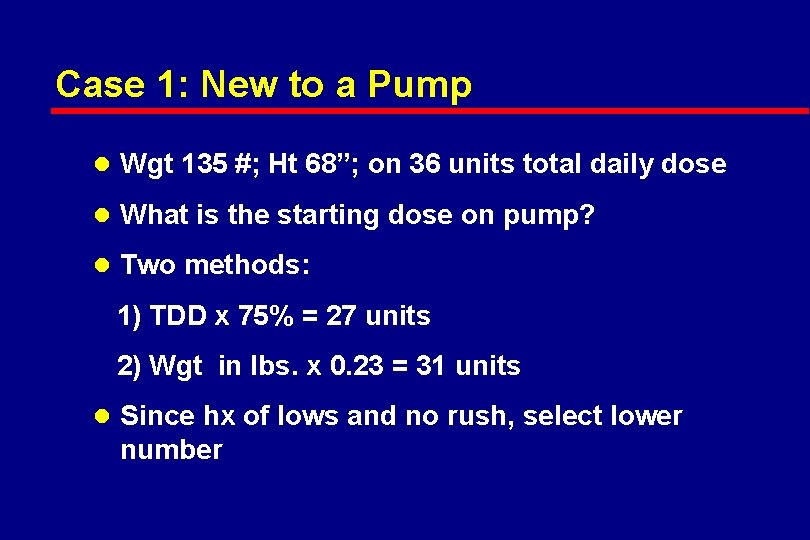
Case 1: New to a Pump l Wgt 135 #; Ht 68”; on 36 units total daily dose l What is the starting dose on pump? l Two methods: 1) TDD x 75% = 27 units 2) Wgt in lbs. x 0. 23 = 31 units l Since hx of lows and no rush, select lower number
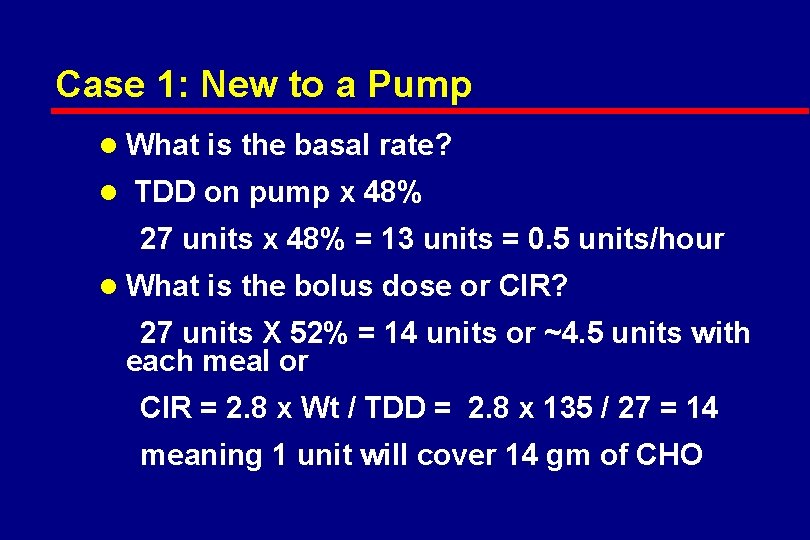
Case 1: New to a Pump l What is the basal rate? l TDD on pump x 48% 27 units x 48% = 13 units = 0. 5 units/hour l What is the bolus dose or CIR? 27 units X 52% = 14 units or ~4. 5 units with each meal or CIR = 2. 8 x Wt / TDD = 2. 8 x 135 / 27 = 14 meaning 1 unit will cover 14 gm of CHO
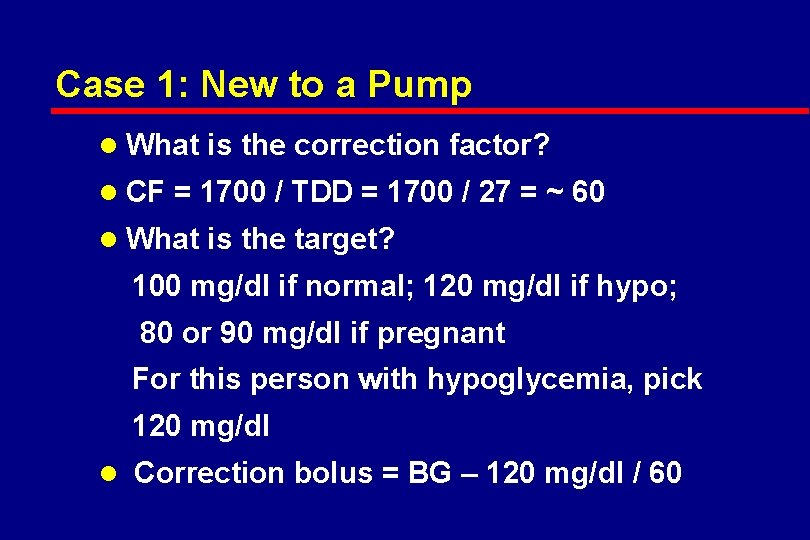
Case 1: New to a Pump l What is the correction factor? l CF = 1700 / TDD = 1700 / 27 = ~ 60 l What is the target? 100 mg/dl if normal; 120 mg/dl if hypo; 80 or 90 mg/dl if pregnant For this person with hypoglycemia, pick 120 mg/dl l Correction bolus = BG – 120 mg/dl / 60
Case 1: DM 1 Agrees to CSII (A 1 C)
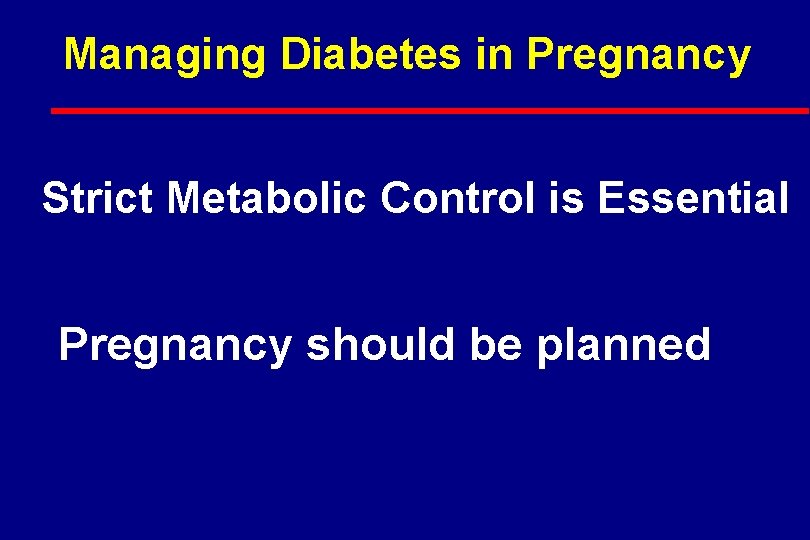
Managing Diabetes in Pregnancy Strict Metabolic Control is Essential Pregnancy should be planned
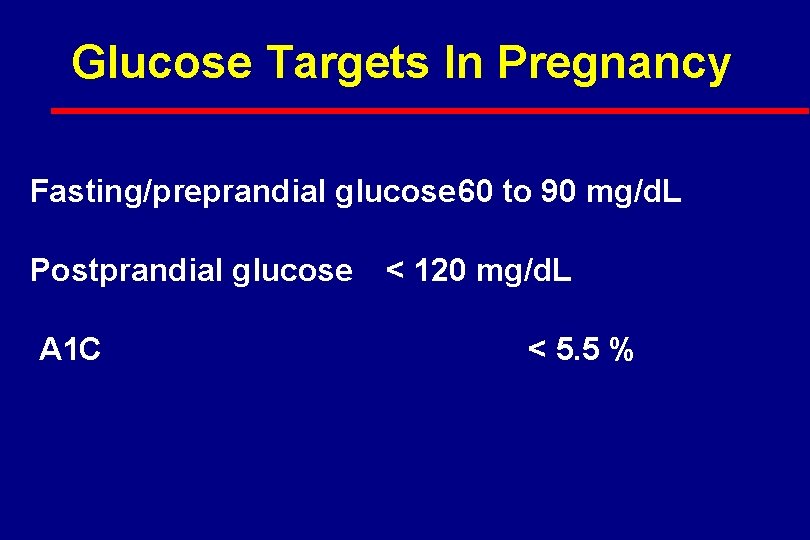
Glucose Targets In Pregnancy Fasting/preprandial glucose 60 to 90 mg/d. L Postprandial glucose A 1 C < 120 mg/d. L < 5. 5 %
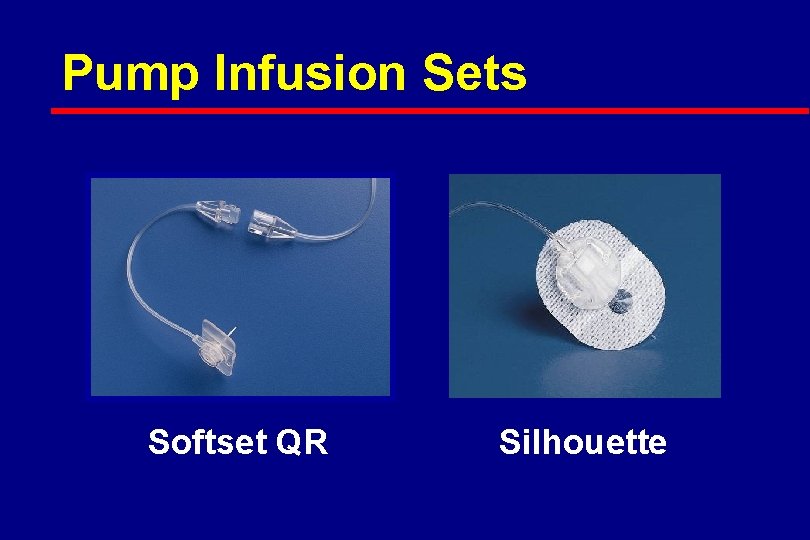
Pump Infusion Sets Softset QR Silhouette
Managing Diabetes in Pregnancy Strict Metabolic Control is Essential Helpful Hint Monitor Ketones Frequently: if BG > 180 mg/dl (avoid DKA) every AM Urine (starvation ketosis)
Managing Diabetes in Pregnancy Insulin Requirements Increase 2– 3 X’s Over Course of Pregnancy Insulin requirements increase: ~ ~ 1 – 14 wks (may decrease or increase) 24 – 26 wks (10% - 15% increase/ wk) 30 – 32 wks * 32 – 38 wks * *(decreasing insulin may mean placental failure)
Managing Diabetes in Pregnancy Insulin requirements decrease post delivery: Vaginal Delivery • Reduce or suspend in delivery room - BR ~ 50% • - May need to D/C BR for 12 – 24 hrs. - Check BG frequently to avoid hypoglycemia C-Section Suspend insulin delivery in OR at clamp of cord Resume basal 1 -h later at pre-pregnancy rate
Case 1: DM 1 on CSII Pregnant (A 1 C)
Case 1: DM 1 Agrees to CSII l Patient loves the pump l No more migraines from hypoglycemia l Patient delivered at 37 weeks of pregnancy healthy boy with A 1 C at 5. 2 to 5. 5%
Case 1: Why has she done well l Pregnancy was planned l On CSII l SMBG with recording 7 to 8 times per day l Knows glycemic goals l Knows CHO counting l Follows up every 4 weeks l Faxes 2 times per week
Case 1: Specific Factors l Weight: 138 to 159 pounds l Basal: 12. 4 to 14. 2 units per day l Bolus: (I/C Ratio) 1/1 to 1. 5/1 to 2/1 l Correction factor: BG-120/60 to -100/60 to BG-90/40 l Eyes, Micro. Alb/Cr, BP, T 4, TSH all normal BG
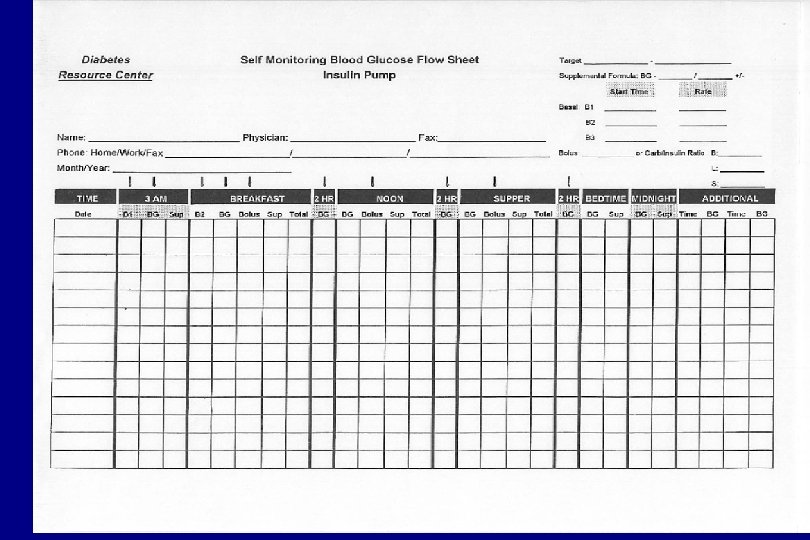
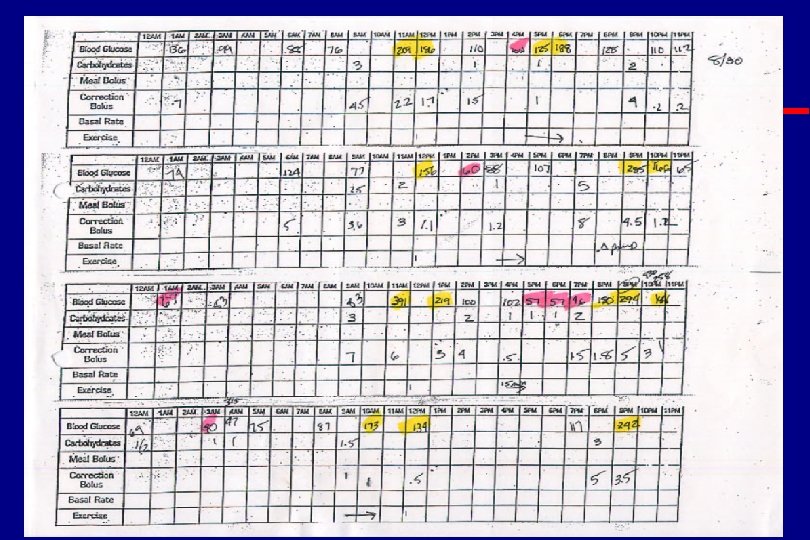
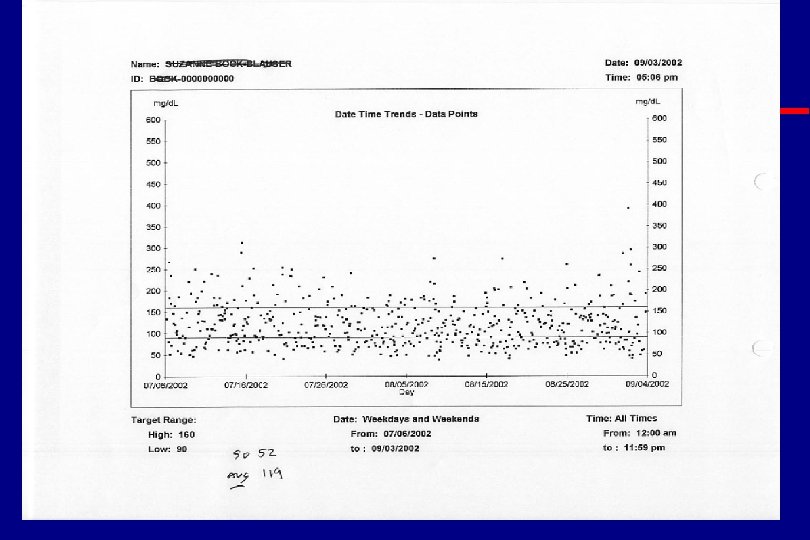
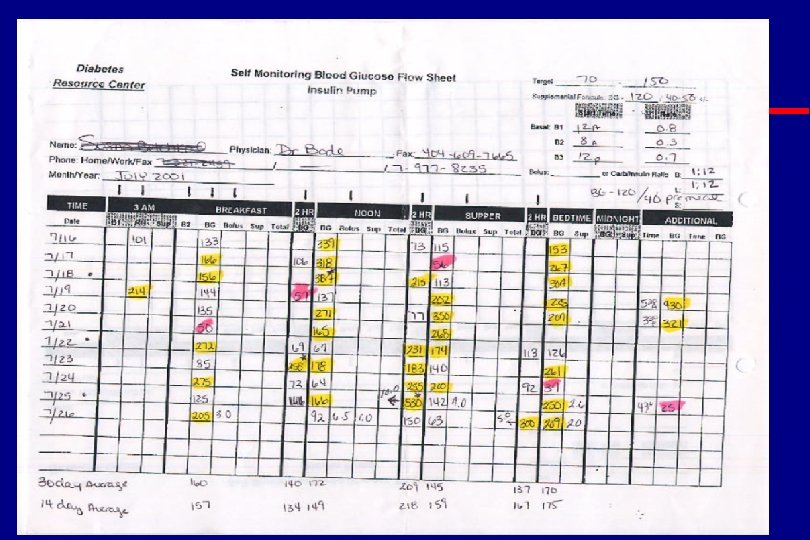
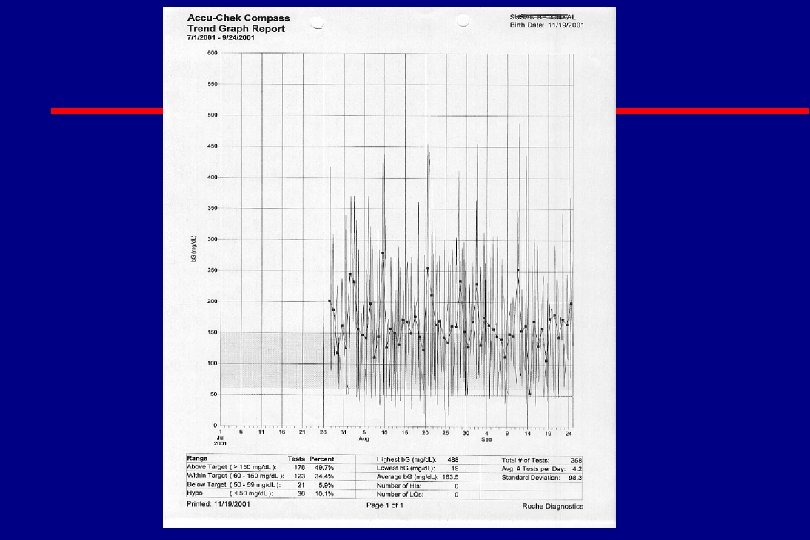
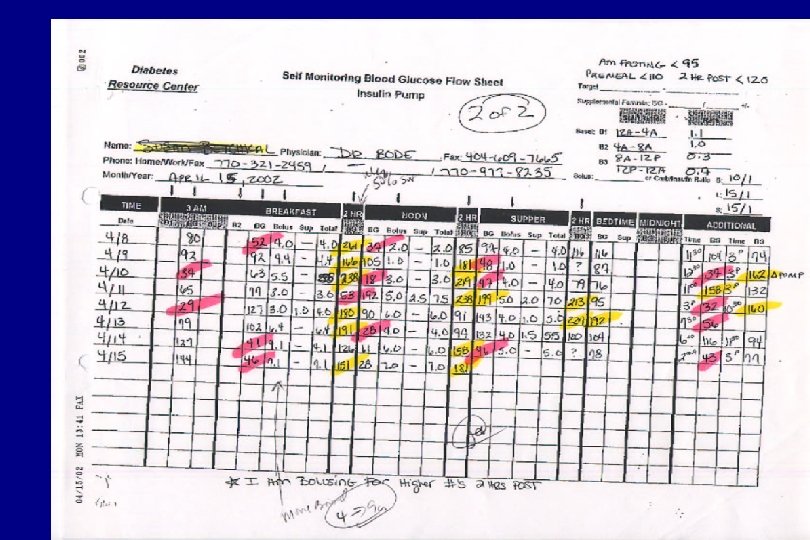
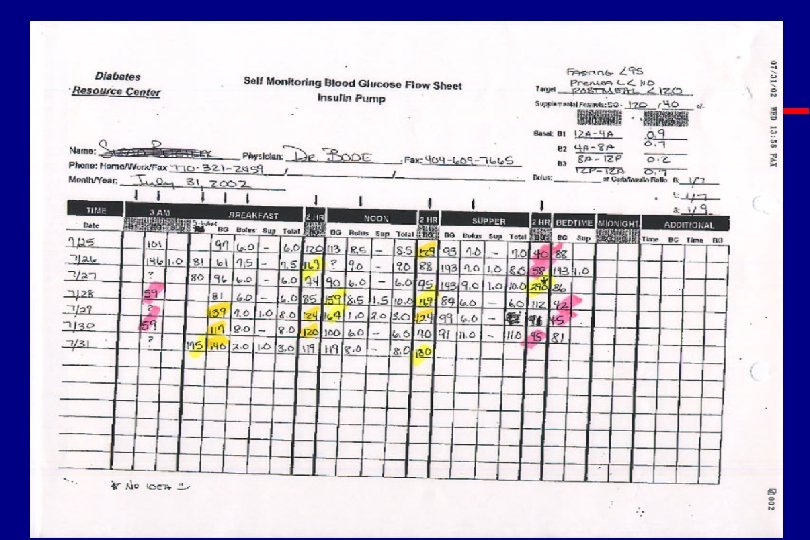
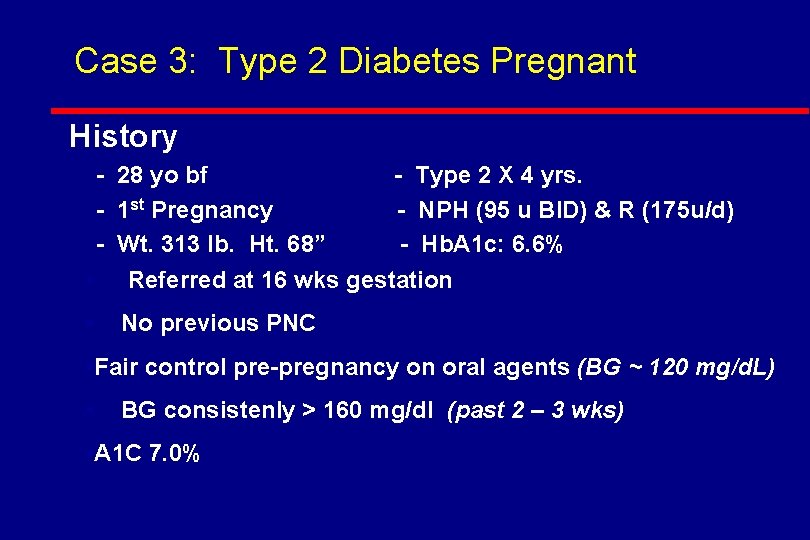
Case 3: Type 2 Diabetes Pregnant History - 28 yo bf - 1 st Pregnancy - Wt. 313 lb. Ht. 68” - Type 2 X 4 yrs. - NPH (95 u BID) & R (175 u/d) - Hb. A 1 c: 6. 6% • Referred at 16 wks gestation • No previous PNC • Fair control pre-pregnancy on oral agents (BG ~ 120 mg/d. L) • BG consistenly > 160 mg/dl (past 2 – 3 wks) • A 1 C 7. 0%
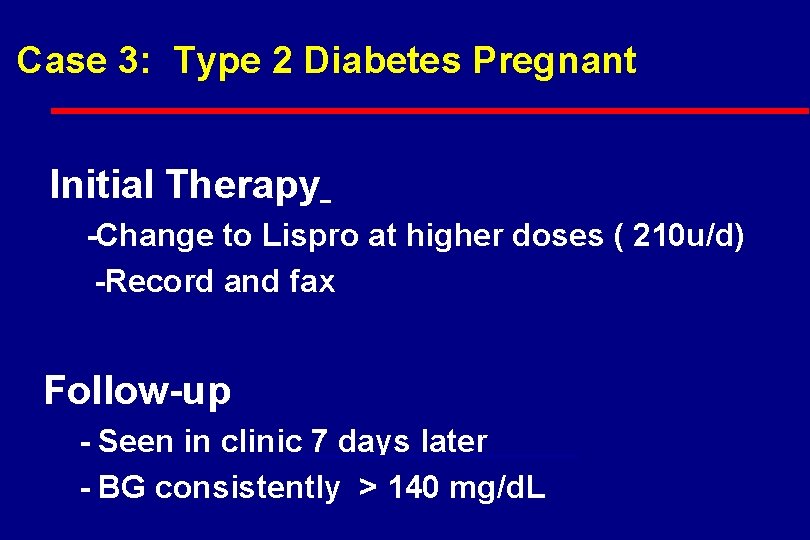
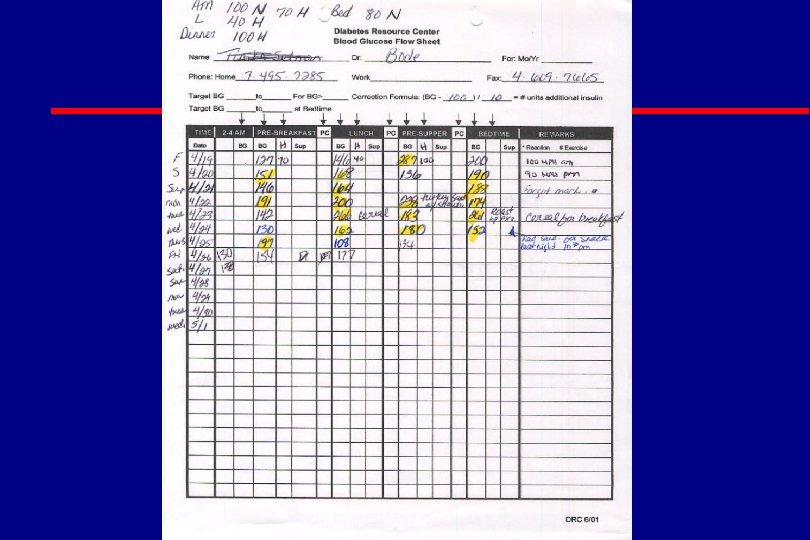
Case 3: Type 2 Diabetes Pregnant Initial Therapy -Change to Lispro at higher doses ( 210 u/d) -Record and fax Follow-up - Seen in clinic 7 days later - BG consistently > 140 mg/d. L
Case 2: New to a Pump l Wgt 325 lbs; Ht 68”; on 400 units total dose l What is the starting dose on pump? l Two methods: 1) TDD x 75% = 300 units 2) Wgt in lbs. x 0. 23 = 75 units l I picked the lower dose
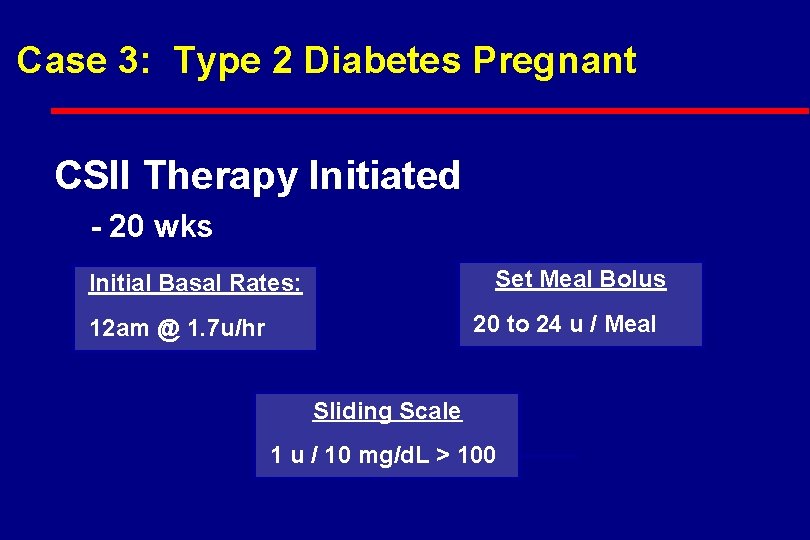
Case 3: Type 2 Diabetes Pregnant CSII Therapy Initiated - 20 wks Set Meal Bolus Initial Basal Rates: 20 to 24 u / Meal 12 am @ 1. 7 u/hr Sliding Scale 1 u / 10 mg/d. L > 100
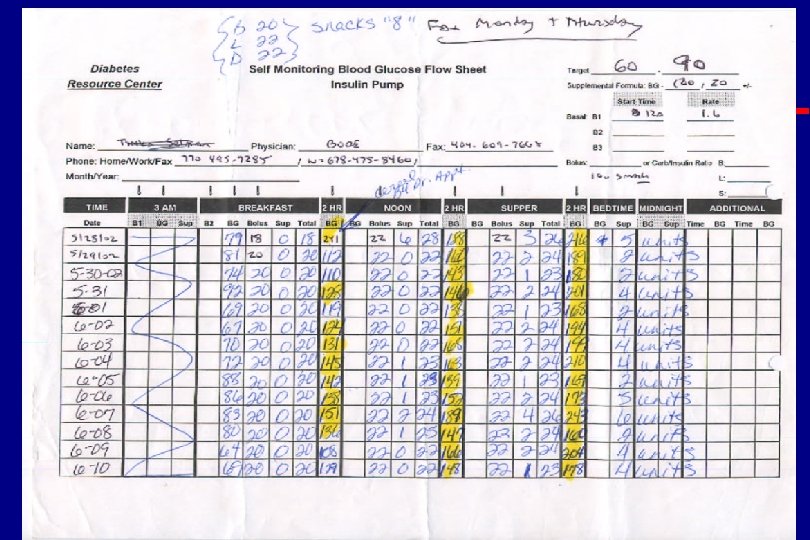
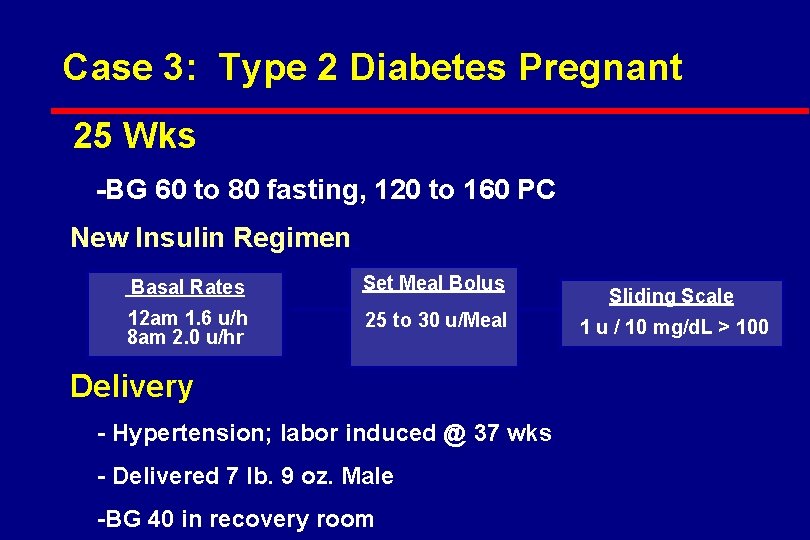
Case 3: Type 2 Diabetes Pregnant 25 Wks -BG 60 to 80 fasting, 120 to 160 PC New Insulin Regimen Basal Rates Set Meal Bolus 12 am 1. 6 u/h 8 am 2. 0 u/hr 25 to 30 u/Meal Delivery - Hypertension; labor induced @ 37 wks - Delivered 7 lb. 9 oz. Male -BG 40 in recovery room Sliding Scale 1 u / 10 mg/d. L > 100
Managing Diabetes In Pregnancy Breast Feeding Recommended Dietary Allowance - Calorie intake - similar to pregnancy BG may drop 50 – 100 mg/dl during feeding - Avoid Hypoglycemia - Temporary Basal Rate - Snack (~20 – 30 gm) - Check BG before & after each feeding
Billing l Get paid for what you do l Use your codes and negotiate for coverage l Detailed visit: 99214 l Prolonged visit with contact plus above: 99354 or 99355 (insulin start or pump start) l Prolonged visit w/o contact plus above: 99358 or 59 (faxes, phone calls, emails)
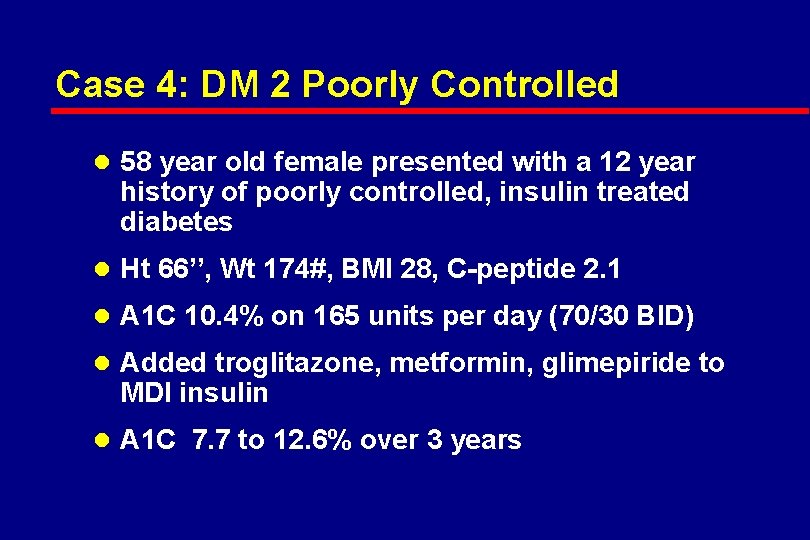
Case 4: DM 2 Poorly Controlled l 58 year old female presented with a 12 year history of poorly controlled, insulin treated diabetes l Ht 66’’, Wt 174#, BMI 28, C-peptide 2. 1 l A 1 C 10. 4% on 165 units per day (70/30 BID) l Added troglitazone, metformin, glimepiride to MDI insulin l A 1 C 7. 7 to 12. 6% over 3 years
Case 4: DM 2 Poorly Controlled l Admitted twice for IV insulin and fasting with short lived success (A 1 C to 7. 6% but back up to 12. 6%) l Tried weight watchers and appetite suppressants; no help l Decided to try CSII
Case 4: DM 2 on CSII, A 1 C Results
Case 4: DM 2 Poorly Controlled l Patient loves the pump l On 110 units per day consuming 2 meals only per day (1. 4 units per kg or 0. 6 units per lbs) l Also on rosiglitazone 4 mg/day
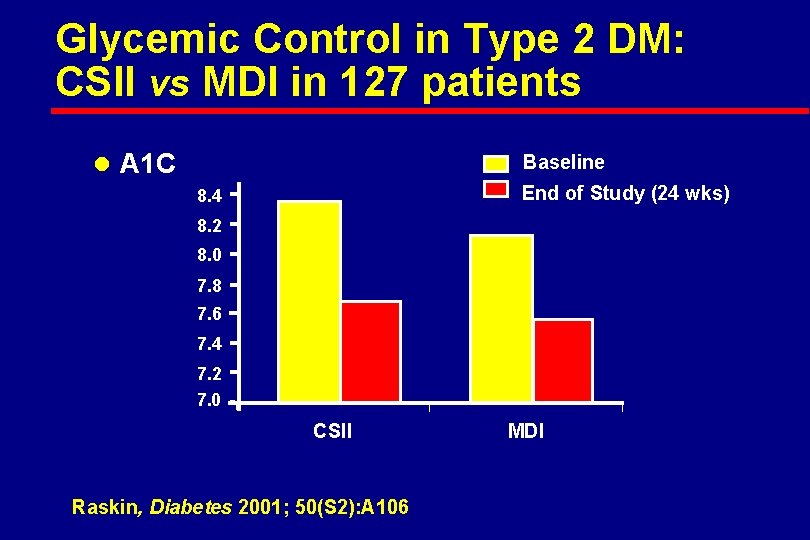
Glycemic Control in Type 2 DM: CSII vs MDI in 127 patients l A 1 C Baseline End of Study (24 wks) 8. 4 8. 2 8. 0 7. 8 7. 6 7. 4 7. 2 7. 0 CSII Raskin, Diabetes 2001; 50(S 2): A 106 MDI
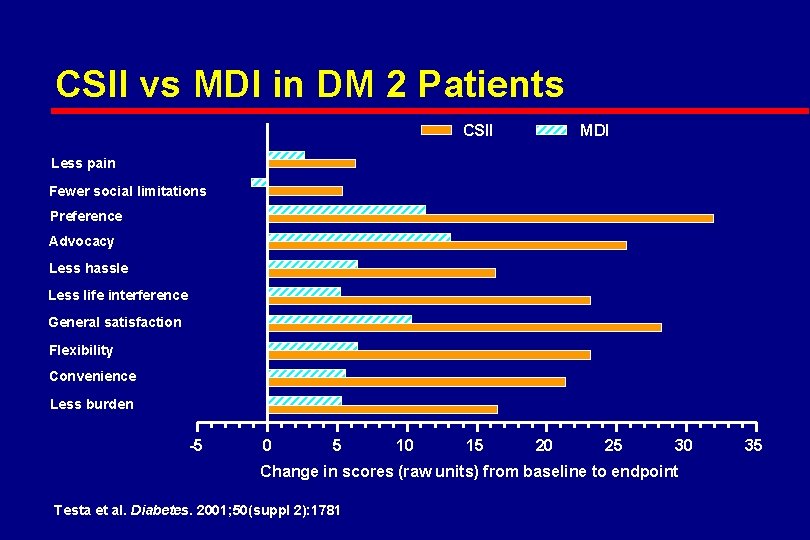
CSII vs MDI in DM 2 Patients CSII MDI Less pain Fewer social limitations Preference Advocacy Less hassle Less life interference General satisfaction Flexibility Convenience Less burden -5 0 5 10 15 20 25 30 Change in scores (raw units) from baseline to endpoint Testa et al. Diabetes. 2001; 50(suppl 2): 1781 35
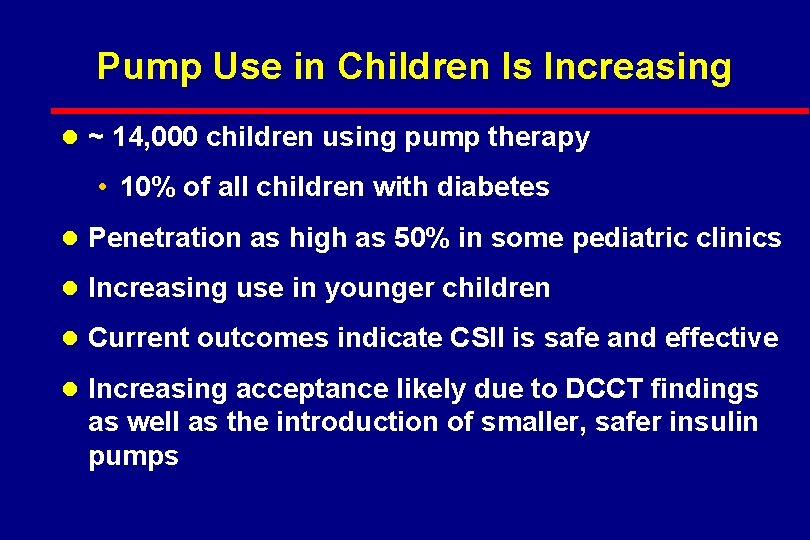
Pump Use in Children Is Increasing l ~ 14, 000 children using pump therapy • 10% of all children with diabetes l Penetration as high as 50% in some pediatric clinics l Increasing use in younger children l Current outcomes indicate CSII is safe and effective l Increasing acceptance likely due to DCCT findings as well as the introduction of smaller, safer insulin pumps
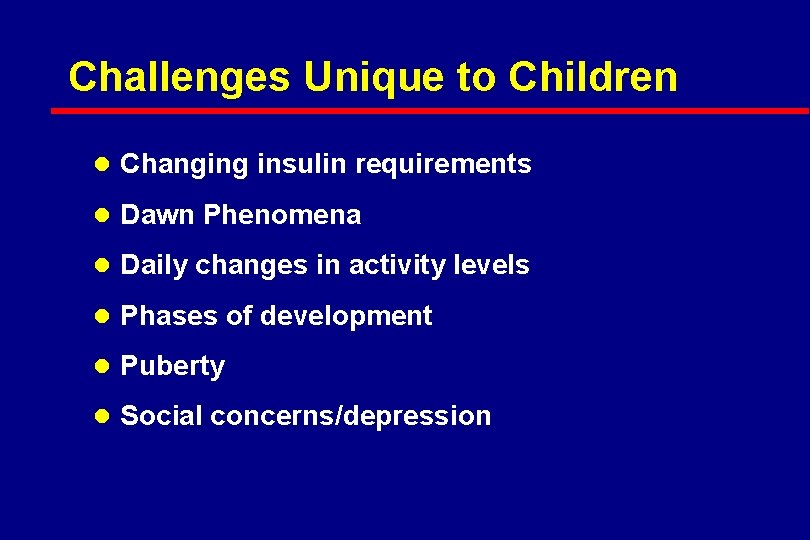
Challenges Unique to Children l Changing insulin requirements l Dawn Phenomena l Daily changes in activity levels l Phases of development l Puberty l Social concerns/depression
Diabetes in Younger Children Present Unique Challenges l Unpredictable food intake and activity l Imprecision of small insulin doses l Inability to convey hypoglycemia symptoms l Frequent viral infections
Challenges Unique to Teens l Struggle for independence l Growth and body changes l Identity l Peer relationships, alcohol, drugs, sex l Hectic schedules l Driving l College l Changes in psyche (mood swings)
Basal Rates Vary as a Child Grows l Pre-pubertal children • Highest rate (as much as 2 x) from 9 p-12 a • Lowest rate from 3 a-7 a* l Pubertal children • Highest rates between 3 a-9 a and 9 p-12 a* l Easiest to start with one rate l Make changes after the first night based on SBGM Conrad et al. , Diabetes, 2000, 49 (Suppl 1): A 101.
Bolus Doses l Use the smart pump functions Target at 100 mg/dl Carb dose calculator Correction dose l Keep it simple l Determine what patient is willing and or able to do
Carbohydrate: Insulin Ratios l Grams vs. Servings of CHO (exchanges) l Realistic starting meal plan l Have the family pick a plan that fits their lifestyle l Add dual wave option when able and willing
Avoiding DKA l Give a pen with the pump l Instruct that any time the patient feels nauseated or has abdominal pain -- change the site l Blood sugar is greater than 250 mg/dl • Take correction dose • Check for ketones • Recheck in 60 minutes • If coming down, leave alone • If not, take a shot and change the site
Avoiding Hypoglycemia l Frequent blood glucose monitoring l Occasional 3 am checks l Consider re-adjusting glycemic goals for hypoglycemic unawareness l Bolus frequency • Utilize Bolus calculator with active insulin to prevent stacking
Pumps in School l Leave class less often l School nurse responsibilities l Parent responsibilities l Bolusing in school l Alternatives for younger children l Leave insulin pen in school for problems
Highs and School l Blood sugar greater than 250 mg/dl before school – Change the site l Blood sugar greater than 250 mg/dl during school – Check for ketones – Take a bolus • Bolus Calculator – Recheck in 60 minutes • If not coming down, take insulin with a pen and change the site when child gets home
Case 5: Persistent Hypoglycemia on CSII l 42 year old male on pump for 6 years develops hypoglyemia ~5 pm with no bolus since 12 pm; he also has hyperglycemia upon awakening but all other BG’s in range. Basals 12 am 0. 8; 4 am 1. 4; 9 am 0. 8 l What do you do?
Case 5: Persistent Hypoglycemia on CSII l Basals changed 12 am 0. 8; 4 am 1. 6; 8 am 0. 8; 2 pm 0. 6; 7 pm 0. 8 l Hypoglycemia persists with now seizures and one MVA at 6 pm l What now? l Insulin antibodies negative
Case 5: Persistent Hypoglycemia on CSII l Basals changed again 12 am 0. 8; 4 am 1. 8; 8 am 0. 8; 2 pm 0. 4; 8 pm 0. 8 l Hypoglycemia persists with another seizure at 6 pm l What now?
Case 5: Persistent Hypoglycemia on CSII l The problem is the pump time is reversed; 6 am is actually 6 pm l Always verify all pump functions (time, basal, bolus, syringe placement, insulin in reservoir, tubing, and site when evaluating problems).
Pump Therapy Indications l A 1 C >6. 5% l Hectic lifestyle l Frequent hypoglycemia l Shift work l Dawn phenomenon l Type 2 l Exercise l Pediatrics l Pregnancy l Gastroparesis Marcus. Postgrad Med. 1995.
Current Candidate Selection Patient Requirements – Willing to monitor and record BG – Motivated to take insulin – Willing to quantify food intake – Willing to follow-up – Interested in extending life
Pump Follow-up Procedures – Monitor, record, and report glucoses • Pre and post meal • Overnight (periodically) – Contact as needed • Phone, fax, e-mail – Office visits • First infusion set change • 1 -2 weeks later with RD, RN, or MD and PRN – After stable • Quarterly visits ADA: Clinical Practice Recommendations, 2003.
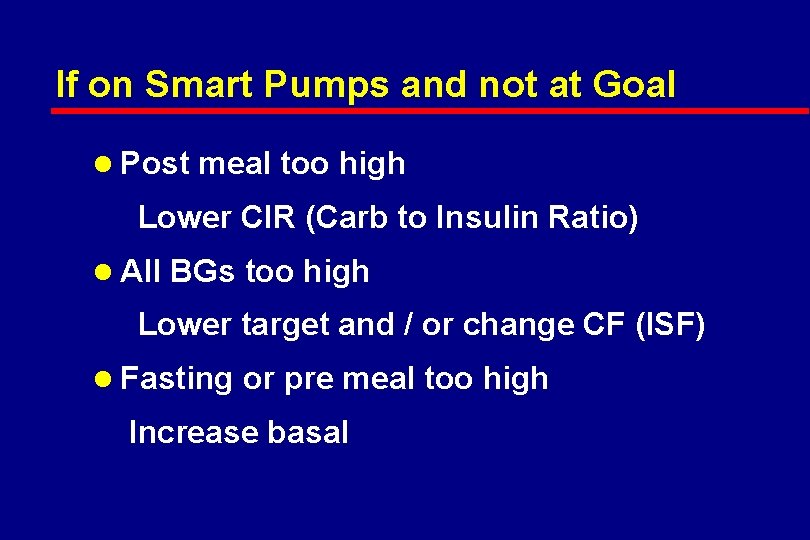
If on Smart Pumps and not at Goal l Post meal too high Lower CIR (Carb to Insulin Ratio) l All BGs too high Lower target and / or change CF (ISF) l Fasting or pre meal too high Increase basal
- Slides: 62