
Instrumentation Amplifier Noise Analysis 1 2 Three Stage
![References 1. 2. [1] Hann, Gina. "Selecting the right op amp - Electronic Products.](https://slidetodoc.com/presentation_image_h/a561b7fe1ced689298e1c798b900e794/image-41.jpg "References 1. 2. [1] Hann, Gina. \"Selecting the right op amp - Electronic Products.")
- Slides: 42
Instrumentation Amplifier Noise Analysis 1
2
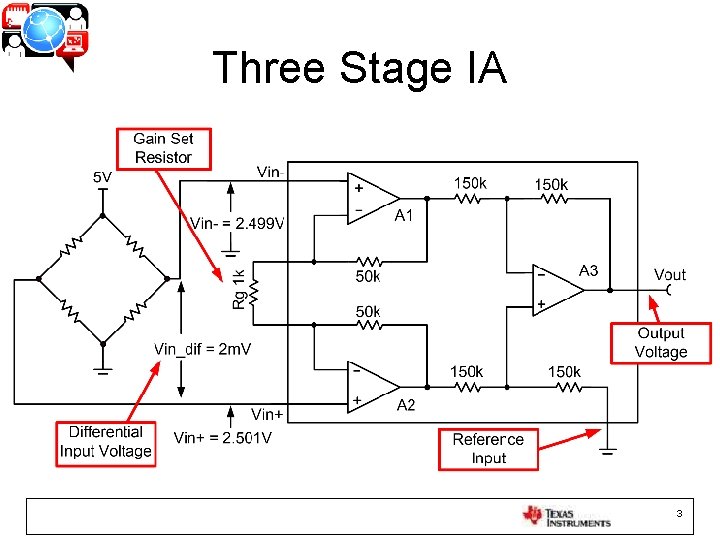
Three Stage IA 3
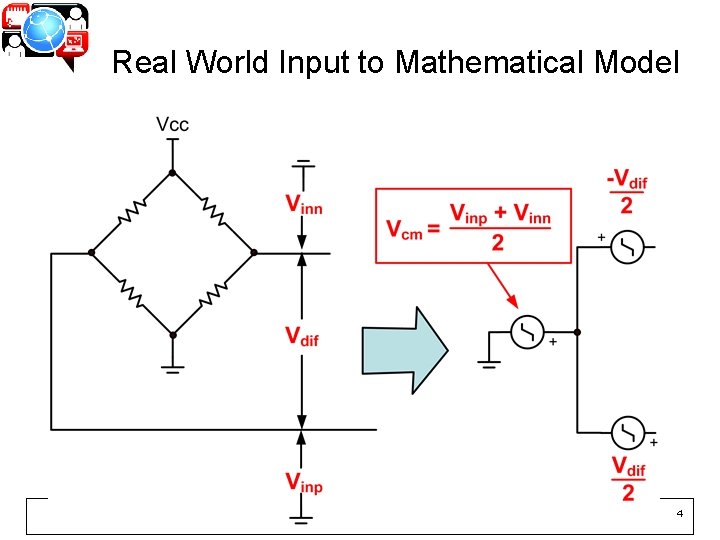
Real World Input to Mathematical Model 4
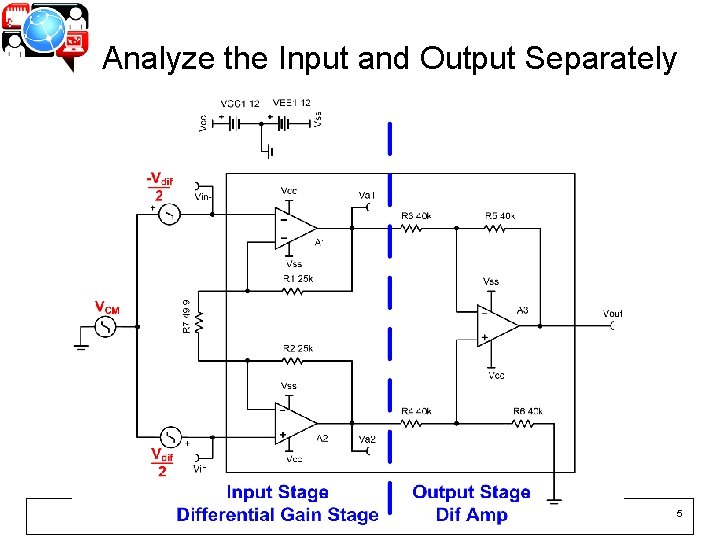
Analyze the Input and Output Separately 5
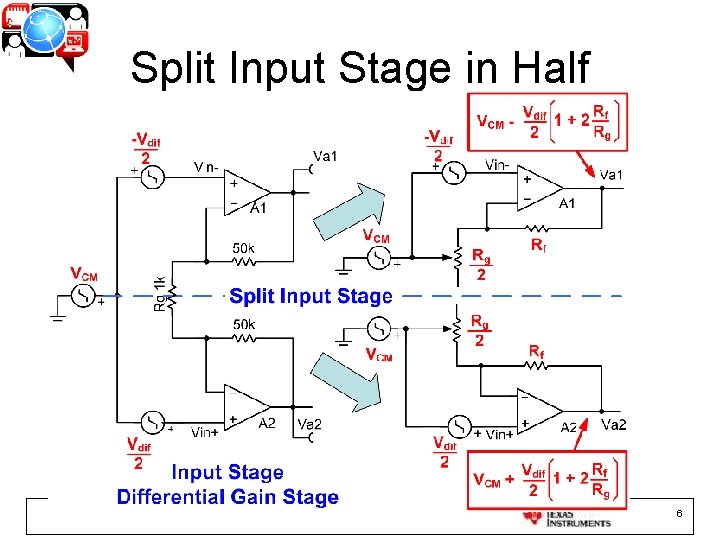
Split Input Stage in Half 6
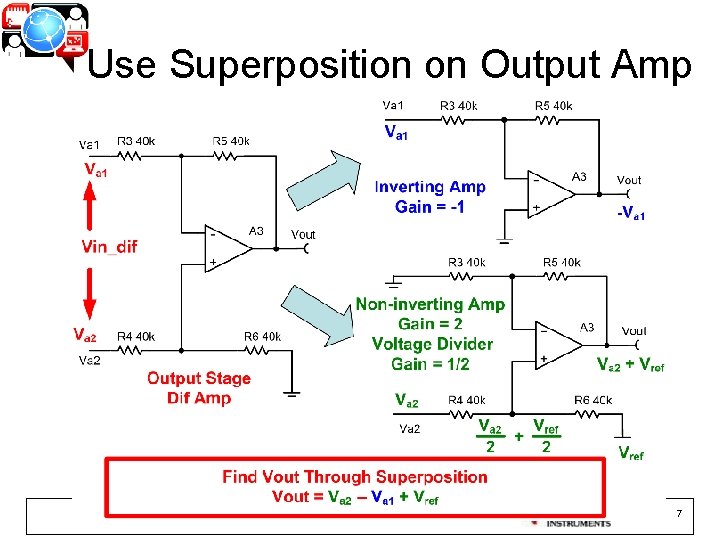
Use Superposition on Output Amp 7
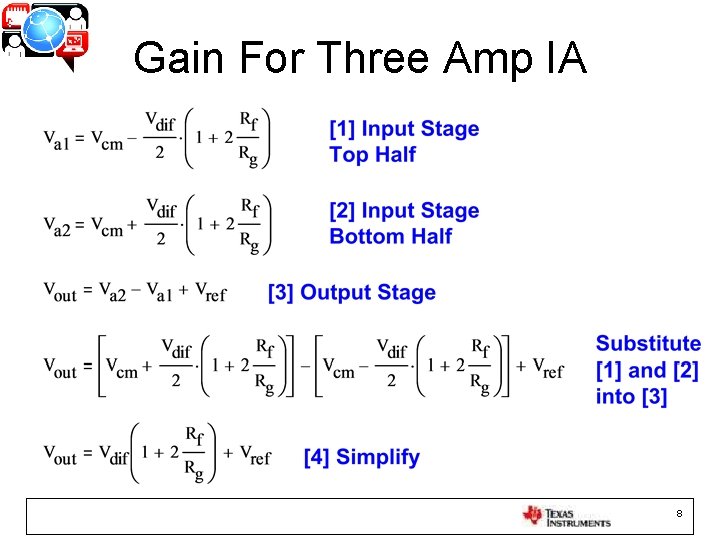
Gain For Three Amp IA 8
9
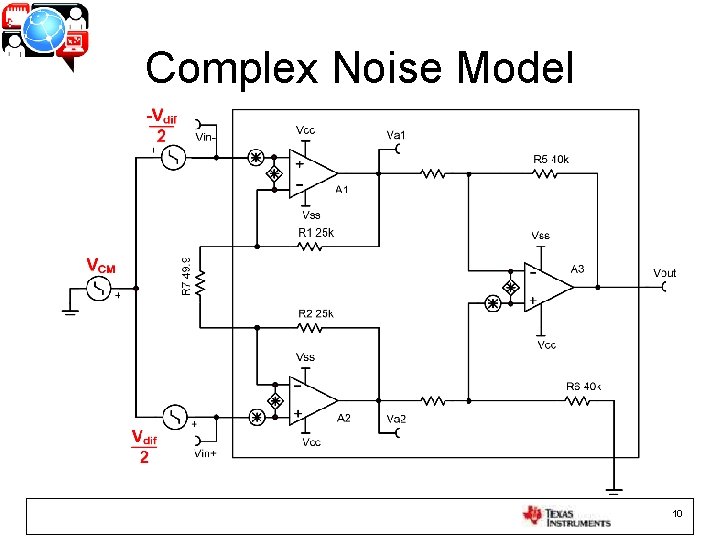
Complex Noise Model 10
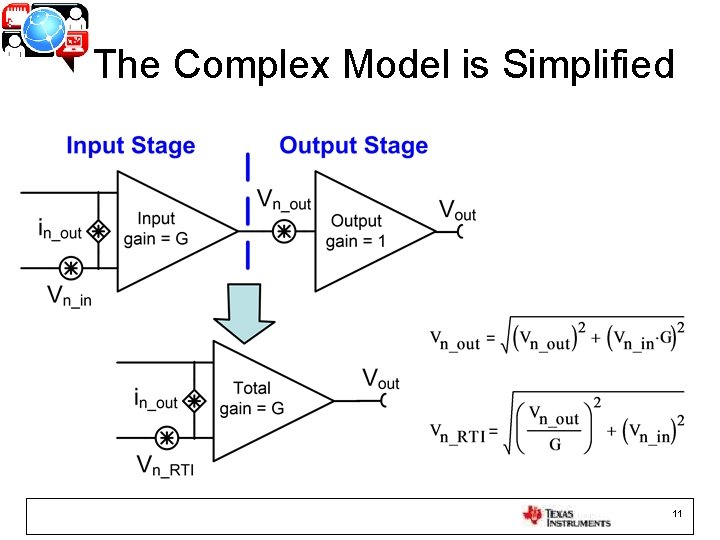
The Complex Model is Simplified 11
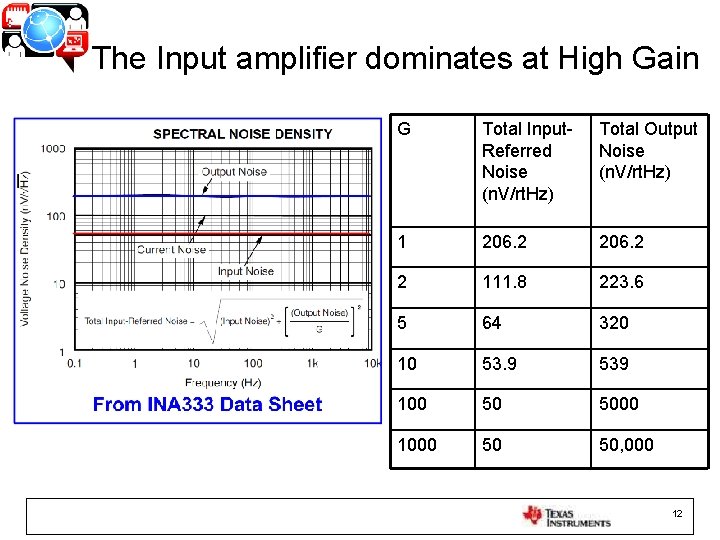
The Input amplifier dominates at High Gain G Total Input. Referred Noise (n. V/rt. Hz) Total Output Noise (n. V/rt. Hz) 1 206. 2 2 111. 8 223. 6 5 64 320 10 53. 9 539 100 50 5000 1000 50 50, 000 12
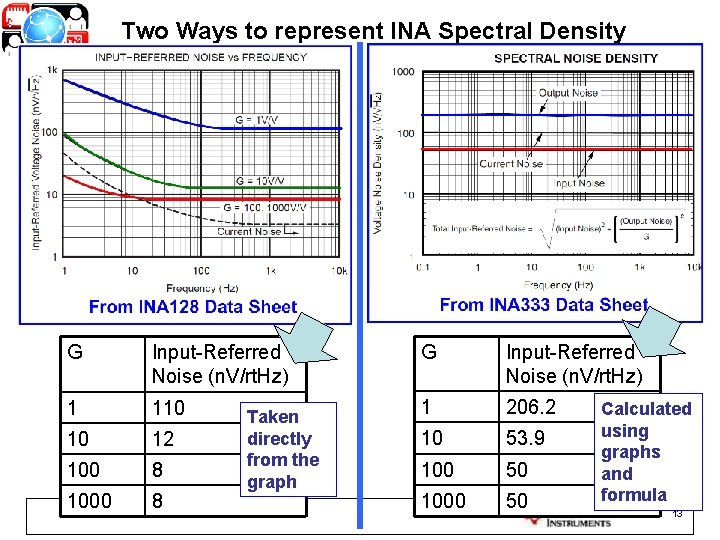
Two Ways to represent INA Spectral Density G Input-Referred Noise (n. V/rt. Hz) 1 110 1 206. 2 10 12 10 53. 9 100 8 100 50 1000 8 1000 50 Taken directly from the graph Calculated using graphs and formula 13
14
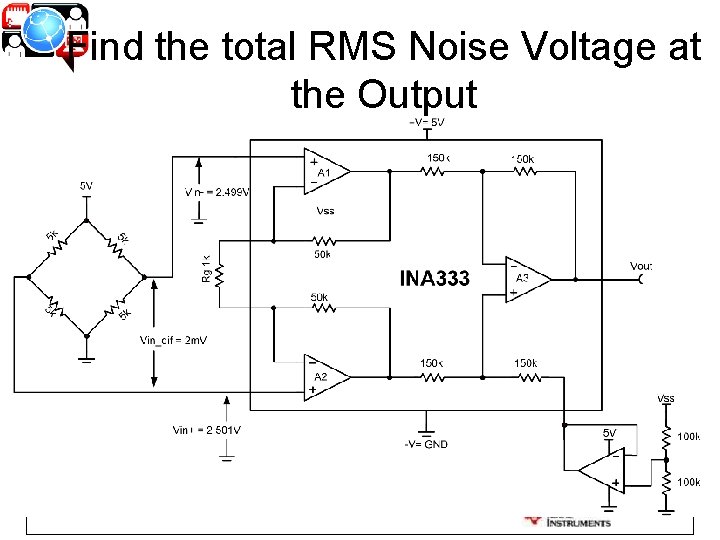
Find the total RMS Noise Voltage at the Output 15
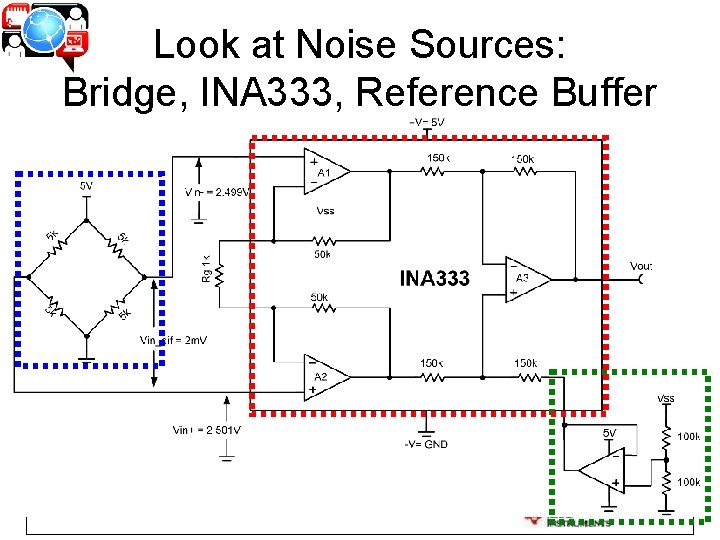
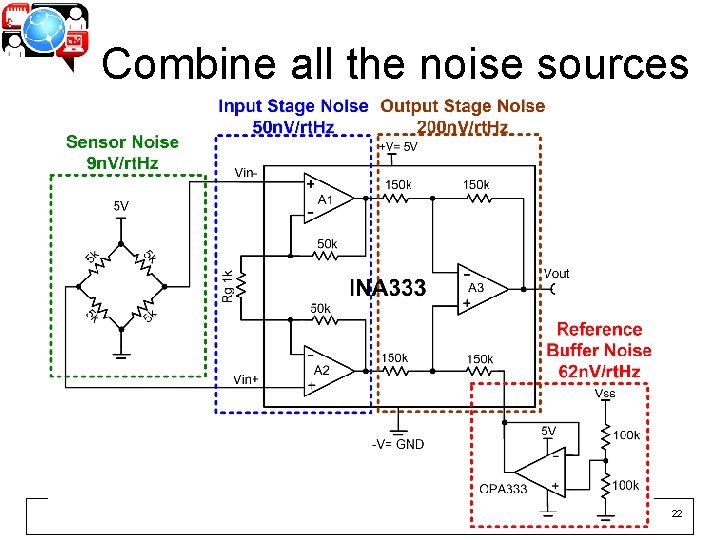
Look at Noise Sources: Bridge, INA 333, Reference Buffer 16
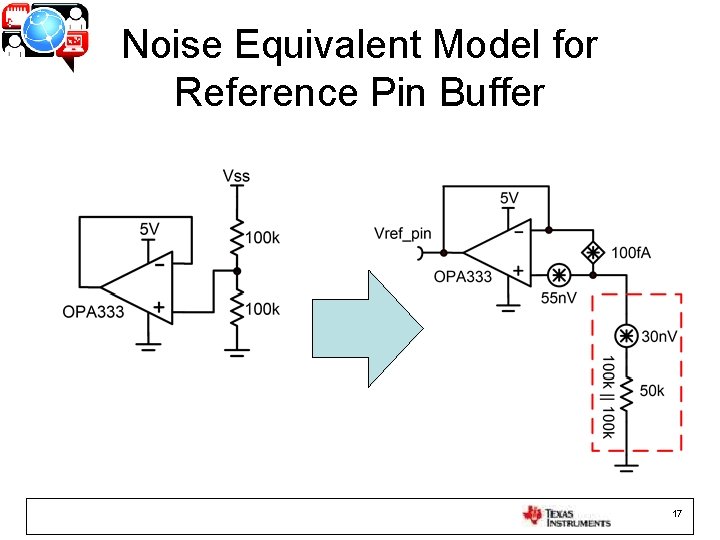
Noise Equivalent Model for Reference Pin Buffer 17
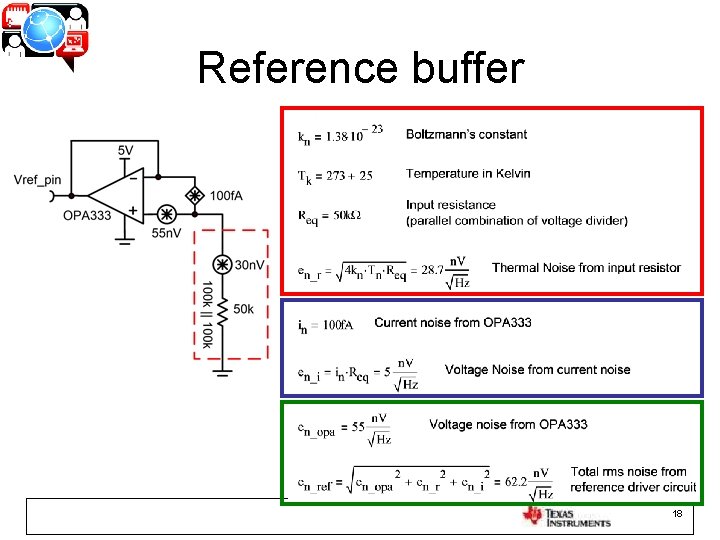
Reference buffer 18
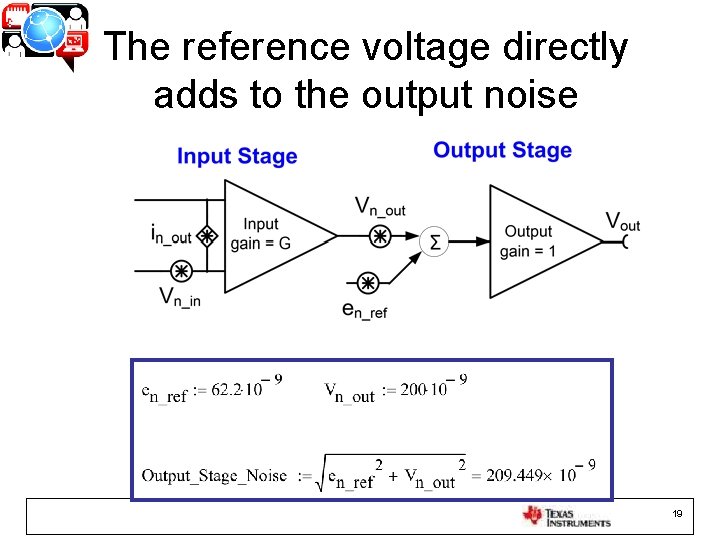
The reference voltage directly adds to the output noise 19
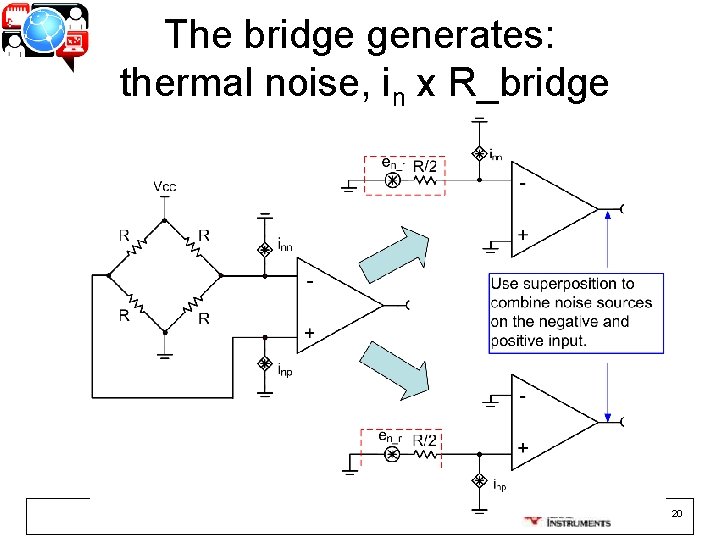
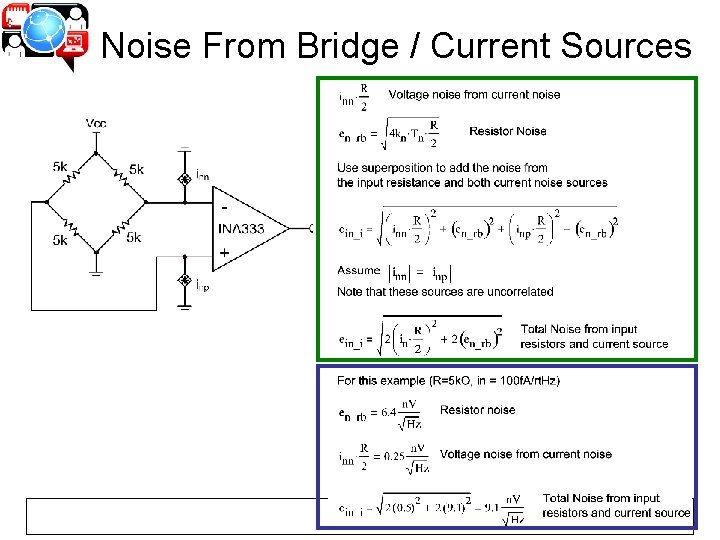
The bridge generates: thermal noise, in x R_bridge 20
Noise From Bridge / Current Sources 21
Combine all the noise sources 22
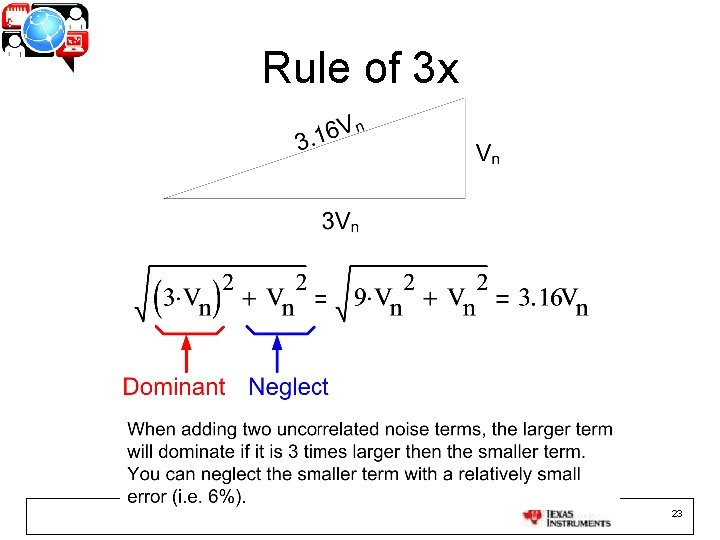
Rule of 3 x 23
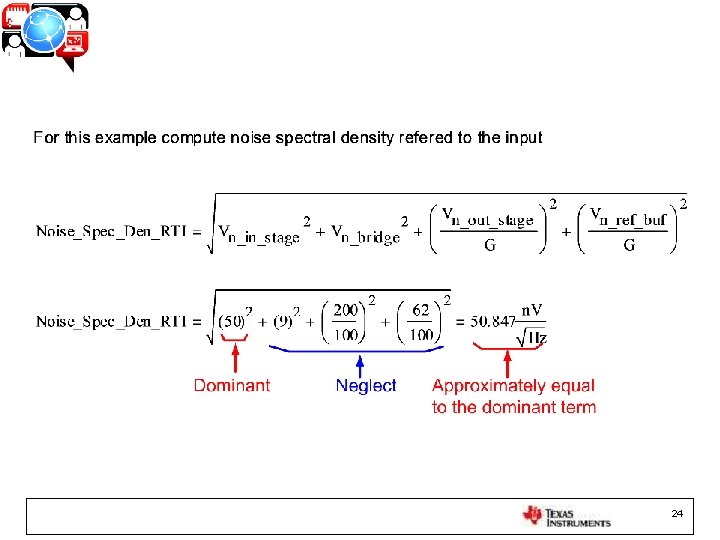
24
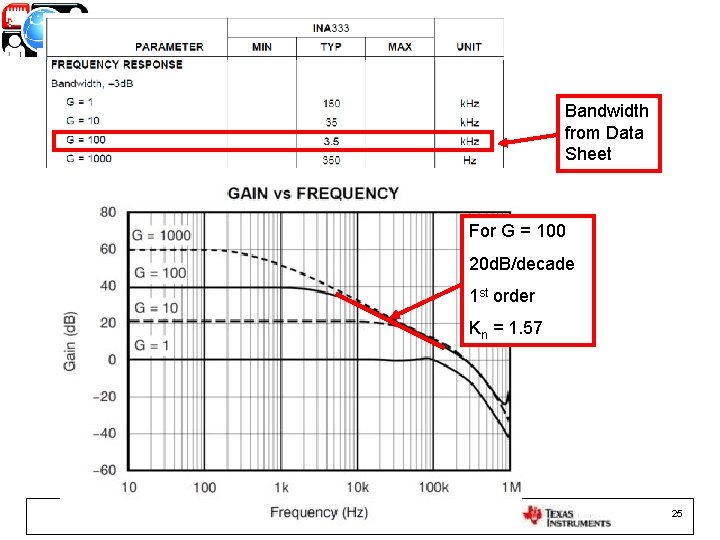
Bandwidth from Data Sheet For G = 100 20 d. B/decade 1 st order Kn = 1. 57 25
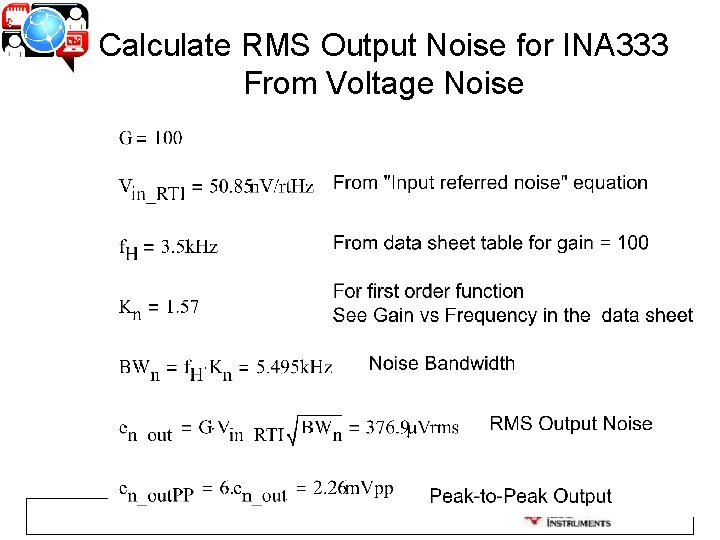
Calculate RMS Output Noise for INA 333 From Voltage Noise 26
27
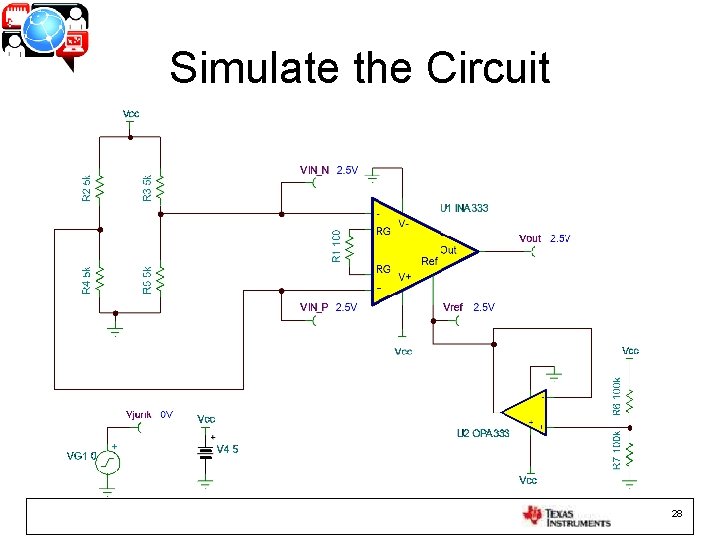
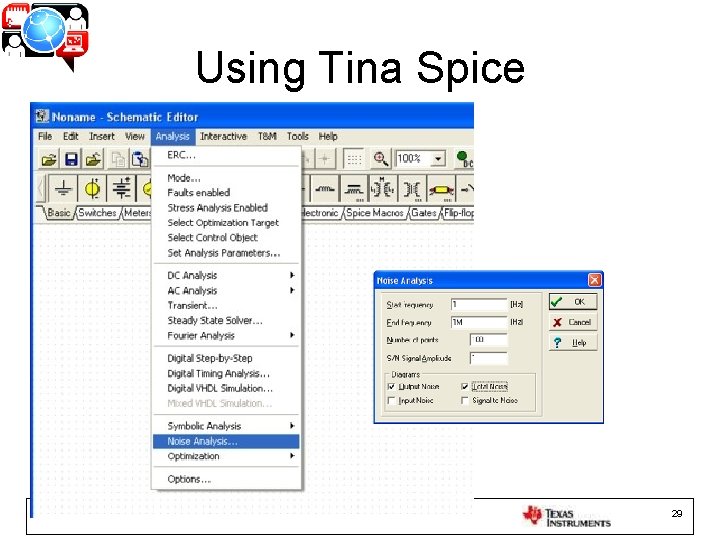
Simulate the Circuit 28
Using Tina Spice 29
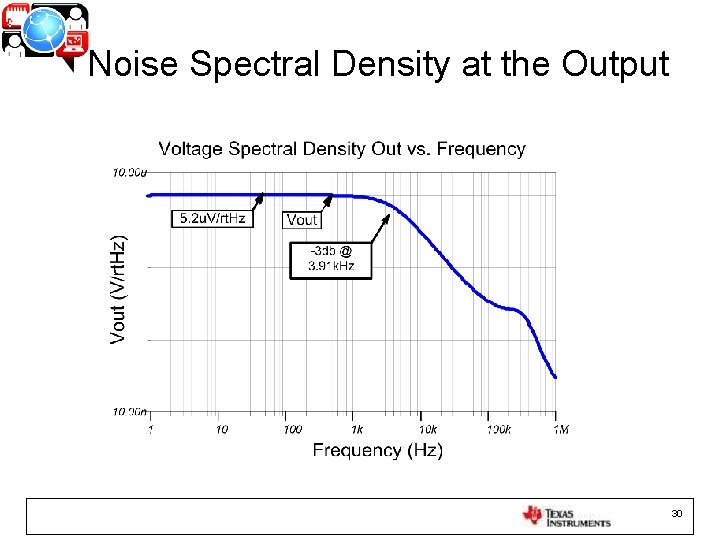
Noise Spectral Density at the Output 30
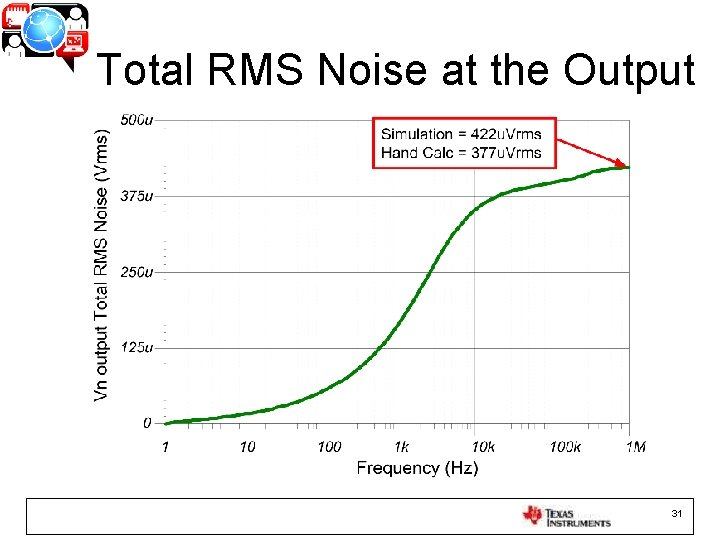
Total RMS Noise at the Output 31
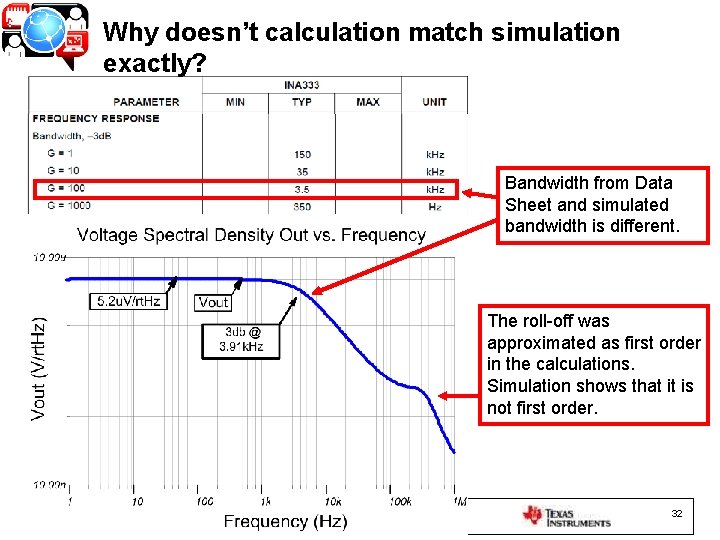
Why doesn’t calculation match simulation exactly? Bandwidth from Data Sheet and simulated bandwidth is different. The roll-off was approximated as first order in the calculations. Simulation shows that it is not first order. 32
33
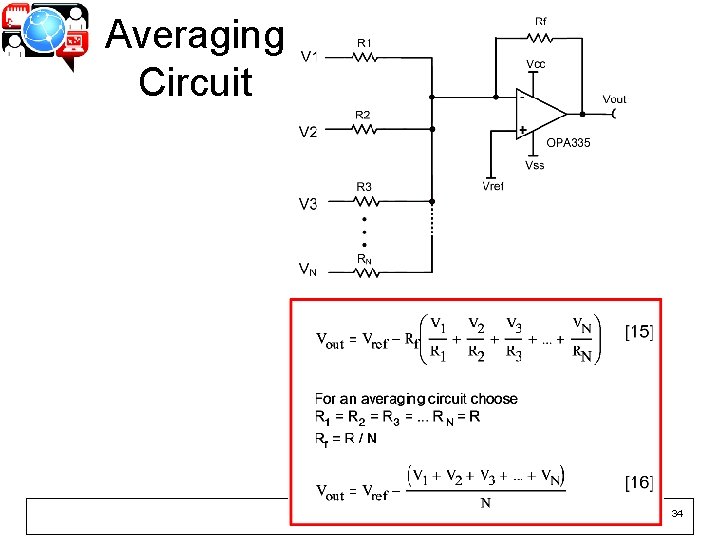
Averaging Circuit 34
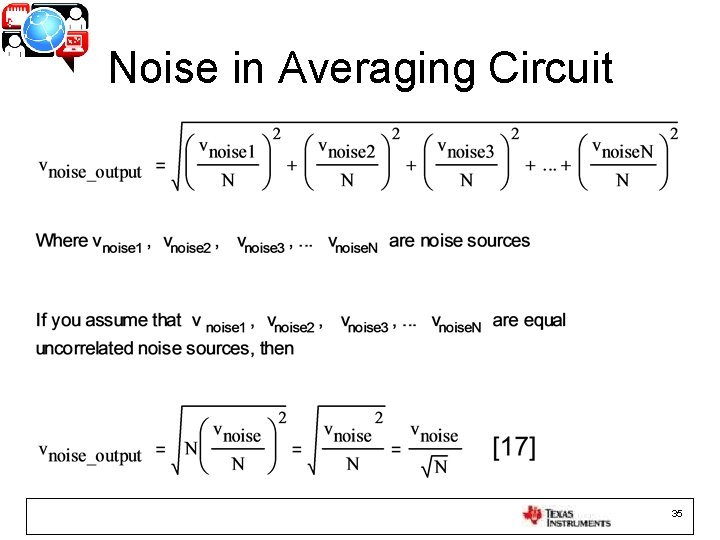
Noise in Averaging Circuit 35
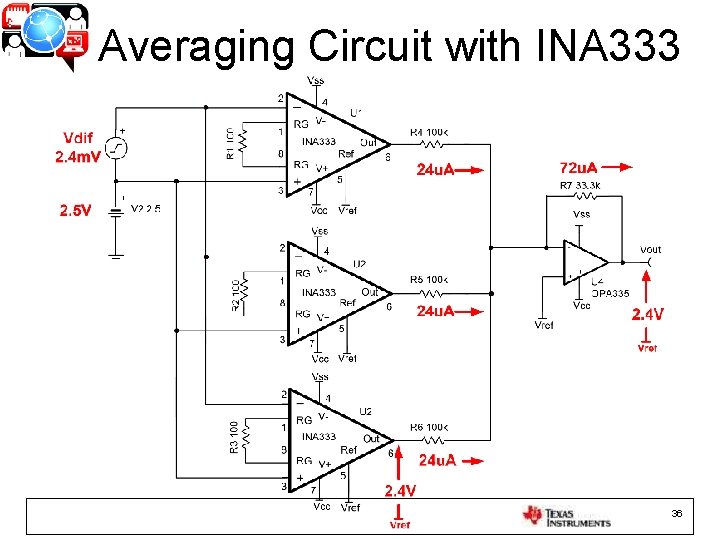
Averaging Circuit with INA 333 36
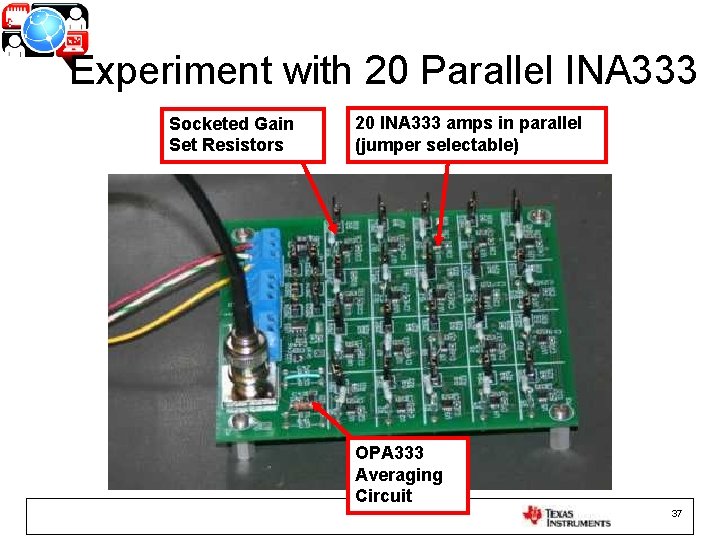
Experiment with 20 Parallel INA 333 Socketed Gain Set Resistors 20 INA 333 amps in parallel (jumper selectable) OPA 333 Averaging Circuit 37
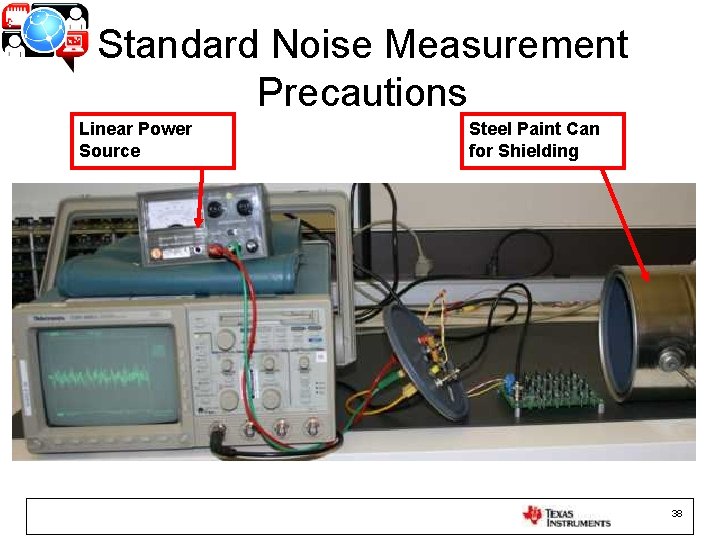
Standard Noise Measurement Precautions Linear Power Source Steel Paint Can for Shielding 38
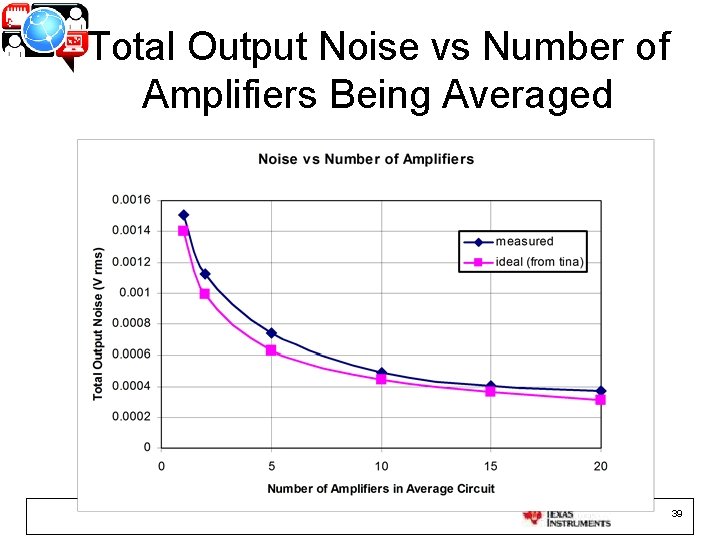
Total Output Noise vs Number of Amplifiers Being Averaged 39
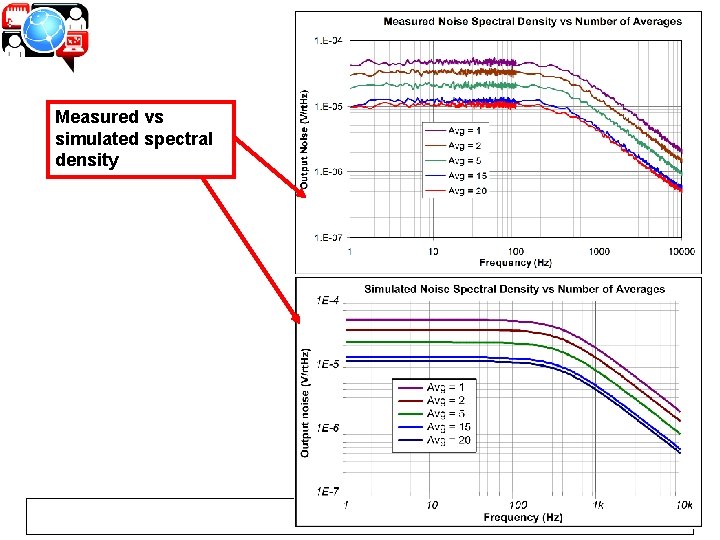
Measured vs simulated spectral density 40
References 1. 2. [1] Hann, Gina. "Selecting the right op amp - Electronic Products. " Electronic Products Magazine – Component and Technology News. 21 Nov. 2008. Web. 09 Dec. 2009. <http: //www 2. electronicproducts. com/Selecting_the_right_op_amp-articlefacntexas_nov 2008 -html. aspx>. Henry W. Ott, Noise Reduction Techniques in Electronics Systems, John Wiley and Sons Acknowledgments: 1. 2. 3. 8. R. Burt, Technique for Computing Noise based on Data Sheet Curves, General Noise Information T. Green, General Information B. Trump, General Information Matt Hann, General INA information and review Noise Article Series (www. en-genius. net) http: //www. en-genius. net/site/zones/audiovideo. ZONE/technical_notes/avt_022508 41
Thank You for Your Interest in INA Noise – Calculation and Measurement 42