
Instrument in operative dentistry Lec 2 Karam ahmed
- Slides: 17
Instrument in operative dentistry Lec. 2 Karam ahmed Msc. operative dentistry
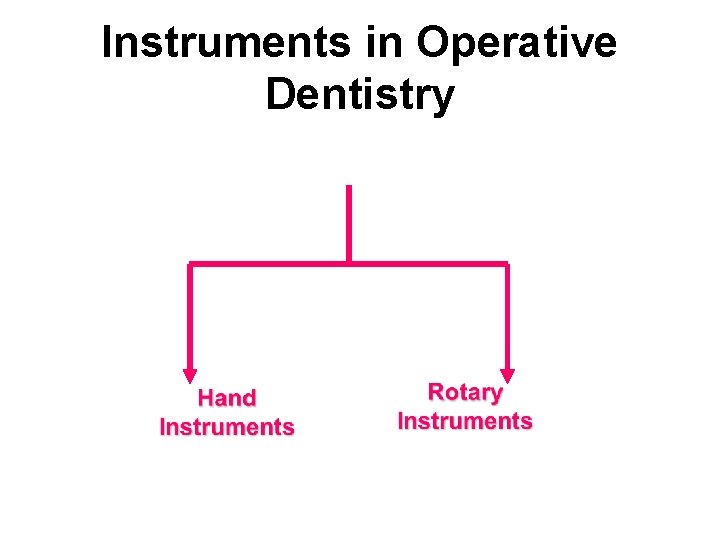
Instruments in Operative Dentistry
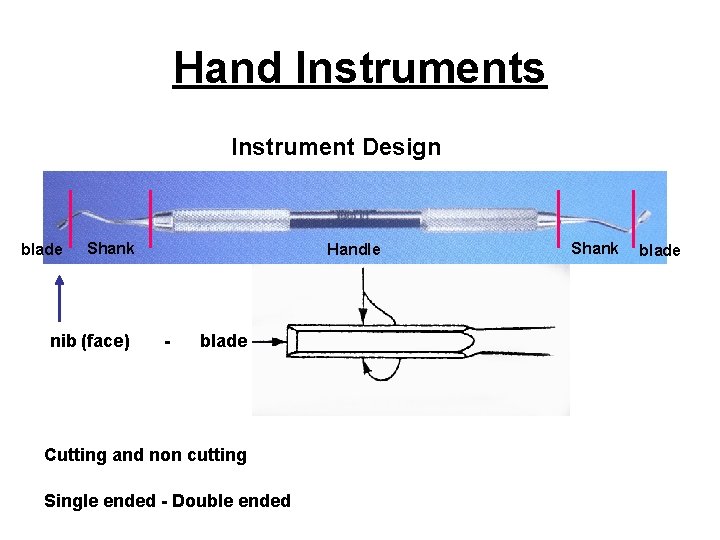
Hand Instruments Instrument Design blade Shank nib (face) Handle - blade Cutting and non cutting Single ended - Double ended Shank blade
Non cutting instruments Diagnostic: mirror, probe (dental explorer), tweezers. Filling : v Dycal applicator, v Cement spatula, v Ash 49, v Glass slap, v Retainer, v Dappen dish, v Amalgam carrier, v Condenser, v Hollenback carver, v Burnisher, v Plastic instrument…….
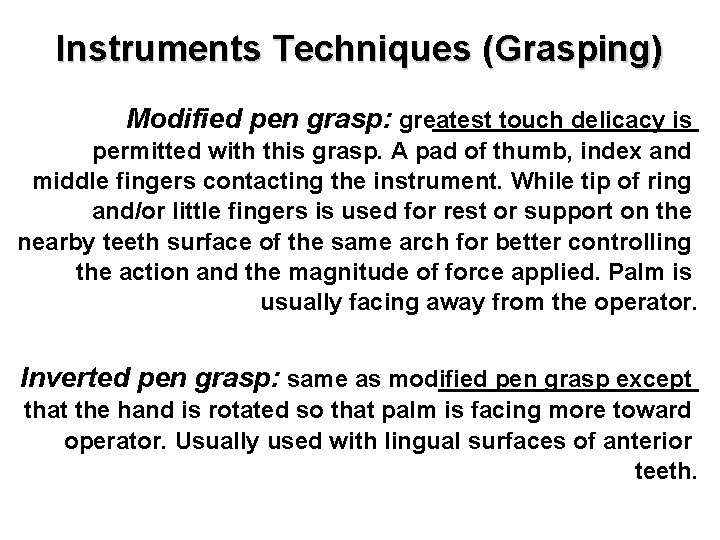
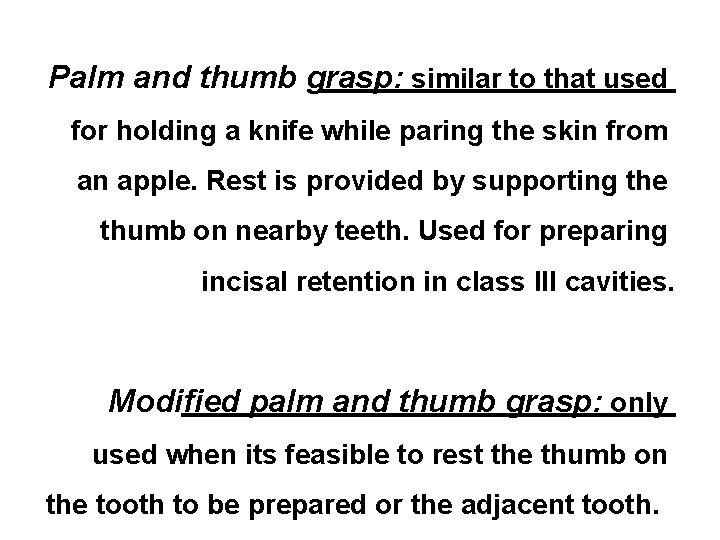
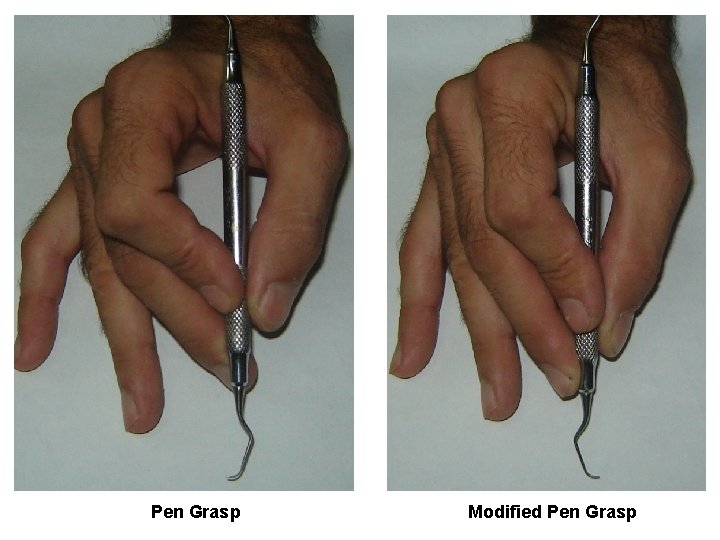
Instruments Techniques (Grasping) Modified pen grasp: greatest touch delicacy is permitted with this grasp. A pad of thumb, index and middle fingers contacting the instrument. While tip of ring and/or little fingers is used for rest or support on the nearby teeth surface of the same arch for better controlling the action and the magnitude of force applied. Palm is usually facing away from the operator. Inverted pen grasp: same as modified pen grasp except that the hand is rotated so that palm is facing more toward operator. Usually used with lingual surfaces of anterior teeth.
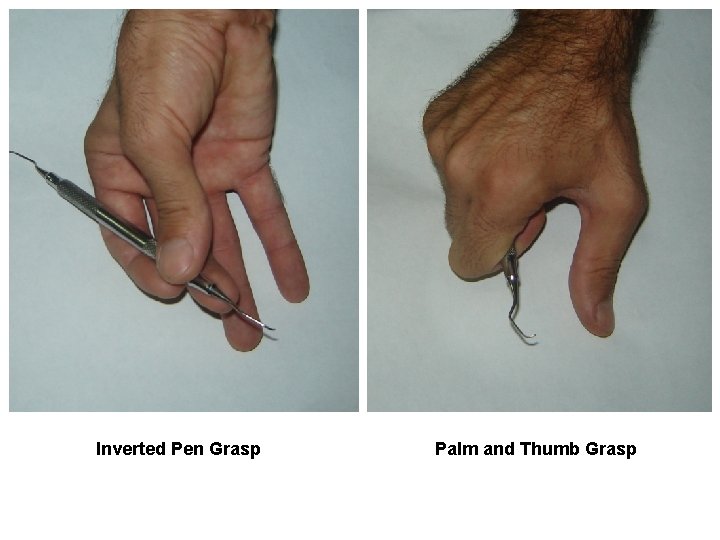
Palm and thumb grasp: similar to that used for holding a knife while paring the skin from an apple. Rest is provided by supporting the thumb on nearby teeth. Used for preparing incisal retention in class III cavities. Modified palm and thumb grasp: only used when its feasible to rest the thumb on the tooth to be prepared or the adjacent tooth.
Pen Grasp Modified Pen Grasp
Inverted Pen Grasp Palm and Thumb Grasp
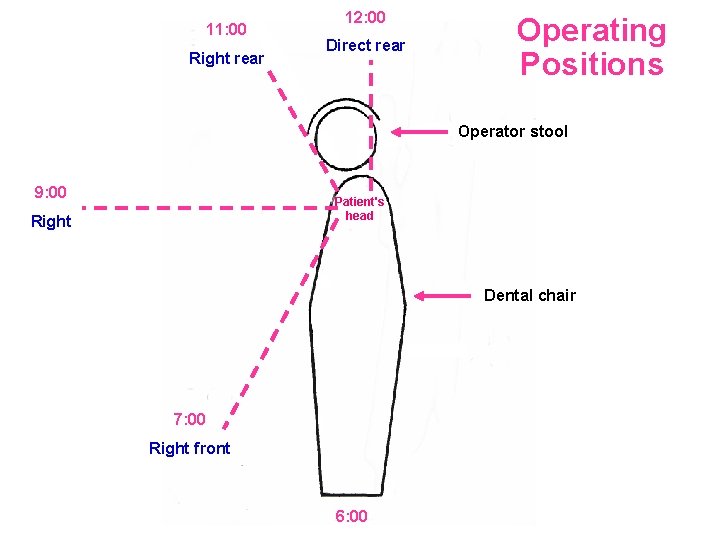
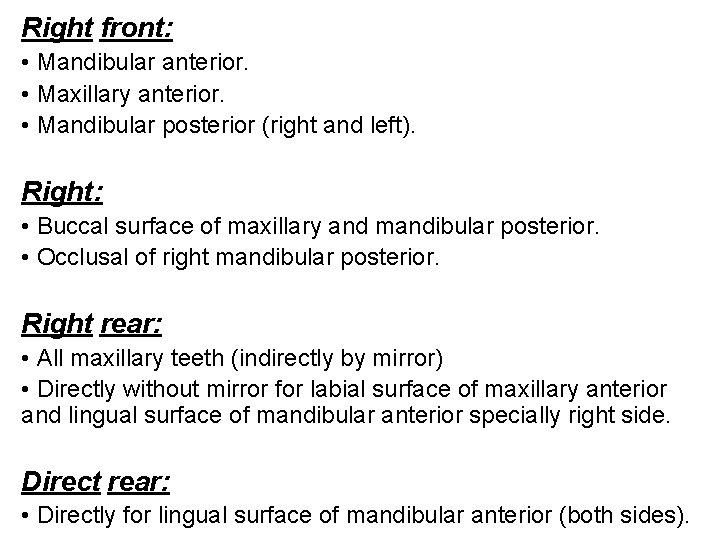
11: 00 Right rear 12: 00 Direct rear Operating Positions Operator stool 9: 00 Patient's head Right Dental chair 7: 00 Right front 6: 00
Right front: • Mandibular anterior. • Maxillary anterior. • Mandibular posterior (right and left). Right: • Buccal surface of maxillary and mandibular posterior. • Occlusal of right mandibular posterior. Right rear: • All maxillary teeth (indirectly by mirror) • Directly without mirror for labial surface of maxillary anterior and lingual surface of mandibular anterior specially right side. Direct rear: • Directly for lingual surface of mandibular anterior (both sides).
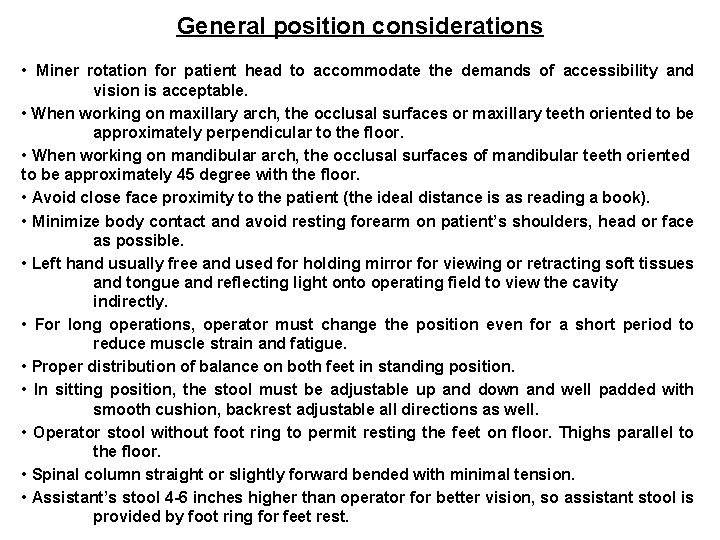
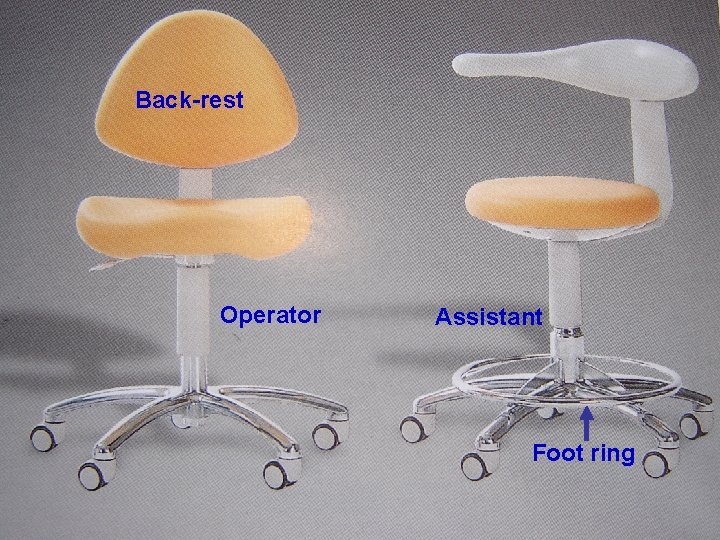
General position considerations • Miner rotation for patient head to accommodate the demands of accessibility and vision is acceptable. • When working on maxillary arch, the occlusal surfaces or maxillary teeth oriented to be approximately perpendicular to the floor. • When working on mandibular arch, the occlusal surfaces of mandibular teeth oriented to be approximately 45 degree with the floor. • Avoid close face proximity to the patient (the ideal distance is as reading a book). • Minimize body contact and avoid resting forearm on patient’s shoulders, head or face as possible. • Left hand usually free and used for holding mirror for viewing or retracting soft tissues and tongue and reflecting light onto operating field to view the cavity indirectly. • For long operations, operator must change the position even for a short period to reduce muscle strain and fatigue. • Proper distribution of balance on both feet in standing position. • In sitting position, the stool must be adjustable up and down and well padded with smooth cushion, backrest adjustable all directions as well. • Operator stool without foot ring to permit resting the feet on floor. Thighs parallel to the floor. • Spinal column straight or slightly forward bended with minimal tension. • Assistant’s stool 4 -6 inches higher than operator for better vision, so assistant stool is provided by foot ring for feet rest.
Back-rest Operator Assistant Foot ring
Cutting instrument Slow speed handpeice Tooth structure can be removed by slow speed but this must be avoided, Why? ? ? ? ? v Traumatic experience for both patient and dentist. v Ineffective. v Time consuming. v Require heavy force. v Excessive vibration and heat generation. v Burs have tendency to roll out of cavity and the cavity margins or outer tooth surface. v Carbide burs easily broken by slow speed and high pressure. So it has limited uses for: Ø teeth cleaning. Ø caries excavation. Ø finishing and polishing. 13
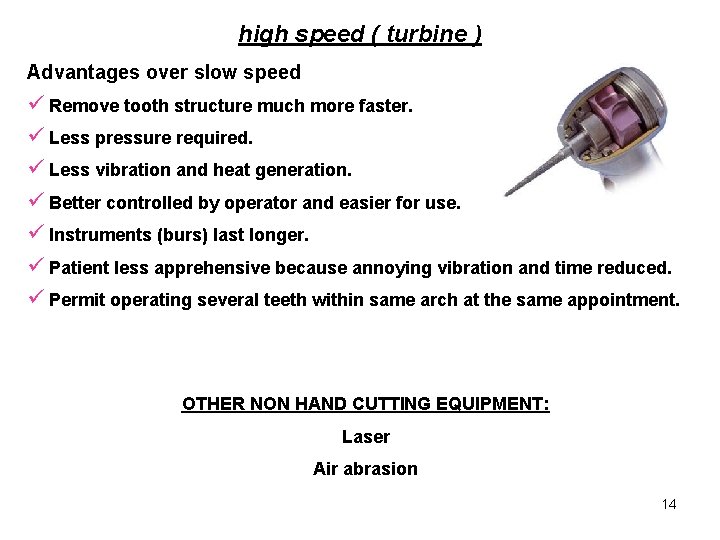
high speed ( turbine ) Advantages over slow speed ü Remove tooth structure much more faster. ü Less pressure required. ü Less vibration and heat generation. ü Better controlled by operator and easier for use. ü Instruments (burs) last longer. ü Patient less apprehensive because annoying vibration and time reduced. ü Permit operating several teeth within same arch at the same appointment. OTHER NON HAND CUTTING EQUIPMENT: Laser Air abrasion 14
Classification of Burs According to Material used Steel burs: Well cutting human dentin but Mainly used now for finishing procedures, Why? ? ? Ø Dull easily. Ø Heat production. Ø Vibration. Carbide burs: Stiffer and stronger than steel but unfortunately: Ø Rust easily, Ø Easily fractured at neck when subjected to sudden blow, so replaced by steel neck. Ø Again steel neck may bend and producing a risky eccentric rotation (run 15 out) vibration.
• Diamond burs: 1. Highly cutting efficiency 2. No heat generation 3. Not fractured easily 16
The End 17