
Instructional Strategies to Support Affective Learning Tips for
- Slides: 12
Instructional Strategies to Support Affective Learning
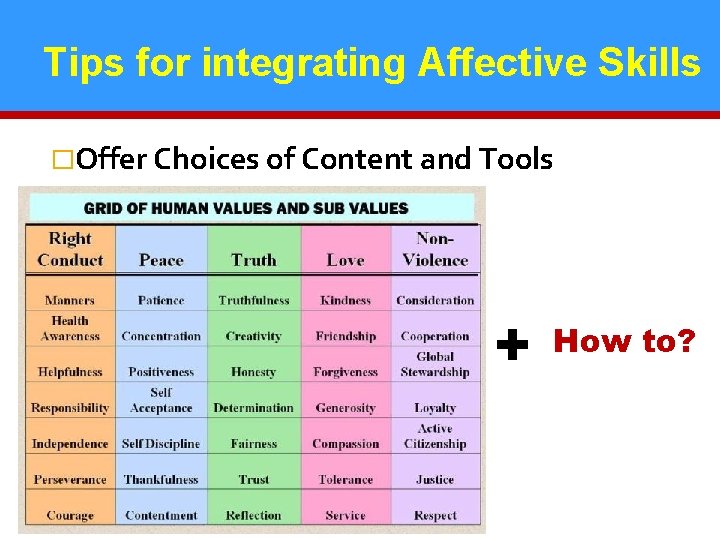
Tips for integrating Affective Skills �Offer Choices of Content and Tools + How to?
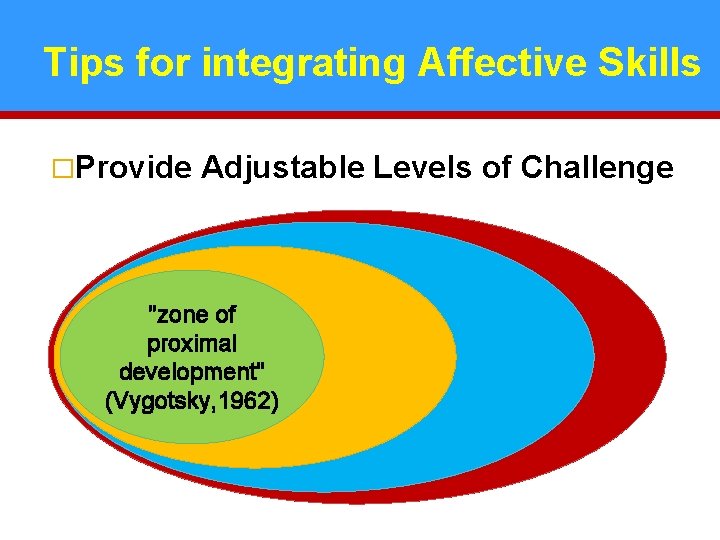
Tips for integrating Affective Skills �Provide Adjustable Levels of Challenge "zone of proximal development" (Vygotsky, 1962)
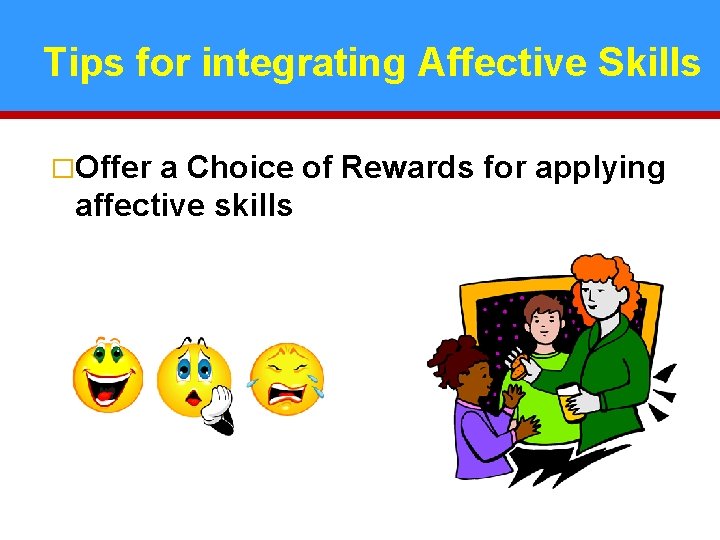
Tips for integrating Affective Skills �Offer a Choice of Rewards for applying affective skills
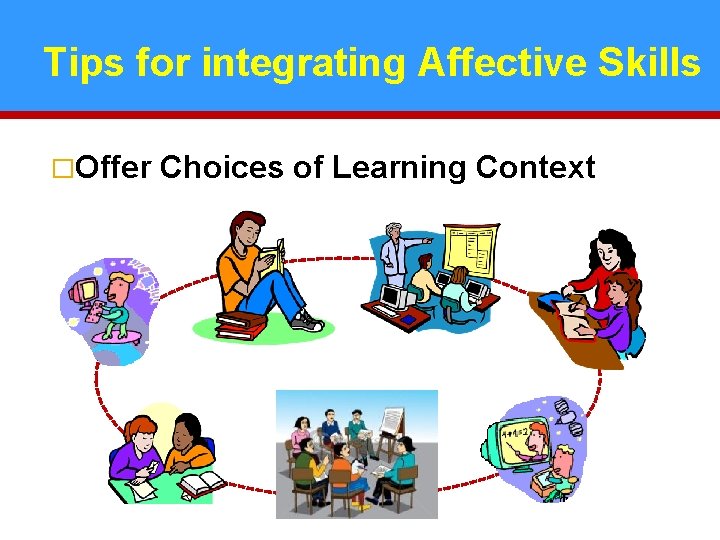
Tips for integrating Affective Skills �Offer Choices of Learning Context
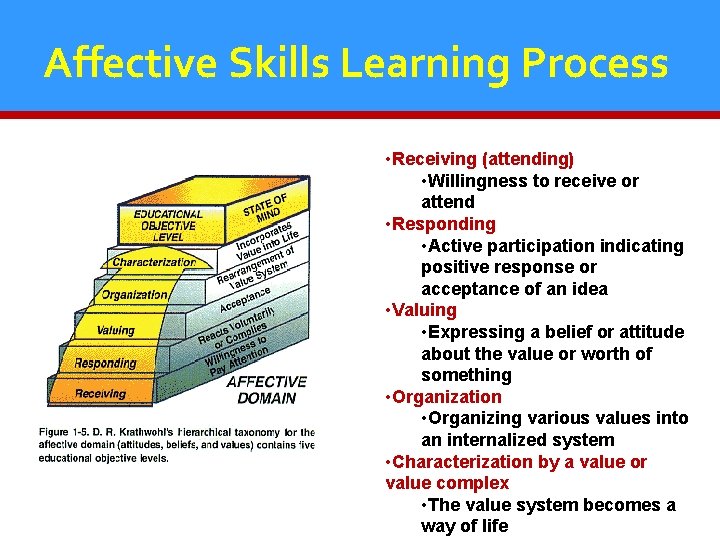
Affective Skills Learning Process • Receiving (attending) • Willingness to receive or attend • Responding • Active participation indicating positive response or acceptance of an idea • Valuing • Expressing a belief or attitude about the value or worth of something • Organization • Organizing various values into an internalized system • Characterization by a value or value complex • The value system becomes a way of life
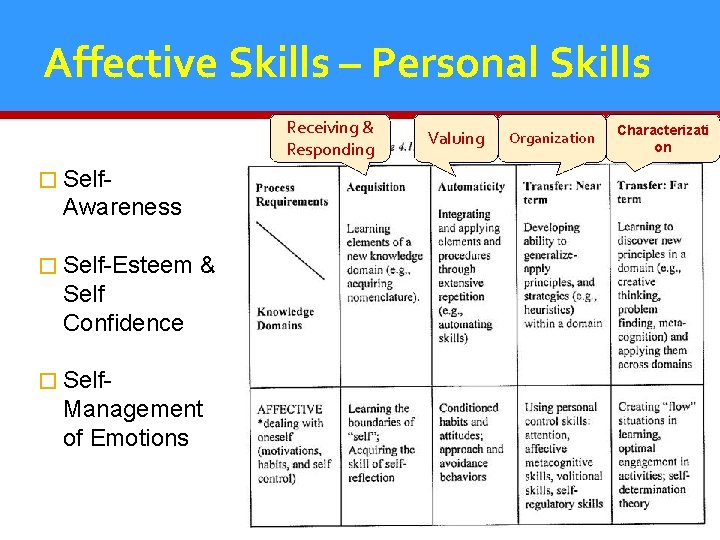
Affective Skills – Personal Skills Receiving & Responding � Self- Awareness � Self-Esteem & Self Confidence � Self- Management of Emotions Valuing Organization Characterizati on
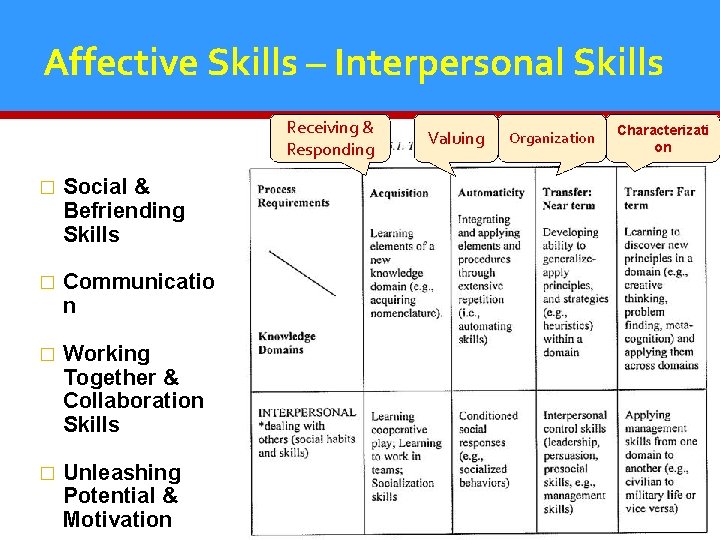
Affective Skills – Interpersonal Skills Receiving & Responding � Social & Befriending Skills � Communicatio n � Working Together & Collaboration Skills � Unleashing Potential & Motivation Valuing Organization Characterizati on
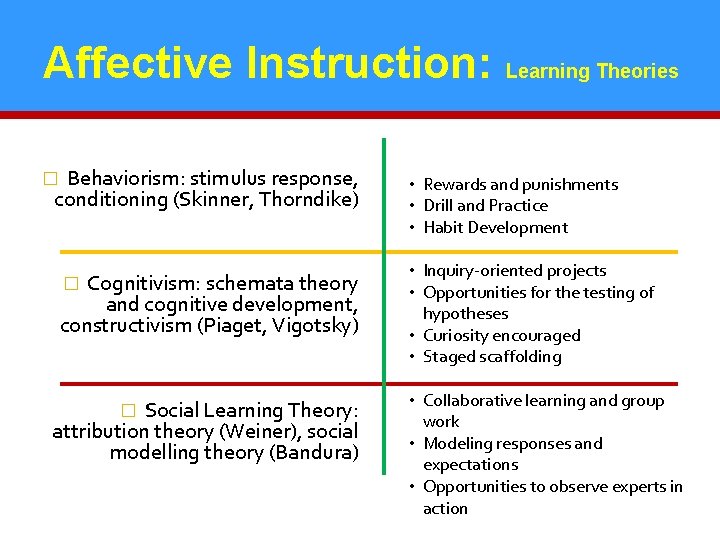
Affective Instruction: Learning Theories Behaviorism: stimulus response, conditioning (Skinner, Thorndike) � Cognitivism: schemata theory and cognitive development, constructivism (Piaget, Vigotsky) � Social Learning Theory: attribution theory (Weiner), social modelling theory (Bandura) � • Rewards and punishments • Drill and Practice • Habit Development • Inquiry-oriented projects • Opportunities for the testing of hypotheses • Curiosity encouraged • Staged scaffolding • Collaborative learning and group work • Modeling responses and expectations • Opportunities to observe experts in action
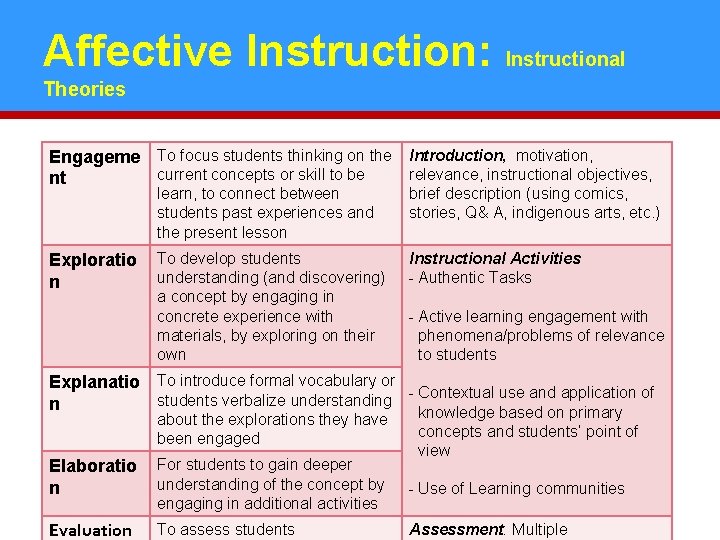
Affective Instruction: Instructional Theories Engageme To focus students thinking on the Introduction, motivation, current concepts or skill to be relevance, instructional objectives, nt Exploratio n learn, to connect between students past experiences and the present lesson brief description (using comics, stories, Q& A, indigenous arts, etc. ) To develop students understanding (and discovering) a concept by engaging in concrete experience with materials, by exploring on their own Instructional Activities - Authentic Tasks - Active learning engagement with phenomena/problems of relevance to students Explanatio To introduce formal vocabulary or students verbalize understanding - Contextual use and application of n knowledge based on primary about the explorations they have been engaged concepts and students’ point of view Elaboratio n For students to gain deeper understanding of the concept by engaging in additional activities - Use of Learning communities Evaluation To assess students Assessment: Multiple
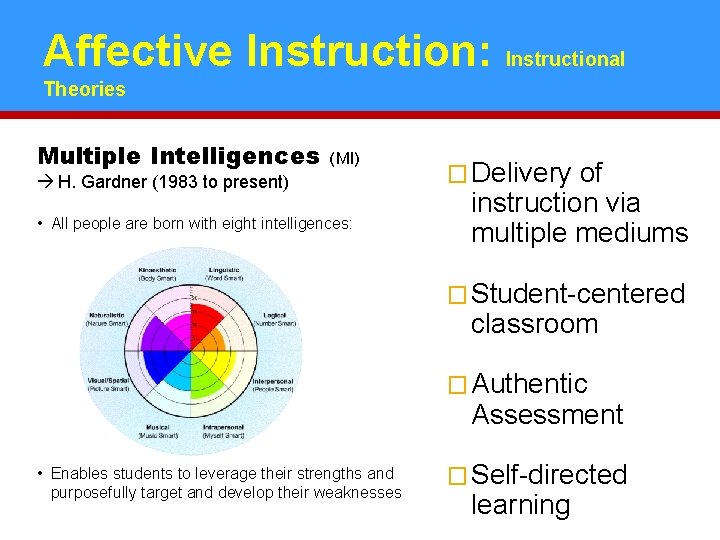
Affective Instruction: Instructional Theories Multiple Intelligences (MI) H. Gardner (1983 to present) • All people are born with eight intelligences: � Delivery of instruction via multiple mediums � Student-centered classroom � Authentic Assessment • Enables students to leverage their strengths and purposefully target and develop their weaknesses � Self-directed learning
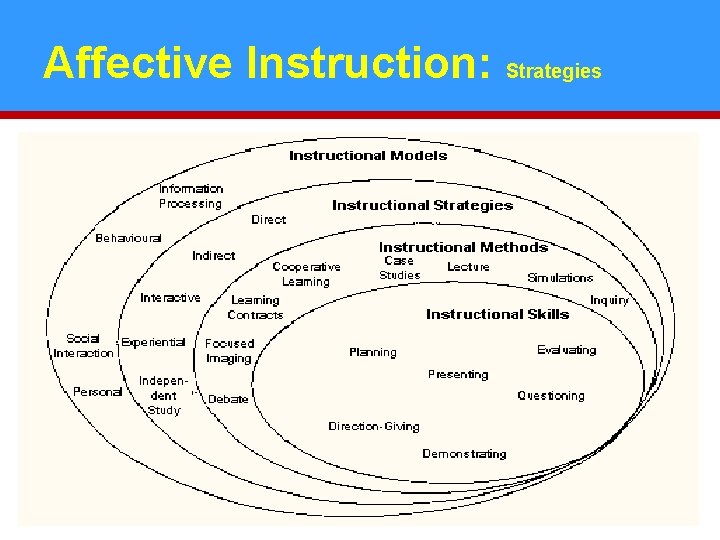
Affective Instruction: Strategies