
Instructional strategies Instructional Strategies What are they Basic
Instructional strategies
Instructional Strategies • What are they? • Basic techniques used to promote learning.
What’s more important? • Knowledge or Thinking Skills
Key Instructional Skills
Questioning • Why do teachers use questioning? – Generate interest – Stimulate learning – Check for understanding – Encourage participation – Develop thinking skills – Evaluate learning
Questioning • As a teacher you must decide – When questions are appropriate – How to ask them – How to respond to answers
Questioning • Keep these guidelines in mind when creating questions: • Plan questions along with the lesson • Ask questions of varying difficulty – Bloom’s – What do varying difficulty questions accomplish? • Include open ended questions – What are open ended questions?
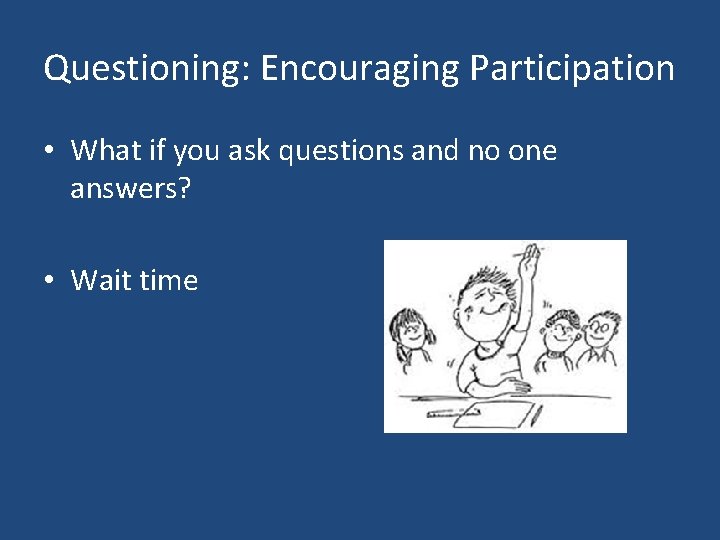
Questioning: Encouraging Participation • What if you ask questions and no one answers? • Wait time
Questioning: Responding to Students Answers • How should you respond to student’s answers to your spoken questions?
Using Examples • What can a teacher use as an example in a class? – Math? – Science? – History? – English? – Kindergarten?
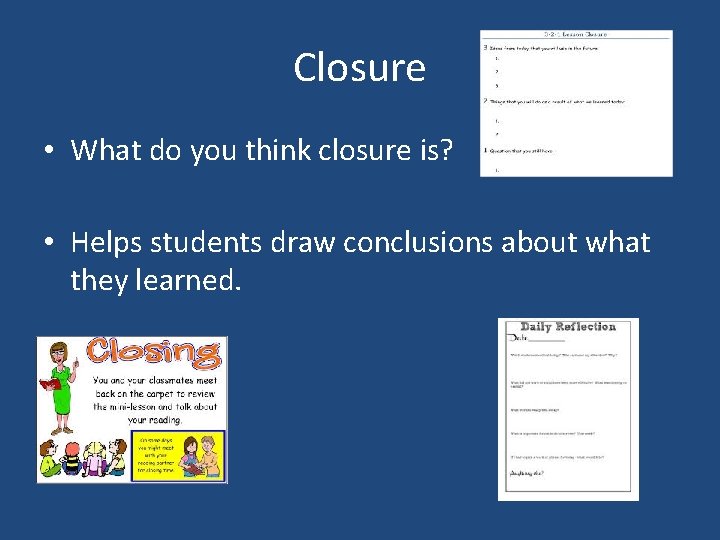
Closure • What do you think closure is? • Helps students draw conclusions about what they learned.
Basic Teaching Strategies
Two Classifications 1. Teacher – Centered Methods 1. Teacher presents information to learners 2. Teacher directs learning process 2. Learner – Centered Methods 1. Teacher acts as a facilitator or guide for learning
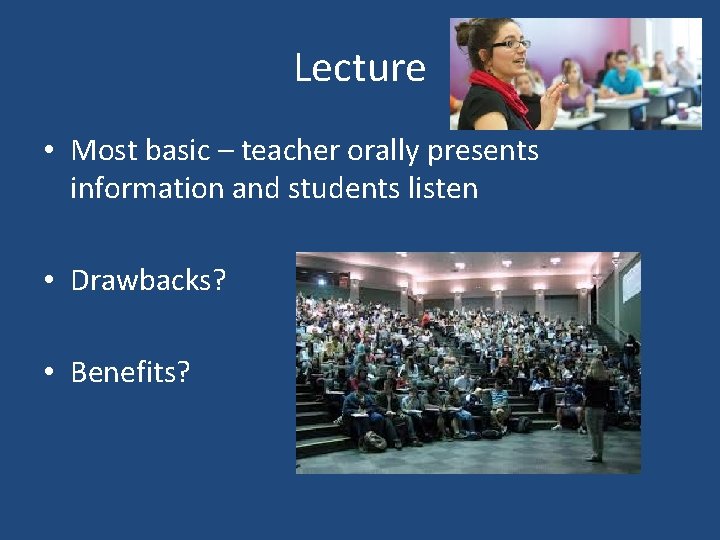
Lecture • Most basic – teacher orally presents information and students listen • Drawbacks? • Benefits?
Reading • Basic way of learning a wealth of information.
Discussions • Can be teacher centered or learned centered • Must start with a question • Why are discussions beneficial? • Why do teachers have to set ground rules?
Guest Speakers • Every school has different policies on guest speakers.
Simulations • Skits, role playing, case studies, mock trial • Computer based simulations
Reflective Responses • Students think deeply about an issue or something they have learned. • Can be verbal or written
Labs • Productive lab creates something • Experimental Lab uses a formal process to research a problem
Cooperative Learning • Everyone in a group works together to achieve a common goal. • Individual accountability is important
Student Presentations • Students share what they learn • Communication skills • Leads to a better understanding of material
Questions to discuss • Which instructional strategy that we discussed today do you think is best?
- Slides: 23