
INSTRUCTIONAL APPROACH TO PARAGRAPH WRITING Analysis Design Develop

- Slides: 25
INSTRUCTIONAL APPROACH TO PARAGRAPH WRITING Analysis Design Develop Implement Evaluate
Analysis Key Elements: • Causes of Performance Gap • Instructional Goals for Learners • Description of Learner.
Performance Gap Causes • Performance Gap exists between GA Writing Assessment for 8 th Grade & Desired Outcome • In-Class Rubric Evaluation demonstrated a need for further instruction in paragraph writing.
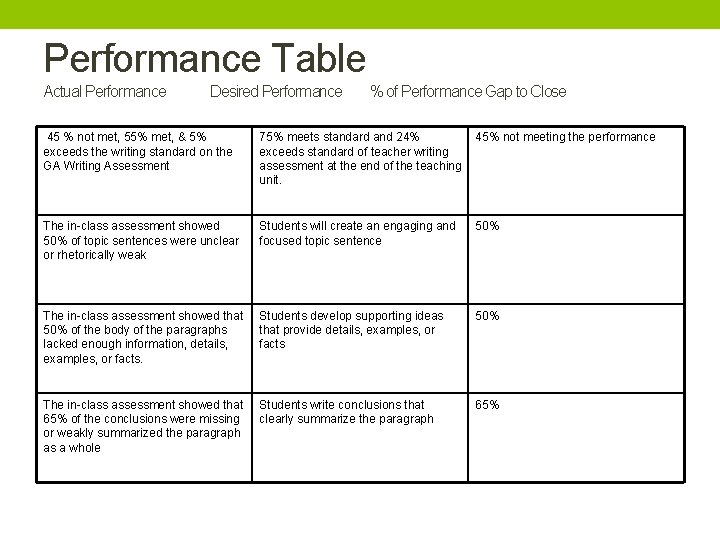
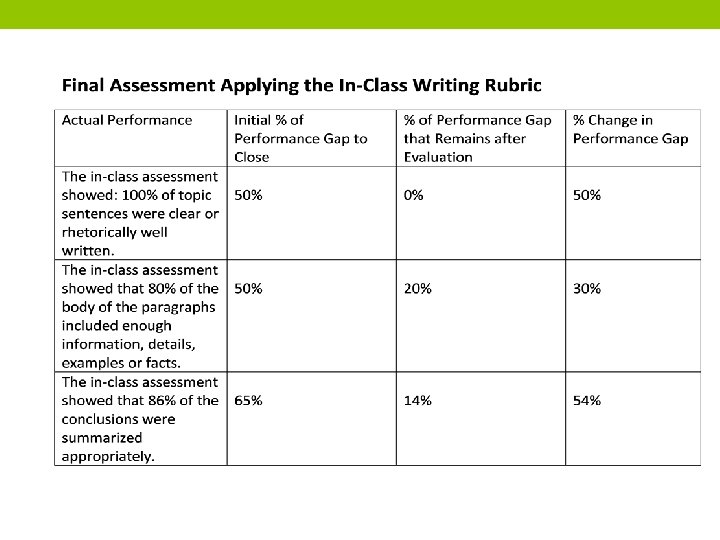
Performance Table Actual Performance Desired Performance % of Performance Gap to Close 45 % not met, 55% met, & 5% exceeds the writing standard on the GA Writing Assessment 75% meets standard and 24% exceeds standard of teacher writing assessment at the end of the teaching unit. 45% not meeting the performance The in-class assessment showed 50% of topic sentences were unclear or rhetorically weak Students will create an engaging and focused topic sentence 50% The in-class assessment showed that 50% of the body of the paragraphs lacked enough information, details, examples, or facts. Students develop supporting ideas that provide details, examples, or facts 50% The in-class assessment showed that 65% of the conclusions were missing or weakly summarized the paragraph as a whole Students write conclusions that clearly summarize the paragraph 65%
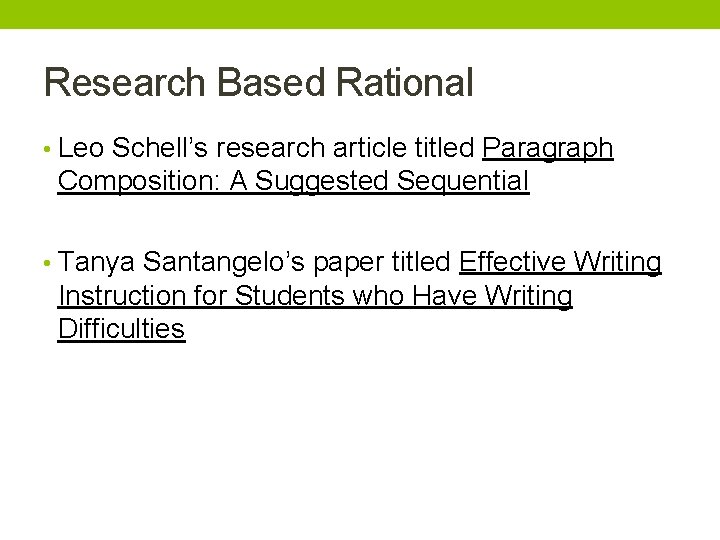
Research Based Rational • Leo Schell’s research article titled Paragraph Composition: A Suggested Sequential • Tanya Santangelo’s paper titled Effective Writing Instruction for Students who Have Writing Difficulties
Design • Restates the Purpose and Instruction • Desired Performance & Related Tasks • Testing Methods or Strategies
Purpose To improve the individual writing skills of students with the goal of creating an engaging paragraph.
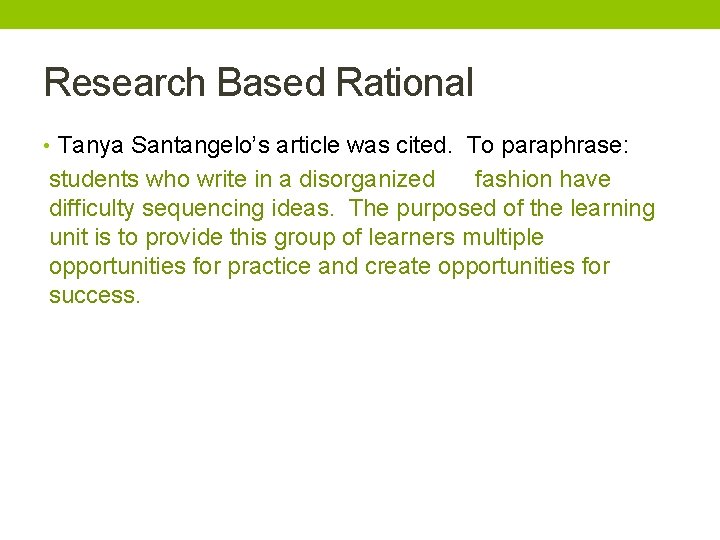
Research Based Rational • Tanya Santangelo’s article was cited. To paraphrase: students who write in a disorganized fashion have difficulty sequencing ideas. The purposed of the learning unit is to provide this group of learners multiple opportunities for practice and create opportunities for success.
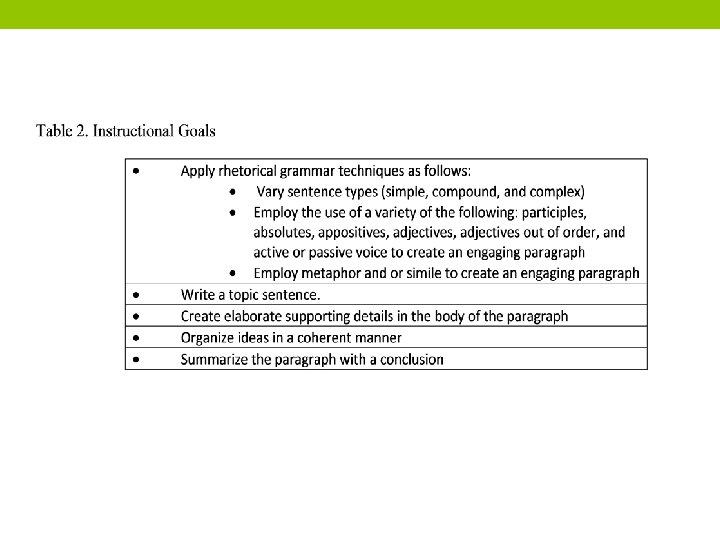
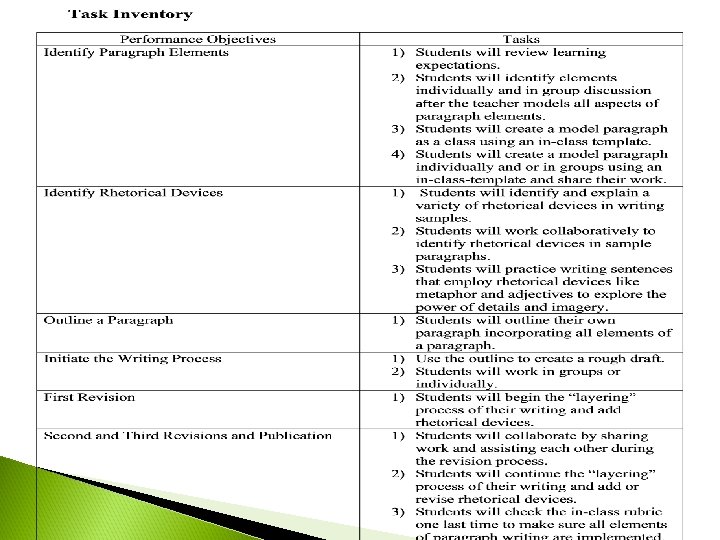
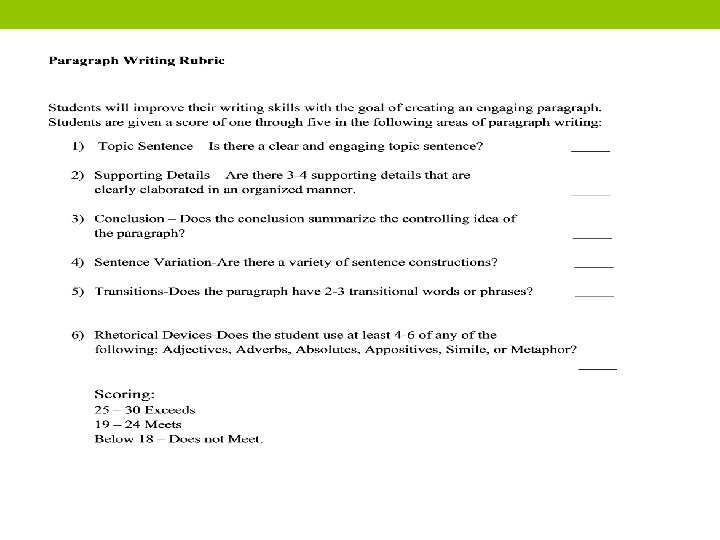
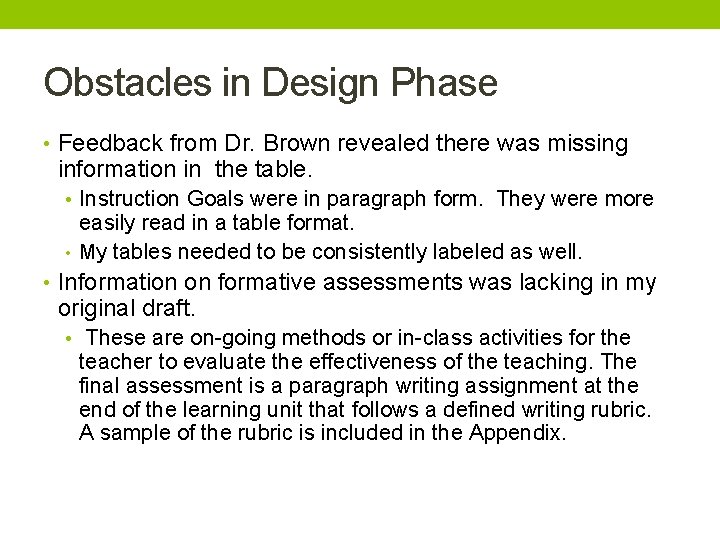
Obstacles in Design Phase • Feedback from Dr. Brown revealed there was missing information in the table. • Instruction Goals were in paragraph form. They were more • easily read in a table format. My tables needed to be consistently labeled as well. • Information on formative assessments was lacking in my original draft. • These are on-going methods or in-class activities for the teacher to evaluate the effectiveness of the teaching. The final assessment is a paragraph writing assignment at the end of the learning unit that follows a defined writing rubric. A sample of the rubric is included in the Appendix.
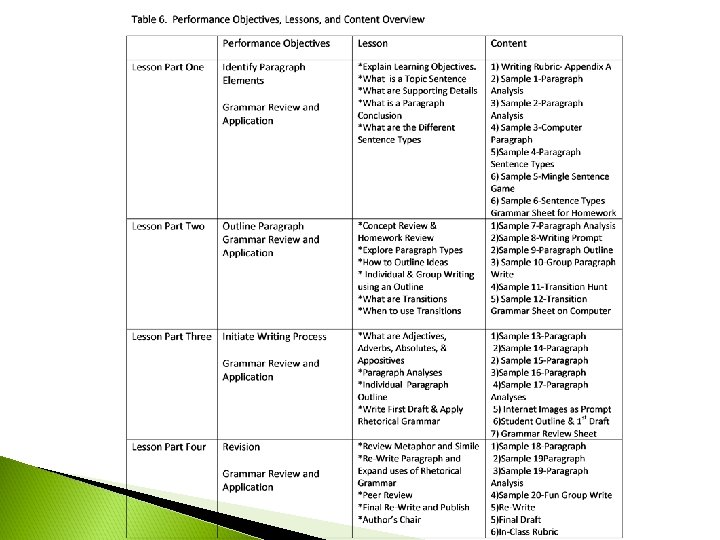
Develop Phase • Performance Objectives, Lessons, Content • Instructional Strategies • Guidance for Student & Teacher
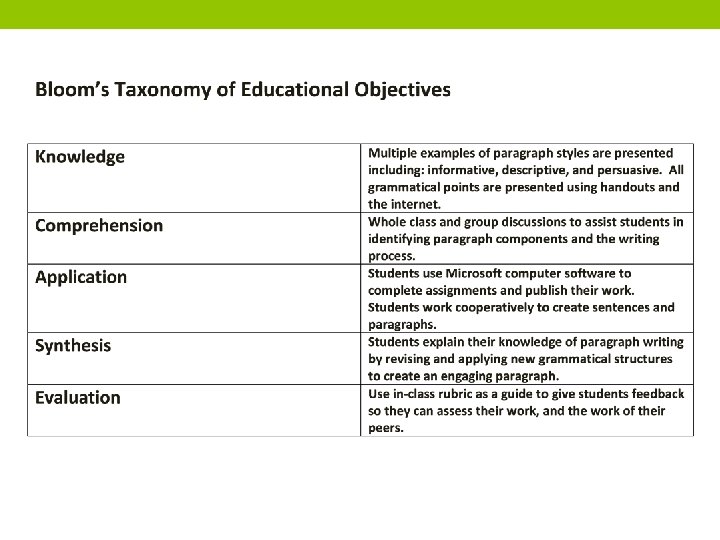
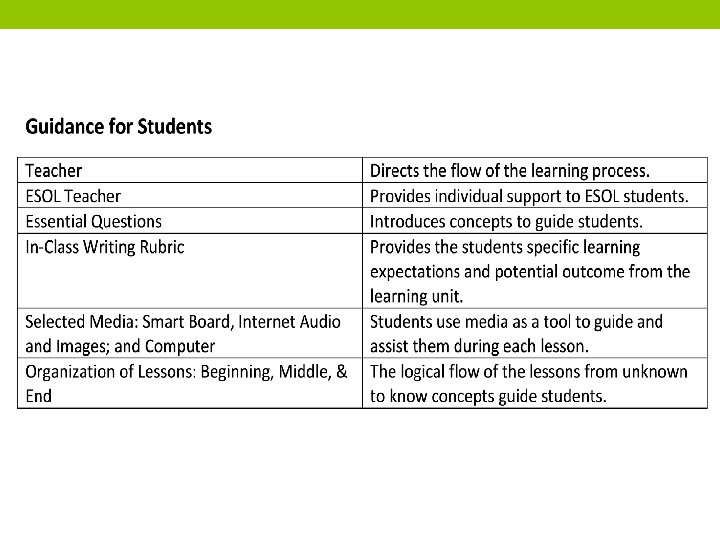
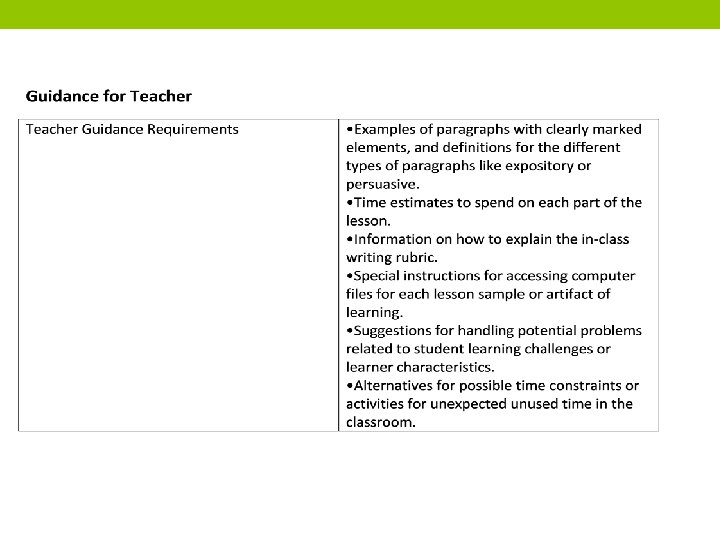
Instructional Strategies • Blooms Taxonomy of Educational Objectives • Beginning, Middle End • Formative Assessments • Guidance for Student • Guidance for Teacher
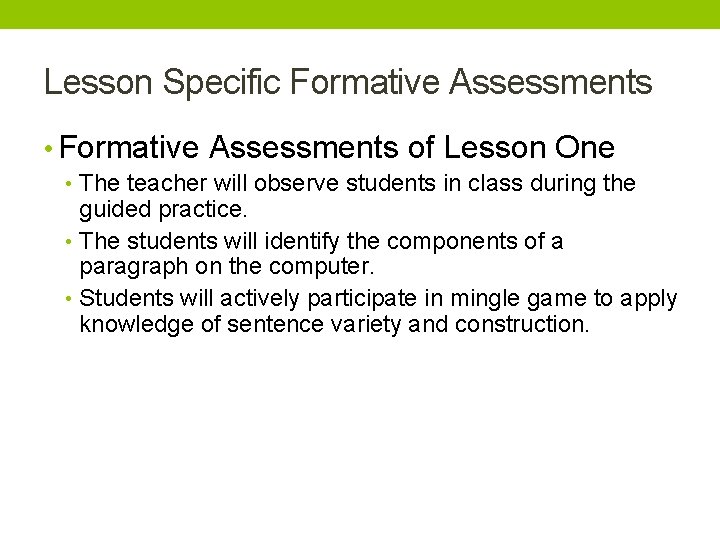
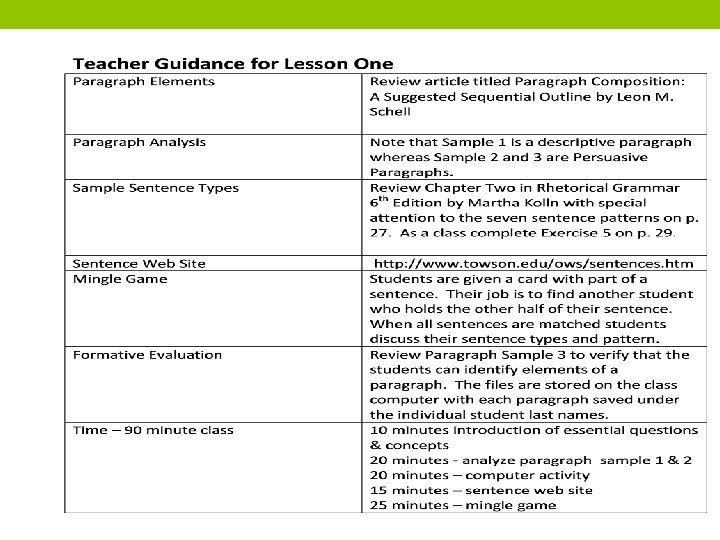
Lesson Specific Formative Assessments • Formative Assessments of Lesson One • The teacher will observe students in class during the guided practice. • The students will identify the components of a paragraph on the computer. • Students will actively participate in mingle game to apply knowledge of sentence variety and construction.
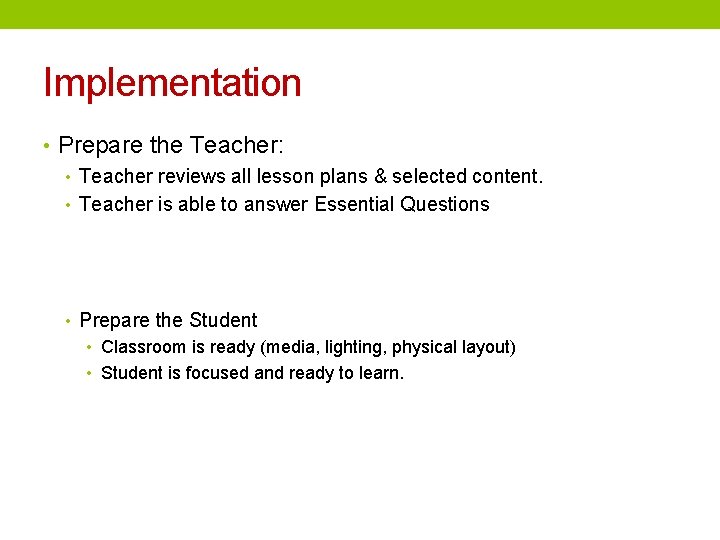
Implementation • Prepare the Teacher: • Teacher reviews all lesson plans & selected content. • Teacher is able to answer Essential Questions • Prepare the Student • Classroom is ready (media, lighting, physical layout) • Student is focused and ready to learn.
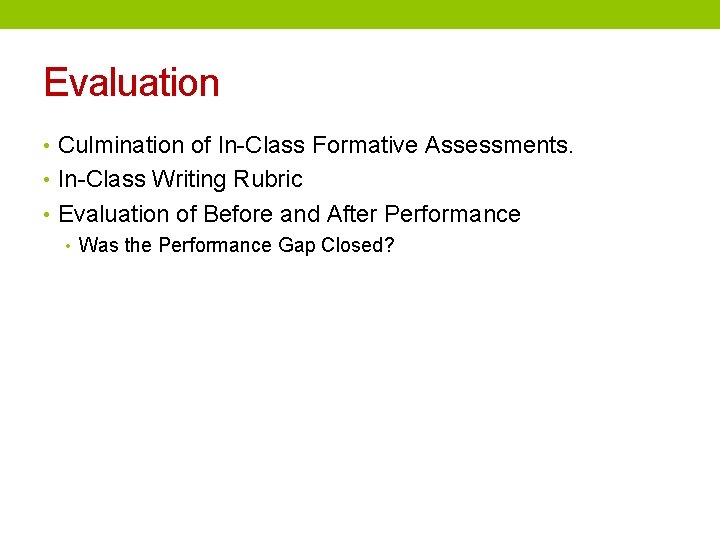
Evaluation • Culmination of In-Class Formative Assessments. • In-Class Writing Rubric • Evaluation of Before and After Performance • Was the Performance Gap Closed?