
Institutionalization A Forerunner of Culture 2003 Prentice Hall
- Slides: 19
Institutionalization: A Forerunner of Culture © 2003 Prentice Hall Inc. All rights reserved.
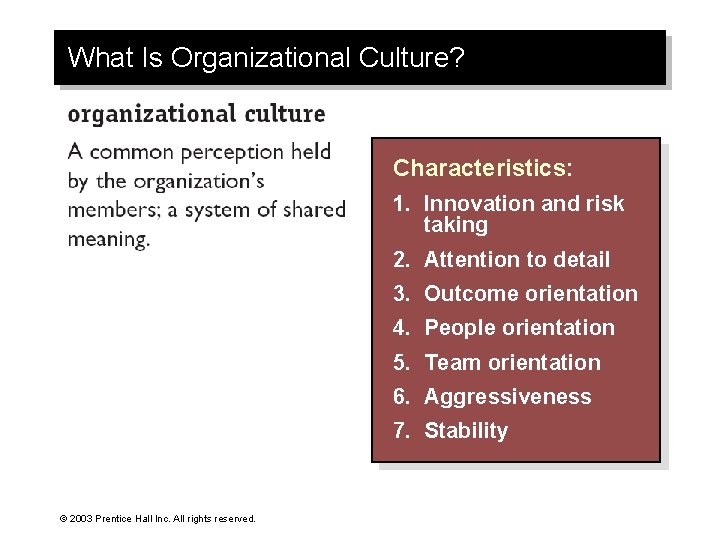
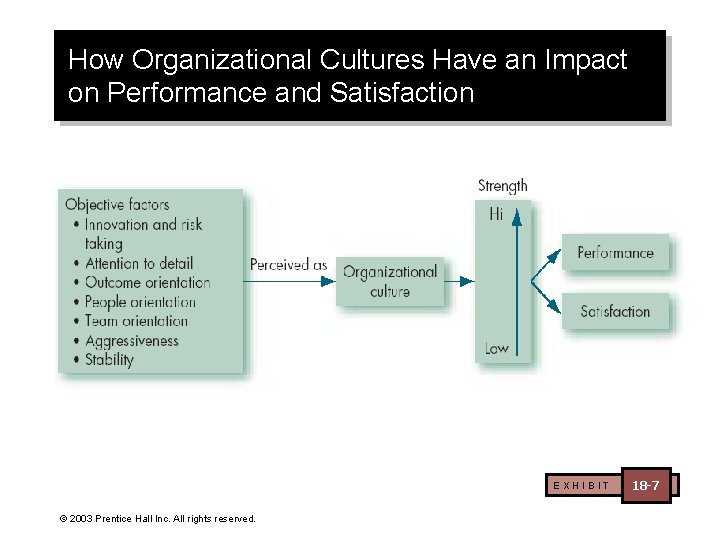
What Is Organizational Culture? Characteristics: 1. Innovation and risk taking 2. Attention to detail 3. Outcome orientation 4. People orientation 5. Team orientation 6. Aggressiveness 7. Stability © 2003 Prentice Hall Inc. All rights reserved.
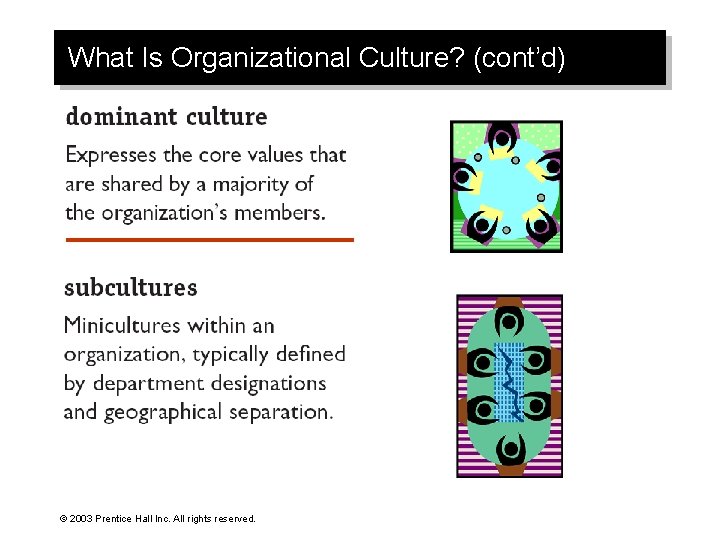
What Is Organizational Culture? (cont’d) © 2003 Prentice Hall Inc. All rights reserved.
What Is Organizational Culture? (cont’d) © 2003 Prentice Hall Inc. All rights reserved.
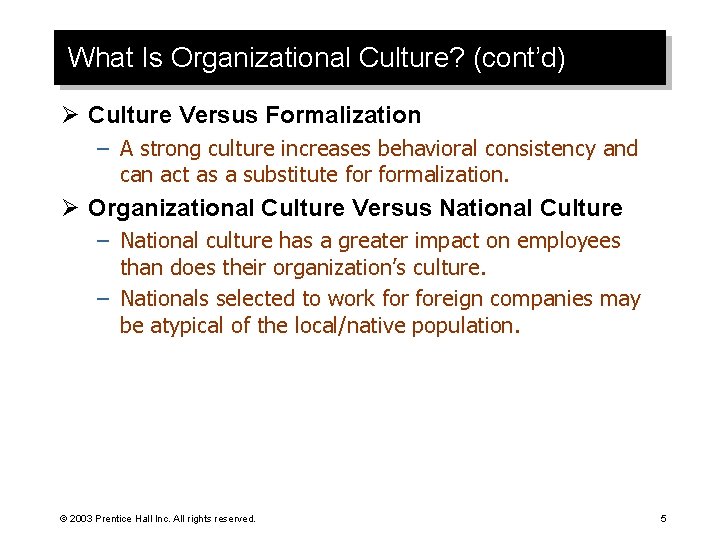
What Is Organizational Culture? (cont’d) Ø Culture Versus Formalization – A strong culture increases behavioral consistency and can act as a substitute formalization. Ø Organizational Culture Versus National Culture – National culture has a greater impact on employees than does their organization’s culture. – Nationals selected to work foreign companies may be atypical of the local/native population. © 2003 Prentice Hall Inc. All rights reserved. 5
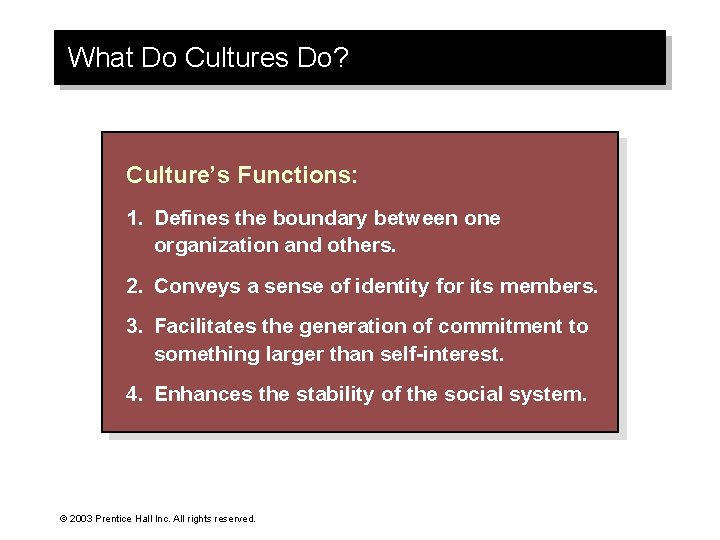
What Do Cultures Do? Culture’s Functions: 1. Defines the boundary between one organization and others. 2. Conveys a sense of identity for its members. 3. Facilitates the generation of commitment to something larger than self-interest. 4. Enhances the stability of the social system. © 2003 Prentice Hall Inc. All rights reserved.
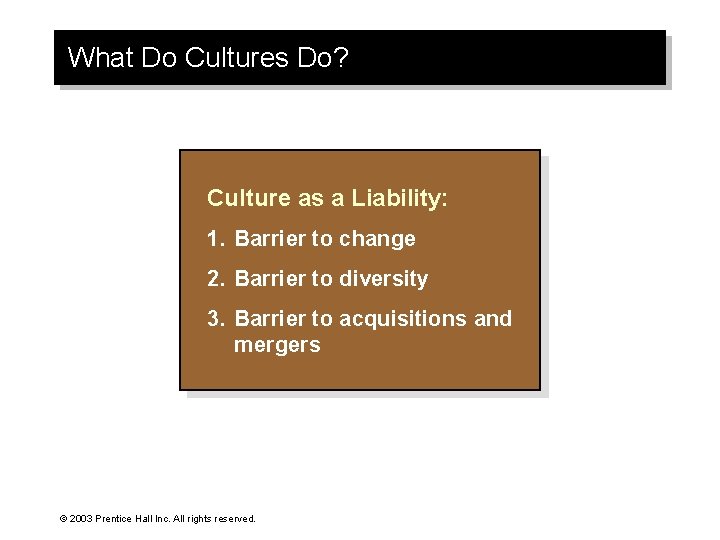
What Do Cultures Do? Culture as a Liability: 1. Barrier to change 2. Barrier to diversity 3. Barrier to acquisitions and mergers © 2003 Prentice Hall Inc. All rights reserved.
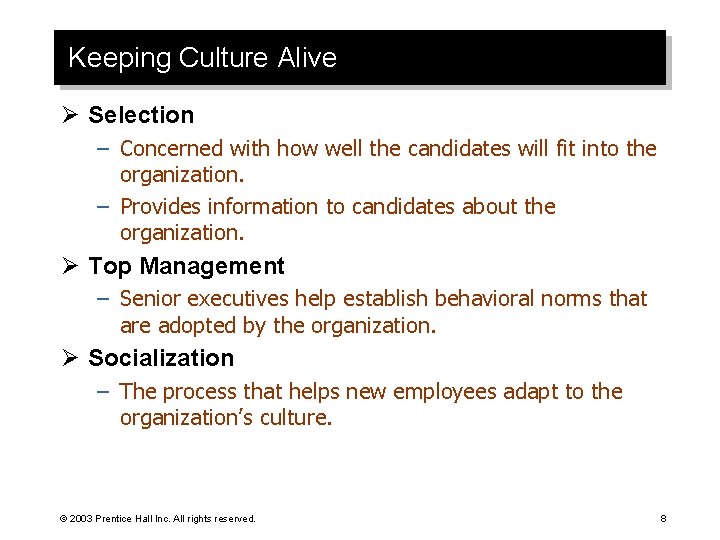
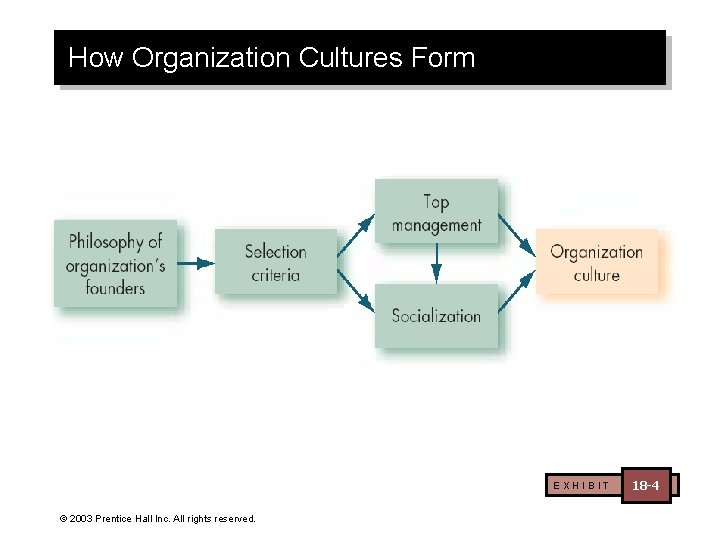
Keeping Culture Alive Ø Selection – Concerned with how well the candidates will fit into the organization. – Provides information to candidates about the organization. Ø Top Management – Senior executives help establish behavioral norms that are adopted by the organization. Ø Socialization – The process that helps new employees adapt to the organization’s culture. © 2003 Prentice Hall Inc. All rights reserved. 8
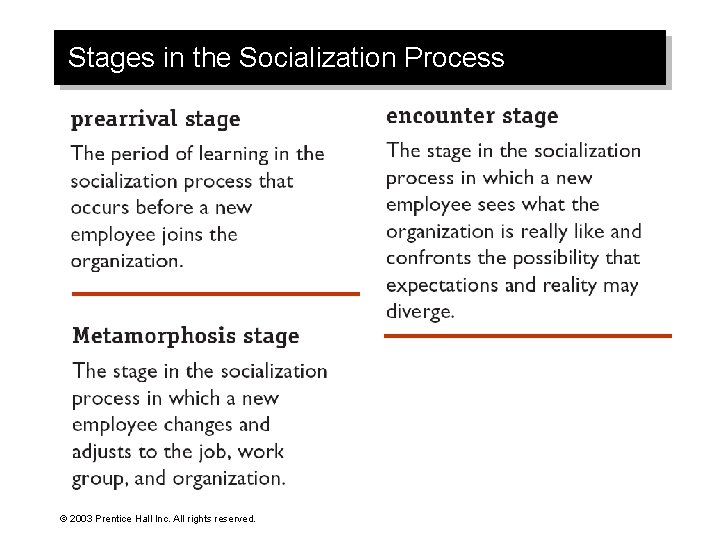
Stages in the Socialization Process © 2003 Prentice Hall Inc. All rights reserved.
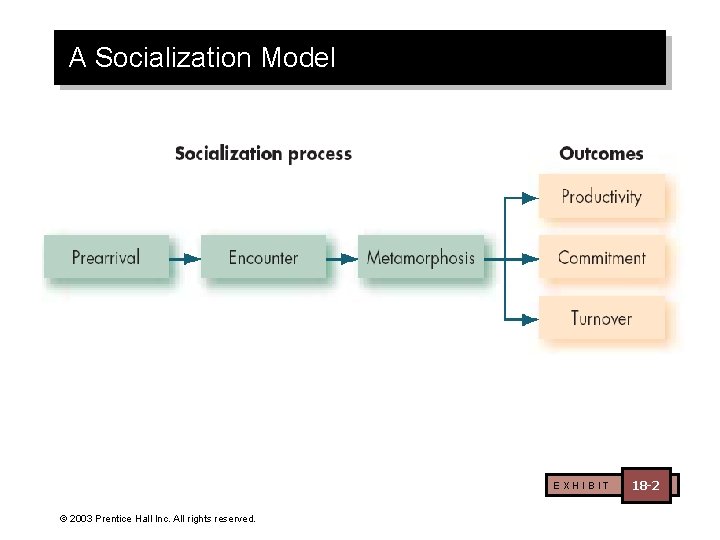
A Socialization Model EXHIBIT © 2003 Prentice Hall Inc. All rights reserved. 18 -2
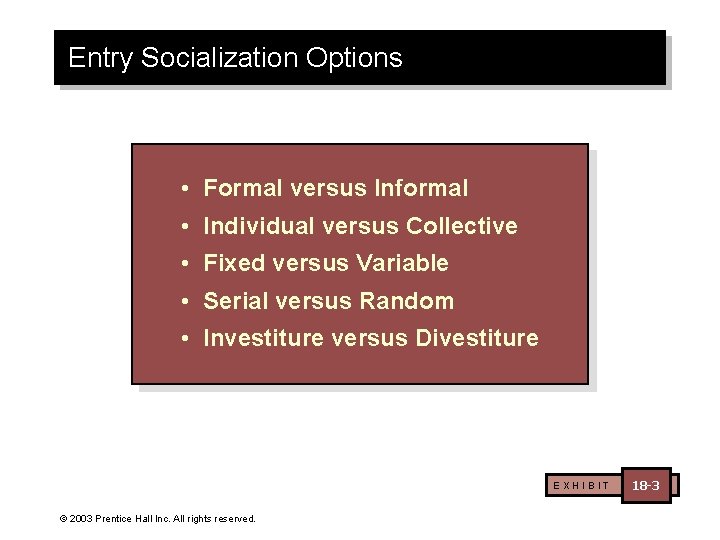
Entry Socialization Options • Formal versus Informal • Individual versus Collective • Fixed versus Variable • Serial versus Random • Investiture versus Divestiture EXHIBIT © 2003 Prentice Hall Inc. All rights reserved. 18 -3
How Organization Cultures Form EXHIBIT © 2003 Prentice Hall Inc. All rights reserved. 18 -4
How Employees Learn Culture • Stories • Rituals • Material Symbols • Language © 2003 Prentice Hall Inc. All rights reserved.
Creating An Ethical Organizational Culture Ø Characteristics of Organizations that Develop High Ethical Standards – High tolerance for risk – Low to moderate in aggressiveness – Focus on means as well as outcomes Ø Managerial Practices Promoting an Ethical Culture – – Being a visible role model. Communicating ethical expectations. Providing ethical training. Visibly rewarding ethical acts and punishing unethical ones. © 2003 Prentice Hall Inc. All rights reserved. 14
Creating a Customer-Responsive Culture Ø Key Variables Shaping Customer-Responsive Cultures 1. The types of employees hired by the organization. 2. Low formalization: the freedom to meet customer service requirements. 3. Empowering employees with decision-making discretion to please the customer. 4. Good listening skills to understand customer messages. 5. Role clarity that allows service employees to act as “boundary spanners. ” 6. Employees who engage in organizational citizenship behaviors. © 2003 Prentice Hall Inc. All rights reserved. 15
Creating a Customer-Responsive Culture Managerial Actions: • Select new employees with personality and attitudes consistent with high service orientation. • Train and socialize current employees to be more customer focused. • Change organizational structure to give employees more control. • Empower employees to make decision about their jobs. © 2003 Prentice Hall Inc. All rights reserved.
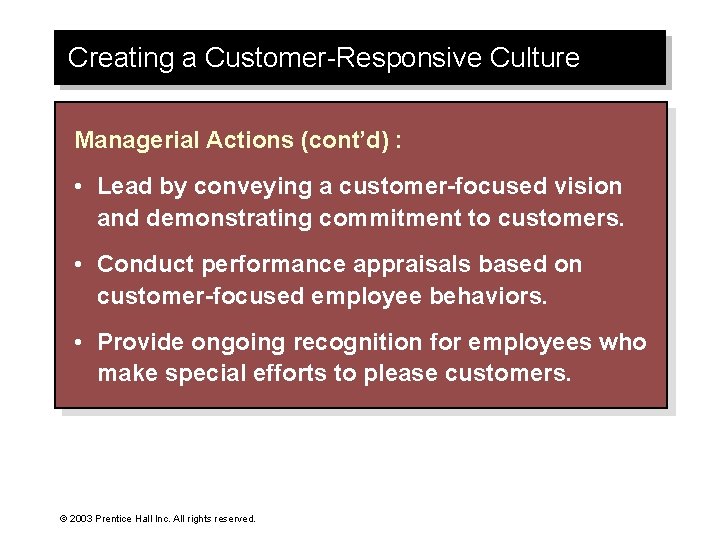
Creating a Customer-Responsive Culture Managerial Actions (cont’d) : • Lead by conveying a customer-focused vision and demonstrating commitment to customers. • Conduct performance appraisals based on customer-focused employee behaviors. • Provide ongoing recognition for employees who make special efforts to please customers. © 2003 Prentice Hall Inc. All rights reserved.
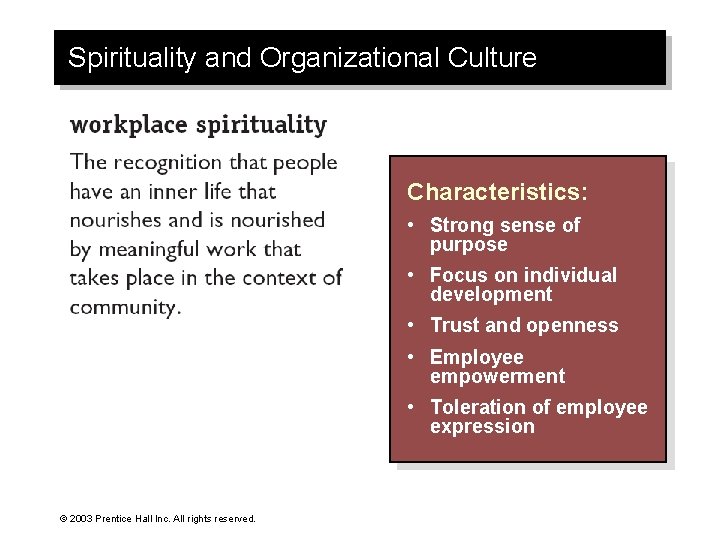
Spirituality and Organizational Culture Characteristics: • Strong sense of purpose • Focus on individual development • Trust and openness • Employee empowerment • Toleration of employee expression © 2003 Prentice Hall Inc. All rights reserved.
How Organizational Cultures Have an Impact on Performance and Satisfaction EXHIBIT © 2003 Prentice Hall Inc. All rights reserved. 18 -7