
Institutional variability in RBC conservation practices for CABG

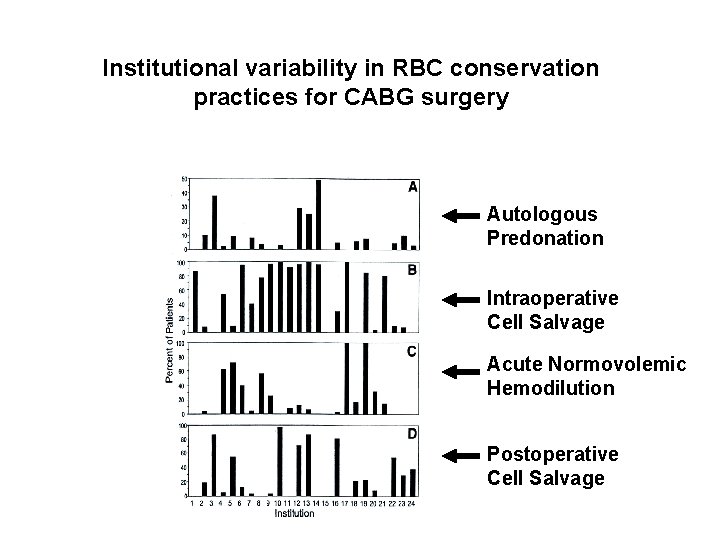
Institutional variability in RBC conservation practices for CABG surgery Autologous Predonation Intraoperative Cell Salvage Acute Normovolemic Hemodilution Postoperative Cell Salvage
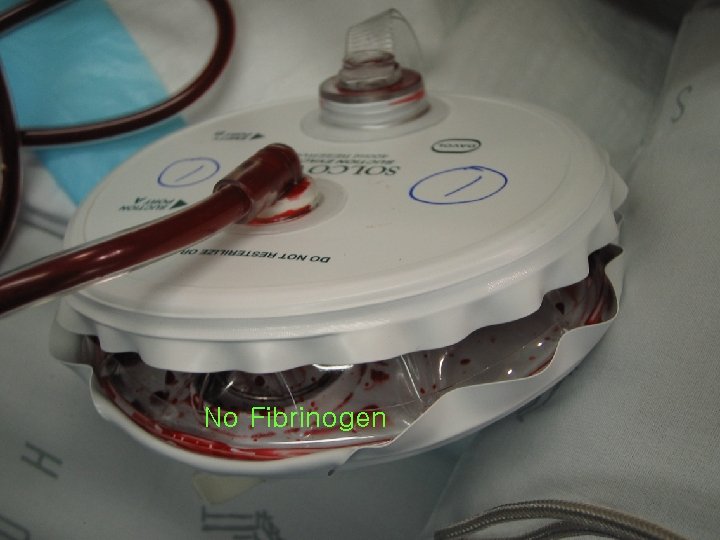
No Fibrinogen
Postoperative Cell Salvage Definition : Salvage of RBC collected from wound drains Main issues : - Technique : unwashed or washed - Safety ? - Cost-effectiveness ? - Which device ?
Postoperative blood salvage Indications • Total knee arthroplasty with tourniquet +++ • Complex spine surgery • Revision total hip arthroplasty • Blood loss > 300 ml within 5 first postop hours Contraindications • Malignancy • Sepsis • Topical use of antiseptic solutions before closure • Fibrin glue
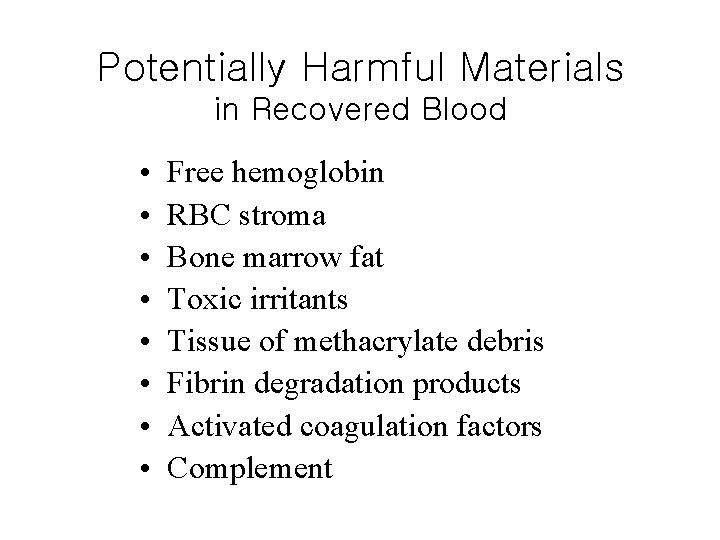
Potentially Harmful Materials in Recovered Blood • • Free hemoglobin RBC stroma Bone marrow fat Toxic irritants Tissue of methacrylate debris Fibrin degradation products Activated coagulation factors Complement
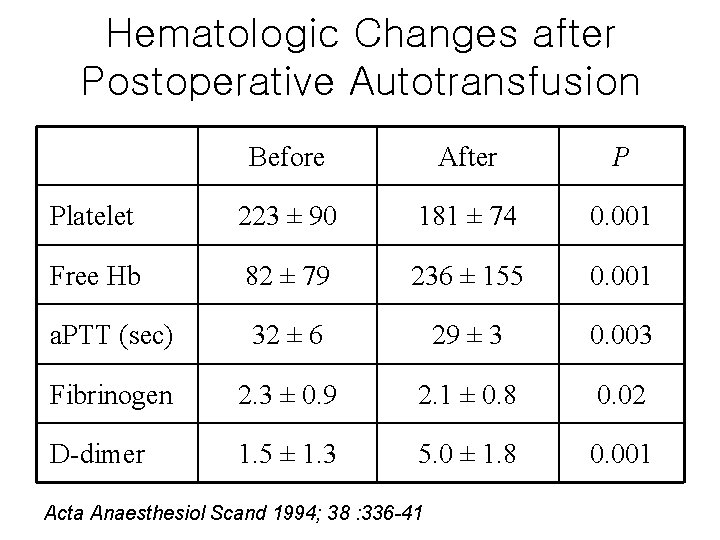
Hematologic Changes after Postoperative Autotransfusion Before After P Platelet 223 ± 90 181 ± 74 0. 001 Free Hb 82 ± 79 236 ± 155 0. 001 a. PTT (sec) 32 ± 6 29 ± 3 0. 003 Fibrinogen 2. 3 ± 0. 9 2. 1 ± 0. 8 0. 02 D-dimer 1. 5 ± 1. 3 5. 0 ± 1. 8 0. 001 Acta Anaesthesiol Scand 1994; 38 : 336 -41
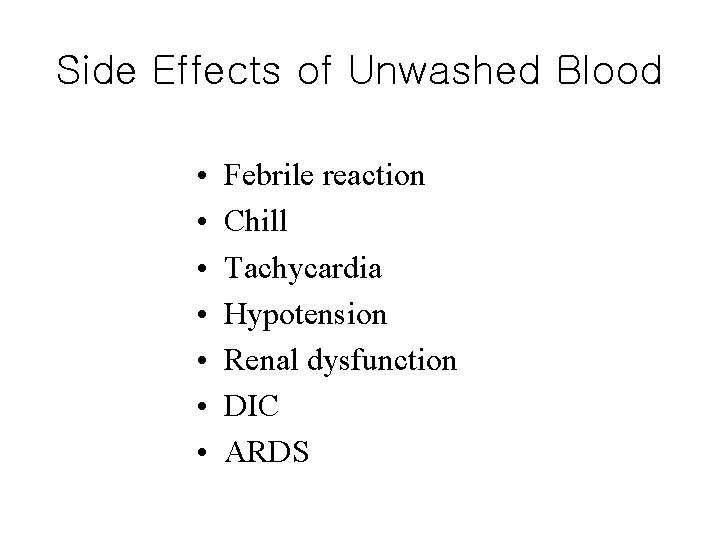
Side Effects of Unwashed Blood • • Febrile reaction Chill Tachycardia Hypotension Renal dysfunction DIC ARDS
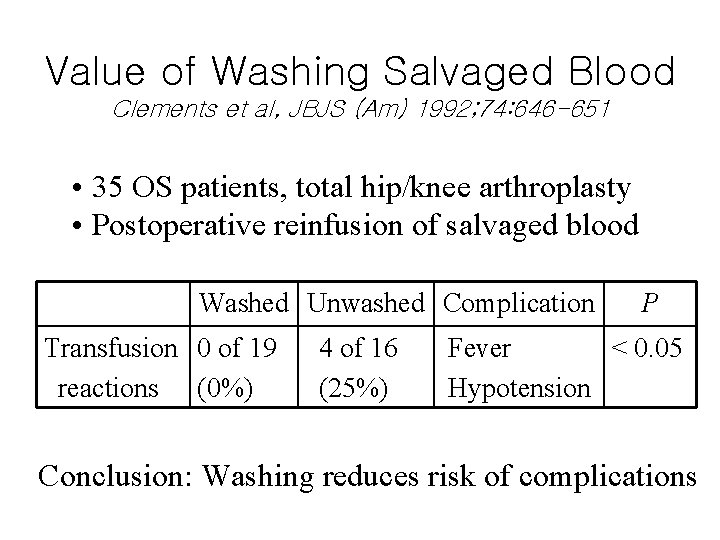
Value of Washing Salvaged Blood Clements et al, JBJS (Am) 1992; 74: 646 -651 • 35 OS patients, total hip/knee arthroplasty • Postoperative reinfusion of salvaged blood Washed Unwashed Complication Transfusion 0 of 19 reactions (0%) 4 of 16 (25%) P Fever < 0. 05 Hypotension Conclusion: Washing reduces risk of complications
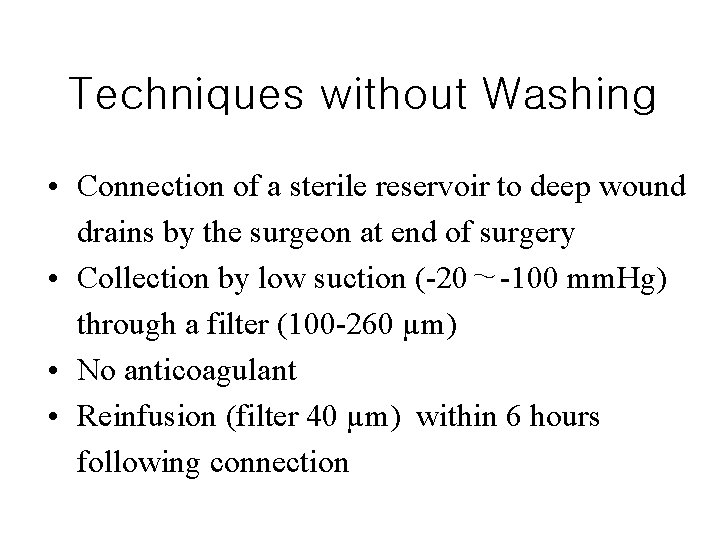
Techniques without Washing • Connection of a sterile reservoir to deep wound drains by the surgeon at end of surgery • Collection by low suction (-20∼-100 mm. Hg) through a filter (100 -260 µm) • No anticoagulant • Reinfusion (filter 40 µm) within 6 hours following connection
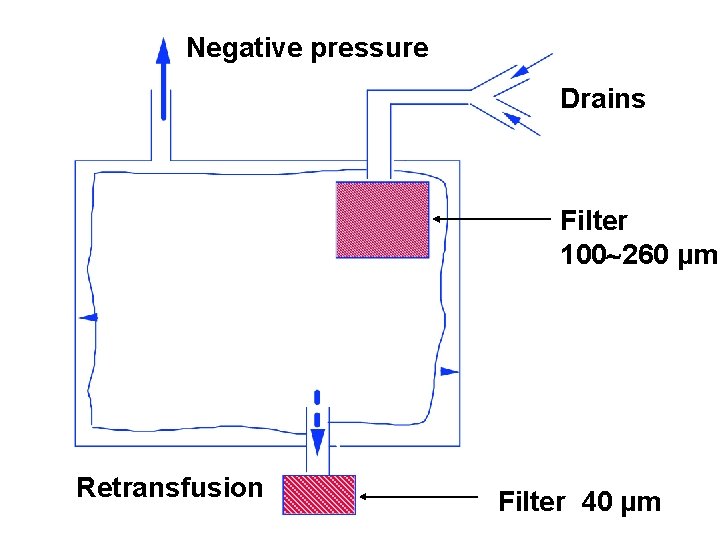
Negative pressure Drains Filter 100 260 µm Retransfusion Filter 40 µm
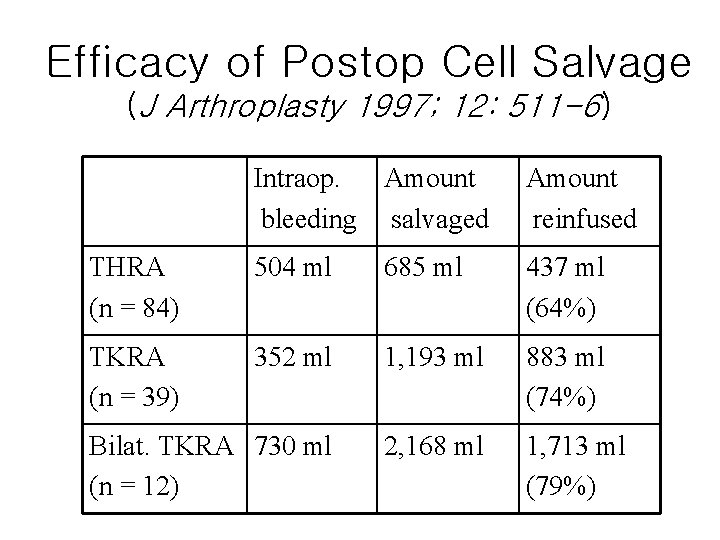
Efficacy of Postop Cell Salvage (J Arthroplasty 1997; 12: 511 -6) Intraop. Amount bleeding salvaged Amount reinfused THRA (n = 84) 504 ml 685 ml 437 ml (64%) TKRA (n = 39) 352 ml 1, 193 ml 883 ml (74%) Bilat. TKRA 730 ml (n = 12) 2, 168 ml 1, 713 ml (79%)
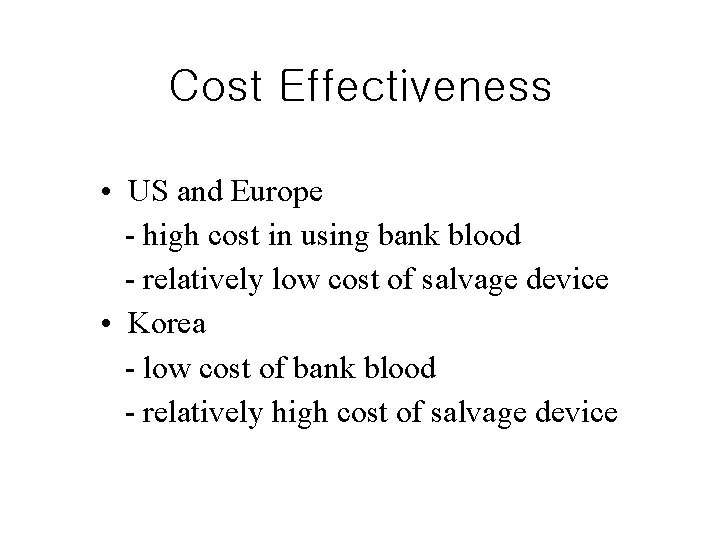
Cost Effectiveness • US and Europe - high cost in using bank blood - relatively low cost of salvage device • Korea - low cost of bank blood - relatively high cost of salvage device
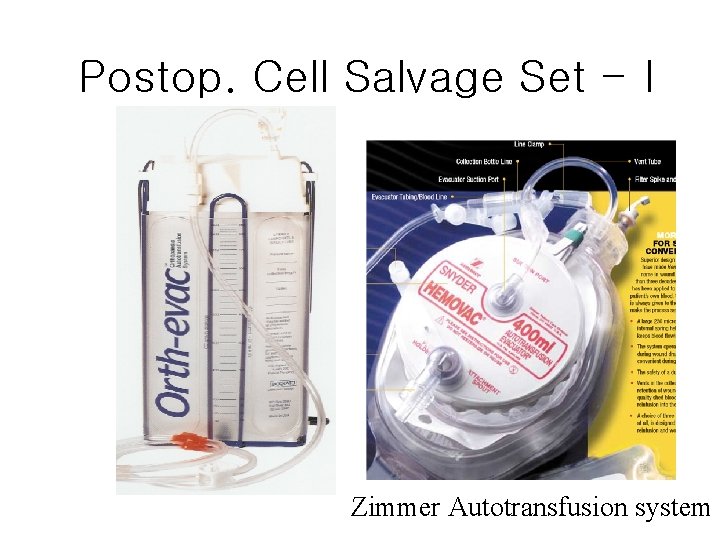
Postop. Cell Salvage Set - I Zimmer Autotransfusion system
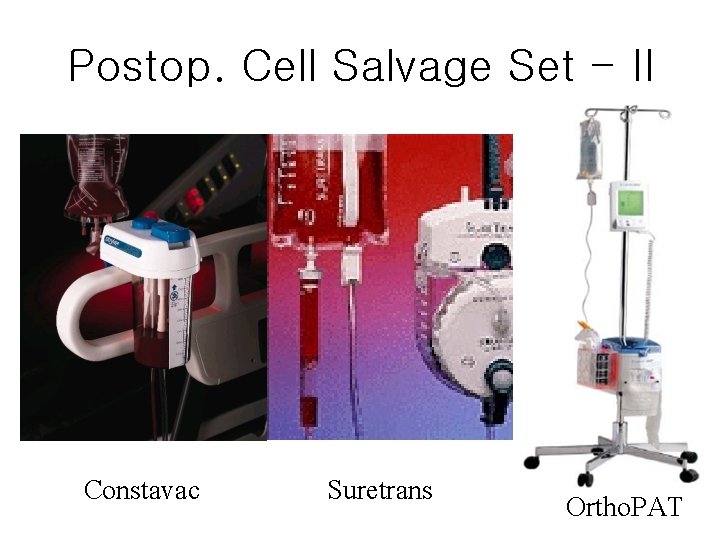
Postop. Cell Salvage Set - II Constavac Suretrans Ortho. PAT
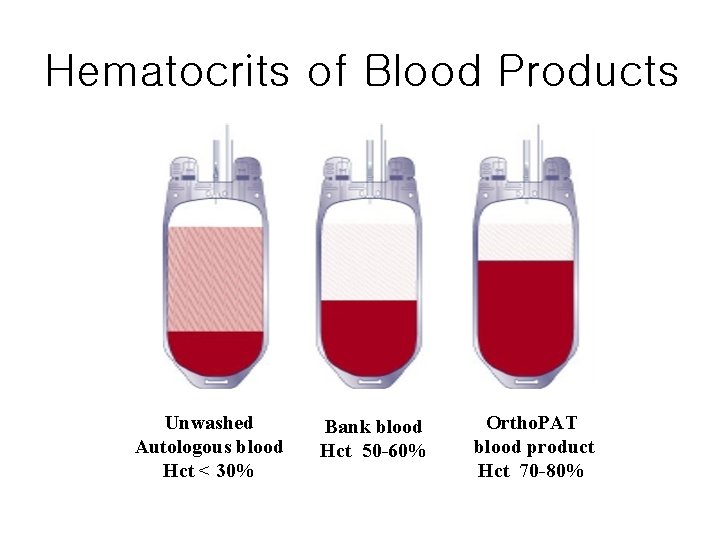
Hematocrits of Blood Products Unwashed Autologous blood Hct < 30% Bank blood Hct 50 -60% Ortho. PAT blood product Hct 70 -80%
Postoperative Blood Salvage Conclusions • Effective in RBC conservation • Precise indications • 5 postop. hours blood loss evaluation • Collection and reinfusion within 6 hrs +++ • Reinfusion limit : 1, 000 1, 500 ml
- Slides: 17