
Institute of Public Administration Dublin Ireland Teresa Casserly
Institute of Public Administration Dublin, Ireland Teresa Casserly Case for Competency Based Training DISPA Romania, May 2019

page 2
The background to the Irish story The Civil Service consists over 40 Departments and offices. 37, 000 Staff. Provides services to government, members of the public and society. A diverse range of skills required. Key Challenges – up to 10, 000 staff eligible to retire over the next 5 to 10 years. Higher expectations for quality services. A competitive labour market, attracting and retaining talent. Need to exploit opportunities provided by emerging technologies.
The Policy Context In 2017 A People Strategy for the Civil Service 2017 - 2020 4 Strategic Priorities Be an employer of choice. Build the workforce of the future. Build, support and value manager as ‘People Developers’. Position HR as a Strategic Driver (and enabling priority)
The Policy Context In 2017 Senior Public Service Strategy (SPS) Top level Civil Servants – 5 Levels. Management Committee oversees policy. A strong strategic focus and approach to their roles. Cross governmental issues. Demonstrate more visible leadership in capacity to manage and develop people. Work collaboratively. In innovative ways on whole of government projects. Ability to be reflective.
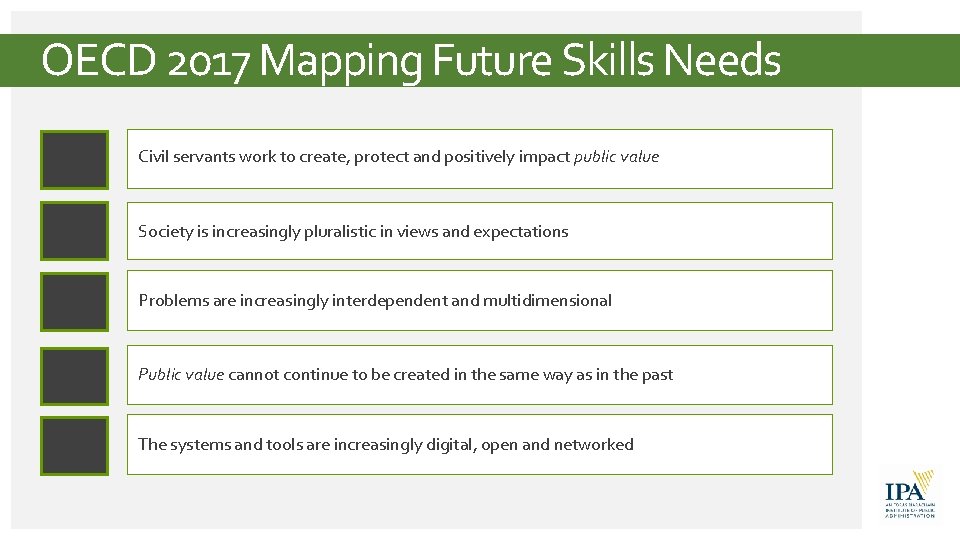
OECD 2017 Mapping Future Skills Needs Civil servants work to create, protect and positively impact public value Society is increasingly pluralistic in views and expectations Problems are increasingly interdependent and multidimensional Public value cannot continue to be created in the same way as in the past The systems and tools are increasingly digital, open and networked
OECD on Leadership Competency “The most important role of public sector leaders has been to solve the problems and challenges faced in a specific environment. When we say we want more leadership in the public sector, what we are really looking for is people who will promote institutional adaptations in the public interest ”. Source: OECD 2001
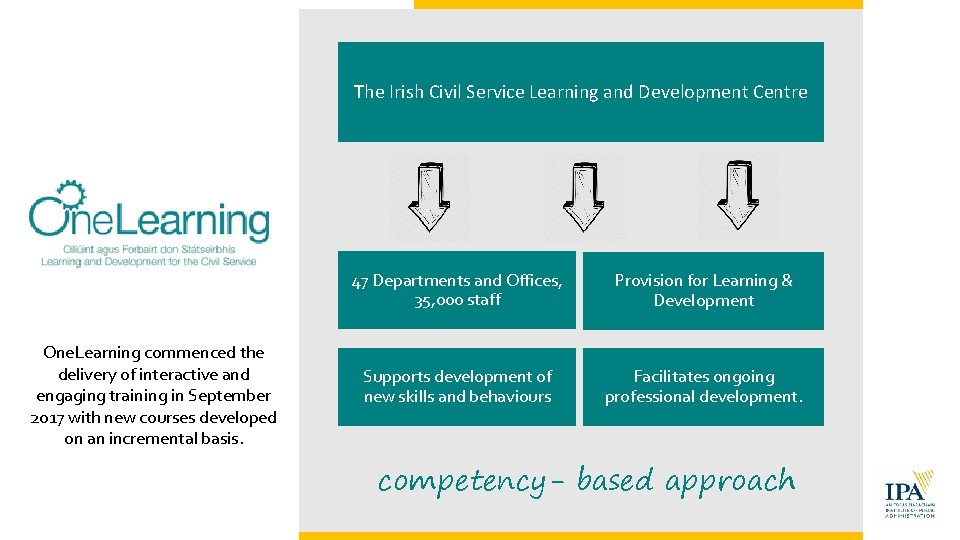
The Irish Civil Service Learning and Development Centre One. Learning commenced the delivery of interactive and engaging training in September 2017 with new courses developed on an incremental basis. 47 Departments and Offices, 35, 000 staff Provision for Learning & Development Supports development of new skills and behaviours Facilitates ongoing professional development. competency- based approach
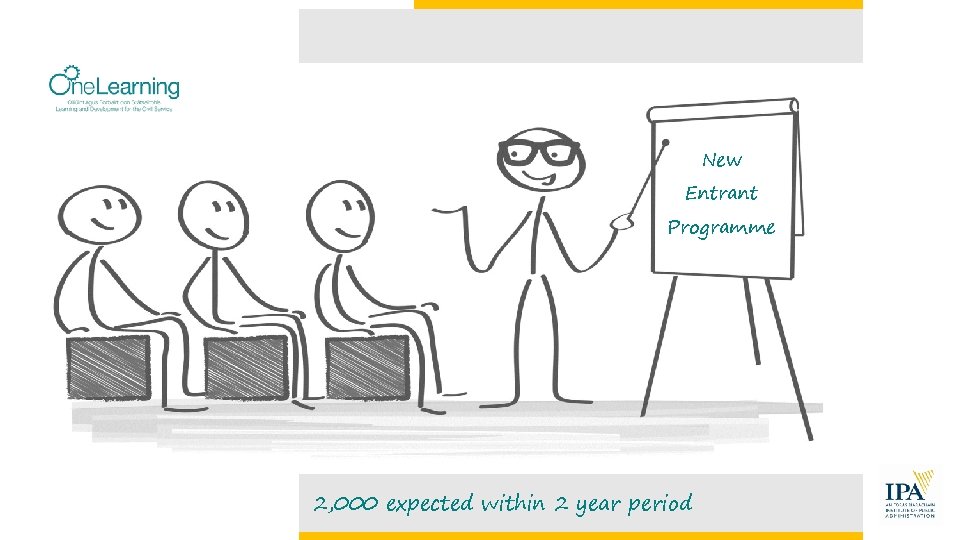
New Entrant Programme 2, 000 expected within 2 year period
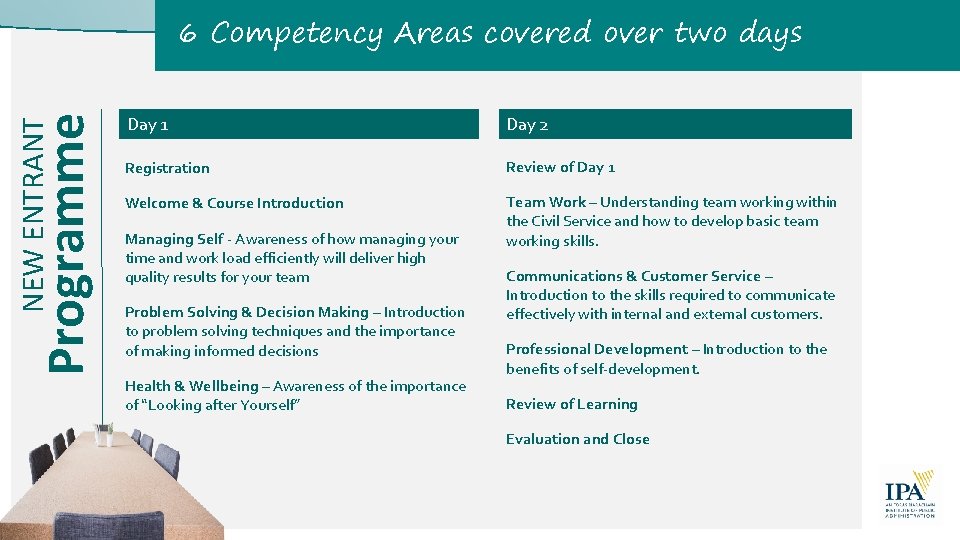
NEW ENTRANT Programme 6 Competency Areas covered over two days Day 1 Day 2 Registration Review of Day 1 Welcome & Course Introduction Team Work – Understanding team working within the Civil Service and how to develop basic team working skills. Managing Self - Awareness of how managing your time and work load efficiently will deliver high quality results for your team Problem Solving & Decision Making – Introduction to problem solving techniques and the importance of making informed decisions Health & Wellbeing – Awareness of the importance of “Looking after Yourself” Communications & Customer Service – Introduction to the skills required to communicate effectively with internal and external customers. Professional Development – Introduction to the benefits of self-development. Review of Learning Evaluation and Close
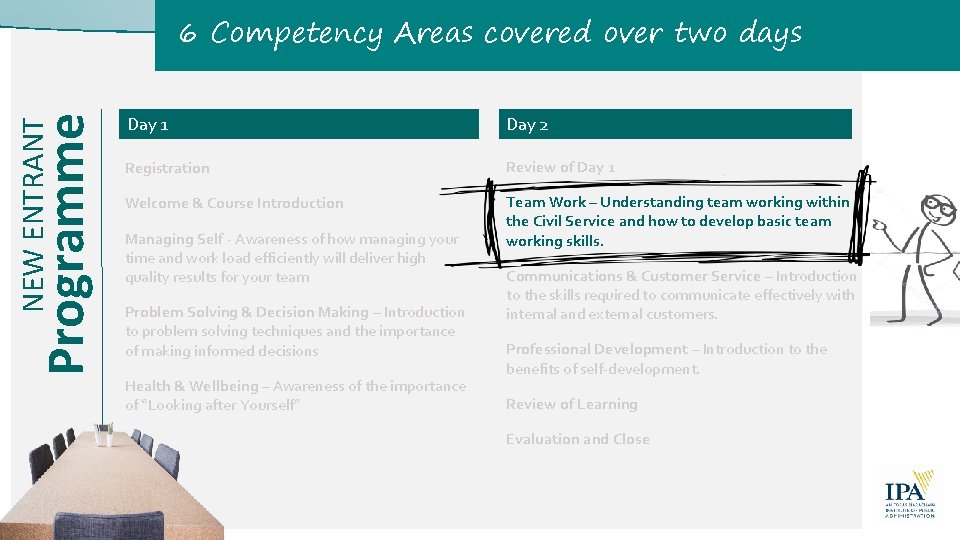
NEW ENTRANT Programme 6 Competency Areas covered over two days Day 1 Day 2 Registration Review of Day 1 Welcome & Course Introduction Team Work – Understanding team working within the Civil Service and how to develop basic team working skills. Managing Self - Awareness of how managing your time and work load efficiently will deliver high quality results for your team Problem Solving & Decision Making – Introduction to problem solving techniques and the importance of making informed decisions Health & Wellbeing – Awareness of the importance of “Looking after Yourself” Communications & Customer Service – Introduction to the skills required to communicate effectively with internal and external customers. Professional Development – Introduction to the benefits of self-development. Review of Learning Evaluation and Close
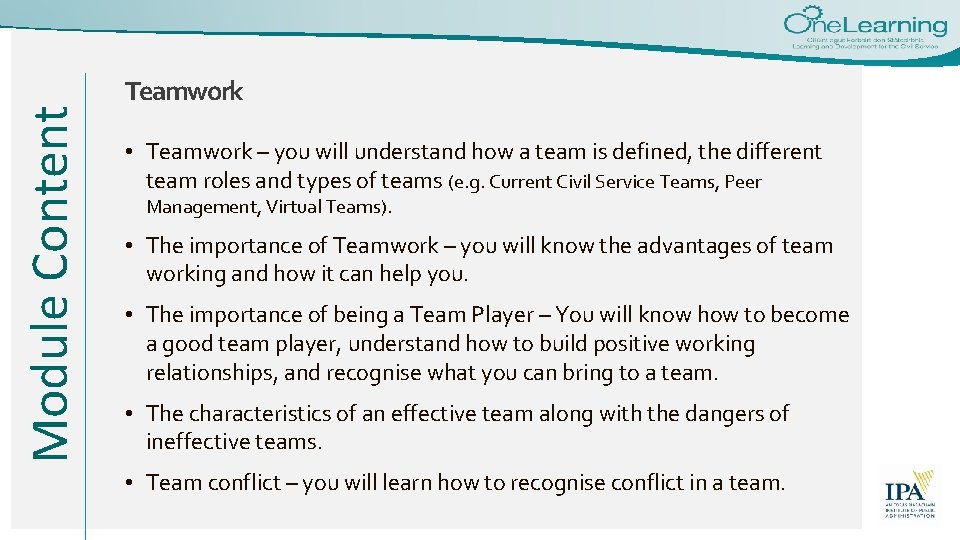
Module Content Teamwork • Teamwork – you will understand how a team is defined, the different team roles and types of teams (e. g. Current Civil Service Teams, Peer Management, Virtual Teams). • The importance of Teamwork – you will know the advantages of team working and how it can help you. • The importance of being a Team Player – You will know how to become a good team player, understand how to build positive working relationships, and recognise what you can bring to a team. • The characteristics of an effective team along with the dangers of ineffective teams. • Team conflict – you will learn how to recognise conflict in a team.
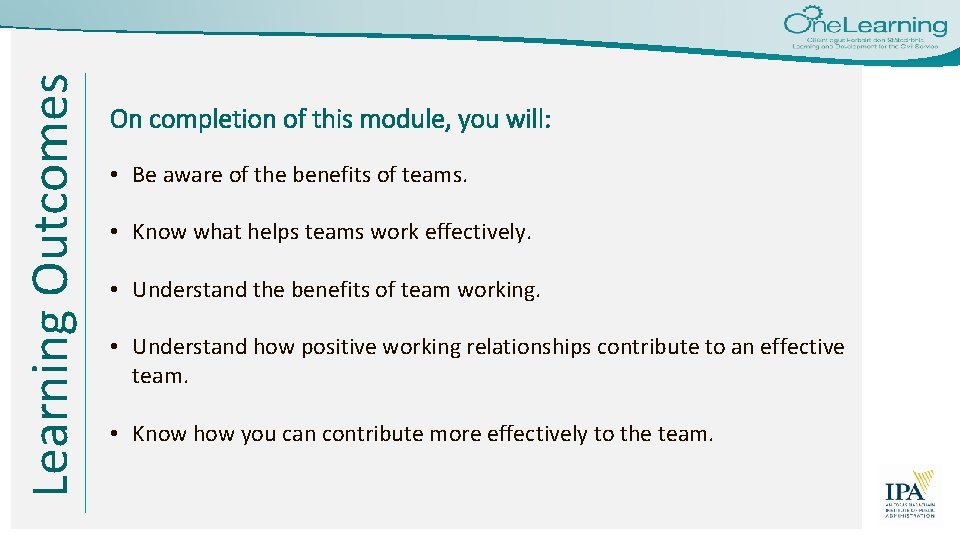
Learning Outcomes On completion of this module, you will: • Be aware of the benefits of teams. • Know what helps teams work effectively. • Understand the benefits of team working. • Understand how positive working relationships contribute to an effective team. • Know how you can contribute more effectively to the team.
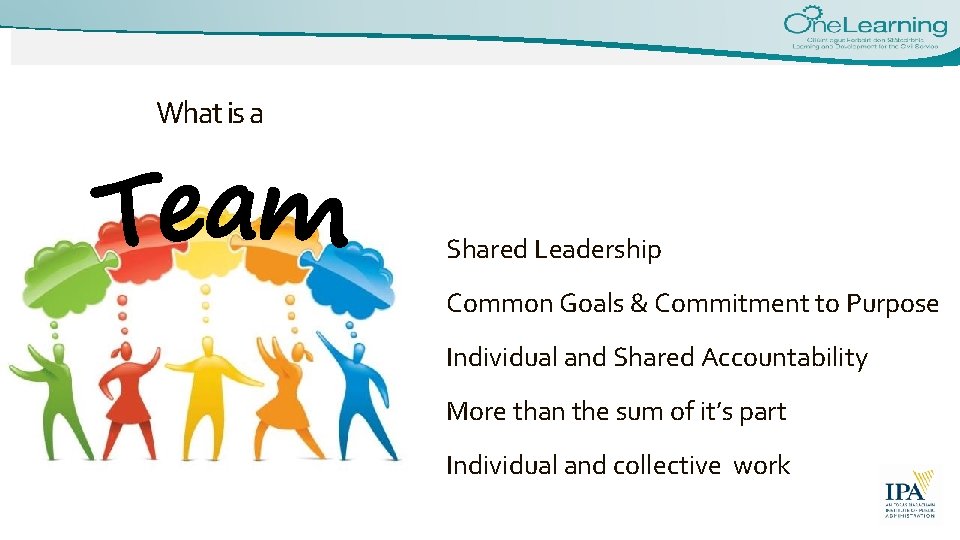
What is a Shared Leadership Common Goals & Commitment to Purpose Individual and Shared Accountability More than the sum of it’s part Individual and collective work
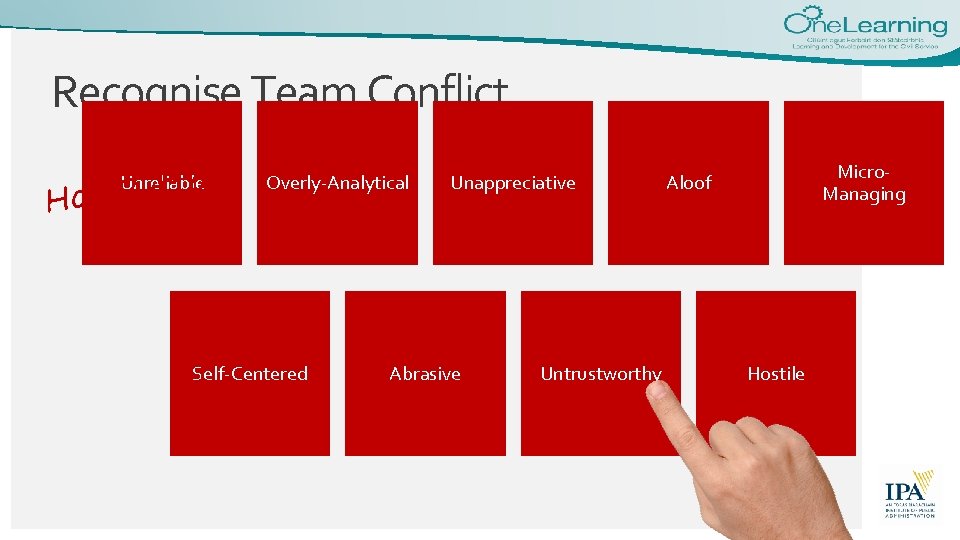
Recognise Team Conflict s n o t t u B Hot Unreliable Overly-Analytical Self-Centered Unappreciative Abrasive Untrustworthy Micro. Managing Aloof Hostile
Strategies for Dealing with Conflict Accept values, perceptions & expectations of others. Be honest with self and others. Build relationships with colleagues. Don’t assume that you are always right. Don’t get defensive if others disagree with you. Listen carefully to others. Let others express their feelings. Ensure you learn something from each situation.
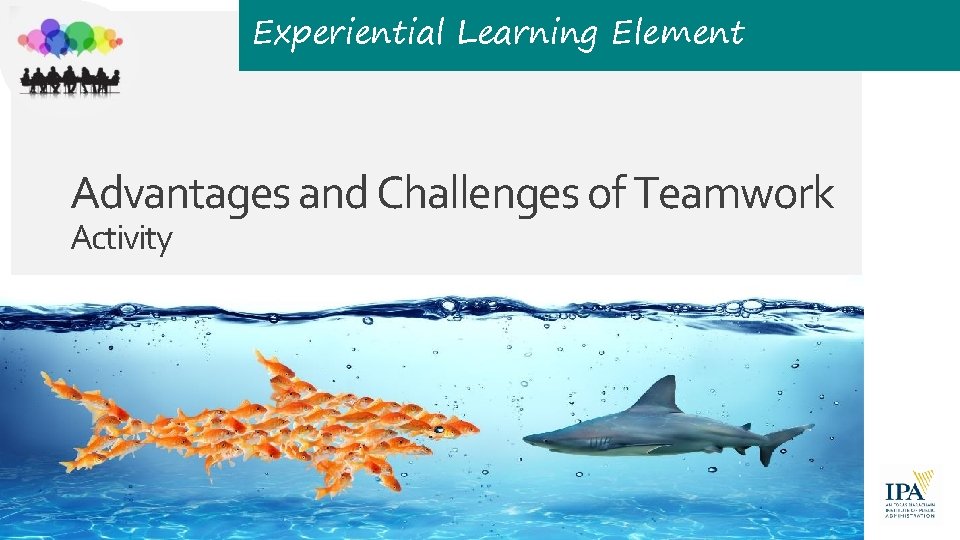
Experiential Learning Element Advantages and Challenges of Teamwork Activity
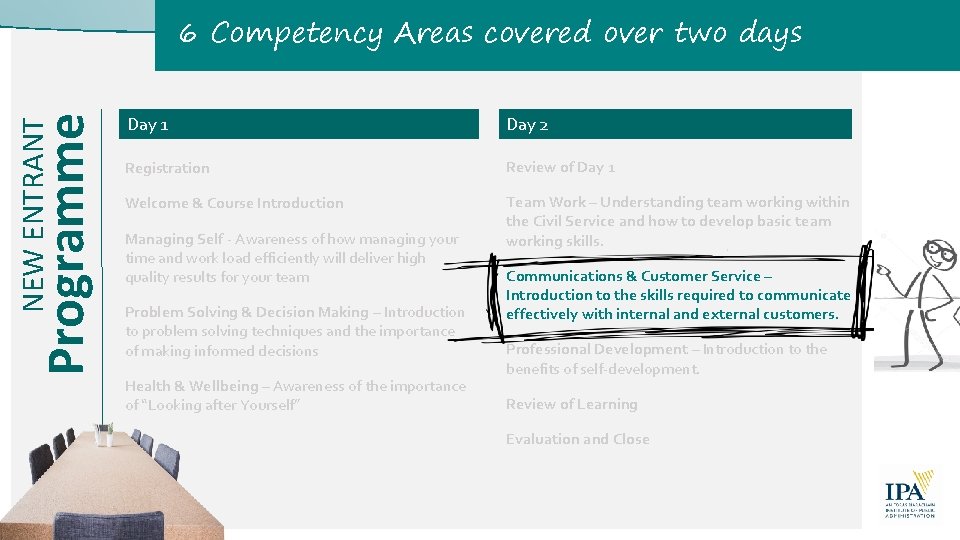
NEW ENTRANT Programme 6 Competency Areas covered over two days Day 1 Day 2 Registration Review of Day 1 Welcome & Course Introduction Team Work – Understanding team working within the Civil Service and how to develop basic team working skills. Managing Self - Awareness of how managing your time and work load efficiently will deliver high quality results for your team Problem Solving & Decision Making – Introduction to problem solving techniques and the importance of making informed decisions Health & Wellbeing – Awareness of the importance of “Looking after Yourself” Communications & Customer Service – Introduction to the skills required to communicate effectively with internal and external customers. Professional Development – Introduction to the benefits of self-development. Review of Learning Evaluation and Close
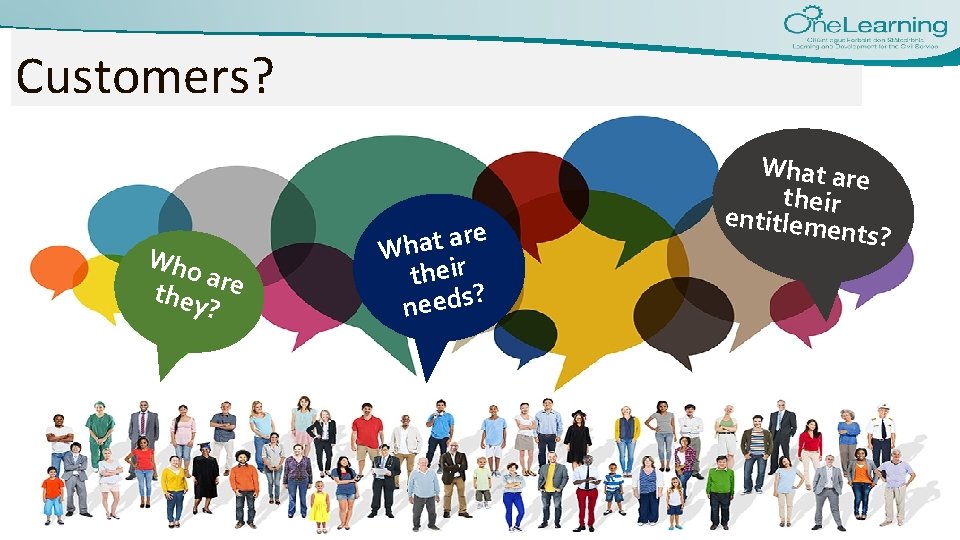
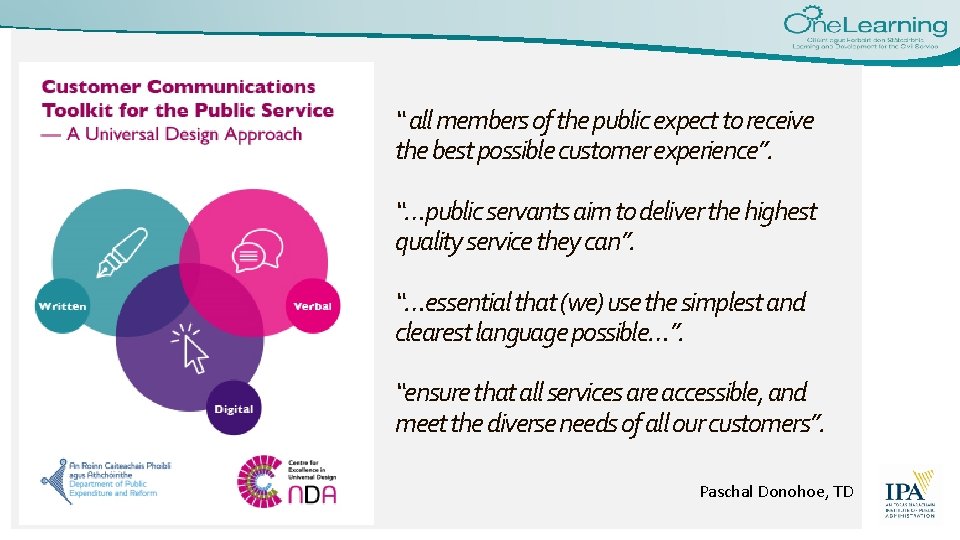
Module Content Customer Service • Customer Service in a Civil Service Context – What is customer service, the 12 Guiding Principles of the Quality Customer Service (QCS) Initiative and Customer Charters (Internal & External), Colleagues as customers, the key customer contact points (writing, email, phone, face to face). • Understanding Workplace Communication – The who, how and why. Barriers to Communication. • Oral Communication Skills: the advantages/disadvantages, Active Listening, Questioning skills, Giving and receiving feedback, improving communication skills.
Module Content Communications • Written communications – The challenges of communicating in writing (avoiding wordiness and jargon, using active versus passive voice, grammar, punctuation, identifying common errors), writing for your audience, proofreading and the appropriate formats for the various types of communication e. g. Emails, Letters, Memos, file notes, replies to reps. • Freedom of Information requirements - Records created subject to FOI - Free from irrelevant or inappropriate remarks, Factual and accurate info only, be aware of the relevant legislative requirements for storing and providing access to records.
Learning Outcomes On completion of this module, you will: • Recognise the importance and benefits of good workplace communication skills. • Recognise the importance and benefits of good customer service. • Recognise the relevant legislative requirements when dealing with information
Customers? Who a they re ? re a t a h W their ? s d e e n What are their entitleme nts?
“ all members of the public expect to receive the best possible customer experience”. “…public servants aim to deliver the highest quality service they can”. “…essential that (we) use the simplest and clearest language possible…”. “ensure that all services are accessible, and meet the diverse needs of all our customers”. Paschal Donohoe, TD
Communicating in Challenging Situations Stop Pause and breathe, recognise danger. Think Gather your thoughts, get ready. Respond Go forward with a solution.
What is Competence? ü Competency? ü A specific range of skills, knowledge and ability to do something successfully. ü A focus on skills, knowledge & behaviours. ü More often used in learning concrete skills rather than abstract learning.
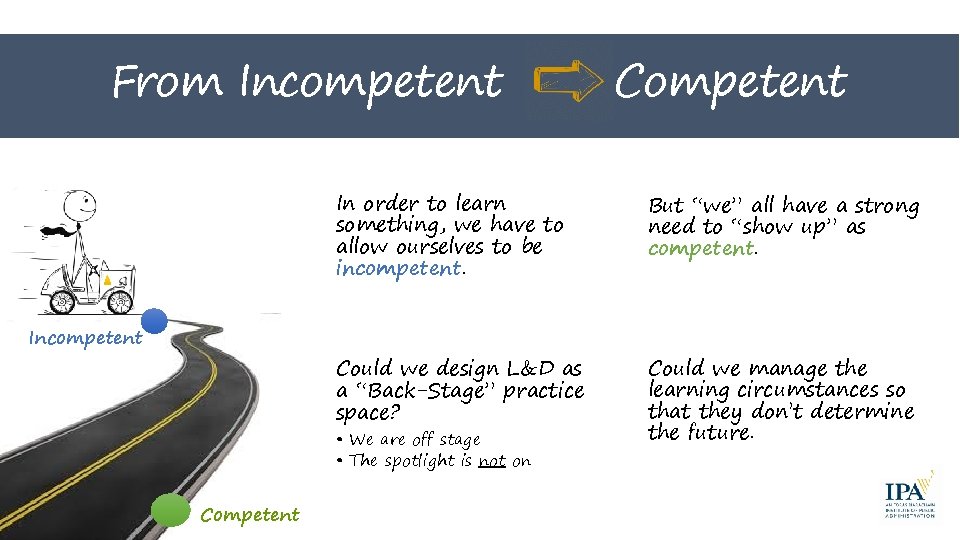
From Incompetent In order to learn something, we have to allow ourselves to be incompetent. But “we” all have a strong need to “show up” as competent. Could we design L&D as a “Back-Stage” practice space? Could we manage the learning circumstances so that they don’t determine the future. • We are off stage • The spotlight is not on Competent
• It is a highly structured approach to learning design • It is dependent on measurable job requirements, indicators of performance • It is helpful to establish current levels of competency for participants • There is a need to develop instructional content • Scenarios are required for application of particular competencies • Not always possible to isolate measurable performance indicators for a domain • It helps align L&D with recruitment, selection, career development and performance reviews and feedback. Is it helpful to design for competencies?
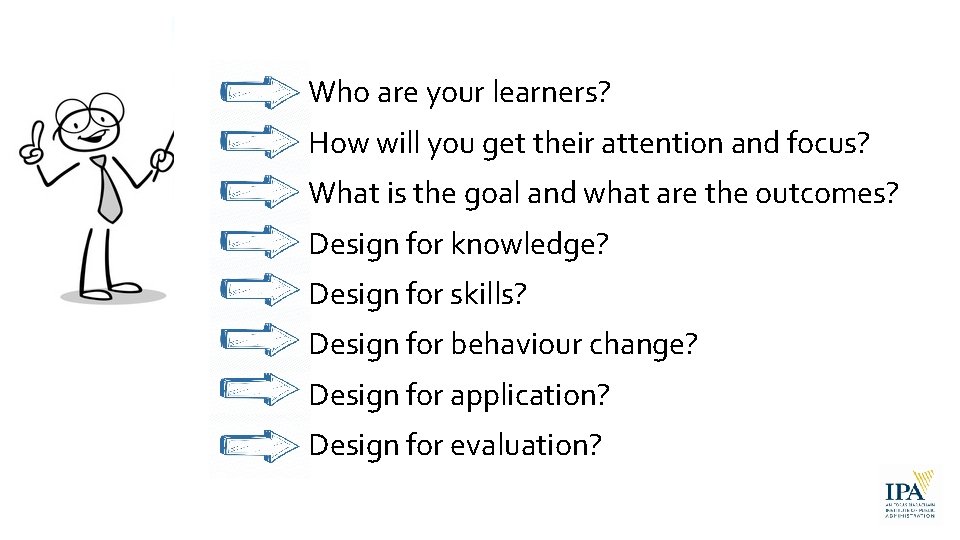
Who are your learners? How will you get their attention and focus? What is the goal and what are the outcomes? Design for knowledge? Design for skills? Design for behaviour change? Design for application? Design for evaluation?
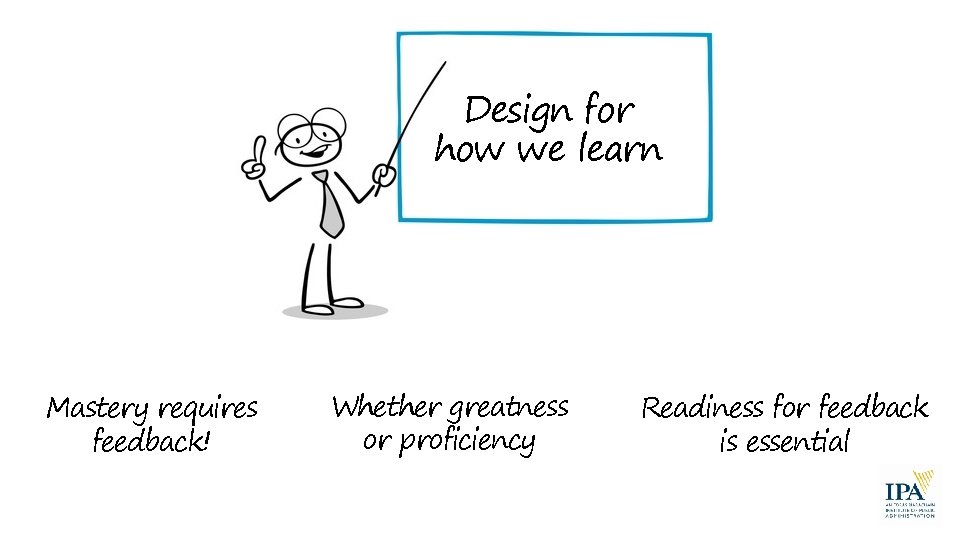
Design for how we learn Mastery requires feedback! Whether greatness or proficiency Readiness for feedback is essential
Feedback Values
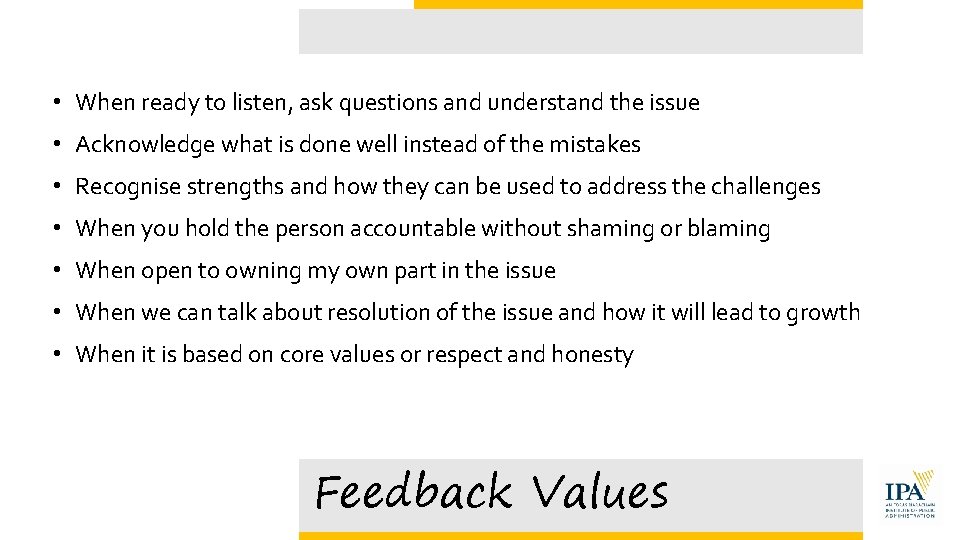
• When ready to listen, ask questions and understand the issue • Acknowledge what is done well instead of the mistakes • Recognise strengths and how they can be used to address the challenges • When you hold the person accountable without shaming or blaming • When open to owning my own part in the issue • When we can talk about resolution of the issue and how it will lead to growth • When it is based on core values or respect and honesty Feedback Values
Journaling the Learning We invite you to use your Learning Journal to record experiences that you can learn from. Capturing all your key learning points in one place will give you a resource to return to whenever you feel the need. It will also help you to prepare for PMDS and for your annual PDP.

Thank You Teresa Casserly tcasserly@ipa. ie www. ipa. ie
- Slides: 33