
Institute of Cognitive Neuroscience University College London Experimental

- Slides: 32
Institute of Cognitive Neuroscience University College London Experimental Design in Functional Neuroimaging
Overview • • • Subtractive designs Factorial designs Functional specialisation and functional integration Parametric designs Psychophysiological interactions
Functional specialisation Identification of regionally specific effects that can be attributed to changing stimuli or task conditions Functional integration Identification of interactions among specialised cortical areas and how these interactions depend upon context
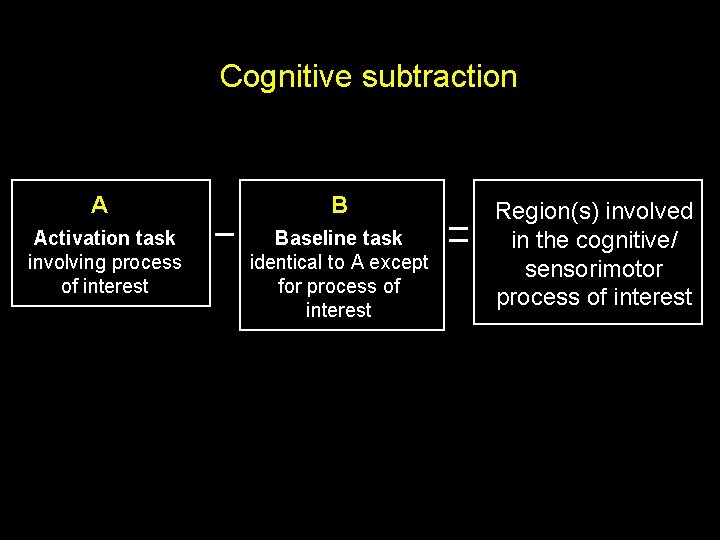
Cognitive subtraction A B Activation task involving process of interest Baseline task identical to A except for process of interest Region(s) involved in the cognitive/ sensorimotor process of interest
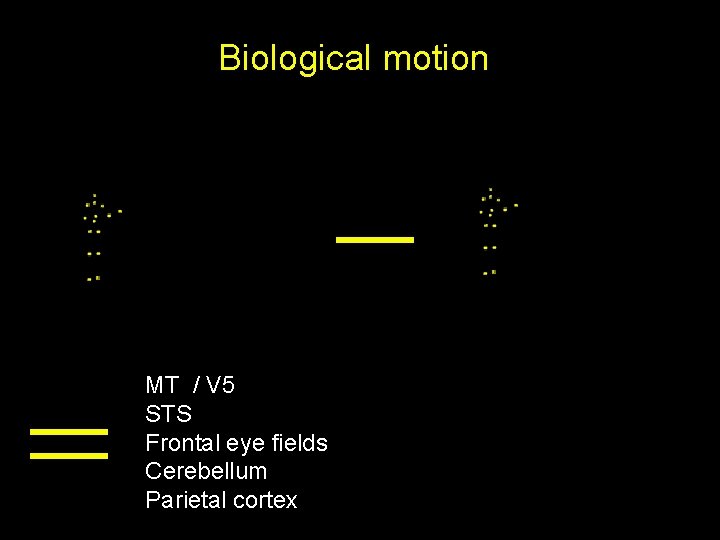
Biological motion MT / V 5 STS Frontal eye fields Cerebellum Parietal cortex
Assumptions of cognitive subtraction 1. The experimental task and baseline task must be identical in every way except for the process of interest Many processes in addition to presence of biological motion in A including: • Visual motion • Eye movements
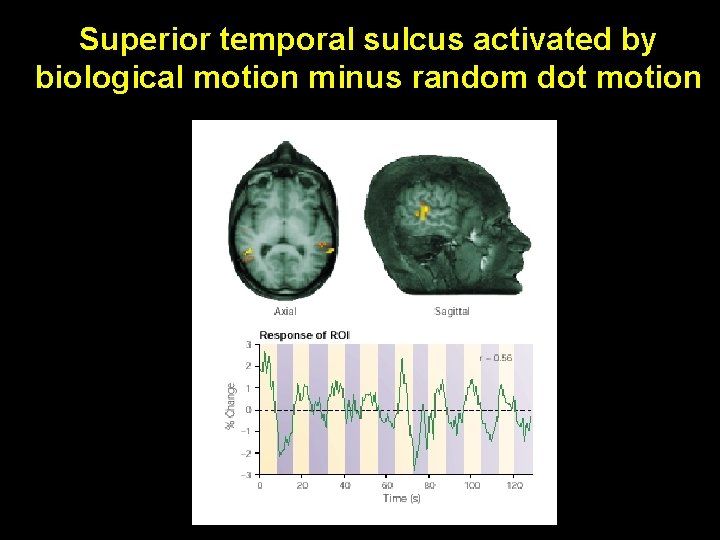
Superior temporal sulcus activated by biological motion minus random dot motion
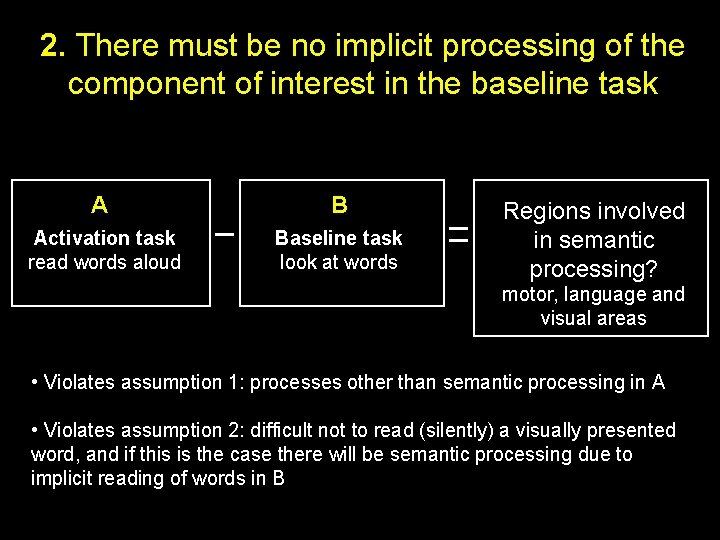
2. There must be no implicit processing of the component of interest in the baseline task A B Activation task read words aloud Baseline task look at words Regions involved in semantic processing? motor, language and visual areas • Violates assumption 1: processes other than semantic processing in A • Violates assumption 2: difficult not to read (silently) a visually presented word, and if this is the case there will be semantic processing due to implicit reading of words in B
3. Pure insertion ‘Pure insertion’ assumes that an extra cognitive component can be introduced without affecting the expression of existing components There may be an interaction between the new component the old component If visual cortex is activated more by reading words than by seeing words, it might be concluded that the visual cortex is involved in reading But adding the cognitive component of reading might affect the processing or expression of seeing words There may be a top-down effect of reading on the way words are processed in visual cortex - this interaction effect will be indistinguishable in the subtraction
Conjunctions Cognitive conjunctions combine a series of subtractions with the aim of isolating a process that is common to two (or more) task pairs The assumption of pure insertion can be avoided by extracting the presence of a main effect in the absence of an interaction
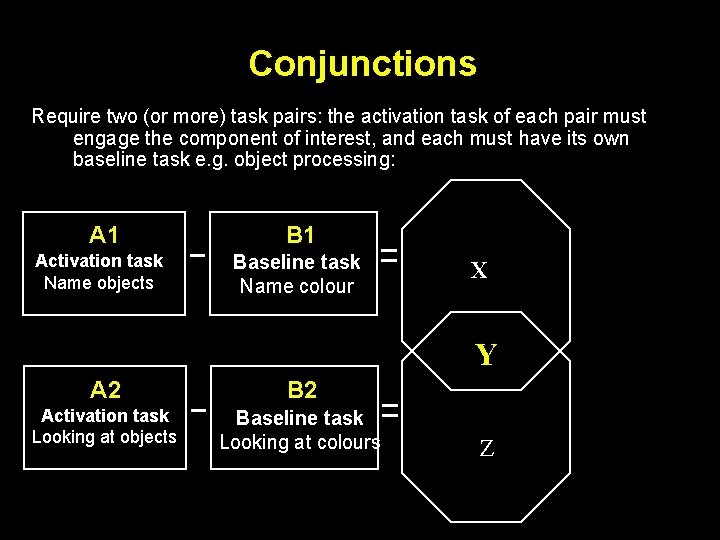
Conjunctions Require two (or more) task pairs: the activation task of each pair must engage the component of interest, and each must have its own baseline task e. g. object processing: A 1 Activation task Name objects B 1 Baseline task Name colour X Y A 2 B 2 Activation task Looking at objects Baseline task Looking at colours Z
Conjunctions Baseline tasks can be high level or low level The only restriction is that differences between the task pairs both contain the component of interest The analysis results in any commonality in activation differences between the task pairs The resulting region should be uniquely associated with the process of interest, not any interactions specific to each subtraction
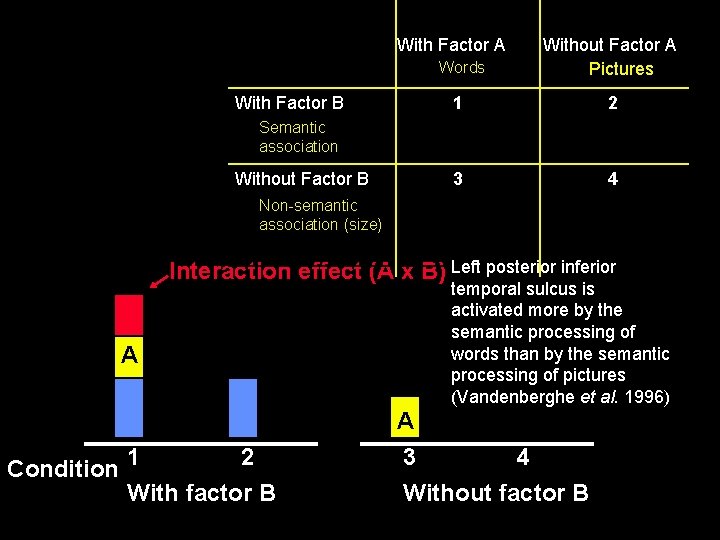
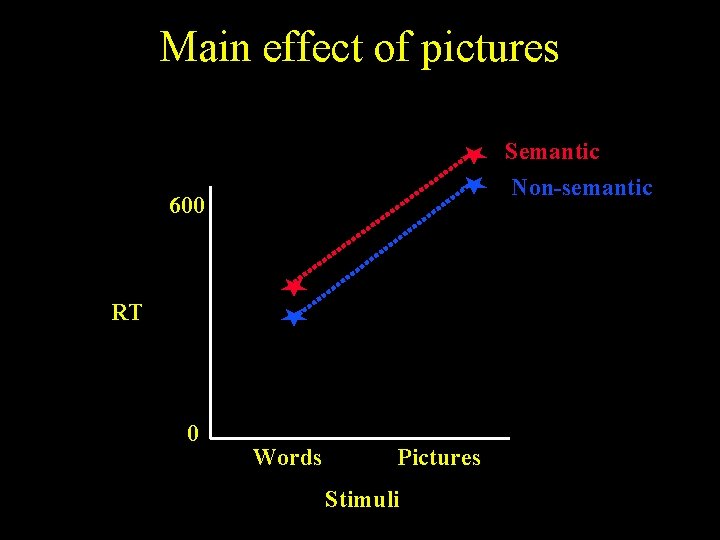
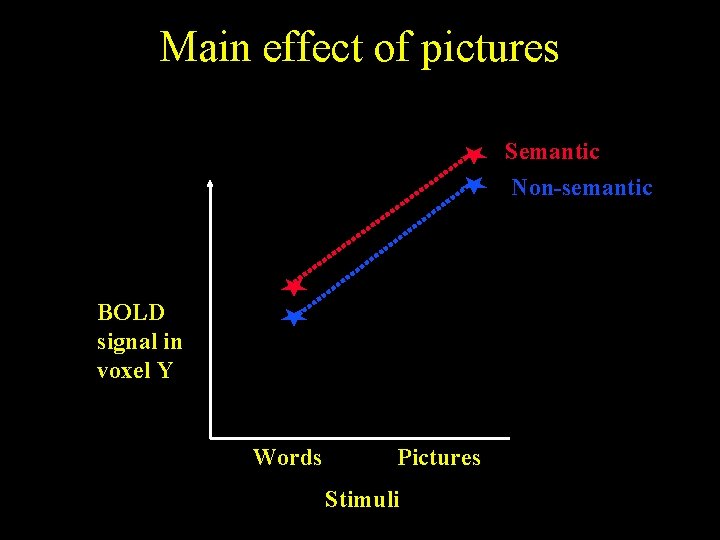
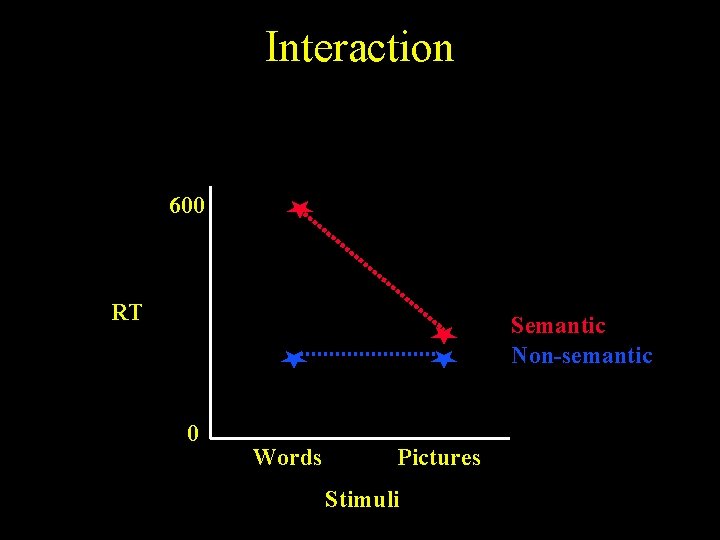
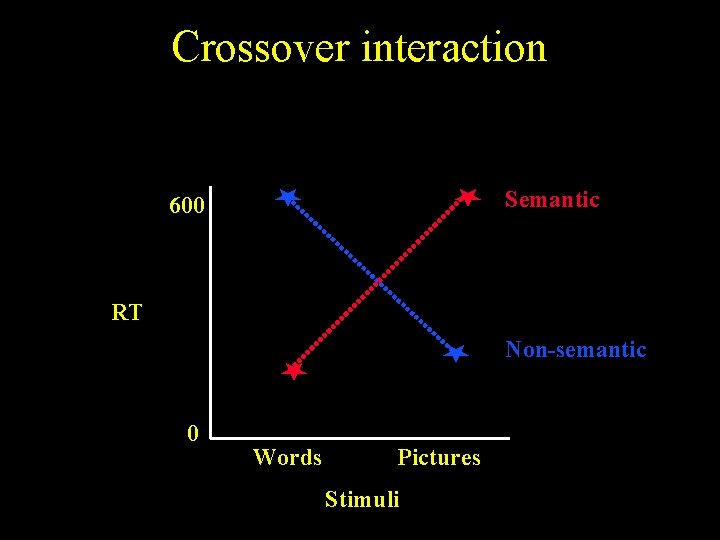
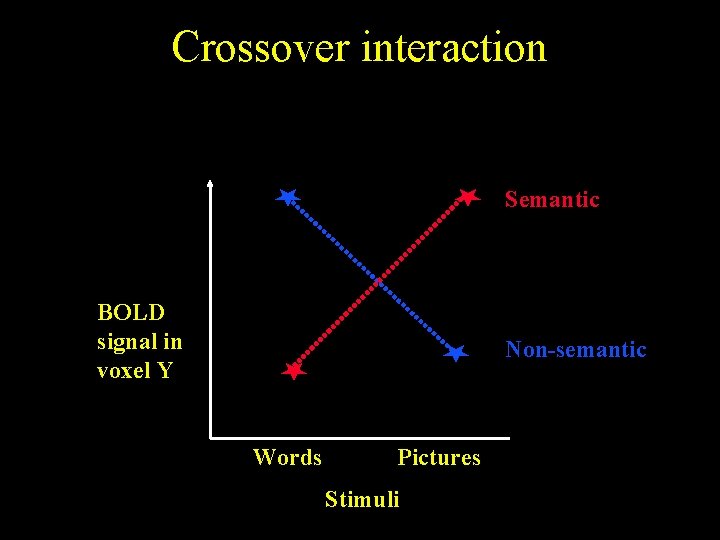
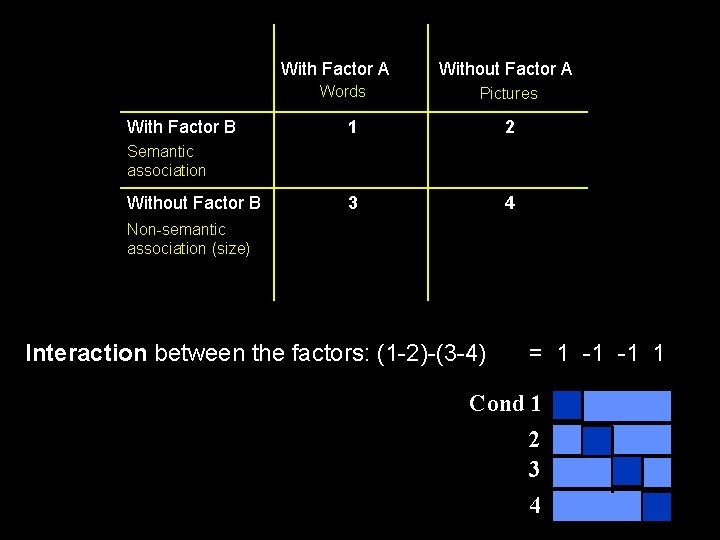
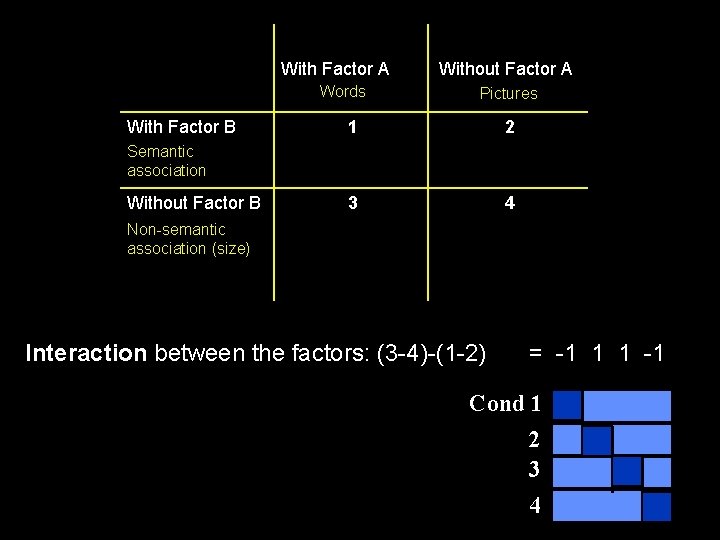
Factorial designs In factorial designs there are two or more factors and the different levels of each factor must be equated The interaction identifies brain areas where the effect of one factor varies depending on the presence or absence of the other factor This allows the effect of one factor on the expression of the other factor to be measured
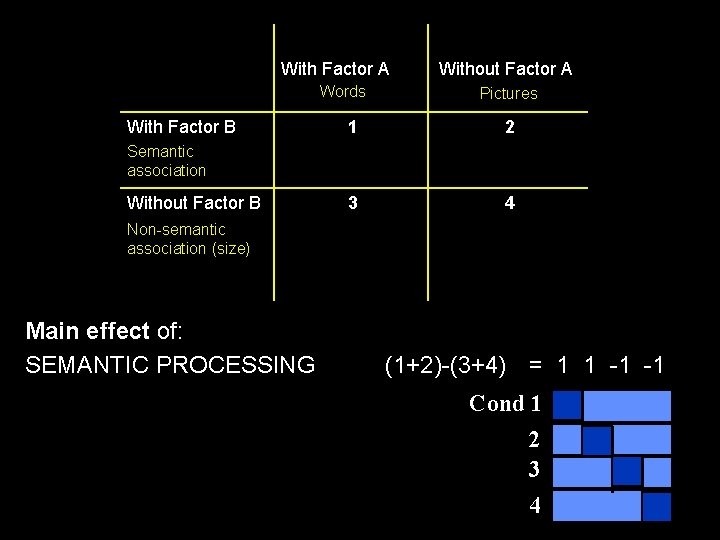
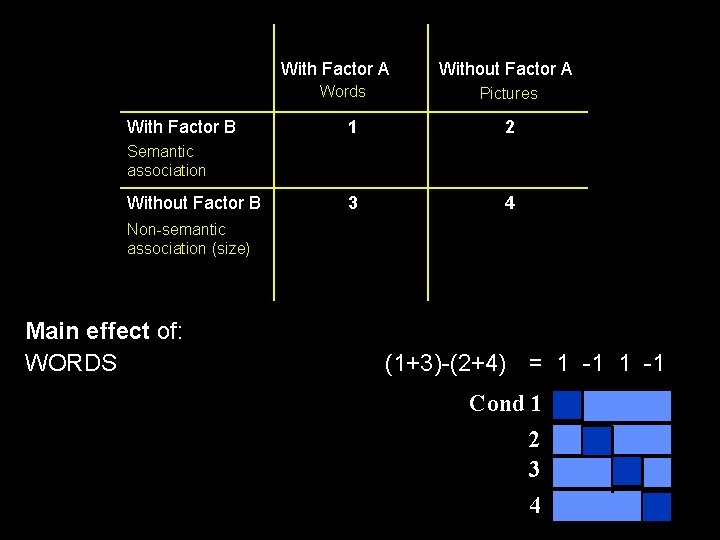
With Factor A With Factor B Words Without Factor A Pictures 1 2 3 4 Semantic association Without Factor B Non-semantic association (size) Interaction effect (A x B) Left posterior inferior A 2 Condition 1 With factor B temporal sulcus is activated more by the semantic processing of words than by the semantic processing of pictures (Vandenberghe et al. 1996) A 3 4 Without factor B
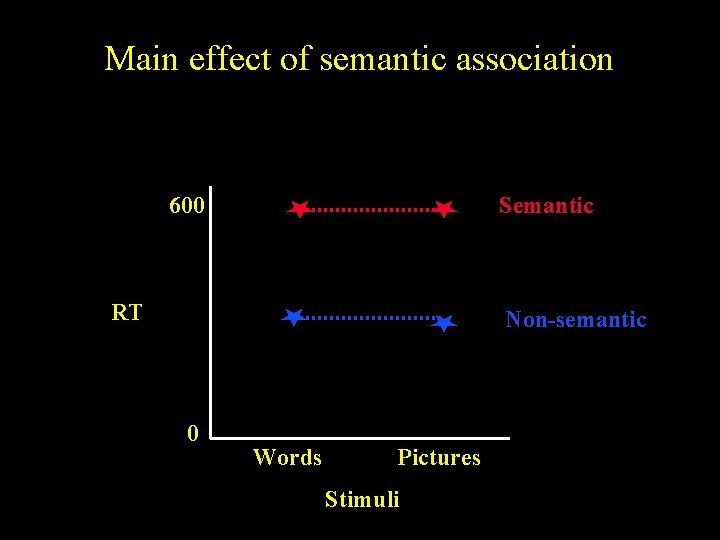
Main effect of semantic association 600 Semantic RT Non-semantic 0 Words Pictures Stimuli
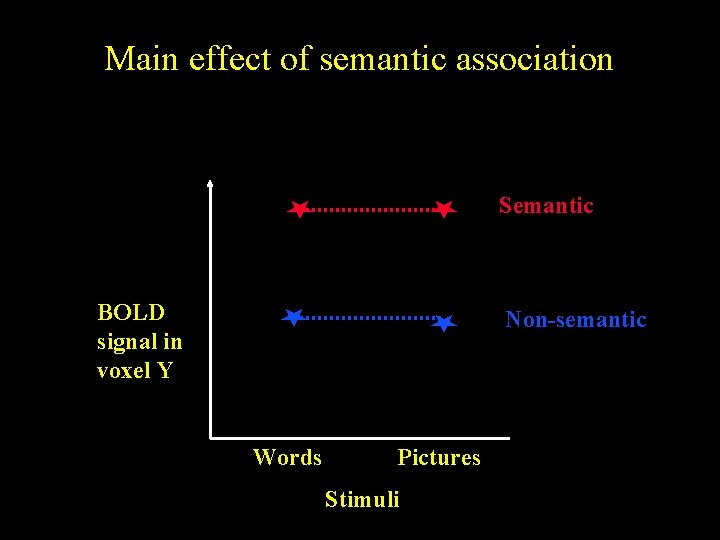
Main effect of semantic association Semantic BOLD signal in voxel Y Non-semantic Words Pictures Stimuli
Main effect of pictures Semantic Non-semantic 600 RT 0 Words Pictures Stimuli
Main effect of pictures Semantic Non-semantic BOLD signal in voxel Y Words Pictures Stimuli
Interaction 600 RT Semantic Non-semantic 0 Words Pictures Stimuli
Interaction BOLD signal in voxel Y Semantic Non-semantic Words Pictures Stimuli
Crossover interaction Semantic 600 RT Non-semantic 0 Words Pictures Stimuli
Crossover interaction Semantic BOLD signal in voxel Y Non-semantic Words Pictures Stimuli
With Factor A Words With Factor B Without Factor A Pictures 1 2 3 4 Semantic association Without Factor B Non-semantic association (size) Main effect of: SEMANTIC PROCESSING (1+2)-(3+4) = 1 1 -1 -1 Cond 1 2 3 4
With Factor A Words With Factor B Without Factor A Pictures 1 2 3 4 Semantic association Without Factor B Non-semantic association (size) Main effect of: WORDS (1+3)-(2+4) = 1 -1 Cond 1 2 3 4
With Factor A Words With Factor B Without Factor A Pictures 1 2 3 4 Semantic association Without Factor B Non-semantic association (size) Interaction between the factors: (1 -2)-(3 -4) = 1 -1 -1 1 Cond 1 2 3 4
With Factor A Words With Factor B Without Factor A Pictures 1 2 3 4 Semantic association Without Factor B Non-semantic association (size) Interaction between the factors: (3 -4)-(1 -2) = -1 1 1 -1 Cond 1 2 3 4
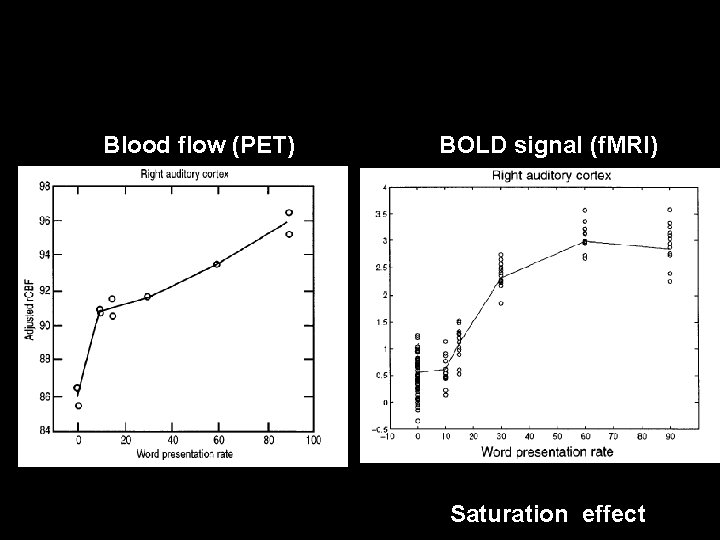
Parametric designs • Process of interest is treated as a dimension • The covariate of interest (or regressor) can be: – manipulated externally by the experimenter (e. g. word presentation rate) – determined by subject (e. g. number of words correctly remembered) • Analysis reveals brain areas whose activity shows a significant regression on the covariate of interest – Positive or negative slope – Linear or non-linear
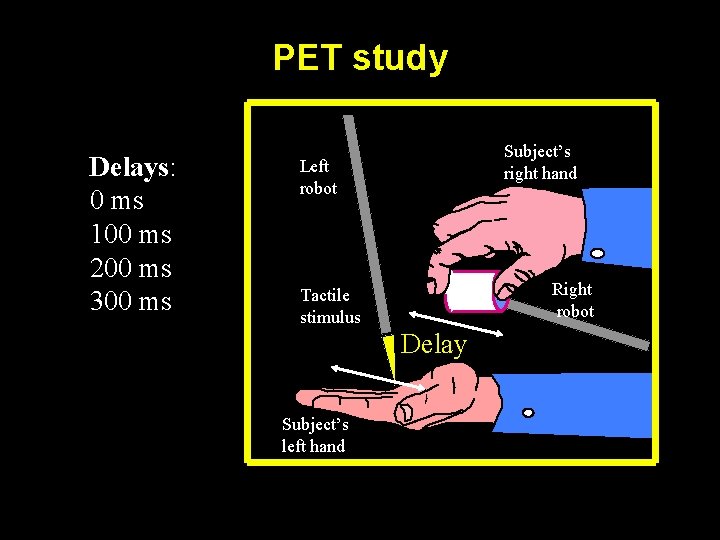
PET study Delays: 0 ms 100 ms 200 ms 300 ms Subject’s right hand Left robot Right robot Tactile stimulus Delay Subject’s left hand
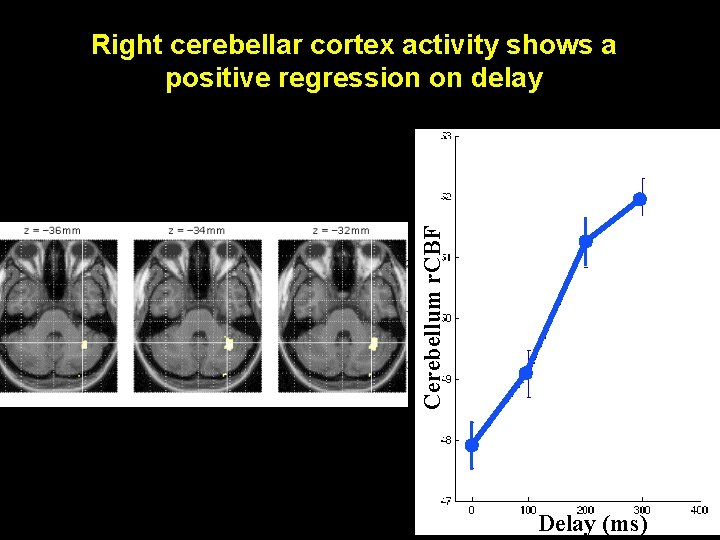
Cerebellum r. CBF Right cerebellar cortex activity shows a positive regression on delay Delay (ms)
Blood flow (PET) BOLD signal (f. MRI) Saturation effect
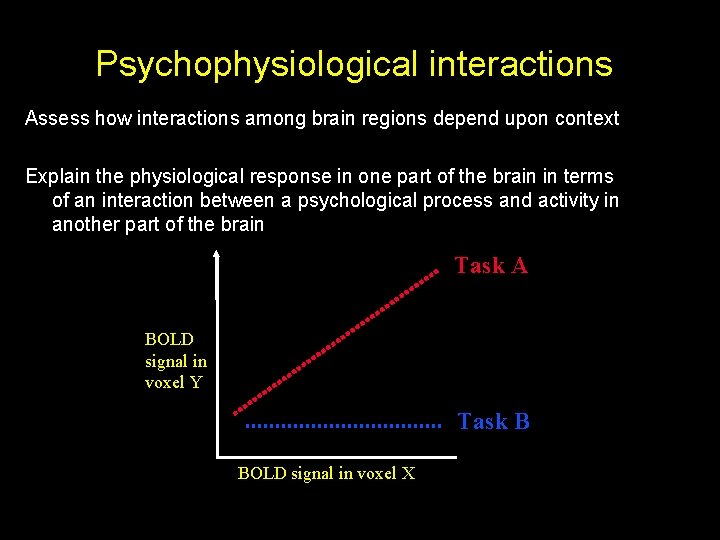
Psychophysiological interactions Assess how interactions among brain regions depend upon context Explain the physiological response in one part of the brain in terms of an interaction between a psychological process and activity in another part of the brain Task A BOLD signal in voxel Y Task B BOLD signal in voxel X
Cerebellum contributes of SI activity during selfproduced but not externally produced touch Self-produced touch Externally produced touch