
Institute for microbiology shows TRACING THE CRIMINAL L

Institute for microbiology shows TRACING THE CRIMINAL L Part seven: Anaerobic criminals
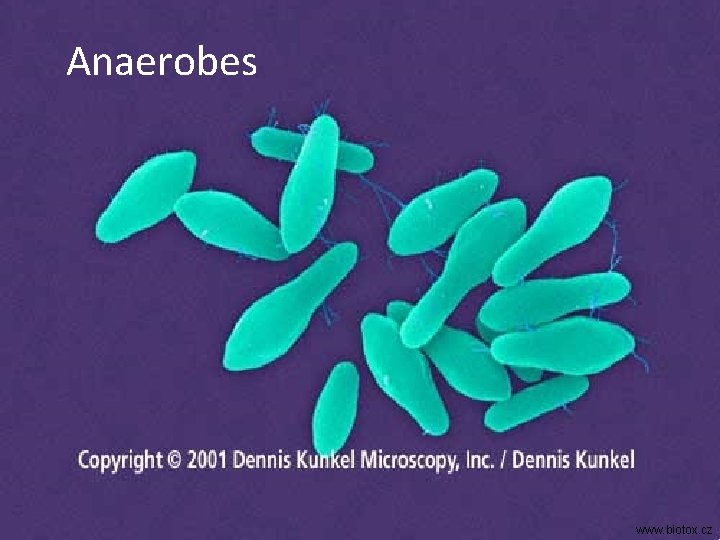
Anaerobes www. biotox. cz
Survey of topics Pathogens with complicated diagnostics Clostridia – clinical characteristics Spore non forming anaerobes and lactobacilli – characteristics Relation of bacteria to oxygen (repeating from spring term) Diagnostics of anaerobic bacteria, anaerobiosis
Pathogens with complicated diagnostics
Before we start… • …it is something to think about. Until now (P 01 to P 06) we spoke mostly about bacteria, that do not need special approach. (Although, some bacteria from P 06 did not match: gonococcus, brucella, legionella etc. ) • Clinical doctor simply sends a specimen „for bacteriological culture“, and something would grow out of it. • Now, it is the END! Now, we will have bacteria that do not match to this system.
http: //de. wikipedia. org And so: • If the clinical doctor wants his specimen to be examined for presence of anaerobes, mycobacteria or actinomycetes, it should be written on the request for examination. Special approaches have to be used. • In other agents (e. g. mycoplasms or chlamydia) it is often necessary to take serum and to perform indirect diagnostics • Remember especially this for your practice! n Not regarding the examination – this should be clear for you even after 20 years.
Clostridia – clinical characteristics
Story one • Mrs. Cabbage was all the time seen working in the garden. It was her big hobby. Once she injured her hand, because a pointed remainder of a plant was hidden in the soil. She went to her general practicioner. • The GP used local treatment for the wound, and then recommended re-vaccination agaist one serious disease • If she would get the disease, it would be very dangerous, including spasms of her body
Neurotoxic clostridia • The criminal that threatened Mrs. Cabbage was Clostridium tetani, causative agent of tetanus. The disease is typical by a small, local inflamation, and toxin action throughout the whole body. The toxin leads to spasms. • Another neurotoxic clostridium is Clostridium botulinum, causative agent of botulism. Here the agent does not enter the body at all. Only its toxin comes to the body (usually from badly prepared conserved meat) acting again as neurotoxin, but here producing pareses.
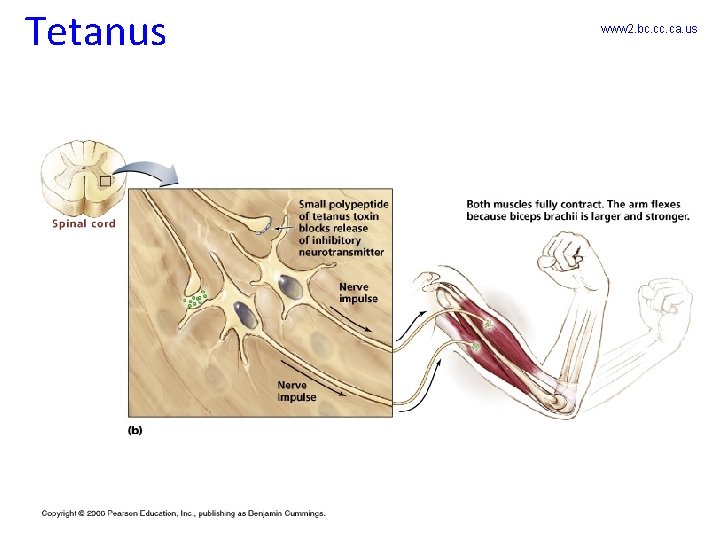
Tetanus www 2. bc. ca. us
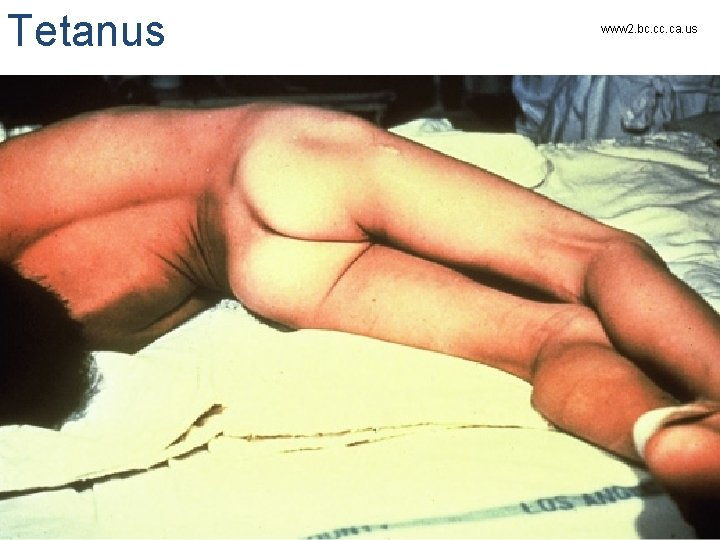
Tetanus www 2. bc. ca. us

medinfo. ufl. edu A tetanic man

Once more tetanus http: //pharmacie. univ-lille 2. fr
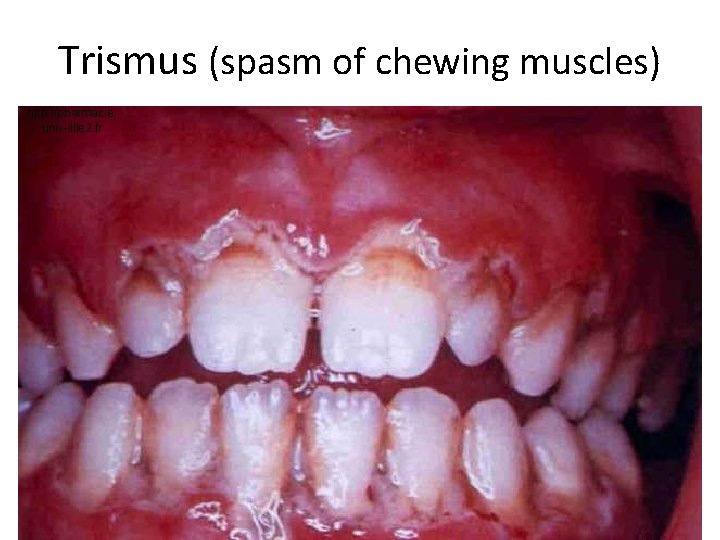
Trismus (spasm of chewing muscles) http: //pharmacie. univ-lille 2. fr
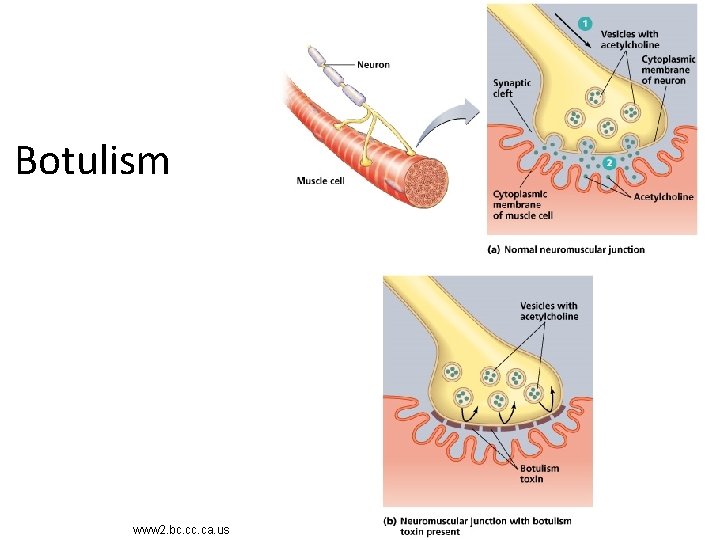
Botulism www 2. bc. ca. us
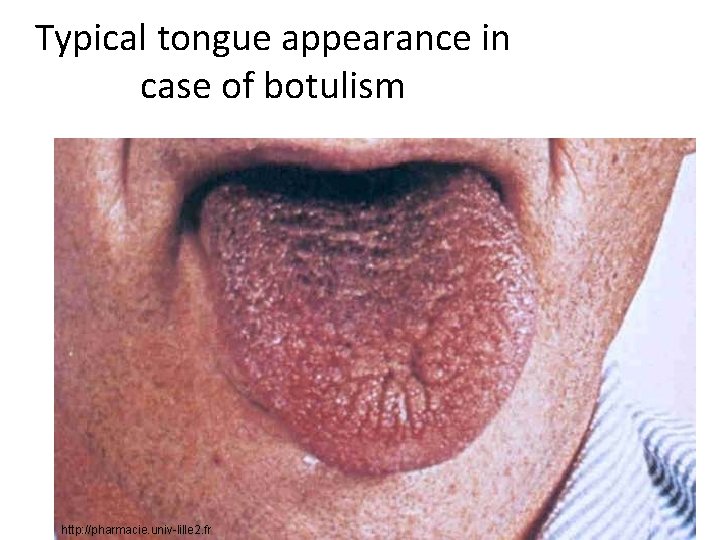
Typical tongue appearance in case of botulism http: //pharmacie. univ-lille 2. fr
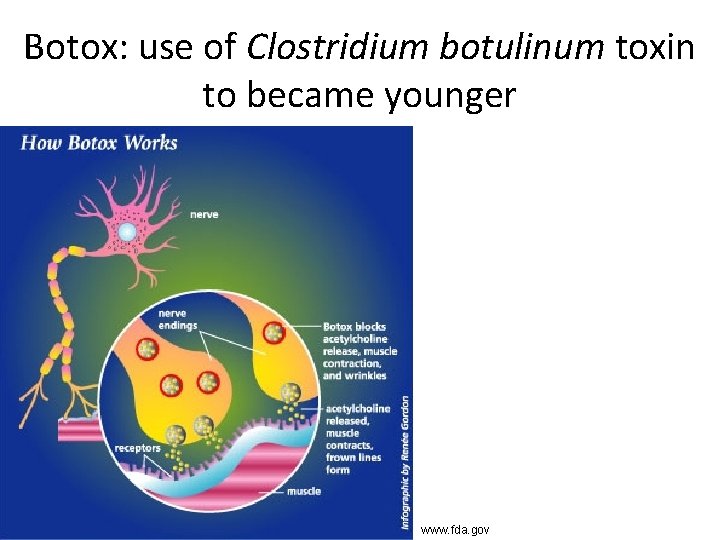
Botox: use of Clostridium botulinum toxin to became younger www. fda. gov
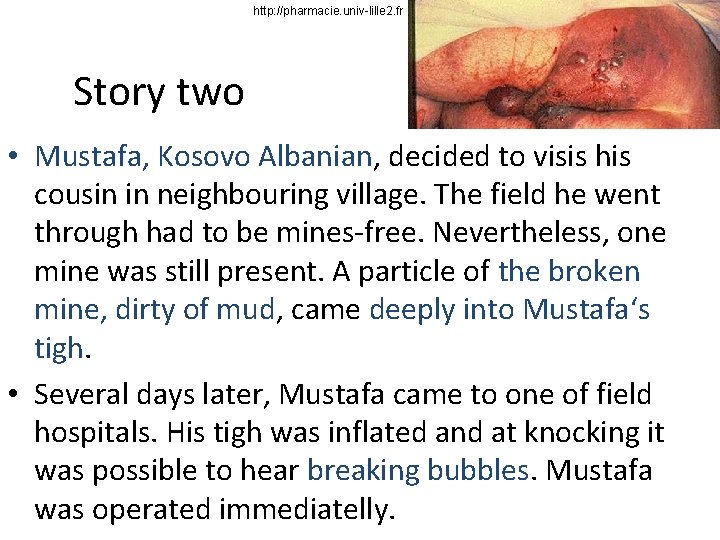
http: //pharmacie. univ-lille 2. fr Story two • Mustafa, Kosovo Albanian, decided to visis his cousin in neighbouring village. The field he went through had to be mines-free. Nevertheless, one mine was still present. A particle of the broken mine, dirty of mud, came deeply into Mustafa‘s tigh. • Several days later, Mustafa came to one of field hospitals. His tigh was inflated and at knocking it was possible to hear breaking bubbles. Mustafa was operated immediatelly.
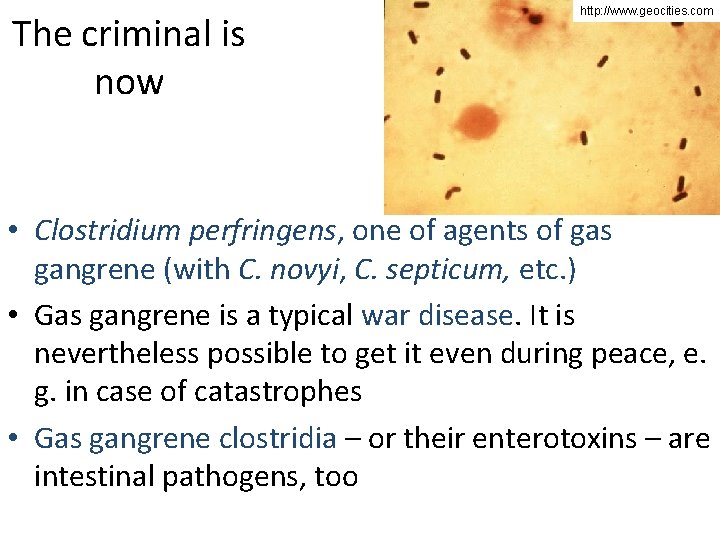
The criminal is now http: //www. geocities. com • Clostridium perfringens, one of agents of gas gangrene (with C. novyi, C. septicum, etc. ) • Gas gangrene is a typical war disease. It is nevertheless possible to get it even during peace, e. g. in case of catastrophes • Gas gangrene clostridia – or their enterotoxins – are intestinal pathogens, too
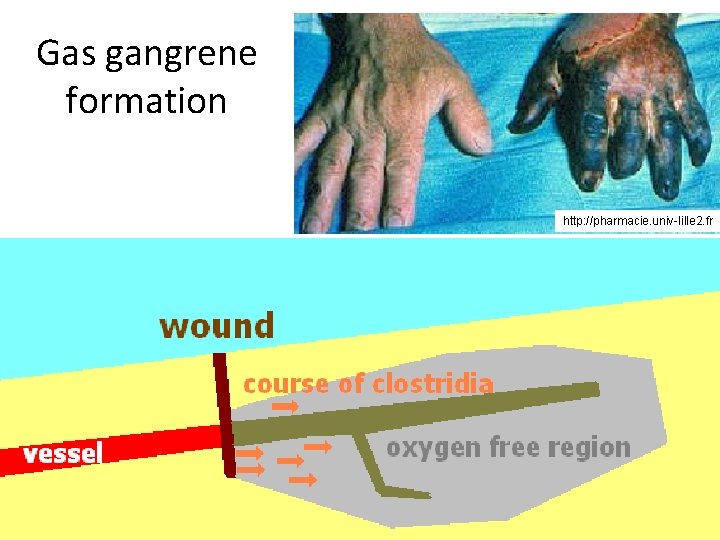
Gas gangrene formation http: //pharmacie. univ-lille 2. fr
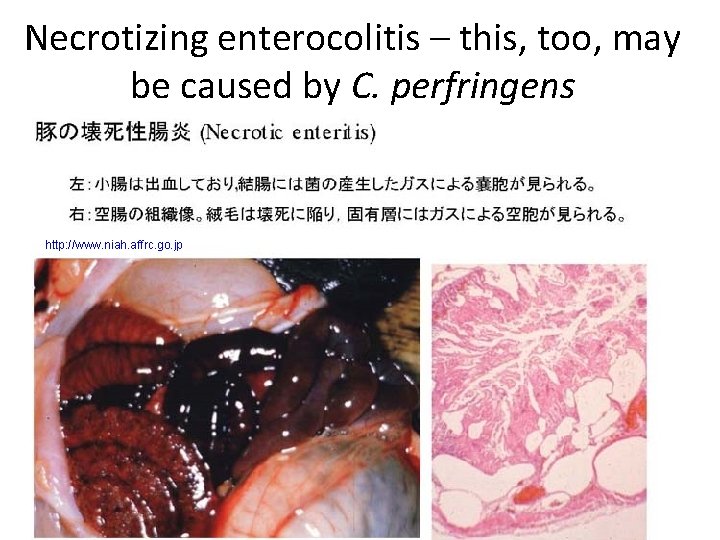
Necrotizing enterocolitis – this, too, may be caused by C. perfringens http: //www. niah. affrc. go. jp
Story three • Mr. Bones was third week in the hospital because of bacterial inflammation of bone marrow. The inflamation was treated by clindamycine (lincosamidic antibiotic). Suddenly, Mr. Bones started to have heavy diarrhoea. The departement did not have metronidazol, and so they used the old methode: Mr. Bones had to drink an ampule of vancomycine – an antibiotic, that is normally administered only administrativelly.
The agent n n Clostridium difficile, or its toxin The microbe is present commonly in the intestine; a problem appears when the toxin starts to be produced, and mostly when its concurrence is destroyed and it overmultiplies. Destroying of concurrence is mostly due to treatment by some antibiotics, formerly mostly lincosamids, but unfortunatelly, now also aminopenicillins and other drugs. Lincosamids are effective against majority of strictly anaerobic bacteria, but not C. difficile. Treatment is performed mostly using antibacterial chemoterapeutic metronidazol now. There exist another method, so called „stool transplantation“.
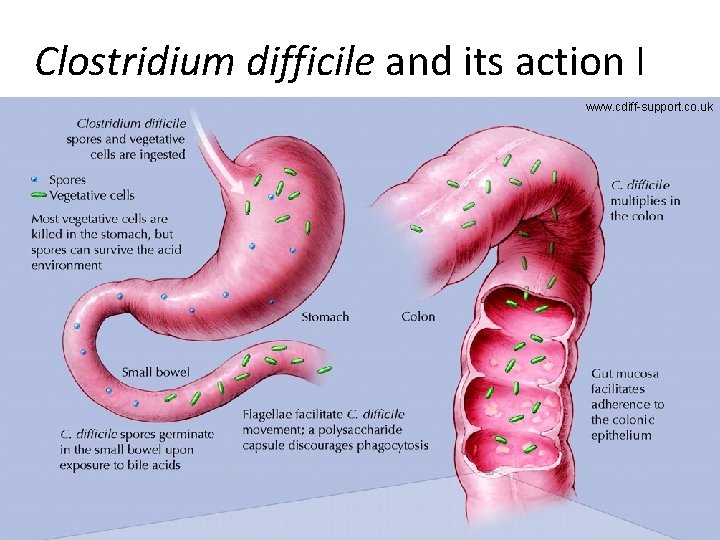
Clostridium difficile and its action I www. cdiff-support. co. uk
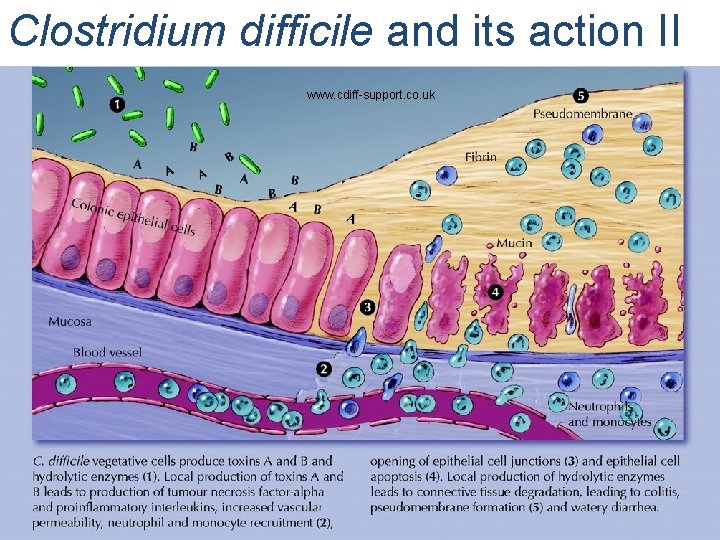
Clostridium difficile and its action II www. cdiff-support. co. uk
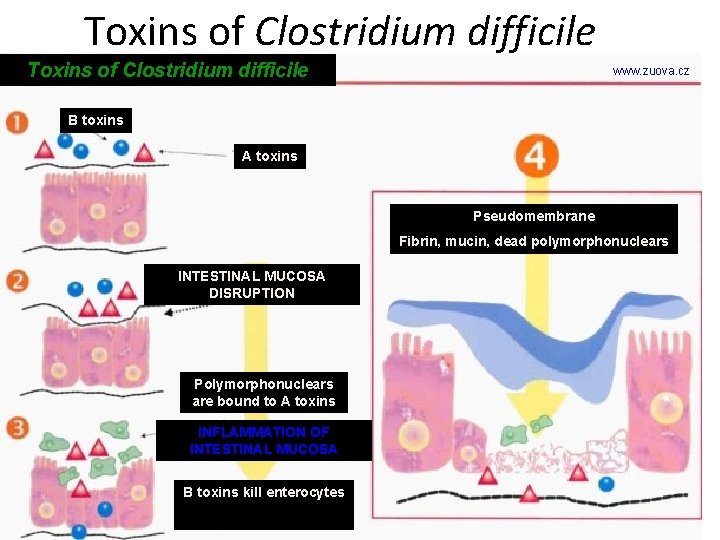
Toxins of Clostridium difficile www. zuova. cz B toxins A toxins Pseudomembrane Fibrin, mucin, dead polymorphonuclears INTESTINAL MUCOSA DISRUPTION Polymorphonuclears are bound to A toxins INFLAMMATION OF INTESTINAL MUCOSA B toxins kill enterocytes
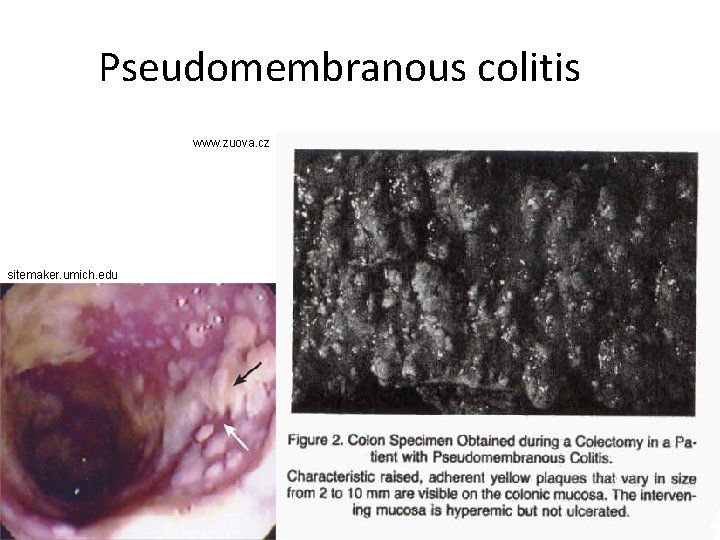
Pseudomembranous colitis www. zuova. cz sitemaker. umich. edu
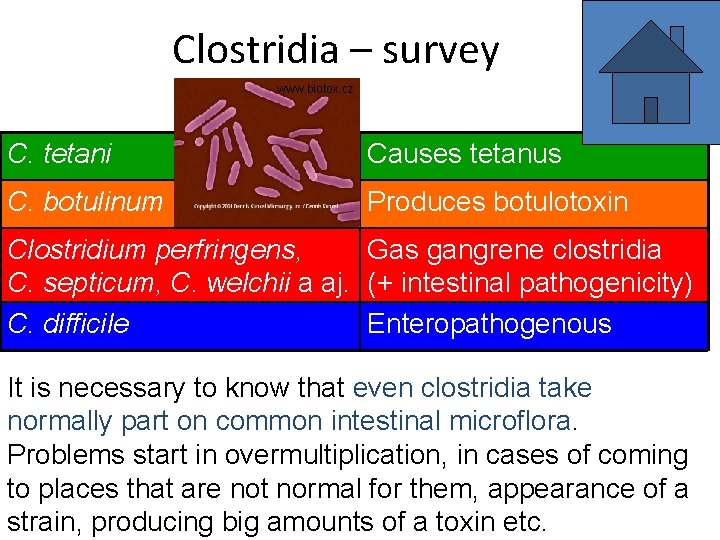
Clostridia – survey www. biotox. cz C. tetani Causes tetanus C. botulinum Produces botulotoxin Clostridium perfringens, Gas gangrene clostridia C. septicum, C. welchii a aj. (+ intestinal pathogenicity) C. difficile Enteropathogenous It is necessary to know that even clostridia take normally part on common intestinal microflora. Problems start in overmultiplication, in cases of coming to places that are not normal for them, appearance of a strain, producing big amounts of a toxin etc.
Spore non forming anaerobes (and lactobacilli) – clinical characteristics
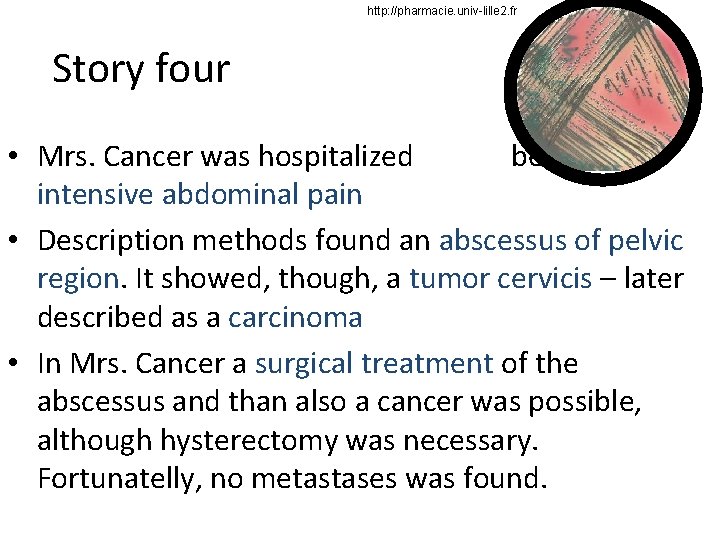
http: //pharmacie. univ-lille 2. fr Story four • Mrs. Cancer was hospitalized because of intensive abdominal pain • Description methods found an abscessus of pelvic region. It showed, though, a tumor cervicis – later described as a carcinoma • In Mrs. Cancer a surgical treatment of the abscessus and than also a cancer was possible, although hysterectomy was necessary. Fortunatelly, no metastases was found.
The disease is formed by n n n A mixture of strictly anaerobic, but also facultative anaerobic bacteria It is likely, that the mixture was previously preent in Mrs. Cancer‘s vagina, without making any problems The cancer broke the anatomical barrier, and so microbes came to other places, causing the abscessus Non-sporulating anaerobic bacteria have limited ways of transmission because of their characteristics Majority of infectons are endogenous
www. microbes-edu. org Common characteristics of sporenon-forming anerobes n They are present as a part of common microflora: n n in the large bowel they form 99 % of the total amount of microorganisms, about one kilogram of them in oral cavity they live thanks to biofilm – they are inside and so they have no acces to the air that would be harmful for them in vagina they are not present in all females, but about 70 % of women have some anaerobes in vagina; in case of overmultiplication, it is a dysmicrobia, requiring treatment In inflamation usually there is no single pathogen, but rather a mixture, „Veillon microflora“
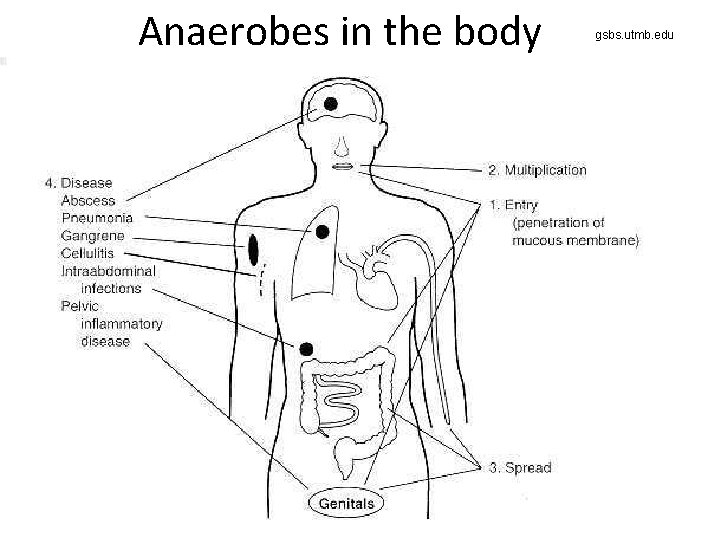
Anaerobes in the body gsbs. utmb. edu
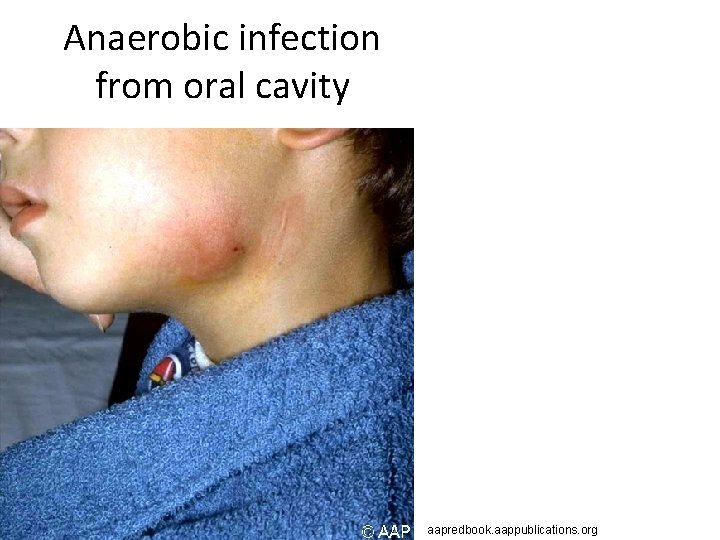
Anaerobic infection from oral cavity aapredbook. aappublications. org
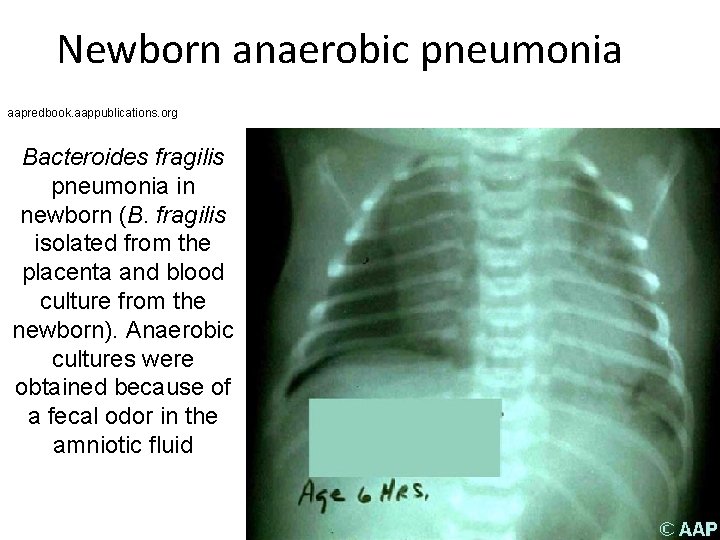
Newborn anaerobic pneumonia aapredbook. aappublications. org Bacteroides fragilis pneumonia in newborn (B. fragilis isolated from the placenta and blood culture from the newborn). Anaerobic cultures were obtained because of a fecal odor in the amniotic fluid
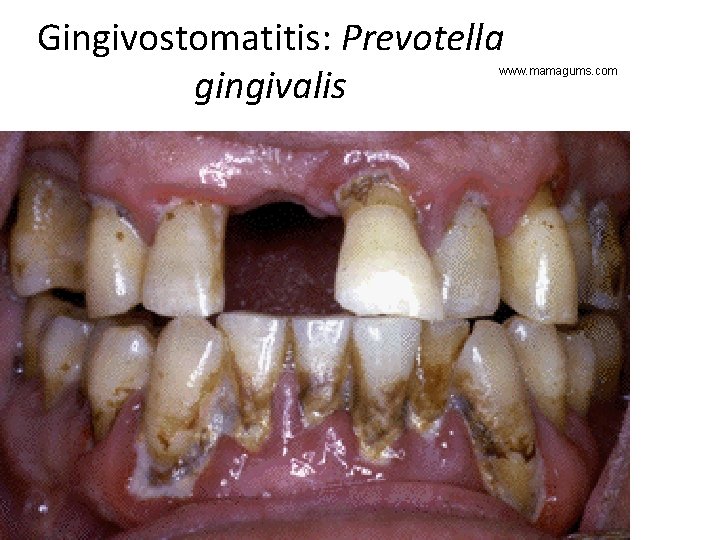
Gingivostomatitis: Prevotella gingivalis www. mamagums. com
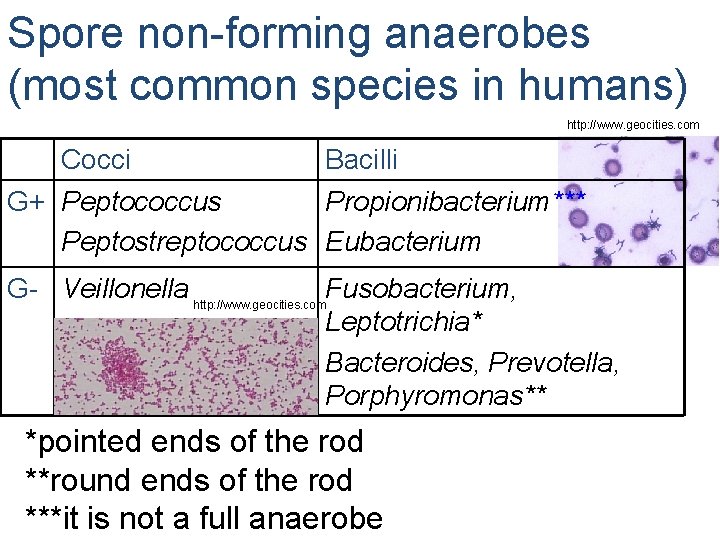
Spore non-forming anaerobes (most common species in humans) http: //www. geocities. com Cocci Bacilli G+ Peptococcus Propionibacterium*** Peptostreptococcus Eubacterium G- Veillonella http: //www. geocities. com. Fusobacterium, Leptotrichia* Bacteroides, Prevotella, Porphyromonas** *pointed ends of the rod **round ends of the rod ***it is not a full anaerobe
Story five • Miss Clark had chronical probles with her vaginal infections • Topic antibiotics in form of vaginal globules of cream with applicator gave her only partial help, pathogens often came back again • Finally, her gynecologist advised to use a probiotic drug with some „good“ bacteria, that would bring back the original vaginal microflora and not allow the pathogens to multiply again • The main „good bacterium“ was…
Lactobacillus acidophilus, „Döderlein‘s bacillus“ • Lactobacilli are quite robust Gram-positive rods. They are called lactobacilli, because they ferment various substrates (moslty glucose and lactose) to lactate • Lactobacilli are the most important part of normal vaginal microflora, and also important part of intestinal microflora • Lactobacilli are not anaerobic bacteria. Nevertheless, as they are often microaerophilic, they are usually not able to grow at the normal atmosphere. On the contrary, the imperfect anaerobiose of our common anaerobic jars and anaerostats enable them to grow better.
Relation of bacteria to oxygen (repeating)
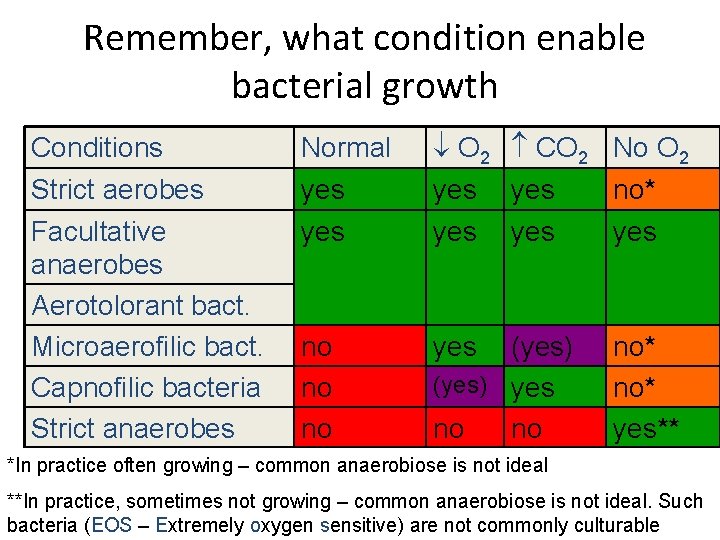
Remember, what condition enable bacterial growth Conditions Strict aerobes Facultative anaerobes Aerotolorant bact. Microaerofilic bact. Capnofilic bacteria Strict anaerobes Normal yes O 2 CO 2 No O 2 yes no* yes yes no no no yes (yes) yes no no no* yes** *In practice often growing – common anaerobiose is not ideal **In practice, sometimes not growing – common anaerobiose is not ideal. Such bacteria (EOS – Extremely oxygen sensitive) are not commonly culturable
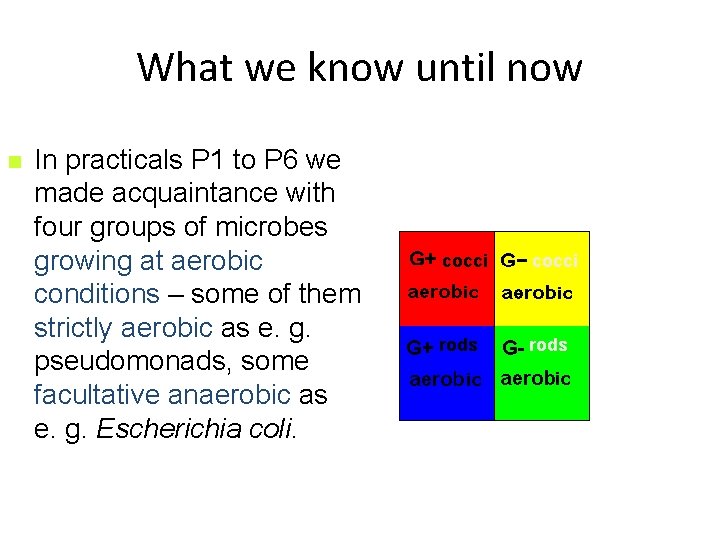
What we know until now n In practicals P 1 to P 6 we made acquaintance with four groups of microbes growing at aerobic conditions – some of them strictly aerobic as e. g. pseudomonads, some facultative anaerobic as e. g. Escherichia coli. cocci rods
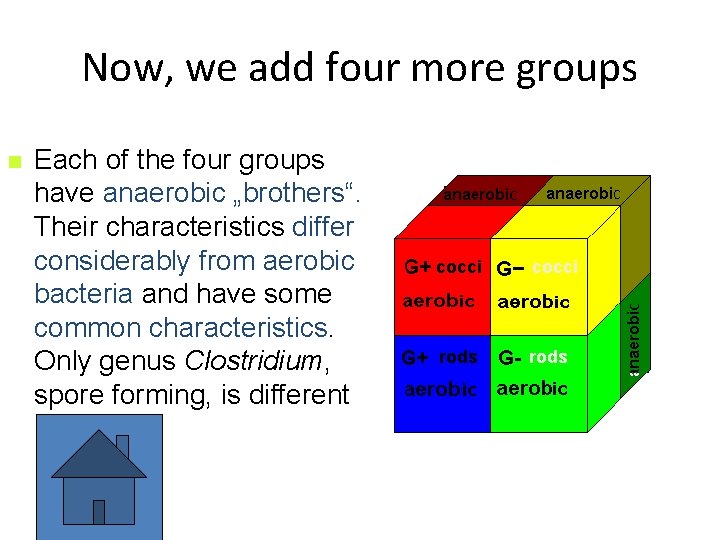
Now, we add four more groups n Each of the four groups have anaerobic „brothers“. Their characteristics differ considerably from aerobic bacteria and have some common characteristics. Only genus Clostridium, spore forming, is different cocci rods
Diagnostics of anaerobic bacteria, how to obtain anaerobiosis
How to search for the anaerobic bacteria – I • Microscopy: More important than in aerobic bacteria, because of morphological diversity • Culture: It is necessary to get anerobiosis using anaerobic jars or boxes. In liquid media it is sufficient to pour parafin oil over the medium. VL (viande levure) broth, VL blood agar and various special media are used • Biochemical identification: catalase and oxidase usually negative, mutual differenciation possible biochemically, and chromatographical gas analysis (they are biochemically active) • Antigen analysis and indirect diagnostics are rarelly used in diagnostics
Sampling and transporation in anaerobic cultivation • Priority has liquid specimen, e. g. pus, the best is to send it in syringe with a cap after elimination of oxygen* • When a swab is sent, it is necessary to send it in a transport medium; on the other hand, common, e. g. Amies medium, is sufficient • It is also possible to talk with laboratory and to inoculate the specimen directly to media, e. g. peroperationally. *for safety reasons, unlike in older recommendations, it is no more recommended to use a syringe with needle
Microscopy of anaerobic bacteria • We perform normal Gram staining. We differenciate bacteria according to shape and cell wall type into cocci and bacilli, G+ and G–. • Anaerobic rods vary in shape very much – one preparation contains various formations from filamentous to nearly coccal ones • In Gram-negative rods, it is useful to differenciate between those with rounded ends (Bacteroides, Prevotella, Porphyromonas) and those with pointed ends, often spindle-shaped (Fusobacterium, Leptotrichia)
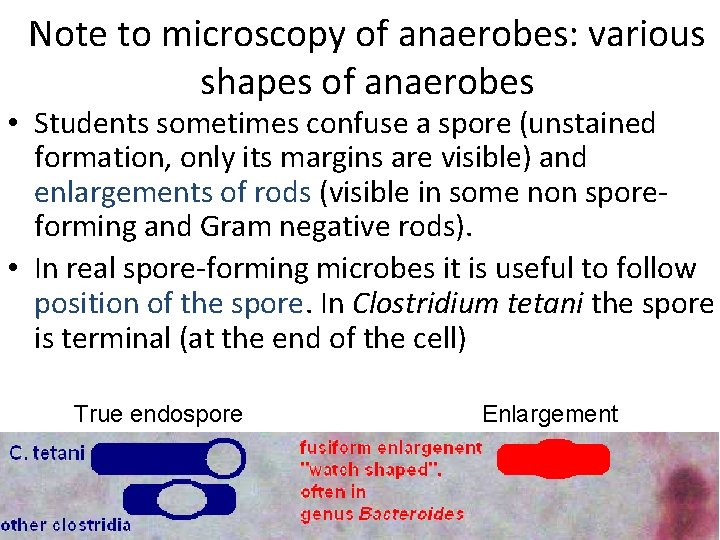
Note to microscopy of anaerobes: various shapes of anaerobes • Students sometimes confuse a spore (unstained formation, only its margins are visible) and enlargements of rods (visible in some non sporeforming and Gram negative rods). • In real spore-forming microbes it is useful to follow position of the spore. In Clostridium tetani the spore is terminal (at the end of the cell) True endospore Enlargement
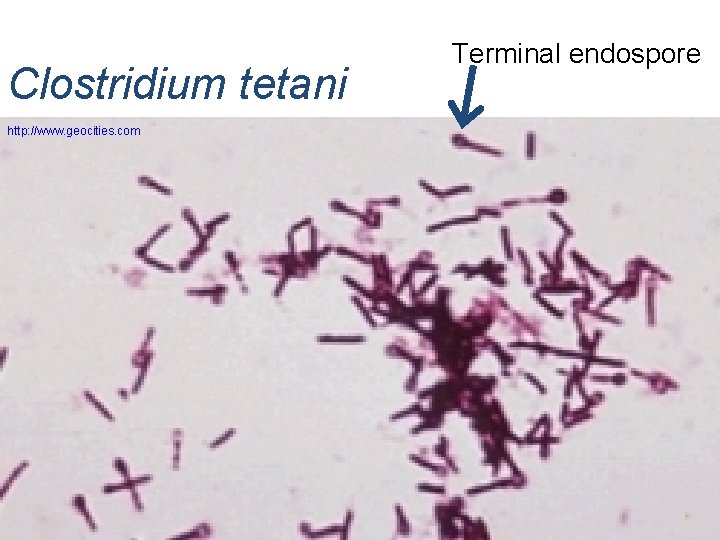
Clostridium tetani http: //www. geocities. com Terminal endospore
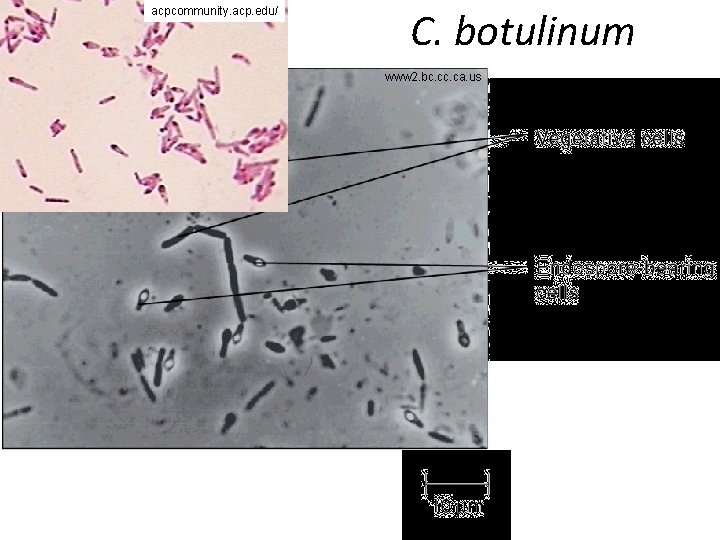
acpcommunity. acp. edu/ C. botulinum www 2. bc. ca. us
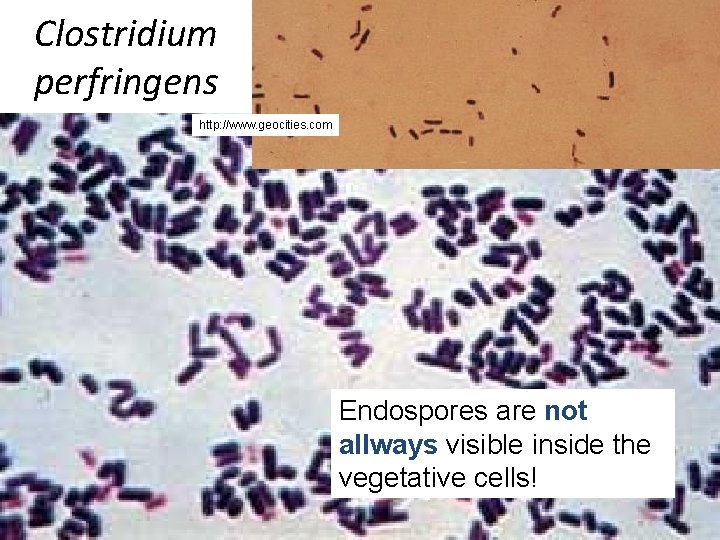
Clostridium perfringens http: //www. geocities. com Endospores are not allways visible inside the vegetative cells!
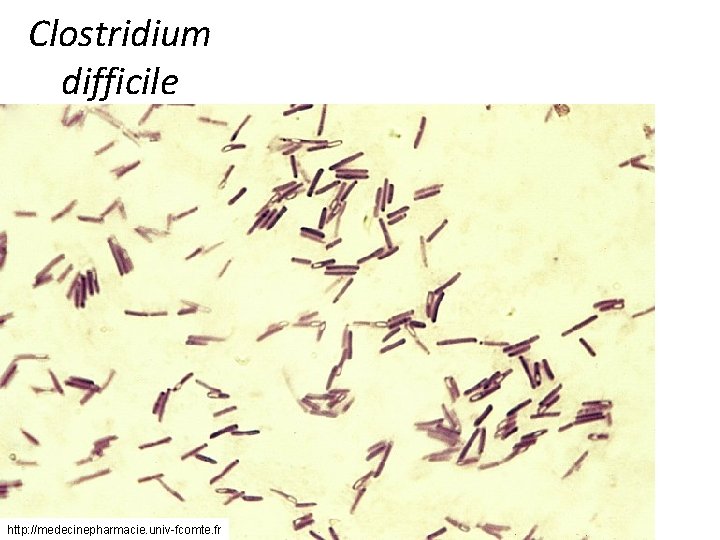
Clostridium difficile http: //medecinepharmacie. univ-fcomte. fr
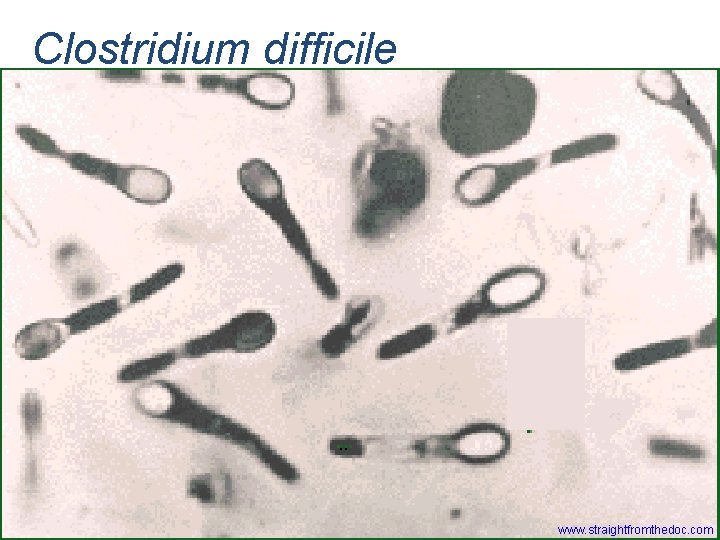
Clostridium difficile www. straightfromthedoc. com
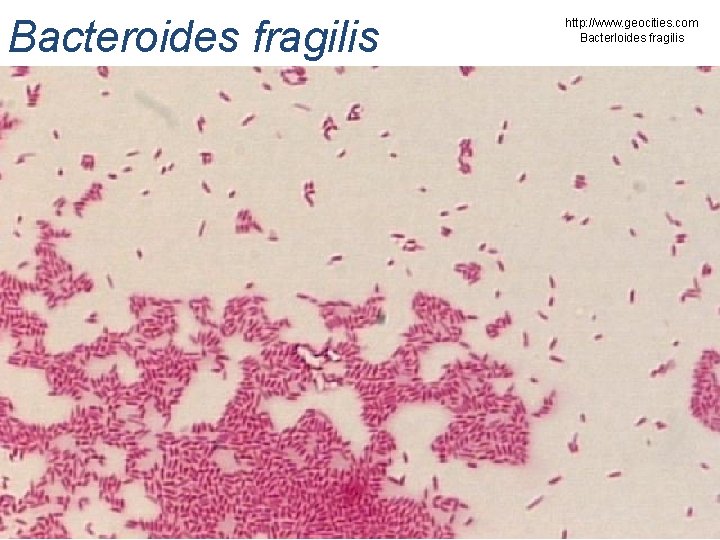
Bacteroides fragilis http: //www. geocities. com Bacterloides fragilis
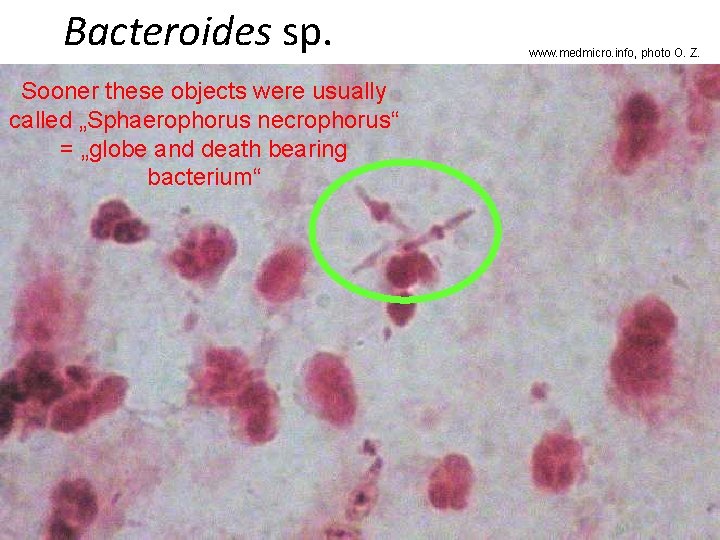
Bacteroides sp. Sooner these objects were usually called „Sphaerophorus necrophorus“ = „globe and death bearing bacterium“ www. medmicro. info, photo O. Z.
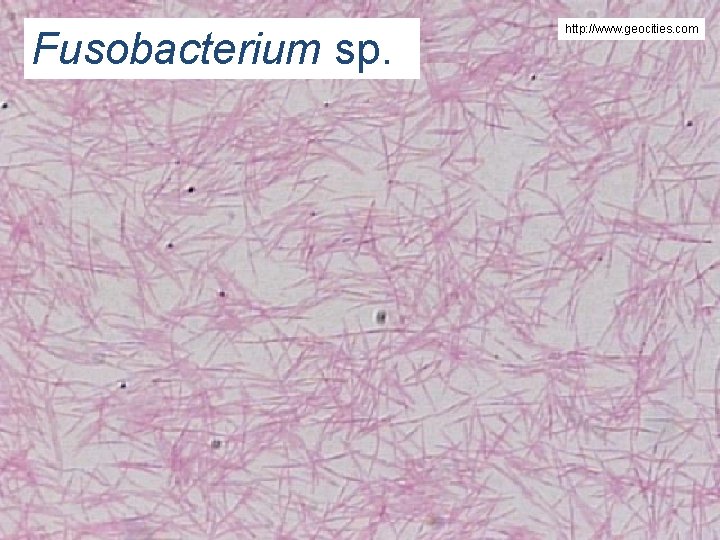
Fusobacterium sp. http: //www. geocities. com
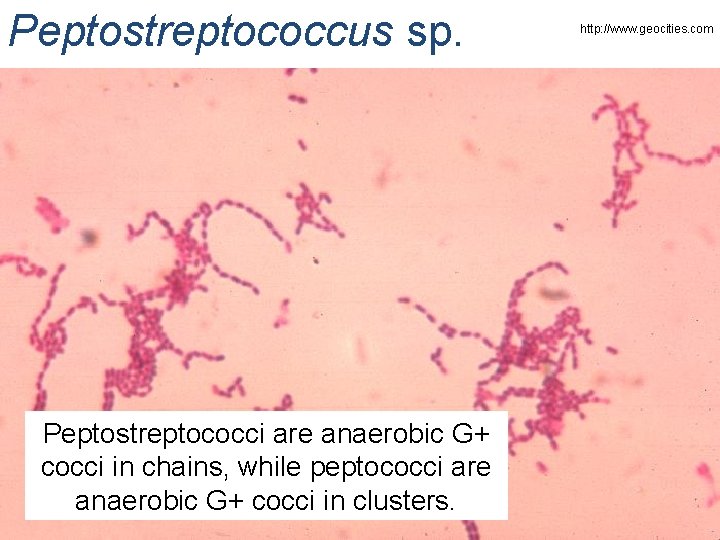
Peptostreptococcus sp. Peptostreptococci are anaerobic G+ cocci in chains, while peptococci are anaerobic G+ cocci in clusters. http: //www. geocities. com
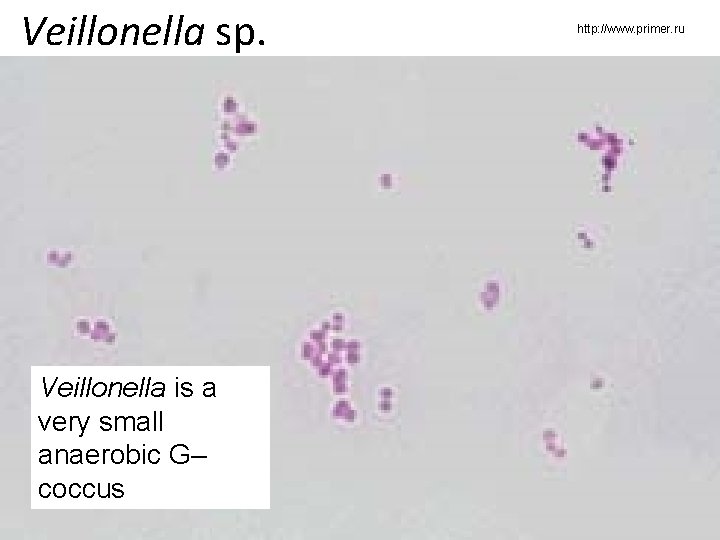
Veillonella sp. Veillonella is a very small anaerobic G– coccus http: //www. primer. ru
Culture of anaerobic bacteria • Anaerobic bacteria grow often in tiny, irregular colonies, that may have tails on margins. It smells typically. • Aerobic culture on blood agar enables only growth of strictly aerobic and facultatively anaerobic bacteria. So, if a bacterium does not grow here, but does grow in anaerobic conditions, it is a strictly aerobic bacterium. To culture anaerobes, we use VL blood agar (in practice we say simply „VL agar“).
To anaerobic culture: How to get the anaerobiose • Mechanically – VL broth is covered by parafin oil • Physically – in the anaerobic box, air is replaced by a mixture of anaerobic gases from a bomb • Chemically – in the anaerobic jar – organic acids H 2 and CO 2 – in the second phase on palladium catalysator hydrogen reacts with oxygen, and water is formed, so oxygen is consumpted
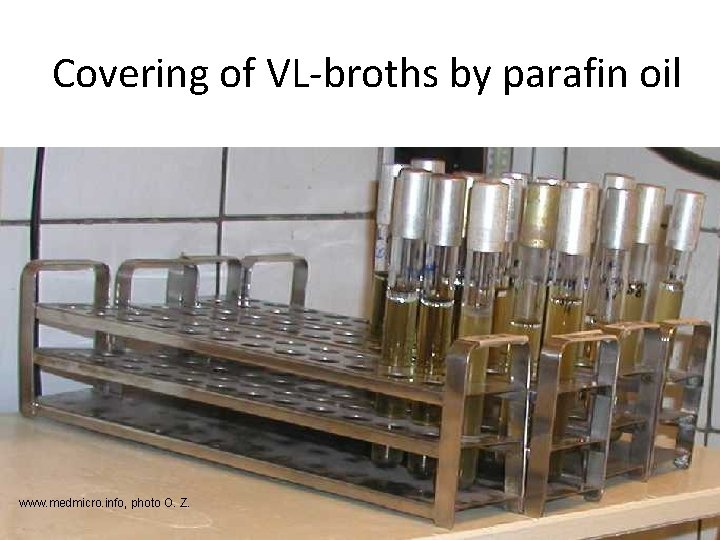
Covering of VL-broths by parafin oil www. medmicro. info, photo O. Z.
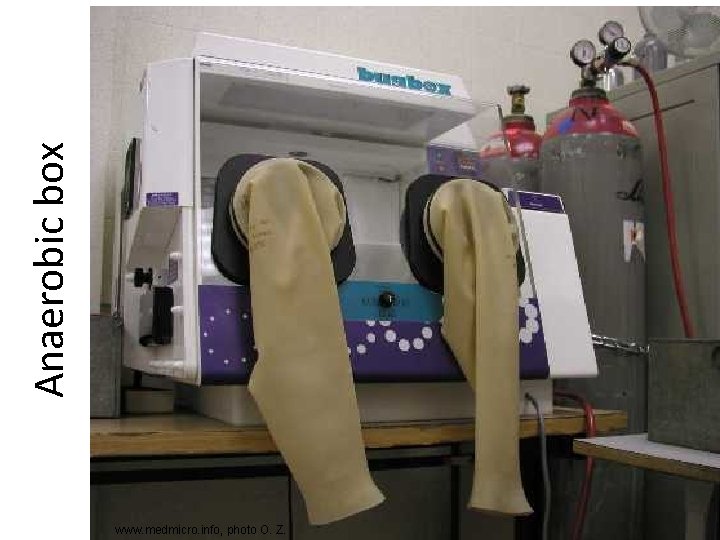
Anaerobic box www. medmicro. info, photo O. Z.
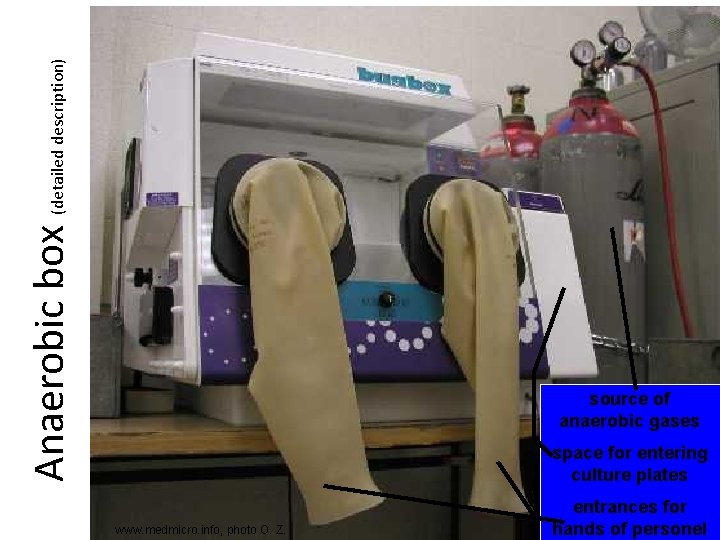
Anaerobic box (detailed description) source of anaerobic gases space for entering culture plates www. medmicro. info, photo O. Z. entrances for hands of personel
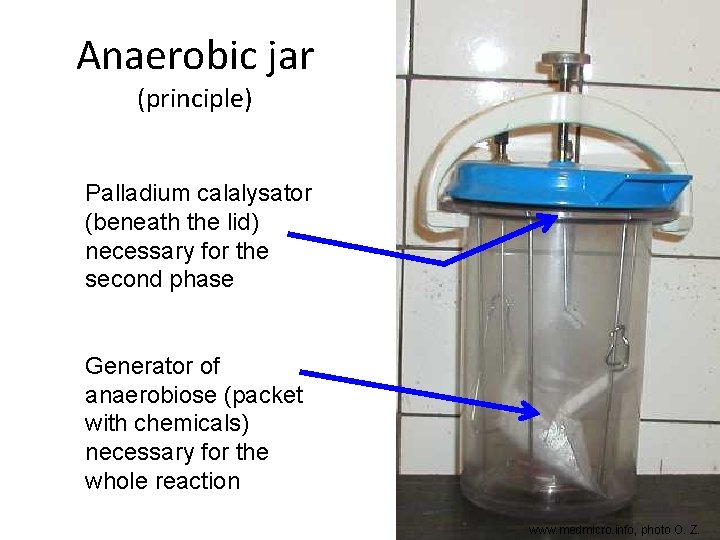
Anaerobic jar (principle) Palladium calalysator (beneath the lid) necessary for the second phase Generator of anaerobiose (packet with chemicals) necessary for the whole reaction www. medmicro. info, photo O. Z.
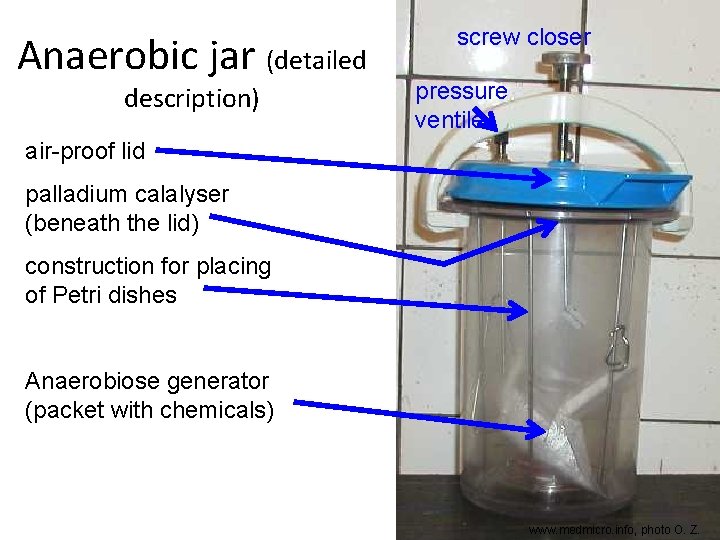
Anaerobic jar (detailed description) screw closer pressure ventile air-proof lid palladium calalyser (beneath the lid) construction for placing of Petri dishes Anaerobiose generator (packet with chemicals) www. medmicro. info, photo O. Z.
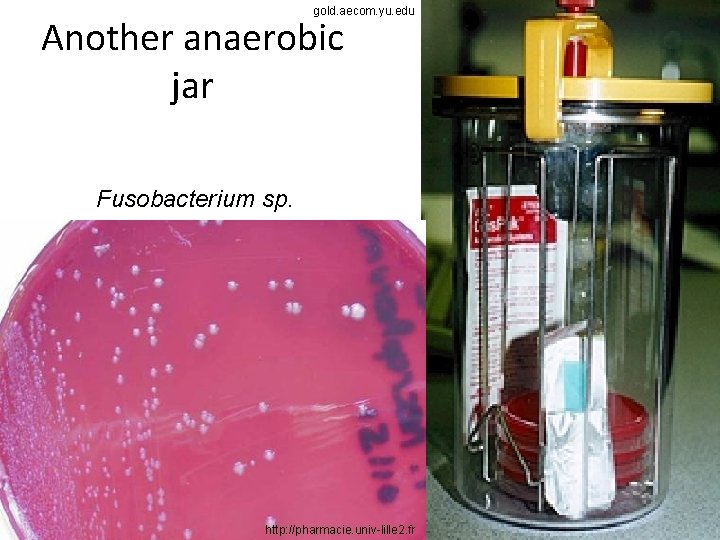
gold. aecom. yu. edu Another anaerobic jar Fusobacterium sp. http: //pharmacie. univ-lille 2. fr
Morphology of colonies of anaerobic bacteria • Clostridia use tu have quite large, iregullar, badly smelling colonies • Other anaerobic bacteria have rather small colonies • Some anaerobic bacteria (Prevotella melaninogenica) have pigmented colonies
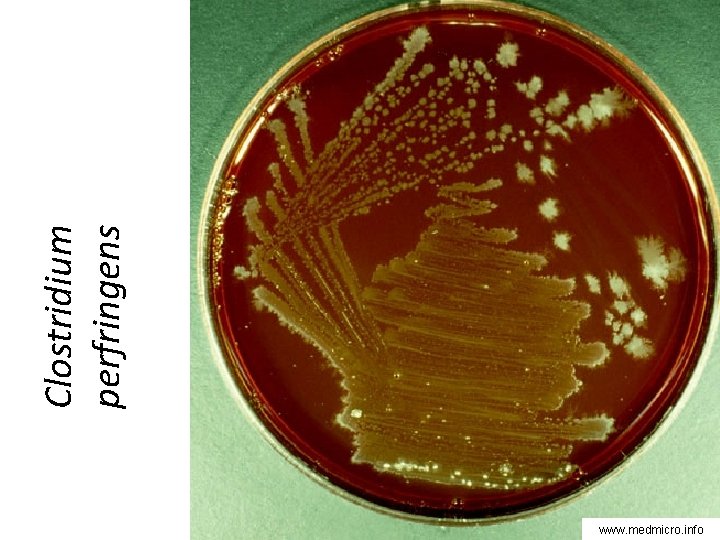
www. medmicro. info Clostridium perfringens
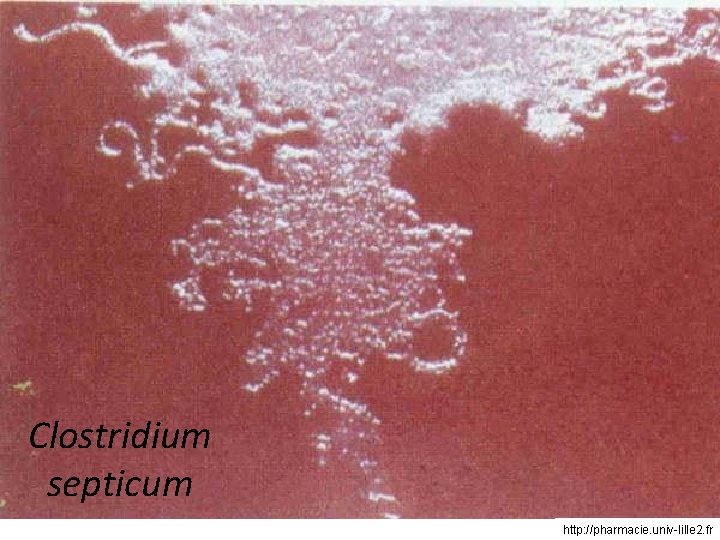
Clostridium septicum http: //pharmacie. univ-lille 2. fr
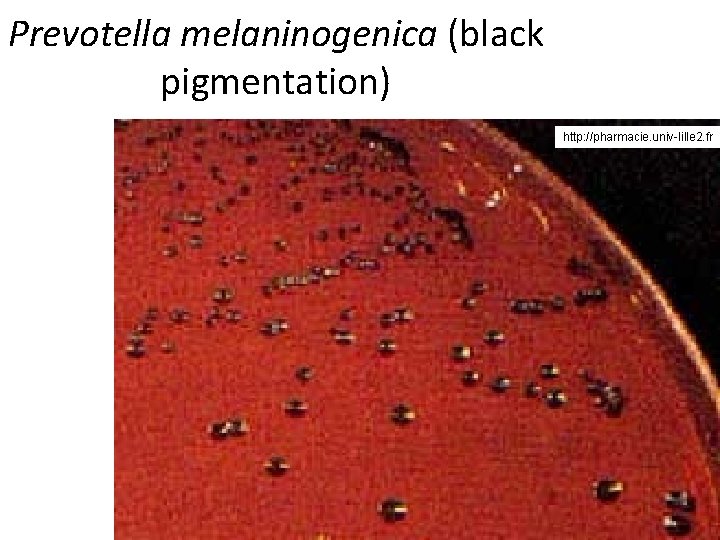
Prevotella melaninogenica (black pigmentation) http: //pharmacie. univ-lille 2. fr
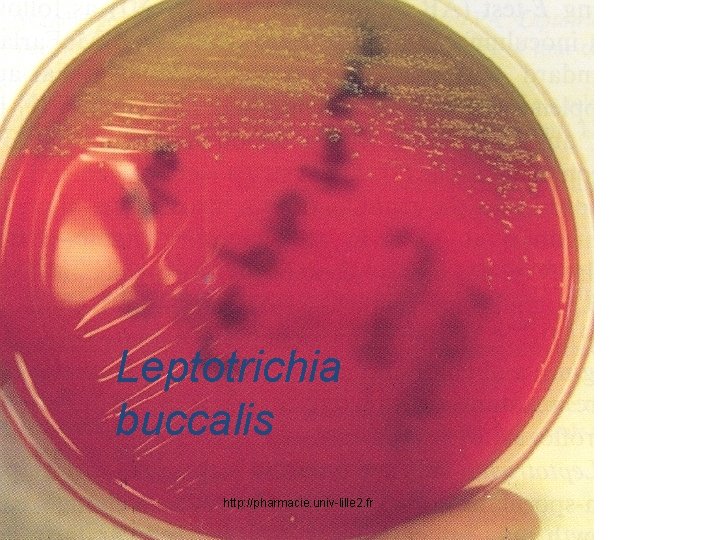
Leptotrichia buccalis http: //pharmacie. univ-lille 2. fr
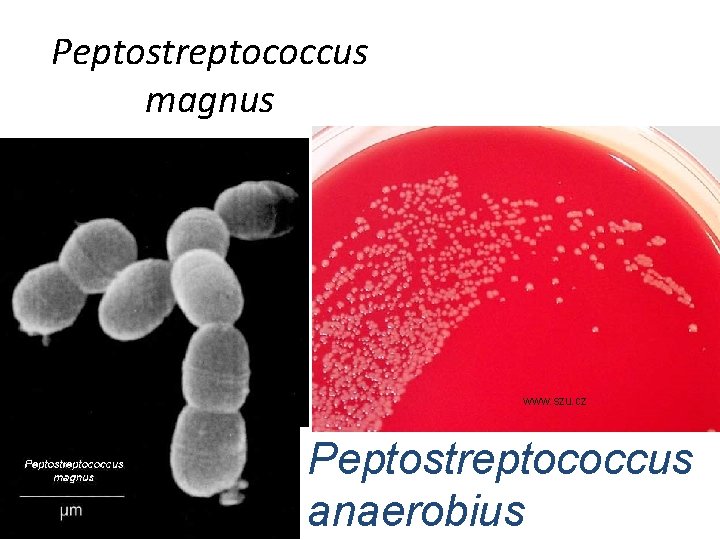
Peptostreptococcus magnus www. zuova. cz www. szu. cz Peptostreptococcus anaerobius
Biochemical differentiation • Different tests are used, in Czech conditions mostly ANAEROtest 23 Lachema. strain A strain B We write results of the strains („+“ or „-“) and count the octal code We assess the result acording to the codebook ATTENTION – the codebook is divided into several parts according to morphology of anaerobic bacteria. It is necessary to search in the proper part of the codebook
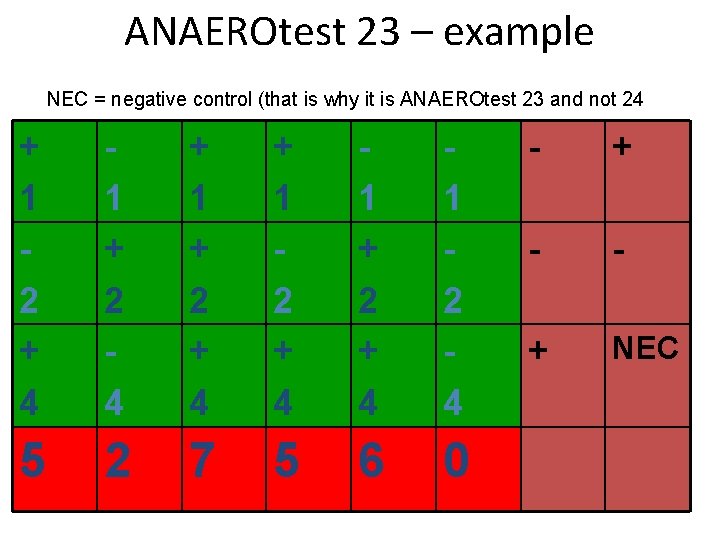
ANAEROtest 23 – example NEC = negative control (that is why it is ANAEROtest 23 and not 24 + 1 2 + 4 1 + 2 4 + 1 + 2 + 4 + 1 2 + 4 1 + 2 + 4 1 2 4 5 2 7 5 6 0 - + - - + NEC
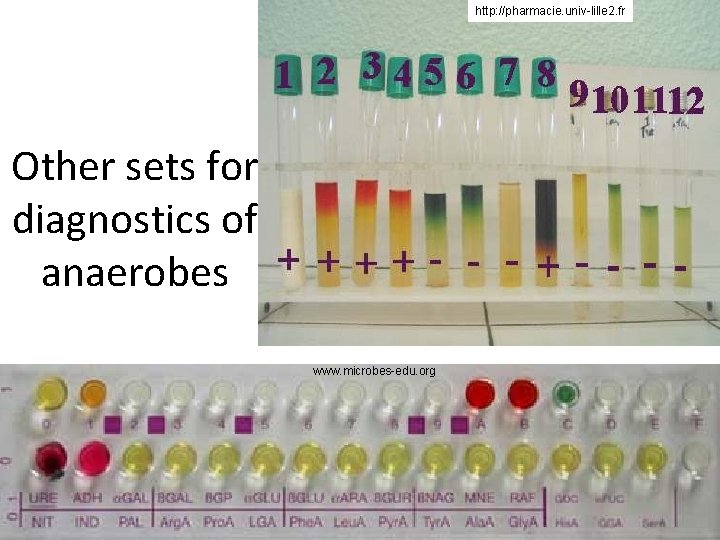
http: //pharmacie. univ-lille 2. fr Other sets for diagnostics of anaerobes www. microbes-edu. org
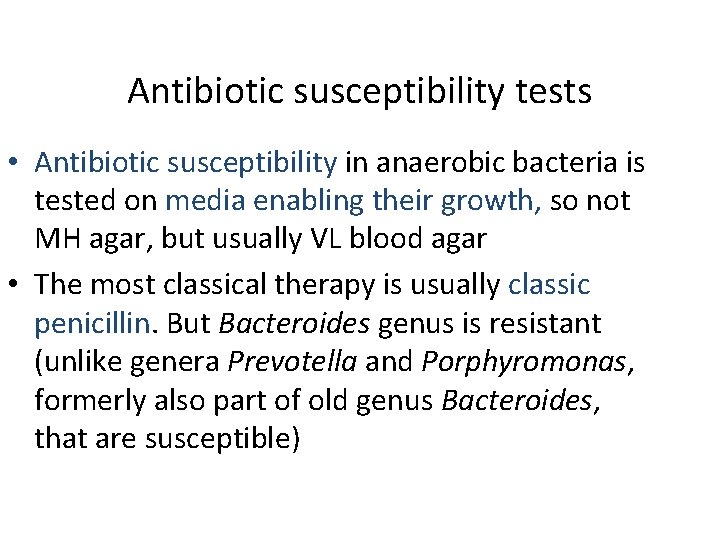
Antibiotic susceptibility tests • Antibiotic susceptibility in anaerobic bacteria is tested on media enabling their growth, so not MH agar, but usually VL blood agar • The most classical therapy is usually classic penicillin. But Bacteroides genus is resistant (unlike genera Prevotella and Porphyromonas, formerly also part of old genus Bacteroides, that are susceptible)
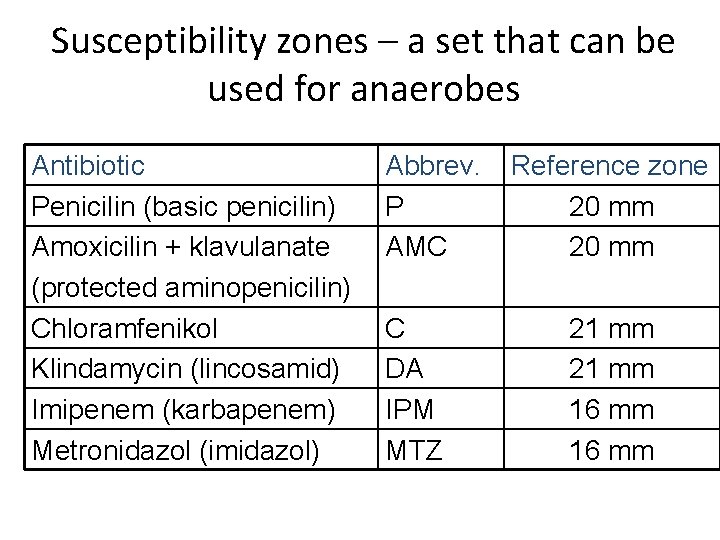
Susceptibility zones – a set that can be used for anaerobes Antibiotic Penicilin (basic penicilin) Amoxicilin + klavulanate (protected aminopenicilin) Chloramfenikol Klindamycin (lincosamid) Imipenem (karbapenem) Metronidazol (imidazol) Abbrev. P AMC C DA IPM MTZ Reference zone 20 mm 21 mm 16 mm
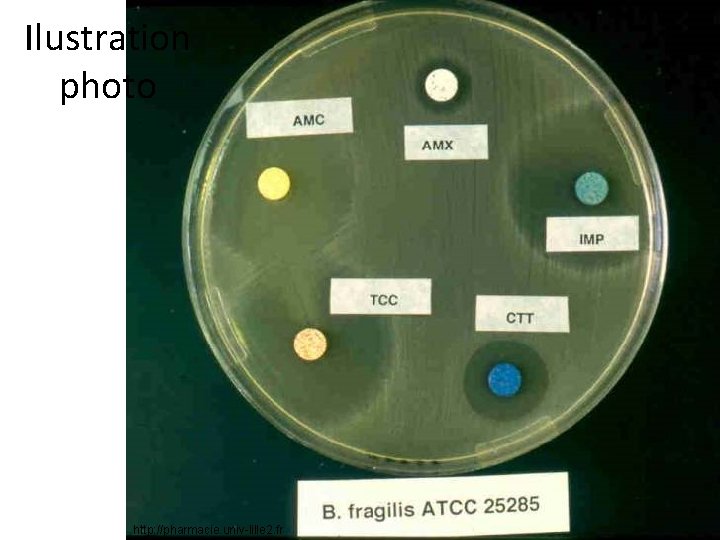
Ilustration photo http: //pharmacie. univ-lille 2. fr
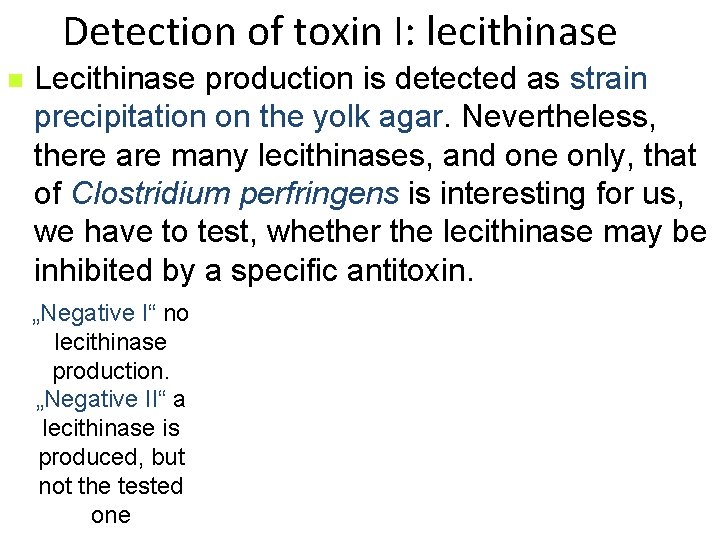
Detection of toxin I: lecithinase n Lecithinase production is detected as strain precipitation on the yolk agar. Nevertheless, there are many lecithinases, and one only, that of Clostridium perfringens is interesting for us, we have to test, whether the lecithinase may be inhibited by a specific antitoxin. „Negative I“ no lecithinase production. „Negative II“ a lecithinase is produced, but not the tested one
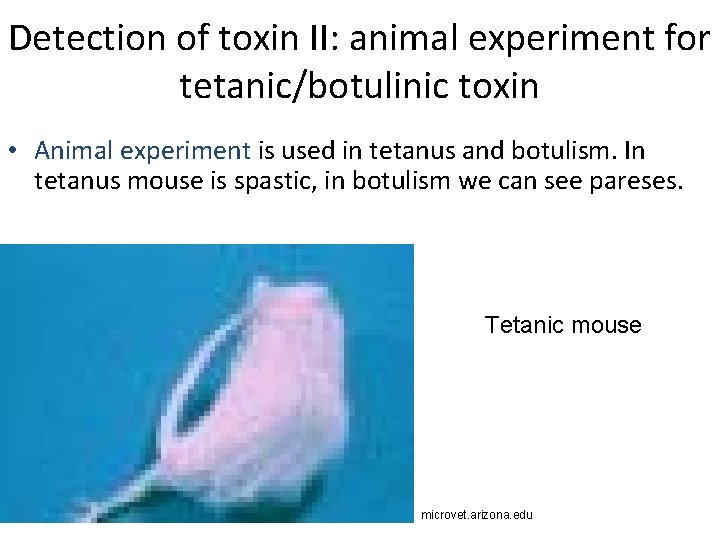
Detection of toxin II: animal experiment for tetanic/botulinic toxin • Animal experiment is used in tetanus and botulism. In tetanus mouse is spastic, in botulism we can see pareses. Tetanic mouse microvet. arizona. edu
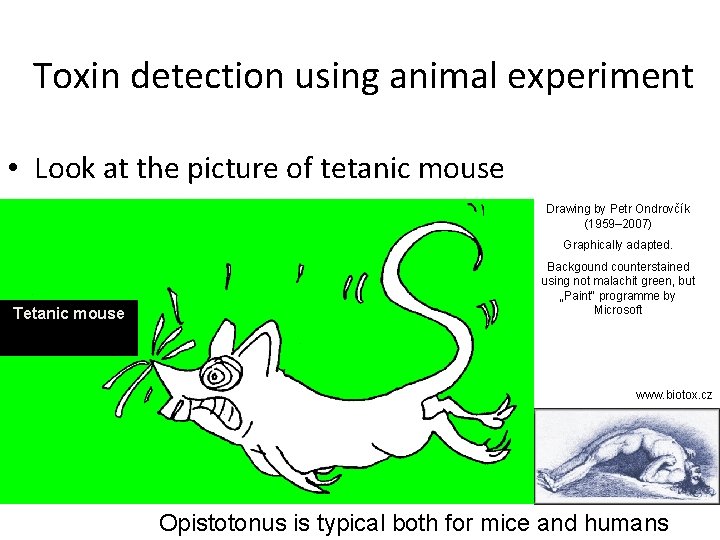
Toxin detection using animal experiment • Look at the picture of tetanic mouse Drawing by Petr Ondrovčík (1959– 2007) Graphically adapted. Tetanic mouse Backgound counterstained using not malachit green, but „Paint“ programme by Microsoft www. biotox. cz Opistotonus is typical both for mice and humans
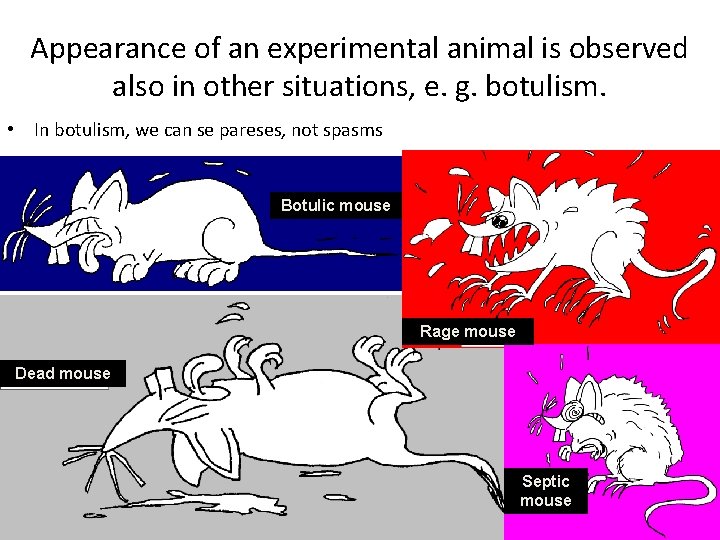
Appearance of an experimental animal is observed also in other situations, e. g. botulism. • In botulism, we can se pareses, not spasms Botulic mouse Rage mouse Dead mouse Septic mouse
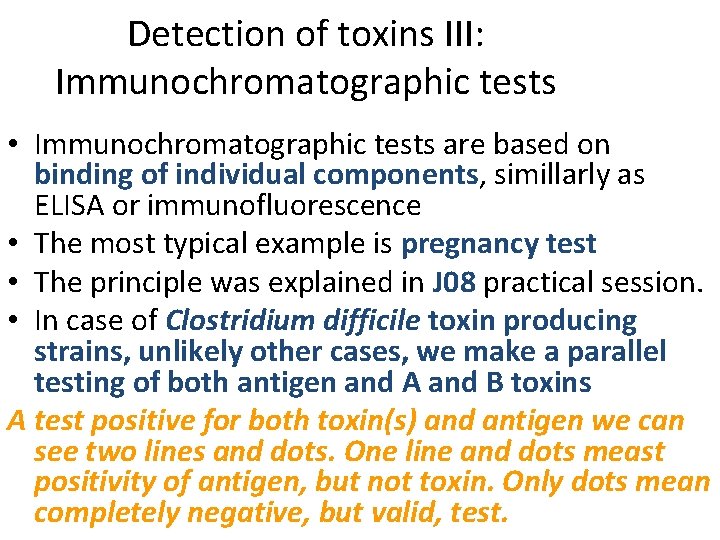
Detection of toxins III: Immunochromatographic tests • Immunochromatographic tests are based on binding of individual components, simillarly as ELISA or immunofluorescence • The most typical example is pregnancy test • The principle was explained in J 08 practical session. • In case of Clostridium difficile toxin producing strains, unlikely other cases, we make a parallel testing of both antigen and A and B toxins A test positive for both toxin(s) and antigen we can see two lines and dots. One line and dots meast positivity of antigen, but not toxin. Only dots mean completely negative, but valid, test.
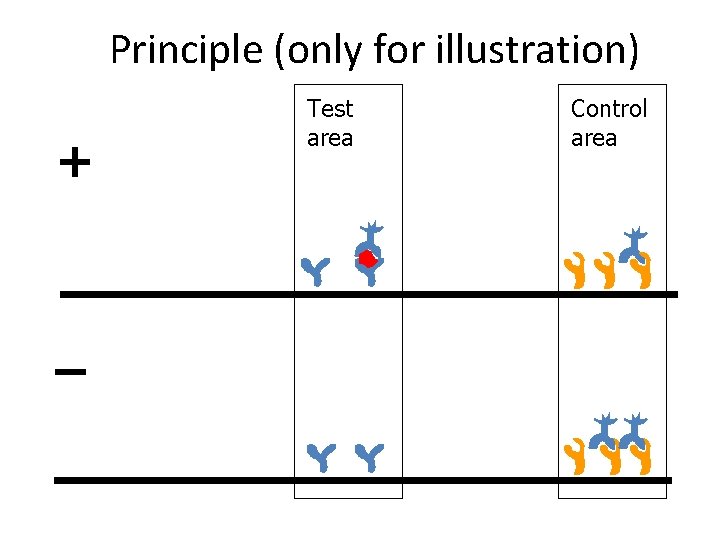
Principle (only for illustration) + – Test area Control area
Practical search for anaerobes (example in vaginal microbes) • For vaginal swabs where anaerobic culture is requested we use VL agar with disks of vancomycin and amikacin. Usually, anaerobic bacteria grow between these two disks. • Besides eventually present anaerobic flora, we can see a lot of vaginal lactobacilli, microaerofilic bacteria commonly found in vaginal swabs (and rather rarely present in normal aerobic culture) • Our imperfect anaerobiosis enables growth of microaerofilic bacteria, as you can see.
The End http: //pharmacie. univ-lille 2. fr
- Slides: 86