
Institut fr Meteorologie und Klimaforschung Bereich Atmosphrische Umweltforschung
Institut für Meteorologie und Klimaforschung, Bereich Atmosphärische Umweltforschung (IMK-IFU), Garmisch-Partenkirchen
Institut für Meteorologie und Klimaforschung, Bereich Atmosphärische Umweltforschung (IMK-IFU), Garmisch-Partenkirchen Sounding of Free-tropospheric Water Vapour with the Zugspitze DIAL Thomas Trickl, Hannes Vogelmann Topics: 1. Lidar at IMK-IFU 2. System Description 3. Measurements 4. Upgrading and future validation campaigns
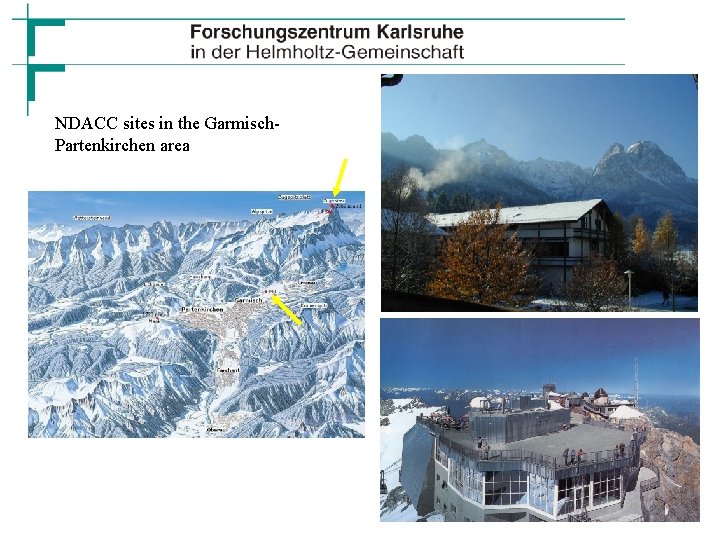
NDACC sites in the Garmisch. Partenkirchen area
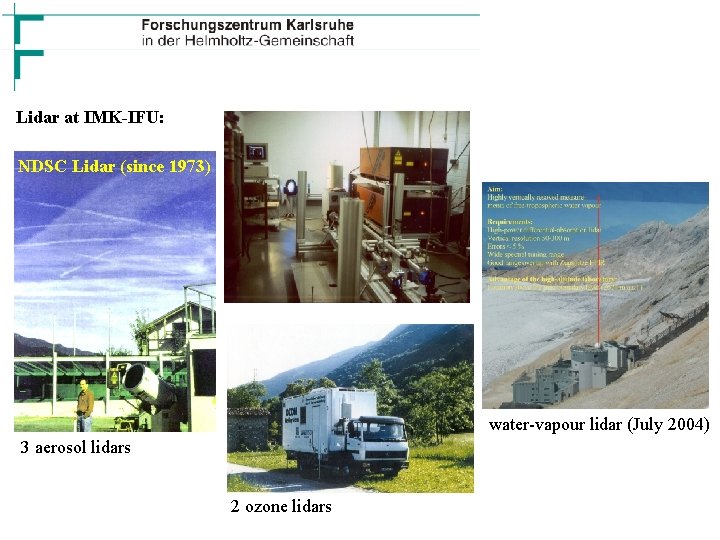
Lidar at IMK-IFU: NDSC Lidar (since 1973) water-vapour lidar (July 2004) 3 aerosol lidars 2 ozone lidars
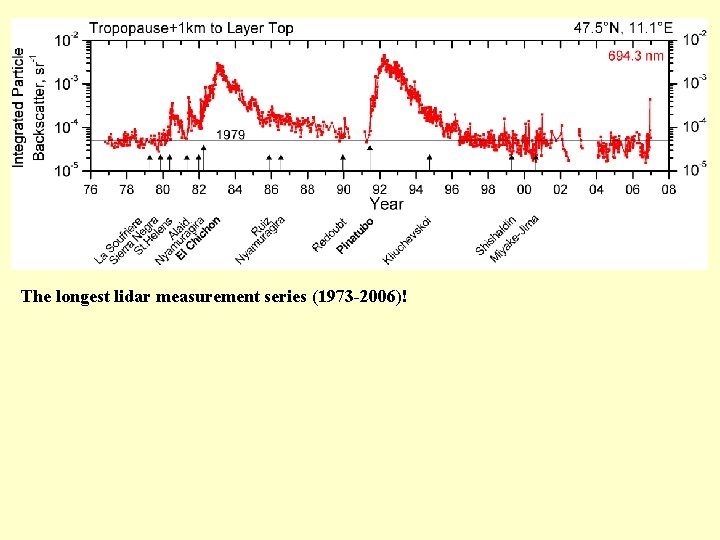
The longest lidar measurement series (1973 -2006)!
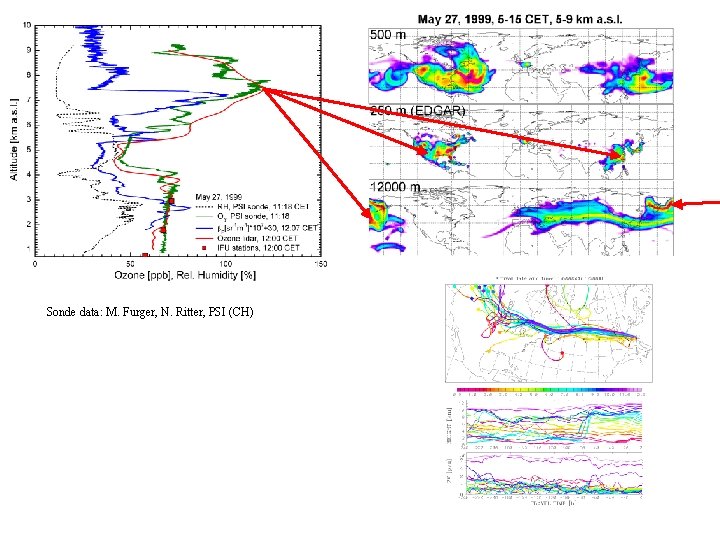
Sonde data: M. Furger, N. Ritter, PSI (CH)
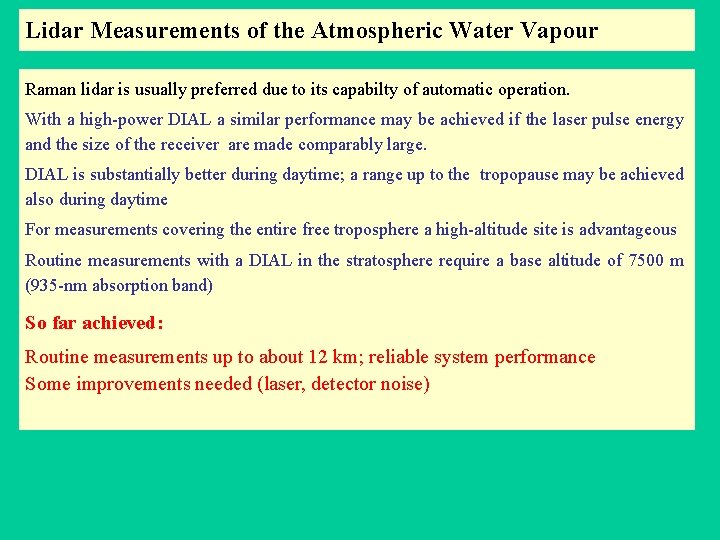
Lidar Measurements of the Atmospheric Water Vapour Raman lidar is usually preferred due to its capabilty of automatic operation. With a high-power DIAL a similar performance may be achieved if the laser pulse energy and the size of the receiver are made comparably large. DIAL is substantially better during daytime; a range up to the tropopause may be achieved also during daytime For measurements covering the entire free troposphere a high-altitude site is advantageous Routine measurements with a DIAL in the stratosphere require a base altitude of 7500 m (935 -nm absorption band) So far achieved: Routine measurements up to about 12 km; reliable system performance Some improvements needed (laser, detector noise)
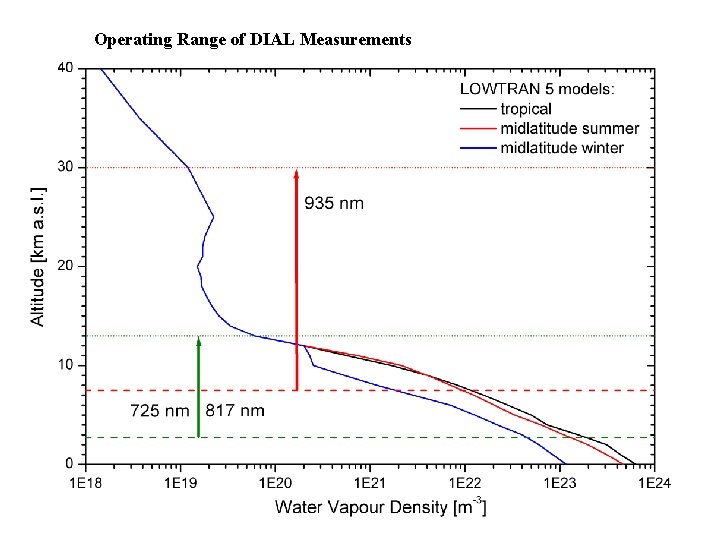
Operating Range of DIAL Measurements
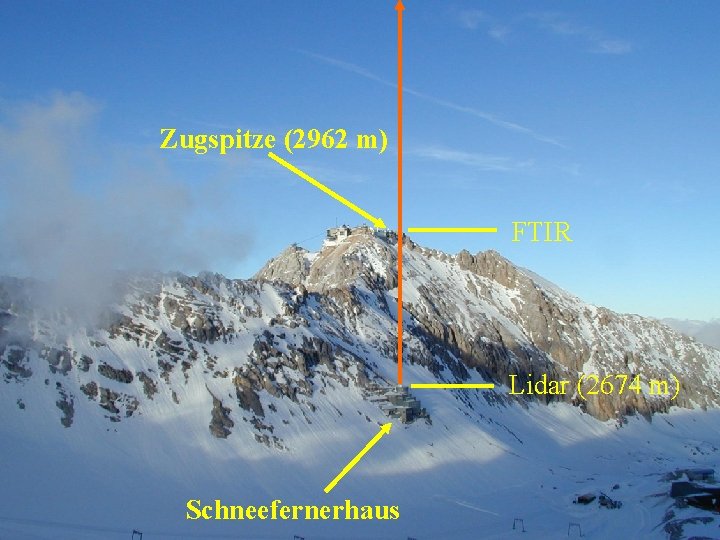
Zugspitze (2962 m) FTIR Lidar (2674 m) Schneefernerhaus
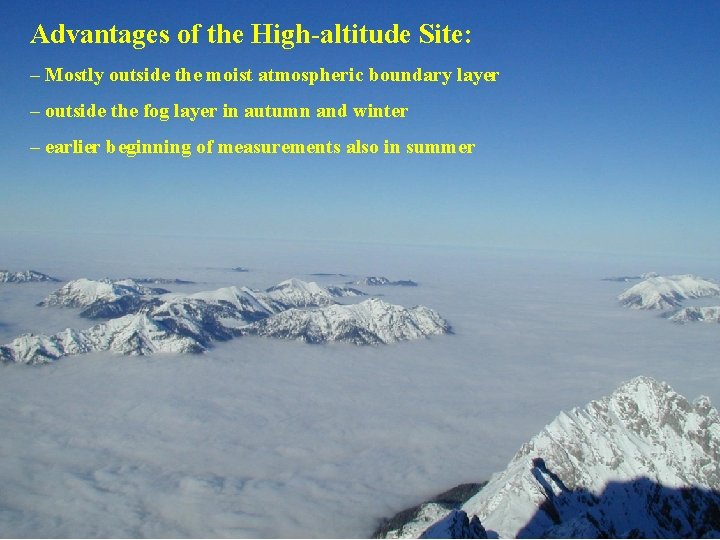
Advantages of the High-altitude Site: – Mostly outside the moist atmospheric boundary layer – outside the fog layer in autumn and winter – earlier beginning of measurements also in summer
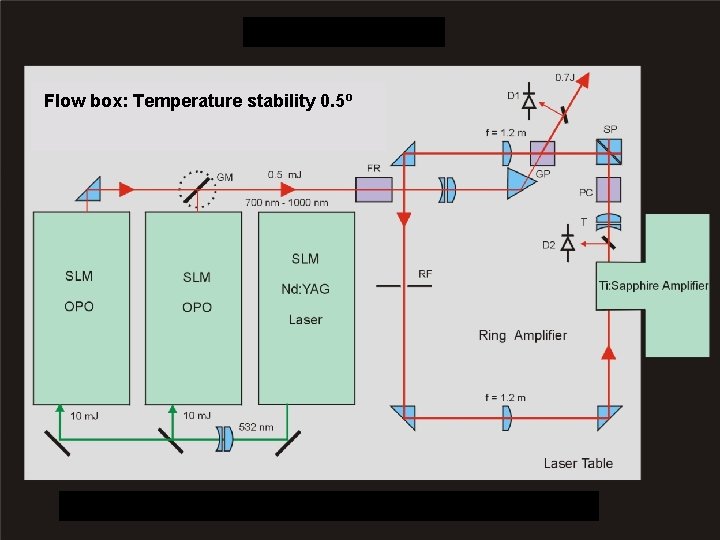
Flow box: Temperature stability 0. 5º Durch Minimum an
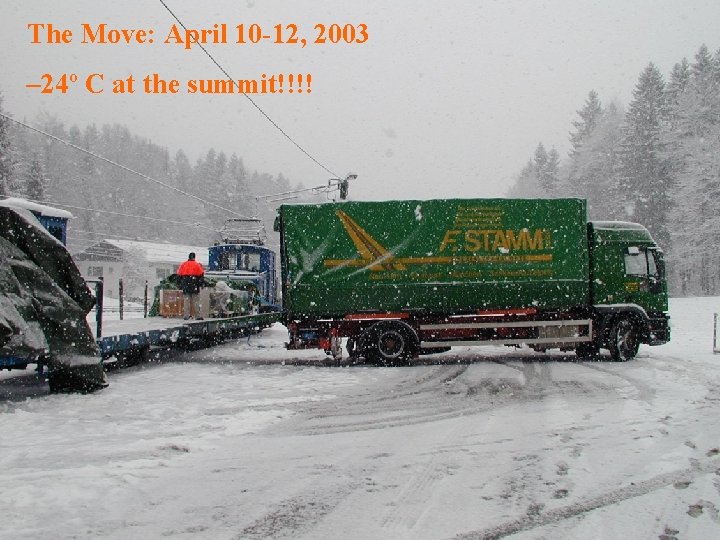
The Move: April 10 -12, 2003 – 24º C at the summit!!!!
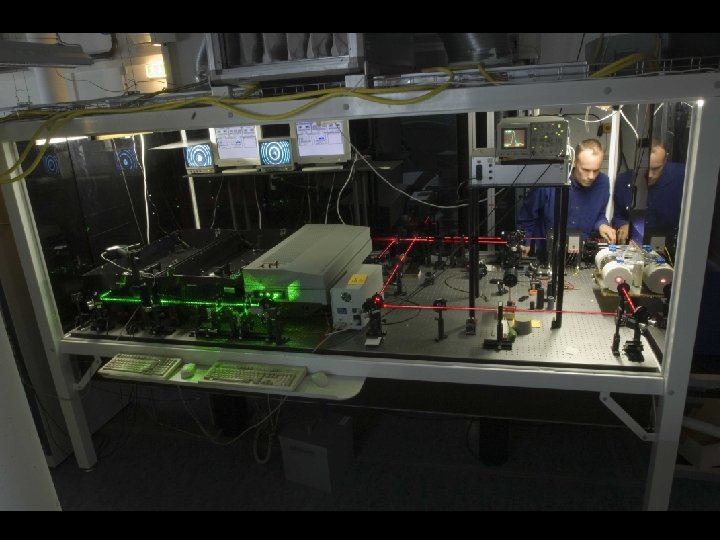
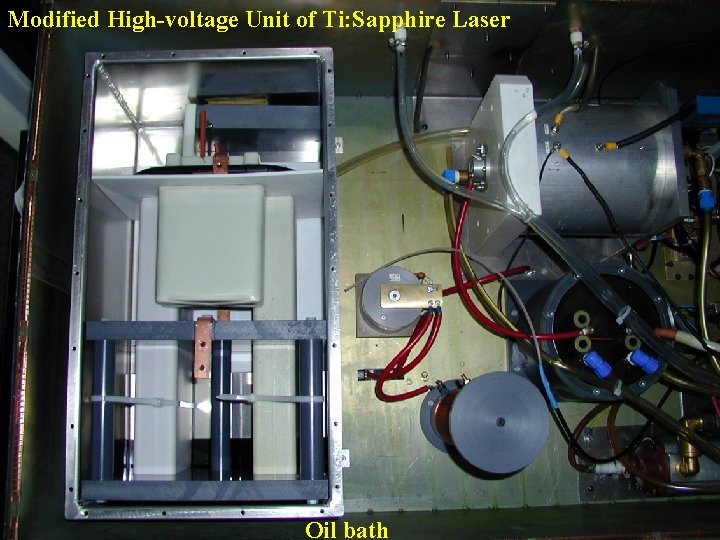
Modified High-voltage Unit of Ti: Sapphire Laser Oil bath
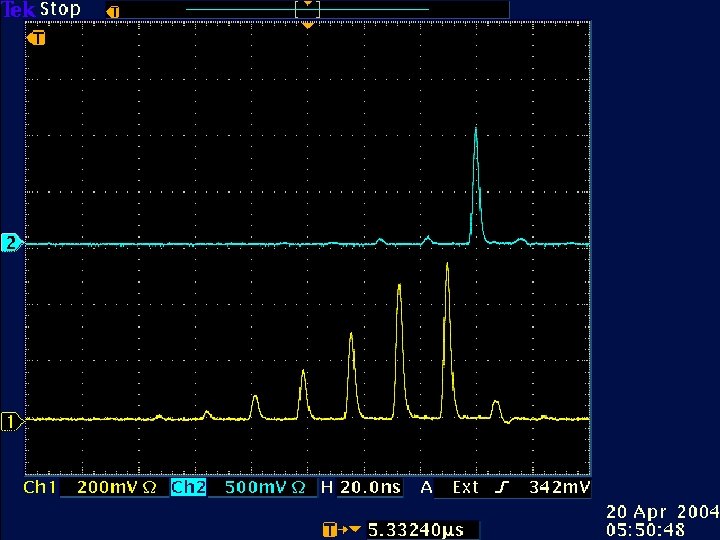
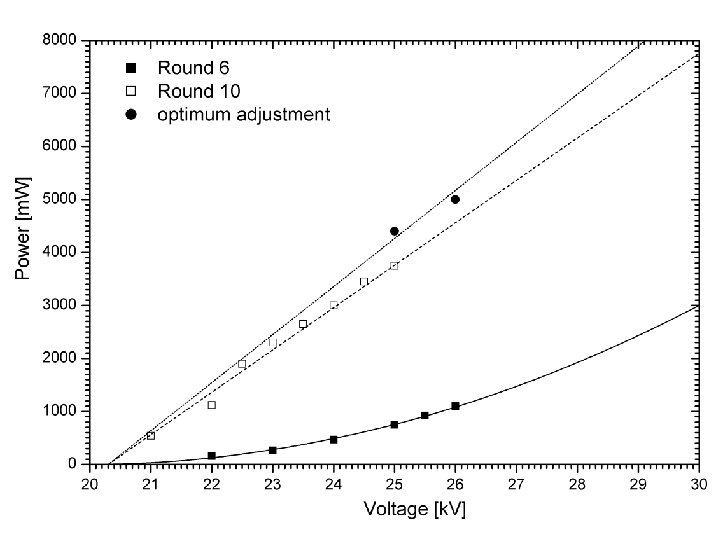
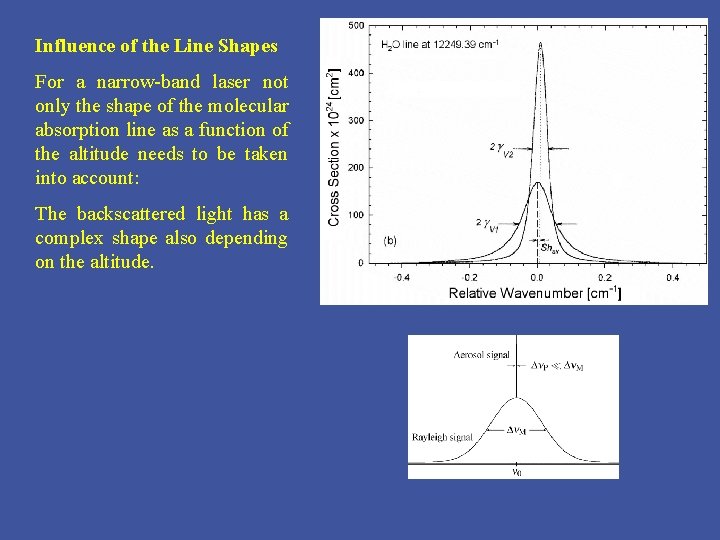
Influence of the Line Shapes For a narrow-band laser not only the shape of the molecular absorption line as a function of the altitude needs to be taken into account: The backscattered light has a complex shape also depending on the altitude.
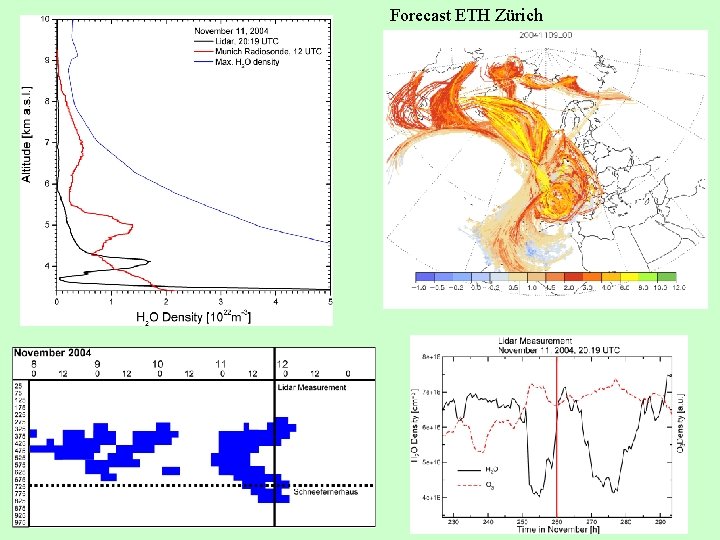
Forecast ETH Zürich
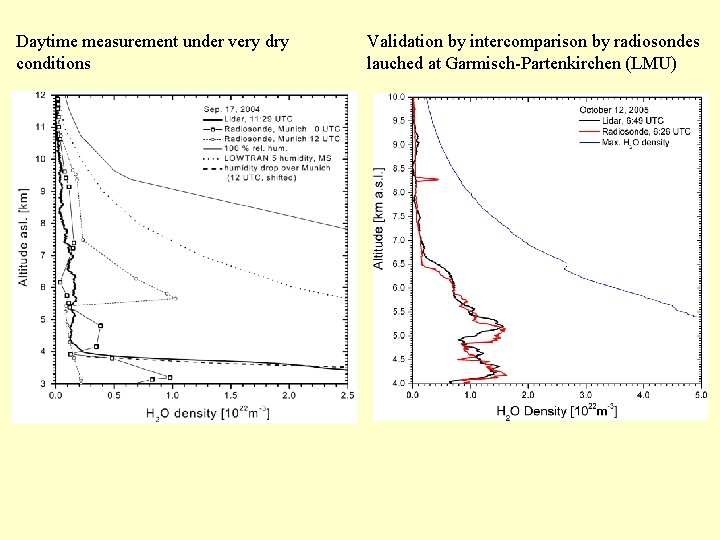
Daytime measurement under very dry conditions Validation by intercomparison by radiosondes lauched at Garmisch-Partenkirchen (LMU)
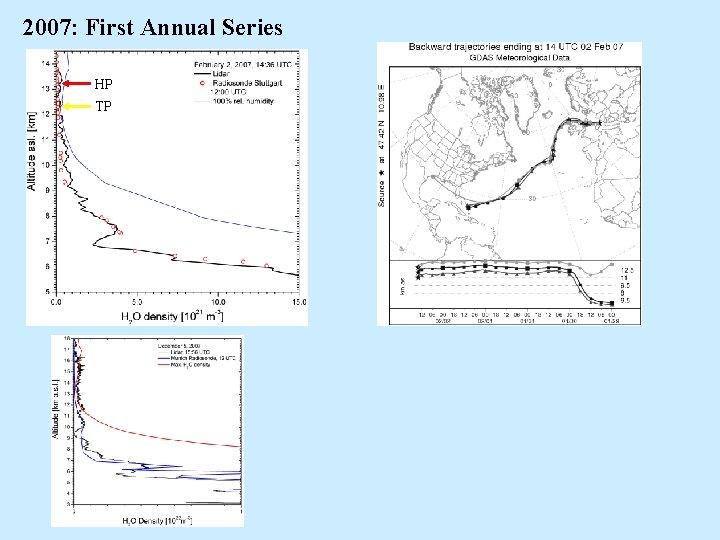
2007: First Annual Series HP TP
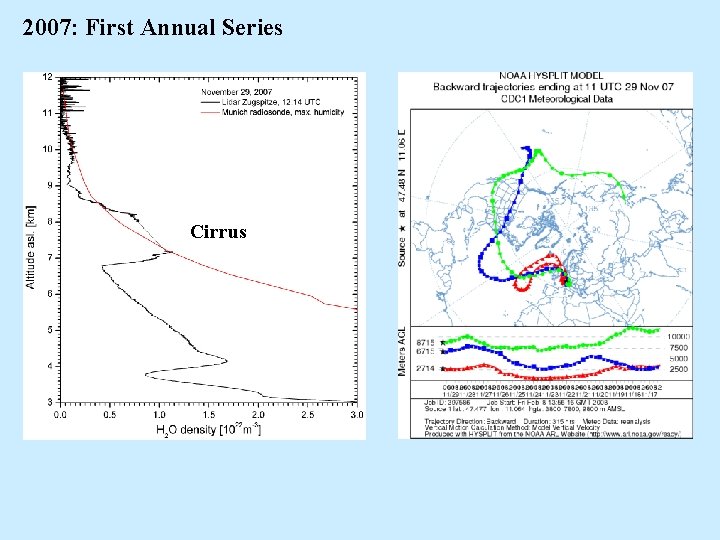
2007: First Annual Series Cirrus
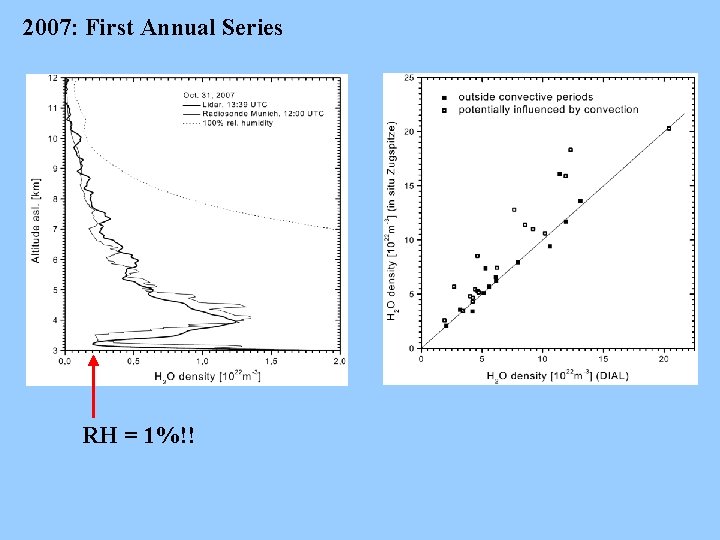
2007: First Annual Series RH = 1%!!
Conclusions 1. The lidar performs reliably and rather stable; measurements can be started within 1 h after the arrival at the laboratory. With an improved control of the cavity end mirrors even an automatic operation over many hours should be possible. 2. The noise-limited sensitivity above 10 km is about 1. 5 1020 m– 3 or 18 ppm. The theoretical limit is 1 -2 ppm and can almost be reached with the specifications expected after the next upgrading. 3. The laser has been operated with just roughly 100 m. J in order to avoid optical damages; an upgrading to more than 400 m. J will be attempted in 2008; 700 m. J require major changes in the laser power supply to eliminate arcing.
Thank you!
- Slides: 24