
Inspection of Thermal Spray Coatings Presented by Dean
Inspection of Thermal Spray Coatings Presented by: Dean Hooks, Thermion
Scope • This webinar defines thermal spray coating (TSC) and provides an overview of its inspection
Introduction • This webinar will review the procedures for the inspection of metallic thermal spray coatings (TSCs) of aluminum, zinc, and their alloys and composites for the corrosion protection of steel • Inspection requirements in accordance with SSPC-CS 23. 00/AWS C 2. 23/NACE No. 12
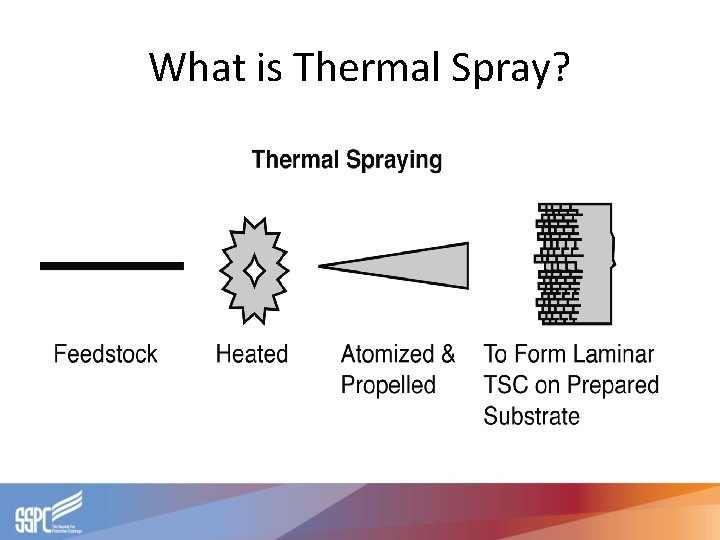
What is Thermal Spray?

Thermal Spray Coating (TSC) Materials • Aluminum, zinc, and their alloys in the form of powder or wire heated to a plastic or molten state
How does TSCs Protect Steel? • Sealed: Good barrier protection • Unsealed: Galvanic (sacrificial) protection
Special Properties • Very good resistance to high temperatures, sunlight, and weathering • Good application properties: adhesion to metals, film build, edge retention, and transfer efficiency • Good impact and abrasion resistance • Attacked by acids or alkalis unless topcoated
Environmental Advantages • No volatile organic compounds (VOCs) to cause air pollution (100% solids) • No hazardous air pollutants (HAPs) • Limited overspray into surrounding areas
Economic Advantages • Long-term protection (40+ years) of steel structures resulting in low life-cycle costs (costs per year) • Reduced rework for original coating defects • Reduced maintenance over coating life
SSPC-CS 23. 00/AWS C 2. 23/NACE No. 12 • Revised May 2016 • A procedure for the application of metallic thermal spray coating (TSCs) of aluminum, zinc, and their alloys and composites for the corrosion protection of steel • Required equipment, application procedures, and in-process quality control (QC) checkpoints are specified
Pre-Surface Preparation Requirements • The steel surface temperature shall be at least 3°C (5°F) above the dew point temperature • Verify compressed air cleanliness in accordance with ASTM D 4285 • Verify cleanliness of abrasive in accordance with SSPC-AB 1, 2, or 3
Surface Cleanliness • Before TSC application, steel substrate shall be prepared in accordance with: – SSPC-SP 5/NACE No. 1 for immersion service; or – Minimum of SSPC-SP 10/NACE No. 2 for other service applications; and – Level of nonvisible contamination specified
Surface Profile • Unless otherwise specified: – Minimum angular profile depth of 65μm(2. 5 mil) – Maximum angular profile depth of 125μm(5. 0 mil) • Measured in accordance with SSPC-PA 17 using ASTM D 4417: – Method B – Depth Micrometer – Method C – Replica Tape
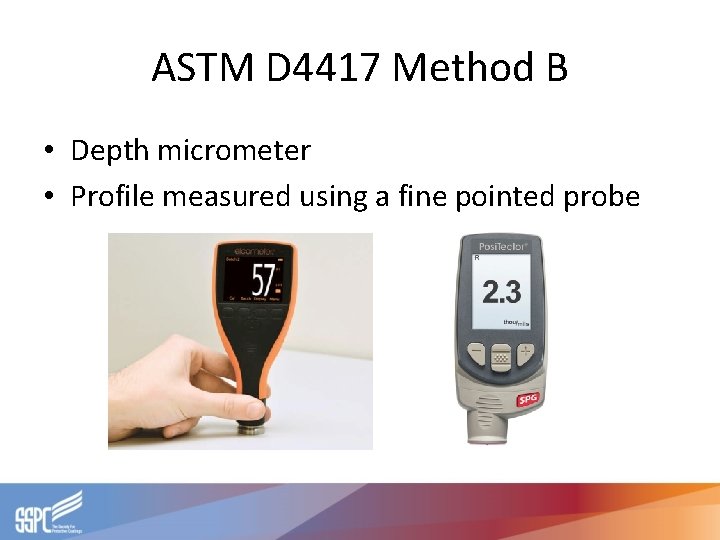
ASTM D 4417 Method B • Depth micrometer • Profile measured using a fine pointed probe
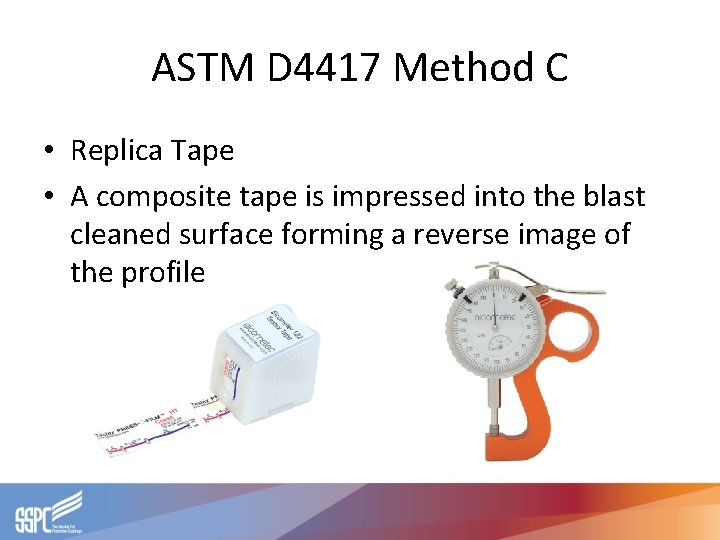
ASTM D 4417 Method C • Replica Tape • A composite tape is impressed into the blast cleaned surface forming a reverse image of the profile
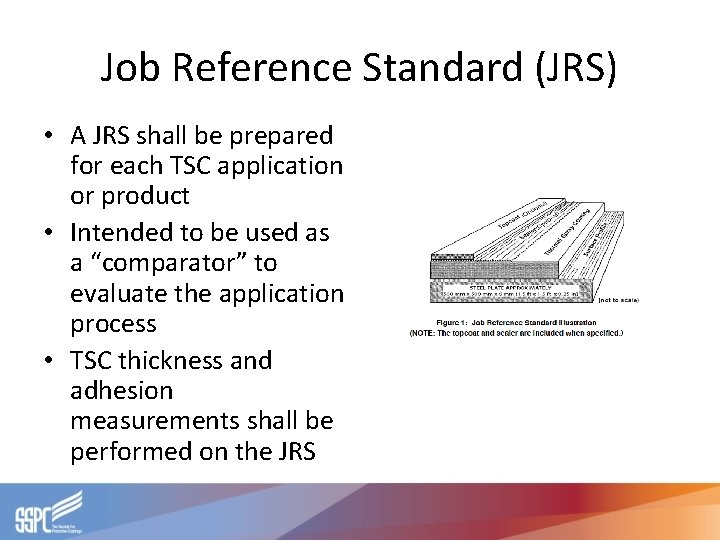
Job Reference Standard (JRS) • A JRS shall be prepared for each TSC application or product • Intended to be used as a “comparator” to evaluate the application process • TSC thickness and adhesion measurements shall be performed on the JRS
Inspection of TSC Thickness • TSC thickness measured in accordance with SSPC-PA 2 • Coating Thickness Restriction Level 4 – Spot readings can be between 80% of the specified minimum and 150% of the specified maximum thickness – Area average must be within specified thickness
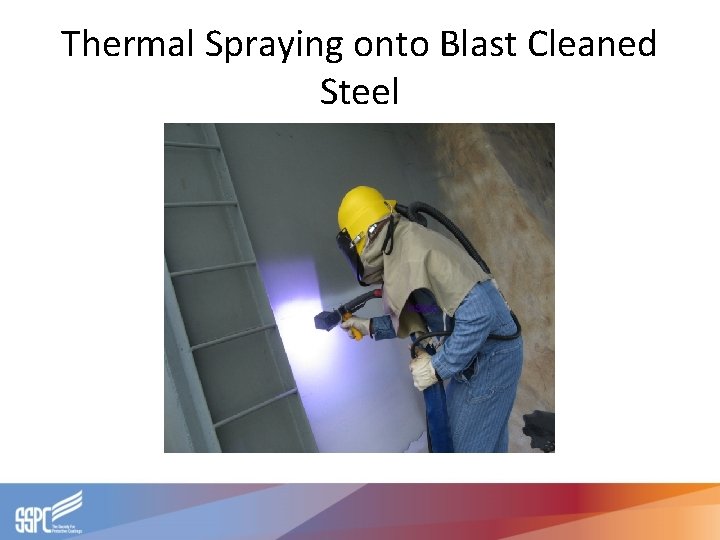
Thermal Spraying onto Blast Cleaned Steel
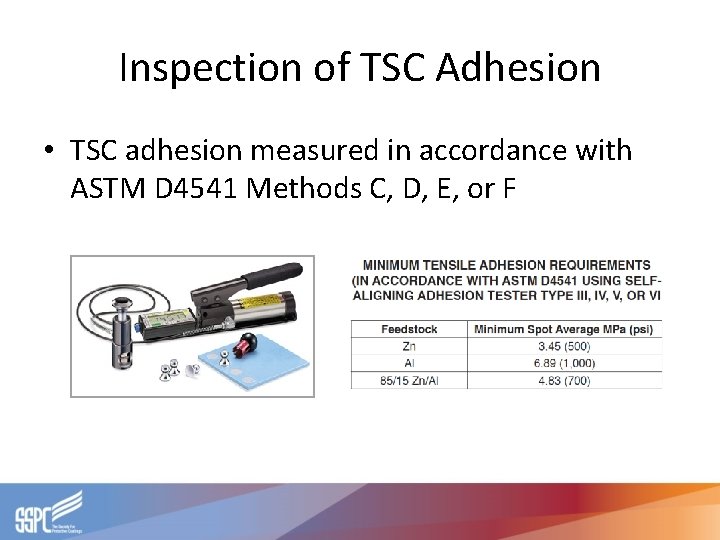
Inspection of TSC Adhesion • TSC adhesion measured in accordance with ASTM D 4541 Methods C, D, E, or F
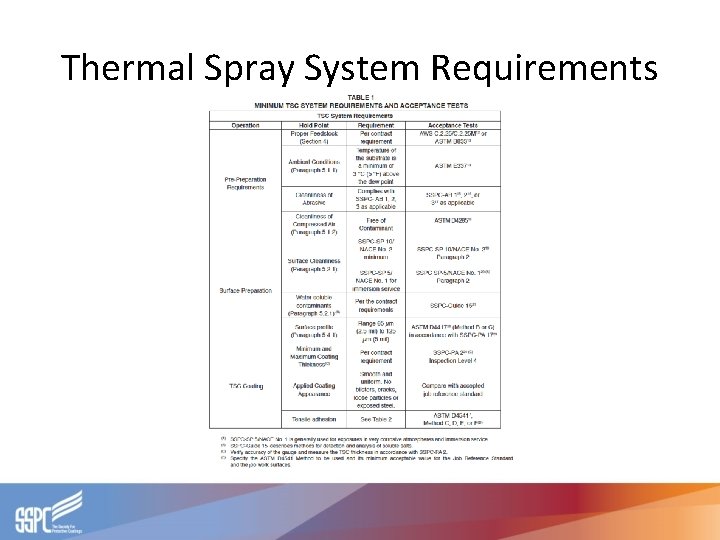
Thermal Spray System Requirements
Nonmandatory Adhesion Testing • Bend Test – 180 degree bend on a Mandrel – Qualitative, testing proper surface preparation, equipment setup, and spray parameters – Mandrel diameter for threshold of cracking depends on substrate and coating thickness
Bend Test • Passes – On the bend radius, there is no cracking or spalling, or only minor cracking that cannot be lifted from the substrate with a knife blade • Fails – Coating cracks with lifting from the substrate

Bend Test
Nonmandatory Adhesion Testing • Hammer and Chisel Cut Test – A procedure to identify areas of metallized coating that are poorly adhering – Involves impacting the coating with blow from a hammer to a masonry chisel – Any disbonding or peel of the coating is considered a failure
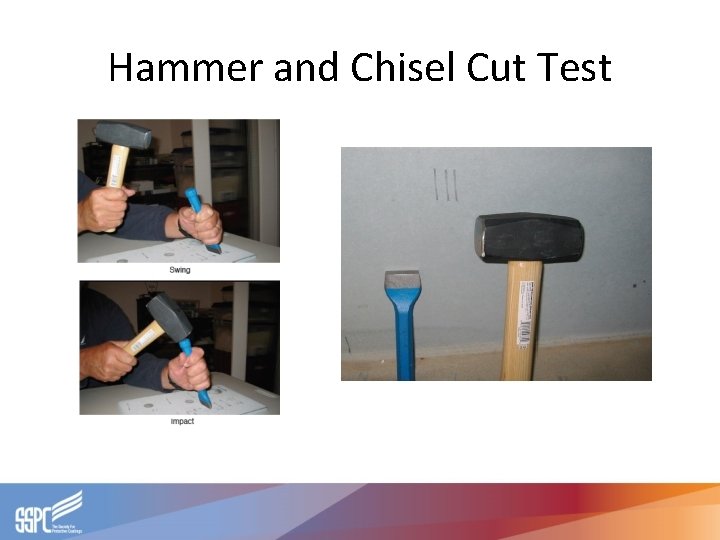
Hammer and Chisel Cut Test
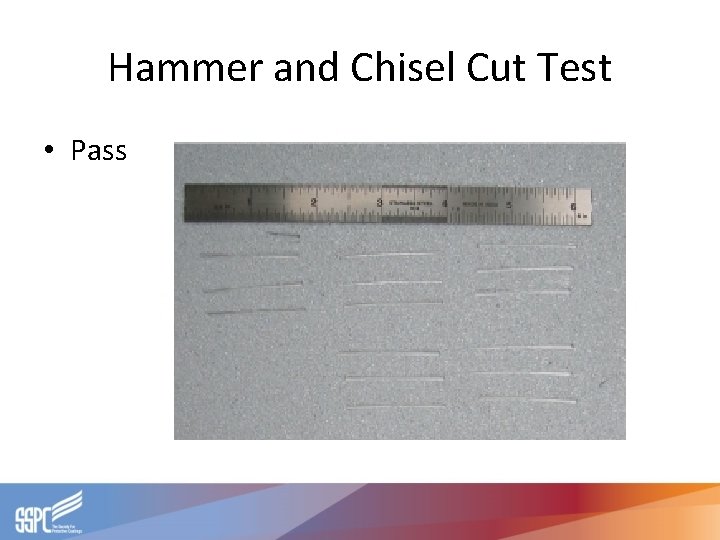
Hammer and Chisel Cut Test • Pass
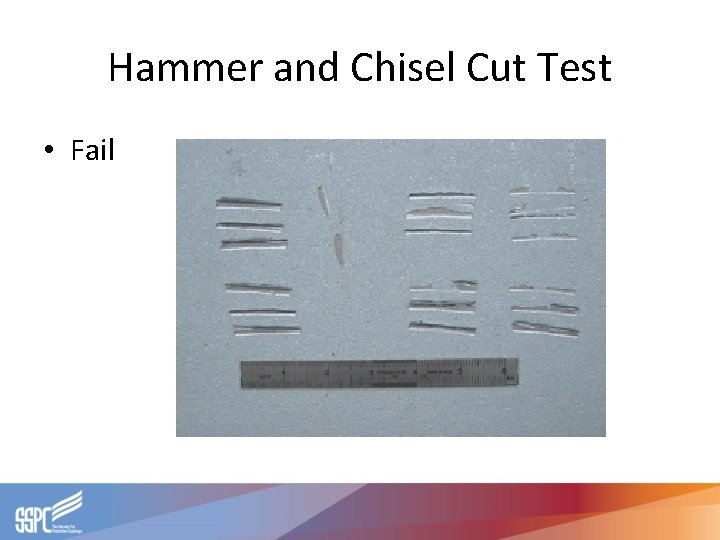
Hammer and Chisel Cut Test • Fail

Questions?
- Slides: 29