
Insights into the epidemiology of footandmouth disease in
- Slides: 25
Insights into the epidemiology of foot-andmouth disease in East Africa provides opportunities for targeted control T. Lembo, M. Casey, R. Reeve, H. Auty, K. Bachanek. Bankowska, V. Fowler, P. Hamblin, D. Haydon, R. Kazwala, T. Kibona, D. King, A. Ludi, A. Lugelo, T. Marsh, V. Mioulet, D. Mshanga, S. Parida, D. Paton, K. Parekh, S. Cleaveland The Boyd Orr Centre for Population and Ecosystem Health,
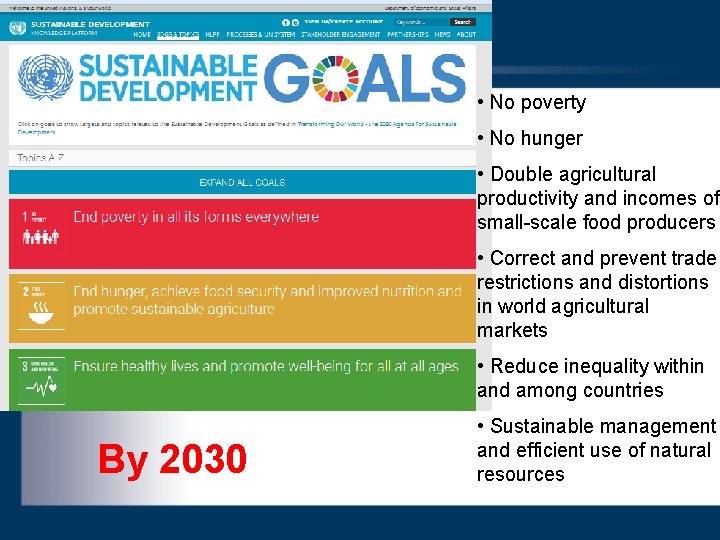
• No poverty • No hunger • Double agricultural productivity and incomes of small-scale food producers • Correct and prevent trade restrictions and distortions in world agricultural markets • Reduce inequality within and among countries By 2030 • Sustainable management and efficient use of natural resources
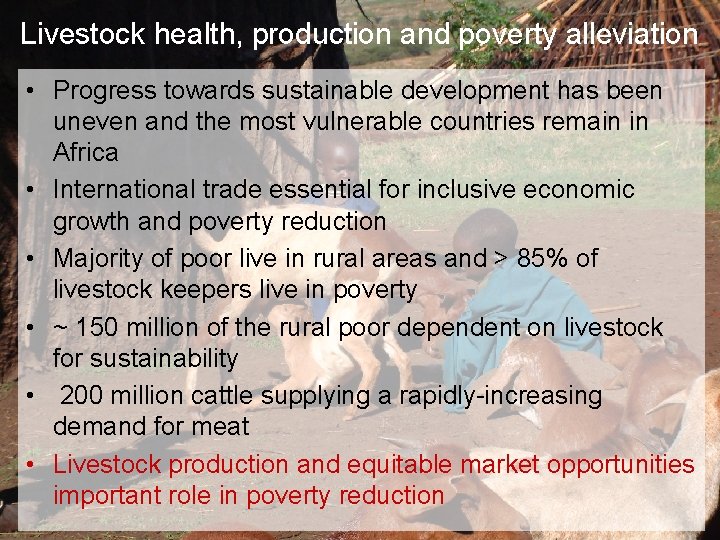
Livestock health, production and poverty alleviation • Progress towards sustainable development has been uneven and the most vulnerable countries remain in Africa • International trade essential for inclusive economic growth and poverty reduction • Majority of poor live in rural areas and > 85% of livestock keepers live in poverty • ~ 150 million of the rural poor dependent on livestock for sustainability • 200 million cattle supplying a rapidly-increasing demand for meat • Livestock production and equitable market opportunities important role in poverty reduction
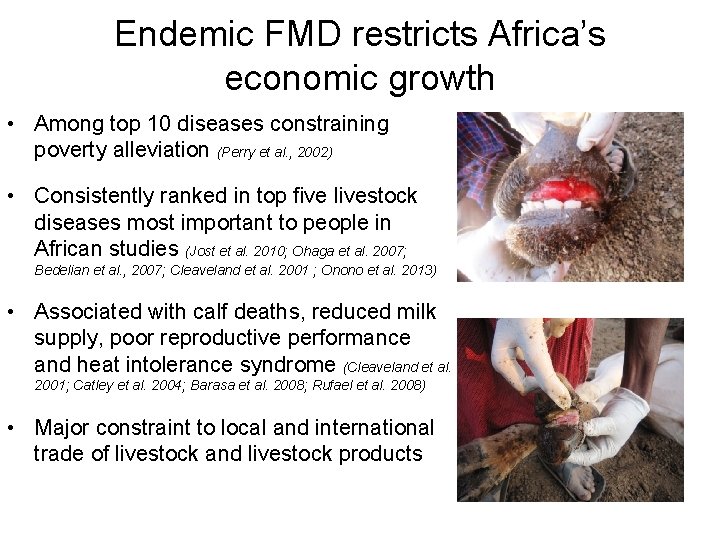
Endemic FMD restricts Africa’s economic growth • Among top 10 diseases constraining poverty alleviation (Perry et al. , 2002) • Consistently ranked in top five livestock diseases most important to people in African studies (Jost et al. 2010; Ohaga et al. 2007; Bedelian et al. , 2007; Cleaveland et al. 2001 ; Onono et al. 2013) • Associated with calf deaths, reduced milk supply, poor reproductive performance and heat intolerance syndrome (Cleaveland et al. 2001; Catley et al. 2004; Barasa et al. 2008; Rufael et al. 2008) • Major constraint to local and international trade of livestock and livestock products
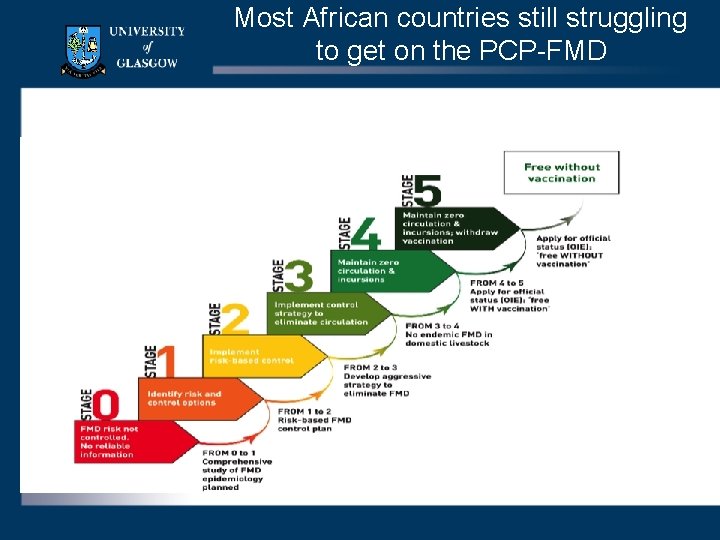
Most African countries still struggling to get on the PCP-FMD
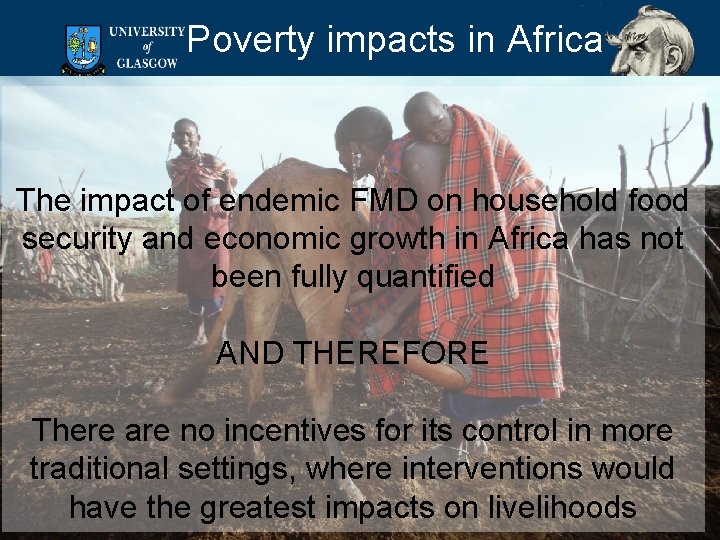
Poverty impacts in Africa The impact of endemic FMD on household food security and economic growth in Africa has not been fully quantified AND THEREFORE There are no incentives for its control in more traditional settings, where interventions would have the greatest impacts on livelihoods
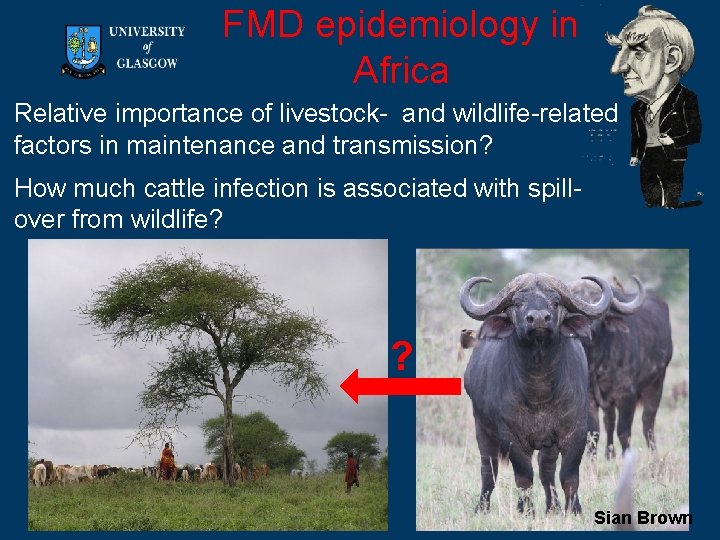
FMD epidemiology in Africa Relative importance of livestock- and wildlife-related factors in maintenance and transmission? How much cattle infection is associated with spillover from wildlife? ? Sian Brown
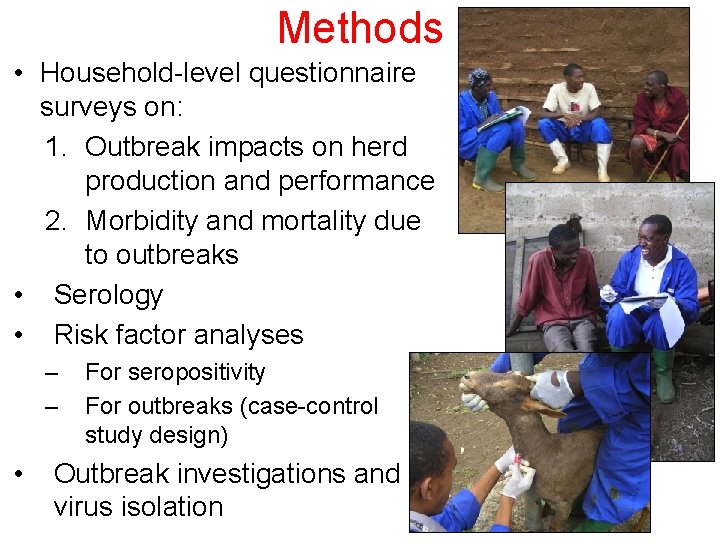
Methods • Household-level questionnaire surveys on: 1. Outbreak impacts on herd production and performance 2. Morbidity and mortality due to outbreaks • Serology • Risk factor analyses – – • For seropositivity For outbreaks (case-control study design) Outbreak investigations and virus isolation
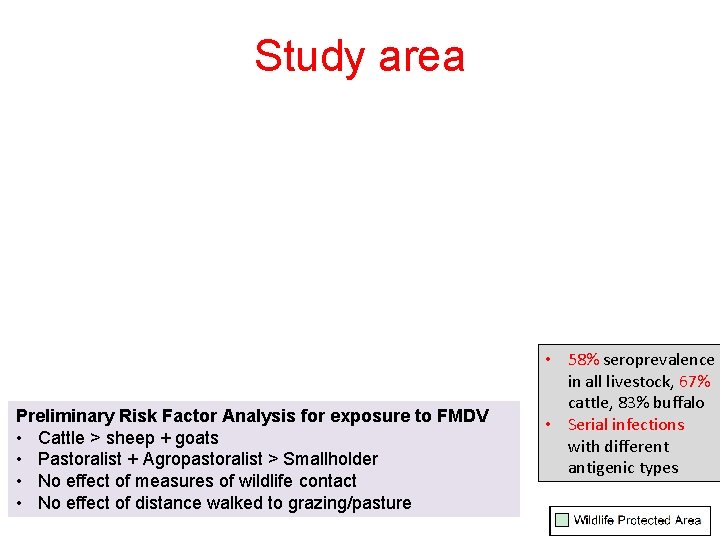
Study area Preliminary Risk Factor Analysis for exposure to FMDV • Cattle > sheep + goats • Pastoralist + Agropastoralist > Smallholder • No effect of measures of wildlife contact • No effect of distance walked to grazing/pasture • 58% seroprevalence in all livestock, 67% cattle, 83% buffalo • Serial infections with different antigenic types
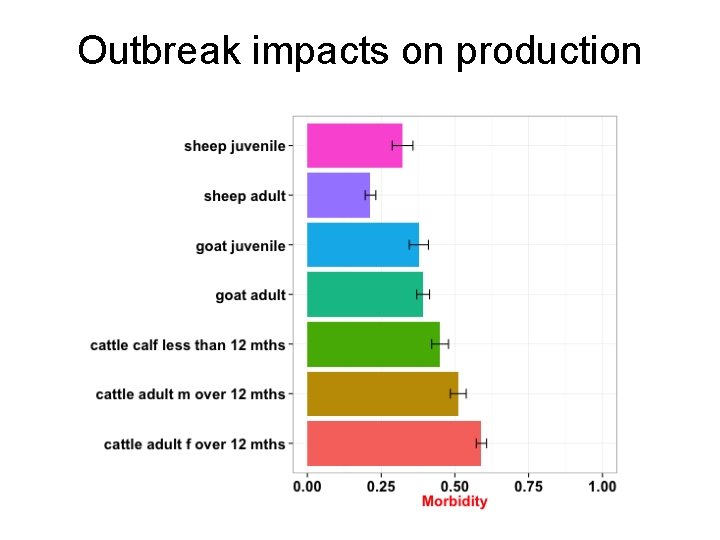
Outbreak impacts on production
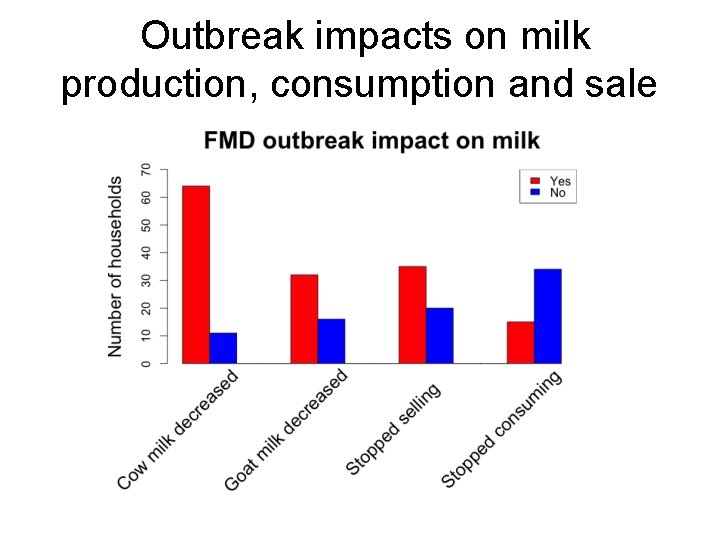
Outbreak impacts on milk production, consumption and sale
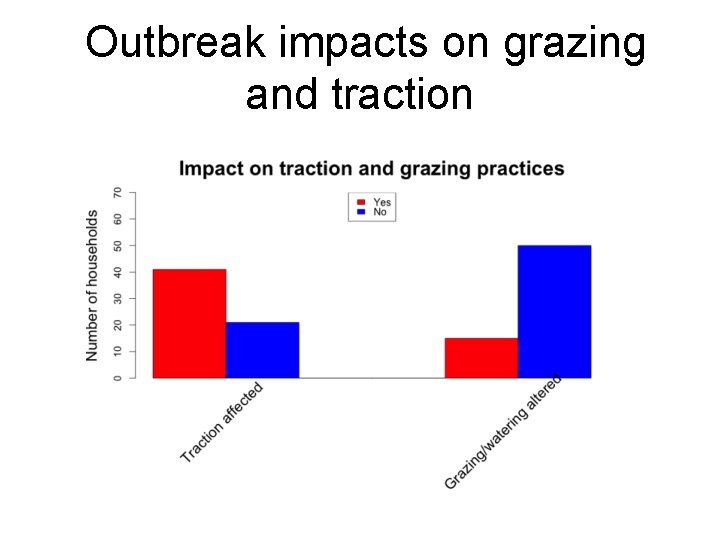
Outbreak impacts on grazing and traction
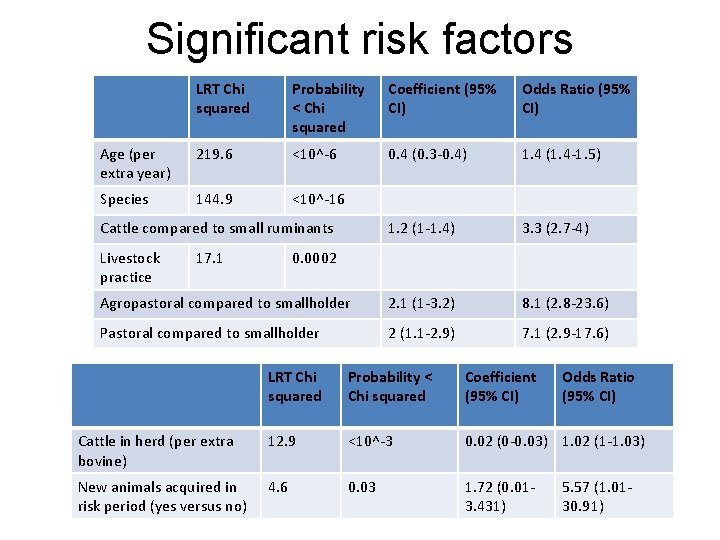
Significant risk factors LRT Chi squared Probability < Chi squared Coefficient (95% CI) Odds Ratio (95% CI) Age (per extra year) 219. 6 <10^-6 0. 4 (0. 3 -0. 4) 1. 4 (1. 4 -1. 5) Species 144. 9 <10^-16 1. 2 (1 -1. 4) 3. 3 (2. 7 -4) Agropastoral compared to smallholder 2. 1 (1 -3. 2) 8. 1 (2. 8 -23. 6) Pastoral compared to smallholder 2 (1. 1 -2. 9) 7. 1 (2. 9 -17. 6) Cattle compared to small ruminants Livestock practice 17. 1 0. 0002 LRT Chi squared Probability < Chi squared Coefficient (95% CI) Odds Ratio (95% CI) Cattle in herd (per extra bovine) 12. 9 <10^-3 0. 02 (0 -0. 03) 1. 02 (1 -1. 03) New animals acquired in risk period (yes versus no) 4. 6 0. 03 1. 72 (0. 013. 431) 5. 57 (1. 0130. 91)
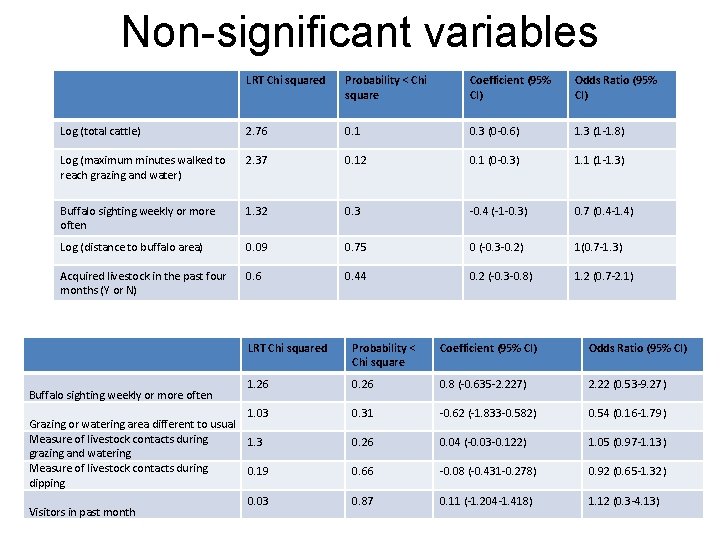
Non-significant variables LRT Chi squared Probability < Chi square Coefficient (95% CI) Odds Ratio (95% CI) Log (total cattle) 2. 76 0. 1 0. 3 (0 -0. 6) 1. 3 (1 -1. 8) Log (maximum minutes walked to reach grazing and water) 2. 37 0. 12 0. 1 (0 -0. 3) 1. 1 (1 -1. 3) Buffalo sighting weekly or more often 1. 32 0. 3 -0. 4 (-1 -0. 3) 0. 7 (0. 4 -1. 4) Log (distance to buffalo area) 0. 09 0. 75 0 (-0. 3 -0. 2) 1(0. 7 -1. 3) Acquired livestock in the past four months (Y or N) 0. 6 0. 44 0. 2 (-0. 3 -0. 8) 1. 2 (0. 7 -2. 1) LRT Chi squared Probability < Chi square Coefficient (95% CI) Odds Ratio (95% CI) 1. 26 0. 8 (-0. 635 -2. 227) 2. 22 (0. 53 -9. 27) 1. 03 Grazing or watering area different to usual Measure of livestock contacts during 1. 3 grazing and watering Measure of livestock contacts during 0. 19 dipping 0. 31 -0. 62 (-1. 833 -0. 582) 0. 54 (0. 16 -1. 79) 0. 26 0. 04 (-0. 03 -0. 122) 1. 05 (0. 97 -1. 13) 0. 66 -0. 08 (-0. 431 -0. 278) 0. 92 (0. 65 -1. 32) 0. 03 0. 87 0. 11 (-1. 204 -1. 418) 1. 12 (0. 3 -4. 13) Buffalo sighting weekly or more often Visitors in past month
Inference of infection history in 2011 from cross-sectional serology
Virus isolation Serengeti 2012 -2015
Northern Tanzania 2011 -2015
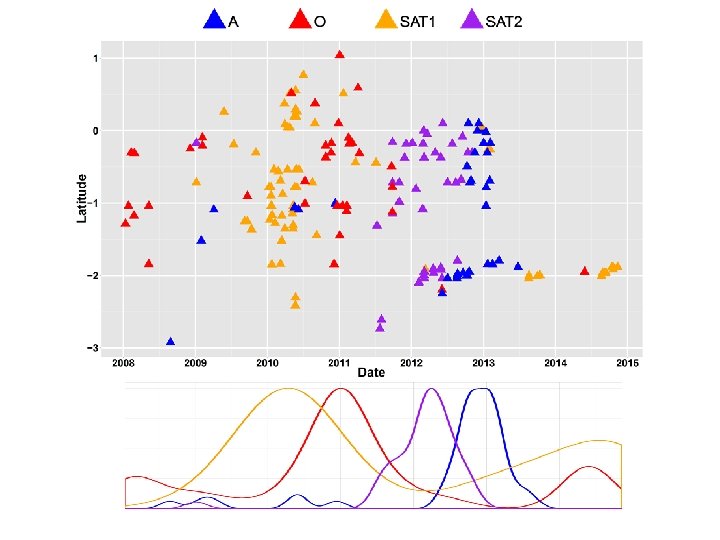
Virus isolation 2008 -2015 Tanzania & Kenya
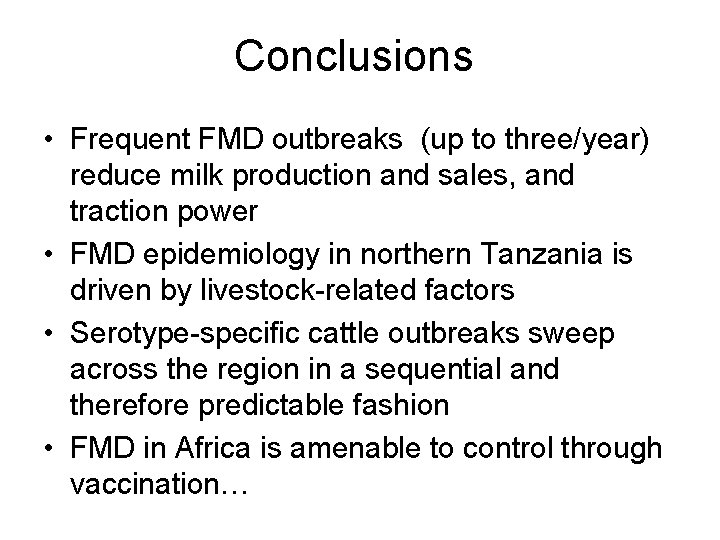
Conclusions • Frequent FMD outbreaks (up to three/year) reduce milk production and sales, and traction power • FMD epidemiology in northern Tanzania is driven by livestock-related factors • Serotype-specific cattle outbreaks sweep across the region in a sequential and therefore predictable fashion • FMD in Africa is amenable to control through vaccination…
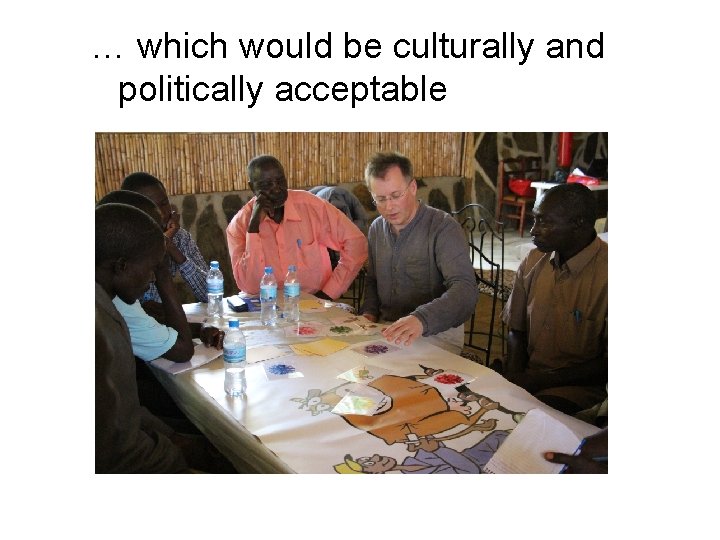
… which would be culturally and politically acceptable
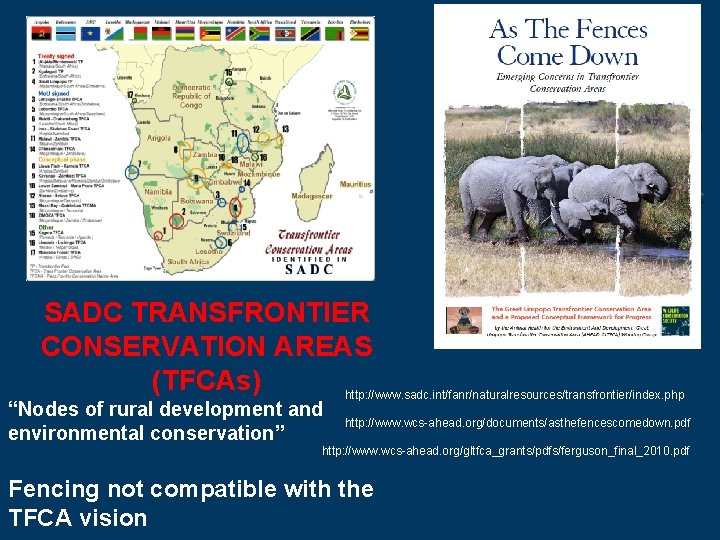
SADC TRANSFRONTIER CONSERVATION AREAS (TFCAs) http: //www. sadc. int/fanr/naturalresources/transfrontier/index. php “Nodes of rural development and environmental conservation” http: //www. wcs-ahead. org/documents/asthefencescomedown. pdf http: //www. wcs-ahead. org/gltfca_grants/pdfs/ferguson_final_2010. pdf Fencing not compatible with the TFCA vision
University of Glasgow, UK The Pirbright Institute, UK University of Edinburgh, UK Onderstepoort Veterinary Institute Directorate Veterinary Services, Tanzania Veterinary Laboratory Agency, Tanzania Zonal Veterinary Investigation Centres (Arusha & Mwanza), Tanzania Wildlife Research Institute Tanzania National Parks Ngorongoro Conservation Area Authority Sokoine University of Agriculture, Tanzania Washington State University, USA Boyd Orr Centre for Population and Ecosystem Health
THANK YOU