
Inside the Earth Review of Density Density is
- Slides: 18
Inside the Earth
Review of Density… Density is an expression of the relative heaviness of a substance n n n mass per unit volume n grams per cubic centimeter (g/cm 3) The density of pure water is 1 g/cm 3. Granite rock is about 2. 7 times denser at 2. 7 g/cm 3. n
Formation of the Earth • The most dense material (Iron and Nickel) settled to the core (center) • Less dense matter (Silicates) formed the vast interior of the Earth (mantle). • The least dense material (Granite and Basalt) formed the Earth’s solid stony crust. – Volcanic eruptions continued through the crust.
Formation of the Earth Continued… • With each eruption, gases, water vapor, ash and lava (molten material) were brought to the surface. • The water vapor and gases formed the atmosphere. • As the Earth cooled the water vapor turned to water and the rains started. • The oceans formed from runoff. This also supplied the ocean with the mineral content it has today.
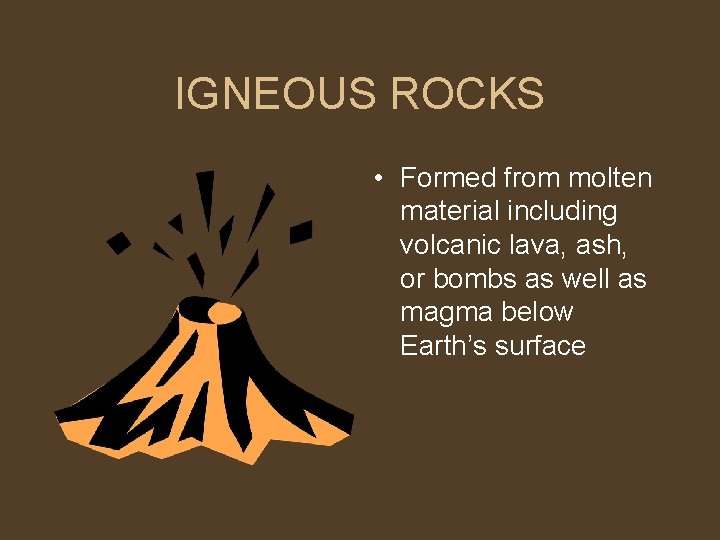
IGNEOUS ROCKS • Formed from molten material including volcanic lava, ash, or bombs as well as magma below Earth’s surface
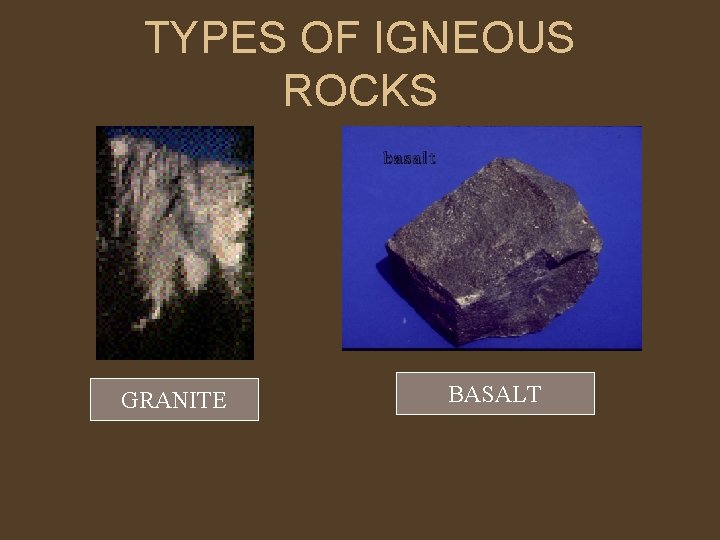
TYPES OF IGNEOUS ROCKS GRANITE BASALT
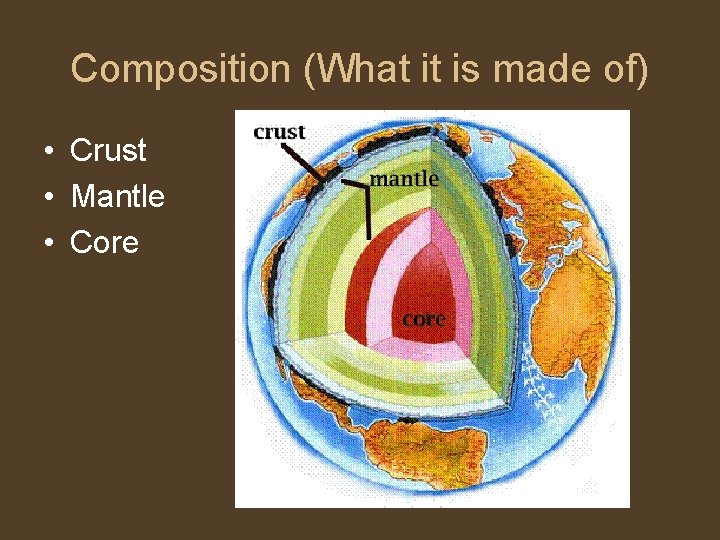
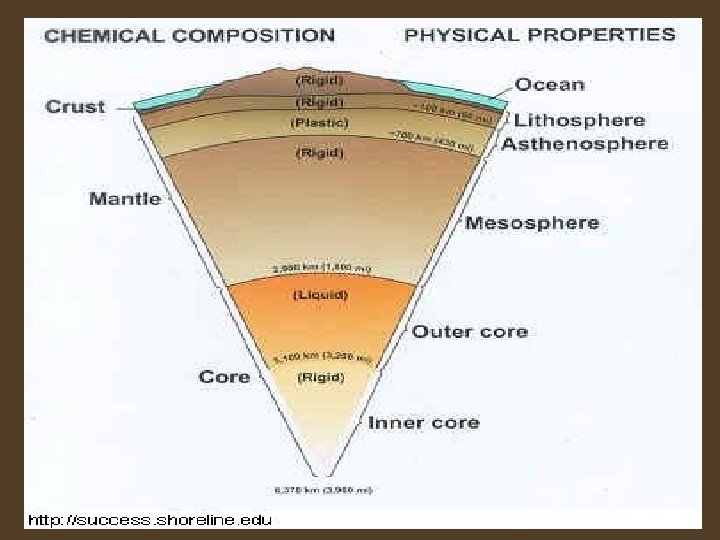
Composition (What it is made of) • Crust • Mantle • Core
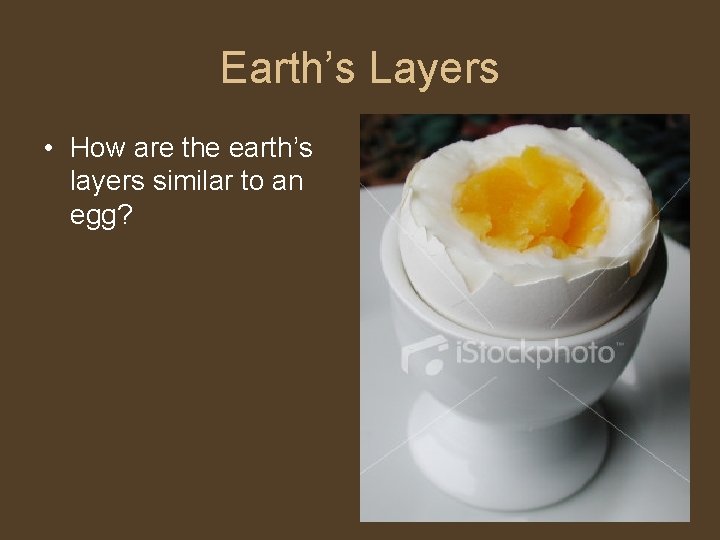
Earth’s Layers • How are the earth’s layers similar to an egg?
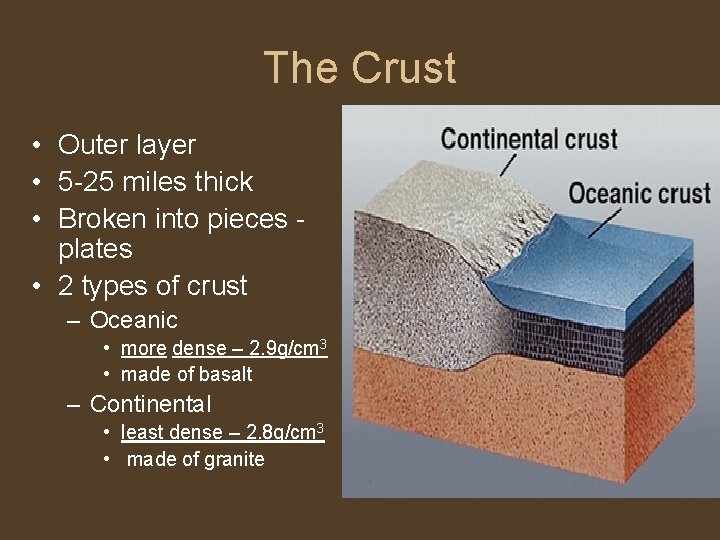
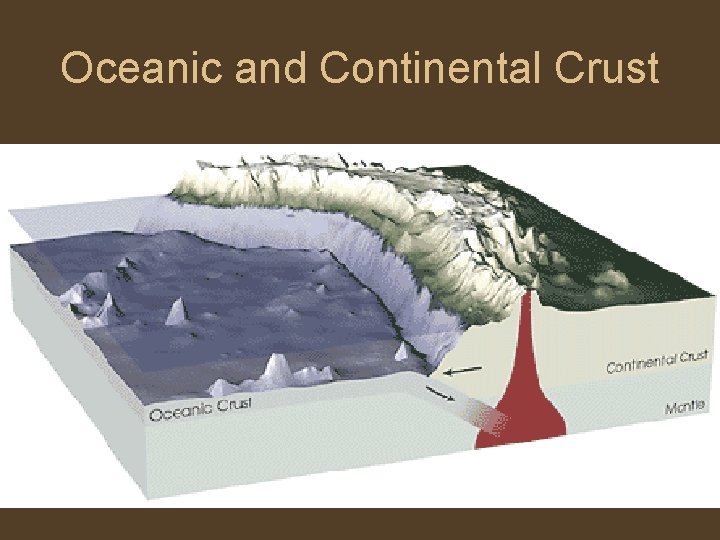
The Crust • Outer layer • 5 -25 miles thick • Broken into pieces plates • 2 types of crust – Oceanic • more dense – 2. 9 g/cm 3 • made of basalt – Continental • least dense – 2. 8 g/cm 3 • made of granite
Oceanic and Continental Crust
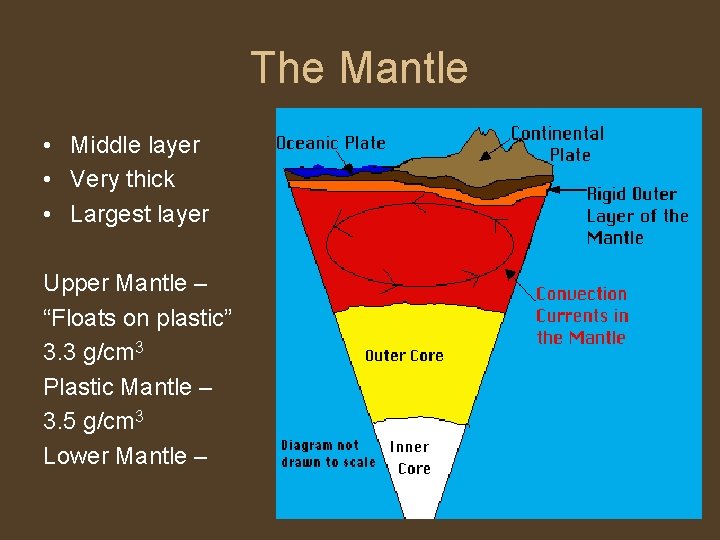
The Mantle • Middle layer • Very thick • Largest layer Upper Mantle – “Floats on plastic” 3. 3 g/cm 3 Plastic Mantle – 3. 5 g/cm 3 Lower Mantle –
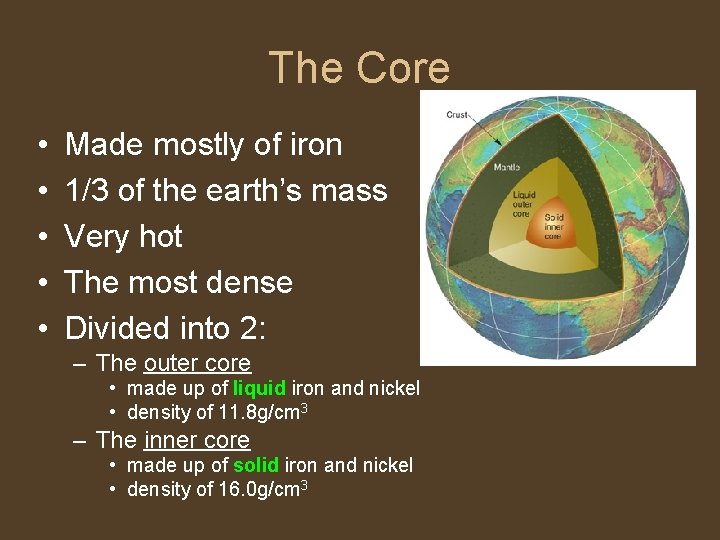
The Core • • • Made mostly of iron 1/3 of the earth’s mass Very hot The most dense Divided into 2: – The outer core • made up of liquid iron and nickel • density of 11. 8 g/cm 3 – The inner core • made up of solid iron and nickel • density of 16. 0 g/cm 3
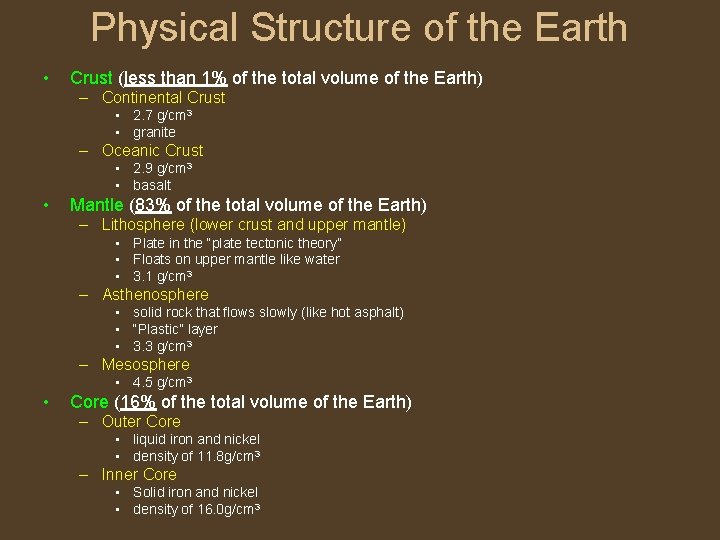
Physical Structure of the Earth • Crust (less than 1% of the total volume of the Earth) – Continental Crust • 2. 7 g/cm 3 • granite – Oceanic Crust • 2. 9 g/cm 3 • basalt • Mantle (83% of the total volume of the Earth) – Lithosphere (lower crust and upper mantle) • Plate in the “plate tectonic theory” • Floats on upper mantle like water • 3. 1 g/cm 3 – Asthenosphere • solid rock that flows slowly (like hot asphalt) • “Plastic” layer • 3. 3 g/cm 3 – Mesosphere • 4. 5 g/cm 3 • Core (16% of the total volume of the Earth) – Outer Core • liquid iron and nickel • density of 11. 8 g/cm 3 – Inner Core • Solid iron and nickel • density of 16. 0 g/cm 3
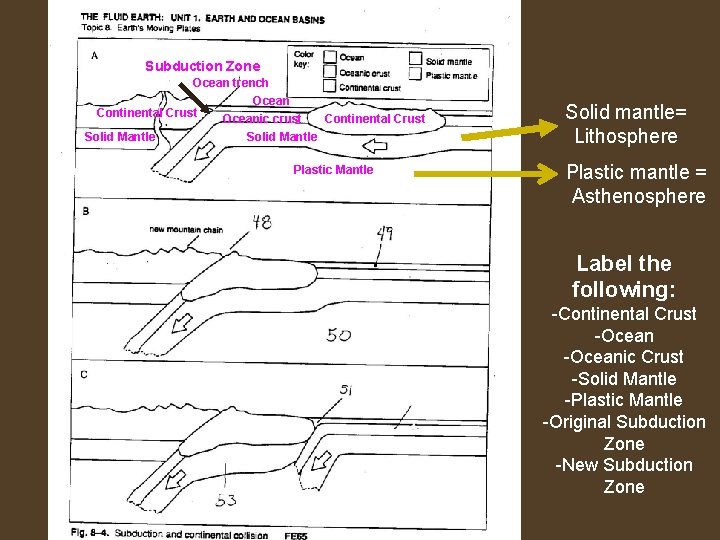
Subduction Zone Ocean trench Ocean Continental Crust Oceanic crust Solid Mantle Continental Crust Solid Mantle Plastic Mantle Solid mantle= Lithosphere Plastic mantle = Asthenosphere Label the following: -Continental Crust -Oceanic Crust -Solid Mantle -Plastic Mantle -Original Subduction Zone -New Subduction Zone
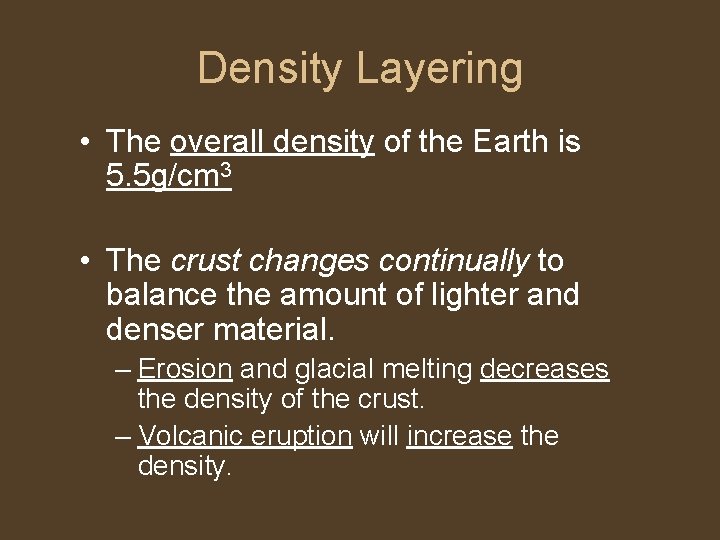
Density Layering • The overall density of the Earth is 5. 5 g/cm 3 • The crust changes continually to balance the amount of lighter and denser material. – Erosion and glacial melting decreases the density of the crust. – Volcanic eruption will increase the density.
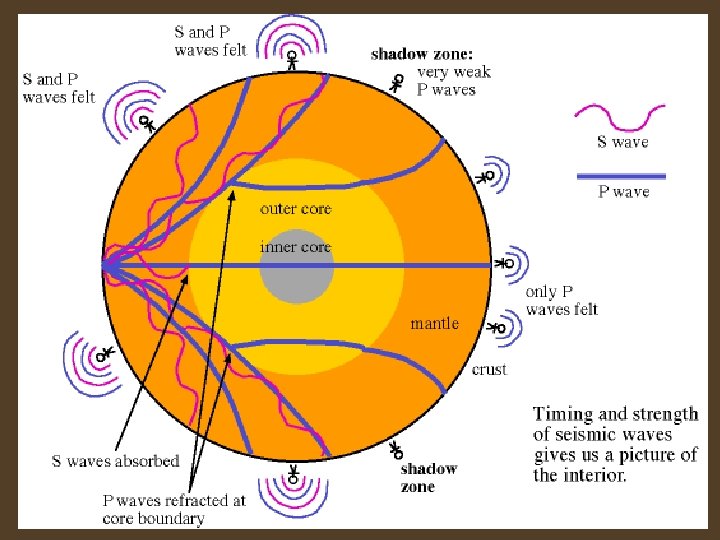
Seismic waves • Evidence of distinct layers in the Earth with different densities comes from the observations of seismic waves (the vibrations generated by earthquakes and explosions) • As seismic waves move through the Earth, wave patterns may change indicating the waves were: – Reflected: bounced back due to extreme density – Refracted: directional change • Measuring the changes in the velocity of these waves as they travel through the Earth provides information on the number of layers and the thickness and composition of the layers.