
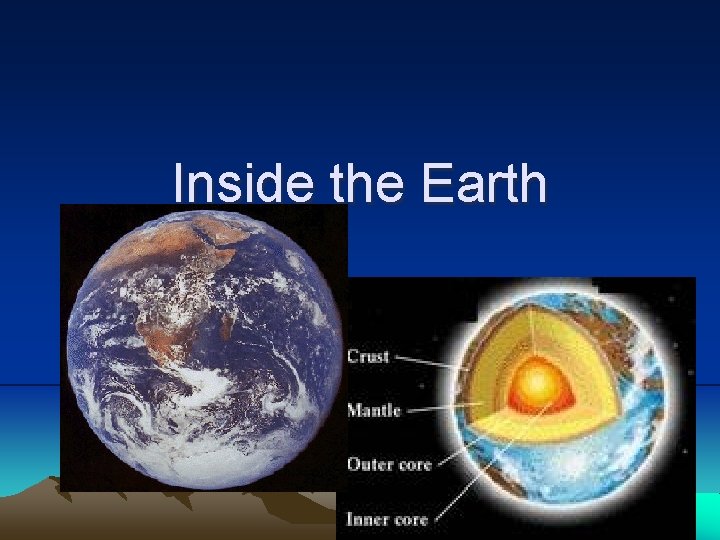
Inside the Earth Layers of the Earth CRUST
- Slides: 38
Inside the Earth
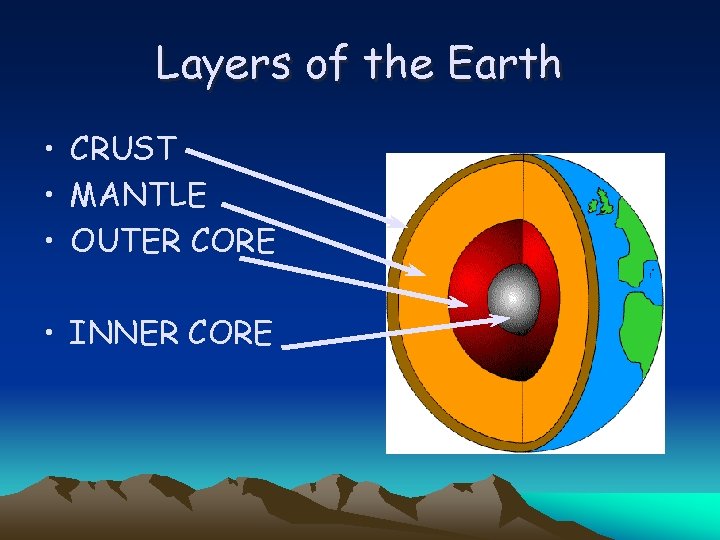
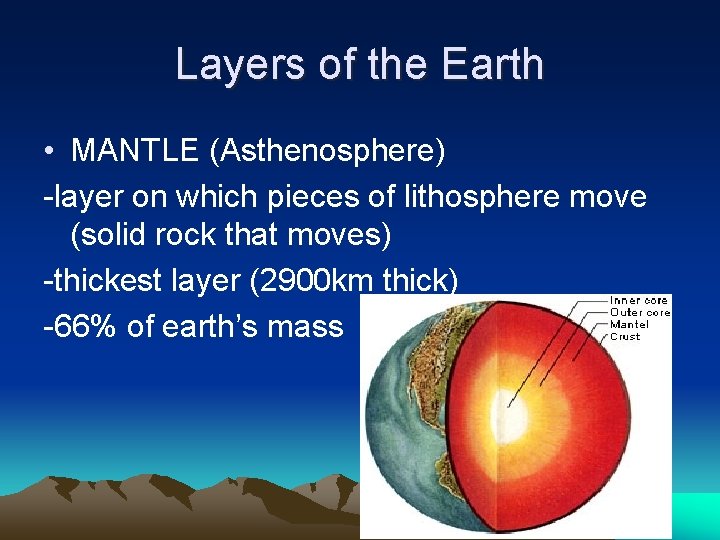
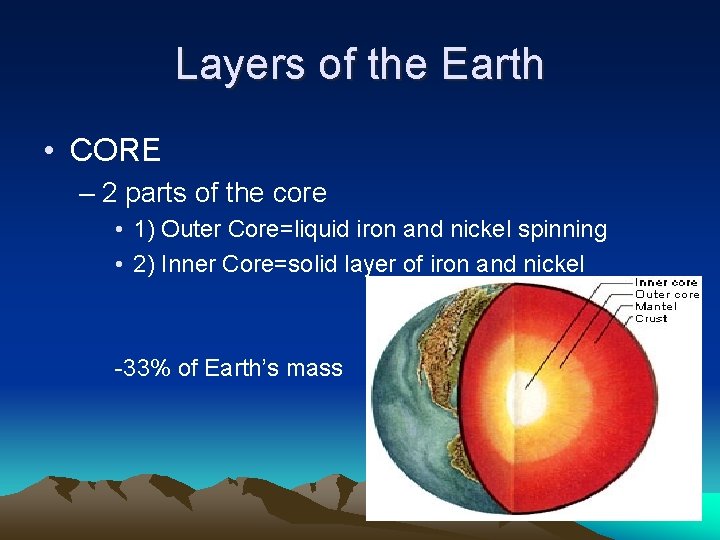
Layers of the Earth • CRUST • MANTLE • OUTER CORE • INNER CORE
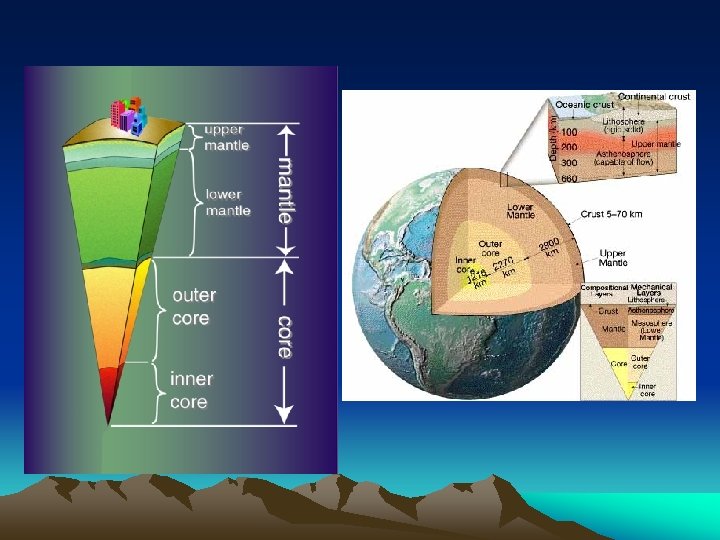
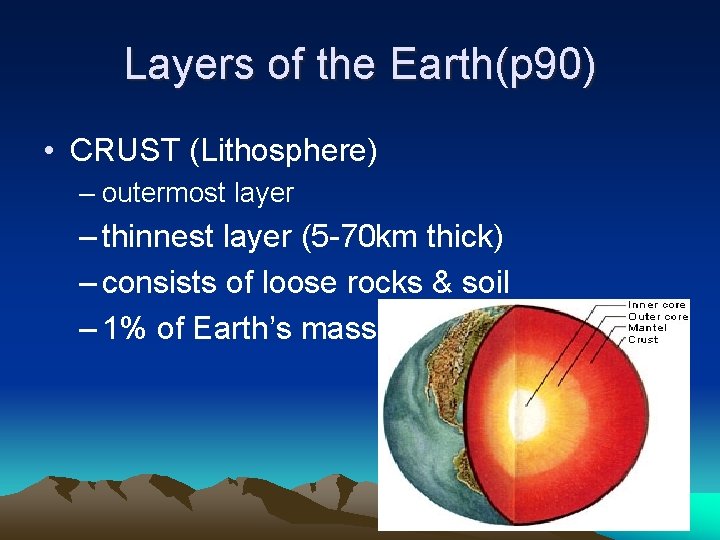
Layers of the Earth(p 90) • CRUST (Lithosphere) – outermost layer – thinnest layer (5 -70 km thick) – consists of loose rocks & soil – 1% of Earth’s mass
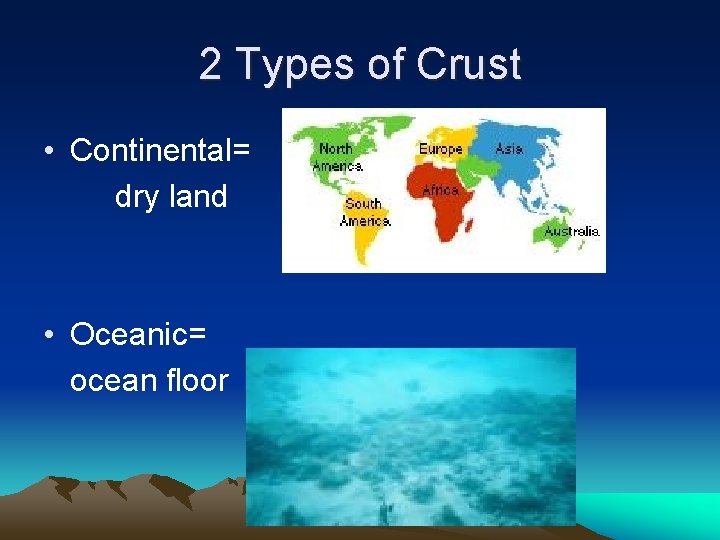
2 Types of Crust • Continental= dry land • Oceanic= ocean floor
Layers of the Earth • MANTLE (Asthenosphere) -layer on which pieces of lithosphere move (solid rock that moves) -thickest layer (2900 km thick) -66% of earth’s mass
Layers of the Earth • CORE – 2 parts of the core • 1) Outer Core=liquid iron and nickel spinning • 2) Inner Core=solid layer of iron and nickel -33% of Earth’s mass
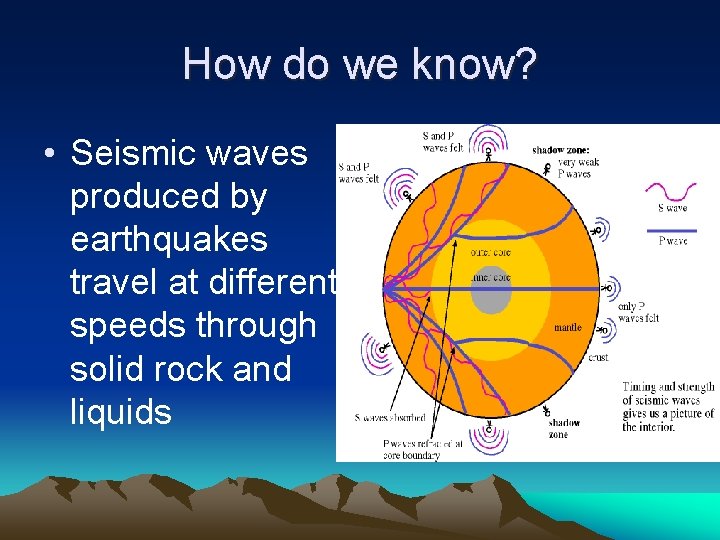
How do we know? • Seismic waves produced by earthquakes travel at different speeds through solid rock and liquids
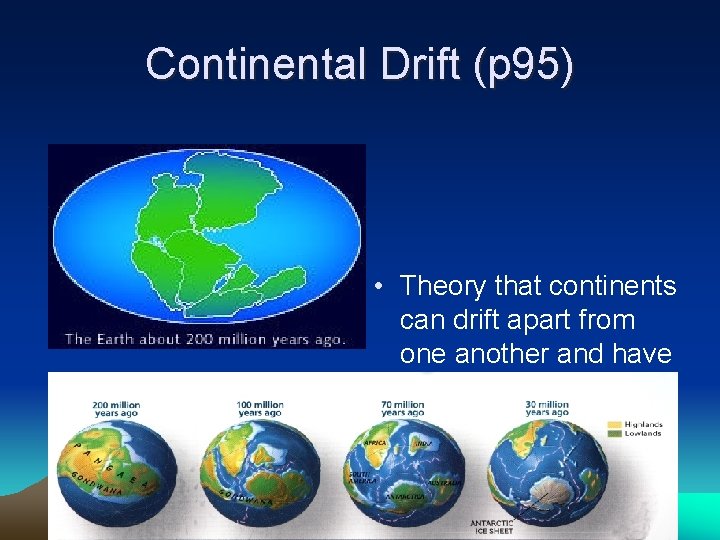
Continental Drift (p 95) • Theory that continents can drift apart from one another and have done so in the past • Pangaea= single landmass
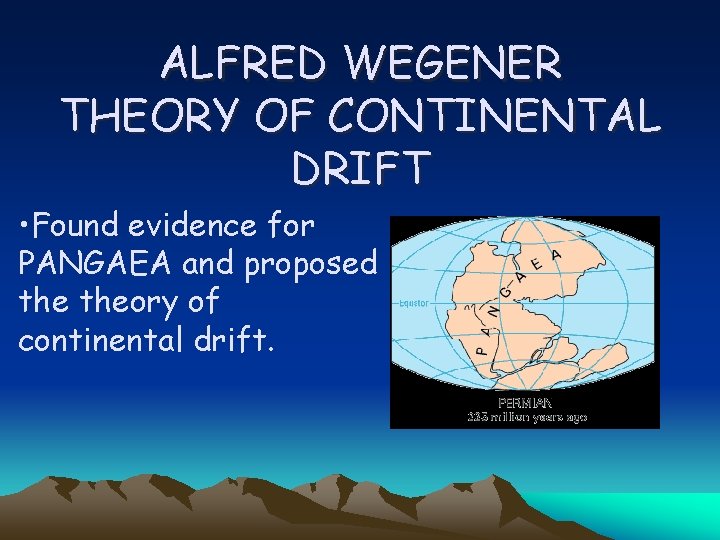
ALFRED WEGENER THEORY OF CONTINENTAL DRIFT • Found evidence for PANGAEA and proposed theory of continental drift.
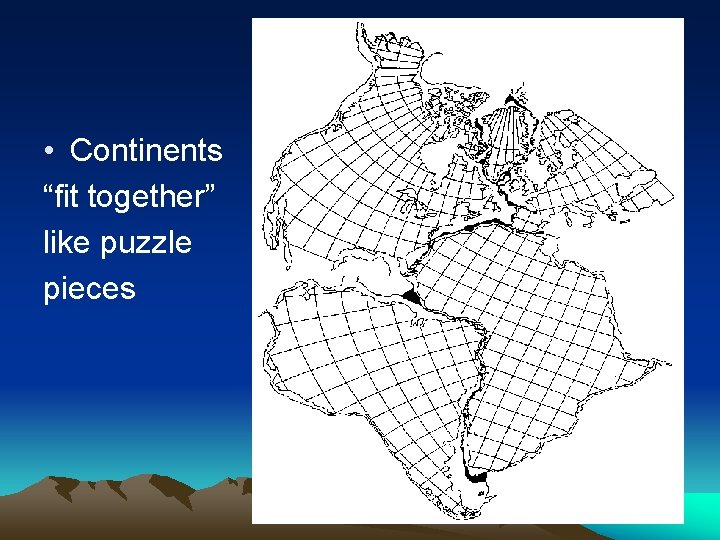
• Continents “fit together” like puzzle pieces
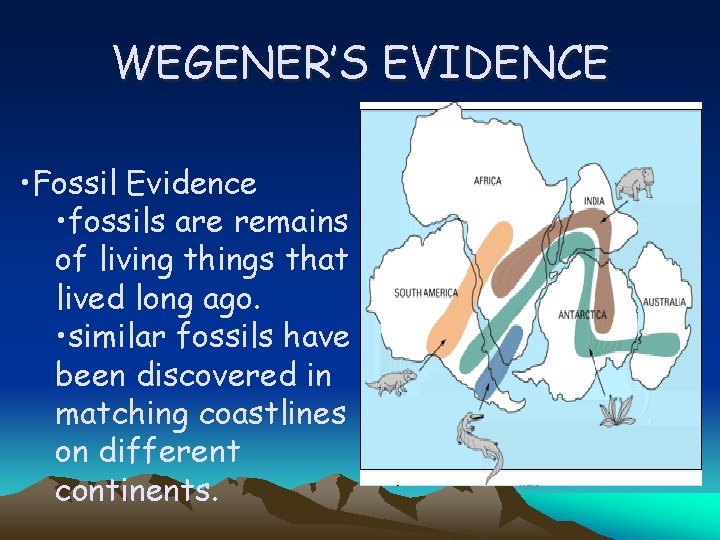
WEGENER’S EVIDENCE • Fossil Evidence • fossils are remains of living things that lived long ago. • similar fossils have been discovered in matching coastlines on different continents.
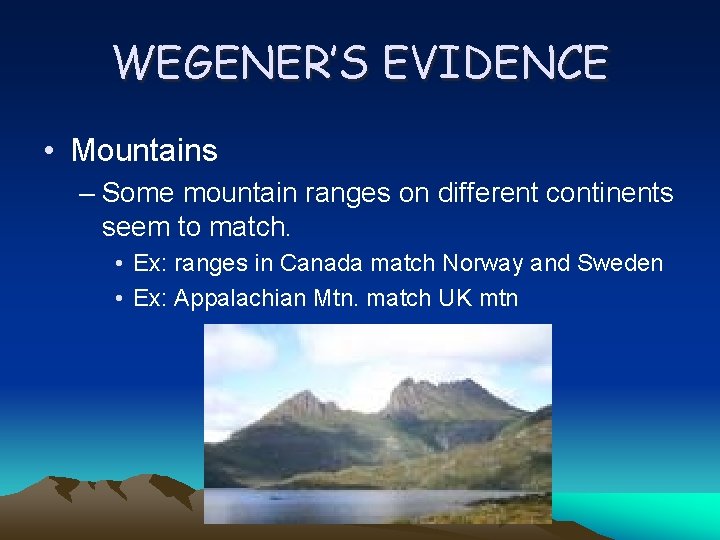
WEGENER’S EVIDENCE • Mountains – Some mountain ranges on different continents seem to match. • Ex: ranges in Canada match Norway and Sweden • Ex: Appalachian Mtn. match UK mtn
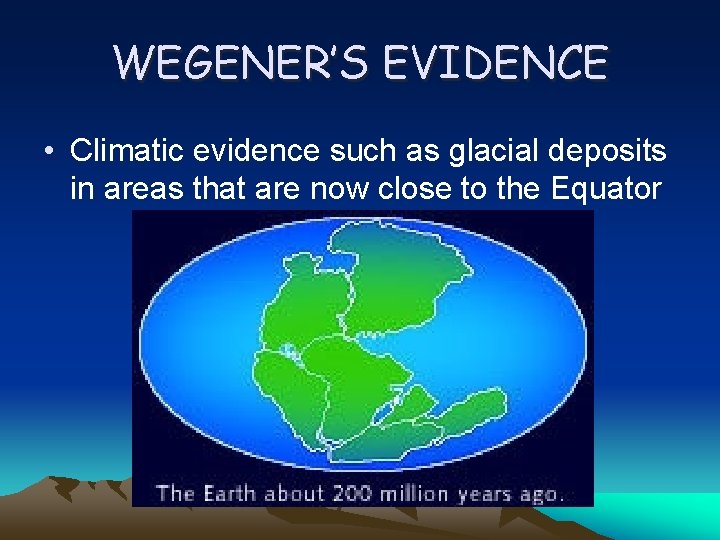
WEGENER’S EVIDENCE • Climatic evidence such as glacial deposits in areas that are now close to the Equator
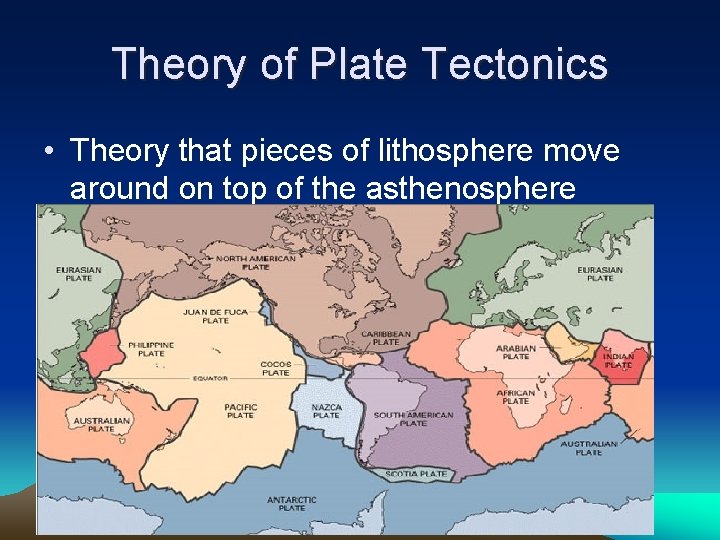
Theory of Plate Tectonics • Theory that pieces of lithosphere move around on top of the asthenosphere
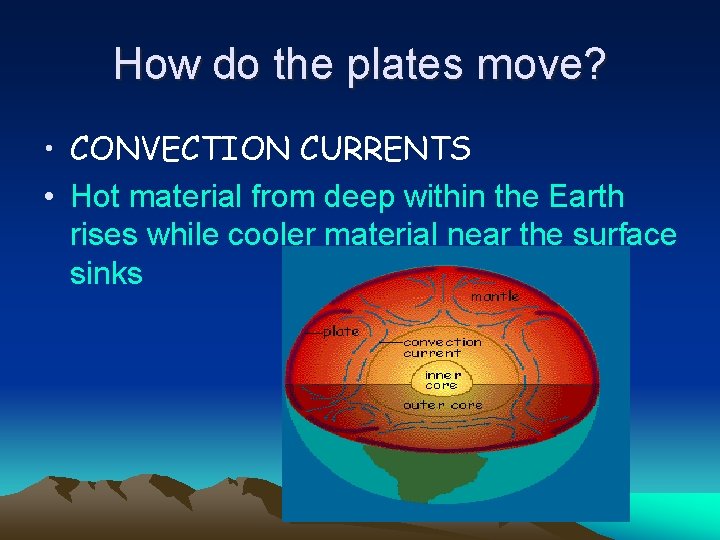
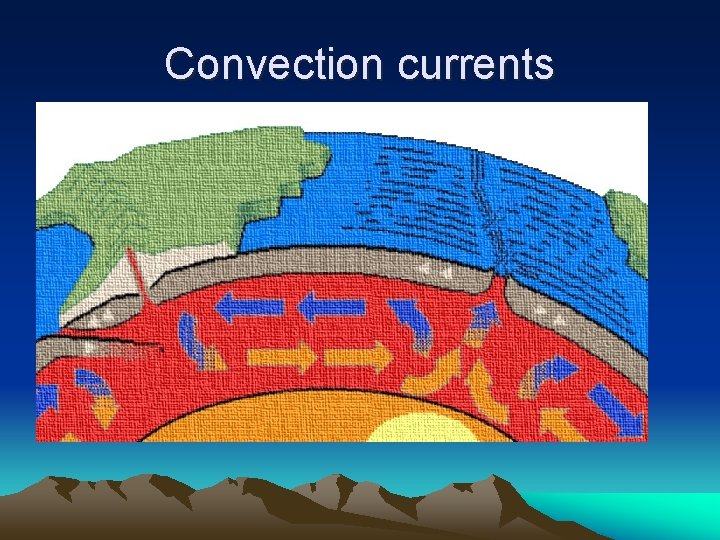
How do the plates move? • CONVECTION CURRENTS • Hot material from deep within the Earth rises while cooler material near the surface sinks
Convection currents
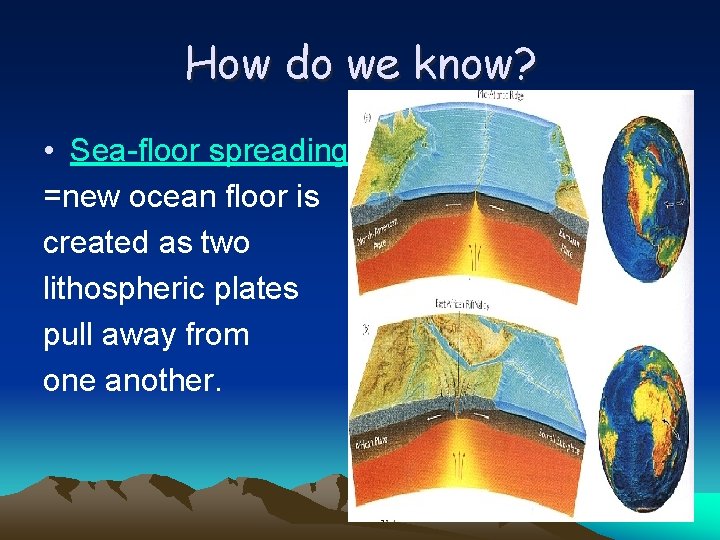
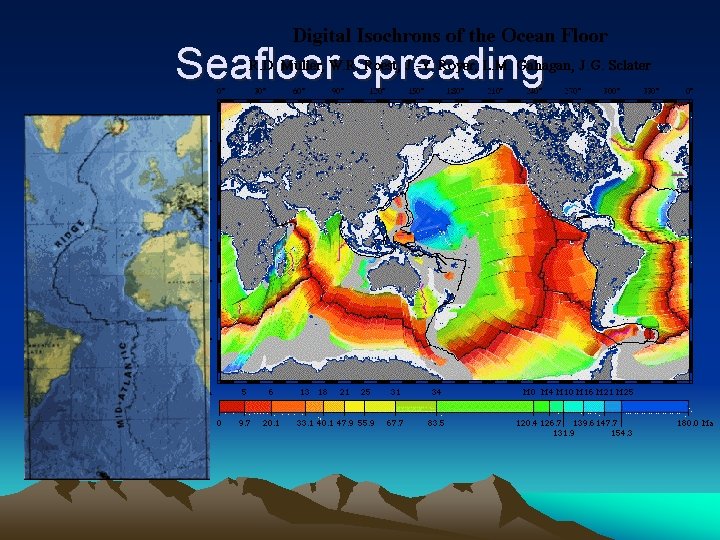
How do we know? • Sea-floor spreading =new ocean floor is created as two lithospheric plates pull away from one another.
Seafloor spreading
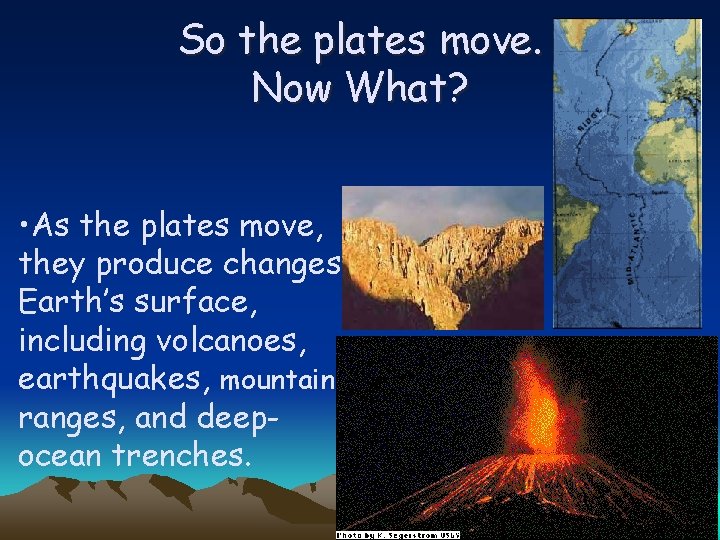
So the plates move. Now What? • As the plates move, they produce changes in Earth’s surface, including volcanoes, earthquakes, mountain ranges, and deepocean trenches.
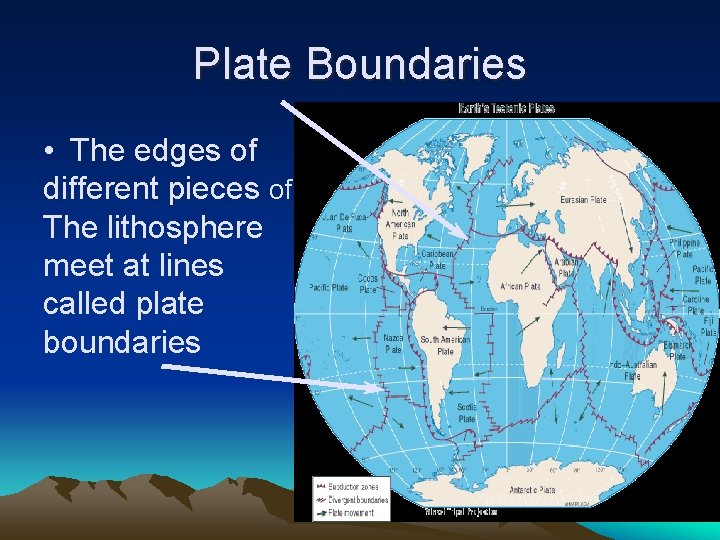
Plate Boundaries • The edges of different pieces of The lithosphere meet at lines called plate boundaries
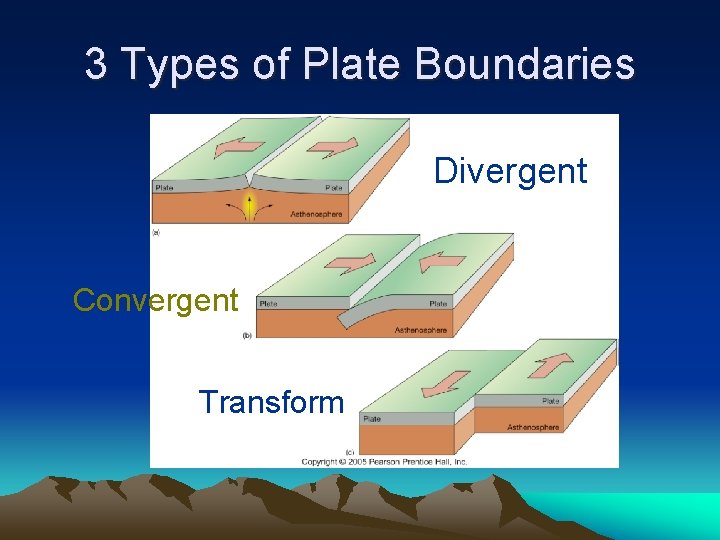
3 Types of Plate Boundaries Divergent Convergent Transform
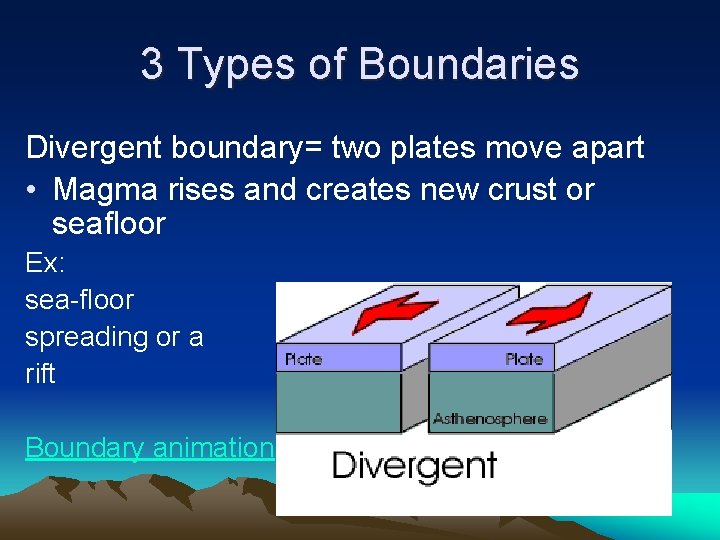
3 Types of Boundaries Divergent boundary= two plates move apart • Magma rises and creates new crust or seafloor Ex: sea-floor spreading or a rift Boundary animation
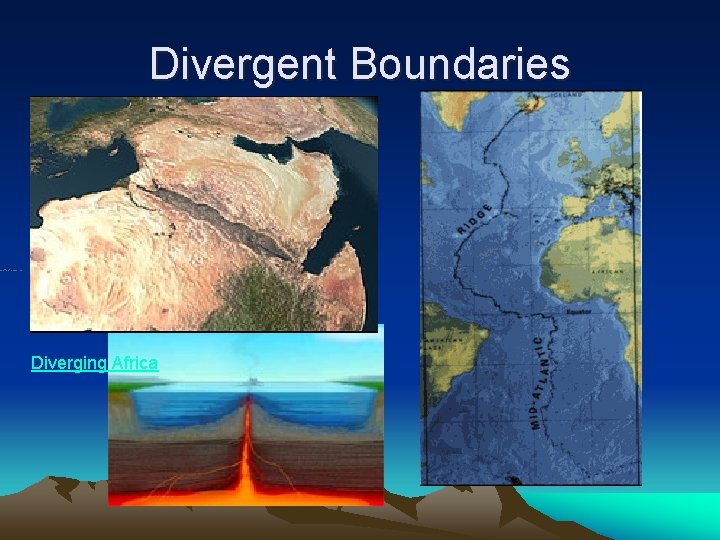
Divergent Boundaries © All Rights Reserved. Diverging Africa
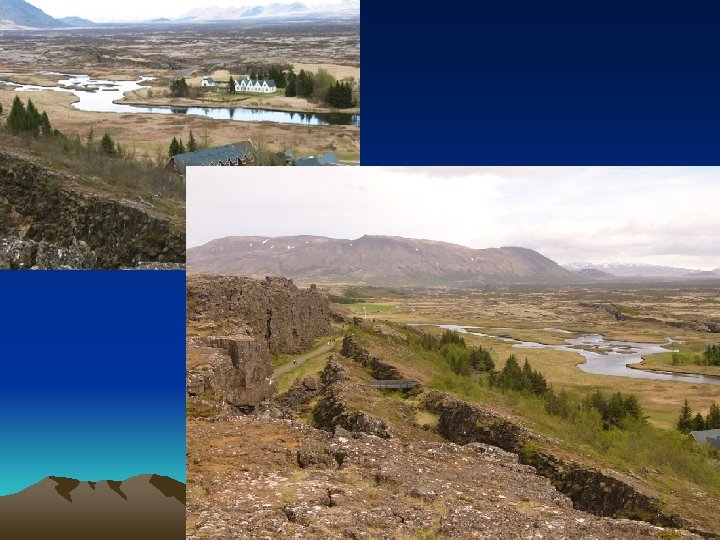
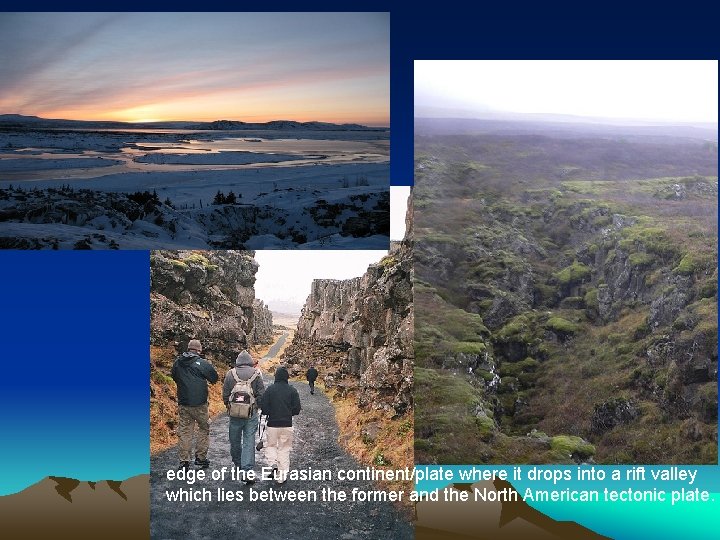
edge of the Eurasian continent/plate where it drops into a rift valley which lies between the former and the North American tectonic plate.
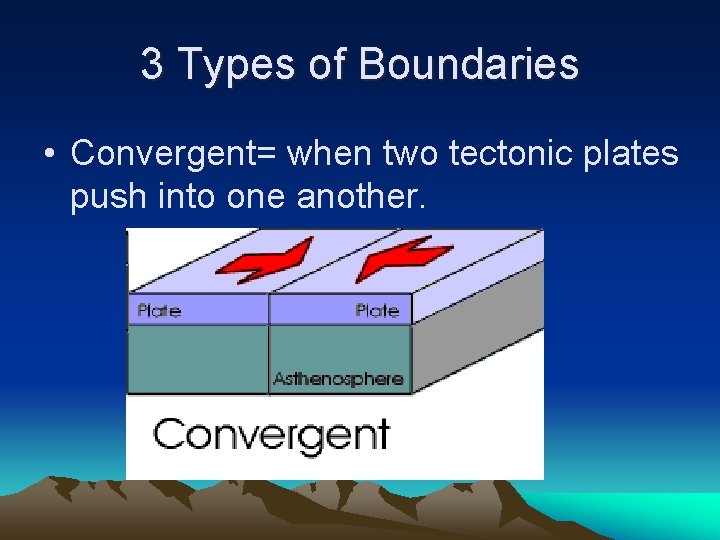
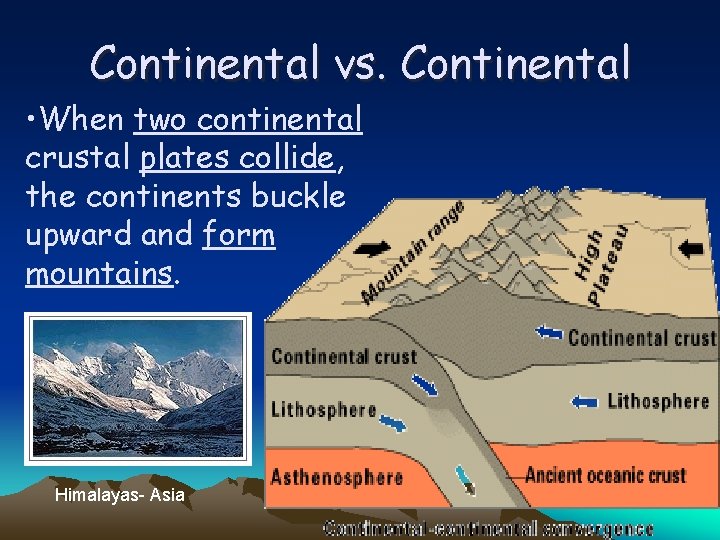
3 Types of Boundaries • Convergent= when two tectonic plates push into one another.
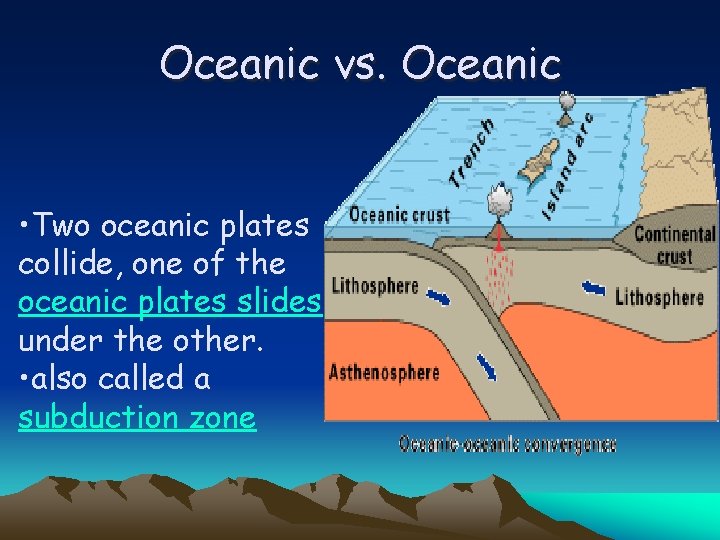
Convergent Boundaries • Continental vs. Continental • Continental vs. Oceanic • Oceanic vs. Oceanic
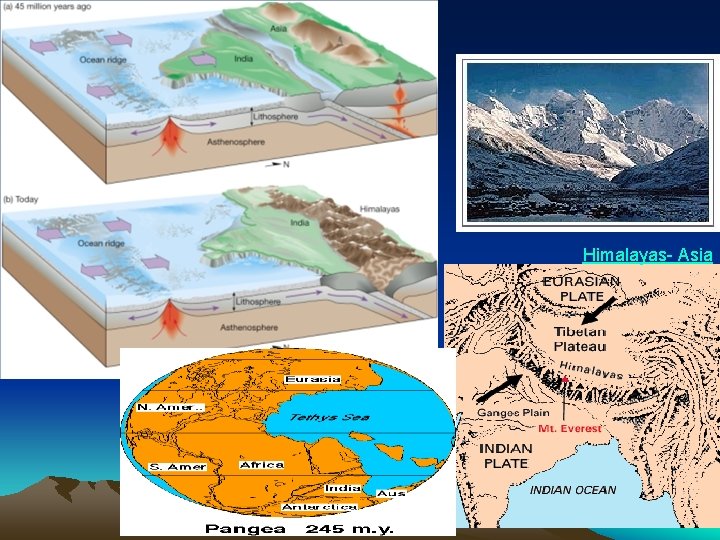
Continental vs. Continental • When two continental crustal plates collide, the continents buckle upward and form mountains. Himalayas- Asia
Himalayas- Asia
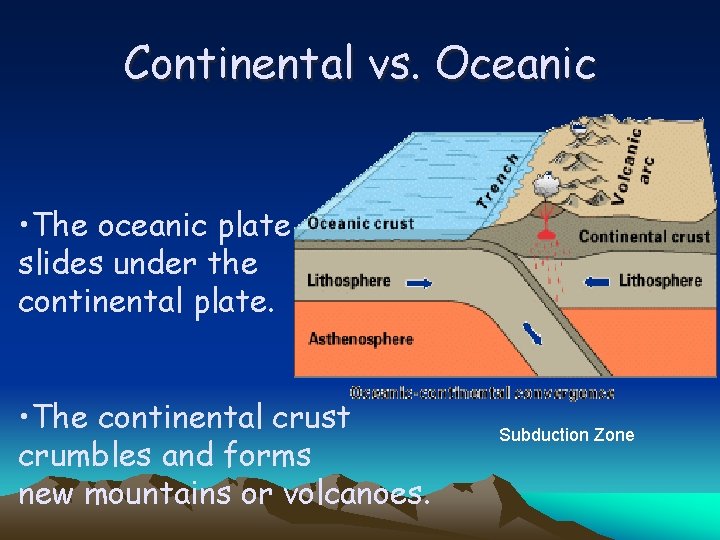
Continental vs. Oceanic • The oceanic plate slides under the continental plate. • The continental crust crumbles and forms new mountains or volcanoes. Subduction Zone
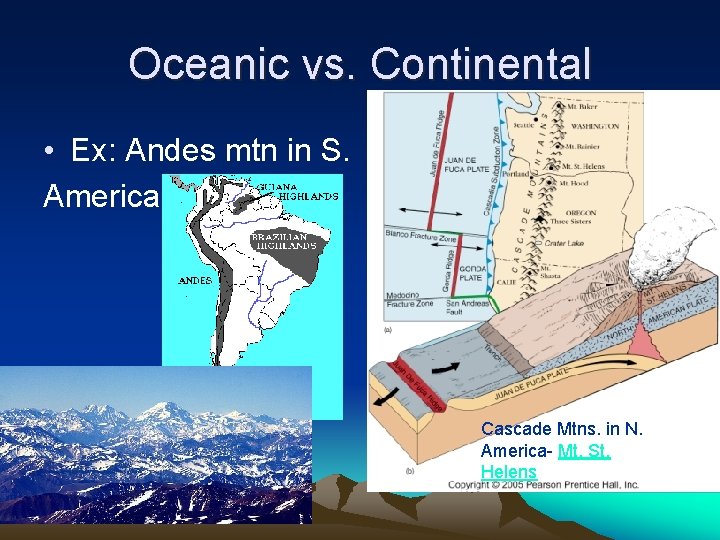
Oceanic vs. Continental • Ex: Andes mtn in S. America Cascade Mtns. in N. America- Mt. St. Helens
Oceanic vs. Oceanic • Two oceanic plates collide, one of the oceanic plates slides under the other. • also called a subduction zone
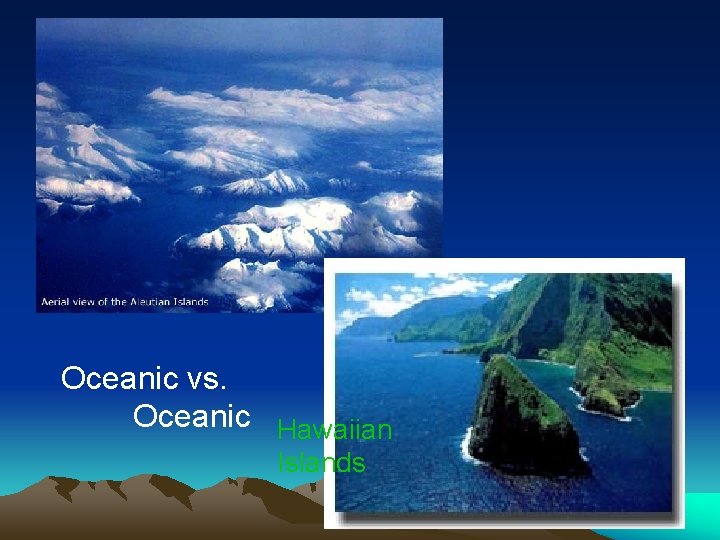
Oceanic vs. Oceanic Hawaiian Islands
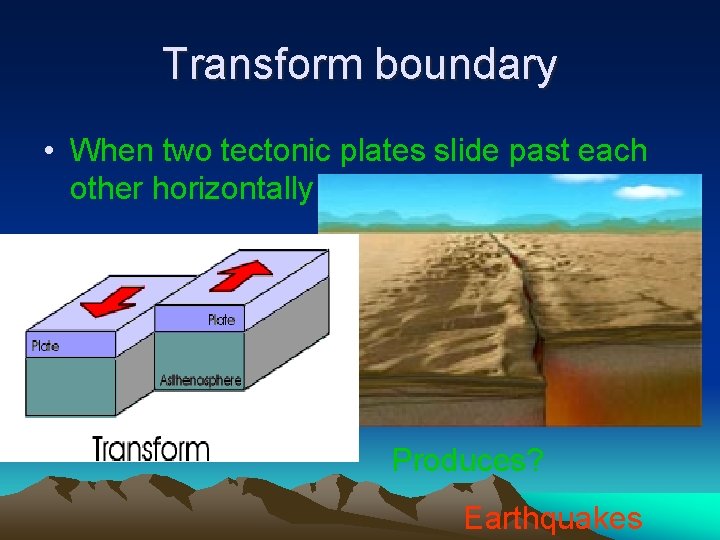
Transform boundary • When two tectonic plates slide past each other horizontally Produces? Earthquakes
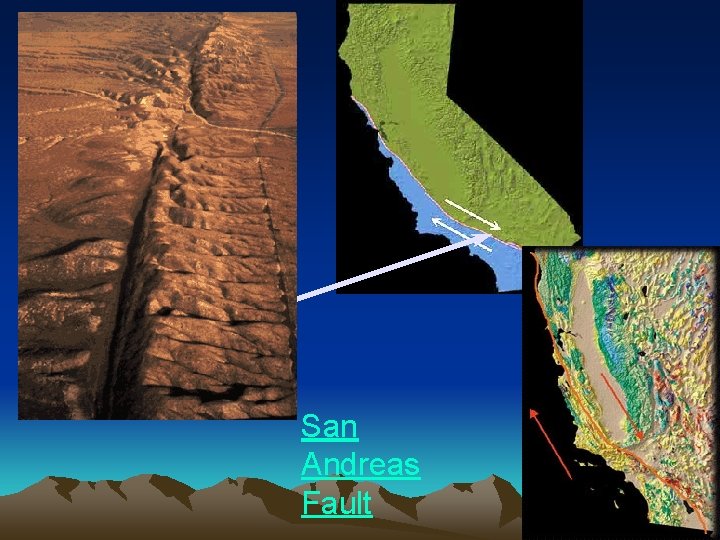
San Andreas Fault
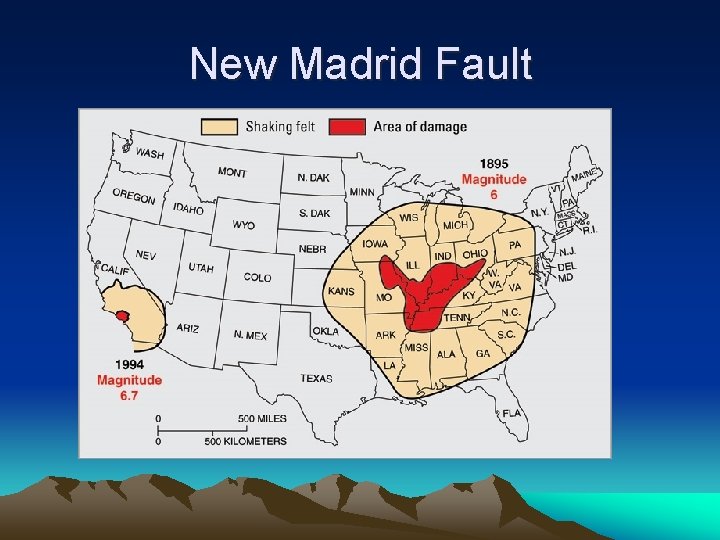
New Madrid Fault
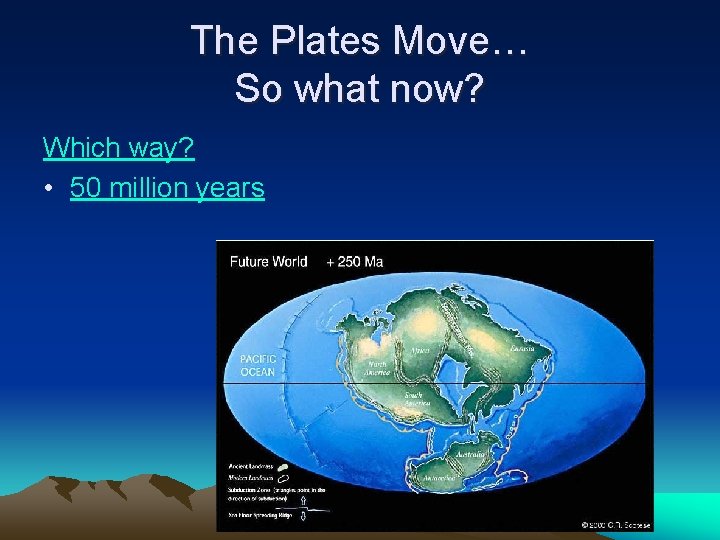
The Plates Move… So what now? Which way? • 50 million years