
Inside Peer Assisted Learning PAL How do students
- Slides: 17
Inside Peer Assisted Learning (PAL) – How do students arrive at uni? Dr. Julia Sacher „Starting together with Peer Assisted Learning (PAL)“ Bielefeld University, Germany Center for Teaching, Learning and Career julia. sacher@uni-bielefeld. de
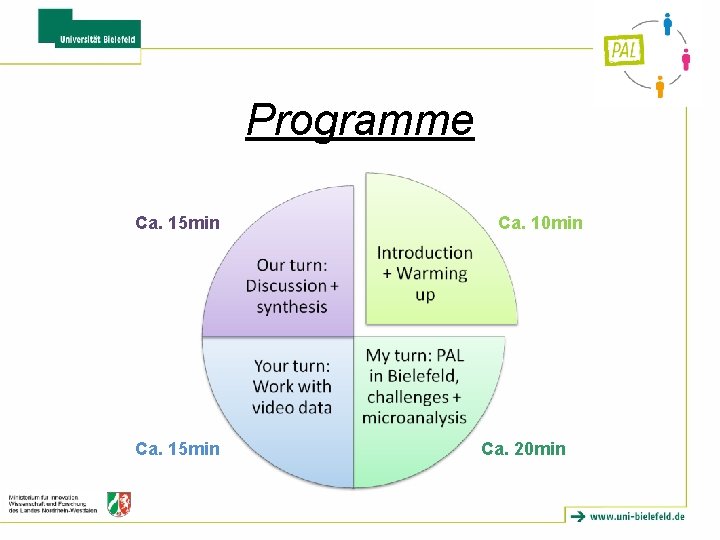
Programme Ca. 15 min Ca. 10 min Ca. 20 min
Group Formation
In a nutshell: PAL at Bielefeld University „Starting together with Peer Assisted Learning (PAL)“, 2014 -2017 ⇒ Situation in Germany: PASS / PAL / SI are widely unknown ⇒ Popularization of the PAL-concept ▪ Among lecturers ▪ Among students
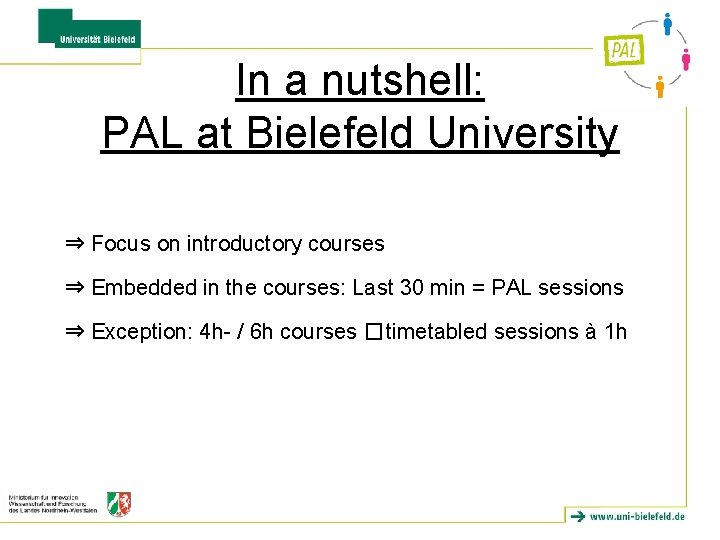
In a nutshell: PAL at Bielefeld University ⇒ Focus on introductory courses ⇒ Embedded in the courses: Last 30 min = PAL sessions ⇒ Exception: 4 h- / 6 h courses �timetabled sessions à 1 h
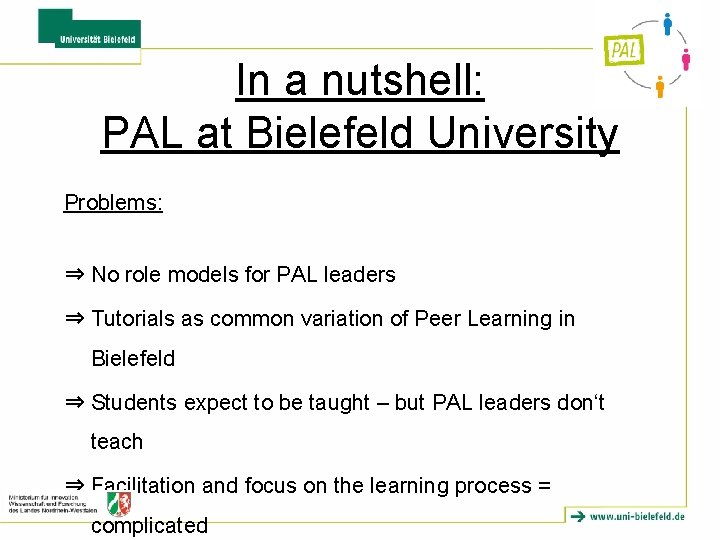
In a nutshell: PAL at Bielefeld University Problems: ⇒ No role models for PAL leaders ⇒ Tutorials as common variation of Peer Learning in Bielefeld ⇒ Students expect to be taught – but PAL leaders don‘t teach ⇒ Facilitation and focus on the learning process = complicated
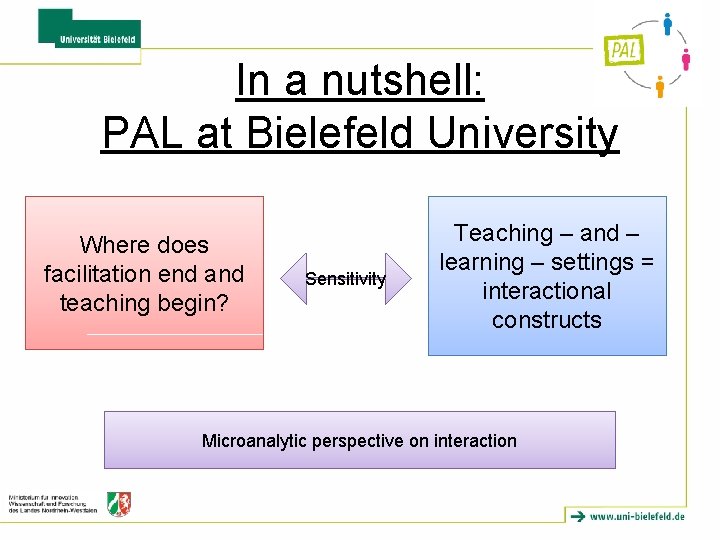
In a nutshell: PAL at Bielefeld University Where does facilitation end and teaching begin? Sensitivity Teaching – and – learning – settings = interactional constructs Microanalytic perspective on interaction
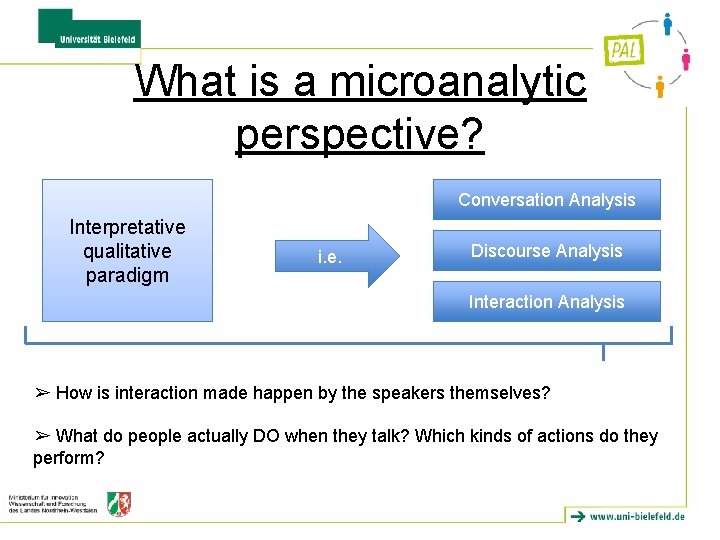
What is a microanalytic perspective? Conversation Analysis Interpretative qualitative paradigm i. e. Discourse Analysis Interaction Analysis ➢ How is interaction made happen by the speakers themselves? ➢ What do people actually DO when they talk? Which kinds of actions do they perform?
What is a microanalytic perspective? Everything you do, you can perform verbally in various ways. Greeting: • Good morning! • Hiya! • Ladies and Gentlemen, it is an honour to be here. ⇒ Information about and shaping of the situation, the relationship between the speakers, the level of formality etc. ⇒ Allows assumptions about what may come next
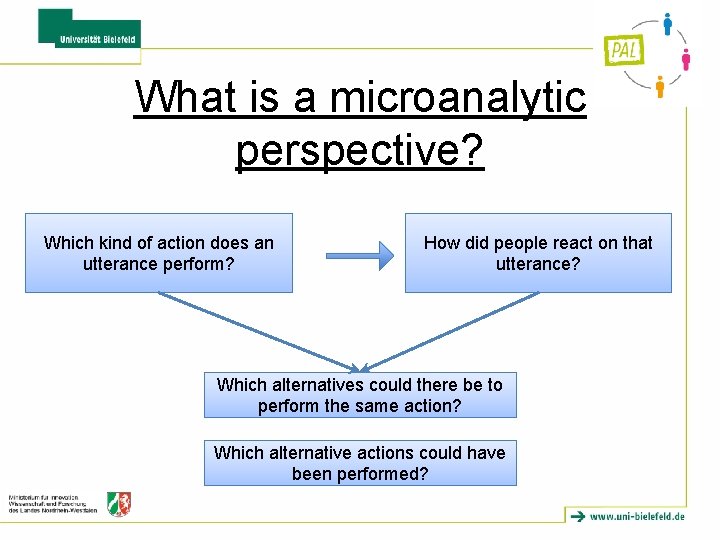
What is a microanalytic perspective? Which kind of action does an utterance perform? How did people react on that utterance? Which alternatives could there be to perform the same action? Which alternative actions could have been performed?
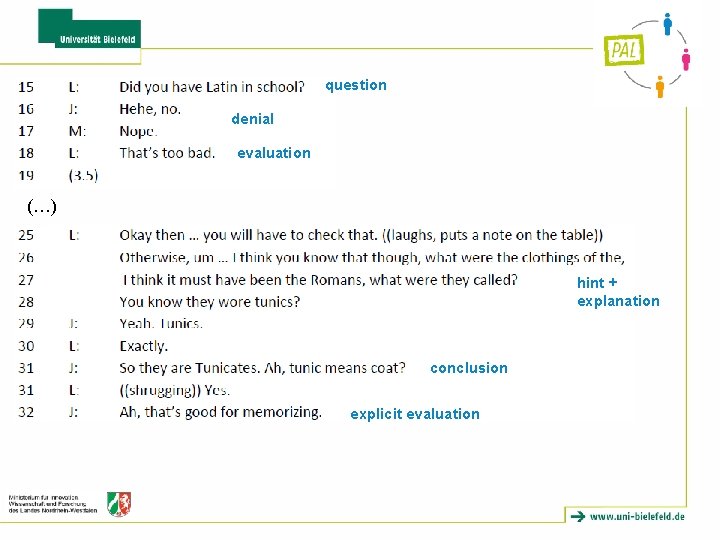
What is a microanalytic perspective? • What does L do? • Where could she have acted differently to focus on learning processes?
question denial evaluation (…) hint + explanation conclusion explicit evaluation
What else could she have done? • Facilitate a discussion about vocabulary techniques: How can one memorize technical terms in Latin without ever gaving learned Latin? – Which components of the other terms do the students know from other words / other contexts?
Your turn!
Our turn • First impressions – working with data = Hard? Easy? Useful? Rubbish? • Did you have aha-experiences? • What do PAL leaders (and other peers) have to learn in order to successfully lead their sessions? • How can we as trainers / supervisors „nudge“ them towards the process- / metalevel of interaction?
The tree of knowledge • Feedback on the workshop: What did you (not) like? • Feedback on your experience: What did you learn today?
Thank you!