
Insert Picture Here Oracle Coherence Product Overview Raanan
- Slides: 37
<Insert Picture Here> Oracle Coherence Product Overview Raanan Dagan / Coherence Team
What is Oracle Coherence? Distributed Memory Data Management Solution (aka: Data Grid)
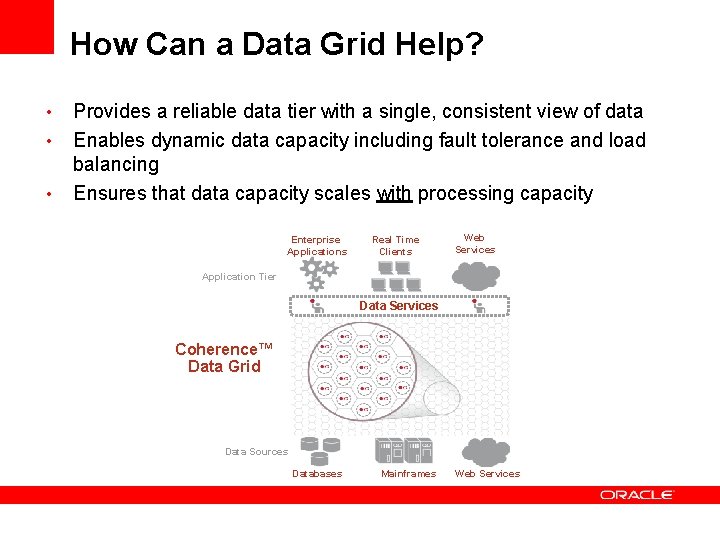
How Can a Data Grid Help? • • • Provides a reliable data tier with a single, consistent view of data Enables dynamic data capacity including fault tolerance and load balancing Ensures that data capacity scales with processing capacity Enterprise Applications Real Time Clients Web Services Application Tier Data Services Coherence™ Data Grid Data Sources Databases Mainframes Web Services
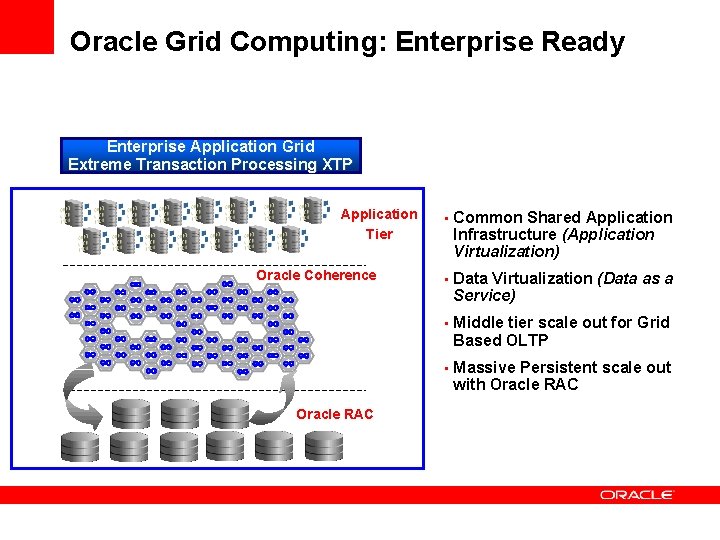
Oracle Grid Computing: Enterprise Ready Enterprise Application Grid Extreme Transaction Processing XTP Application Tier Oracle Coherence • Common Shared Application Infrastructure (Application Virtualization) • Data Virtualization (Data as a Service) • Middle tier scale out for Grid Based OLTP • Massive Persistent scale out with Oracle RAC
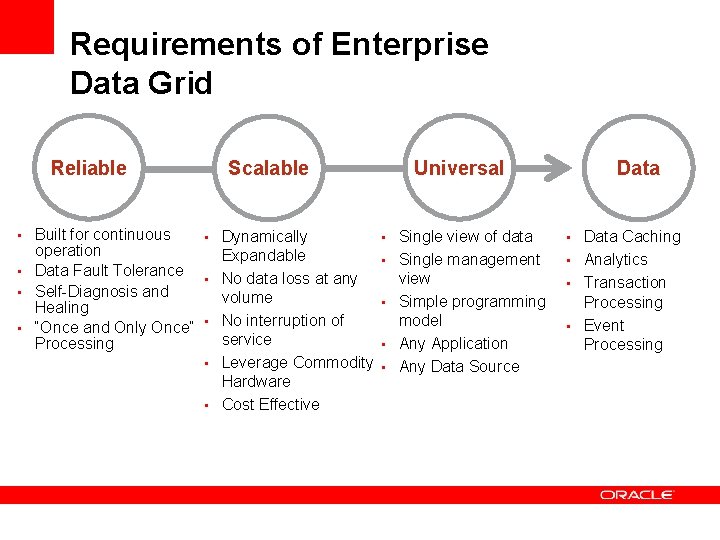
Requirements of Enterprise Data Grid Reliable • Built for continuous Scalable • Dynamically operation Expandable • Data Fault Tolerance • No data loss at any • Self-Diagnosis and volume Healing • No interruption of • “Once and Only Once” service Processing • Leverage Commodity Hardware • Cost Effective Universal Data • Single view of data • Data Caching • Single management • Analytics view • Simple programming model • Any Application • Any Data Source • Transaction Processing • Event Processing
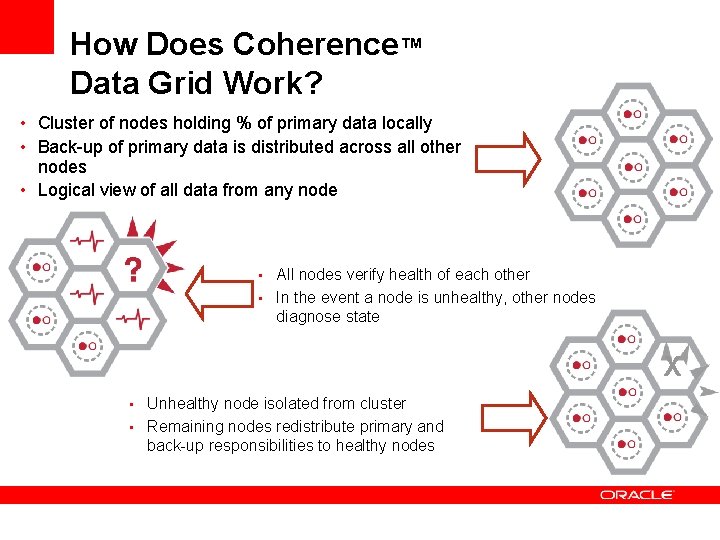
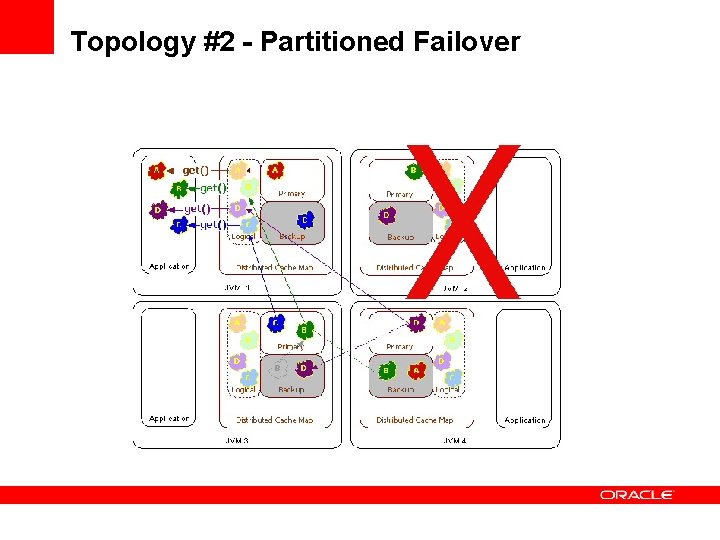
How Does Coherence™ Data Grid Work? • Cluster of nodes holding % of primary data locally • Back-up of primary data is distributed across all other nodes • Logical view of all data from any node • All nodes verify health of each other • In the event a node is unhealthy, other nodes diagnose state X • Unhealthy node isolated from cluster • Remaining nodes redistribute primary and back-up responsibilities to healthy nodes
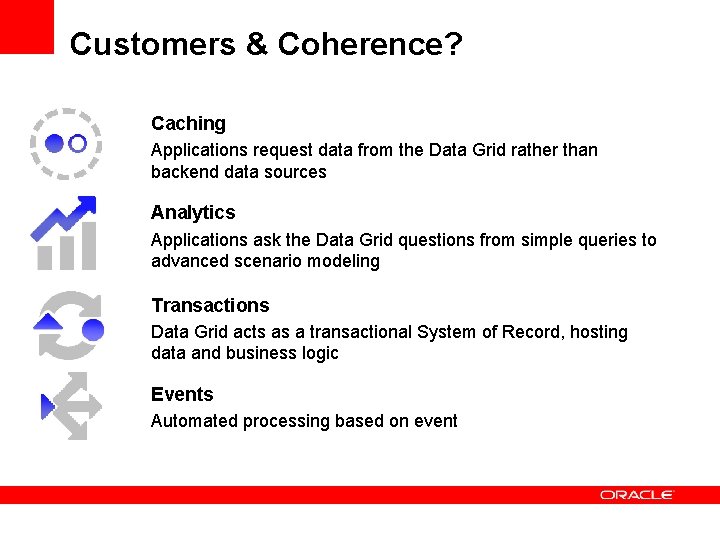
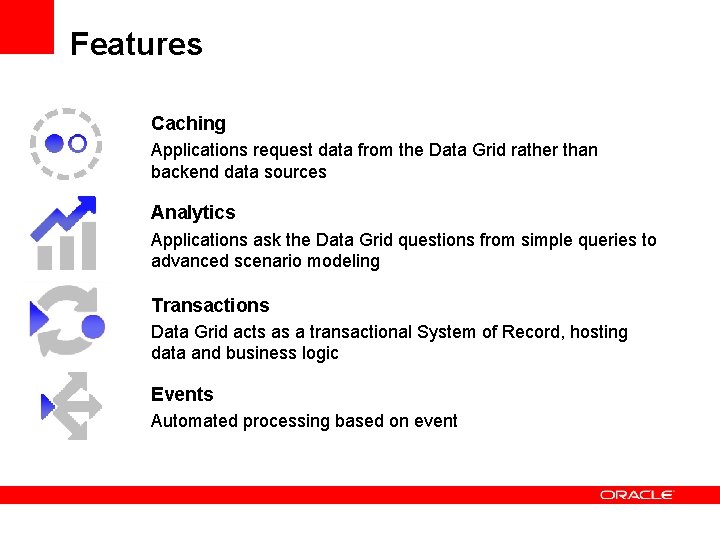
Customers & Coherence? Caching Applications request data from the Data Grid rather than backend data sources Analytics Applications ask the Data Grid questions from simple queries to advanced scenario modeling Transactions Data Grid acts as a transactional System of Record, hosting data and business logic Events Automated processing based on event
Demo
Technical
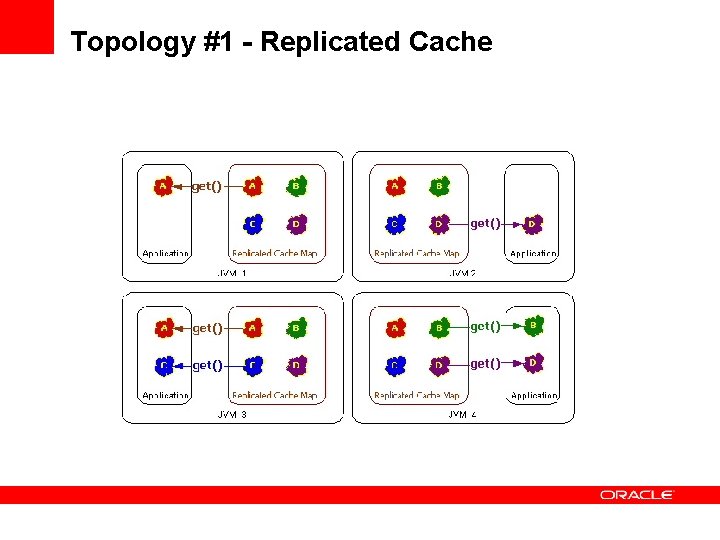
Topology #1 - Replicated Cache
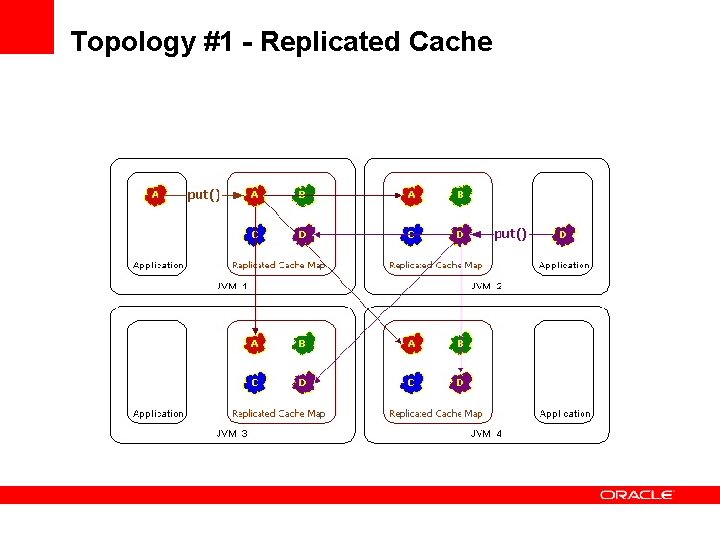
Topology #1 - Replicated Cache
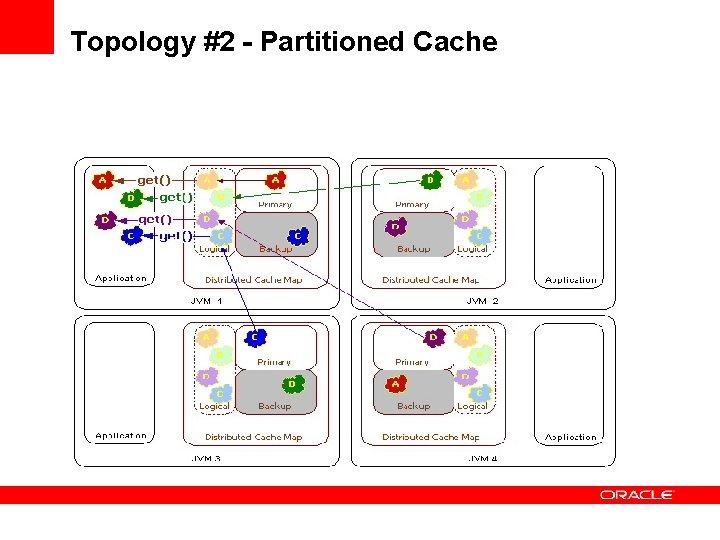
Topology #2 - Partitioned Cache
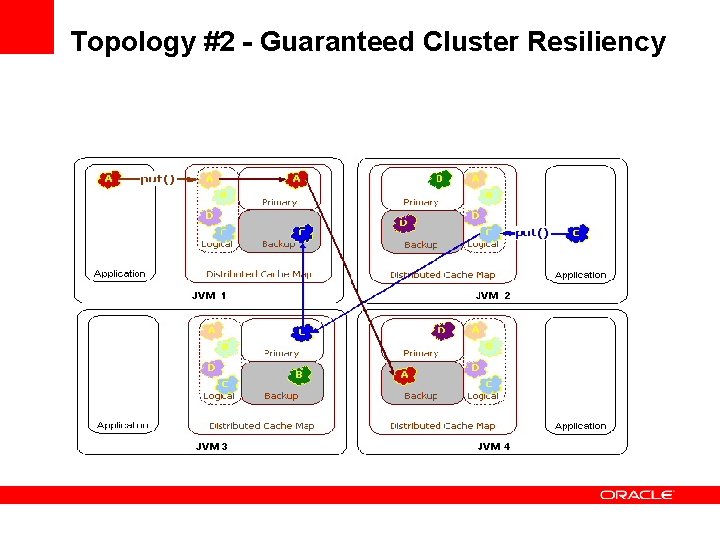
Topology #2 - Guaranteed Cluster Resiliency
Topology #2 - Partitioned Failover
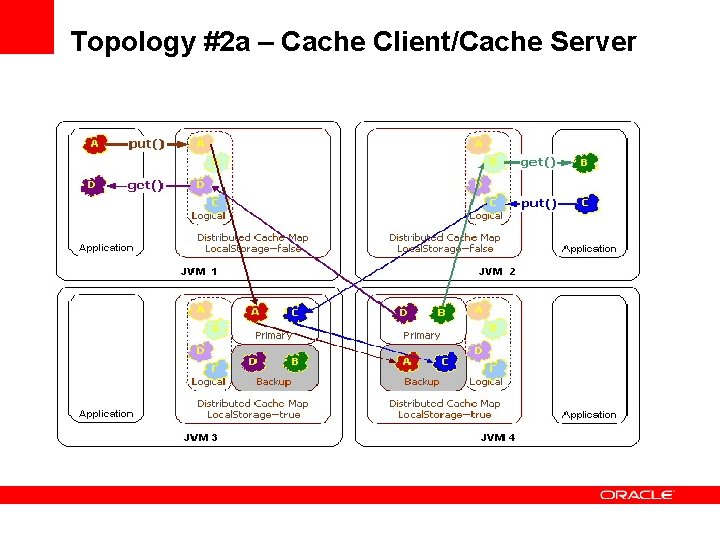
Topology #2 a – Cache Client/Cache Server
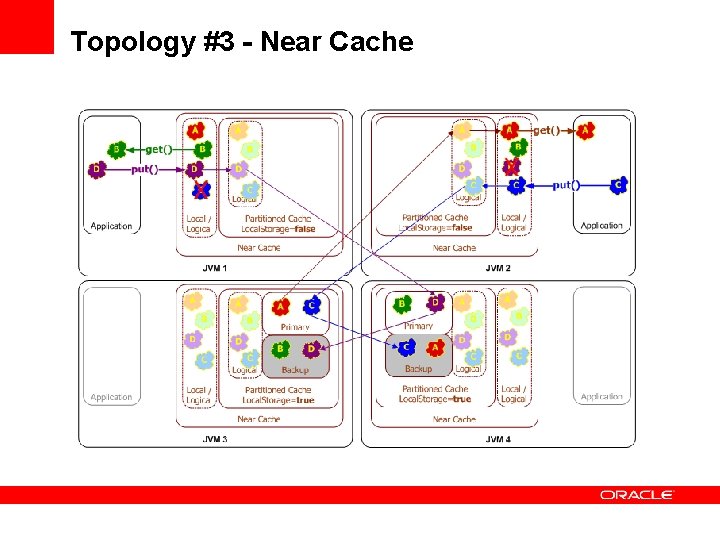
Topology #3 - Near Cache
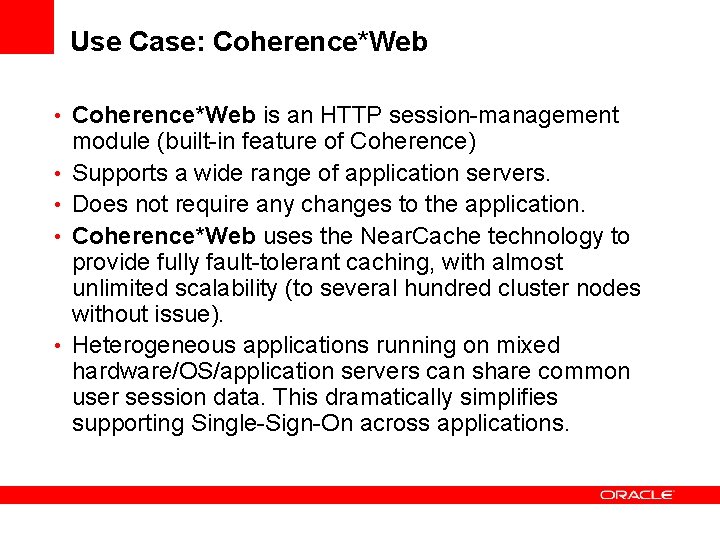
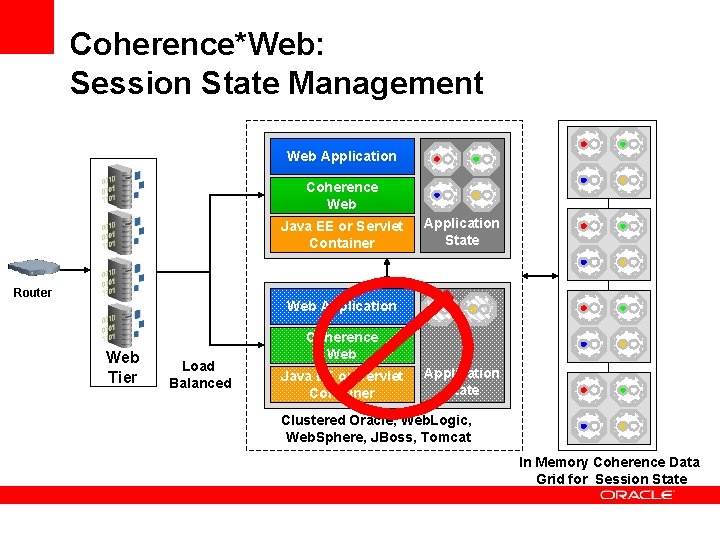
Use Case: Coherence*Web • Coherence*Web is an HTTP session-management • • module (built-in feature of Coherence) Supports a wide range of application servers. Does not require any changes to the application. Coherence*Web uses the Near. Cache technology to provide fully fault-tolerant caching, with almost unlimited scalability (to several hundred cluster nodes without issue). Heterogeneous applications running on mixed hardware/OS/application servers can share common user session data. This dramatically simplifies supporting Single-Sign-On across applications.
Coherence*Web: Session State Management Web Application Coherence Web Java EE or Servlet Container Router Application State Web Application Web Tier Load Balanced Coherence Web Java EE or Servlet Container Application State Clustered Oracle, Web. Logic, Web. Sphere, JBoss, Tomcat In Memory Coherence Data Grid for Session State
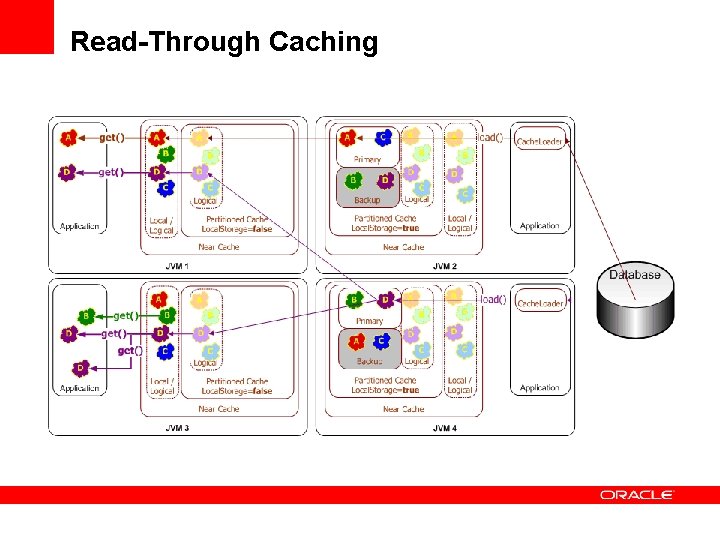
Read-Through Caching
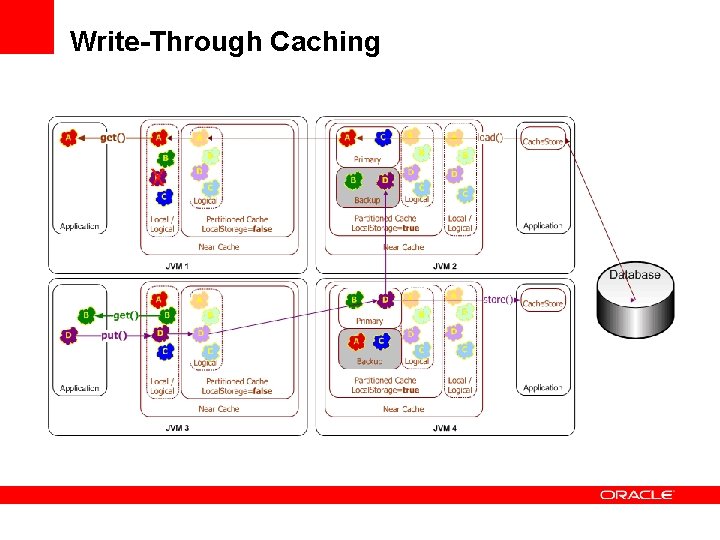
Write-Through Caching
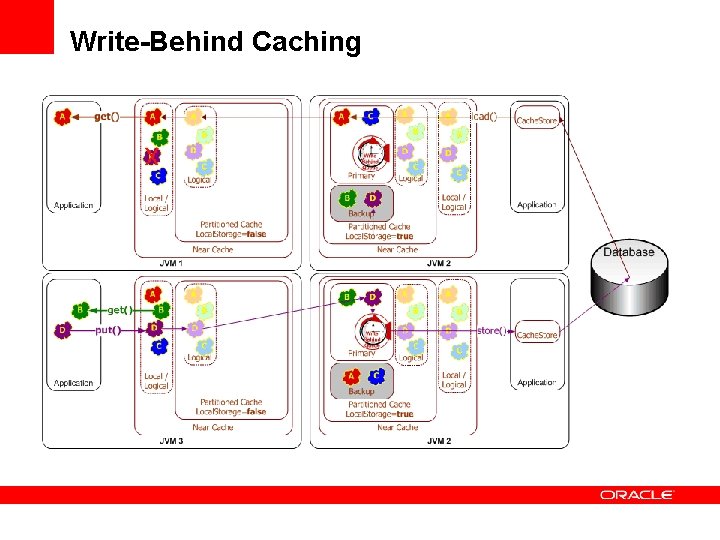
Write-Behind Caching
Features Caching Applications request data from the Data Grid rather than backend data sources Analytics Applications ask the Data Grid questions from simple queries to advanced scenario modeling Transactions Data Grid acts as a transactional System of Record, hosting data and business logic Events Automated processing based on event
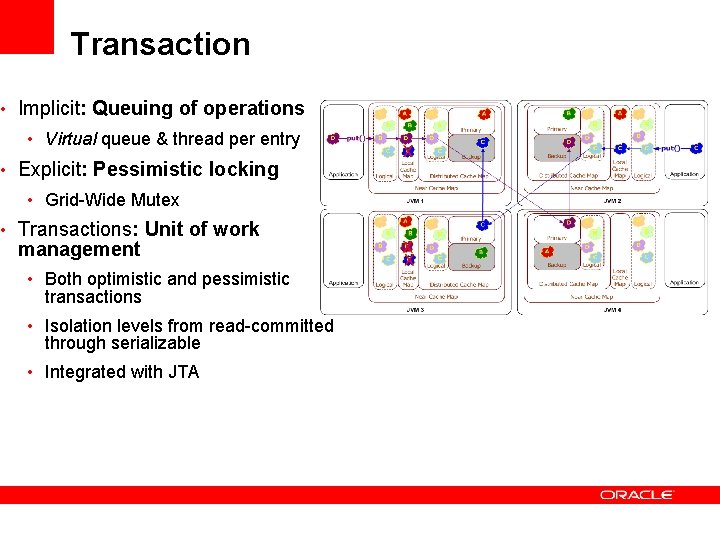
Transaction • Implicit: Queuing of operations • Virtual queue & thread per entry • Explicit: Pessimistic locking • Grid-Wide Mutex • Transactions: Unit of work management • Both optimistic and pessimistic transactions • Isolation levels from read-committed through serializable • Integrated with JTA
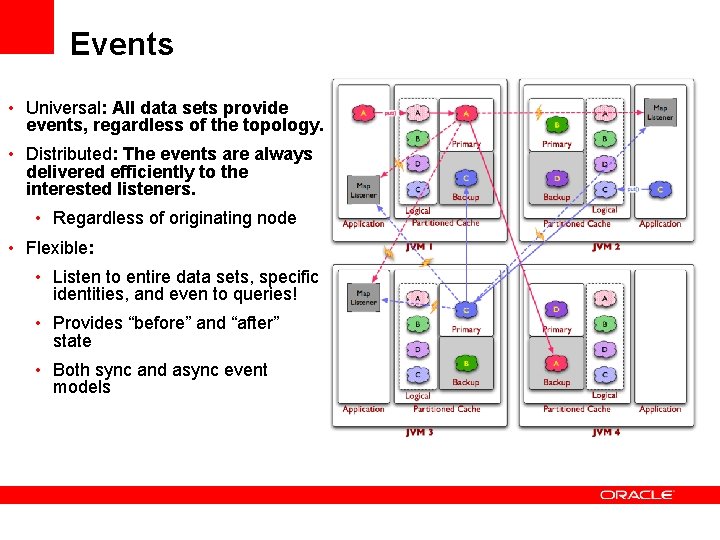
Events • Universal: All data sets provide events, regardless of the topology. • Distributed: The events are always delivered efficiently to the interested listeners. • Regardless of originating node • Flexible: • Listen to entire data sets, specific identities, and even to queries! • Provides “before” and “after” state • Both sync and async event models
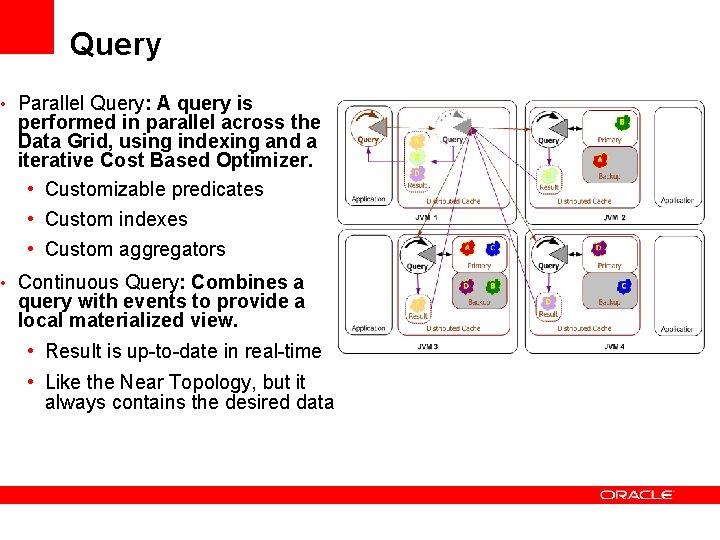
Query • Parallel Query: A query is performed in parallel across the Data Grid, using indexing and a iterative Cost Based Optimizer. • Customizable predicates • Custom indexes • Custom aggregators • Continuous Query: Combines a query with events to provide a local materialized view. • Result is up-to-date in real-time • Like the Near Topology, but it always contains the desired data
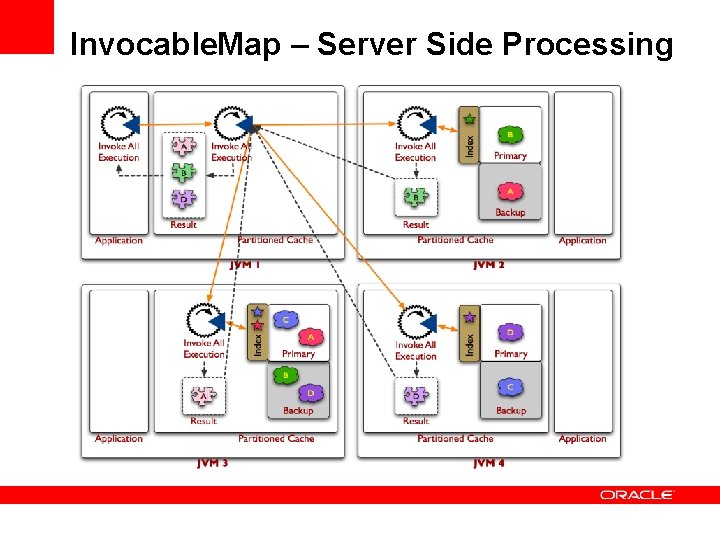
Invocable. Map – Server Side Processing
Coherence*Extend • Supports “fat client” real-time applications such as trading desks, as well as other server tiers • WAN support • Connection to the cluster is over TCP • Continuous query can be used to maintain real-time query results on the desktop!
Network
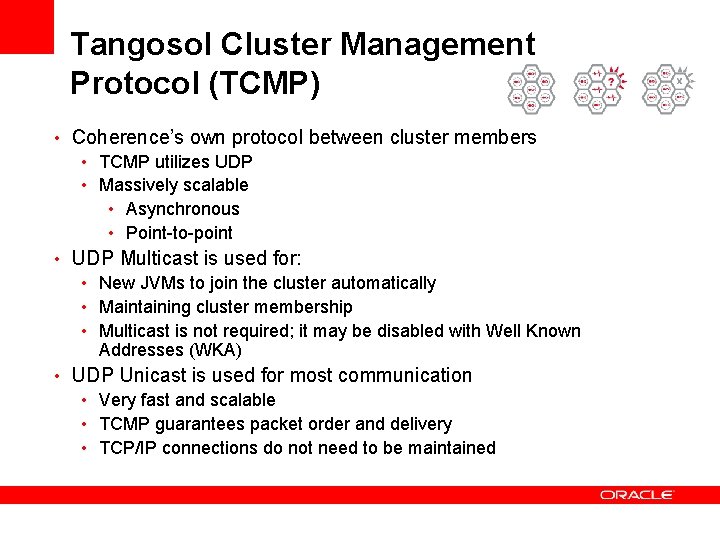
Tangosol Cluster Management Protocol (TCMP) • Coherence’s own protocol between cluster members • TCMP utilizes UDP • Massively scalable • Asynchronous • Point-to-point • UDP Multicast is used for: • New JVMs to join the cluster automatically • Maintaining cluster membership • Multicast is not required; it may be disabled with Well Known Addresses (WKA) • UDP Unicast is used for most communication • Very fast and scalable • TCMP guarantees packet order and delivery • TCP/IP connections do not need to be maintained
Clustering is about Consensus! Oracle Coherence Clustering is very different! Goal: • Maintain Cluster Membership Consensus all times • Do it as fast as physically possible • Do it without a single point of failure or registry of members • Ensure all members have the same responsibility and work together to maintain consensus • Ensure that no voting occurs to determine membership
Clustering is about Consensus! Why: If all members are always known… • We can partition / load balance Data & Services • We don’t need to hold TCP/IP connections open (resource intensive) • Any member can “talk” directly with any other member (peer-to-peer) • The cluster can dynamically (while running) scale to any size
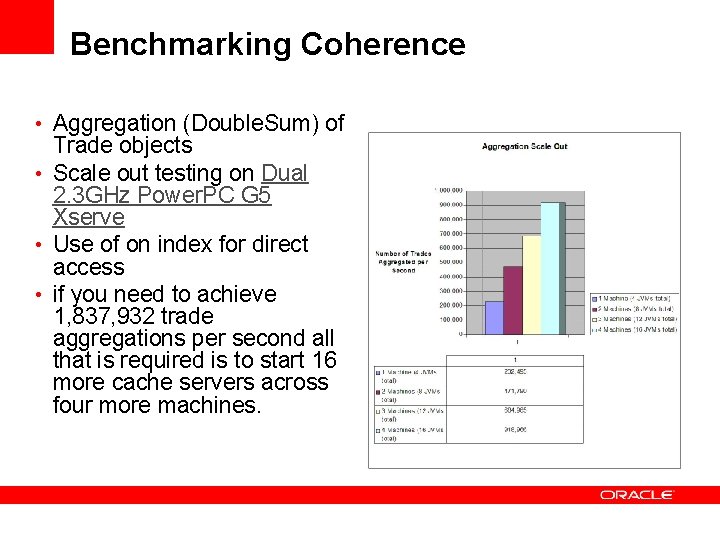
Benchmarking Coherence • Aggregation (Double. Sum) of Trade objects • Scale out testing on Dual 2. 3 GHz Power. PC G 5 Xserve • Use of on index for direct access • if you need to achieve 1, 837, 932 trade aggregations per second all that is required is to start 16 more cache servers across four more machines.
Coherence Management and Monitoring • Management Features • Coherence provides standard JMX APIs • Cluster-wide JMX: Ability to monitor and manage the entire cluster from any node • Customizable web-based console • Does not require an m. Bean server or any JMX libraries on managed nodes • Support custom application m. Beans • Support for Coherence*Web
Summary
Technical Resources • White Papers & Presentations http: //www. oracle. com/technology/products/coherence/index. html • Technical Documentation http: //wiki. tangosol. com • Support Forums, Technical FAQ’s http: //forums. oracle. com/forums/forum. jspa? forum. ID=480
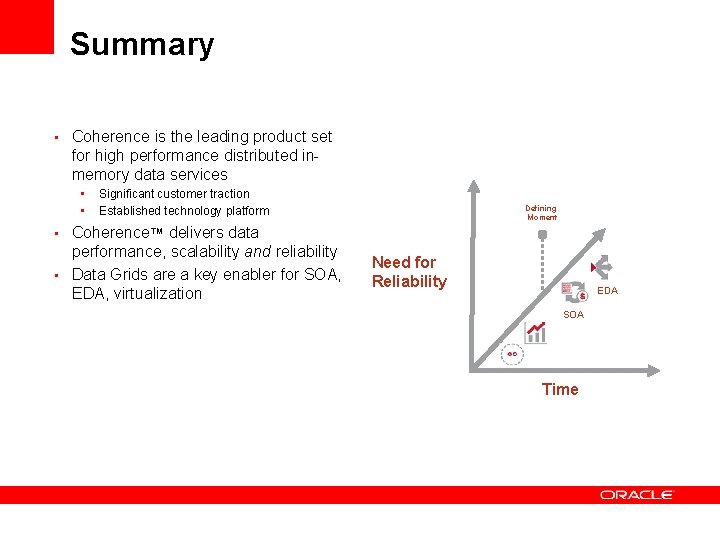
Summary • Coherence is the leading product set for high performance distributed inmemory data services • • Significant customer traction Established technology platform Defining Moment • Coherence™ delivers data performance, scalability and reliability • Data Grids are a key enabler for SOA, EDA, virtualization Need for Reliability EDA SOA Time